One Piece, Chainsaw Man, and the Power of the Scribble in Manga

26 de ago. de 2025 — Belu Liendo
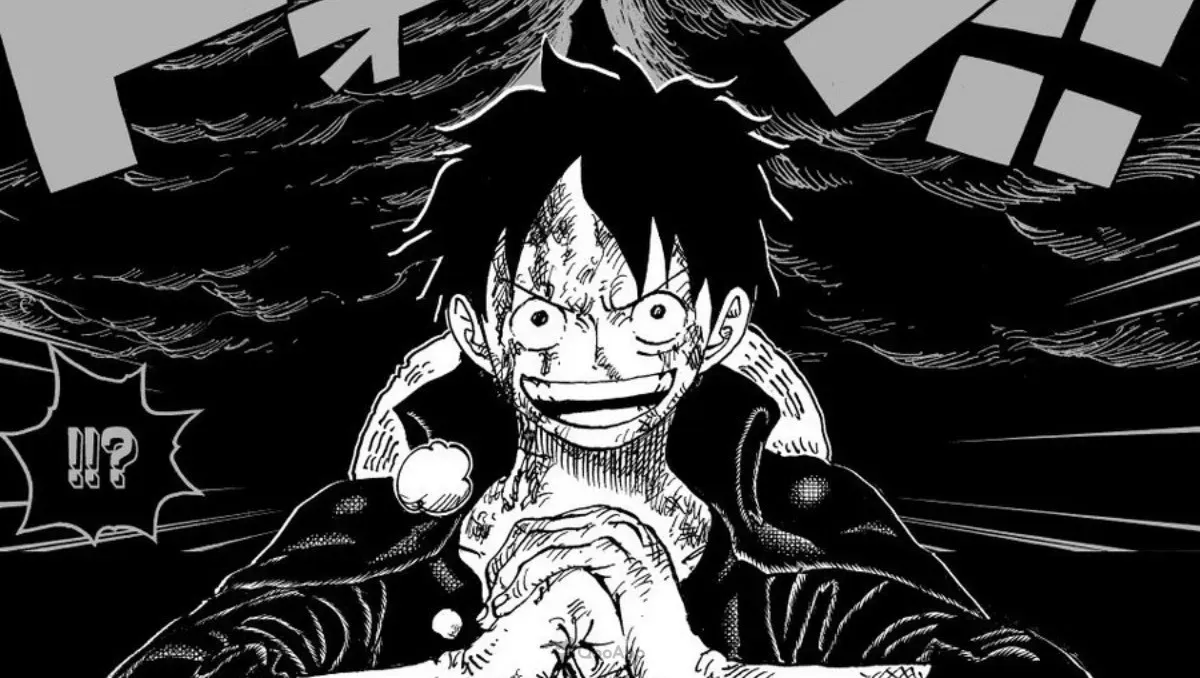
One day, after watching the Wizard of Oz movie (1939), a little Japanese kid from Kumamoto Prefecture dropped to his knees, looked up at the sky, and like a daimyo (a feudal lord from the Edo period) declaring war, shouted with all his might: "What a horrible ending! All that trouble searching for a treasure that doesn't exist! I'm going to live to draw and tell my own adventure story with the best ending of all!" And that's how One Piece was born.
A few years later, another little Japanese kid, this one from Nihako Prefecture, observed the stillness and quiet of the town where he lived, also looked up at the sky, and with a sigh wished: "I'm going to be a manga artist because I really don't feel like working the land or in an office!" And that's how Chainsaw Man was born.
The above are fictional reconstructions, cooked up in my little head after reading interviews with my favorite mangaka about the inspiration behind their most famous works: Eiichiro Oda (One Piece) and Tatsuki Fujimoto (Chainsaw Man, Goodbye Eri, Look Back, Fire Punch, and more). What these guys do fascinates me, so I'm going to introduce you to their work as briefly as possible.
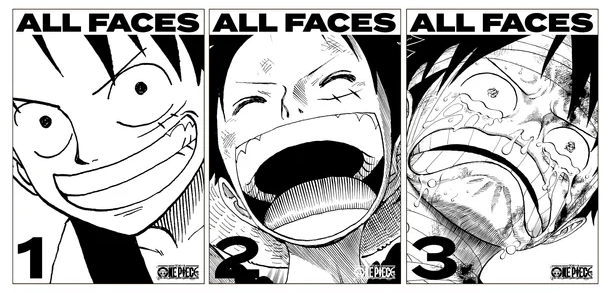
One Piece is a manga that has been published weekly since 1997 in Weekly Shonen Jump magazine, and it mainly tells the story of Monkey D. Luffy, a young and fearless pirate who sets sail in search of a mysterious treasure. This character is the perfect excuse to build a universe with one of the largest and most solid worldbuilding efforts in all of fiction. The manga also has an anime adaptation by Toei studio and a live-action series produced by Netflix. This shit do numbers as fuck! And while its reception has gone through various phases over the years, it is currently the best-selling Japanese comic in history.
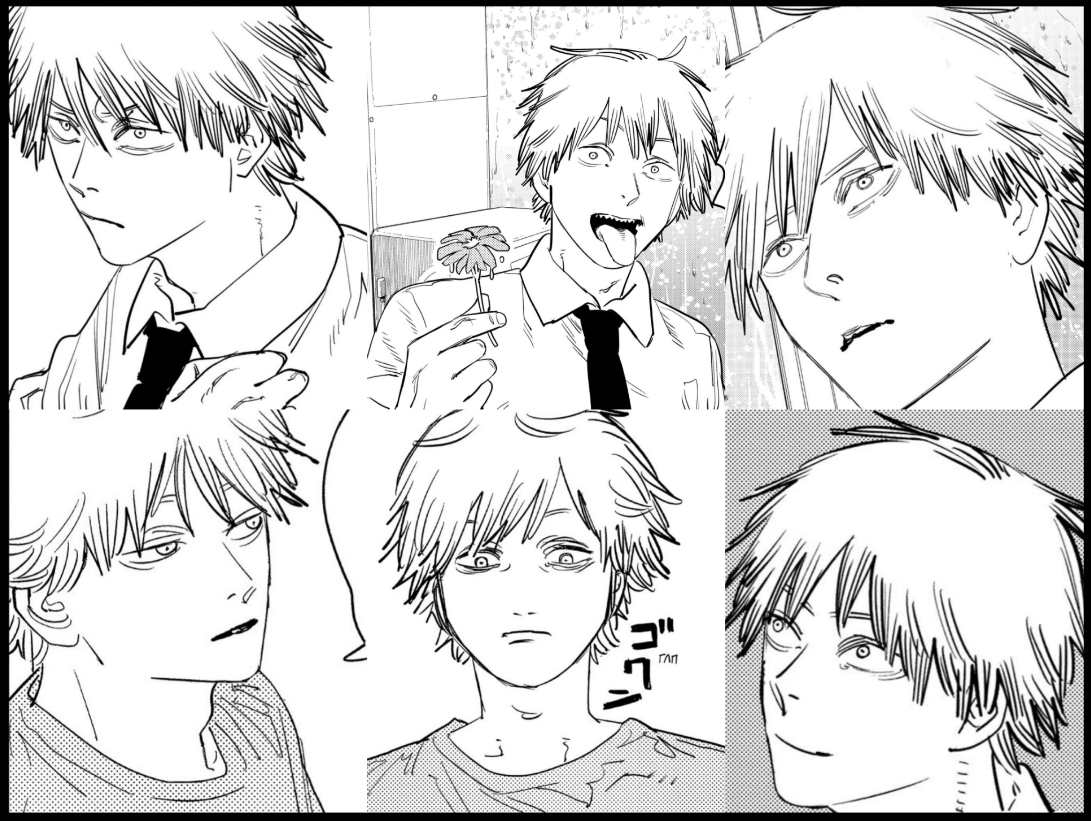
The most famous work by Tatsuki Fujimoto is Chainsaw Man, a manga also published in Weekly Shonen Jump, in his case since 2018. It has an anime adaptation of its first volumes, which aired in late 2022 and achieved massive worldwide success. The story of Chainsaw Man takes place in 1997 in an alternate timeline. The protagonist is Denji, a young orphan trapped in extreme poverty who must become a demon hunter to change his life. It's an extravagant story, with a unique and sometimes slightly uncomfortable vulnerability. And it also has readership and reception records: its chapter 167 is the most-read chapter in the history of MangaPlus and it was the best-selling manga in the United States in 2024.
Do Oda and Fujimoto "draw like crap"?
Surfing around the internet, you'll notice that despite having two very different narrative and aesthetic styles for developing their main characters and stories, both authors are united by the same criticism from their detractors. Things ranging from "I don't like their style, it's too simple, it lacks line art, it's too cartoony" to "these Japanese guys really draw like crap compared to others."
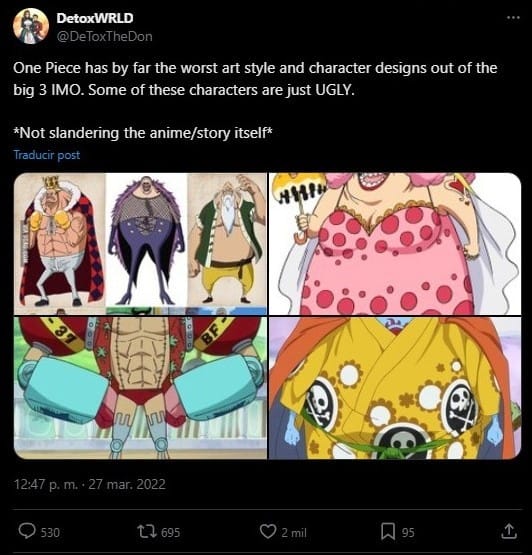
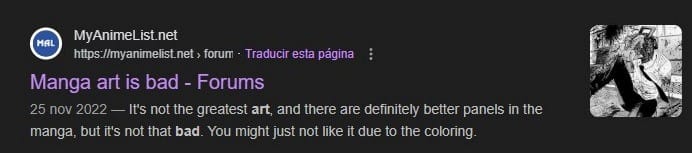
Sir Isaac Newton's third law of motion says that "for every action, there is an equal and opposite reaction." That's why great passions also generate great detractors. I'm not too interested in the point of view of the hater base; what I am interested in is digging into the origin of that colossal initial force. Why do these characters, despite being so cartoony, childish, simple, whatever, have MILLIONS of fans around the world? Why, if they're so simple, do they feel so familiar to us? When this beautiful PDF by Scott McCloud came into my life, I was able to find an answer that, while it awakened in me a sort of cosmic horror, has satisfied me for now.
Understanding the icon, understanding comics
There are quite a few definitions of icon. The most famous one comes from Charles Sanders Peirce, but I won't get into that. For comics purposes, in Understanding Comics: The Invisible Art (1993), Scott McCloud gives us the following: an icon is an image used to represent a person, thing, place, or idea. A drawing/illustration is a type of icon. The degree of resemblance to the person, thing, place, or idea that drawing attempts to portray can be measured. Therefore, we can say that some drawings are more iconic than others. We can more or less agree on this, right?
Because of this damned/blessed ability to recognize patterns, symbols, and icons, human beings can find their face everywhere. Our brain interprets random patterns as something meaningful:
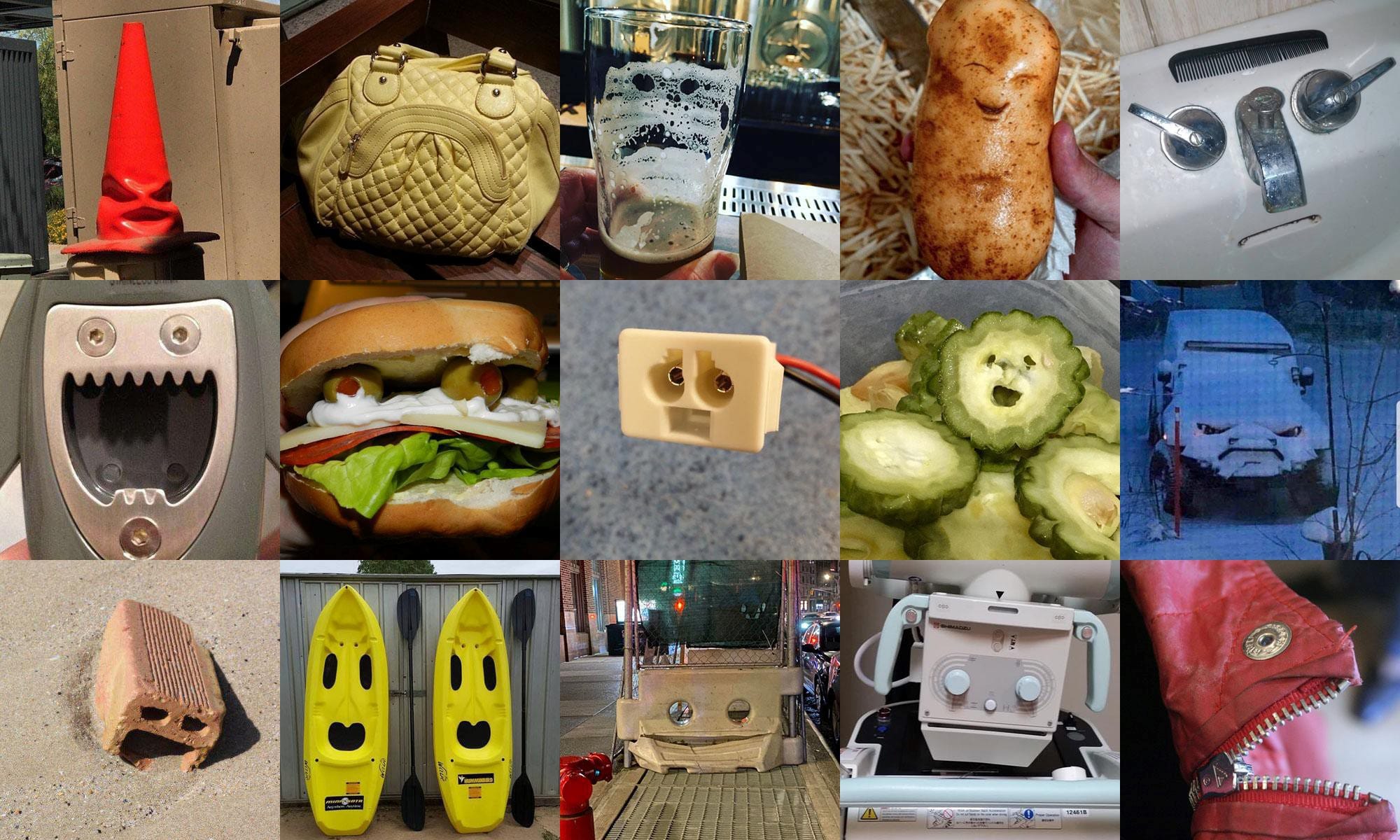
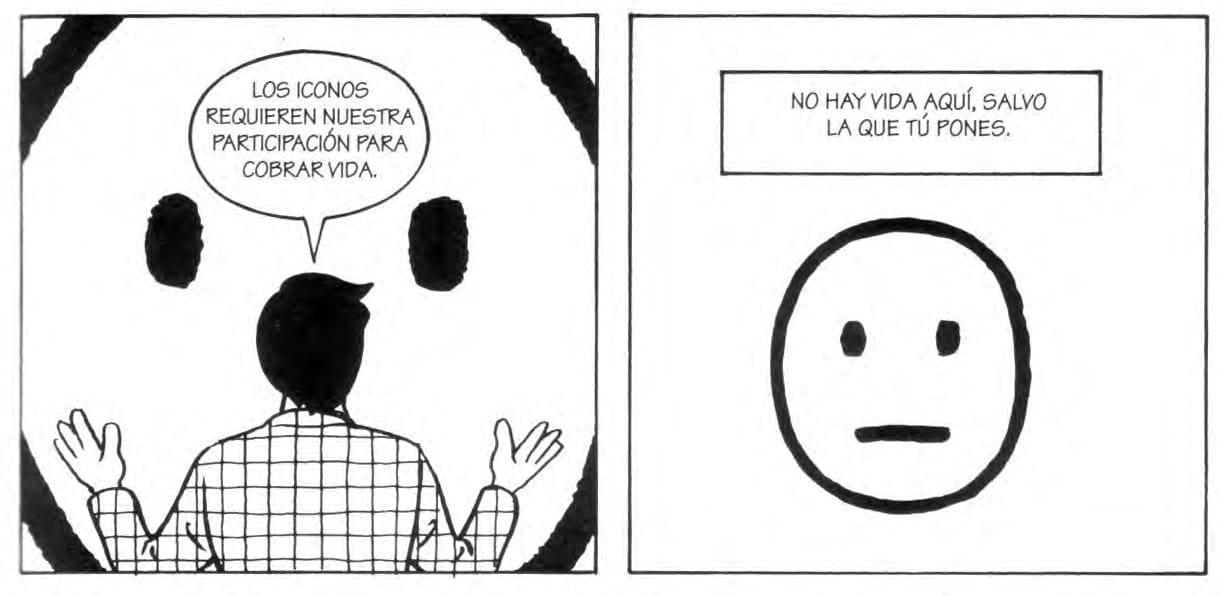
This ability scares me a little, because I quickly infer that it's a biological adaptation we've been building for millennia. It's likely that our ancestors had to learn to identify human faces quickly. The ability to recognize patterns separated us from the world of beasts, because that's how human beings access a different interpretation of nature. It's one of our most primal attributes, and its secret is locked away in the depths of our cognition, a door we fortunately can't access but that always remains as our protective shield.
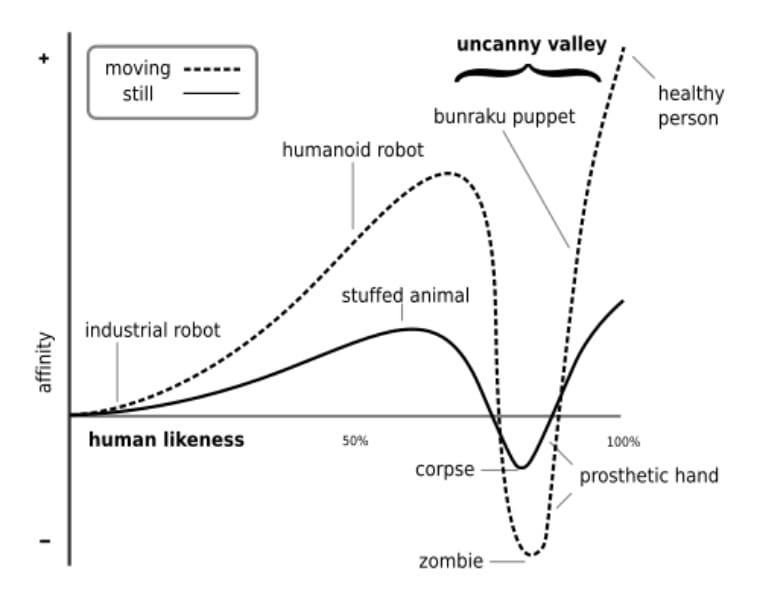
McCloud also dared to formulate a specific definition of comics, since this genre was the elephant in the room of art and literature for many centuries. For him *drumroll*, a comic is a sequence of juxtaposed illustrations with the purpose of conveying information and producing an aesthetic response in the viewer. It can be summed up by saying that comics are sequential art.
Thanks to this ability to find ourselves everywhere, human beings also find their face in cartoons. Readers can use those cartoony and simple characters as a "mask" to enter the worlds of graphic narratives. Reading a comic or manga is a contract between author and reader that requires total commitment from both in a constant exercise of interpreting interconnected iconography. Panel by panel, through a kind of interpretive magic, we breathe life and emotion into a comic because we have to engage in an exercise of sensory surrender to that story. And thanks to this masking process, a simple character can be a better shield than another, because it will harbor more people in its expressions.
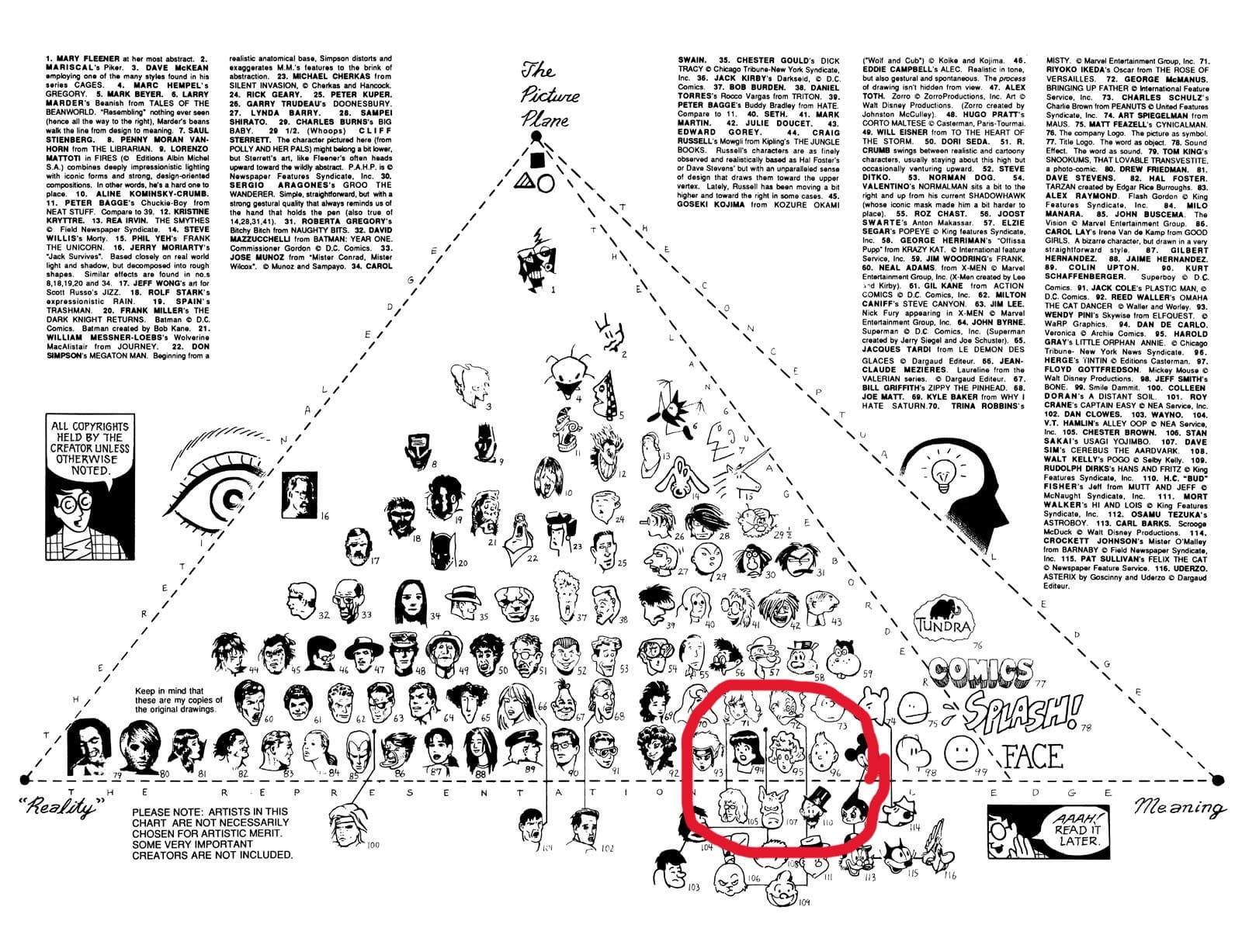
McCloud --I thank Sebastian Gago for introducing me to his work-- created this triangle to place every single comic book character across three variables: reality, language, and the picture plane. While there are characters all over the surface of this triangle, Luffy and Denji are clearly in a very similar quadrant (marked in red). And they're the favorites of millions.
The case of One Punch Man
On another note, two years ago Todd McFarlane, creator of Venom and Spawn's designs, was asked what's more important when creating a comic: a good artist or a good writer. He replied that "he could sell a comic drawn by Michelangelo and written by a dog," but that "he couldn't sell a comic written by Shakespeare and drawn by his mother." Todd, I've got news for you: in 2010, One Punch Man was published, created by the mangaka ONE, a webtoon of terrible quality, but with a great story! So much so that the editors asked Yusuke Murata to re-illustrate it from scratch to meet basic aesthetic publication standards, while preserving ONE's authorship. It became a best-selling manga, and then the anime came out -- a total hit.
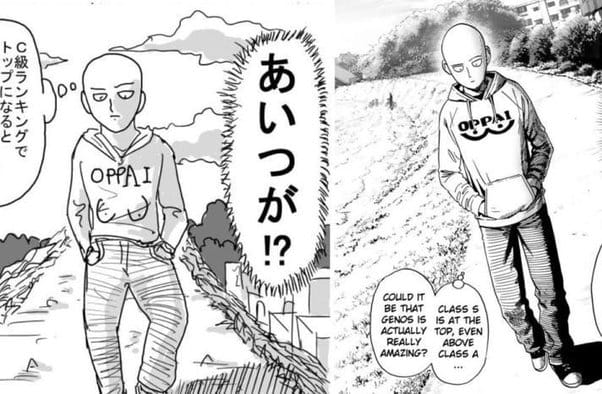
Even so, a few years later, ONE said something like "Hey, I've learned to draw now, let me keep my own drawings in the publications!" and, proving that One Punch Man wasn't a fluke, in 2014 he released MobPsycho100, a manga that keeps his horrendous drawings and is an absolute gem.
Takehiko Inoue, the counterexample
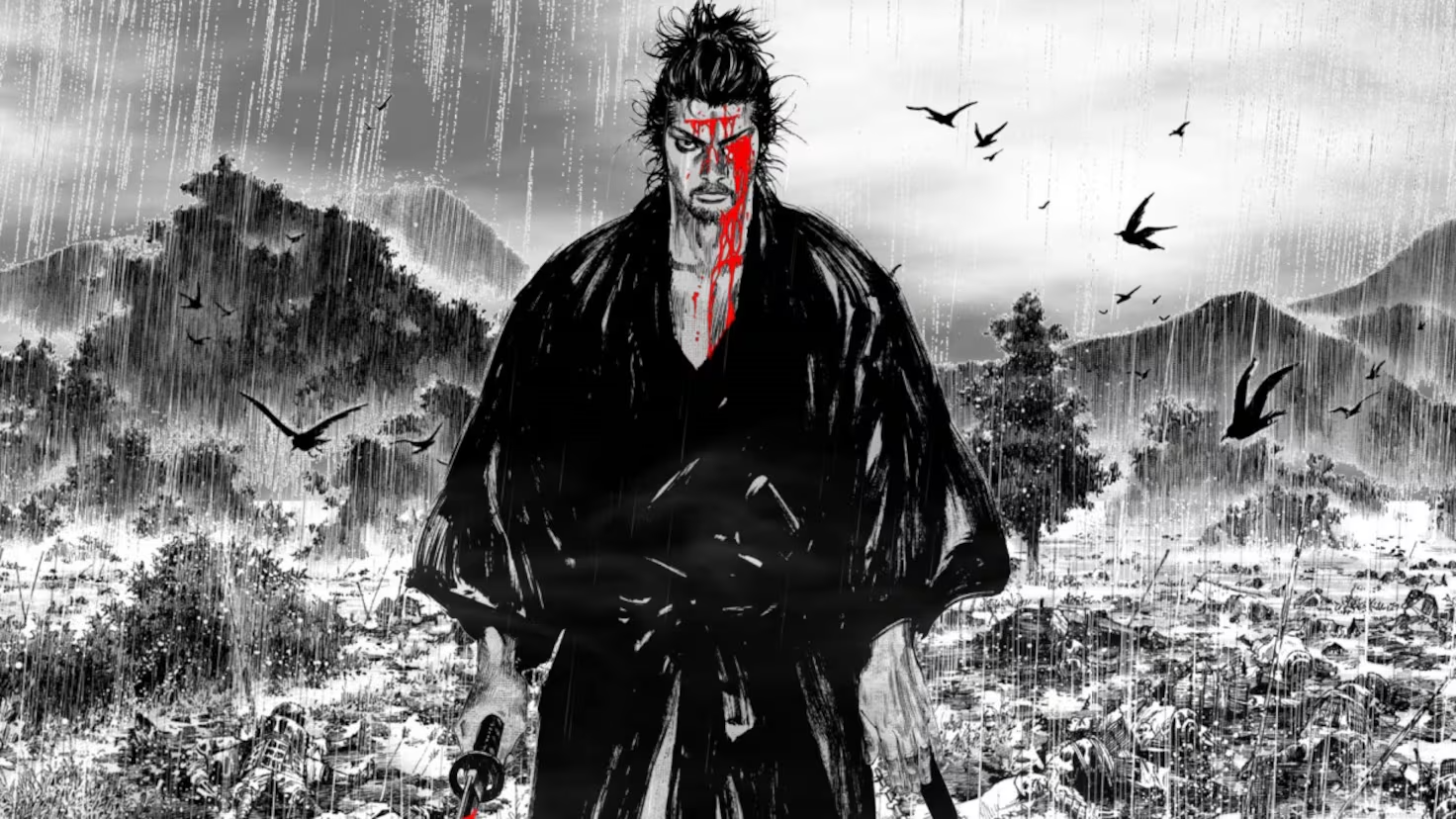
One of the great references in manga, when it comes to illustration, is Takehiko Inoue, author of the renowned Vagabond, currently on hiatus. When I read it, that reading contract was somewhat mediated by the author's interest in showcasing his skill as an artist, so flipping through his pages felt like walking through a beautifully curated art gallery -- though, hey, I might also just have monkey brain. His illustration is so beautiful that it represents a challenge for any animation studio: nobody has dared yet to attempt the feat of adapting it into anime, for fear of not being able to reach such a level of detail and perfection. And here's a disclaimer: just because a successful manga exists doesn't mean it will be adapted for the screen, just as not every anime was first a manga.
Fortunately, Inoue is also the author of Slam Dunk, which made it to the screen and established itself as one of the most famous sports anime of all time. Now then, why do I bring Inoue into the conversation? Because in the depths of the internet, people constantly compare him with Eiichiro Oda due to the stark difference in their drawing styles. In 2010, these authors were able to meet at the exhibition The Last Manga Exhibition and gave a joint interview that isn't widely cited -- I even had a hard time finding a translation -- so I can bring you this little excerpt thanks to Ramen para dos:
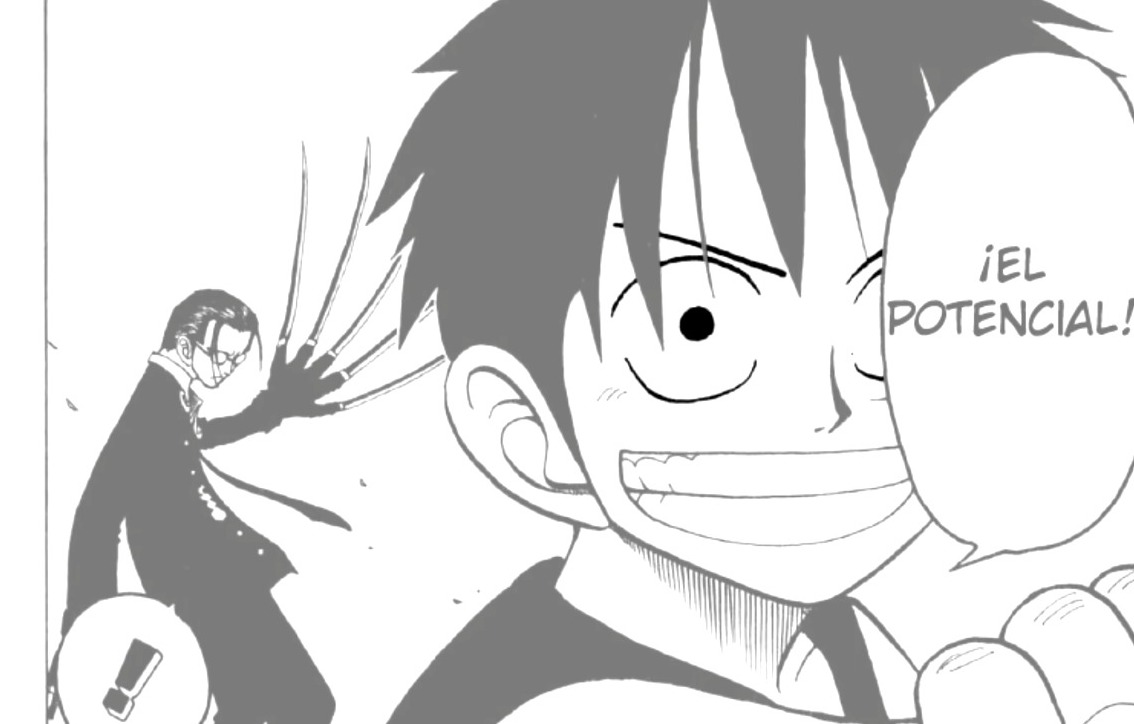
Inoue: What's incredible about the character of Luffy in One Piece is that his eyes are dots. That's really special. You said that "something that's really good stays that way without adding anything more," and I think that phrase is very representative of your personality. You have an unshakeable faith in your work, and that's reflected in the way you draw those black eyes. I bet the editor and everyone who worked with you told you to put some sparkle in the pupils, or to circle them, but you didn't budge an inch.
Oda: Yeah, at first they told me a lot of things like that.
Inoue: And you didn't listen to them, you kept the two black dots, and this is the result. It's brilliant.
Low Drawing, High Life
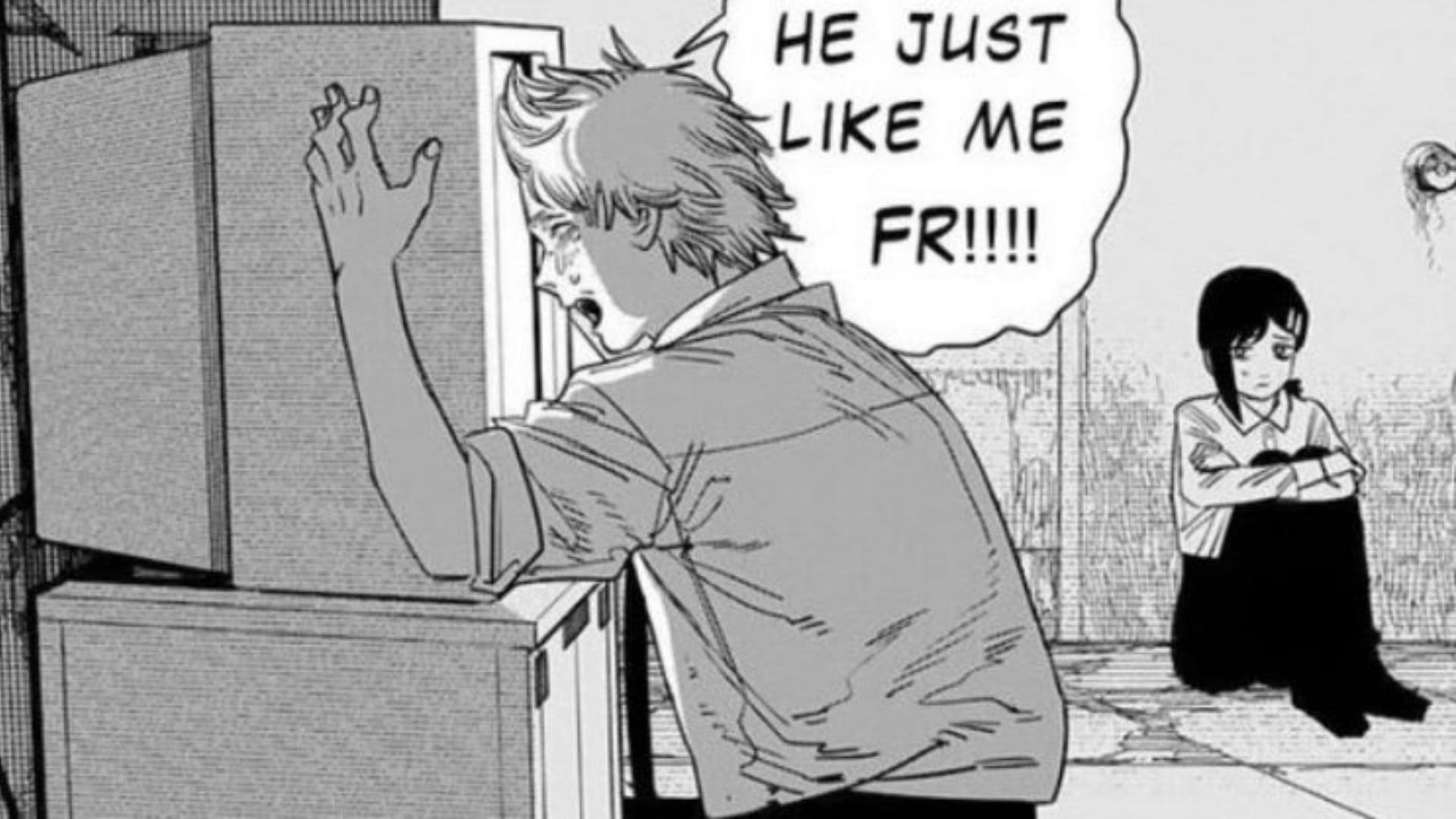
Tatsuki Fujimoto is one of the most creatively gifted mangaka of the new era, but he has confessed on multiple occasions that what he enjoys most about creating manga is writing his characters' stories, not so much the drawing. Sometimes he forgets to add backgrounds and other details in his panels, yet his Denji won the world's heart immediately, also wielding massive meme power. A great victory for the substance guys over the style guys. Also, because of his reluctance toward illustration and the heavy workload he faces, Fujimoto has many assistants who are also his students at the same time. Despite his young age, he's a talent forge: under his wing were none other than Tatsuya Endo (author of Spy x Family), Yukinobu Tatsu (author of Dandadan), and Yuji Kaku (author of Jigokuraku). All I hear is the GOAT sound.
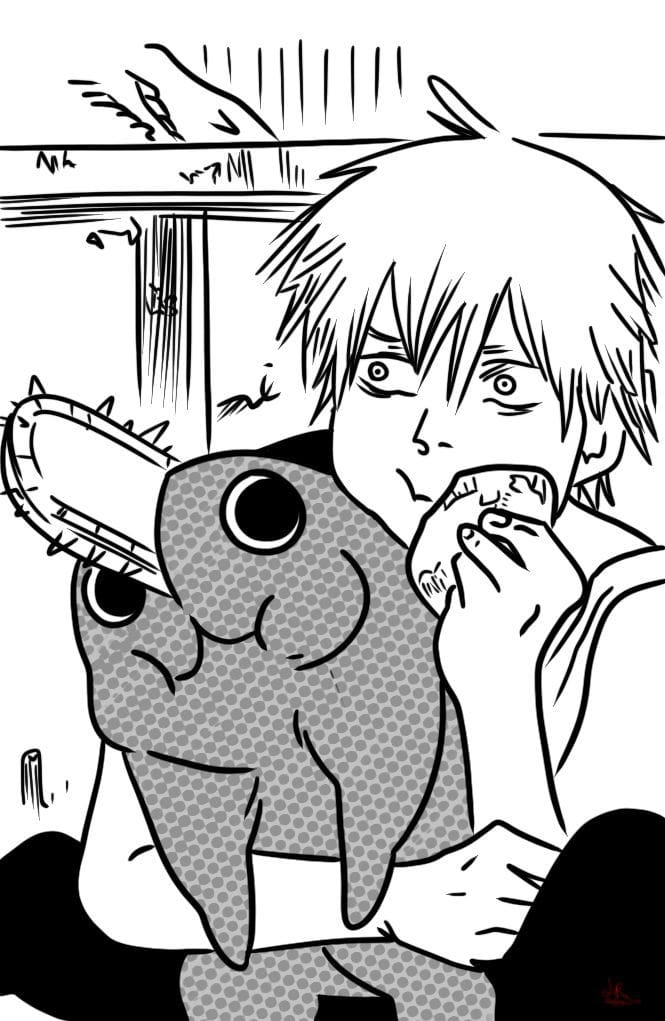
Oda and Fujimoto are not Takehiko Inoue, they're not Kentaro Miura (rest in peace), they're not Boichi (horny madman), they're not Yusuke Murata, they're not Yukinobu Tatsu, nor are they Katsuhiro Otomo -- please, they're none of those guys. And none of us is Miyamoto Musashi, the main character of Vagabond. There's a slightly more distant relationship there. Maybe we're all a little more like Luffy? Maybe we all feel more like Denji? Why?
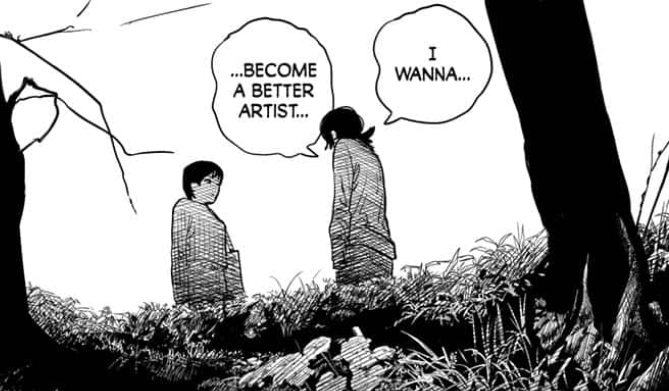
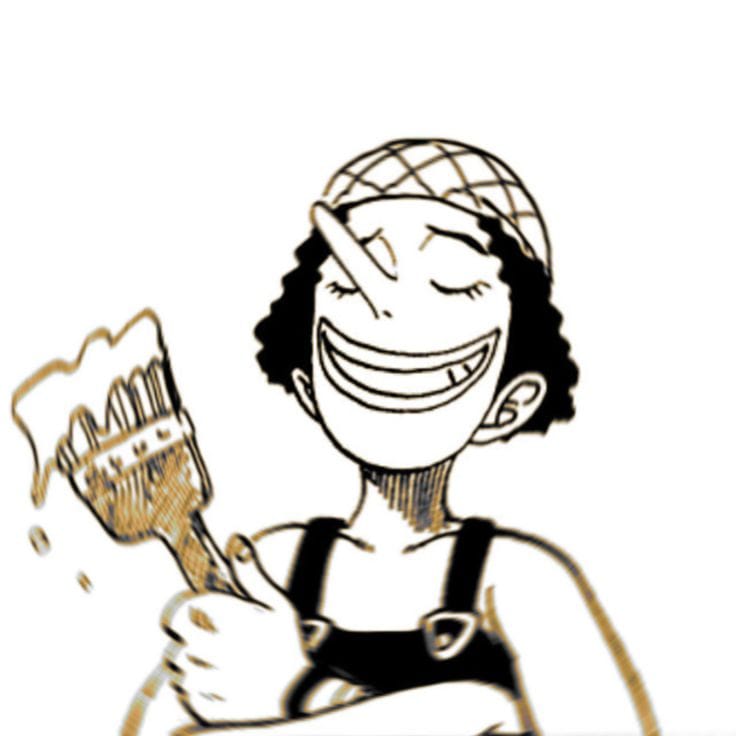
Creating a character out of simple strokes is a massive leap of faith. This aesthetic choice comes with risks: your character becomes a corny, naive, and idiotic scribble of itself, the whole world forgets it, it doesn't stand out from the crowd, you can't link or reference it to anything. That's where the power of each author's pen comes in, to give the character through the story the weight, dimension, and narrative that the drawing alone isn't providing. If you pull off the move, in that simple cartoon you can harbor the entire world. Because of its transparency, simplicity, and honesty, it becomes a graphic weapon far more powerful than the most detailed realism. The decision to build a simple character is therefore a decision made from a place of possibility, not limitation.
Where to find Tatsuki Fujimoto
- Here's Look Back, somewhat illegally uploaded to YouTube a few months ago, a film I'm still reflecting on.
- You can read Chainsaw Man online and/or buy the volumes.
- Also, on October 30th, the movie in Argentina Chainsaw Man -- The Movie: Reze Arc was released, continuing the anime series (it came out in Japan in mid-September).
Where to find Eiichiro Oda
- These wonderful people translate every weekly One Piece chapter from Japan through sheer dedication, and their translation is one of the best available online.
- You can also read the volumes on various websites or buy them: One Piece is everywhere, you don't really have to look that hard.
All of humanity fits in two little dots and a crooked line
We can all scribble a little face with two dots and a crooked line -- it was probably the first thing we did when someone handed us a pencil and a piece of paper in our earliest, sweetest childhood. In hyperrealism there's plenty of skill and technical ability, but in the caricature of a face and its infinite possibility for reproduction and emotionality lies the human capacity to recognize itself across time. Thank you very much, mangaka, for your horrendous drawings.