Pampa Primigenia: Gauchos vs. Cthulhu in an Authentic Argentine RPG

21 de mar. de 2026 — Luciano Casamajor
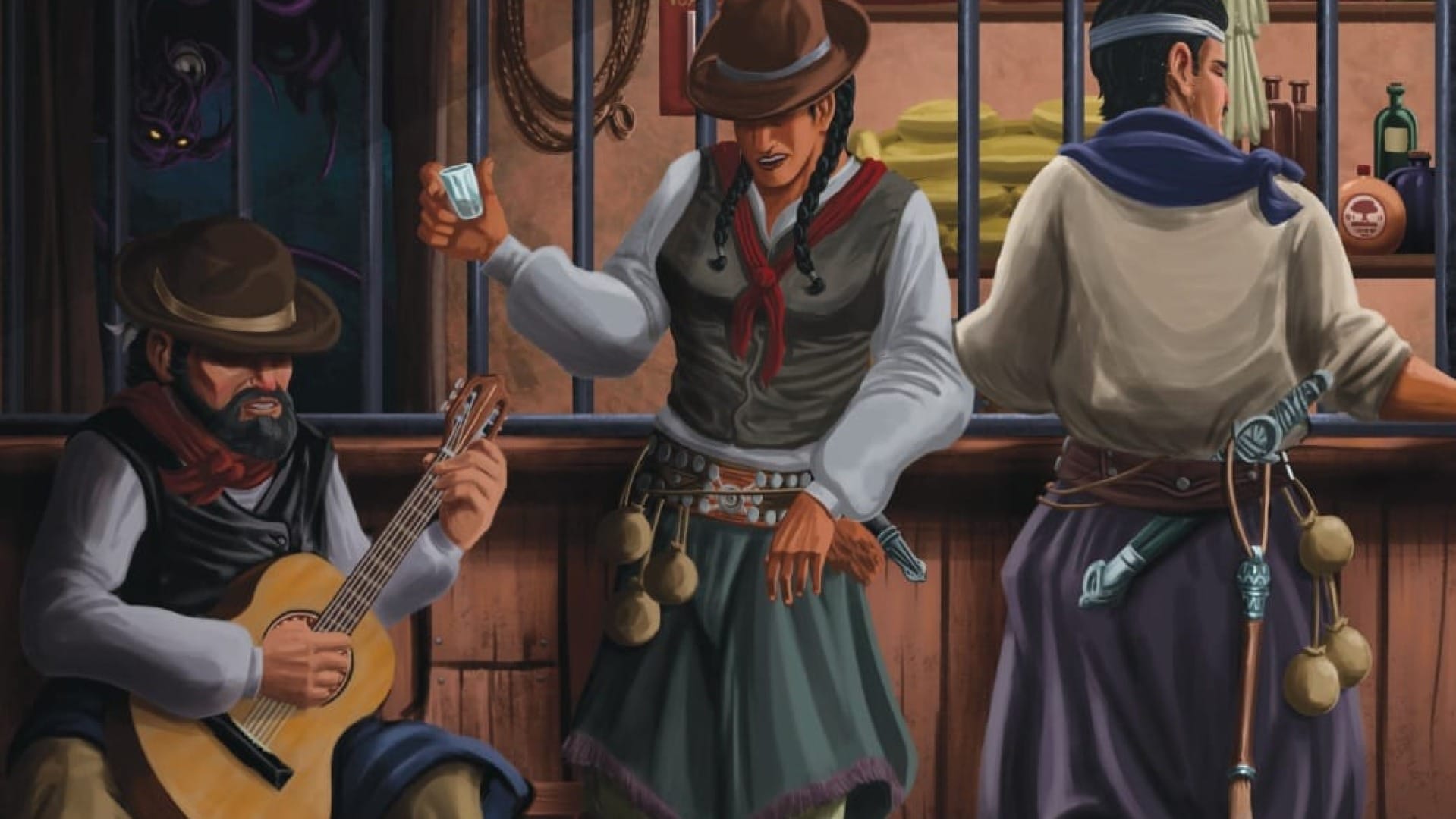
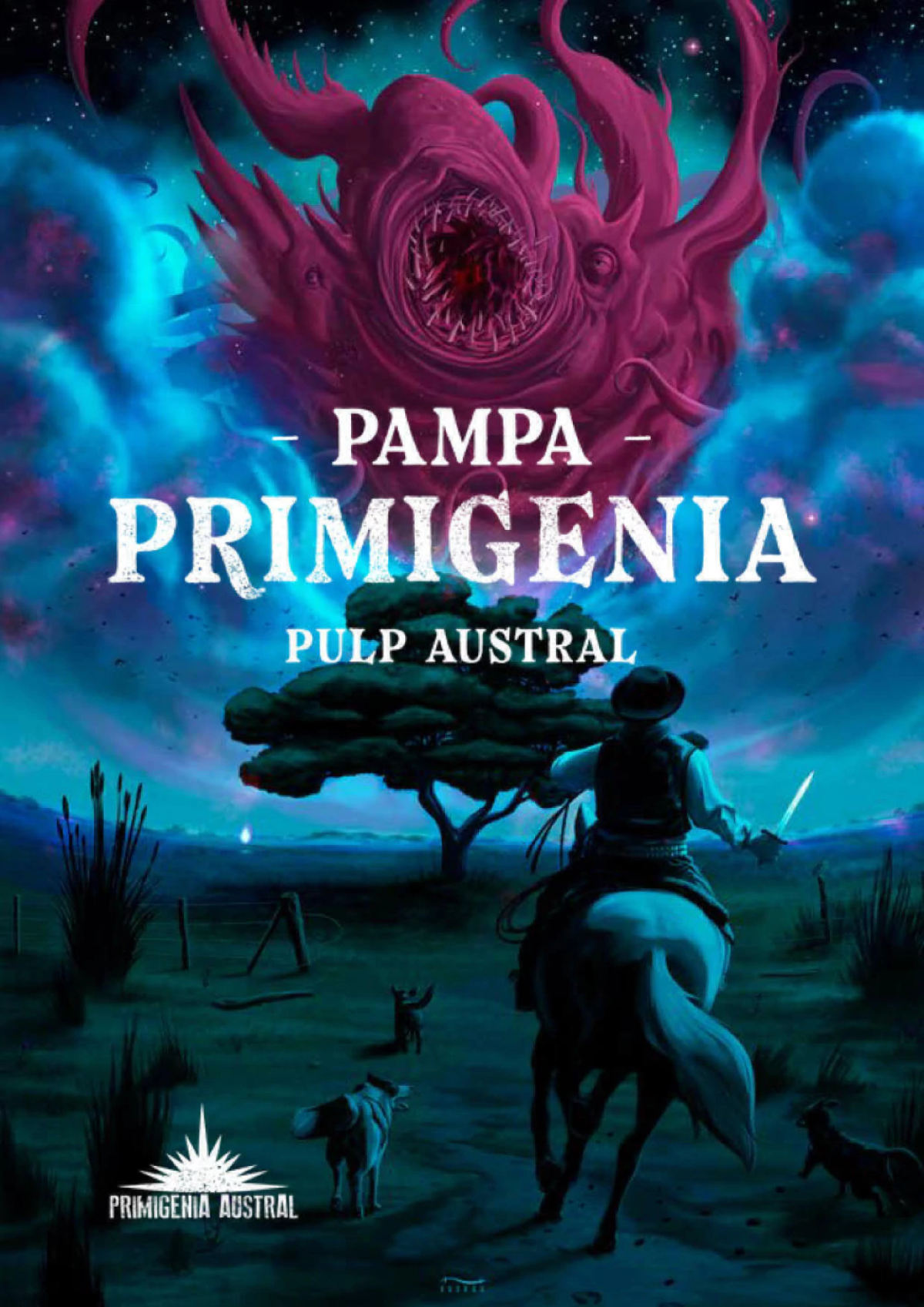
Pampa Primigenia is an Argentine role-playing game created by César Jara Encina and Hernán Júarez, published physically under their label Primigenia Austral in 2024. It has a simple and direct hook: we are gauchos (a sort of local cowboys) in a version of the pampas corrupted by Lovecraftian monsters. Did you stumble into the pulpería (local tavern) and the vibe feels super heavy? They’re probably all cultists. Did you cross paths with a spicy caravan, guarded by gauchos armed to the teeth with wild eyes? They must be transporting a lost page of the Necronomicon to the University of Buenos Aires. And what’s that green glow coming from a remote ranch? A plague of Mi-Go. Or something much worse.
"It all started as a joke," César confesses to me as we kick off the interview. I wanted to hear from the creators themselves how this crossover came to be. Unsurprisingly, the folks at Primigenia Austral are big fans of Cthulhu, and one day they started brainstorming what would happen if a band of gauchos stood up to him. Both authors had played a lot of Dogs in the Vineyard, the game by Vincent Baker about Mormons in an Alt West defending their faith with guns. "We messed around with that idea in our morning meeting. Later that day, I sat down with my mate after lunch and started brainstorming what attributes these gauchos would have. And that’s when Guapura and Facón came up, and I thought, ‘There’s something here.’"
A few months later, they released a beta version of the game and let it circulate for a year. And when they got tired of receiving requests to buy the physical book, the development of this awesome austral pulp game began.
How do you play?
Pampa Primigenia is a game powered by the Apocalypse (PbtA), so if you’ve played any other game with this framework and design philosophy, you won’t find it hard to enjoy. And if you’re new to them, don’t worry, the basics are very simple and accessible. Basically, like in any role-playing game, there’s a system to resolve actions whose outcomes are uncertain or more fun to determine randomly. Want to get off the horse? You do it, and that’s it. Want to sprint while being chased by a Hound of Tindalos? Grab the dice, m’ijo.
You’ll roll two D6 (that is, the dice from generala), add their values, and then add a relevant stat from the three available in the game: Mate (social skills), Viveza (intelligence and cunning), or Facón (fighting and physical prowess). Does it add up to 12 or more? You nailed it. Between 10 and 11? Good result. 7 to 9? Not so great or it brings complications. 6 or less? Things are getting hairy.
It has a simple and direct hook: we are gauchos in a version of the pampas corrupted by Lovecraftian monsters.
Like all PbtA games, your roll is framed within a move that you invoke based on the fiction, meaning what your character wants to do and their circumstances, not, as in other systems, based on items or spells you have. For example, the case above would be Face Danger because your gaucho is reacting under pressure to an imminent threat (the Hound of Tindalos chasing him): that’s the fictional trigger for the move. If later your gaucho wants to proactively take down a gaucho, the move would be Take Out (“when you have a hold on or hunt a dangerous creature”). If he wants to intimidate instead, the corresponding move is My Bolas Say NO! (“when you intimidate or threaten someone”).
All moves are resolved the same way: 2D6 + some particular stat, and we see how much we add up, with 12 or more being the best and 6 or less the worst. But each move dictates different consequences for those categories: for example, rolling 12 or more on Take Out gives you extra damage, you gain Guapura (a special resource you spend to get an extra die on a roll), and what you killed can also be butchered or have something useful taken from it; on the other hand, My Bolas Say NO! makes the intimidated entity obey you and also gives you 1 Guapura.
 Luciano Casamajor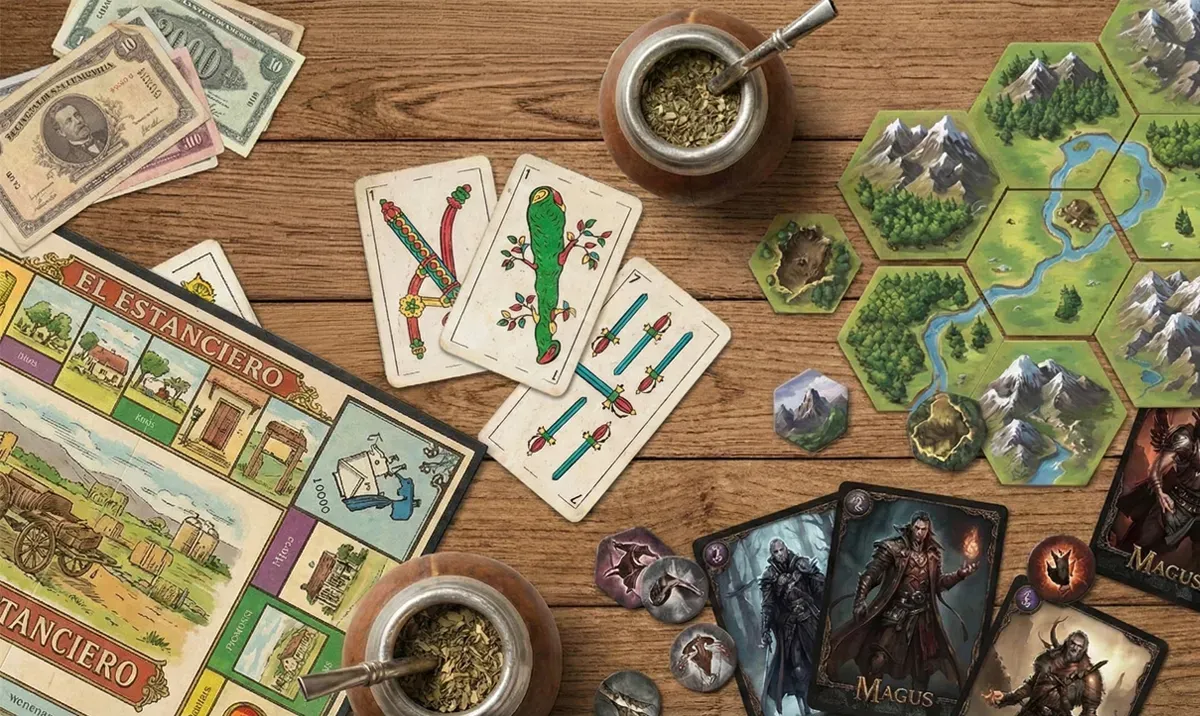
For those unfamiliar with PbtA, note that it’s not the Payador (that is, the GM) who decides what move you make. Technically, it’s not even the players, but the fiction. That is, you always start by stating what your character wants to do and how they attempt it, and it’s that narration that triggers a move. It may seem like a technicality or a mental exercise, but this encapsulates a strong principle of narrativist games: fiction comes first, then the real consequences (dice rolls or the resolution system), which in turn generate more consequences in the fiction. “Apocalypse World is one of my go-to games,” César tells me as he turns to his bookshelf and grabs his copy of Vincent and Meguey Baker’s bible. “It’s a title that always has a place at my table, you know? And it really influenced my philosophy, and in general, my games tend to follow it, regardless of the specific engine, with or without moves, with or without playbooks.” When I inevitably ask if they considered including playbooks (the narrativist equivalent of classes), the answer is that they didn’t want to pigeonhole the gauchos into those classic typologies (the gaucho, the outlaw), but rather stick with the archetypal strength of the rural worker, someone who lives off their land. You don’t even have to play as gauchos, as the game invites us to explore the equivalents in other Latin American countries, like huasos in Chile or charros in Mexico.
The Payador also doesn’t roll dice, and while they manage all the NPCs, creatures, and the world outside the players, they don’t resolve turns or calculate initiative or anything like that. What they do is prepare dramatic situations and execute the consequences of the players’ rolls. Did you want to intimidate someone and rolled 6 or less? It’s up to the Payador to decide what flavor of you just came off looking like a fool you get, in addition to marking you with the condition Slow, which will subtract 2 from your Mate stat until it wears off. Unless you come up with a nice punishment for your character yourself; because this is a game of collaborative fiction and the important thing is to create a good story, not for the players to resolve the Machiavellian combat that the GM designed beforehand. In fact, this is outlined among the principles of the Payador: “when in doubt, don’t try to decide everything. Brew yourself a mate and ask the others what they think or suggest. Often they’ll have amazing and fun ideas.” Like all PbtA games, Pampa Primigenia establishes agendas and principles for the Payador and the players; that is, the guidelines of what should matter to you and how you should conduct yourself while playing. These can be summed up as bringing the Pampas to life, inventing adventures worthy of these gauchos, and navigating them with guapura and sacrifice, even if it means death. In other words, live everything the setting proposes to you. “For me, it’s always important to explain to the person reading your game, ‘Look, this game is about this. You have freedom, but I propose these themes for you to highlight at the table,’” César explains. “Even if we use known systems, there are specific themes in our game, so we leverage the system to highlight those themes, like in this case, guapura and the defense of the land against the external.”
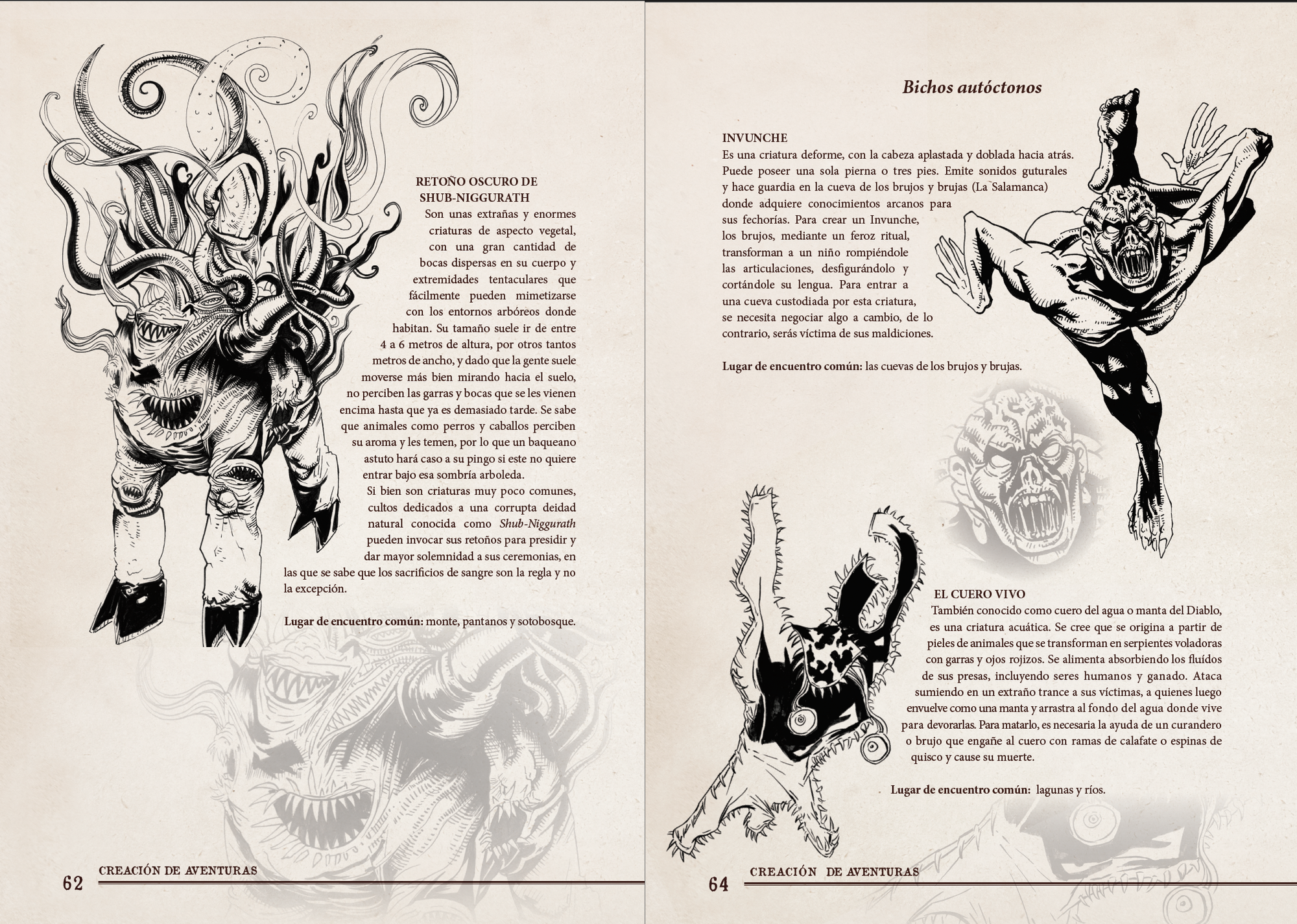
And that is undoubtedly the strongest bet of this game: to provide you with the elements to create your own blend of H. P. Lovecraft and José Hernández. The game doesn’t come with a detailed and specific lore. The idea isn’t to start from a canon of which eldritch entities are where in Argentina and why. What Pampa Primigenia gives you are the ingredients and then frees you with a let him cook. Specifically, you’ll find a small encyclopedia of possible monsters, antagonists, and pre-generated characters, as well as random tables to sketch adventures with a couple of dice rolls. One of the mantras of PbtA is play to find out, that is, play to see what happens; therefore, none of these little blocks come with scripted plot points but do include motivations, personality traits, secrets, and other hooks to set the narrative gears of your adventure in motion, which can last several sessions or a two-hour encounter. The truth is that this eldritch Pampas is not a safe place (as it should be), and it’s very likely that your gauchos will end up dead or insane at the first encounter with a Primigenio. In fact, the manual has a note that made me laugh when explaining how players deal and receive damage: “Primigenios, Outer Gods, or other creatures of immeasurable power cannot be physically harmed; they can only be deceived, put to sleep, or subdued by other non-physical means. Good luck!” Moreover, your characters have 5 Health boxes and 5 Stability boxes (your sanity), which fill up when they take damage… except when it comes to primigenios like Cthulhu and similar entities, which “simply erase you from the face of the earth”. This isn’t Arkham Horror, buddy, put that ridiculous shotgun away.
It’s about subverting genre traits. What would be considered exotic in classic pulp, like an aboriginal or a gaucho, here are the protagonists who, moreover, come from the bottom: they are rural workers or perhaps outcasts, pursued by the law.
That doesn’t mean Pampa Primigenia isn’t a game driven by action, which, along with the mystery of the bizarre and some touches of humor, forms the pulp trident of this system. Its authors call it a new subgenre: Austral Pulp, which takes those traits and mixes them with the traditions, legends, and culture of the peoples of central and southern Argentina and Chile. In fact, the manual describes more than double the number of South American folkloric creatures than Lovecraftian entities, and let’s be honest, the Caá-Porá, smoking his pipe made from a human skull and tibia, or the Chancha con Cadenas are way more metal than the usual unpronounceable tentacle bags. The authors explain that it’s about subverting genre traits. What would be considered exotic in classic pulp, like an aboriginal or a gaucho, here are the protagonists who, moreover, come from the bottom: they are rural workers or perhaps outcasts, pursued by the law. If you cross paths with Indiana Jones in Pampa Primigenia, he’s more likely to be a villain than a hero. And it’s not about fighting to defend a hegemony (like preventing the Nazis from getting the Lost Ark), but rather about defending one’s own land.
In that crucible of fantastic traditions lies the most genuine bet of Pampa Primigenia. Because in addition to mixing various bestiaries, the strength of austral pulp lies in telling stories from the perspective of the locals, whether they are indigenous peoples, gauchos, or even their analogs. That the manual comes with a recipe for brewing mate or that there’s a small subsystem for combat with “esgrima criolla” are flashes of this search by the authors. The one that struck me as most suggestive is the Pact with the Mandinga mechanic. It’s a simple mechanic that allows the Payador to offer assistance from this enigmatic mythological character, associated with the Devil, every so often. This help comes at a cost to the gaucho’s Stability but allows them to turn a failure into a success or a basic success into a superior one. What’s interesting is the narrative surrounding the mechanic. Why would the Mandinga help the players? Because, beyond his Faustian nature, he doesn’t like these Lovecraftian entities that have invaded his land.
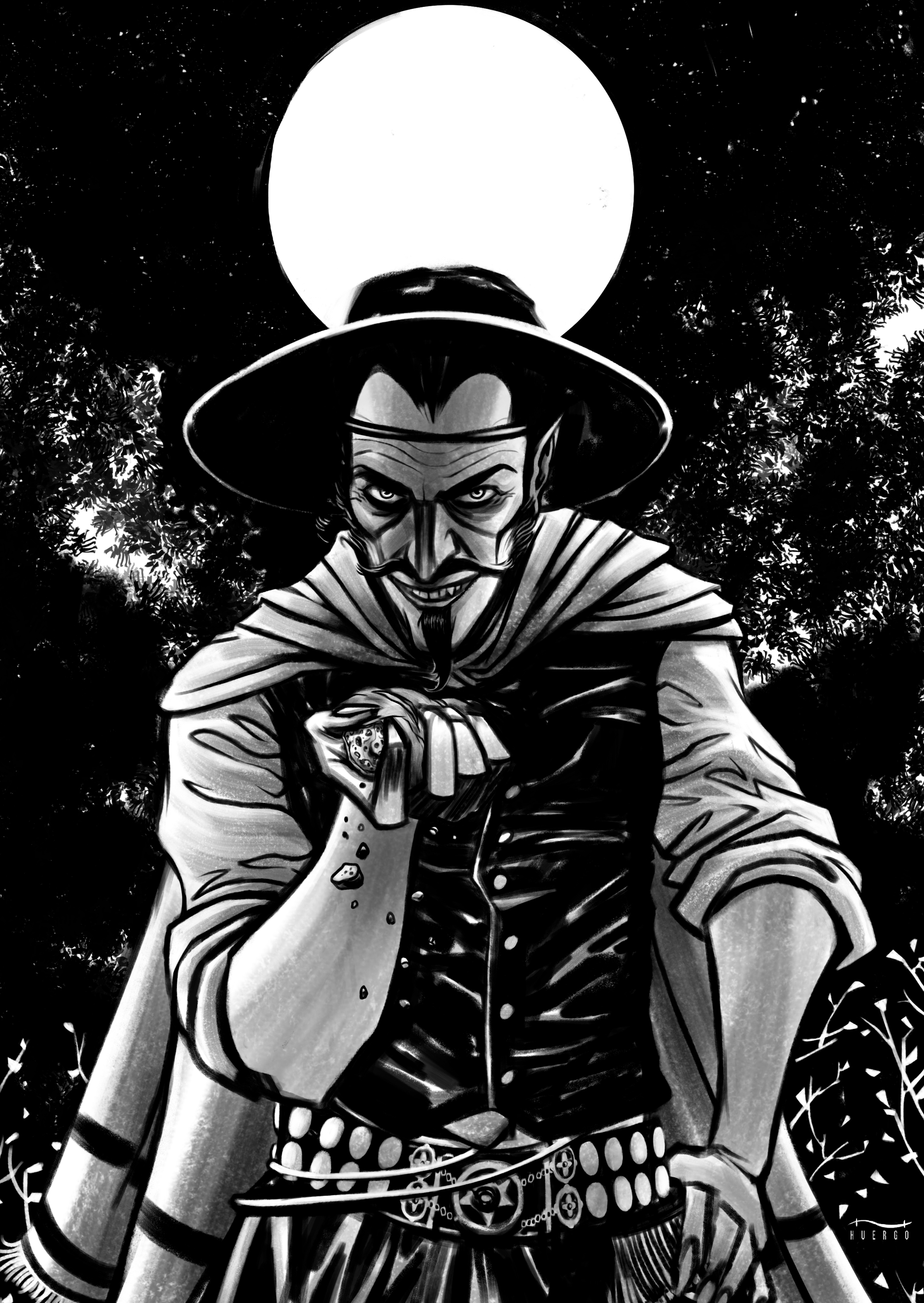
With gestures like this, Pampa Primigenia forges a connection between Lovecraftian cosmic horror and the conquest and resistance of America. Not so much in military terms (since the setting is well after 1500 and the struggle with the Eldritch is not physical) but rather political and cultural: the game places us in a moment where the Spanish and British colonial influences clash with independence movements and the projects of a Greater Homeland. And what does the eldritch represent if not a deeply antilocal, misanthropic worldview with eugenic roots? What better hero to oppose it than a vitalist gaucho, a local underdog who, armed with his boleadora and loyal steed, throws himself against whatever comes his way, just to survive? Let’s not forget that roleplaying as you hack a Shoggoth to pieces is, how should I put it, a blast.
Edit Role in Argentina
While Pampa Primigenia is the flagship title of Primigenia Austral (having sold over 500 copies and being their most ambitious physical product, with art and production that would make anyone want to adorn their library), César Jara Encina, Hernán D’Andreis, and Hernán Juárez are very clear that they don’t want to be a one-trick pony. Since their pandemic origins back in December 2020, they have released four physical games and another twenty in digital format. The vast majority are offered for free (pay what you want) on their website, but this quest for accessibility shouldn’t be confused with hippie ideals. “We always strive to be professional. We never wanted people to buy or illustrate games just for good vibes. That’s why, the first time we sold a .pdf, it felt wonderful that someone appreciated our work and contributed to sustain what we do. Nowadays, the sale of the books funds our travels to roleplaying events in different parts of the world. That’s a milestone.”
While Pampa Primigenia is the flagship title of Primigenia Austral (...), César Jara Encina, Hernán D’Andreis, and Hernán Juárez are very clear that they don’t want to be a one-trick pony. Since their pandemic origins back in December 2020, they have released four physical games and another twenty in digital format.
As the owner of a literary publishing house and a connoisseur of board games, I found it hard to imagine how a project belonging to an even smaller niche of culture survives. "Commercially, it’s complex, especially because we are exclusively focused on roleplaying. We would love to be able to live off this. But we’re not naive. Vincent Baker works as a set designer. If he can’t make a living from independent roleplaying, we don’t have high hopes," explains César. “Creatively? We’re thrilled. Our goal was to move away from what is most consumed in imported games: D&D, the well crunchy systems [that’s what we call roleplaying games with complex resolution systems involving thousands of tables and values that need to be crunched]; and to embrace a more narrative, more experimental tradition. We love games that deal with very particular themes and have mechanics that accompany them ludo-narratively.” Their goal has always been to produce serious, professional work, not to release games without testing or layout. "There’s an innocent view that with pure enthusiasm you can just print a book. And that’s not the case. We think: 'If in three years we have the audience and the money, we’ll print.' And it happened, but it might not have, and in that case, we wouldn’t have done it.” This internal demand is reflected outwardly. "The landscape is very uninformed. There are many people creating games who believe they have fantastic ideas, and that’s important but it’s only part of the equation. The work is what distills ideas into games. Not everyone is willing to do that or has the time. But there’s undoubtedly talent. We have almost ten external projects. We try to never close the door but we do set policies for game submissions. We want to maintain a level of quality out of respect for our audience and the authors. If you send us a game, we want it to shine."
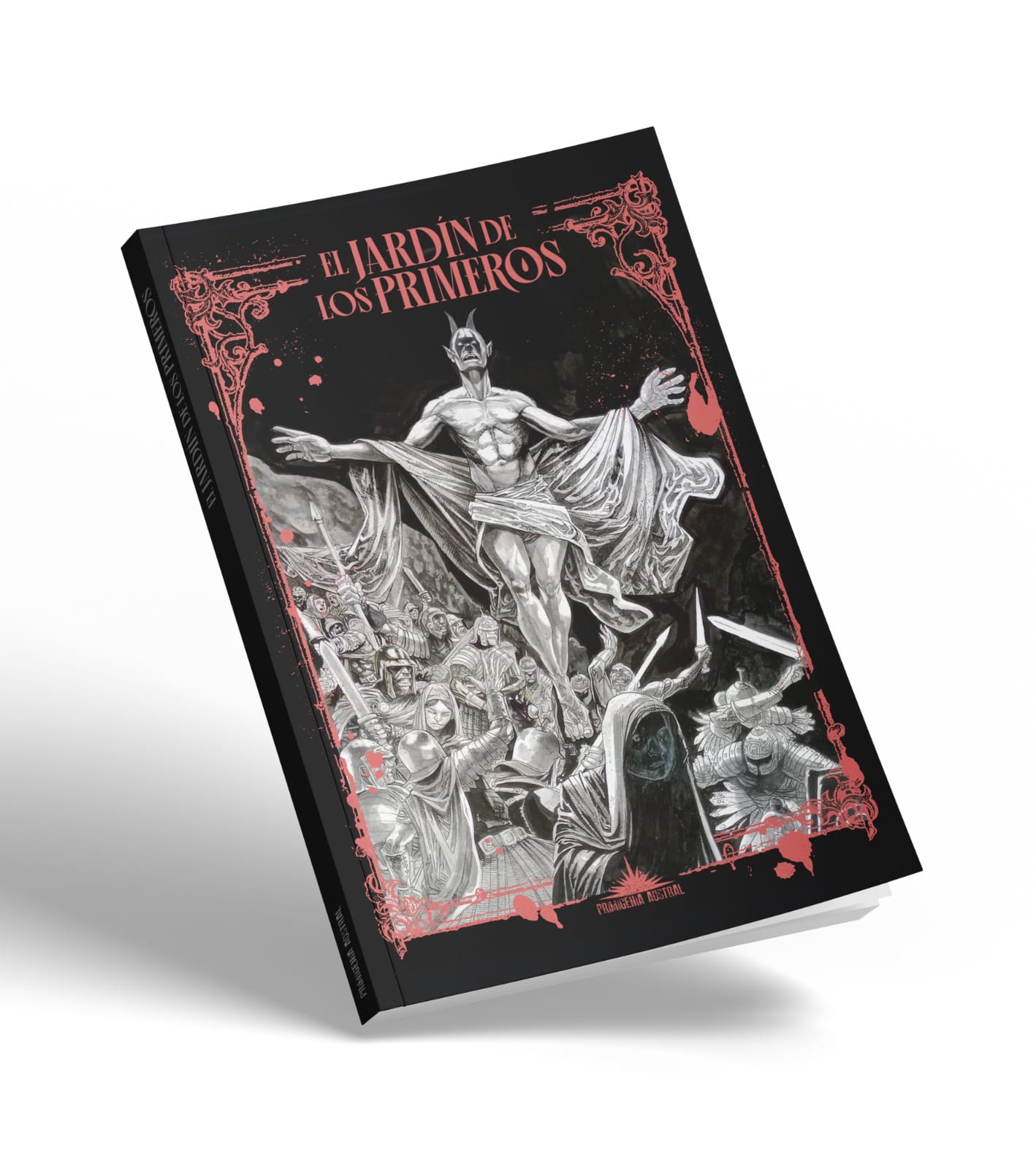
So what are the Primigenia Austral team working on now? They have just released Nosotras, las brujas, a game where we embody Sisters trying to save a companion accused of witchcraft and facing the threat of torture and execution. And for that, there’s only one path: convince the townsfolk that they’ve captured the wrong person and that the real witch is still out there. Looking towards the near future, they hinted at what’s coming next: The Garden of the First, by Hernán Juarez, a vampire game where immortality, more than a superpower, is a curse. In other words, picking up that promise that White Wolf’s Vampire: The Masquerade made in its prologue and then betrayed starting on page 2. Less uzis and katanas, more Anne Rice and Only Lovers Left Alive. It will be available starting July of this year, and we’ll be there to try it out.