R36S: The $30 Retro Handheld Taking Over 2025
We tested the Chinese handheld that, for just $30, comes with hundreds of preloaded games –from Game Boy and NES classics to PS1 and even some Nintendo 64 titles.

17 de dic. de 2025 — Juanma La Volpe
Console emulation is a passion that grew from the internet's fringes into a huge movement –one powered by people who don't just play, but also contribute. That drive to emulate fuels emulator development, massive game repositories, fan translations, hacks, software preservation, and accessibility improvements. And as demand for retro gaming keeps rising, emulators have spread across devices: first PCs, then phones and tablets, and now even consoles originally designed for a single library can be turned into multi-system machines. Add to that the "emulate-everything" mini rigs that became popular with the beloved Raspberry Pi in the early 2010s.
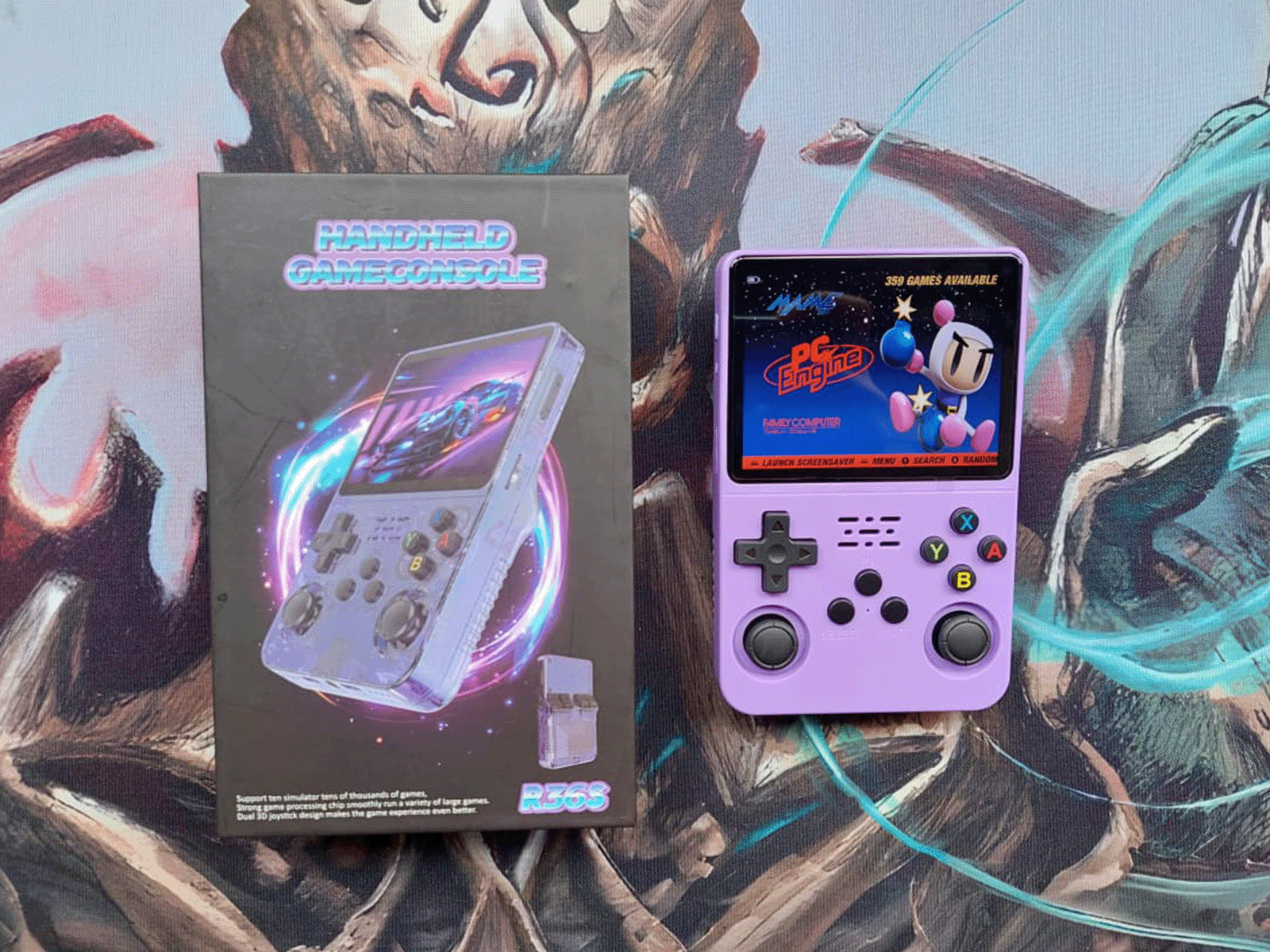
Starting in 2022, Chinese emulation handhelds really began to take off. They had existed before, but this new wave arrived with more power, better build quality, and far more reliable shipping and distribution. Dozens of brands and models hit the market, but the R36S caught my attention thanks to its cult following –almost sect-like at times. This Christmas, my girlfriend Naty finally gave me the famous little console after hearing me talk about it for weeks, and now I'm enjoying the sweet spot of portable retrogaming. So what can you actually do with an R36S? And is it worth it compared to other similar handhelds out there? One thing at a time, gamer brain.
R36S: Cult-Favorite Energy
If you spend any time on social media and consume retrogaming content, you've probably seen it on reels, shorts, or random posts –because in 2025 this tiny device went viral in the scene. As I wrote in my article about new retrogaming devices, there's a kind of "conversation" between developers building platforms and tools for retro play, and Chinese manufacturers who take those ideas and "improve" them –or at least make them cheaper. The R36S is a product of that exchange: it isn't tied to a single brand, but you could call it a clone of handhelds from Anbernic and Powkiddy. Like thousands of products coming out of China, the R36S is manufactured and sold to distributors who then slap on their own branding –often pretty tacky– complete with boxes that say things like "Wow Retro Console" and other nonsense.
So how did this pseudo–Game Boy carve out a place for itself? The R36S has one advantage that's hard to beat: at $30, it's extremely accessible, and in return it delivers quality that punches above its weight. Its core strengths are the Rockchip RK3326 processor, a Linux-based operating system, and a screen that more than gets the job done. With that combo, the little machine quickly became a hit in Latin America, outcompeting handhelds that are more powerful –but also significantly more expensive.
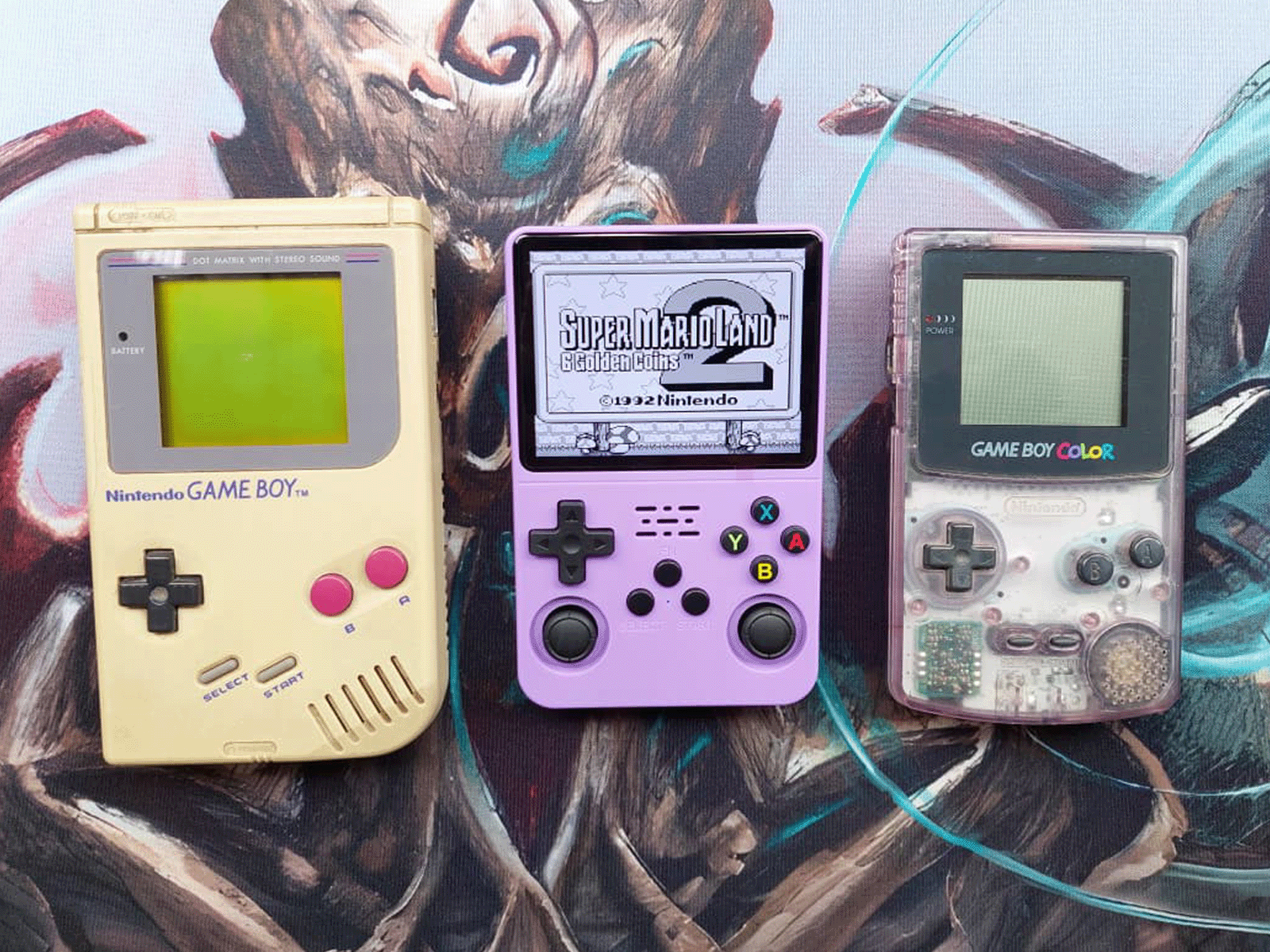
With a large user base worldwide and the flexibility of the ArkOS operating system, a community formed fast. You'll find R36S-specific Discord servers, subreddits, and groups on Facebook and Telegram. People buy and sell the console there, but the real value is in the tutorials: how to update emulators, load games, install extra apps, and squeeze the most out of the device. The handheld is roughly the size of a Game Boy Color and includes analog sticks and triggers, which opens the door to console libraries like the PS1. Its 3.5-inch screen is only slightly larger than the GBC's, but it obviously beats it in color and clarity thanks to an IPS panel. And the battery usually gives you around 6 to 8 hours of play time.
A Huge Library in your Pocket
Out of the box, the console comes with a microSD card full of installed games. And since it runs ArkOS as the operating system and uses EmulationStation as the front end, you can add more games and emulators easily. In practice, it handles the early eras of modern gaming without breaking a sweat: 8- and 16-bit systems like NES (or local clones like the Family Game), Super Nintendo, Sega Genesis and Master System, Neo Geo, arcade boards, and even rarer hardware like the PC Engine.
Move up to 32-bit and the R36S can deliver a very fun PlayStation emulation experience, with a deep library of classics. With a bit more effort –and some patience– you can also play certain Nintendo 64 and Dreamcast games, though it takes some trial and error: not every title runs well, and you'll often need to pick the right emulator core and settings. It's doable, but you have to be willing to tinker.
One feature I genuinely love is that, through PortMaster, you can add ports –indies and classic PC-style games adapted for these devices– so the handheld's library isn't limited to traditional console ROMs. It's a lot of value for the price. That said, if your goal is PS2, Sega Saturn (famously one of the hardest systems to emulate well), or bigger jumps like PS3 and GameCube, you'll want to look at other options on today's market: pricier and more powerful Chinese handhelds, or full handheld PCs like the Steam Deck.
Personally, I want the R36S to play PS1 RPGs and strategy games, and to emulate handheld systems like the Game Boy Color and Game Gear. The stock library is already pretty complete, but the real fun is building your own collection. For that, I highly recommend sites like CDRomance and Romhacking, where you can find everything from once-Japan-only games now translated into English by the community, to hacks, fan mods, and even brand-new games built for retro hardware.
In Argentina, you can order the console from AliExpress for around 40,000 pesos (roughly $30 USD), but a lot have also arrived through import resellers –so if you browse local marketplaces, you'll usually see listings starting at around 60,000 pesos. More powerful alternatives like the RG40XX –or branded devices from Anbernic or Powkiddy, like the X55– tend to start around 150,000 pesos. And handheld PCs can cost a million pesos or more. Those higher-end devices don't just emulate: they can also run modern PC games. Still, for 60,000 pesos, the R36S is a great pick if you want to play retro on the go –and, just as importantly, if you want a hobby device you can tinker with, installing new software and curating a library that goes way beyond what it ships with.