Rick and Morty: "The Speed at Which We Burn Through Ideas Is Insane"

20 de may. de 2025 — Luis Paz
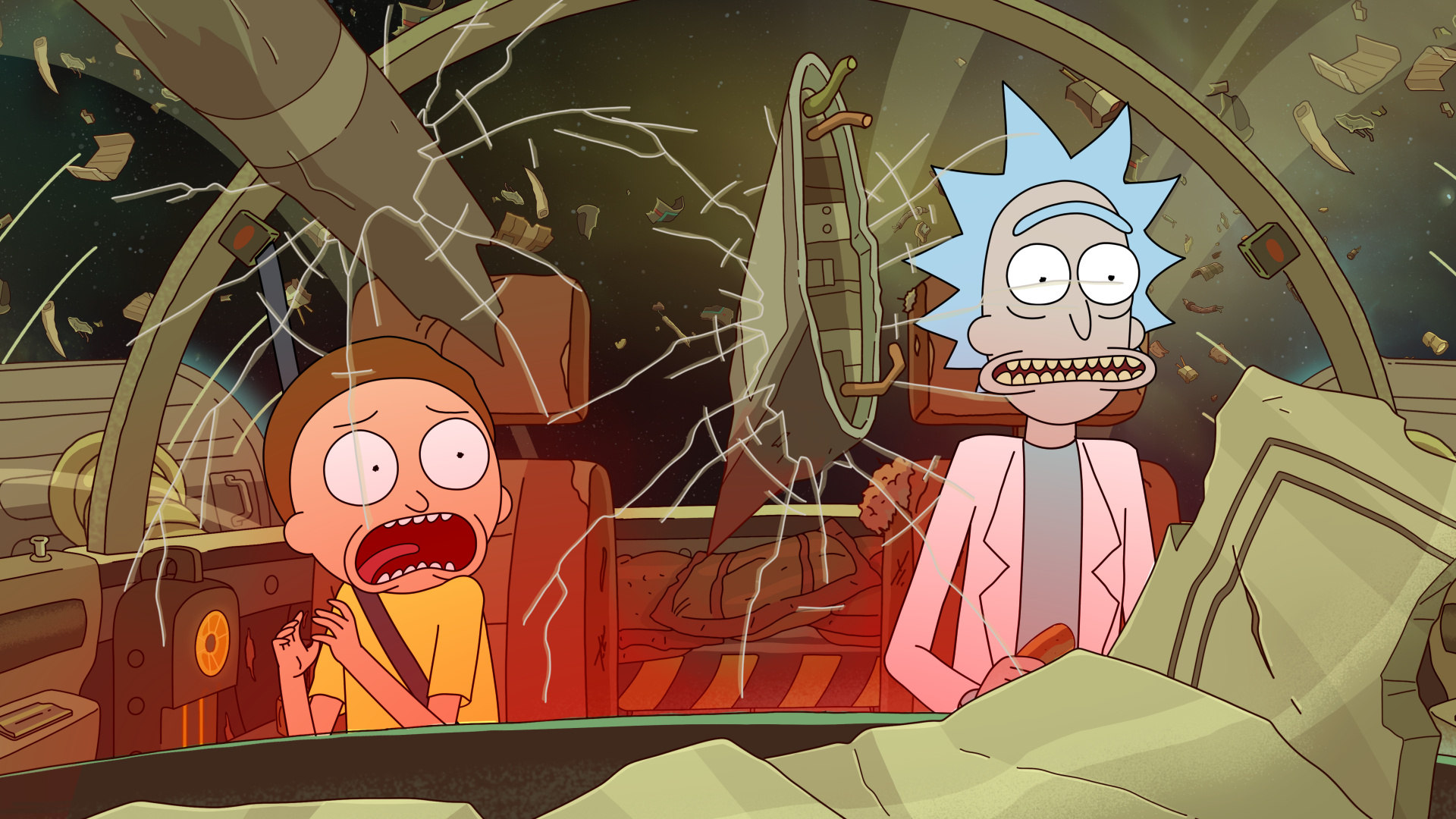
In a brief moment during episode 3 of the new season of Rick and Morty, they're traveling and the kid is playing with a fidget spinner. The old man kind of mocks him for it, and that's when Morty drops a definitive: "I'm retro." With 12 years on the air and an eighth season about to premiere (this Sunday, May 25 at 11 PM on Adult Swim), the space sitcom created by Justin Roiland and Dan Harmon has long been a classic among animated series and a benchmark for the genre, especially following the boom of bizarre, psychedelic, and/or surrealist sagas for adults that flourished over the past decade. It would also be worth examining how Rick and Morty, Regular Show, and Adventure Time are part of an arc that, by now, stretches all the way to Italian brainrot.
In the midst of all that, there was a pandemic and allegations against one of the show's creators, Justin Roiland, accused by his wife of physical violence and false imprisonment, and acquitted in 2023 due to insufficient evidence. Regardless, since January of that year, Roiland (the mind behind the original concept, a remix of Back to the Future and sitcom) left the Rick and Morty team. But Dan Harmon didn't end up running things alone: the role of producer and writer Scott Marder had been growing especially since seasons 3 and 4 -- when many point out that Roiland lost his spark with Rick and Morty -- and from season 5 onward, he also joined as executive producer.
Much like the duo of inventor Rick Sanchez and his grandson Morty Smith, the combo that Harmon and Marder form would also make for a great buddy movie. One speaks warmly, keeps leaning toward the camera during the video call with 421, stumbles and spaces out a bit, never stops waving his hands. The other is more static, smiles from the side, speaks briefly, and always looks like he's thinking several moves ahead. Either way, these are the guys behind a show that, with this eighth season, will break the 80-episode barrier. A classic show that still manages to keep pushing things forward in the world of animation. A cartoon that ranks in the historical top 3, as voted by hundreds of thousands of people in two massive polls, one on IMDB and another on FilmAffinity.
--You're on track to fulfill that idea of being a show with "at least" ten seasons, and in the meantime you've become canon. How does that feel?
Dan Harmon: --It's a huge challenge. Luckily, before us came The Simpsons, who are on something like season 700 and have been going for about 50 years and are the canon of modern animated series. Otherwise, we'd have to go all the way back to The Flintstones as an example of an animated show that lasted decades. And The Simpsons had a trick, which was that they made certain things acceptable. For example, there are episodes or flashbacks where Homer and Marge, who are eternally 35, are back in their high school days. And when there's a reunion or something, the music keeps changing. It's not like they say: "No, we already showed this and Wang Chung was playing back then." Instead, they suddenly show it again but now it's Nirvana.
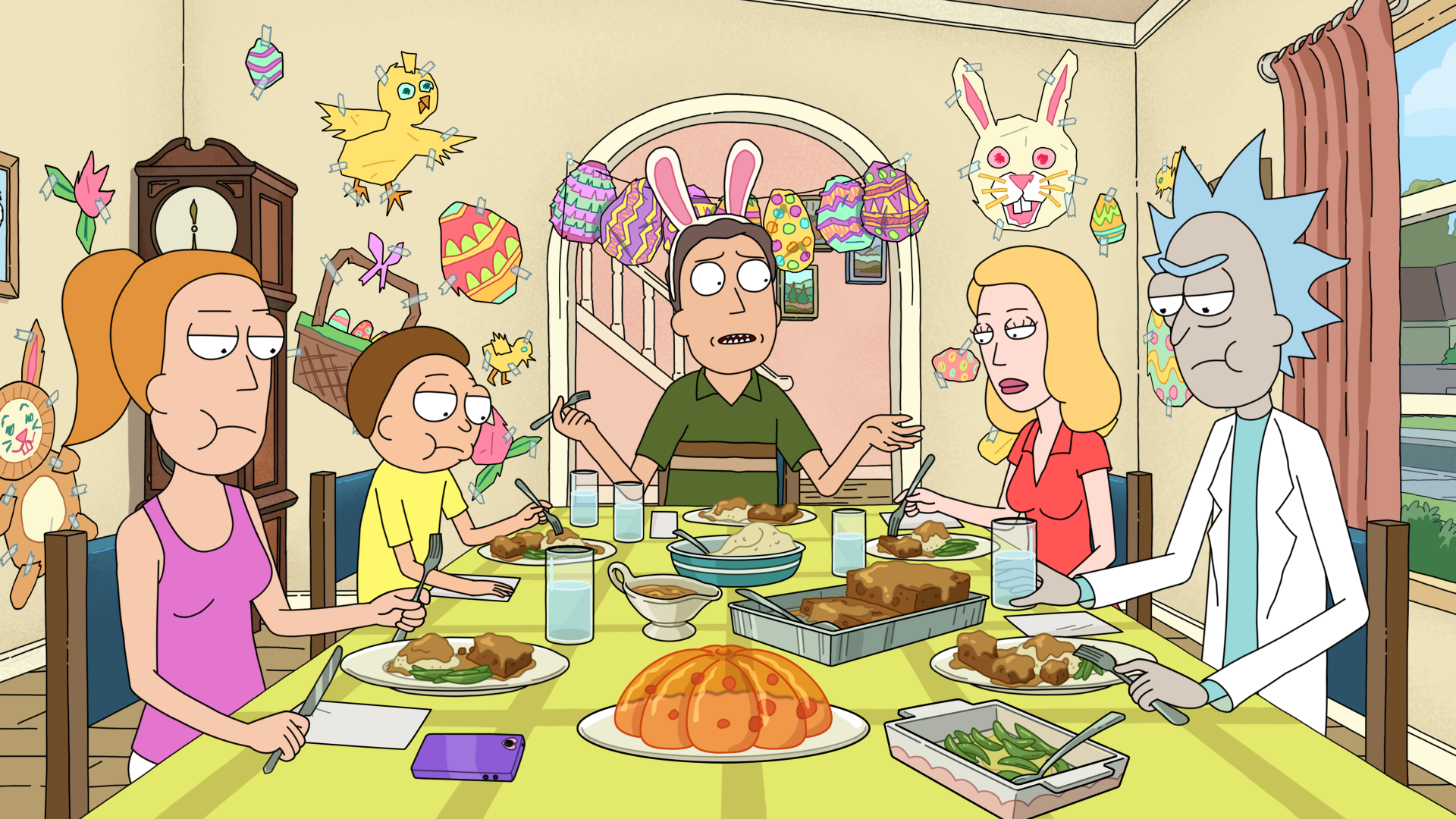
--Well, Morty has been 14 years old since 2013.
Dan Harmon: --You'd think that if nobody has birthdays, then everything that happens in the series, all the events across these 81 episodes, supposedly take place within a six-month span, and we've been delivering them over more than a decade. But The Simpsons already solved this, and that was a relief for me when we hit a certain point, because we have this show that's canon and that says the rule in animation is actually this: if your character is 14, you don't want them turning 15 -- you want them to always be 14. And that's how it's done. From a "logistical" standpoint, we have to handle it like The Simpsons and say: "OK, we have to get used to the idea that this show could last 50 years. What does that mean? What do we have to do with that?"
--And what do you have to do with that?
Scott Marder: --First and foremost, live up to the standard of the show. Dan set the bar incredibly high in the early years, and we try to maintain that level. Every new episode we choose for a season, we compare it against the best the show has ever done. We're really tough on ourselves and won't let one through that doesn't measure up. There's only room for ten episodes per season, and they take a lot of work, so we can't afford to have one that doesn't land.
--The flow of ideas doesn't seem to be a problem, does it?
Dan Harmon: --On the contrary, the problem can be deciding too early which episodes are going to work, because that can close doors on you. As the one leading the team, one of the responsibilities is to create the space so that nobody holds back from pitching an idea because they think it's bad, or dumb, or irrelevant. "No, this is an animated sci-fi show, it has nothing to do with me wetting myself in fourth grade"... well, maybe it actually does have something to do with that after all. Sometimes a story that sounds like a ridiculous anecdote can become the heart of an episode, if you give it context.
--So how much of the creative work you do gets thrown out?
Scott Marder: --The show moves so fast that in another series, six different ideas would be enough for six full episodes. But here, we use those six ideas in a two-minute cold open. The speed at which we burn through content is insane -- it's really wild.
Dan Harmon: --And at the same time, from a Newtonian perspective, you could say we're a fairly inefficient engine, depending on how you look at it. What I mean is that a ton of ideas get tossed. I'd say 95% of what we come up with ends up in the trash, or sometimes in a drawer because it's not something we're going to use now but might work later. Most of the creative work on a show like this is kicking up a huge cloud of ideas, sending thought confetti flying, and then seeing which ideas keep shimmering in the air. You need to generate that much material for a show this fast, where so much happens, that nothing looks like a bad idea -- just things that are discards for now but could become content.
There's another moment, at the end of one of the first episodes of this new season, where Morty and Summer, his older sister -- the character who has developed the most in recent years -- are in a tank, and in less than a minute they go from being desperate, to crying, to connecting as siblings, and then immediately climb out of the tank and beat up "an NPC" who tried to teach them "how things are." That frantic journey between triggers and reactions and stimuli and gags and visual candy perfectly defines Rick and Morty and the entire lineage of animated shows that it helped redefine over the course of its 81 episodes across 8 seasons.
"We only have 20 minutes per episode, and within that we try to tell a story with a beginning, middle, and end," Harmon explains. "Beyond that, the thematic axis might be the invention of teleportation or invisibility, but what ties the series together and gives it meaning is that the audience cares about the characters, that they can empathize with what they're going through and understand why they do what they do. Summer, for example, might make an absurd decision, but if you consider that she's a teenager and at the same time Rick's granddaughter, it all makes sense."