Have You Noticed Santiago Motorizado Is Always Losing Something?

19 de jun. de 2025 — Luis Paz
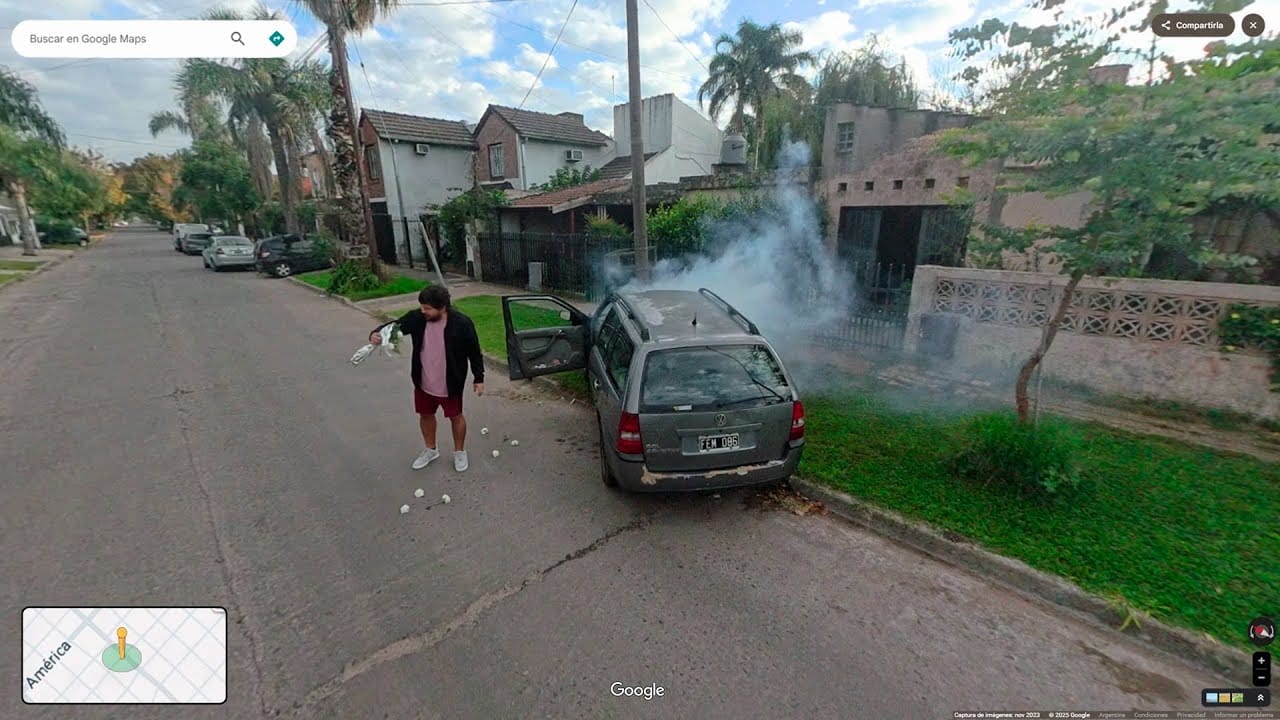
Have you noticed that Santiago Motorizado is always losing something? It started as just a comment, an offhand remark after listening to one of the latest tracks he released as a solo artist, but it gradually became an absolute certainty as I went through the discography of El mató a un policía motorizado and Santiago's solo work.
If you haven't heard "Google Maps," here's the video. It's a very simple song, the concept is not only clear but also underlined, highlighted, and signposted so the idea comes through loud and clear. A joke so obvious I won't even bother transcribing the lyrics -- fair enough -- but an obvious joke that still earns its place because Santiago has been in a constant iteration of songs about searching, loss, and absence, generally with excellent results.
We'll go over the numbers below, but there must be about 20 of his songs -- I already checked and there are at least 28 -- that have some version of this as a leitmotif, and almost all of them are very good, almost all of them are epic, and in almost all of them he finds a different way to face that search. On a different scale, but much like Dargelos, the search is a constant in the poetics of Santiago Barrionuevo.
That's the trait that made El mató a un policía motorizado a proposal bordering on pulp literature in its early days. Not just because of the characters, the dead, the zombies, and the space rock, but fundamentally because of the adventure, the quest that almost all their songs lay out. And every adventure is always the same adventure: the search for a person, a place, an object, or an answer. It's the foundation of human history and its narratives, and that's above all why Santiago Motorizado is a world-class songwriter.
Absence is a recurring topic for Chango -- that's the nickname we first knew him by -- and it's already present in the first single by El Mató, from 2003, "Tormenta Roja": Me decís que no me importa porque no estás conmigo hoy, no estás conmigo hoy. By the time El Mató reached their debut album, the self-titled record from 2004, he added the other two elements. The search in "Terrorismo en la Copa del Mundo" (Si vienen a buscarme, estoy dormida) and what's about to slip away from him in "Guitarra comunista" (Mis amigos se van y sé que ya no volverán).
Then, at the start of the EP trilogy that truly cemented El mató a un policía motorizado's career and took them out of La Plata to place them at the center of Argentine indie, there were several cases on Navidad de reserva, their 2005 record. "Navidad en Los Santos" and that Te persigue la Policía el día de Navidad; the old drunk and lost man from "Viejo ebrio y perdido"; and the "Villancico del final," with its No va a volver, vas a llorar.
On that same EP, which turned twenty this year and remains an absolute banger, another one of Santiago's habits also begins to take shape: setting up the search situation right from his very first line. Eh, esta mañana dijiste que no ibas a volver, is how "Navidad de reserva" opens: the conflict is presented immediately.
He would do the same as the lyricist of El Mató in 2008 on "Día de los muertos" (Ey, mi voz desapareció), in 2013 on "Yoni B" (Ey, Yoni, ¿dónde estás? Te extrañamos), in 2016 on El baile de la colina (Perdido en el gran baile de la colina), in 2017 on "La noche eterna" (Hoy voy a salir a buscar todo lo que quiero) and "Fuego" (Desde el pueblo más lejano de acá, siguiéndote), in 2019 on "El perro" (Busco a mi perro perdido, se escapó con los ruidos), in 2022 on "Tantas cosas nuevas" (No es difícil de entender, todo esto se va a perder), and in 2023 on "Diamante roto" (Pierdo la cabeza y no te conozco). All of these songs open with the quoted lines.
The discography of El mató a un policía motorizado is full of other songs that deal with these themes, some as iconic as "Chica rutera" and those cries of Espero que vuelvas, chica rutera; or like "Mujeres bellas y fuertes," those women who se han ido, mi amigo, y no volverán. Even the band's contribution to the Okupas remaster, with the soundtrack Unas vacaciones raras, has "La otra ciudad": Ya no busques más, es la sombra que te cubre hacia otra ciudad. And so on all the way to the band's latest album, Súper Terror, from 2023, with "Un segundo plan" (Quiero saber a dónde ir, quiero saber a quién seguir) and "Coronado" (Volví y ya no estabas ahí), which, by the way, clocks in at 4:21.
Always something or someone leaving, always something or someone getting lost, always searching.
But the story doesn't end there. Santiago Motorizado has been running a prolific solo career in parallel, spanning singles and soundtracks to albums and collaborations of every color and nationality. The obsession keeps showing up there too. Also for Okupas but as a solo artist, for instance. On Canciones sobre una casa, cuatro amigos y un perro, his soundtrack album, there's the track "Bajo las sombras," where he states: Tantos momentos que buscamos y no encontramos. Ya no quiero, ya no quiero buscar más. OKAY SANTI, WE TOTALLY CAN'T TELL YOU DON'T WANT TO SEARCH ANYMORE.
Also part of the pattern are "Un día no vas a estar," self-explanatory title; and "No hay lugar para nadie más," with its desperate plea for some certainty: ¿En dónde estás? ¿A dónde vas? ¿Quiénes te esperan? And a couple more examples, in case the thesis wasn't clear enough. "Polvo de estrellas," a 2021 single: Vamos a buscar subir todo lo que puedas (that's the opening line) and No lo busques más, ya se acercan las tormentas (that's the closer). "Muchacha de los ojos negros," another single: Yo quiero volver a verte, muchacha de los ojos negros.
Before arriving at the paroxysm of "Google Maps," Santiago left us another track that revels in the search. "Lo que perdí," from 2024, which he made for the Cromanon series on Amazon Prime: Y te escuché decir "Lo que perdí sigue ahí", hay una sombra frente a mí, lo que perdí sigue ahí. But I think the clearest one of all has to be "El fuego cálido," naturally from the search-obsessed Okupas soundtrack and its band of seekers:
Bajo las piedras no hay más que tierra, no busques más, he says at one point; but at another he invites us to keep on Buscando lo nuevo, buscando un lugar donde las noches no se terminen y el fuego cálido sin final te queme los días sin mirar atrás. Man, how could you not go out and search for whatever it is you need to search for.
By the end of this deep dive, I had so many tracks that I ended up putting together this playlist. Maybe if we all listen together, we can help Santiago Barrionuevo in his search.