Magic: The Gathering market and pricing: the ultimate guide to selling your cards

1 de abr. de 2025 — Luis Paz
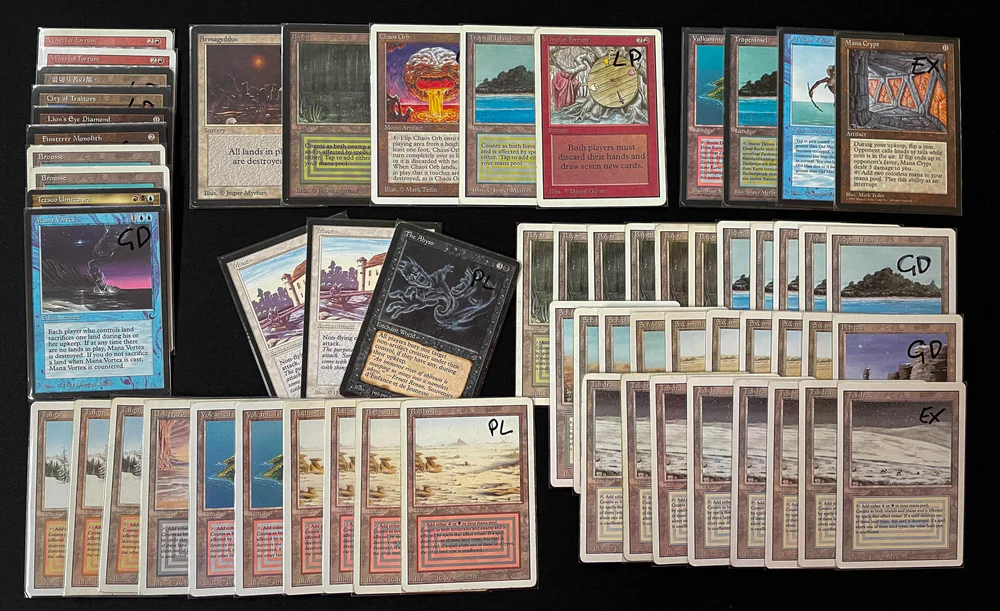
The Magic: The Gathering secondary market is one of the most important not only among card games and other collectibles but in the entire history of popular culture. And this is even more striking because the core of all that wheeling and dealing is the cards themselves, the actual game pieces -- not spin-offs like toys, movies, TV shows, or merch.
This is, then, a hands-on guide to buying and selling Magic cards. It is an introduction to the game's official products, the dynamics of its secondary market, and a proposed strategy for organizing, selecting, pricing, and selling cards.
Where Magic cards come from
In Magic, there is no official way to get a specific card. That is precisely what makes them collectible and gives rise to its massive transnational p2p market, which generates millions of transactions per year between players, collectors, stores, and dealers. This is a fundamental part of Magic's social layer. It is also the cause of speculative investment in the TCG created by Richard Garfield in 1993 and distributed by Wizards of the Coast, owned by Hasbro since 2000.
It doesn't matter if you have the cash for the most expensive mythic. If the manufacturer doesn't sell it as a single and no holder wants to let it go, you're out of luck. You can only get cards in packs or by buying them from someone who cracked a pack -- that's it. Sometimes a store opens them, sometimes stores buy cards from other players, but the origin is always the pack, the booster.
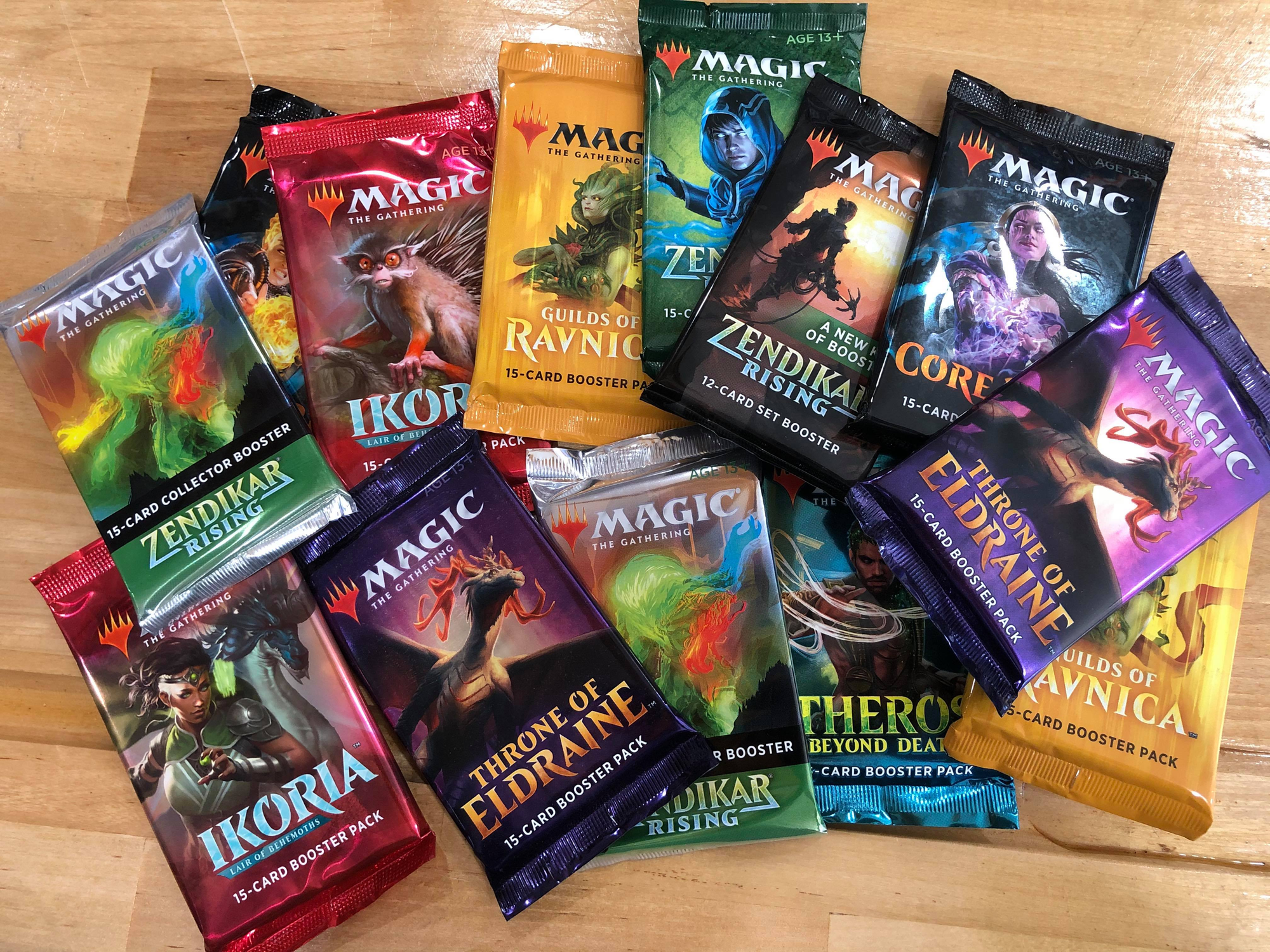
These packs used to contain one basic land, one rare, three uncommons, and ten commons, randomized within their rarity parameters and their expansion or set, as the different waves of official cards are called. Each new set that arrives introduces more spells -- shifting the balance of power among different deck archetypes -- presents unexplored locations, and adds layers of lore to the ludic-narrative multiverse of Magic.
Types of boosters
For two decades, the Booster Pack was the default product. In 2019, they were replaced by a split between Draft Booster, Set Booster, and Collector Booster, each with different card-per-rarity ratios. In 2024, Draft and Set Boosters were discontinued to make way for Play Boosters, with fewer commons and up to four rares. These are the packs used for playing Draft and Sealed. Starting with the Aetherdrift set, they come in booster boxes of 30 packs (previously 36), which cost around 120-140 USD at launch and then usually stabilize around 100-110 USD.
The ones that survived were the Collector Boosters, containing between four and eight rares or mythics, plus others of lower rarity. But what sets them apart most is the variety in card treatments: foil, extended art, borderless, showcase. They come in boxes of 12 packs and go for 200 to 300 USD. They are pure, unadulterated premium Magic.
Boxes, bundles, and preconstructed decks
In addition to the 30-play-booster and 12-collector-booster boxes, there is another divine package: the Bundle (formerly Fat Pack), which includes 8 or 9 play boosters, a special die, and a batch of basic lands in foil and/or full art versions. They also come with a sleek rigid storage box that is collectible in its own right. But just like all official Magic packs, there is no way to know the contents, since the packs are assembled at random, like trading stickers.
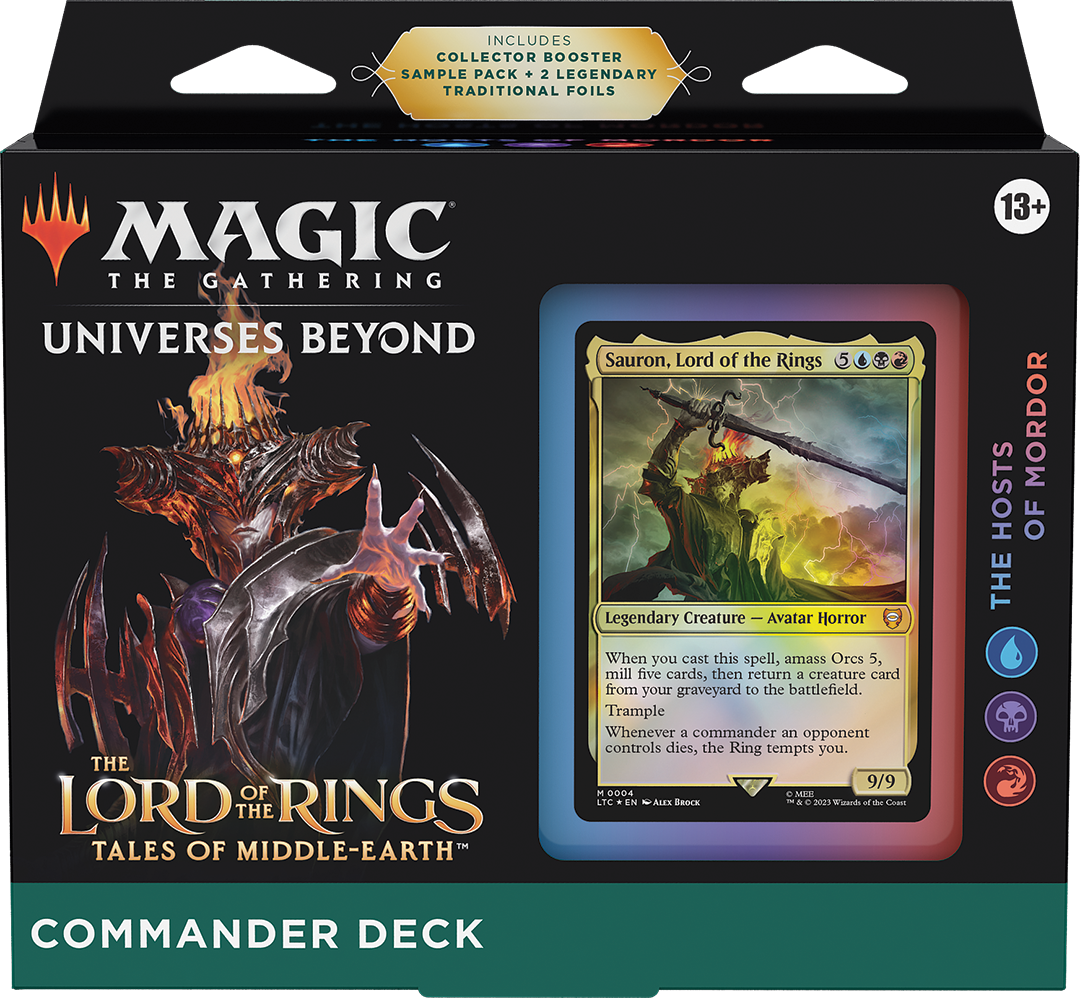
What does have predictability are the factory-sealed preconstructed decks. Ready-to-play 100-card decks for EDH / Commander, featuring reprints of hard-to-find cards and brand-new ones that can end up being highly sought after on the secondary market. And finally, with no use beyond learning how to play Magic, there are the Starter Decks. Commander and Starter decks are currently the only official preconstructed products, and they usually release alongside each game expansion.
A saturated premium card market
Through Wizards of the Coast, Hasbro keeps releasing more and more premium products at an ever-increasing pace, which has become their main business strategy. It makes sense: it costs the same to print a cheap basic land as it does to print that same land in a limited edition (like the meme basics with the full rules text from the Secret Lair), but the revenue the company squeezes out of that inked cardboard is far greater.
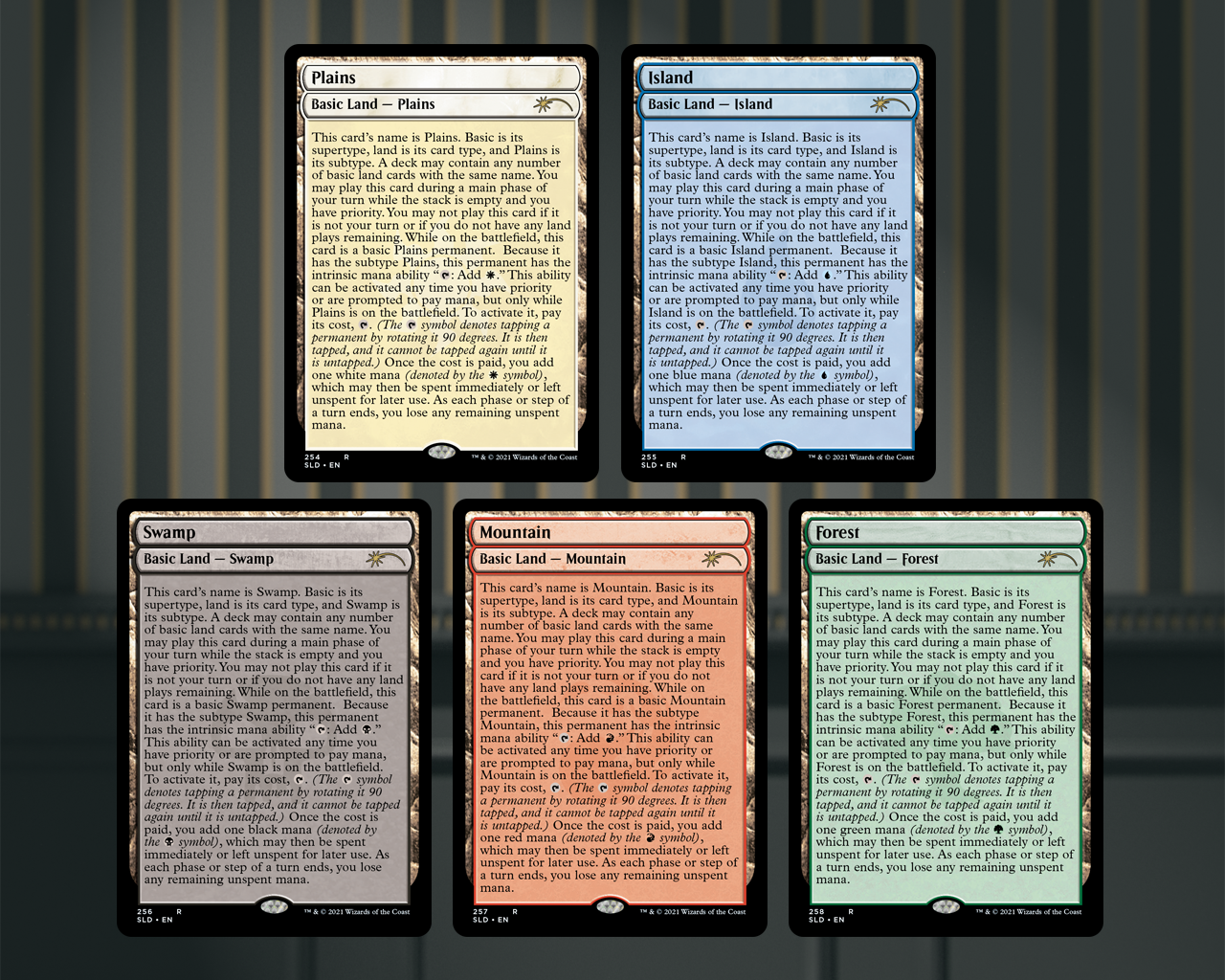
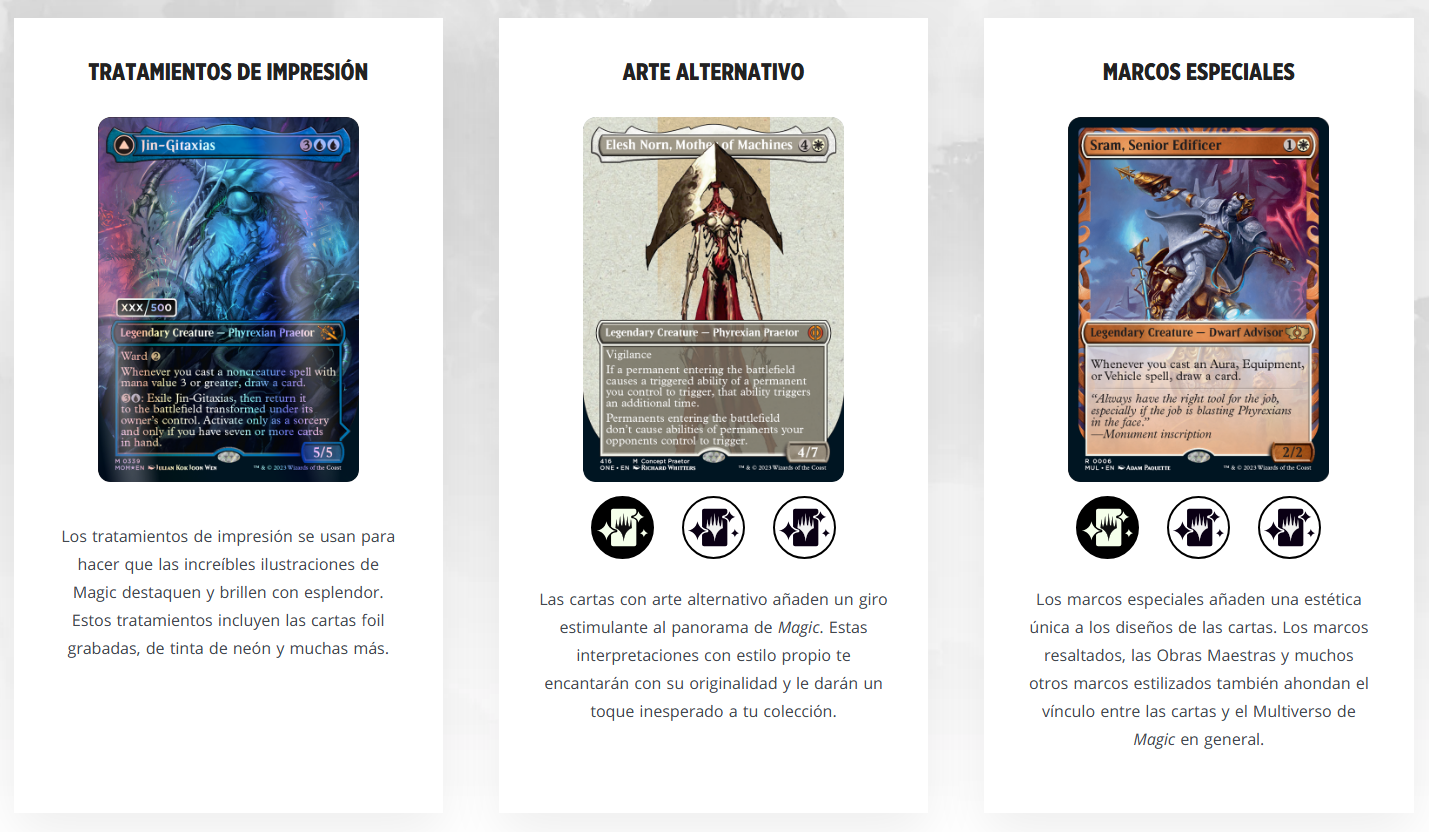
Secret Lair is a line of limited-edition products consisting of small packs of predefined cards, between 3 and 7, in a mix of classics and newer ones that became staples or are iconic. They may share a theme or card type, feature art by the same artist, or be special collaborations. The hallmark of Secret Lair drops is their alternate art with unique illustrations, and they can come in foil, extended art, or borderless variants. Prices range from 70 to 140 USD.
Universes Beyond, lastly, is a crossover segment where the characters, storylines, and settings from other franchises and IPs enter Magic: The Gathering's gameplay. In other words, a way to have an extremely high-quality TCG set from another cultural ecosystem, such as Street Fighter, Warhammer 40,000, Evil Dead, Dungeons & Dragons, The Lord of the Rings, Jurassic Park, Marvel, Monty Python, Hatsune Miku, Godzilla, Fallout, or Final Fantasy, one of the most recent additions.
DISCLAIMER: the constant redesign of booster contents and the erratic rebranding of Magic via Hasbro have brought hyper-segmentation to official products and chaos to prices and stock on the p2p market. Not to mention that this habit of releasing cards in multiple versions adds extra layers of cognitive demand to the game. It is no longer just about recognizing one version of a card but three or four aesthetic variations or more, counting gift or promo cards. There have never been so many variants of a single spell or so much confusion about what your opponent is playing. Now imagine trying to sell them.
Scarcity, condition, and utility: the value of a Magic card
From everything written above, a few things follow -- namely that the rarity system determines a card's scarcity. While play and collector boosters have multiplied the number of rares opened per pack by four to eight times, the logic still holds that there are fewer mythics than rares, fewer rares than uncommons, and fewer uncommons than commons. Moreover, special treatments and promo versions create different tiers of scarcity for the same card. Of a borderless foil mythic, maybe only six copies get opened across an entire city.
A card's condition is also key to its price. The difference between a near-mint copy worth 5 USD and a copy of that same card with worn edges might be just pennies, but for cards worth hundreds or thousands of dollars, the markdown becomes significant.
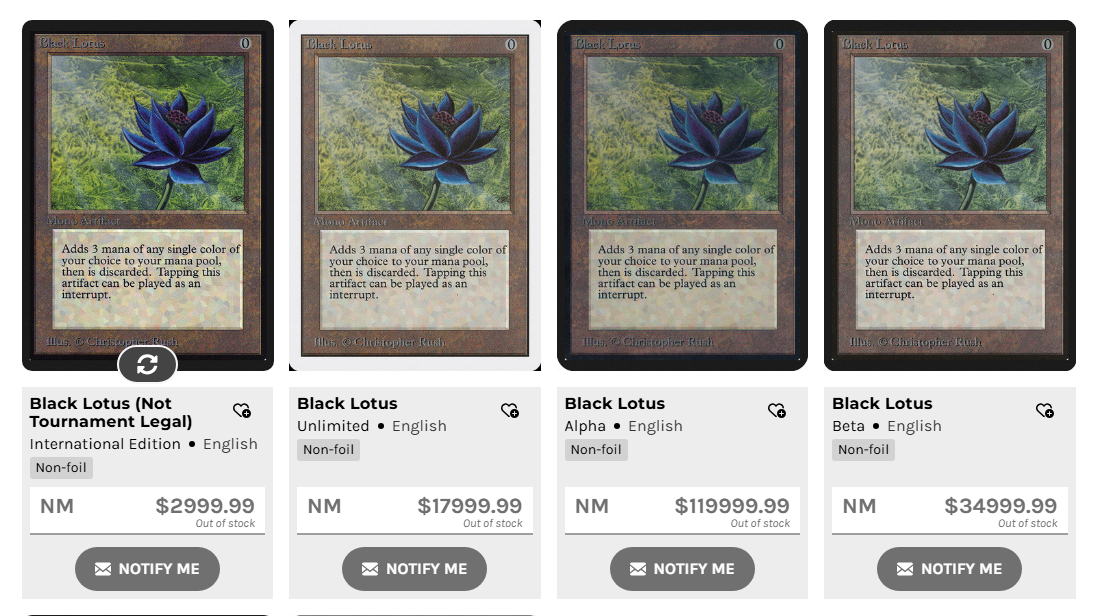
That said, neither rarity nor condition determine a card's price as much as its in-game utility and versatility. Cards required by very popular decks, or by many decks, are in high demand. If they see play across multiple formats, even more so. And that is where basic market dynamics kick in: if on top of that the supply is low because it is a scarce card, if nobody wants to sell it, or if it had a single print run many years ago, then the price can skyrocket.
Demand: why we want that card
We seek certain Magic cards to win more often, such as those offering power, inevitability, and dominance over the opponent's cards; or to have more fun while playing, like some engine for an absurd combo deck. Sometimes they are spectacular creatures or planeswalkers, and sometimes a simple common that does something small but, slotted into the right deck, proves lethal. So the first thing we have is demand driven by a card's functional value, tied to its relevance in the meta and its versatility in fitting into multiple decks or formats.
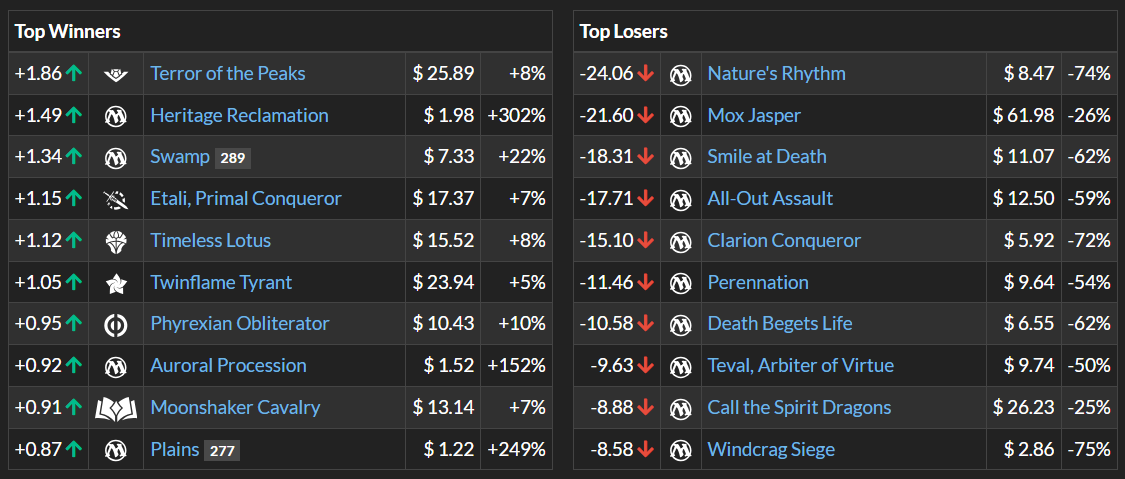
These factors are in constant flux because new cards come out all the time and shake up the meta: a more efficient removal spell, a lord that spawns an unexplored tribal deck. Conversely, bans negatively impact demand by reducing interest in those cards. And then there is the internal competition among a card's different versions -- foils, reprints, borderless, showcase, and promos.
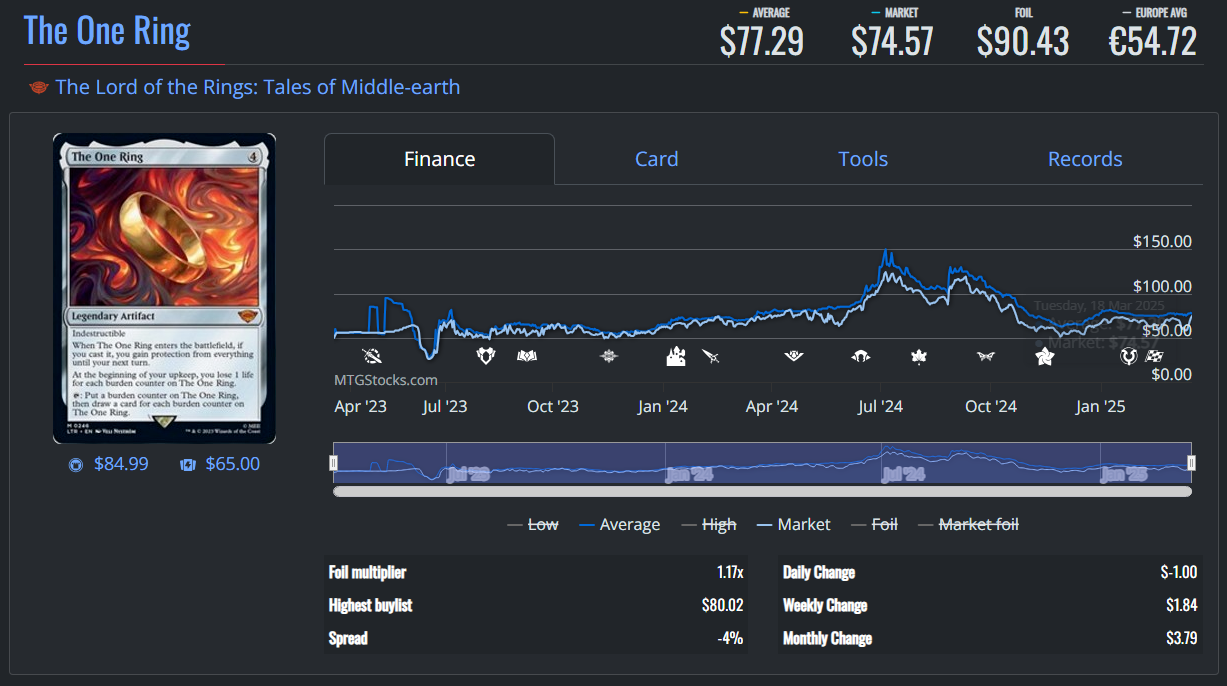
In parallel, there is another layer of demand driven by factors outside of gameplay: cards sought after for collecting, for being illustrated by a particular artist, for being a misprint, or for being part of a cycle. Or for speculation, whether because they are on the Reserved List, because there are no reprints, or because a thematically related set is on the way. And these sources of demand come not only from within the Magic community but also from outside, as in the case of the standard copies of The One Ring, which attracted demand from the Tolkien fandom.
Supply: how easy is it to get
On the other side we have supply -- the cards available. And the first pillar of supply is scarcity: how many copies of a card exist in the catalogs of local game stores and online shops, in the binders of players and dealers. And not just that, but from which edition, in what condition, in which language. And be careful, because millions of copies of a card may have been printed, but the actual circulating supply is determined only by how many packs get opened.
The supply of cards on the secondary market (stores, social media groups, p2p trading, marketplaces) obviously depends on in-game rarity. Sometimes the rarest cards drop in price because a reprint increases the supply or because nobody uses them anymore; and sometimes commons go up because a new deck starts running them and the people who have them aren't willing to sell because they are worth so little. Sites like MTG Stocks make the job easier by tracking the daily price movements of every card.
Formats and the player's advantage
Because they are exposed to the formats most dependent on new sets, Draft and Standard players can accumulate a lot of data about what is happening in the secondary market. They also know the price ranges of official products and -- most importantly -- have meta knowledge, an understanding of "what's being played" and the efficient tactics in each format. They can also identify cards that solve a problem or might see their utility revalued if a thematically related set drops, potentially driving up the price. The same goes for players of community-created formats like Pauper, Pre Modern, or Commander, though in their case the card pool tends to be more niche, defined by era, colors, or mechanics.
Modern and Pioneer have very dynamic metas that are also affected by new set releases, but to a lesser degree because they are non-rotating formats. While some decks can become obsolete from one week to the next, they can also make a comeback after a ban, a reprint, or a powerful new card. On the other hand, the biggest shake-ups in Modern tend to come from format-specific sets like Modern Masters or the more recent Modern Horizons.
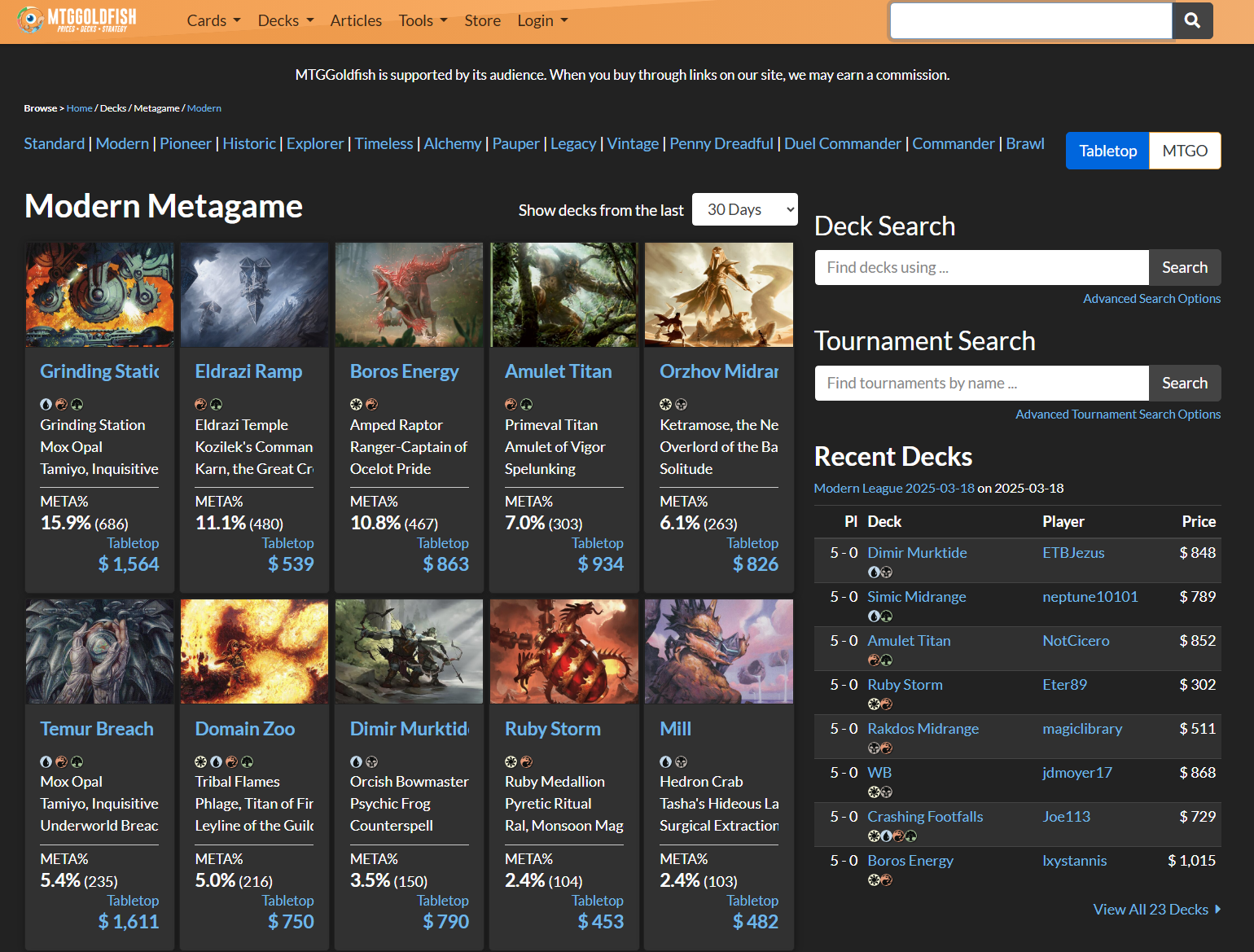
How to sell your Magic: The Gathering cards in 6 simple steps
Every Magic player has their own playbook when it comes to style and trade diplomacy. There are many ways to sell singles, but most of them fall into the tryhard category. I used to juggle six Brave tabs, cross-referencing stock, prices, meta, and spoilers. What for? Over 12-USD cards or ones that might go up a couple of bucks? Never again. People will tell you to scalp a 0.25-USD card -- let them talk and embrace the basics: your goal is to get 80 percent of what your cards are worth with 20 percent of the effort. That is what this guide is about. Chill cardboard vibes.
Step 1: sort
Clear off, clean, and dry the largest table in your house and lay out all the cards you want to sell. Some people sort them by color, mana cost, or card type. The real move is to separate them by set, which makes it much easier to look up prices. If you have a lot, subdivide by color within each set.
Step 2: identify
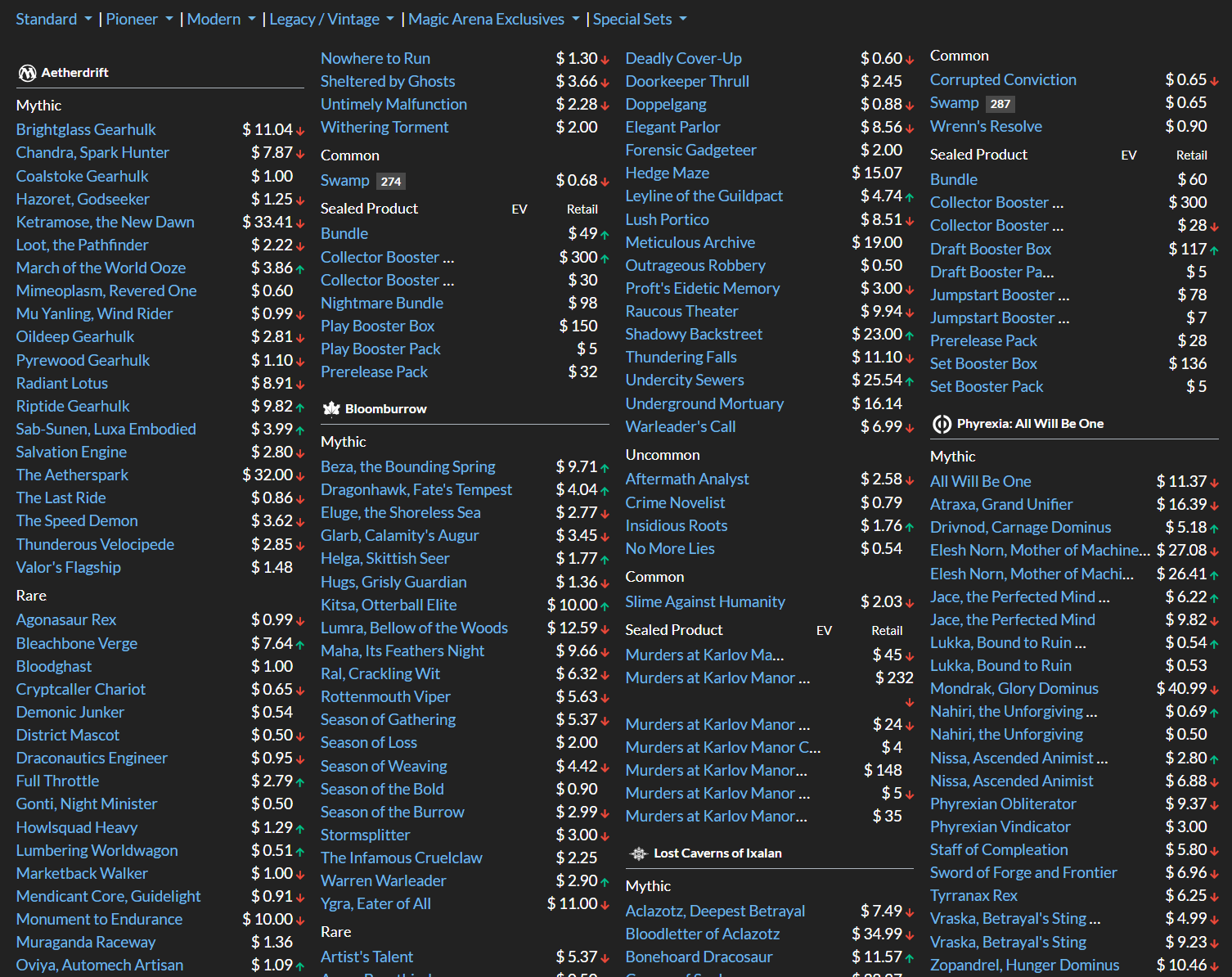
There are two quick ways to identify cards with relevant prices in a set. One is to check the singles listing for each expansion on Star City Games and sort by descending price, but you'll need to filter out foils, and SCG has fixed prices for low-circulation cards. The better option is to check the highlighted card list and prices on MTG Goldfish, which breaks down by format and set and only lists the cards worth considering for their value. By cross-referencing these sites' data with the cards on your table, you'll identify the sellable ones from each set.
Step 3: weed out
In Magic and many TCGs, bulk refers to cards that have no relevant price, aren't widely played, and aren't worth keeping for collecting or speculation. Nearly everything that doesn't appear in the Step 2 lists falls here. These cards can be sold in lots on marketplaces (Mercado Libre or Facebook Marketplace) or to dealers and stores that use them to build courtesy or starter decks. They sell for very little, and you might even consider selling them as scrap cardboard at recycling shops, but they still net a few bucks. Some people give them away to new players or use them to make tokens or proxies. Once you remove the bulk, you'll be left on the table with the value cards -- those priced above the price floor for their rarity. And keep in mind that there's also value in cheap but highly useful cards, scarce ones, or alternate-art versions, but that deeper review comes later.
Step 4: price
While using MTG Goldfish to scout sellable cards solves a lot, nobody actually uses those prices when trading. Goldfish is more of an active demand indicator than a price reference. You should find out which platform is used as the reference in your area (Star City Games, Card Kingdom, and TCG Player are the most common) and use it to check prices when listing a card for sale or when someone asks you its value at a tournament.
Step 5: binder up
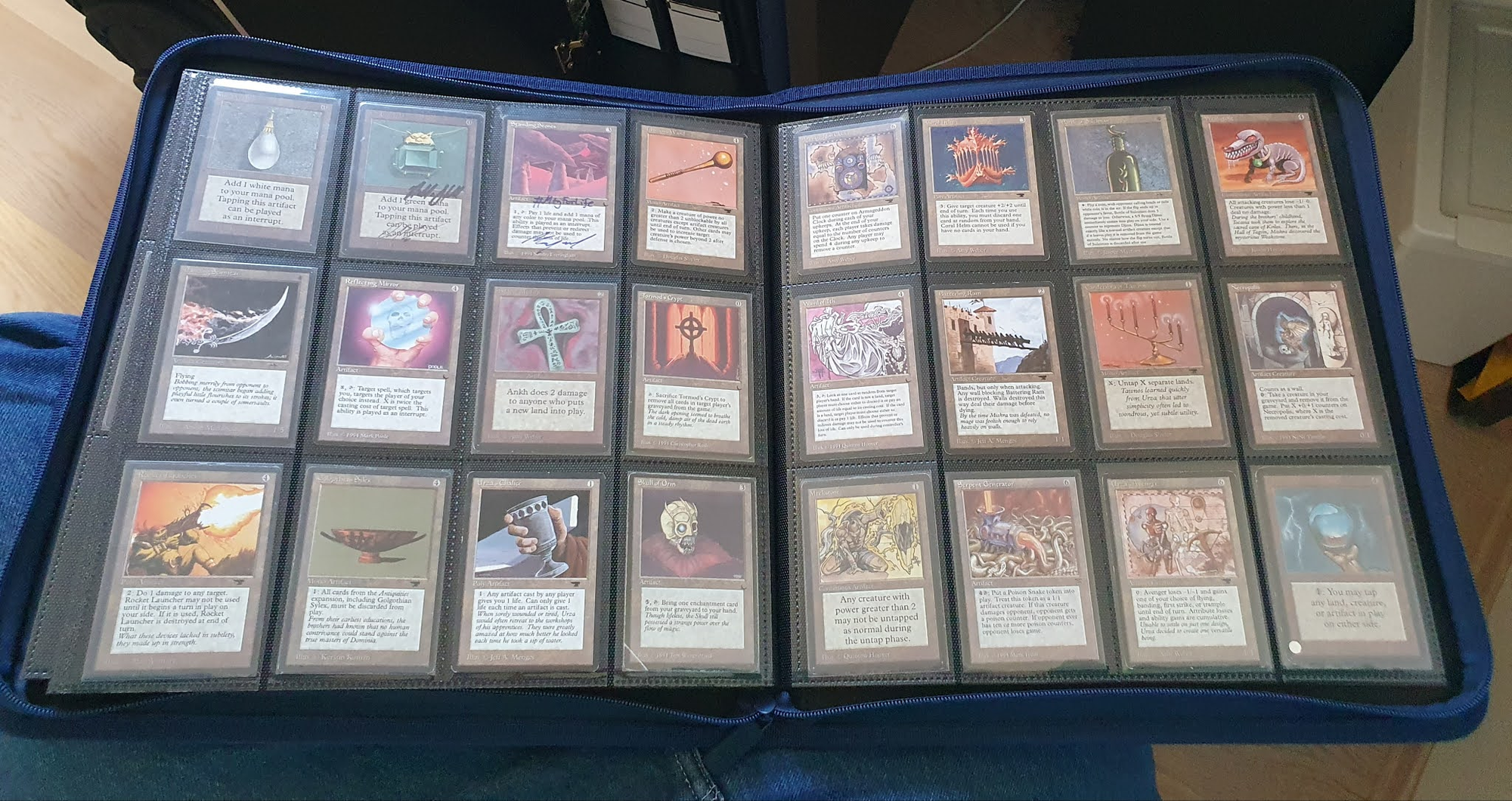
Arrange the value cards in a binder, sorted by color. Some people sort by set, color, and collector number, or by spell type. Overkill. Just organizing them by color will be appreciated by 95% of players. There's a wide variety of binders in different qualities and sizes, and the entire Magic accessories world is a business in itself, but even the most basic binder will do. Put some care into organizing it well and you'll have a major selling point.
Step 6: sell
You know what has value, you've sorted it and put it in a binder -- now it's time to make some money. In the physical world, you can go to places where buyers are: stores (my personal favorite was always La Batikueva), tournaments, places with lots of casual play (back in the day, the malls in Caballito and Villa del Parque), gallery dealers, and open-air spaces like Parque Rivadavia. Be polite, wait to offer your binder between rounds, arrive early when many players are looking for cards to complete their decks, or stick around until the event ends. Many people will offer to trade -- evaluate whether it works for you or decline; nobody will be offended.
Now, in the digital world, you can sell by posting on social media and marketplaces. In my experience, what works best online are Facebook groups. Some like Magic the Gathering Argentina, Tradeo/Compra/Venta de cartas Magic entre jugadores, MTG Tradeo Argentina, MTG! casual, tradeo y mas!, and many others, have a large community of active players.

The cycle starts again
You get home with new cash and old cards. Or with no sales at all. Don't worry. Magic is a hyper-dynamic game, like crypto. Tomorrow the price of what you sold yesterday will go up (it always happens), and the day after, something you couldn't sell will spike (it doesn't happen often, but it does). If you're not in the thick of the daily grind, don't stress about it. You now have a binder, cards you know have value, a box of bulk to squeeze a few more bucks out of, and a big pool of cards you won't know what to do with: those that are useful, beautiful, or collectible but don't have a relevant price today. No big deal -- box them up. In a few months, you'll start the cycle again. Bull market, bear market, corrections, rallies. You know the deal. It's Magic: The Gathering, the most fascinating game of all time, but it's still a market: don't FOMO, don't tryhard.