SNES: The Mythic Machine Almost No One Owned in Argentina

14 de nov. de 2025 — Juan Ruocco 🧙♂️
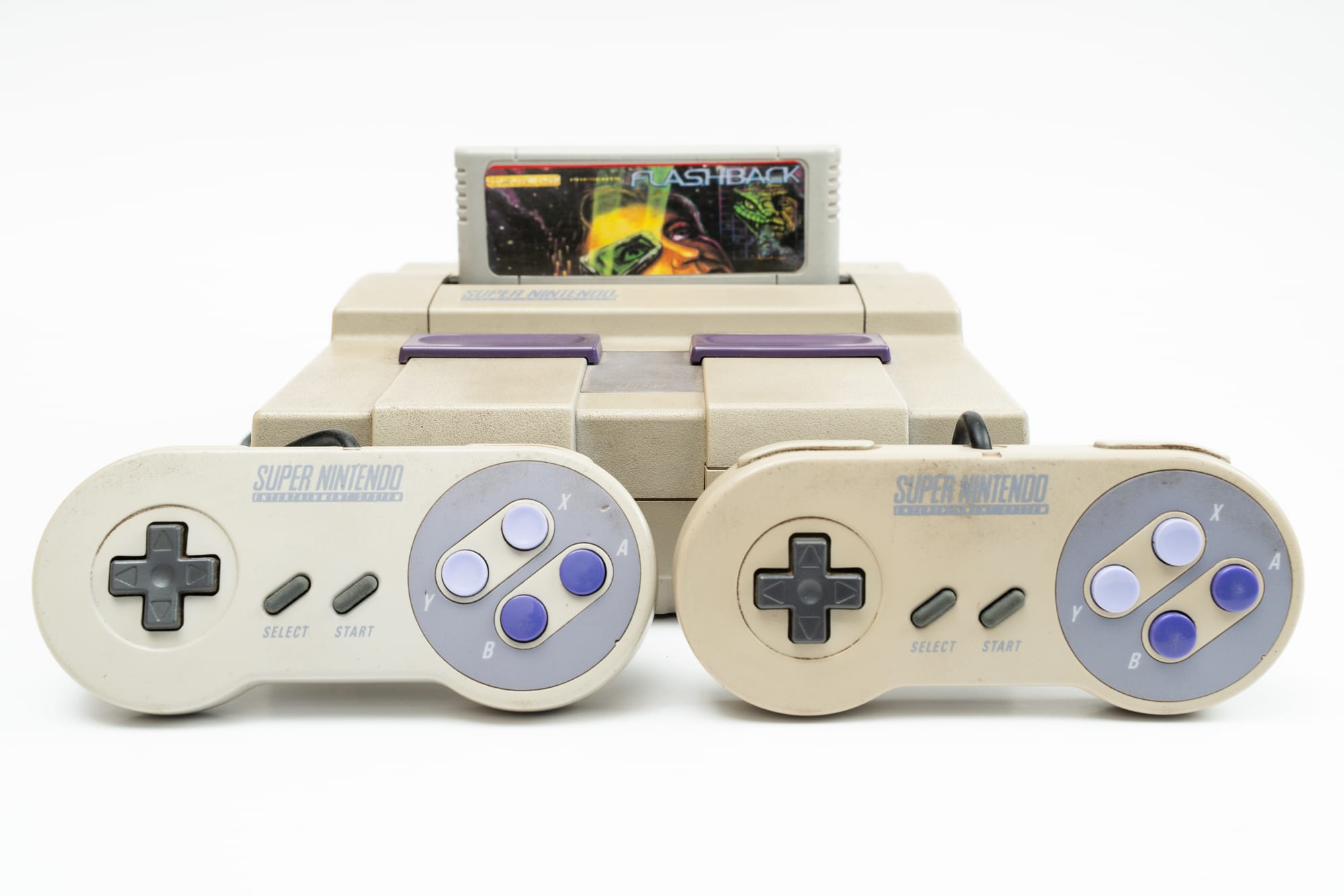
Despite selling roughly 49 million units worldwide, the Super Nintendo Entertainment System (SNES) –better known simply as the Super Nintendo– was a near-mythic machine that almost no one actually owned in Argentina. Through the "cold war" of '90s console battles, Argentina largely aligned with SEGA's Genesis (Mega Drive) or stayed in the 8-bit lane. The Nintendo 64 (N64) was a different story; it became far more popular here. But its predecessor –the SNES– remained an exotic presence we mostly glimpsed through Nintendo's marketing and TV ads.
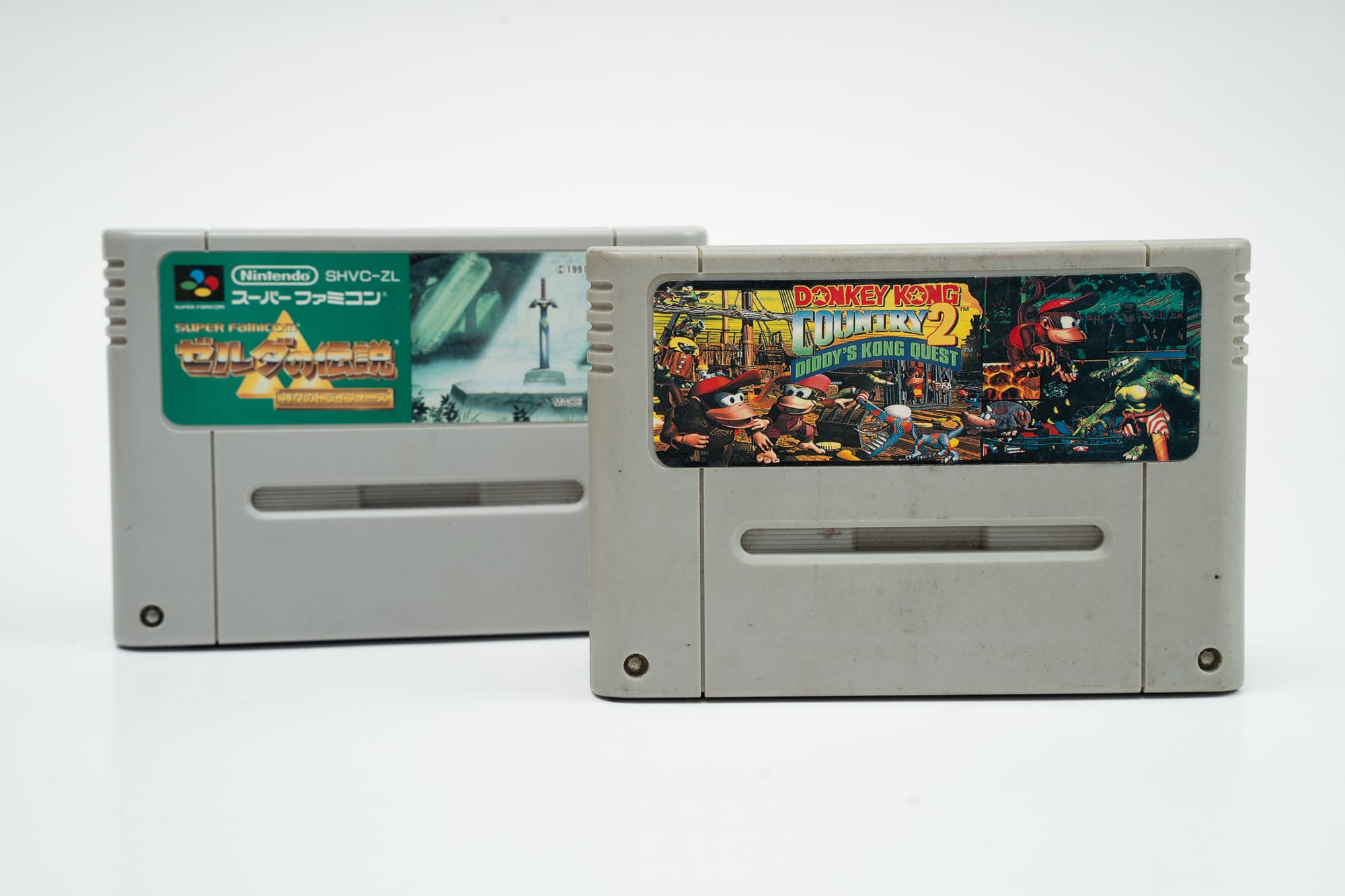
I first learned it existed while hunting down how the hell to do a Fatality: I picked up an issue of Top Kids magazine and realized there was another console out there. Later came TV spots for exclusives like Killer Instinct and Donkey Kong Country. They were like ghosts –right there with us, but just out of reach. Near the end of the decade, with the fifth generation (PlayStation, N64, Sega Saturn) kicking off, a friend scored an SNES and I could finally pit it against its great rival. Graphically they were neck-and-neck, but Nintendo's exclusives tipped the scales. My friend had Donkey Kong Country 1 & 2 and Super Mario RPG. That was the whole story back then.
SNES in the Era of Emulation
With the 2000s came ubiquitous internet and download culture. It started with music and quickly spread. Alongside hoarding the classic LucasArts library, I discovered emulation –topic for another piece. The first thing I emulated was Pokémon Blue on Game Boy, and a window opened. At a friend's place I learned emulation worked for far more systems than the humble Game Boy. Between 2001 and 2004, thanks to emulators, I dove into gems I'd missed for the reasons above. From the SNES library, I poured hours into Super Mario World 2: Yoshi's Island –arguably the best platformer of its era– and The Legend of Zelda: A Link to the Past. The SNES catalog was outrageously strong, though even then I don't think we fully grasped how deep it was.
SNES in the era of retrogaming
Toward the end of the 2000s I found Angry Video Game Nerd (born as "Angry Nintendo Nerd"), which became an era-defining YouTube phenomenon. James Rolfe's character tore into the worst of the NES catalog on original hardware. A friend from those days, Darío Manoukian –who still had an SNES in his living room– showed me the videos. What grabbed me most was that a "recent" console line could already be a collector's scene. That's how I got inoculated with the bug to find my own SNES. If memory serves, in the summer of 2010/2011 I bought one for about 300 pesos from Joaquín, a neighborhood skate buddy.
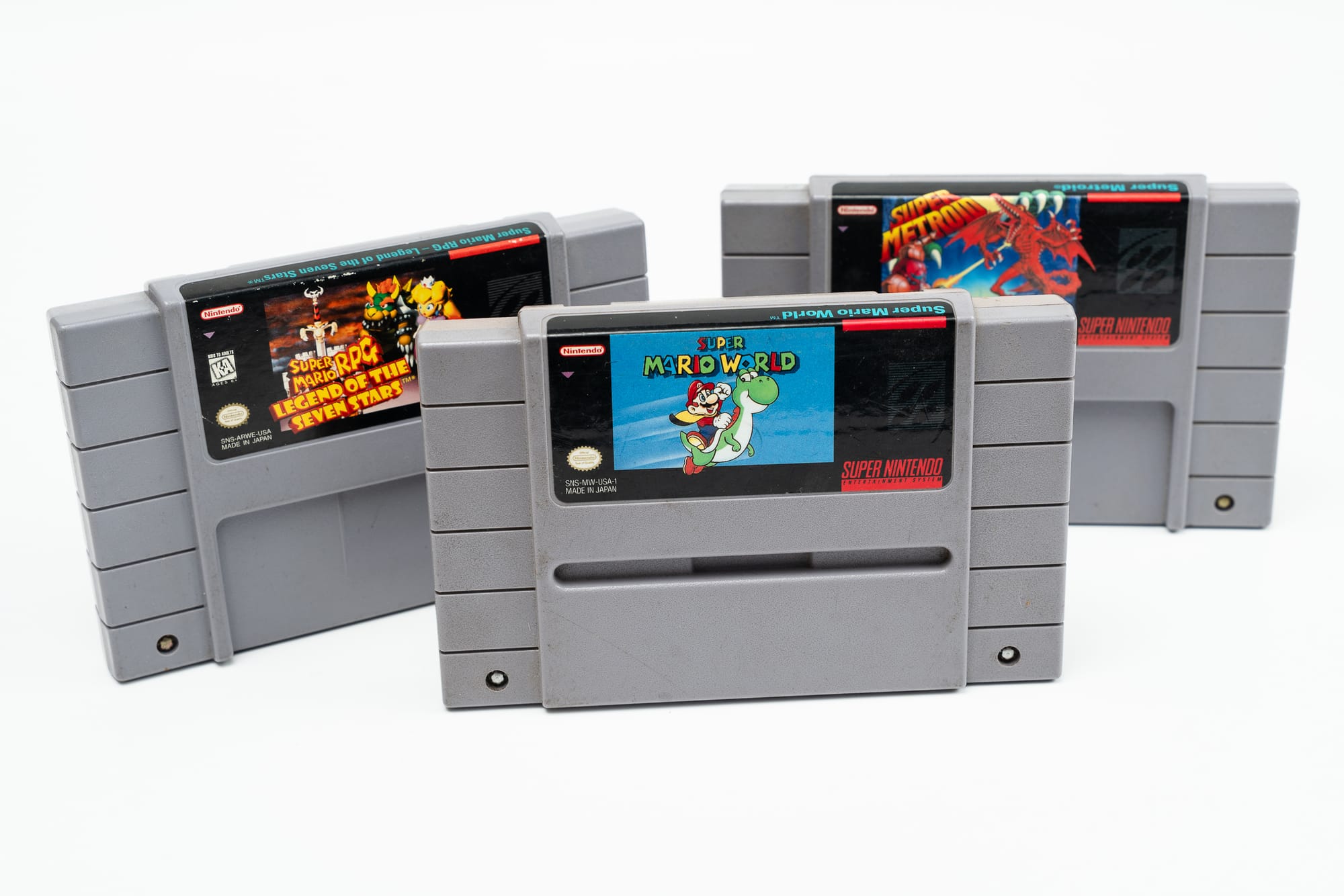
The first surprise: it worked perfectly. On first boot I was playing. I hooked it to a 40" Samsung with composite A/V and it displayed an image immediately. From there it became a scouting hunt for cartridges and the system's best. Luck struck when a lifelong friend dropped off his stash: NBA Jam, Mortal Kombat 1 & 2, Killer Instinct, Super Mario RPG, Super Mario World, Super Metroid, Star Fox, Super Star Wars, Indiana Jones, among others –plus a handful of clunkers like Terminator 2, Jurassic Park or RoboCop. One way or another, the console's arrival meant diving into one of the finest catalogs of its era –and doing it on real hardware, on a 40-inch screen.
The first thing that surprised me about the console was that it worked perfectly. In the first on I was able to play without problems. I connected it to the Samsung 40" TV with its audio and video cables and it shot image without problems. From then on, everything became a kind of scouting around old cartridges and system games to get the best from the catalog. The stroke of luck came when a lifelong friend told me that he still kept his SNES cartridges and left them at home. NBA Jam, the first two Mortal Kombat, Killer Instinct, Mario RPG, Mario World, Super Metroid, Starfox, Super Star Wars, Indiana Jones, among others, in addition to a series of also unplayable games such as those of Terminator 2, Jurassic Park o Robocop. For one reason or another, the arrival of the console meant a dive into one of the finest catalogs of its era and the possibility of playing more classics but now on hardware and in 40 inches.
How to Get the Best SNES Image
Plugging the SNES into a modern flat-panel raised an immediate issue: the picture looked soft. The simplest low-tech fix is to get a CRT television –the displays these consoles were designed for. If you want to go a step further, there's a whole ecosystem of modern gear that brings old consoles up to contemporary resolutions.
It all comes down to scaling the SNES's native signal and how video lines are synchronized. The SNES outputs 240p; the clean trick for digital panels is line-doubling to 480p. I followed the excellent My Life in Gaming recommendations and paired the SNES with an external scaler, the Framemeister XRGB-mini. At the time it was the gold standard for that generation, though methods have evolved: today you'll find special cables and internal HDMI mods that achieve similar or better results.
Even so, the SCART-to-Framemeister route gets you the retro holy grail: true RGB. Separating Red, Green, and Blue into distinct channels yields the cleanest analog image possible. With that dialed in, you can play SNES on any modern screen size with razor-sharp pixels that look cut with a scalpel.
The SNES Catalog
The SNES's strongest card is its library. If the SEGA-Nintendo rivalry settled anything, it's that Nintendo took the decade. The influence of SNES games is hard to match. Just rattle off Super Mario World, The Legend of Zelda: A Link to the Past, Super Metroid, Chrono Trigger, Final Fantasy VI, Super Mario Kart –and you start to see the scope.
These are games that not only defined their time; they codified their genres or became sub-genres unto themselves (see the modern metroidvania boom). They were titles I hadn't truly played until I could do it on the original console. Wonders of the form. Sitting on a rainy Saturday with a pad in hand and firing up Super Metroid feels like watching Alien for the first time –or getting lost in Hyrule Castle's labyrinths, trying to figure out how the hell to reach the next room. Or watching Mario line up against Bowser in a kart race for the first time.
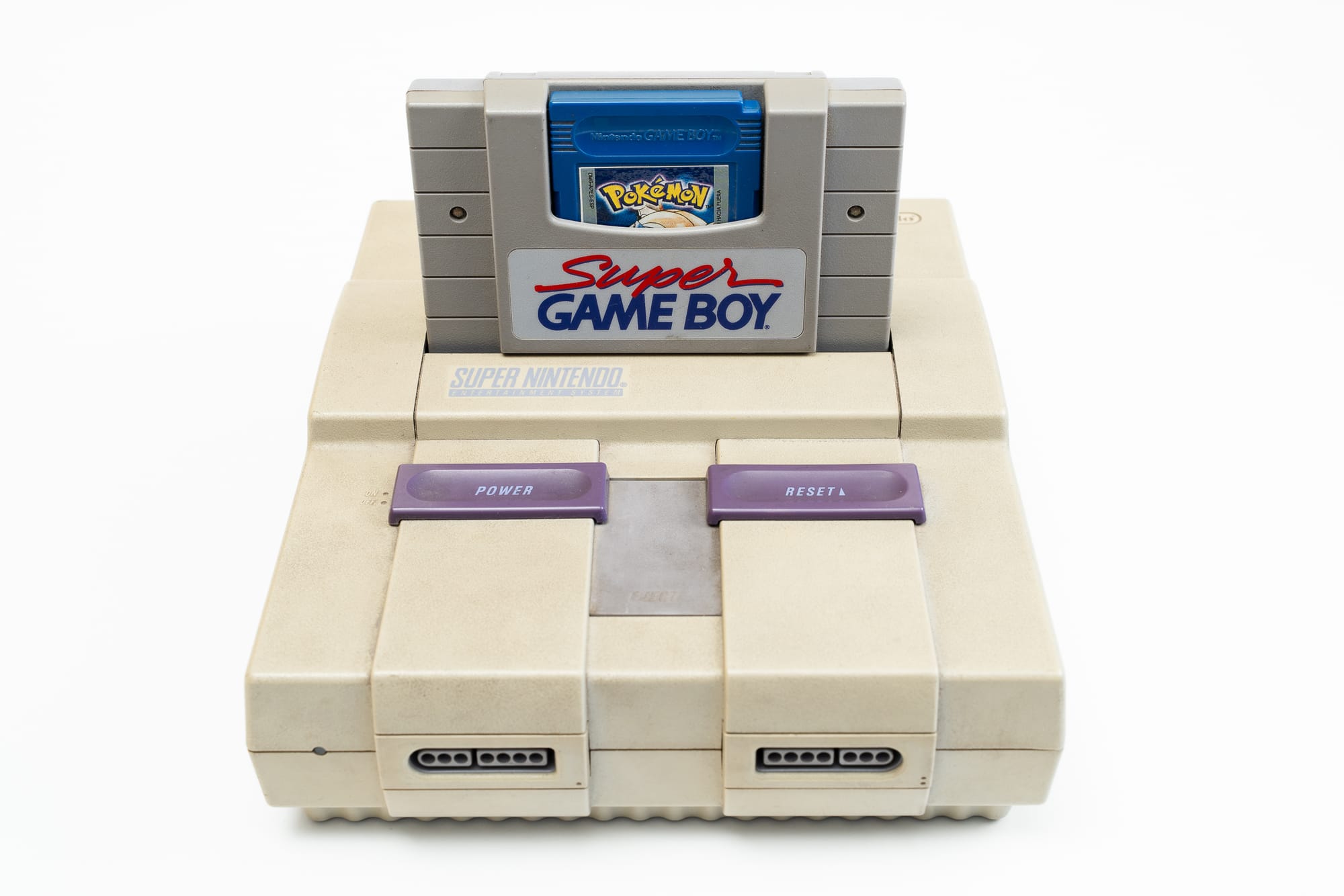
Last but not least, you can grab a Super Game Boy adapter to play Game Boy and Game Boy Color titles on your Super Nintendo; paired with a scaler, you'll get a crisp 1080p image on a modern TV. Play Pokémon Blue/Red end-to-end from your couch while the world burns outside. Life's short –treat yourself.
Technical Specifications of the SNES
The Super Nintendo Entertainment System (SNES) was created by Nintendo and released in 1990 in Japan (as the Super Famicom), 1991 in the United States, and 1992 in Europe and Latin America. It sold about 49 million units worldwide. Key specs:
- CPU: Ricoh 5A22 (65C816-based), ~3.58 MHz
- RAM (WRAM): 128 KB
- VRAM: 64 KB
- Resolution: 256×224 to 512×448 pixels
- Colors: 32,768 palette; up to 256 on screen
- Audio: 8 channels via Sony SPC700 @ 32 kHz
- Cartridges: 2–48 Mbit; some with enhancement chips (e.g., Super FX)