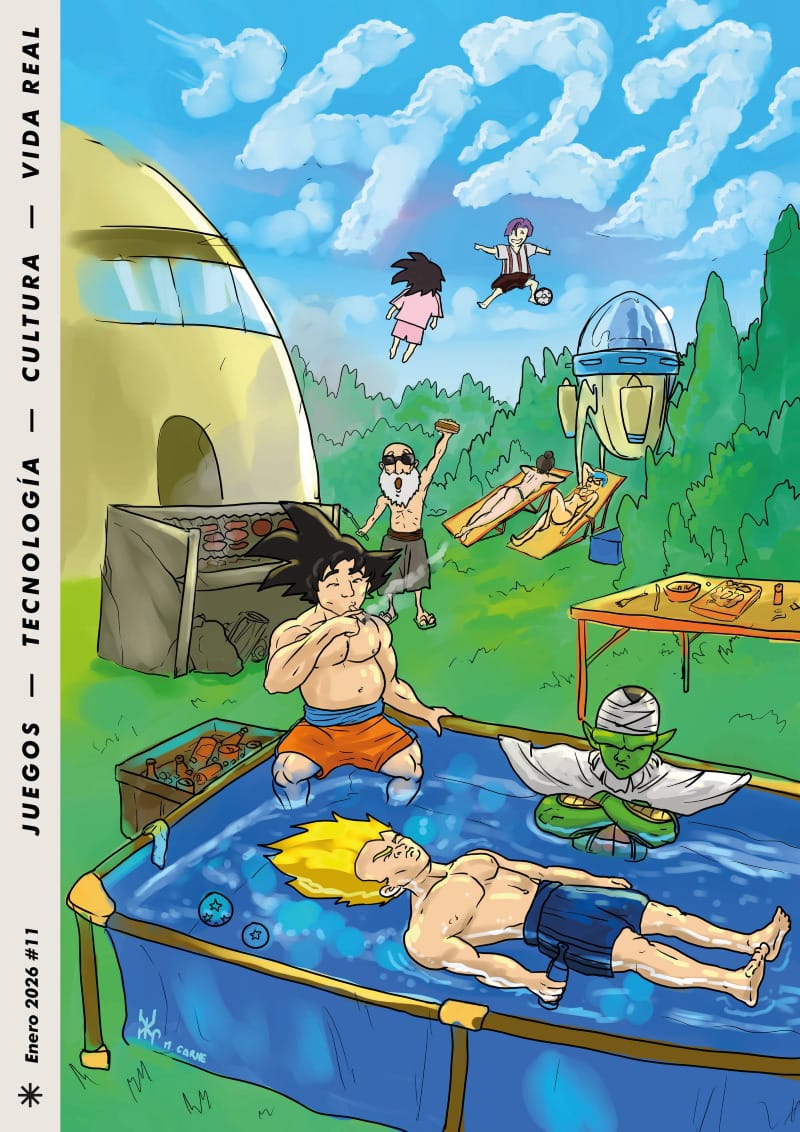
Interviews with Writers for People Who Want to Start Writing – Episode III: Essay, with Tamara Tenenbaum

13 de ene. de 2026 — Roberto Chuit Roganovich
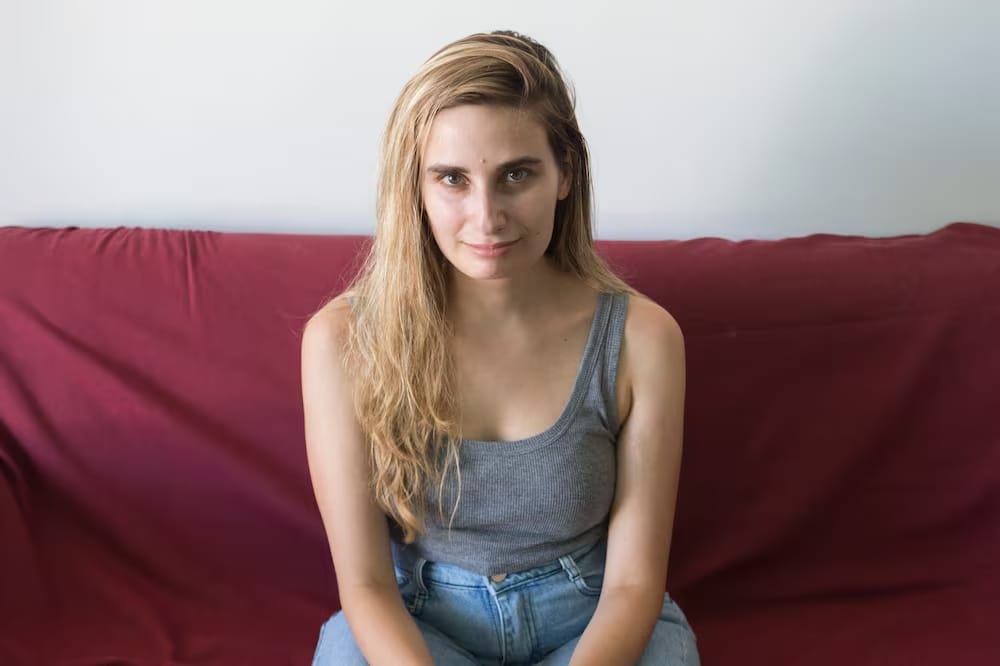
In my brief experience with literature, you never really want to write. You either write or you don’t. That’s it. It feels like an annoying weight—an unbearable ghost perched on your ears—that forces you to sit down, open Word, and start typing. But generalizing my own feeling would be irresponsible: a blunt, dumb leap to a conclusion I’d rather avoid. So I suspect there are people who could use a small nudge.
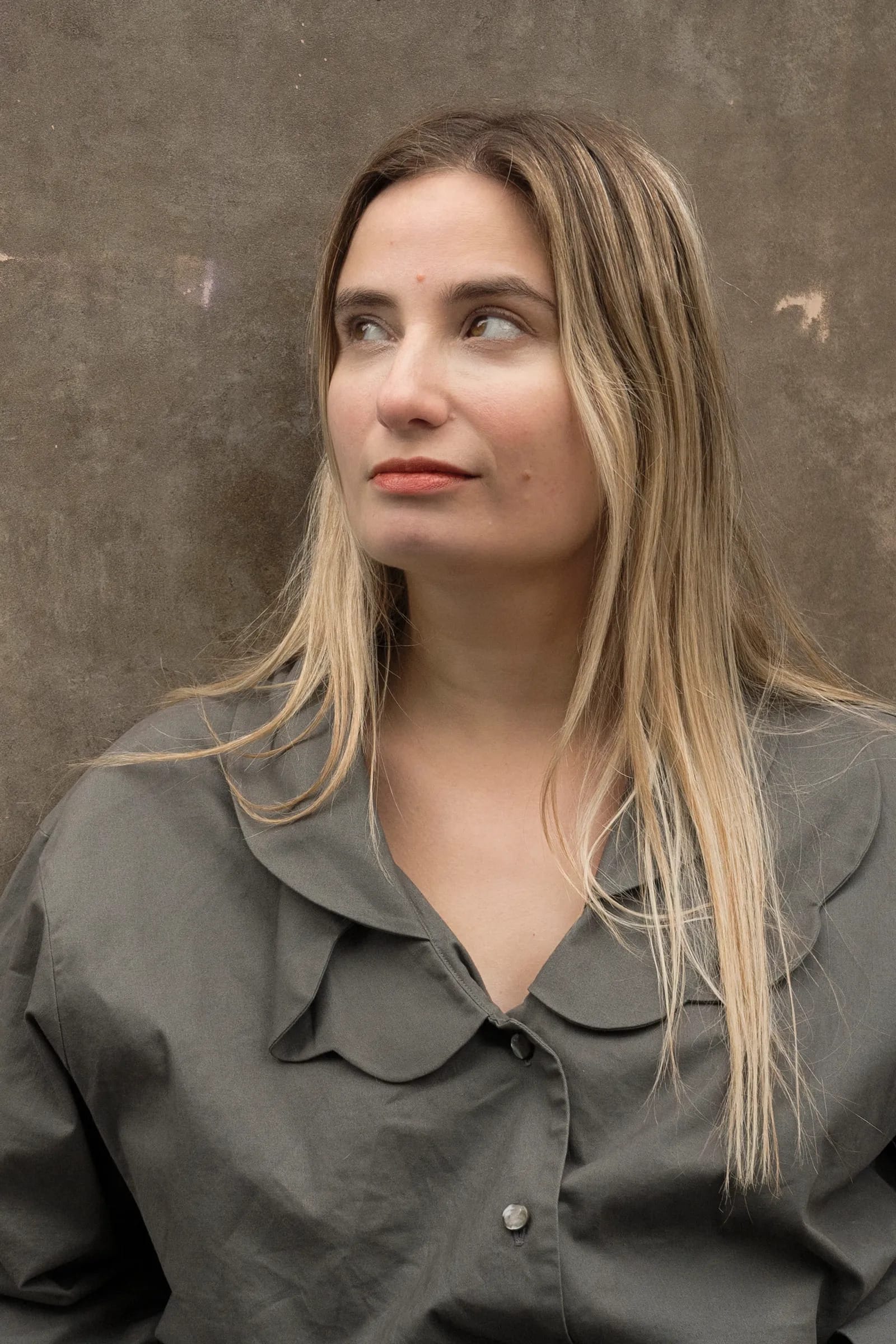
That’s why I started this interview series with writers for people who want to start writing. I reached out to writers I respect—writers whose work, in one way or another, inspires me. Maybe in their answers, advice, and working methods you’ll find what you needed to finally start putting one word after another. This episode continues with Tamara Tenenbaum, to talk about writing essays.
It’s more than difficult to pin down what Tamara writes: novels, screenplays, columns. For the purposes of this series—meant simply to encourage others to take up the practice of writing—we’ll think of her, at least at first and as a working exercise, as an essayist.
From the outside, her essay writing looks a bit like running. It’s hard to imagine the deadline—the finish line rushing toward you—after which the piece has to be done and ready to publish.
—How has writing “against the clock” shaped your work—for better or worse? Did you develop specific tools, strategies, or go-to tricks for that kind of writing?
I write columns on deadlines, but I also write books on deadlines—screenplays too. On big projects, deadlines are much more flexible. And in corporate contexts everything drags: there are delays, feedback rounds, notes, all of that. What a weekly column deadline gives you is a way out of neurosis—out of perfectionism. I mean: a lot of times you have to turn in things that aren’t that good (laughs). I mean that as both a good thing and a bad thing. Of course you always want to do your best, but the deadline gives you a sense of scale: time. You think, “I’m going to do the best I can with the week I have.” And while I let myself be more rigorous on bigger projects, the deadline also trains your judgment: “Okay—let’s look at this with my logical eyes, or my generous eyes, or my overly demanding eyes. Is it ready to file? Relax. It’s ready.” That’s what it gives you: a sense of time.
Things aren’t always the best they could be. They’re the best they can be within the time you have.
A book—or a film—is the same. You can’t spend thirty years writing a book. Or you could… (laughs) but I don’t. At some point, more time doesn’t make it better: “I’ve given this book everything I had to give. To give it more, I’d have to be a different person.”
With columns I do have a method. I organize myself in a specific way. Once I have even a minimal idea, I outline the arguments that support it—what I need to make sure I say, what I don’t want to leave out—and I sketch a little map of the points I absolutely want to hit.
—I guess writing in the heat of the moment, every week, can be exhausting. Are there things you’ve published that you regret? How do you deal with the eventual displeasure of rereading something you wrote? And how could I deal with my own displeasure?
The way I deal with that regret is: “It’s not that important—it’s a column.” The week passes and it’s gone. I swear: it’s gone. You’re not that important, and not that many people read it. It’s fine.
I think I always try to hold the opposite pole in mind at the same time. You have to live between those poles. When you write, sometimes you think: I have to write for posterity—I can’t write nonsense, I can’t waste my time or the reader’s.
But you also can’t lose sight of your own insignificance.
—The time it took you to reach the big leagues was relatively short. When you realized your reflections were being read by people you didn’t even know, did it make you nervous? Were you afraid?
I’m not sure when I realized that—or if I ever fully did. I don’t think about it that much. When I was younger, I was more afraid of writing and being criticized. Of course I still suffer from that. I think anyone who puts their work out there suffers that vulnerability: what people like, what people don’t like. Or worse—the most unspeakable thing: when you think you wrote something that’s going to make people angry and no one gets angry because no one cares. That’s much more terrible (laughs). You say, “In the end, I’m not that important.” It’s a very good lesson.
I’ve mostly deactivated the impulse to worry about what strangers say about me, but when I was younger I had less online street smarts: I could spend days, weeks worrying about it. I think you have to drop that quickly, because it wasn’t good for me—not even in terms of my writing. After those moments of fear, I wrote less daring things, more lukewarm things, and I’d think, “Why am I doing this if that’s not who I am?” That only switches off with time, and by growing thicker skin.
—When the setup changes—when you’re not writing on assignment, when you allow yourself to write longer projects, closer to literature—is there a “chip” you have to switch? Anything you need to get rid of?
When I write longer things that aren’t on assignment, I try to use what the column trained in me: solving problems instead of getting bogged down in the indeterminacy of having too much time. Sometimes having infinite time is the worst thing that can happen to you. “Well, if I want, I have three years to write it.” For me, that’s terrible (laughs). You end up never doing it. Sometimes it helps to have a full day, but sometimes you’re busy—and now I’m going to be a mother—and you have three hours to solve something, and you really use them.
Use the time. And then activate the opposite: “OK, you have time.” If you don’t like what you wrote, for example, throw it away and start over. That possibility is always there.
—Regardless of whether you win, contests sometimes help “organize” the practice of writing. A deadline can help. Outside the essay—in fiction, in screenwriting—do you also try to work with deadlines, or do you let texts mature differently?
Deadlines work for me. But my own imaginary deadlines work for me, too. I set them without too much neurosis. I can linger in my process, stay with something longer, try things. I think for some people it helps to treat an imaginary deadline as if it were real.
It’s very hard, though, to treat imaginary things as if they were real (laughs). The important thing isn’t pushing the deadline back—it’s continuing to work. If you said, “OK, I’m going to have this by March,” and you have it by April, let that be because you kept working—not because you fell off.
The problem isn’t working slowly. The problem is not working.
At the same time, you also have to not work. Sometimes you’re not seeing the text, it’s not happening, and you have to know how to let go and say, “I’m not connecting with this—I’m letting it go,” accepting the risk that you may never reconnect with that material, and also the risk that it was a text you weren’t meant to write.
That’s happened to me many times. I write down ideas that feel brilliant, and then I sit down to write and I think, “I have nothing for this. Maybe it’s not that good—or maybe I have nothing for it.”
—How do your non-essay texts “mature”? Over what span of time? Do you always know what you’re writing about, or do characters, themes, and narrative arcs emerge through the work itself?
Sometimes a starting point you think is right can end up as something that has nothing to do with it. For example, Las Moiras. I was interested in having three old women knitting, and in the metaphor of weaving. They passed a thread along, like the thread of life. While they wove in a literal sense, they also wove in a metaphorical sense: they created tangles, networks. But over time, the weaving metaphor lost a lot of weight in the work. In my first image, that was the most important thing. I loved it: the three Moirai who weave destiny in myth. But then other things gained ground and that part receded.
I also think about my story collection, Nobody Lives So Close to Anyone. The first thing I had was the title. I wanted it to be called that because I wanted someone to say that to someone. And once that was going to be the title, all the other stories had to relate to that line.
I don’t know—texts come from many places, and that’s why they’re less methodical, too. For me, the most important thing is not falling in love with the starting point. The point is useful to begin, but you can’t stay there if it doesn’t work, or if along the way you find something else that works better.
—What helped you understand, if that’s even possible, how writing works? Do you have any go-to books on creative writing or essay writing?
No, I don’t have any go-to books. I’ve read some, but no. I’m more inclined to think you learn writing through reverse engineering. Read whatever it is you want to write—novels, plays, screenplays, essays—and ask yourself how it was made. Try to imagine how someone pulled it off: the structure, where it starts, what keeps you hooked in the first pages. That’s what I like most: reading the things I’d like to copy and thinking about how to copy them. It feels more like a visual artist’s method.
—You always start small. I’d guess that as a kid you tried your hand at stories, poems, maybe school essays. When you started writing longer projects, who did you show your drafts to? How open are you to third-party revisions? Is feedback useful to you?
I didn’t start writing as a kid—not at all. As a kid I only read, all the time. And I miss that a lot. Now I write much more than I read because I have to work a lot. I like working a lot—it’s something I enjoy—but I still think, “God, that was nice.” Up until 23, 24, 25, I didn’t write. I think about how beautiful my mind was when it was full of silence and received so much (laughs). I’d like to go back to that. I even have this fantasy of spending a couple of years without writing, just reading. I did keep a lot of journals, though.
I’m very into receiving feedback and accepting it. I love it. I like treating feedback as a kind of oracle, even when it’s not that good or when I disagree (laughs). The exercise of saying, “I’m going to accept it anyway,” takes you to interesting places. I learned this through screenwriting and theater. There, feedback has a different weight. In theater, a director’s notes aren’t like an editor’s notes: it’s someone who won’t sign the script, but will sign the production. You learn to listen.
That forced modesty taught me a lot. As a writer, you’re not used to letting go of your own work—and letting go is best for the work, best for you, and best for learning and acquiring new tools. I don’t believe being overly protective—being the proprietor of your own work—is automatically best. Of course there are things I’ve defended many times. Sometimes you have to hold your ground, and that’s fine.
—Have you taken writing workshops? What was your experience like?
Yes, I have. My experience was good. I’d do a workshop again if I had time. It’s something I recommend. It helps different people in different ways: for some it creates the obligation to write; for others it’s about hearing new things; for others it’s learning how to revise. It helped me with all of that. Not so much the “write every week” part (laughs). With my column, the deadline helped; in workshop, it didn’t. What workshops really gave me was learning how other people read. That’s the wildest part: learning how your classmates read, how your teacher reads. Just as I like reverse engineering texts, it’s fascinating to watch other people do the same thing—but in their own way.
—Your writing seems hard to systematize: fleeting ideas, big projects, an essay, a novel, a script, a play. How do you organize your ideas? Do you use any software—Notion, Scrivener, Plotter, Hemingway Editor?
No, I don’t use any software. I just keep opening endless Drive folders and sending myself endless emails. Very basic. I could probably stand to be more organized, but the good thing about emailing yourself is that Drive search is great: I type three keywords and I find everything. I’m pretty rudimentary.
—Do you write by hand or on a computer? Why?
Almost always on a computer—and a lot on my phone, too. Mainly because sometimes I don’t have my laptop on me, and if I remember something I can jot it down on my phone. I always have Google Docs open. I can write a paragraph—or a whole column—on my phone. I don’t know if that’s good, but I can do it.
I write very little by hand. Usually I take notes. When I wrote my last essay collection, I took lots of notes on the computer, but in the final stage—when I reread A Room of One’s Own again—I took notes by hand, because by then everything was already well chewed over and I wanted to lock a few things in.
It’s clear that handwriting sticks more. It helps because it’s not easy to erase, unlike typing on a computer where you write, delete, write, delete. The other thing is: I’m bad with objects in general. I lose things, I’m afraid of losing them, I mix one notebook up with another. So I love having everything in Drive, where it can’t get lost because it’s just there.
—How many hours do you write per day? How many would you like to write?
I don’t know. It depends on the day. What I always recommend—within each person’s possibilities—is giving yourself long blocks. It takes me a while to get going, especially at the beginning of a process. If I’m already working on something I have to solve (a chapter, whatever), I can solve it in two hours, three hours. For long blocks, it helps me to bundle everything else: all the errands together, all the shopping together (laughs), all the everyday-life stuff that needs handling—so I can find a full day somewhere.
The consistent part is staying mentally connected to the work. After that, how much you can actually sit down and do is another matter, and it depends on the vicissitudes of life.
—How obsessive are you about revising? Do you spend more time writing or editing—or are they the same thing for you?
I feel like I revise, but relatively little. What I have, sometimes, is a very long ramp-up. I take notes a thousand times, take notes on the notes, try a first run, then go back to the notes. So by the time I start writing the file called FINAL FINAL FINAL, as people do (laughs), it’s taken me a long time. What I do is a big preparatory phase.
I revise small things. I rarely revise structure, because I’ve already thought it through long before. I’m not for or against this method—it’s just a way. Some people find it useful to sit down, draft a version, and then revise. The exact opposite works for me: postponing—sometimes a lot—the moment of starting, but arriving at it with everything well thought out.
—All of us who try to write steal. What do you steal from?
I steal from everywhere. From books, often. I remember someone once told me, “Copy freely—nothing ever comes out exactly the same.” You think you’re copying and nobody notices you’re copying. That’s one of the great things about writing: the nods aren’t that obvious. “Okay, I’m going to copy the structure of this.” Sure—what structure? I copy what I understood of that structure. So nobody sees it.
I steal a lot from conversations I overhear, from things people tell me. I steal more from what people tell me than from my own life (laughs). I really like the things that happen to other people—but also the way they tell them. Especially people who don’t write.
—Three books?
Let’s say Mansfield Park, by Jane Austen. Cuadernos de infancia, by Norah Lange. And American Pastoral, by Philip Roth.
—What do I have to do if I want to start writing?
Read a lot until the hunger shows up. Or until that hunger connects with the materiality of writing.