The Fall of 4chan
29 de abr. de 2025 — Juan Ruocco 🧙♂️
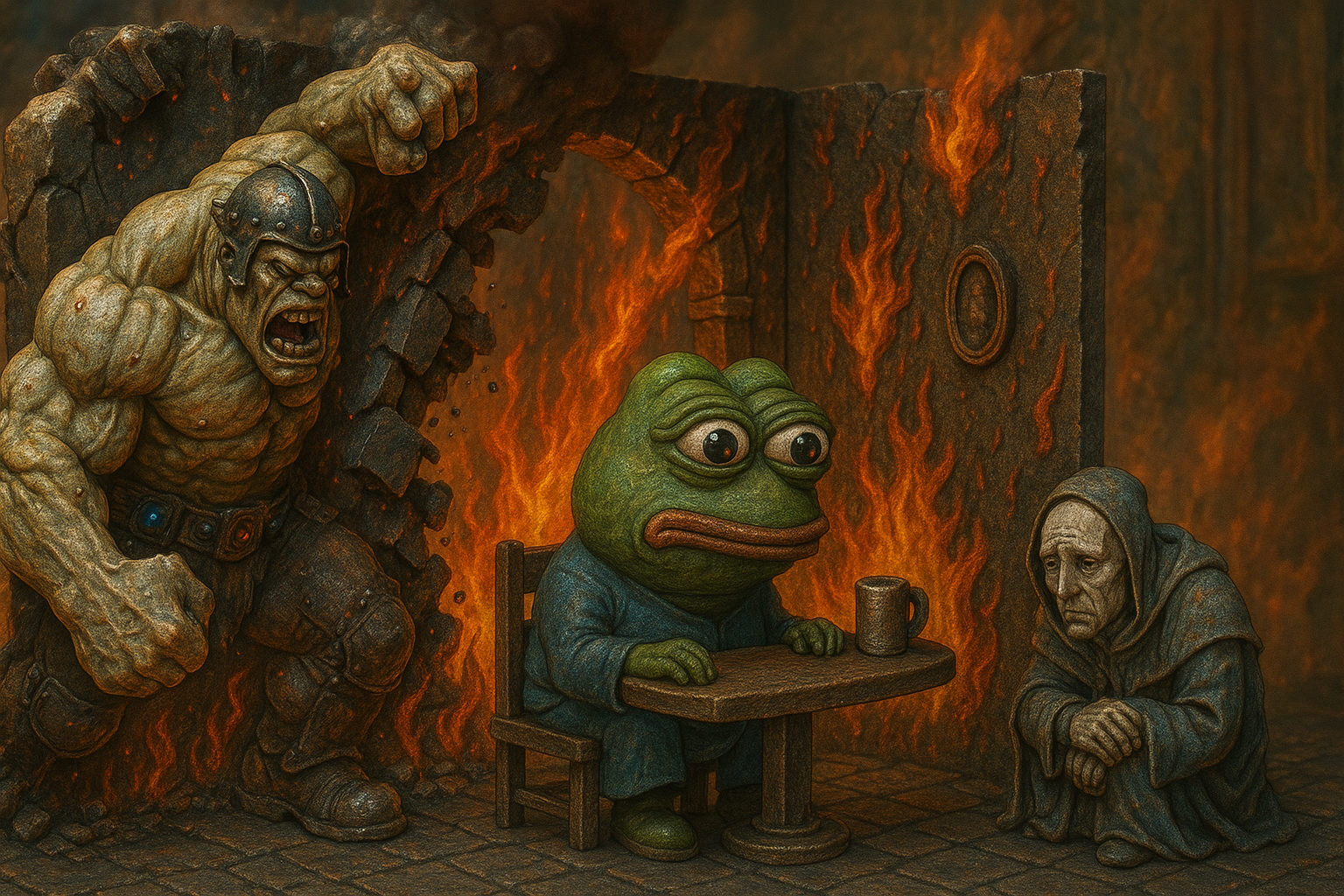
The fall from grace of 4chan didn't catch its users by surprise. Quite the opposite, actually. For years now, among the oldfags (the name used for the site's most veteran users, as opposed to the newfags) there's been a feeling that the site "is dead." In any case, the hack of one of the most infamous yet important sites on the internet marked a milestone on the calendar. We can think of it as the equivalent of the first sack of Rome in 390 BC by the Gauls. While the Western Roman Empire would survive until 476 AD, the process of decomposition it was undergoing by then was already irreversible. The sack of Rome represented the concrete instantiation of that inexorable process which, according to various historians, had begun much earlier. Something similar happened with 4chan: it fell because it was already dead.
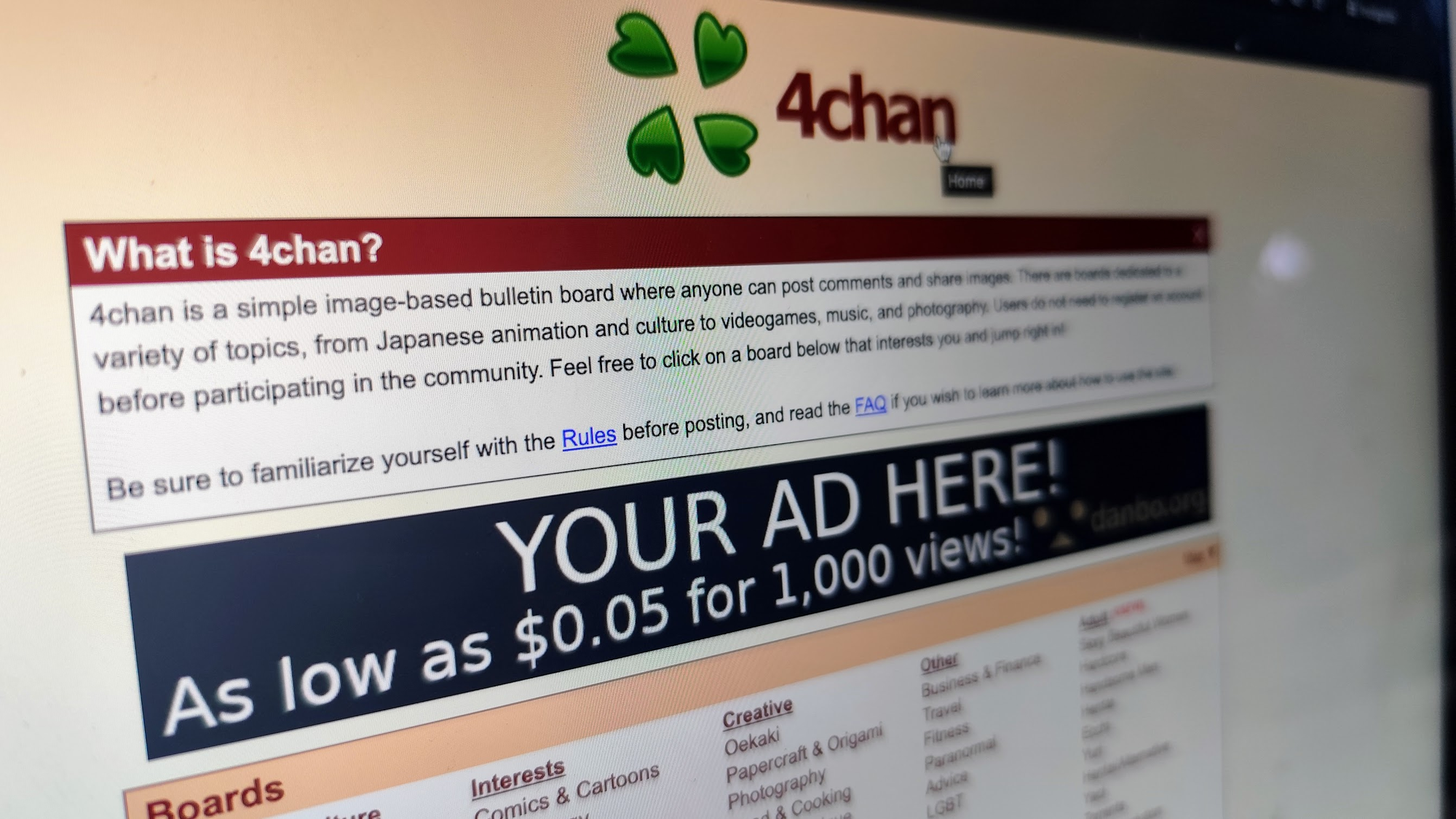
Let's start from the beginning. As journalist Juan Brodersen reports in his newsletter, DarkNews, the forum was attacked by a group that used a site exploit to inject malicious code and take control. The group operated under the pseudonym Soyjack[.]Party, and it's suspected to be made up of current or former users of the imageboard. It's speculated that the attack was a form of retaliation for losing the channel where they used to interact. Meanwhile, the site's code hadn't been updated since 2016, meaning it was semi-abandoned, or at least in a serious state of neglect. That date roughly coincides with the sale of the site by its creator, Christopher Poole, alias "moot", to Japanese entrepreneur Hiroyuki Nishimura.
The leaked information contained all the emails of the janitors, the name used for the site's moderators. While there was speculation on Twitter that many of those emails ended in .gov domains (fueling the theory that the site was an honeypot run by the FBI), in reality the leaked list didn't include any with that domain. The site was practically offline for over a week, until it returned to normal operation.
The "death" of 4chan
It might seem obvious to say, and there's even an article in Wired that shares the same insight, but basically the death of 4chan coincides with its coronation in digital culture. As I've been explaining for several years, it's a case of "death by saturation." The inevitable cycle of any successful cultural movement: going from the margins to the center, becoming the establishment. How? Very simple: what was once confined to 4chan later migrated to much larger platforms like Twitter, and from there it went on to reshape the global digital conversation. For a while now, 4chan has in a way become digital culture itself; and hence the irrelevance of the original 4chan.
And what is it that made 4chan so different from everything else? Well, the perfect combo of ideology and memes. Think for a second about the everyday discussions of Argentine politics, the media, and Twitter: liberalism vs. communism, racism, xenophobia, European restoration, return to traditional Catholicism, Nazis, antisemitism.
Think also about the state of current criticism or the reaction to the progressive establishment aka "woke culture": debating postmodernity, multiculturalism, feminist backlash, accelerationism, Nick Land, Curtis Yarvin, Bronze Age Pervert. Pick any topic. Yes, it was all already there. It was always there. But now nobody cares where it came from, because now it's everywhere, it's become the landscape. Who remembers which was the first craft brewery? Does it even matter?
The chan method
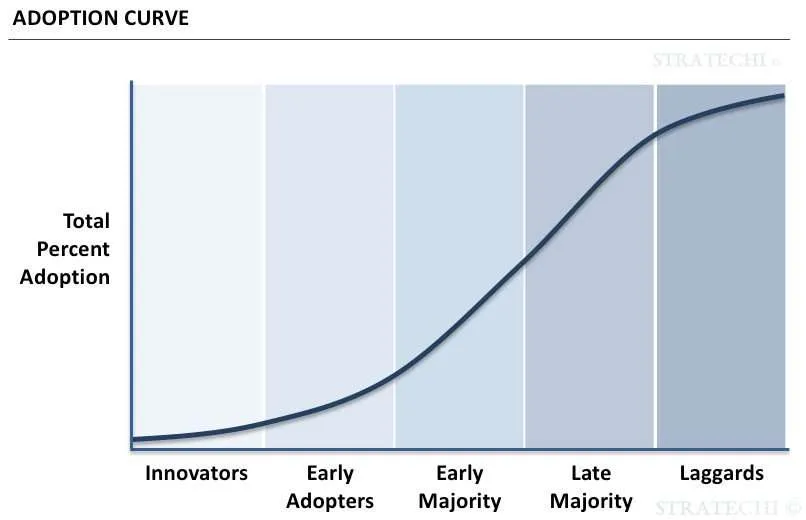
This might seem like an obscenely simplistic take, but if you want the full justification for all of it, you'll have no choice but to read the book that's already been written. There's not much more to add. Basically, what consecrates its triumph is the feedback mechanism that generates interactions through polarizing reactions. That polarizing interaction is what manages to stand out across the entire media landscape and absorb the maximum amount of attention possible. This systematically reinforces its use, which scales geometrically. In the early years of radicalization, this would culminate with some American turning into a school shooter; today it's a mechanism that puts a fringe figure, a troll, or an "outsider" in as president.
It's curious that the hack happened in the middle of the release of the Netflix series Adolescence and the consecration of incel culture in mainstream media. A topic for another article but one that, just thinking about writing it, fills me with apathy. It's so predictable that writing it would embarrass me. I try not to write about obvious things or "foregone conclusions." Although sometimes you have to make a living somehow.
But, again, maybe it's not even about the topics that 4chan established as culture. It's about the method. A small, cohesive group that produces memes and therefore a culture of its own nonstop, with a perfected selective mechanism that rewards winners in such a way that a positive feedback loop is created. The result of applying this method consistently is gaining a unique capacity to influence the "public discourse" or, as I like to say, the noosphere. Or the meme pool. The memetic broth.
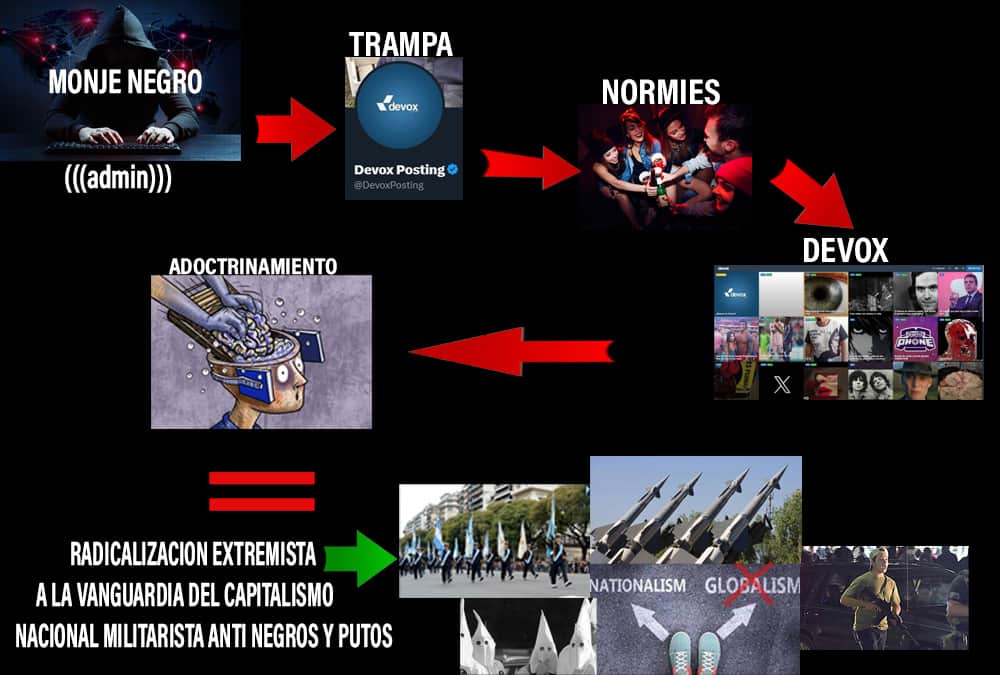
Isn't that exactly what Remilia is after? Or Devox with its influence on contemporary language (tetubis, balubi, nenazo, gordazo, jijo, jijolines, jijazo, juan domingo beron)? Or the libertarians with their alternative media ecosystem on YouTube, Twitter, and beyond? Isn't that what all the state agencies dedicated to "psychological warfare" are after? The new? Holy Grail of digital communication.
4chan and me
Back in the distant 2019, I published on my now-defunct Medium blog an article about 4chan, Anon culture, the strategy of various right-wing movements to instrumentalize it as a political platform, the creation of a distinct digital culture, and radicalization. Those who want to read that foundational article can do so here. Or even find a somewhat longer version here. A lot of water has passed under the bridge since then.
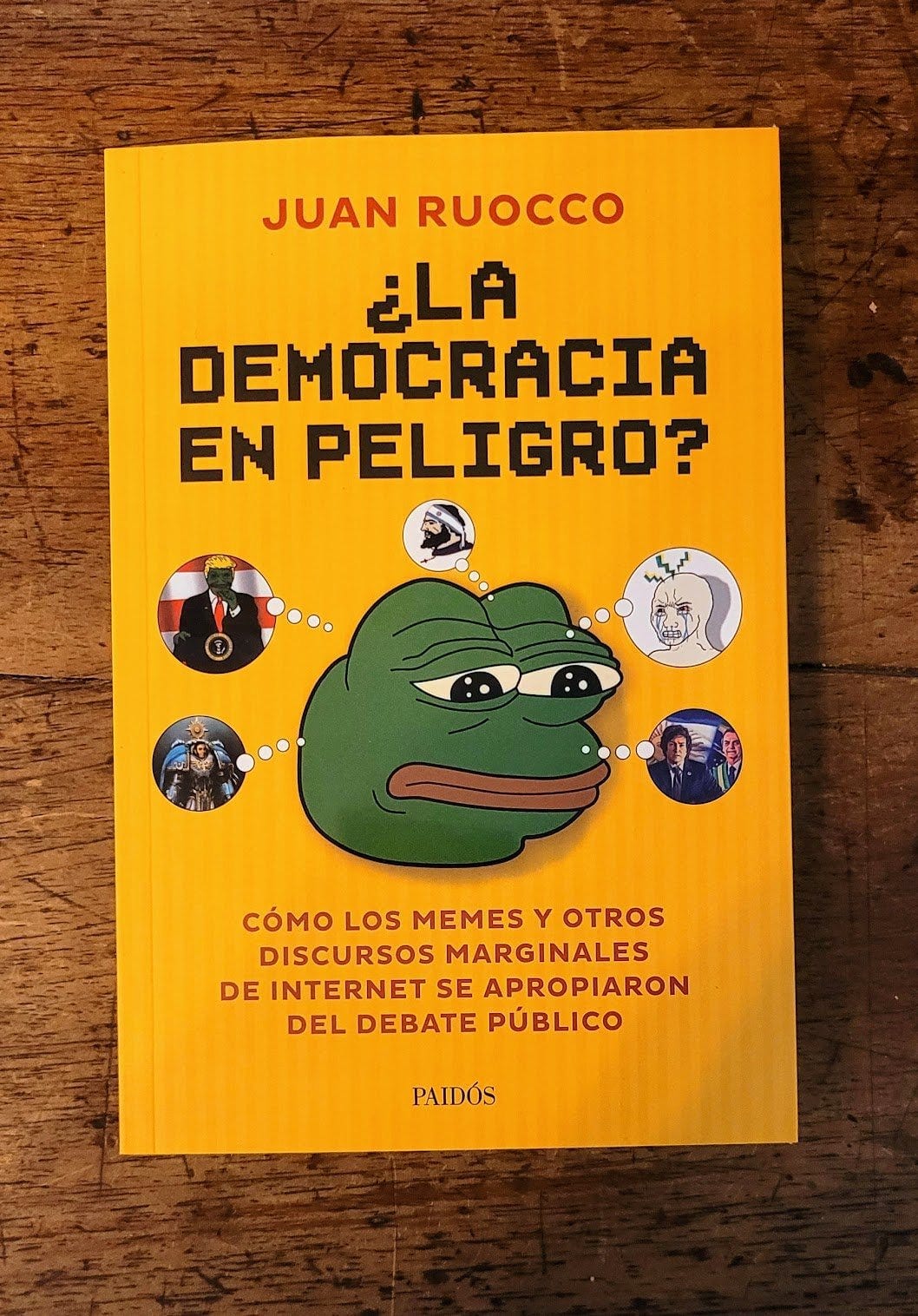
That article opened several doors for me to write in different outlets. The text was cited on various occasions within other works, such as Troll S.A., by Mariana Moyano and Did Rebellion Turn Right-Wing?, by Pablo Stefanoni, kicking off a process that culminated with the publication of my book Democracy in Danger? in 2023. As a corollary of that process where writing became one of my central activities, we arrive at the creation of 421 as a publication and permanent home for those early articles to which I owe so much.
Watching 4chan fall makes me feel a bit nostalgic. I feel like that old warrior who watches the corpse of his enemy pass by, and with it, an era that defined him. 4chan dies by its own rules. But, on the other hand, I think it's nothing more or less than the cycle of things. The primacy of chan culture is already showing severe signs of exhaustion. Only some lost patrol in the jungle could sell it as "news." It's an exhausted cycle. On our side, what remains is to find the new waves from the peripheries, the new marginals, the next establishment.
Murdered by a group of angry anons, it agonizes because nobody wanted to defend it. 4chan is priced in. The digital market has already put a price on its culture. The information selection mechanisms have already differentiated everything that is "signal" from what is "noise." All the valuable information has been extracted and now navigates the infinite waters of the noosphere, of the collective consciousness. Its specificity has no value anymore.
Like Taringa!, like Voxed, it seems the hour of farewell for 4chan is near. While it hasn't died yet, we get the feeling that Cirdan has already built it a ship to sail to Valinor. All that's left is to wait.
Enjoyed the read? The Wizards are who keep 421 alive. Join and get the digital magazine, exclusive content, and more.