Three new restaurants in Buenos Aires where you can nourish your heart, mind, and palate
23 de mar. de 2026 — Natalia Torres
L’Estasi Dell'oro, one of the pieces Ennio Morricone composed for the soundtrack of Il Buono, il Brutto, il Cattivo (The Good, the Bad and the Ugly), is one of my favorite songs to listen to when I step out onto the street.
The song kicks in with a loaded gun. On one hand, it makes me feel like I’m not just a Valkyrie: I’m also the horse, the sword, the entire symphony, and Wagner writing it. On the other hand, of course, it’s the song that Metallica blasts through the speakers before they hit the stage, bringing back the knee-shaking thrill from the time I saw them live at the now-closed Orfeo Superdomo in Córdoba, with the stage just half a block away and the stands boiling over.
The best version of pleasure is the one that manages to bring together both ways of appreciating: when the emotional entrance of blood and fire eventually gives way to reflective calm.
But after a while, the revolver goes back into its holster with the cushioning of the drums and their acceleration. The chorus and orchestral instrumentation rise and fall like a tide over which soprano Edda dell’Orso sails. The descending scale of tubas leading to the end of the song sends tingles down my neck. The enjoyment is now more cerebral.
The best version of pleasure is the one that manages to bring together both ways of appreciating: when the emotional entrance of blood and fire eventually gives way to reflective calm. And when it comes to culinary openings, I’ve recently found greater joy precisely in those that fit into that dual movement. Where just minutes after sitting down, I feel a warmth that lowers my guard, where the menu translates closeness (and not necessarily simplicity), and where, with the dishes on the table, pleasure also becomes cerebral, revealing the nuances, edges, and depths of flavor.
Caprichito: friendly precision
Carola Santoro hits the nail on the head when she explains that at Caprichito, the restaurant she co-founded with her sister Victoria, “the intention wasn’t to create fine dining, but to elevate the food that you really want to eat often.”
Thus, for her, the balance between product, technique, and enjoyment is essential. “It should be accessible in spirit, but with very careful standards for ingredients and processes,” she sums up.
The venue and its nods (the drawing of a teddy bear as a logo, the old school Coca-Cola fridge, the disco ball in the bathrooms) also gently caress certain corners of memory without shouting too loudly. “We thought about and directed the entire project ourselves, without architects or designers or project managers, making every decision so that the space truly feels like ours and is coherent with our other projects. The idea is that the experience is as important as the food, that it makes you want to stay,” notes Carola.
The sisters were already coming off a hit: Ti Amo, the Neapolitan-style pizzeria they opened in Adrogué, which in 2024 ranked third in the list of the 50 best pizzerias in the world according to Top Pizza World. Then came La Sorellina, the same concept but right in the heart of Colegiales.
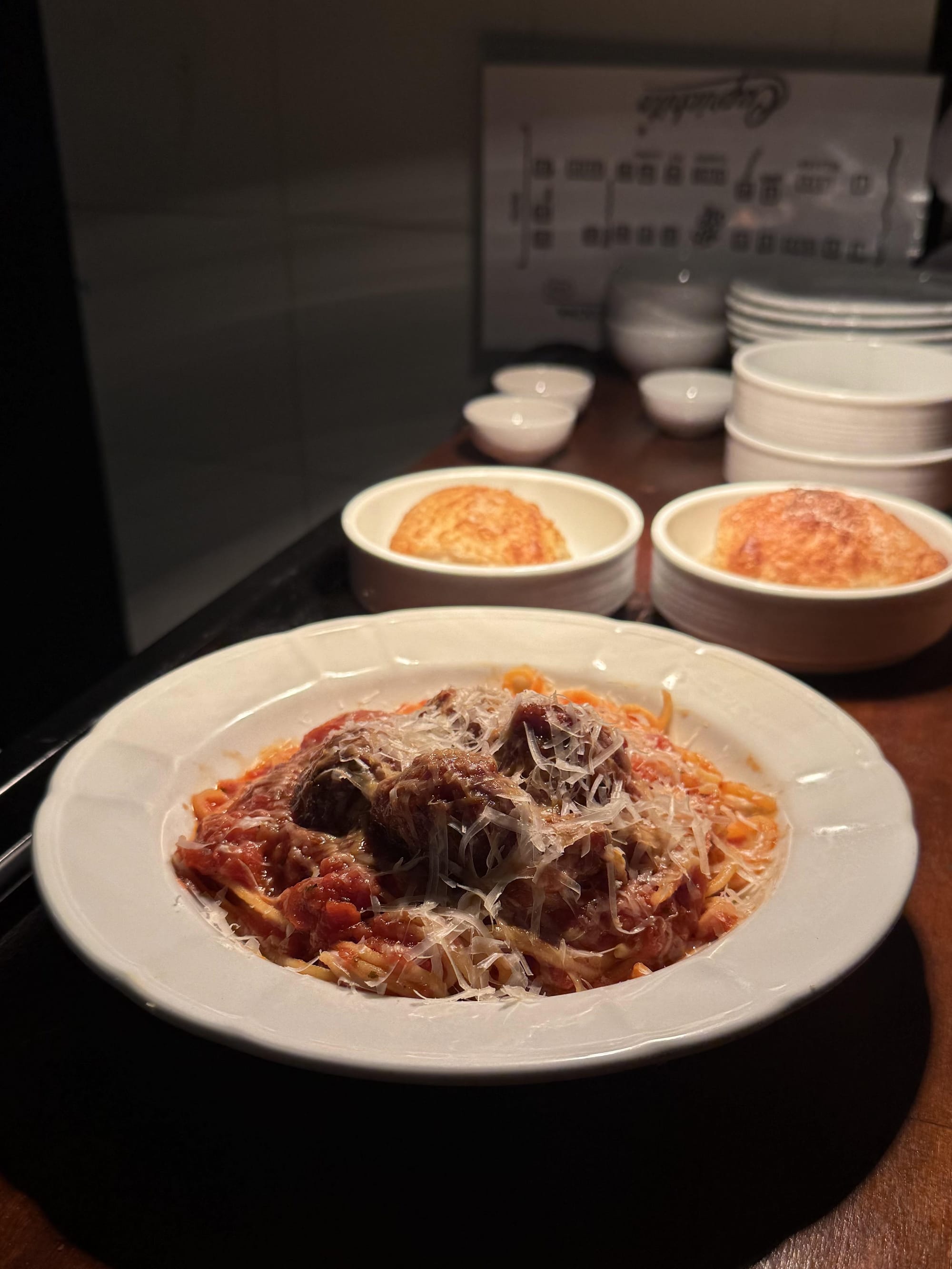
Now, at Caprichito, pizza is still on the menu but not as the star; it’s part of a cast of indulgent and seductive dishes, designed in collaboration with chef Emiliano Belardinelli. Through lasagnas, spaghetti and meatballs, milanesas, and vitel toné, the flavors harken back to traditional trattorias but with a contemporary spark. This is even reflected in a wine list (curated by Celina Bartolomé) that quenches the thirst for red with fresh and fluid options. There’s great warmth and honesty in what you eat: perhaps the best demonstration is the tomato sauce that accompanies the pasta, a Cupid’s arrow straight to the emotional memory.
Garabato: complicating without losing the plot
Is there a return to a more comforting and familiar cuisine in several of the recent culinary openings? Calu Corso, co-founder of Garabato alongside her partner Lucas Canga, says yes and no, because in her case, the search doesn’t respond to a trend, but to the desire for the cuisine to “be easy to understand for any kind of audience.”
“We cook what we like to eat, and we listen to and take into account the customer,” she warns. Her resume backs this up: in addition to Garabato, she runs Mad Pasta, a restaurant that carries the immigrant heritage of flours through a punk strainer. There, everything seems meticulously constructed for maximum effectiveness, and it’s inevitable to receive each recipe with an emphatic nod of the head up and down, in a huge and silent “yes.”
Garabato shares something in common with Mad Pasta, and one word from Calu hits the mark: “chanchada.” There are plump, exuberant sensations, and zero shyness. But beyond maximalism, there’s no overdose or noise, and the layers of flavor come together with clarity. For her, the key is to work “with technique but without complicating for no reason,” something that sometimes seems to get lost in a certain ultra-technical (and unnecessarily narrative) inclination in recent years’ cuisine.
The “chanchada.” There are plump, exuberant sensations, and zero shyness. But beyond maximalism, there’s no overdose or noise, and the layers of flavor come together with clarity.
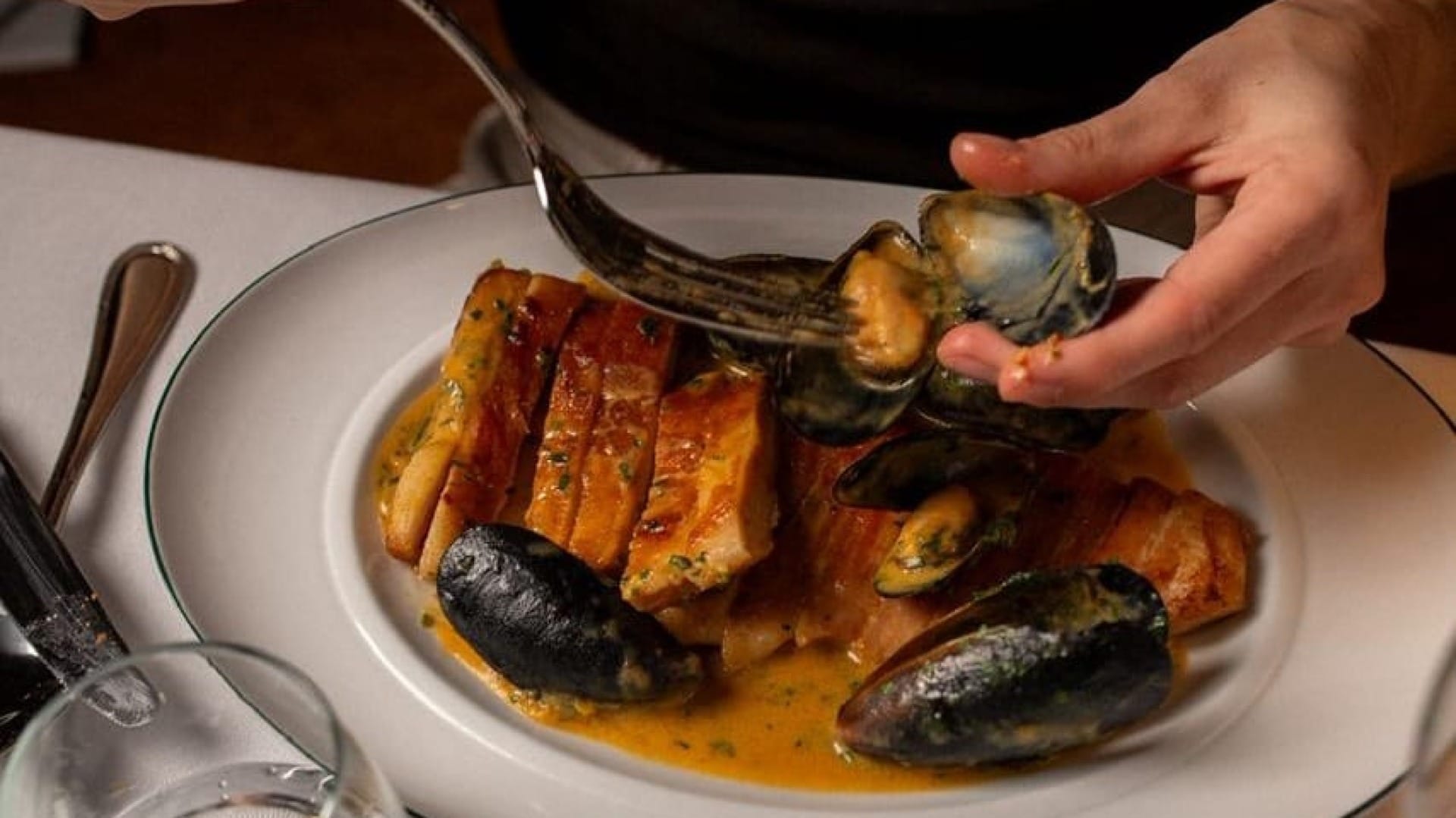
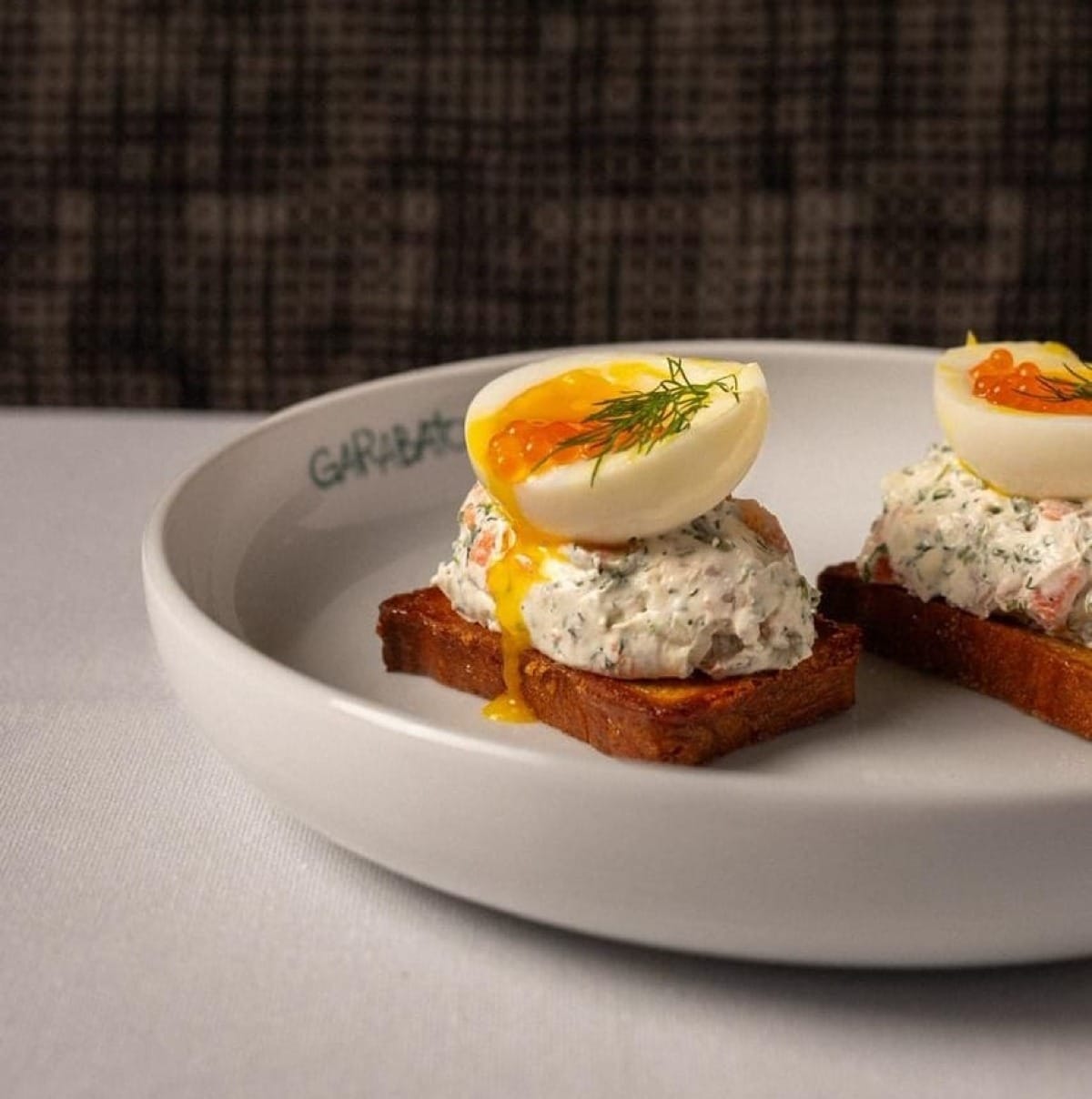
At Garabato, the pork flank comes with mussels and a Cointreau sauce that invites you to lose all decorum and lick the plate until it shines. The trout salad (perhaps the most delicious bite I’ve had in the last six months) comes on toasted brioche with butter and honey: the whole bite is a sensual dance between the salty trout roe, the sweetness of the bread, and the creamy soft-boiled egg. If possible, you should reserve a seat at the large communal bar that borders the kitchen to get a front-row view of the backstage and, on your way, tempt yourself with the ice creams served at the corner before heading to each table.
El Bocadito: wood-fired and neighborhood
That desire to cook what you like to eat that Calu describes is also a rewind movement that brings back emotional memories, creating a bond with the palates that share that memory.
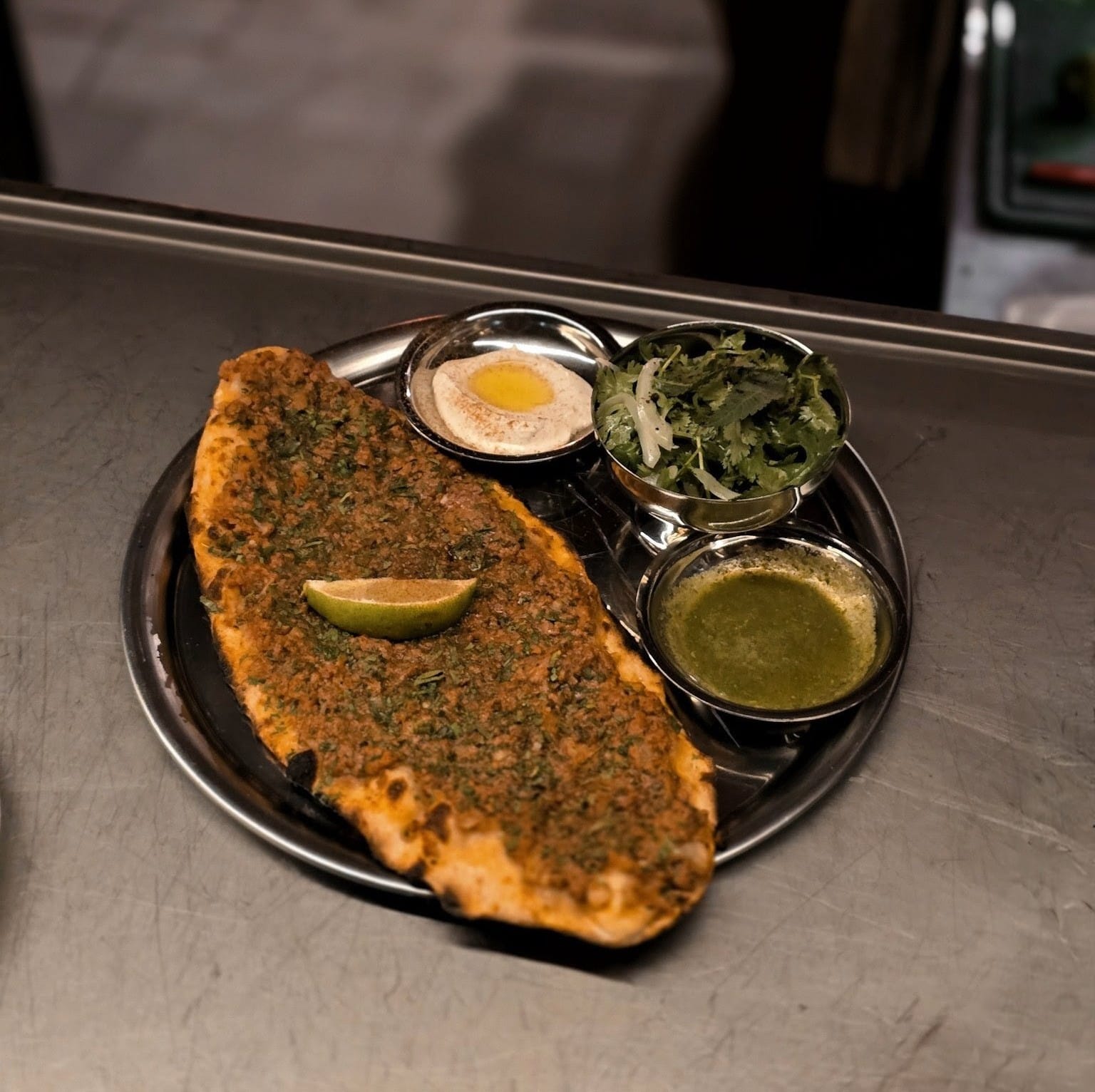
For Wilson Rodríguez, Arabic empanadas were an essential part of the nighttime delivery menu shared at the family table. In his pizzeria, Cancha, he decided to revive them in a freer way, while also being more connected to the culinary tradition of the Middle East. He designed his lehmeyun: spiced lamb meat on a well-aerated pizza dough.
Now, Wilson has just opened a new space: El Bocadito. The venue used to be a Chinese grocery store, and the area is one of the most authentically local in Villa Crespo, still free from gentrification despite the nearby Movistar Arena. Wilson, his partner and co-owner Paula Ramos, and their team have created a restaurant with the soul of a corner store. The atmosphere is built with bricks and plaster, the floor of limestone mosaics they uncovered post-renovation, and a heart in the form of a wood-fired oven.
And the lehmeyun remains a staple on the menu (at least for now, the menu is extremely flexible), in an expanded version: it includes pork alongside lamb, and a little extra fat to enhance the flavor. The blend of spices is the secret: a world of sensations, where there's a bit of everything but it all comes together without confusion, and everyone speaks clearly. Completing the set is a little herb salad, a small bowl of green chutney, and a touch of labne (creamy natural yogurt) to add freshness and acidity.
There’s also sirloin and ribeye on the menu, along with dishes that could easily be enjoyed by a grandparent fond of vermouth: roasted peppers, pâté, fried empanadas, and a trendy mini pizza with burrata that I still regret not ordering during my visit. The clear intention is for neighbors of all ages to make El Bocadito their own.
Of course, pizzas are part of the very soul of Wilson and they are still available, but in a version that aims for the traditional stone-baked pizza from the eighties and nineties in Argentina. For him, however, this nostalgic movement common among many young chefs isn’t necessarily new. “I think it’s something that has already happened with hamburgers at some point or with pizza as well. Perhaps now they are more specific and niche trends, like smash burgers, or Roman-style or New York-style pizza,” he points out.
Bonus track: musical first aid kit
Because if there’s one thing the world has been demanding lately it’s emotional support, I’m sharing this little uplifting playlist, in case L'Estasi dell'oro alone isn’t enough.