Trench Crusade: Demons, Trenches, and Ruins in the Hottest Wargame Right Now
15 de jul. de 2025 — Astartebord
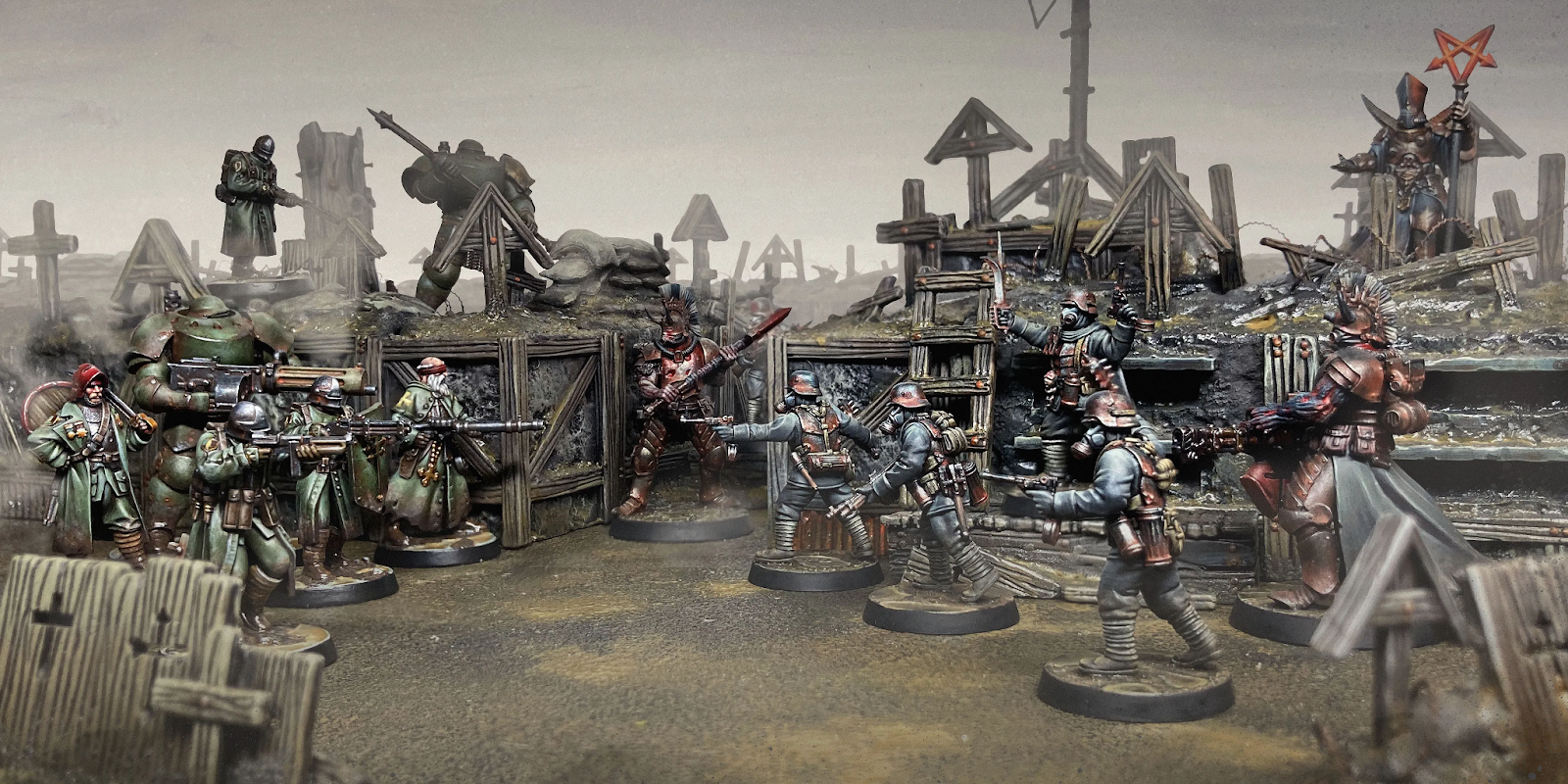
Templars, firearms, demons, trenches, alchemy, witchcraft, God, Christ clones, faith, chaos, wars, and destruction. These words echo throughout the history, scenery, and miniatures of the new religious horror skirmish game, Trench Crusade. It is, in essence, "World War I against demons," as illustrator Mike Franchina, one of its creators, puts it: "Eight hundred years ago, during the First Crusade, the Templars entered Jerusalem. In secret crypts beneath the city, they discover a kind of demonic artifact and are tempted by it. They open a portal to Hell, and all these demons emerge."
Where Does Trench Crusade Come From?
Trench Crusade was originally conceived by Franchina in 2016, but the process accelerated from 2022 onward. In its final form, developed by Tuomas Pirinen, Mike Franchina, and James Sherriff, it raised over 3.3 million dollars on Kickstarter in November 2024 and is on the verge of its official launch, capturing the attention of Warhammer fans everywhere.
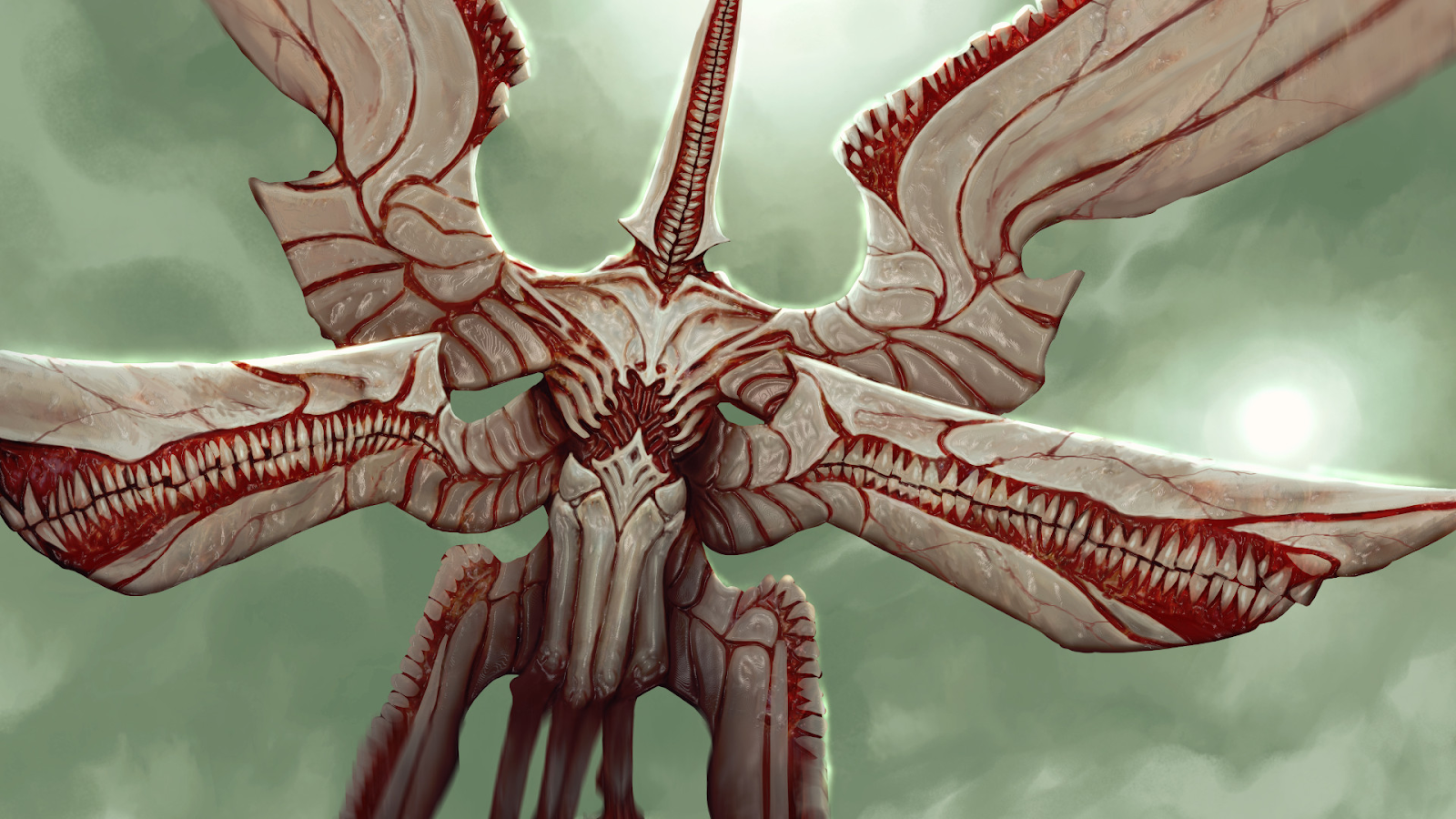
Franchina is an illustrator who worked as a concept artist for Blizzard and Magic: The Gathering. His work has had a major influence on fantasy and sci-fi games, with his dark and twisted style now being one of the pillars that define Trench Crusade's identity.
Tuomas Pirinen was the lead designer of Mordheim, the iconic wargame set in the Warhammer Fantasy universe, released by Games Workshop in 1999. Considered by many to be a cult classic, Mordheim defined an era with its dark tone and narrative focus. Finally, James Sherriff rounds out the trio with his sci-fi and fantasy miniature modeling.
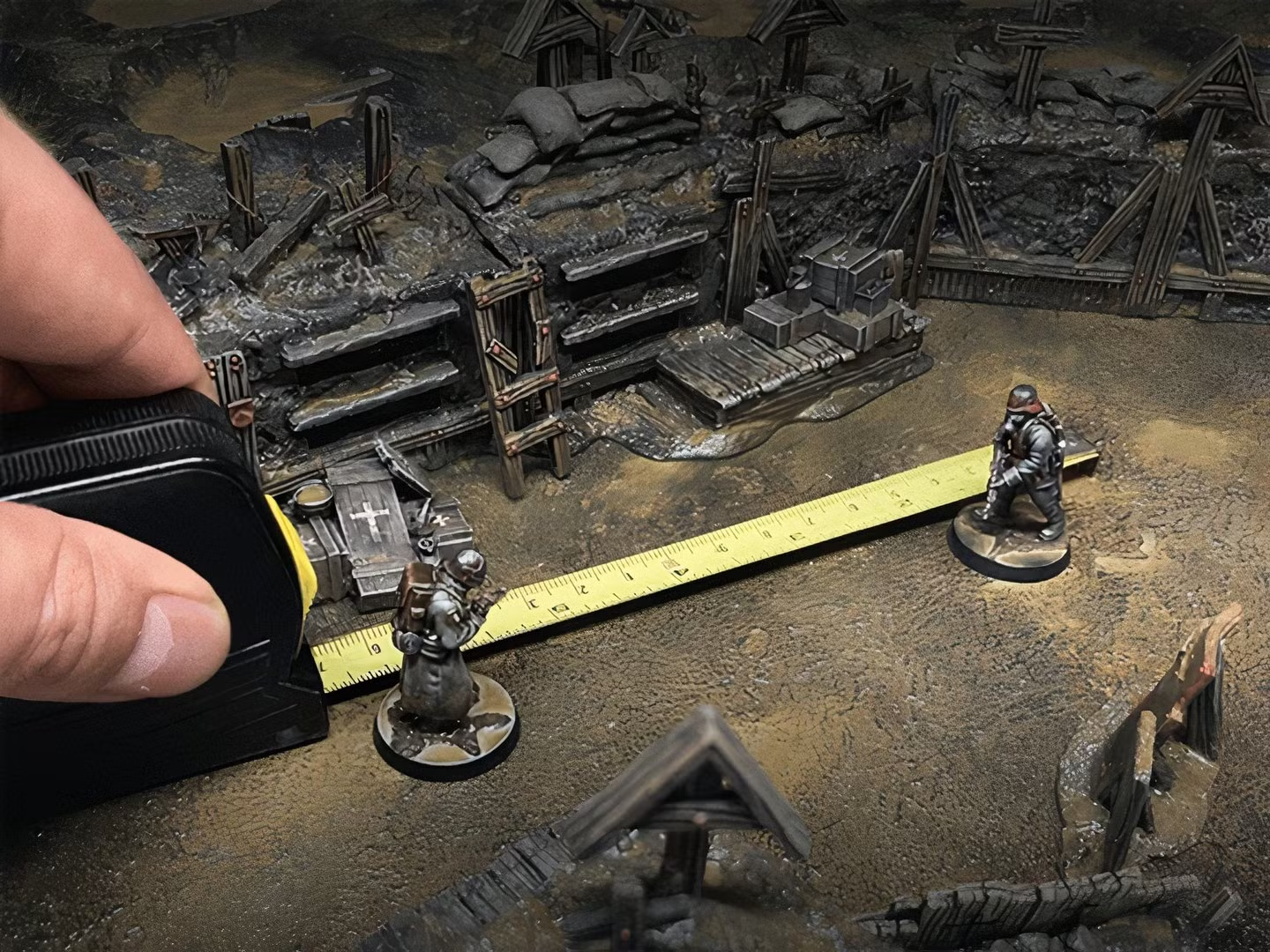
Together they managed to condense decades of experience in wargames, video games, concept art, and modeling into a completely new product that speaks to both Warhammer veterans and new generations alike, both hungry to play something different. But wargames aren't just about the game itself -- they're a hobby that forces us to slow down, assemble, paint, understand, and think through strategies. The battlefield is a kind of chess where you're not limited by squares but by your imagination, the chance of many six-sided dice, and a tape measure.
Trench Crusade vs. Warhammer 40k
Trench Crusade is often compared to Warhammer. Veterans themselves claim that its setting manages to surpass that of 40k and that its creators made interesting decisions regarding its sales model and game design, which was very well received by the wargaming community.
Both have central religious themes. Trench Crusade is about a war against infernal forces, where the Knights Templar, by committing the "ultimate heresy," open the gates of Hell in the Middle East. Warhammer 40k has the Imperium of Man, a theocratic empire that worships the God-Emperor of Mankind, their ruler who guides their starships through an alternate dimension from his Golden Throne (even while half dead) to fight Chaos and cosmic beings considered demons.
They also share a grimdark tone. In fact, Warhammer 40k popularized the term, and Trench Crusade follows the same path with a grim, violent, and disturbing setting, with no truly "good" factions or visible hope -- just like 40k.
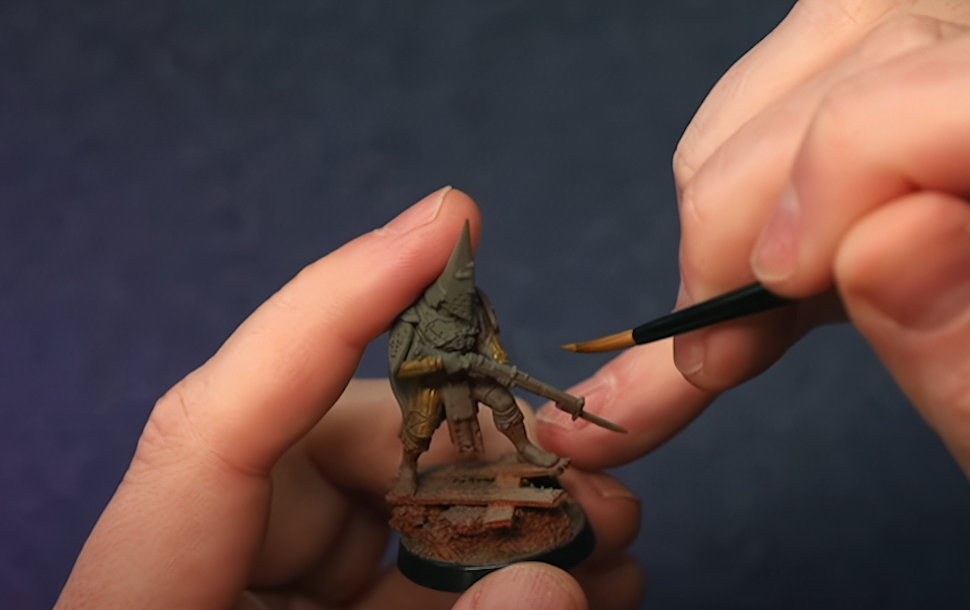
Their main difference (besides the obvious) is that Games Workshop has a clearly corporate and capitalist approach to this hobby, and has sustained it for decades with a quasi-monopolistic position in the wargaming niche. Trench Crusade, on the other hand, proposes a more open and community-driven model. As a skirmish game, you don't need as many miniatures to play, the rules are free, it promotes 3D printing, and it has a list of community licenses to make it clear that it's not trying to control fan-made content.
At launch, the game will include six factions, with over 60 miniatures that will be available on Kickstarter both as physical models and as digital STL files ready to print. Another important difference from 40k is that they encourage players to create their own sub-factions through art, modeling, and more. It's in these custom figures and factions that Pirinen and Franchina see the potential of Trench Crusade -- and I think they're right.
The rules use a system of 2D6 with alternating activations (which makes it more dynamic and engaging than Warhammer 40k), risk/reward decisions, and narrative progression campaigns. This design aims to make every match different, with stories of sacrifice and horror, rather than a mathematical or optimization contest.
In conclusion, while Trench Crusade doesn't aim to compete directly with Warhammer 40k, it offers a creative freedom that Games Workshop simply doesn't allow. This, combined with certain recent corporate decisions by GW, is starting to weaken the giant. Not to mention the clear difference in accessibility and the alternating activation dynamic that gives Trench Crusade a fast, back-and-forth pace that honestly feels more fun compared to the classic full-turn system we're used to.
Getting Started: What You Need to Play
Obviously, Trench Crusade is a hobby that requires time and money -- like any self-respecting nerd, I've spent more than I'd like to admit on plastic miniatures -- but thanks to the explosion of 3D printing, this world is becoming increasingly accessible. Nowadays you can find STL files for print-ready miniatures on sites like MyMiniFactory or even through Patreons of artists who release amazing alternative minis month after month (all valid for play). If you have a printer at home, great. And if not, there are also shops that print on demand -- plus you get to avoid having microplastics in unwanted places.
Alright, now let's say we want to play a match with our friends. For this we need a large table (at least 120x120cm or 90x90cm), terrain, our miniatures (at least 6 per side), a tape measure, 8 D6 dice plus several more in red, and of course the game rules.
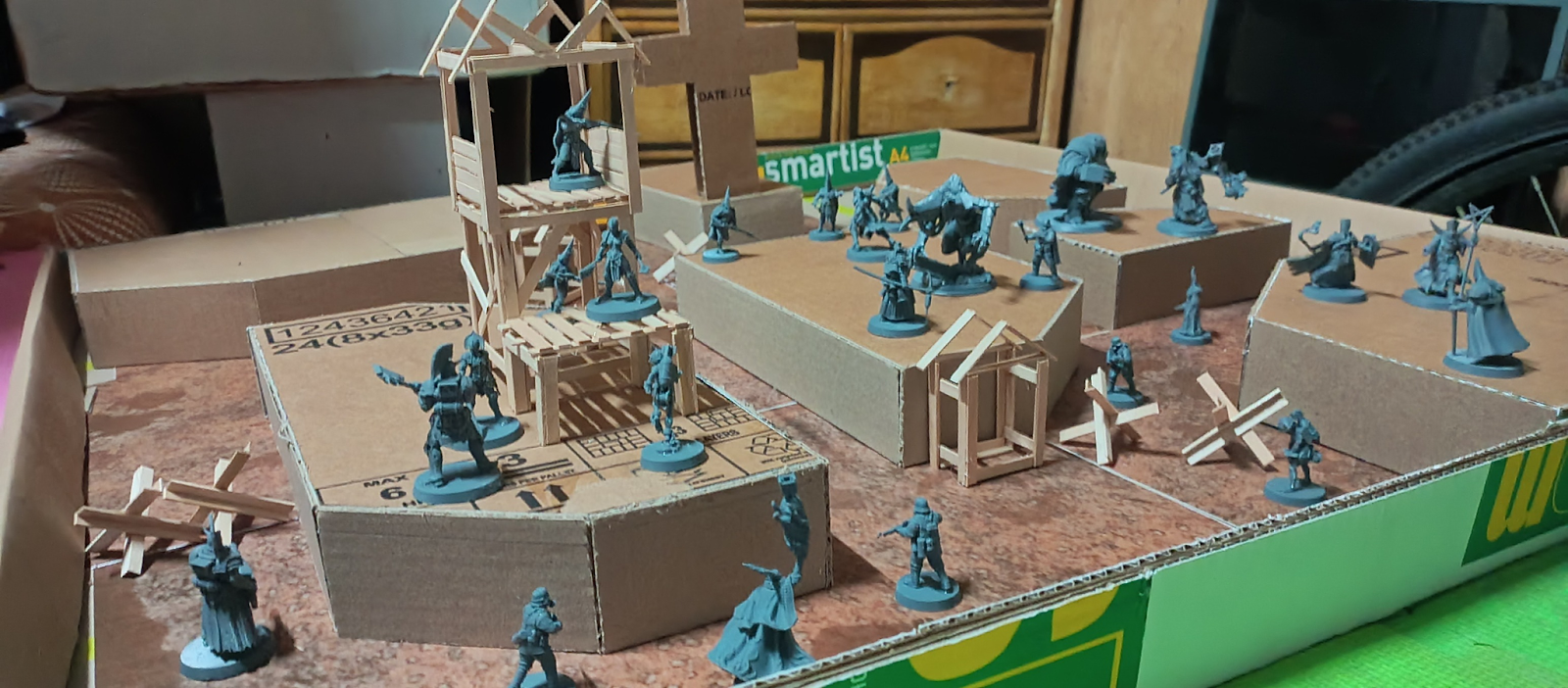
Matches take place on terrain that simulates trenches and ruins. This also provides different obstacles and cover that help make games less linear. The key to great terrain is knowing how to scavenge, because you can get really creative with popsicle sticks, trays, chip tubes, wood, cardboard, or even styrofoam, which is the most common material. You can also get ammo crates or barrels printed in resin.
Then, each player chooses which faction to fight for in the Great War, a key decision for both the game and the hobby, opening the door to the massive lore of Trench Crusade. Players then have around 700 ducats to recruit their warband, keeping in mind that each miniature has a base cost (we'd have enough for 10 to 15 miniatures, though it can be more depending on the rules) and that the idea is for both sides to be balanced. Each unit has mechanics and abilities that we'll need to learn. We can also print or handcraft a sheet with their characteristics, abilities, and stats.
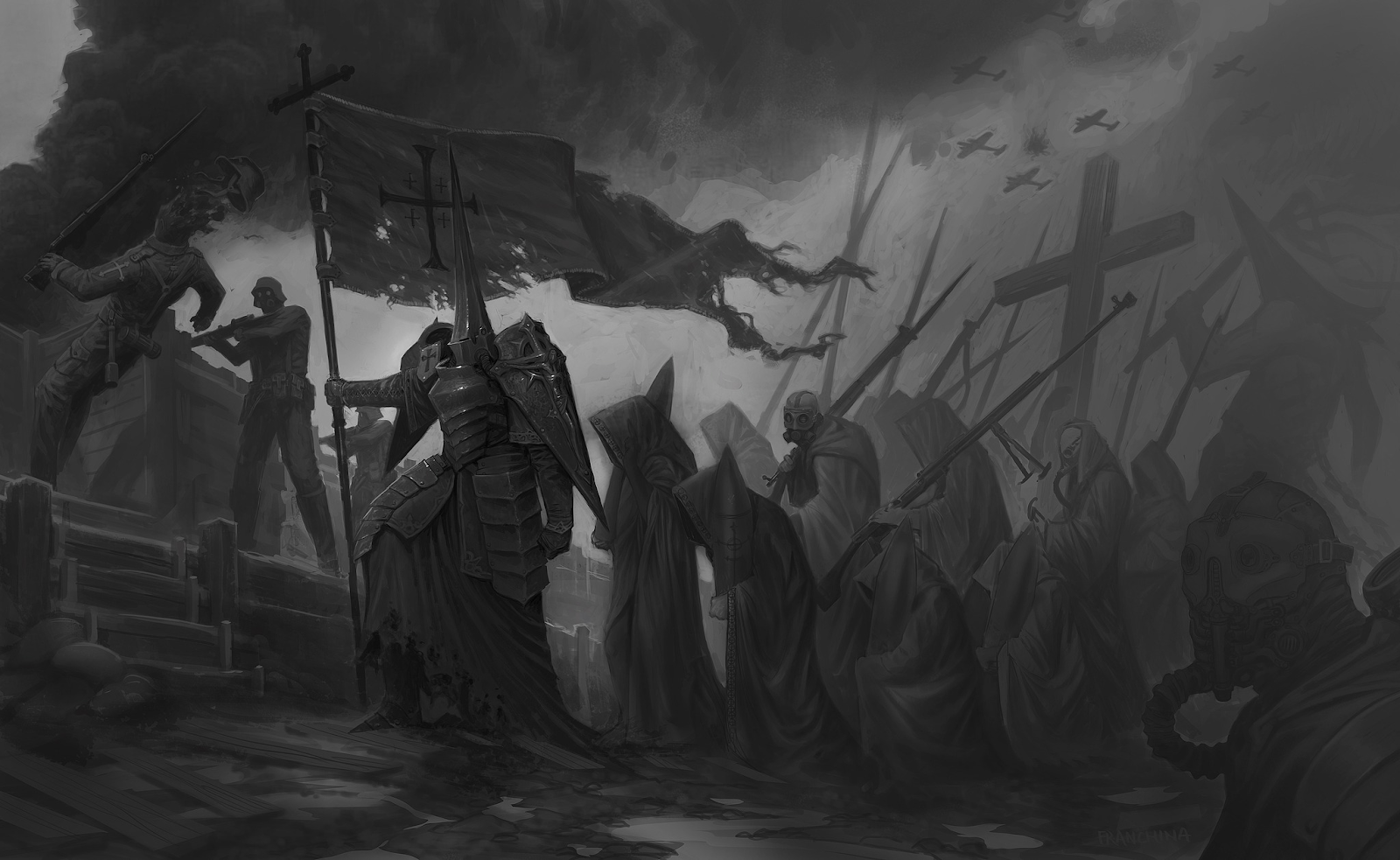
Introduction to the Lore of Trench Crusade
Once we're ready to play, it's important to immerse ourselves in the history, the major events, the factions, and their characters, because the miniatures we choose will represent them, and they'll represent us on the tabletop. For this I'll be referencing my Twitter threads on Trench Crusade.
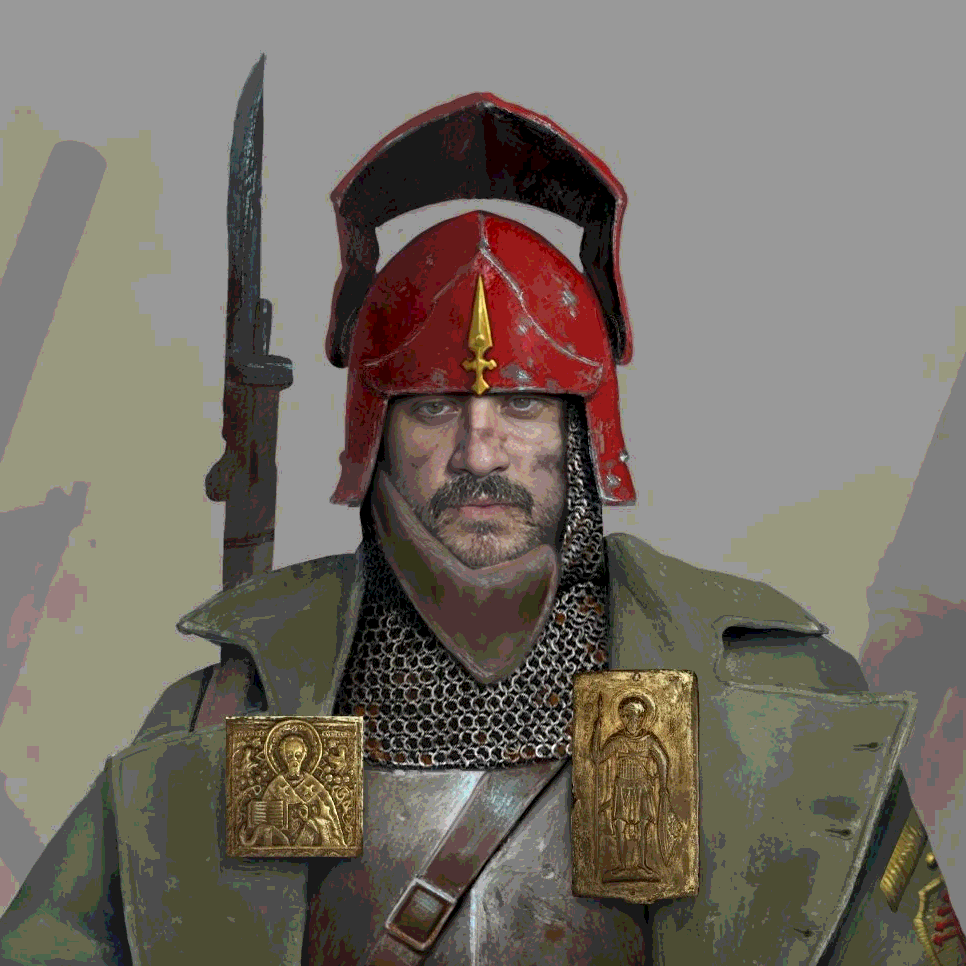
During the First Crusade, the armies of the Church captured Jerusalem. The Knights Templar discovered secret crypts and an ancient demonic artifact. Blinded by greed, they fell to their knees before a new lord. They began trafficking with demons and committing all manner of unspeakable rituals. This was the First Heresy. The armies of the Church withdrew, and Jerusalem became a depraved pit where Hell and our mortal plane began to merge.
Eight centuries passed, and the Church still tries to reclaim the Holy City. The landscape has been completely devastated. Thousands of miles of mud, trenches, and craters where a crusade is fought by armies wielding terrifying weapons and summoning unstoppable supernatural beings. The armies are now at a stalemate. "This is the Trench Crusade."
One curious detail is that the colonization of the Americas never took place or is never mentioned. It's an alternate timeline where the infernal invasion and the First Heresy completely diverted Europe's attention and resources, preventing transatlantic explorations and conquests. So our continent remains a crucible of narrative and strategic possibilities.
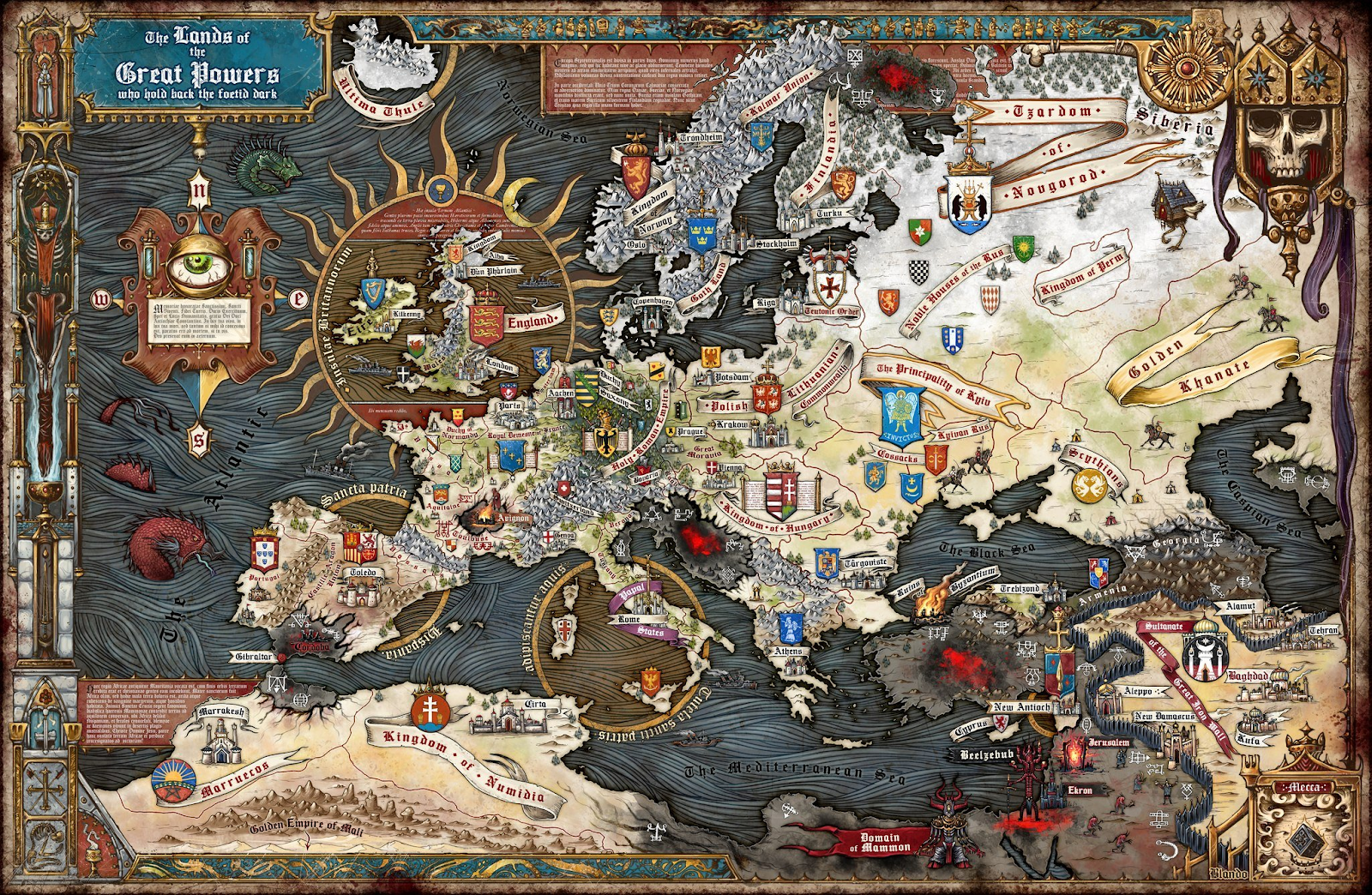
Timeline of Trench Crusade, from the First Crusade
1099 - The First Crusade captures Jerusalem. The Knights Templar commit the Act of Supreme Heresy. The Hellgate opens and Jerusalem is destroyed in the cataclysm.
1101 - The Year of the "Three Battles." The Heretics, alongside armies of the Third Circle of Hell, conquer most of the Levant (the eastern Mediterranean).
1102 - The ancient city of Antioch is fortified and becomes a central point of resistance against the forces of Hell.
1106 - Cobar becomes the First Tyrant of the Sixty-Six (a kind of council that leads the heretics).
1109 - The Grand Sultanate of the Invincible Iron Wall of the Two Horns that Pierce the Sky is formed -- yes, quite a mouthful -- and in the following decades unifies the Islamic factions. The Great Iron Wall of Iskandar reemerges and is fortified against the Heretics.
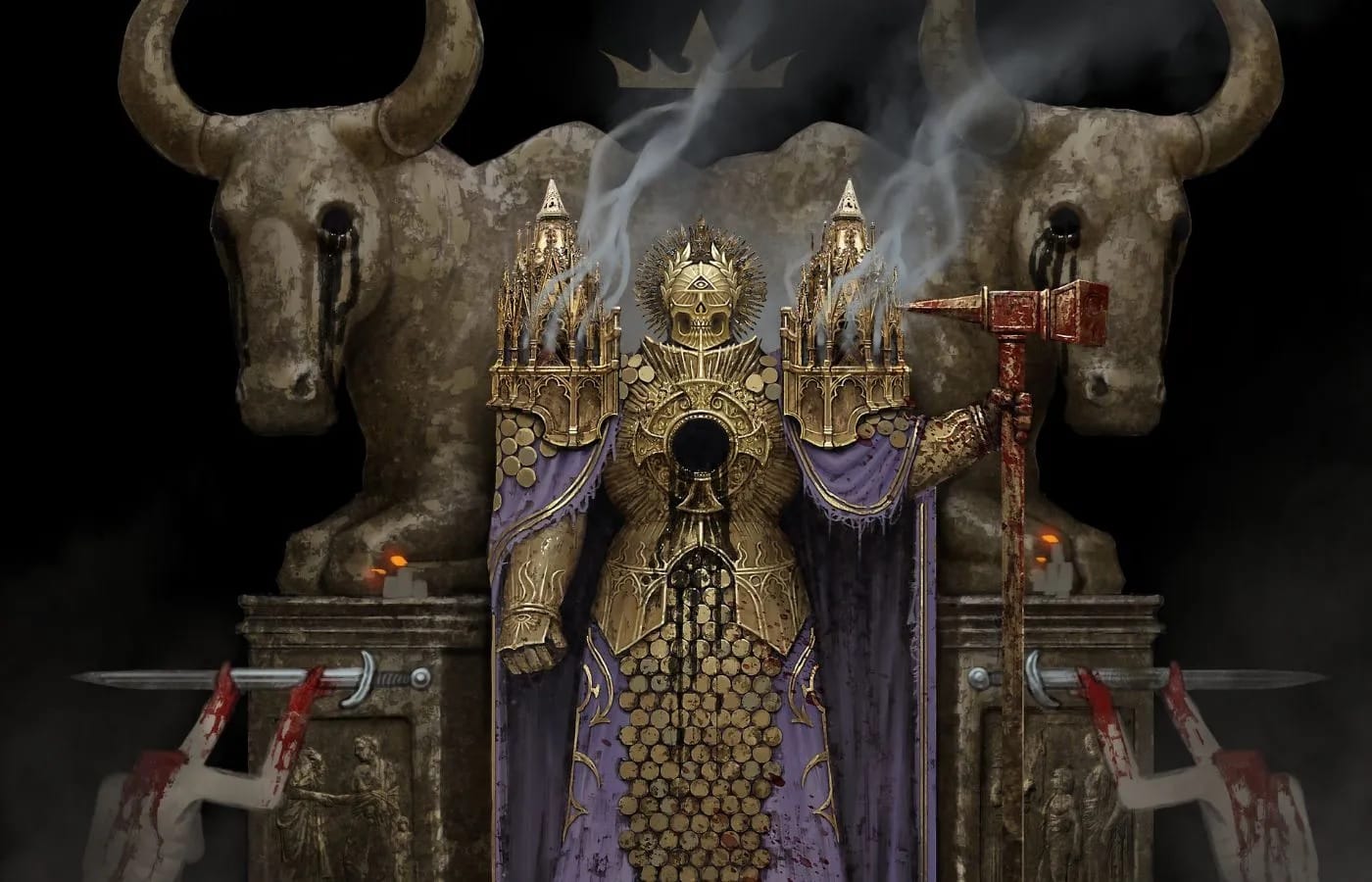
1117 - The legendary Seventeen Martyrs travel to the Earthly Dominions of Hell to convert the Heretics. Captured, tortured, and kept in a perpetual state of agony, they remain trapped to this day inside Brazen Bulls heated to a red glow.
1165 - The Old Man of the Mountain -- who's a big deal, I'll explain later -- and his Hashashins defend the mountain fortress of Alamut. The castle still holds, despite centuries of siege.
1215-1306 - The Triclavianist Wars (from "three nails," referring to the crucifixion of Christ). The Church splits and engages in fierce internal conflict. The Heretic dominions expand while the faithful fight among themselves. Millions die by sword and fire.
1346-1353 - Beelzebub, the Lord of the Flies, unleashes the demonic plague of the Black Chalice. Tens of millions are infected, becoming metastatic vessels in the worst plague in human history. The Corpse Wars begin.
1429 - Joan of Arc, a Living Saint of the Church, leads the forces of the faithful in driving out the Black Chalice, marking one of the greatest victories for the faithful.
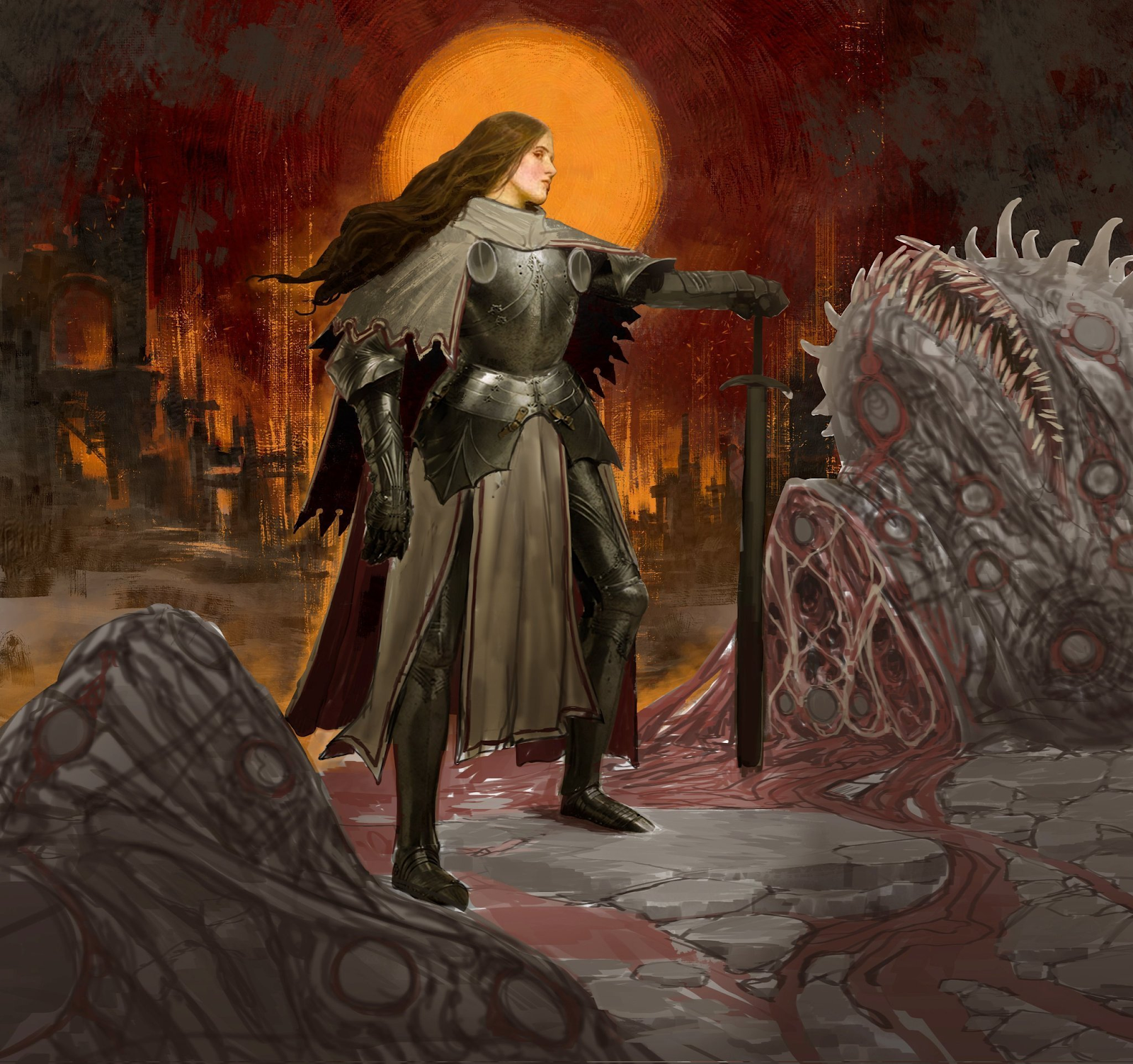
1477 - The City of Argos is taken by God and ceases to exist.
1503 - The War Prophet Angelos, guided by Saint Eligius, discovers the formula for Orichalcum Steel. Though extremely costly, it is a metal that is highly effective against all projectile weapons and is still used to this day.
1545 - Antioch is completely destroyed by a mysterious infernal weapon.
1573 - The Sacred Order of the Dragon halts the heretic advance after the destruction of Byzantium. A million heretics are impaled on the hills of Wallachia -- OMG a Vlad the Impaler reference.
1595 - The walls of New Antioch are completed.
1666 - The Year of the Six Afflictions. In a surprise raid, the newly formed Heretic fleet captures Gibraltar and turns it into a base of operations against Europe. The forces of Hell gain access to the Atlantic.
1670 - Due to Heretic Fleet raids, the English Crown begins construction of the White Cliffs Fortress.
1703 - Against all odds, a small force of Hebrew Knights from their secret fortress destroys the Templar fortress at Acre.
1805 - The Heretic fleet, under the command of High Captain Ranga, defeats the English fleet at the Battle of the Bloody Cliffs. Admiral Horatio Nelson dies in combat.
1807 - Heretic forces invade Eire and kill half the Irish, but they resist the invasion with the help of the Duke of New Antioch and the Church. More details in this thread I wrote.
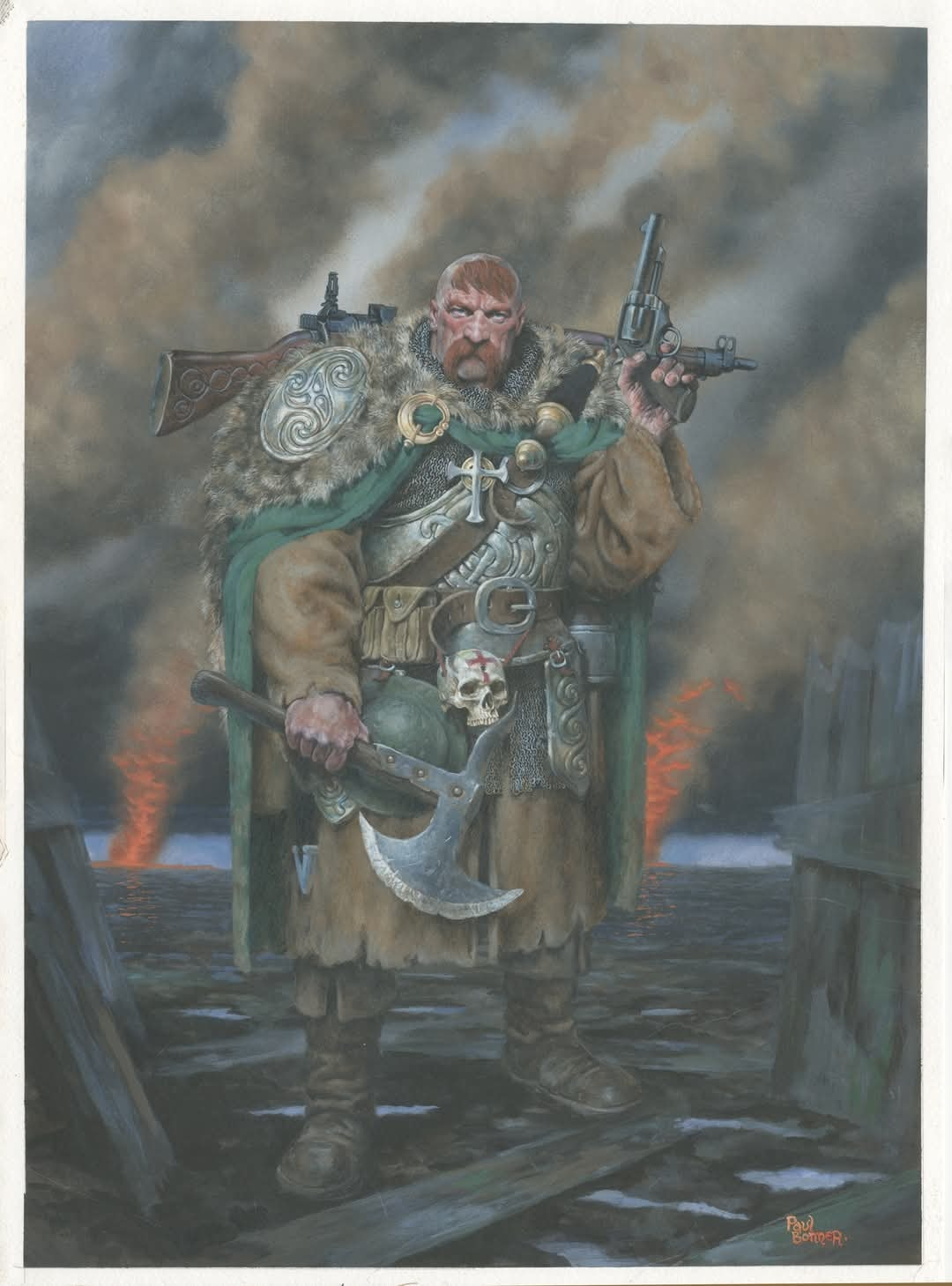
1866 - In the utmost secrecy, heretic scientists, aided by the demon Marbas, build the first modern submarines.
1870 - Launched from Gibraltar, heretic submarine fleets cause massive casualties among merchant navies. Widespread famine breaks out.
1872 - Heretic forces storm the city of Rijeka. It is fortified and becomes the launch point for the heretic conquest of the European continent.
1894 - The Year of the Broken Trinity. Death Commandos simultaneously assassinate the High Pontiff, High Prophetess Aelia, and the Emperor of the Holy Roman Empire. The faithful are thrown into chaos. The Heretic Legions, led by infernal nobles of the Seventh Circle and a massive vanguard of tanks, launch a simultaneous blitzkrieg offensive in the Levant and Europe.
1899 - The Church Space Program begins.
1907 - Construction of the mobile fortress of Britannia is completed.
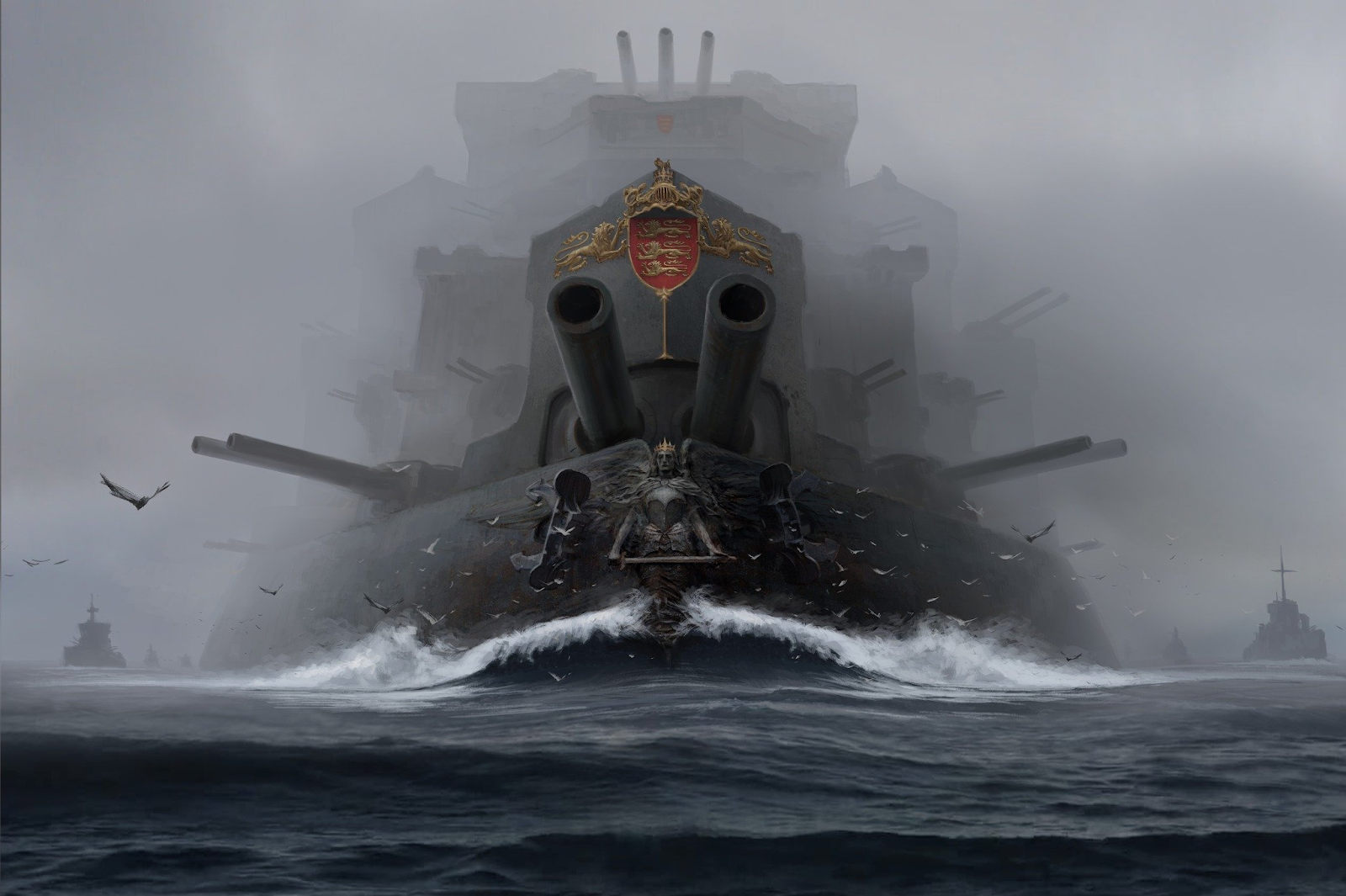
1910 - Battle of Cordoba. A bloody stalemate. Heretic artillery devastates the ancient city but fails to break through to the heart of Hispania.
1914 - Present day. Both sides prepare for major offensives. In the vast expanses of No Man's Land, skirmishes and raids intensify as faithful and heretics compete for intelligence, powerful relics, and strategic positions.
That's the entire official timeline we have to date of the major events of Trench Crusade. The game's progress and its community suggest that we'll soon learn much more about the key events and locations of this setting. In the meantime, what remains is an exhaustive review of the game's six factions and key characters -- a task I hereby duly promise. Keep an eye on 421 in the coming days, just as Azeb snipers watch over the Iron Wall of the Grand Sultanate.