Ultimate Team, The Guilty Pleasure of Digital TCGs

16 de ene. de 2026 — Luis Paz

First, the controversial part: plenty of people can’t stand “soccer games”. Yes, I love EA FC. I loved the FIFA era, and I’m into this new iteration of EA Sports’ long-running series. Same goes for the classics: Konami staples like International Superstar Soccer Deluxe on Sega Genesis, the Winning Eleven and Pro Evolution Soccer (PES) years on PlayStation 2, and every PC Fútbol I played on my early desktop PCs.
I love soccer games —and I still don’t really buy the hate they get from self-identified “hardcore gamers”. Do they honestly think StarCraft or Age of Empires II are more demanding, in terms of resource management, than a modern FIFA match? Is it a serious claim that Battlefield 6 requires more attention and faster reactions than a sweaty Division Rivals game in FC 26?
Some people name their AI chatbots and treat them like partners. Me? I’d rather blast AIs with soccer balls. And EA’s AI is genuinely strong: not just in how it pressures you during matches, but also in how the series has approached simulation. FIFA’s prediction features famously lined up with the winners of the last four World Cups: Spain (2010), Germany (2014), France (2018), and Argentina (2022).
This Didn’t Have to Happen to You (But I Hope It Did)
Back to the point. I’ve been into soccer games since I first walked into an arcade and played Virtua Striker, since the 8-bit days of GOAL!, and since oddball gems like the freestyle soccer mode in the Tiny Toons cartridge on Sega Genesis. More specifically, I’ve been playing EA’s soccer games for about 30 years: FIFA 96 on consoles, FIFA: Road to World Cup 98 on PC.
In the mid-2010s, alongside our real-life Thursday games, my two best friends (Beto and Pablo) and I ran a custom tournament on my PlayStation 4 for a couple of years. At our hangouts —besides trying new weed strains and eating like maniacs— we’d draw teams, play matches, track results, and keep a standings table. We even put money in up front and gave out prizes: a jersey for first, soccer shorts for second, socks for third. We played completely unhinged, and it was perfect.
Time and the pandemic eventually broke the tradition, but I kept grinding soccer games (and, honestly, food and smoke too). During lockdown, I logged more than 500 hours in FIFA 21. That’s almost 21 full days —time I could’ve spent finishing ten great games I still haven’t touched. Vices aren’t logical. And besides: “500 hours”? I didn’t play that many matches. Right —because that’s when I fell into Ultimate Team.
EA Sports’ Hidden TCG
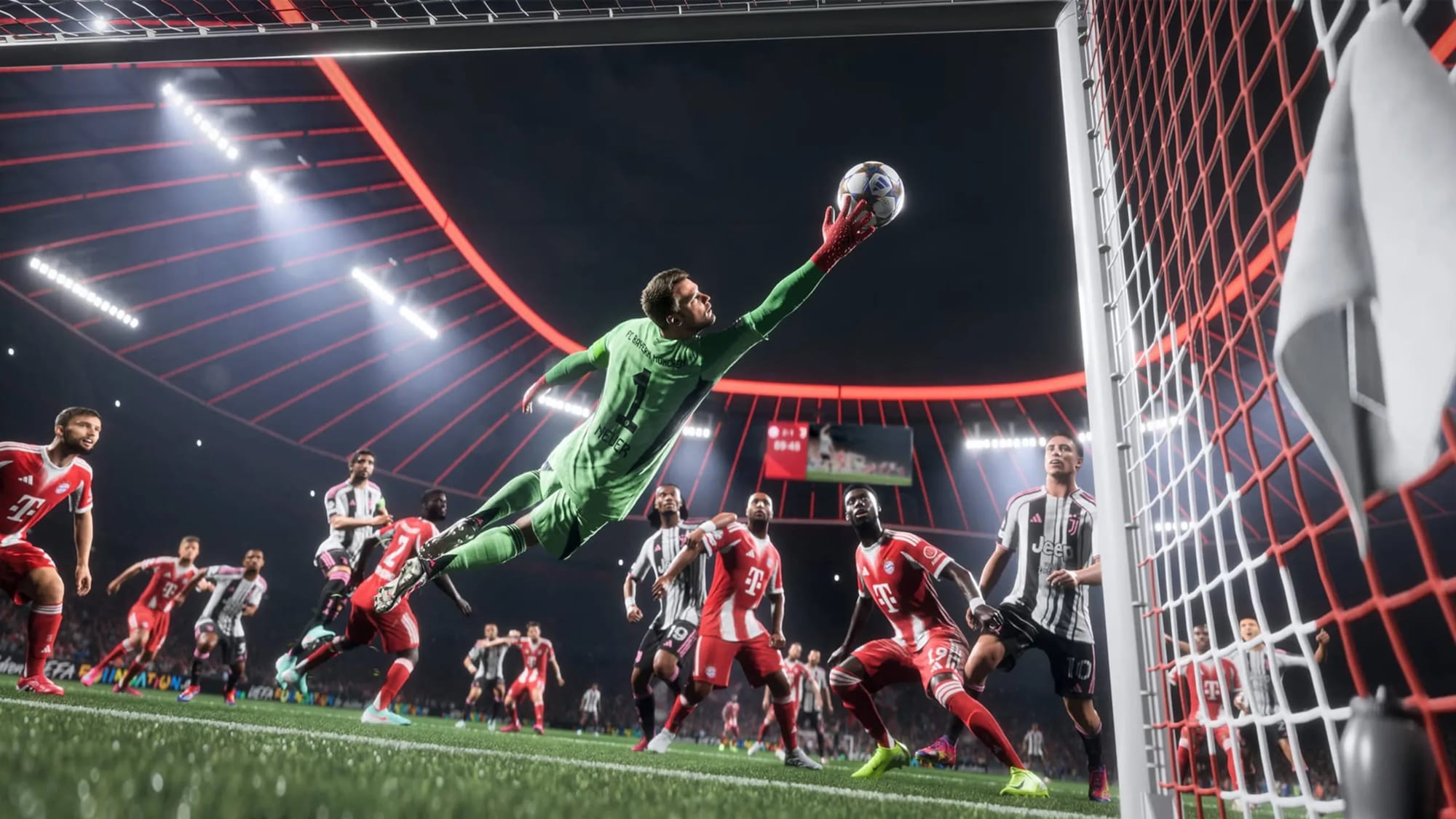
Ultimate Team isn’t a TCG in the strict, literal sense. It isn’t a card game, because it never stops being soccer: you’re still playing matches. But as a mode inside the former FIFA and current EA FC, it keeps the standard match structure while borrowing heavily from fantasy sports. The core loop is simple: you assemble a squad and grow a club using players and items you earn as rewards.
It’s monetized in multiple layers (coins, FC Points, event entries, packs), and it can absolutely become a money pit. But it’s also playable at a high level as free-to-play —if you’re willing to pay with time. And the point isn’t only “win matches, get rewards”. UT adds another dimension: puzzles and optimization problems that pay out in more players, packs, and upgrades. In that sense, it’s closer to Magic: The Gathering than people want to admit: mastery isn’t just mechanical skill, it’s also deckbuilding/squadbuilding, resource management, and navigating a secondary market.
Ultimate Team isn’t a 1:1 TCG, but its meta behaves like one. You rip packs full of “creatures” (players), chase rarities, follow archetypes (a 3-2-2-3 plays like aggro; a 5-4-1 like control), live inside an economy, and deal with rotation. And UT has one feature many digital TCGs still struggle with: a real recycling loop through Squad Building Challenges (SBCs), which convert bulk players into valuable packs or upgraded cards. I’ll get to that in a second.
Whether it’s UT or a TCG, the driver is the same: you collect cards (players) to increase your odds of winning. But collection immediately turns into selection, because the number of pieces you can actually field is small: 60 cards in a constructed Magic deck, 11 starters plus subs in an EA FC match. What Magic calls archetypes and synergies, Ultimate Team rebrands as chemistry —the extent to which players boost each other with bonuses. What Magic calls formats, UT expresses as modes, including dangerously addictive Draft-style events.
The psychological engine is the same everywhere: rip packs hoping for premium pulls, get burned, keep whatever’s usable, and cycle the rest. If there were a way to cash out UT bulk at scale, I’d probably be rich by now. And if there weren’t rotation.
Every new annual EA release resets the Ultimate Team ecosystem. Challenges expire (so rewards expire, so incentives expire), squads reset, and player value becomes fully temporary. That makes “burning” cards rational —but it also highlights the fake ownership at the core of Games-as-a-Service. If your ultra-rare, mythical, legendary, foil-tier CR7 becomes unusable because the edition you pulled it in stops being supported, then it’s effectively worthless. A Legacy-style format —paper Magic’s Legacy, or MTG Arena’s Timeless— would be fascinating here: a place where every player you’ve ever pulled remains playable.
But there’s a key difference from Magic. In MTG, a creature can be unplayable in one format and broken in another. In Ultimate Team, a bad player is just bad. The real obsession is chasing juiced versions of your favorites —or whatever is most overpowered in the current meta. Realistically, the best thing most of your surplus cards can do is become SBC fodder. They’re bits. No one’s feelings get hurt.
Squad Building Challenges (A.K.A. The Real Drug)
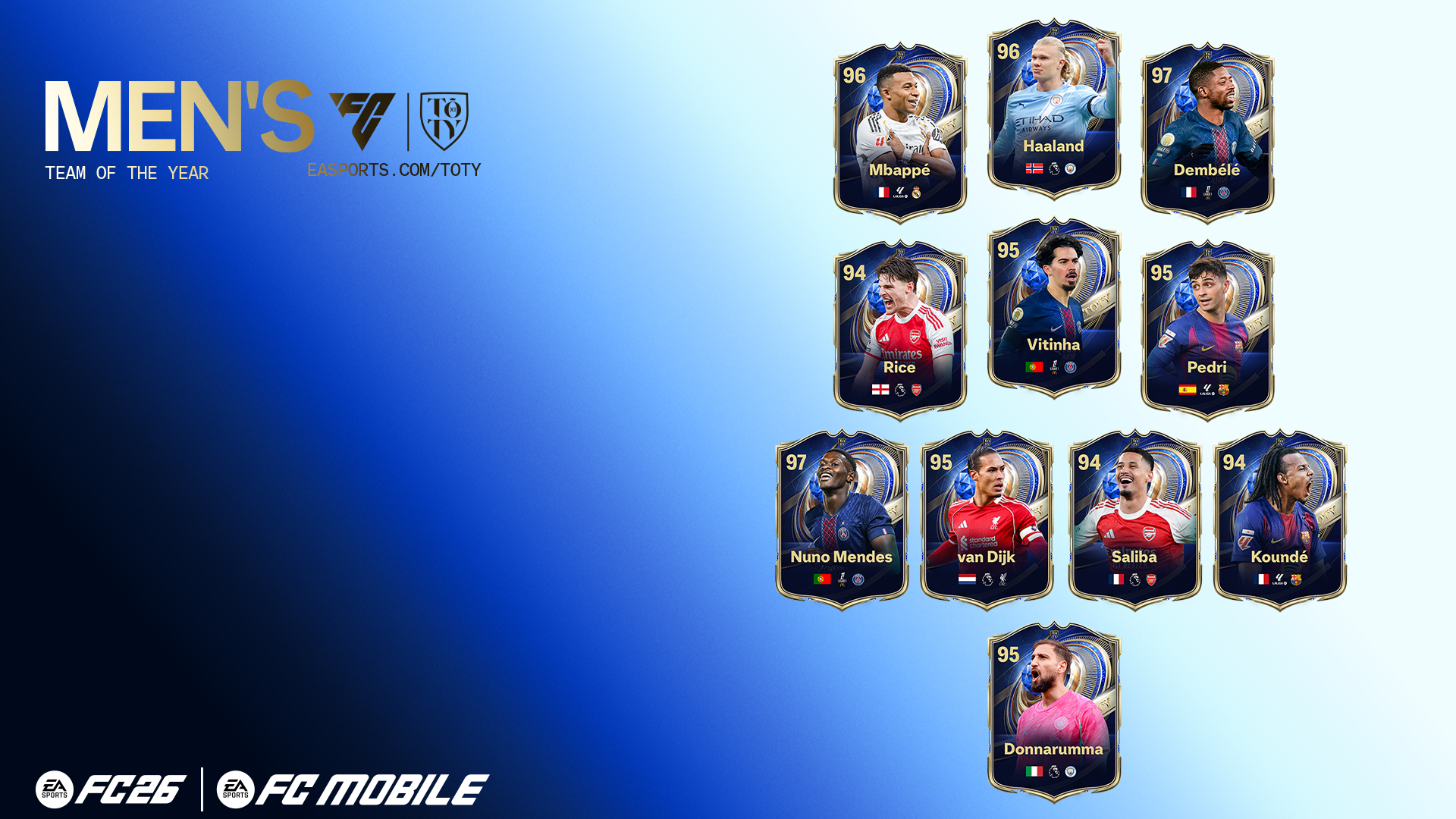
SBCs are exactly what they sound like: Squad Building Challenges. You’re given constraints, you submit a squad, and you receive a predictable reward —pack, specific player, upgrade. For example: submit a starting XI with at least one TOTY card plus seven rare players; ensure at least five share a nationality; cap the number of players from the same club. Some SBCs are laughably easy (submit basically any bronze, get a prize). Others are brutal —like completing 12 different squads for a single player item.
The key is that submitted cards leave your club. If you use a player in an SBC, you can’t use them in matches afterward —and you can’t sell them either. Some cards are tradeable, but a lot of what you pull is untradeable. I usually sell anything tradeable, even good pulls. And I never quick-sell untradeables, even duplicates —because almost everything can be future SBC material. Eventually your club becomes an overstuffed warehouse, and SBCs become the game’s natural “pruning” system.
If you come from TCGs, this feels familiar. It’s basically uptrading: consolidating a pile of mid-value assets into something more valuable. In Magic, you might trade six or seven $1–$2 cards for a single $10 planeswalker —same total value, better asset. SBCs work similarly. Best case scenario: you convert a stack of untradeable cards that meet a requirement into rewards that are tradeable, effectively creating in-game value out of nowhere.
SBCs also fix a classic TCG problem: waste. You pay real money to crack packs full of commons you’ll never use. You can sell bulk, sure, but it’s rarely meaningful —especially in markets where buy/sell spreads are punishing. Digital TCGs try to address this with burn systems: Hearthstone has dusting, Legends of Runeterra has shards, MTG Arena has wildcards and chest progression. SBCs feel better than most of those systems because they’re not just a transaction —they’re puzzles. It’s not “here are 100 useless cards, give me one wildcard”. It’s “solve this constraint problem with what you have and earn something valuable”.
Out of the hundreds of hours I put into FIFA/EA FC each year, a surprising chunk went to SBCs rather than matches. Last year, more than once, I opened EA FC 26 and closed it two hours later without playing a single game —just flipping cards on the market, clearing SBCs, hitting objectives, and optimizing my club.
Team Building Is Deckbuilding
A soccer squad and a TCG deck are both synergy machines. In TCGs, you’ll see effects like “+1/+1 to all your flying creatures”. In UT, synergy is visible and quantifiable: nationality, league, and club links push chemistry, which directly boosts stats.
Leagues, nationality, clubs, roles, and chemistry styles in UT function like color identity, mana curve, and matchups in MTG —an additional layer of creative constraint shaped by the meta. In TCGs, the most expensive deck doesn’t always win; the most consistent one does. UT has a similar logic, but with much more aggressive power creep. There are no bans, and player items evolve: stats get adjusted across the season, and new versions of the same player keep dropping (TOTY is the obvious example).
Then there are PlayStyles. In Magic, you might take Shock (one red mana, 2 damage) over Lightning Strike (one red plus one of any color, 3 damage) because you value lower cost over higher damage. UT has an equivalent decision layer: depending on how you play, you prioritize different players and different PlayStyles. You want better off-ball runs if you play through balls, first-time finishing if you counterattack, stamina if your matches regularly go to extra time.
Evolutions add yet another layer, letting you upgrade players by meeting requirements and completing objectives. They’re also the hardest system to manage, because they often force you to break your squad’s structure to evolve one player, or demand a heavy match grind in a short time window.
At this point, Ultimate Team is less “being a coach” and more a full management simulation in a fantasy football sandbox: Messi and CR7 can share a team with Pirlo, Garrincha, Zidane, and Beckenbauer —plus a 2012-era Neymar, or the iconic Eric Cantona. And when resource management becomes the real game, trading turns into a parallel meta. You can earn a huge amount of coins by arbitraging supply and demand for players and cosmetics —retro kits, badges, nation crests. Demand changes not only because of on-pitch performance, but also because cards suddenly become relevant for a specific SBC or a new Evolution path. Trading —and holding fodder stock for SBCs— is one of the most degen activities in Ultimate Team.
Added Time
There’s a strong case that Ultimate Team is the most complete, challenging, and demanding mode in EA’s soccer series, because it forces you to engage across three massive layers. First, match gameplay: real-time decision making and execution. Second, squadbuilding: chemistry, roles, playstyles, evolutions. Third, the economy: currencies (coins, FC Points), resources (players, upgrades, power-ups), and —crucially— time. Not only time spent playing matches or completing SBCs, but also the downtime involved in repeating challenges, waiting on weekly/monthly rewards, and riding seasonal cycles.
After so many editions —starting as a FIFA 09 add-on and becoming core by FIFA 10— Ultimate Team has accumulated not only hundreds of hours on players’ trackers worldwide, but also a set of economic mechanics and design ideas that even the oldest TCGs could learn from.