Fortnite: The “Live-Service” Era

24 de mar. de 2026 — Axel Bosso
More than thirty years ago, Tim Sweeney planted the seed of a creation that would forever change the entertainment industry. As a child, he spent his time taking apart lawnmowers and discovering video games with Atari, while his father worked at the U.S. Department of Defense, designing military maps for intelligence. Thanks to the invaluable access to cutting-edge technology that this provided (along with a significant financial cushion), Sweeney was able to take the necessary steps to create his dream company alongside colleagues.
In the 2010s, after decades of creating a graphics engine, developing, and publishing video games, his company began working on “FortressGame,” a cartoonish online title that tasked players with building structures and defending them from creatures that plagued the lands and a storm that swept away the foundations. The project went through several stages, including classic game modes like capture the flag and more bizarre ones, like destroying the enemy base, which could take the form of a triceratops or a unicorn.
 Luis Paz
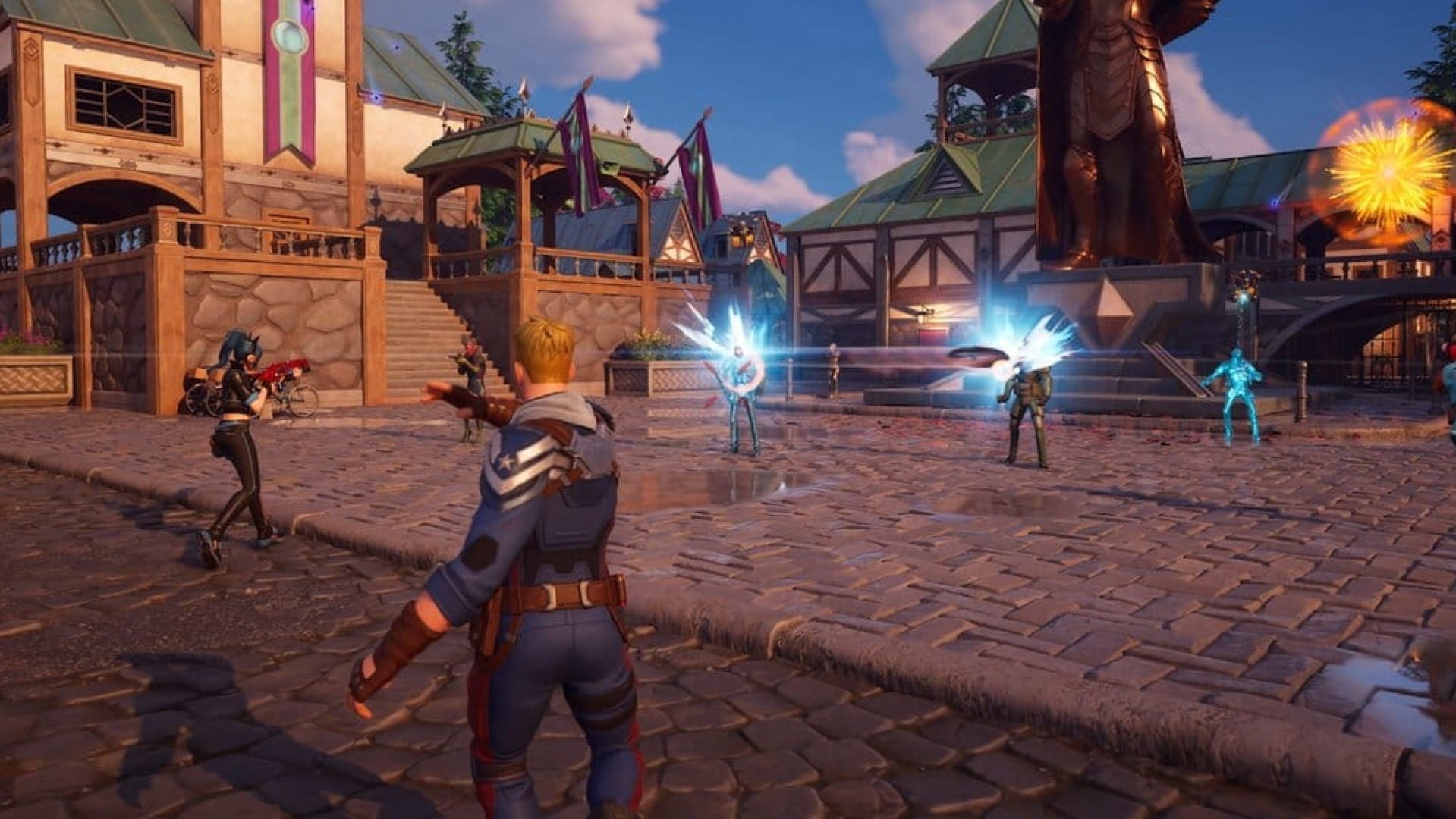
It would be in 2017, after several transformations and a mode that aimed to mimic the success of Minecraft in its freedom of construction and resource use, that this game would find its true identity by imitating a growing success of the moment: Playerunknown’s Battlegrounds. Retaining the construction aspect but shifting the goal to survive on an island with 100 players simultaneously, Fortnite would become a titan of the industry and one of the most successful video games in history.
Nailing it with a “live-service”
We could pinpoint several reasons why Fortnite is the overwhelming success that it is. From its mastery in design and execution to its genuinely good gameplay loop with layers of depth. However, I believe its greatest strength lies in its particular definition: Fortnite is a game as a service.
Games as a service (“live-service”) could be defined in two related ways, but one with a much clearer focus than the other. The general definition would be a game that receives constant updates, adding content (new weapons, characters, levels, missions, etc.) for an indefinite period. If we stick only to this definition, which is partly correct, we run the risk of lumping many current games into this category, due to how AAA development generally works today.
These are experiences that at first won’t cost us anything, but as we play and get hooked, time may pass and we end up spending more money than if we had bought a new single-player game.
A more relevant definition is that of games that are mostly “free-to-play” (meaning you don’t spend a dime to start playing), with practices that encourage spending real money to acquire upgrades and/or purely cosmetic content, as well as the use of different virtual currencies and progression modes that give us a sense of progress and the corresponding satisfaction. This is complemented by the presentation of daily and weekly objectives that compel us to keep playing constantly. Ideally, a couple of hours every day.
Diving a bit deeper, these are experiences that at first won’t cost us anything, but as we play and get hooked, time may pass and we end up spending more money than if we had bought a new single-player game. This happens in the form of “Battle Passes” that lock content based on experience points and money (usually you have to pay to access the pass) and other microtransactions to obtain the virtual item or object you desire. All this just to have the John Wick skin in Fortnite and embody this killing machine against other ridiculous characters, like the kids from South Park, Kim Kardashian, Ryu, and Daft Punk, to name just a handful of the hundreds of recognizable faces available. It’s a way of fulfilling the fantasy of Ready Player One and creating a metaverse with all the things you love, giving you reasons not to go anywhere else.
 Juan Ruocco 🧙♂️
Of course, this also impacts our cognitive sovereignty. This genre of games continuously fights for our attention, thanks to the presence of periodic objectives as I mentioned earlier, or by constantly throwing changes that keep the experience fresh. If we were to ask Sweeney what he thinks about the thousands of young people spending hours in Fortnite, generating free content on social media and buying merch, without even considering the other thousands of video games released each year, he would probably just smile.
Everyone wants their own Fortnite
It's worth mentioning, dear reader, that this text doesn't aim to say anything negative about players who only play one title a year, or those who love Fortnite and/or have invested their hard-earned cash into it. What I'm interested in is to stir the pot a bit regarding the concept of games as a service, because for quite some time now, many industry experts have been warning about what is already happening: everyone wants their own Fortnite.
HoYoverse, formerly known as miHoYo, is a Chinese company that started with three university students in 2012. Today, it boasts thousands of local and foreign employees spread across the globe. Titles like Honkai Impact 3rd (2016) and Genshin Impact (2020) made a significant impact in global markets, turning their anime-style characters into a well-known template in the industry and among players. Genshin, in addition, massively introduced the “gacha” (spending real money on something that gives you random rewards), which is now widely accepted in the genre. By 2026, HoYoverse has multiple high-budget games as a service available on mobile and consoles, and despite some missteps and ups and downs, it remains a company that has found global dominance.
 Juan Ruocco 🧙♂️
Just as there are cases of resounding success, there are also those of explosive failures. There are dozens of costly projects that not only failed to survive but also took their workers down with them. More recently, Wildlight Entertainment was decimated after Highguard, that game showcased with much fanfare at the end of The Game Awards 2025, retained few players weeks after its launch. A similar fate befell Riot Games, another titan of the industry responsible for League of Legends, Valorant, and other endless games. The company laid off a large portion of the developers of 2XKO, the free-to-play fighting game featuring characters from LoL. Although the project had been in beta on PC for a few months, the cuts came shortly after the game's console launch due to “not meeting Riot's expectations.”
There are many issues to discuss regarding these two particular cases and their downfalls. Perhaps Highguard doesn't offer very novel or interesting gameplay in its early hours to hook you, and its somewhat generic artistic direction didn't help. 2XKO, on the other hand, isn't an easy game for beginners, in a genre that's already quite niche and struggles to retain casual players, plus it doesn't offer anything for those looking to do more than just play online against strangers. However, focusing on these games (which are still good games) and leaving the discussion there is missing the bigger picture.
Today, many studios are taking elements from games as a service and applying them to their flagship titles, like Capcom with Monster Hunter or Ubisoft with Assassin’s Creed.
Why does PlayStation, a legendary company historically dedicated to single-player games, have a plan for twelve games as a service in development? Because if just one of those “hits” (and not even at Fortnite's level), the company would earn much more than with any of its other premium experiences (and in some cases, investing much less too). Today, many studios are taking elements from games as a service and applying them to their flagship titles, like Capcom with Monster Hunter or Ubisoft with Assassin’s Creed. It's not that these studios didn't do similar things before (after all, downloadable content, DLC, predates live services), but now the way of developing and bombarding users with content has truly changed.
All of this, and returning to the costly failures, raises questions like the following: How many big games as a service can exist simultaneously to capture diverse groups of players who will make investments? Have we lost the battle against microtransactions? How many people play video games today and which games do they play? Is there a larger audience to attract? Does the COVID-19 pandemic continue to have ripples in the industry? Is the future only online? Will the million-dollar attempts that even a journalist from the Quilmes neighborhood can predict will fail ever end?
The never-ending work
One last angle I want to briefly present is that of the other side of the counter: the developer who works on games as a service. In recent years, I've had the chance to interview people behind projects of this kind, like the game director of Dead by Daylight (2016) and the art director of Diablo Immortal (2022).
Both games receive constant updates, with new original content or collaborations with other IPs. For example, DbD is known for featuring iconic characters from the horror world, and Diablo Immortal had a collaboration with the manga Berserk. To make this happen, teams have constant meetings and defined deadlines to deliver (even if it means crunching) that new twist or disruptive element that brings something fresh. They can't let their players drift away to other games; they need to retain them. Every day, if possible. The job of a games-as-a-service developer is very different from that of the past. Their work doesn't end when the game they've invested years of their life in hits the market: on the contrary, that's when it truly begins. And it will last until the game dies, they get fired, or they resign.
I don't know exactly what will happen to games as a service in the future. But I would be surprised if companies with large capital stopped trying. Even if all the conditions are against them, with many titans already established, and the economic risk being high, the slightest chance of success will push any suited individual to seek those profits. In the meantime, we will continue to echo those lesser-known titles.