Warhammer: A Return to Fantasy
Dice, paintbrushes, and strategy: Warhammer made a comeback in 2024 to prove that tabletop gaming is a disruptive alternative to screen-based entertainment. This article takes a look at a tournament in Buenos Aires where the hobby serves to bring generations together and heal wounds.

2 de abr. de 2026 — Juan von Zeschau
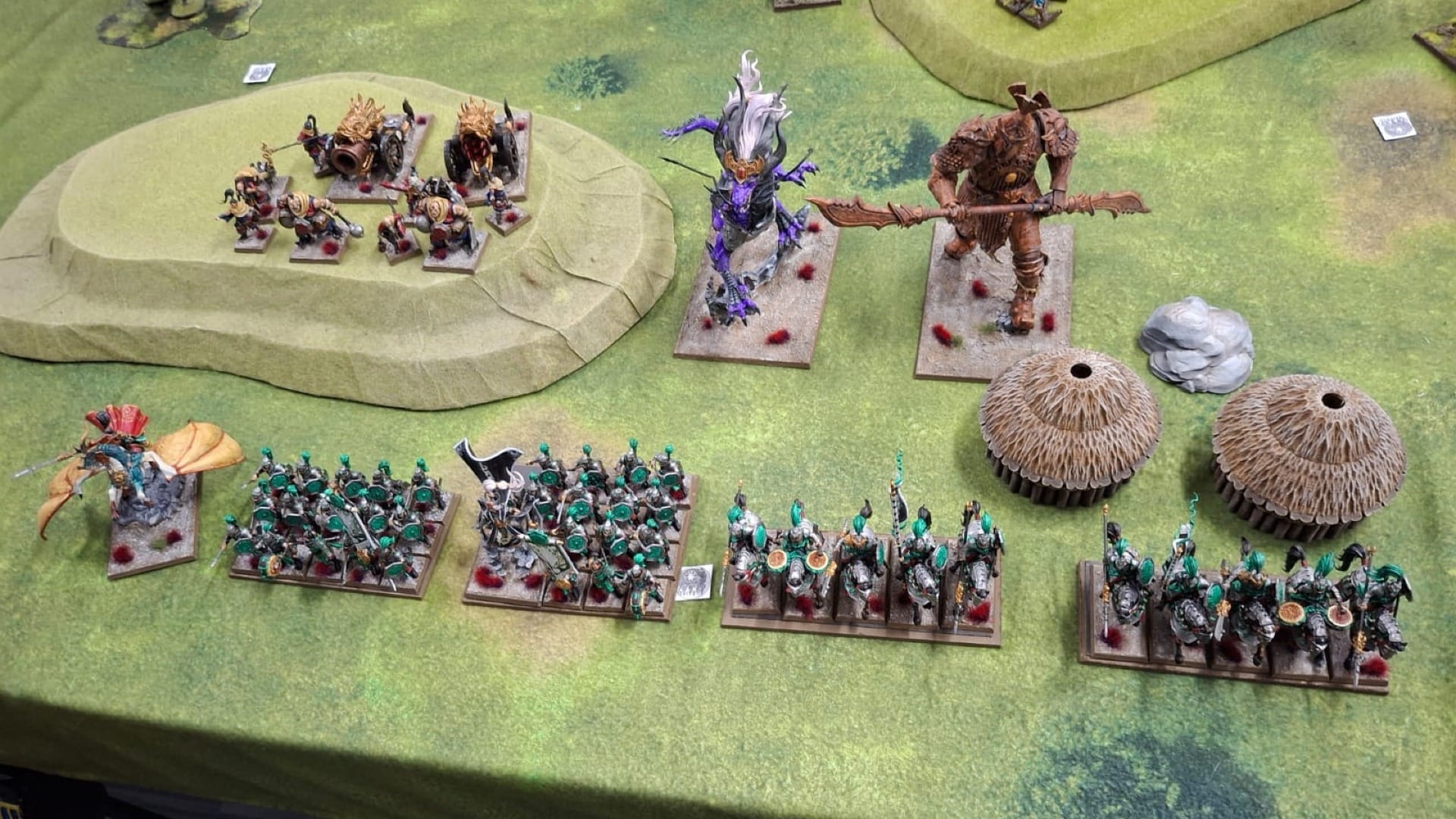
The arrows of the forest elves rain down relentlessly on my Lizardmen army. I knew this would happen before I accepted the challenge: the elves lying in wait atop a hill, ready to unleash their arrows as my troops closed in for hand-to-hand combat, raining down shafts upon the scaly hides. But I was eager to fight them.
The battle is already lost, I know. Maybe I can scrape together a draw. But then, my stegadon, the star beast of my army (a sort of triceratops with a castle on top, filled with javelin throwers), is charged by my enemy's dragon. The elven prince riding it wields a monster-exterminating sword: if he rolls a 6 on the dice, my stegadon will be sent to the great beyond.
The encounter is face-to-face, with no screens in between. (...) We consult the rules in a thick book resting beside the battlefield, and the armies are detailed on a sheet of paper.
No, it’s not a computer game. It’s a tournament of Warhammer Fantasy, a medieval fantasy game created by the British publisher Games Workshop in 1983. It’s played on a table, using plastic, lead, or resin-printed miniatures to represent the warriors. The encounter is face-to-face, with no screens involved. Besides the armies, there are small buildings, hills, and forests laid out on the table. When someone attacks, dozens of six-sided dice are rolled. We take turns moving units, and the system is based on medieval warfare, although it incorporates fantastic and steampunk elements: wizards, dragons, primitive steam tanks.
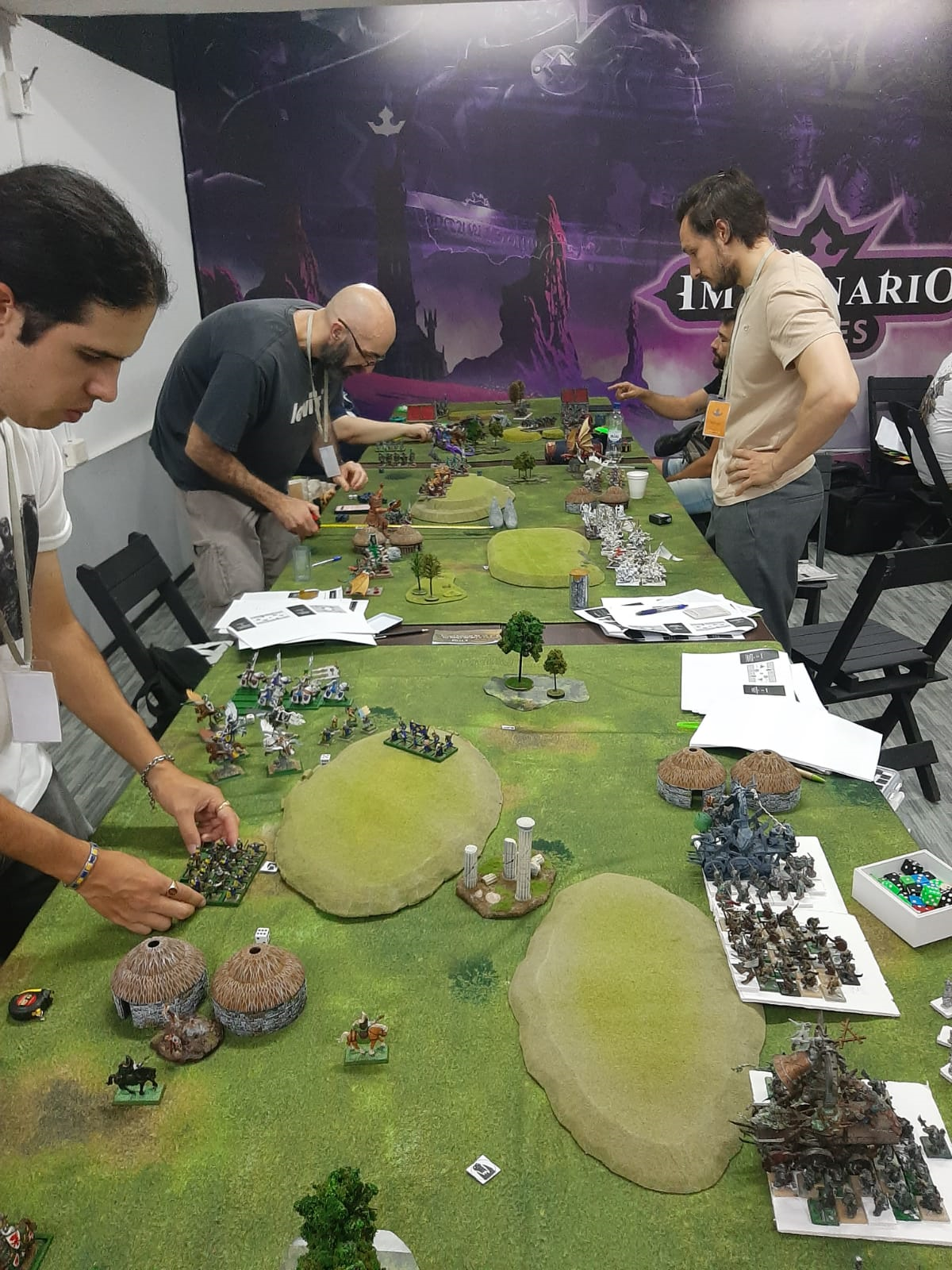
I’m fighting the second battle of the tournament “The Two Crowns” at El Imaginario, a game store in Belgrano. I’m up against the Wood Elves with my Lizardmen. We consult the rules in a thick book resting beside the battlefield, and the armies are detailed on a sheet of paper. I won the first match against the Skaven (ratmen with oxygen masks and poisonous gases, reminiscent of World War I), but this time I’m in deep trouble. My army is slow, the enemy is retreating and waiting for me to bleed out, pierced by their arrows.
The first time I saw a game of Warhammer was at the Brotherhood of the South, back in the mid-nineties. Menemism, Videomatch, the World Cup in France, that era. I was fourteen, a shy teenager who had just moved from Mar del Plata and had few friends in the city. The Brotherhood (a chorizo house in Villa Crespo, now demolished) was mainly a role-playing club, but it also organized Warhammer Fantasy battles and Warhammer 40,000. I started with role-playing games: I was a huge fan of The Lord of the Rings, and the role-playing game of the franchise was, for me, the natural entry point. However, every time we took a break from the game, or went to buy a hot dog and a soda at the buffet, I would spend a few minutes watching the Warhammer miniatures. I was fascinated by the dwarves with their artillery, or the hand-painted knights of Bretonnia. The battles lasted for hours.
Back then, without 3D printers, assembling an army was a luxury for a select few. The cheapest models cost two pesos (two dollars), and they were the knockoff lead versions. An army consisted of between fifty and eighty models. In the midst of a crisis and at fifteen years old, it was impossible for me to indulge in such luxuries.
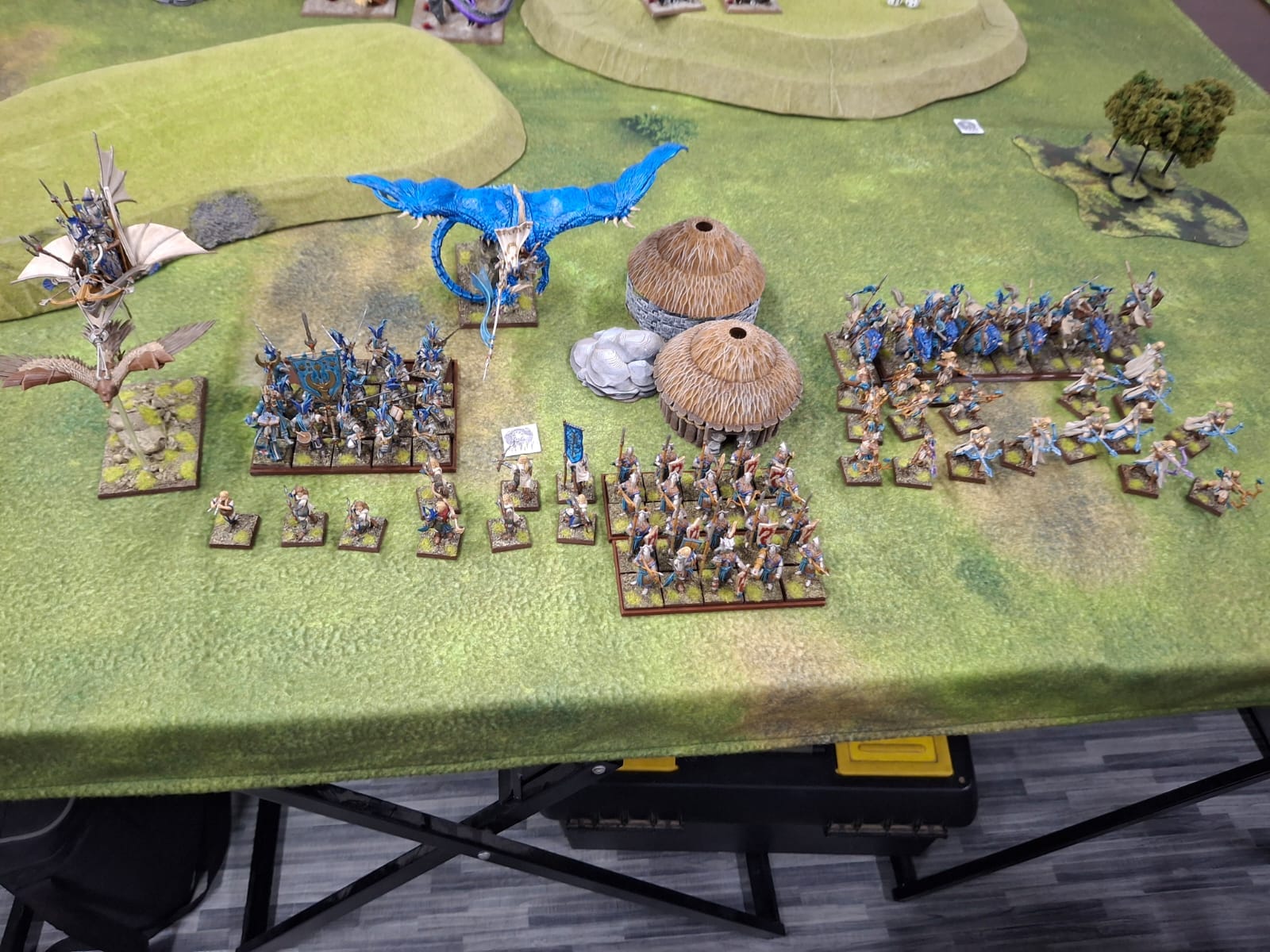
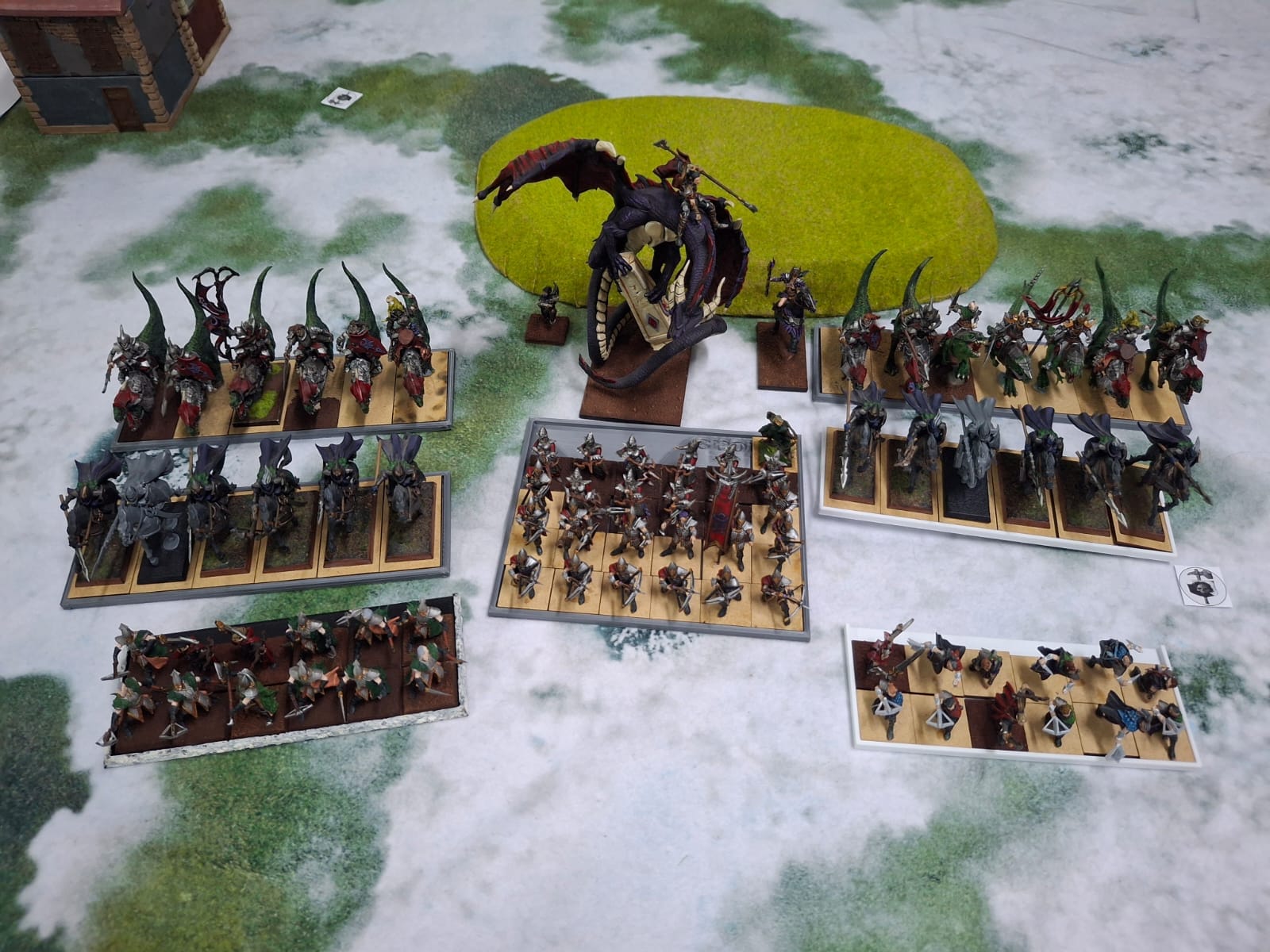
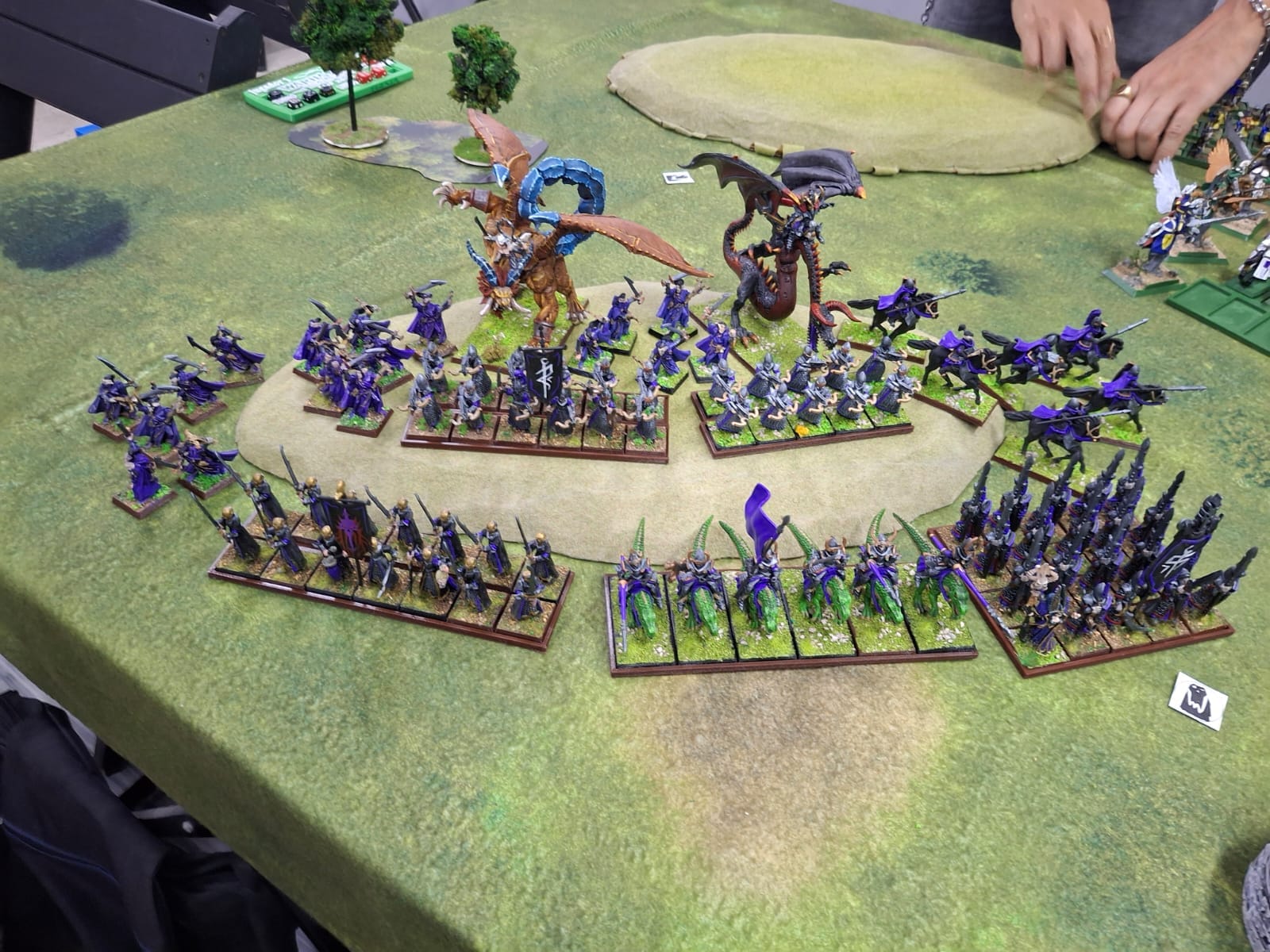
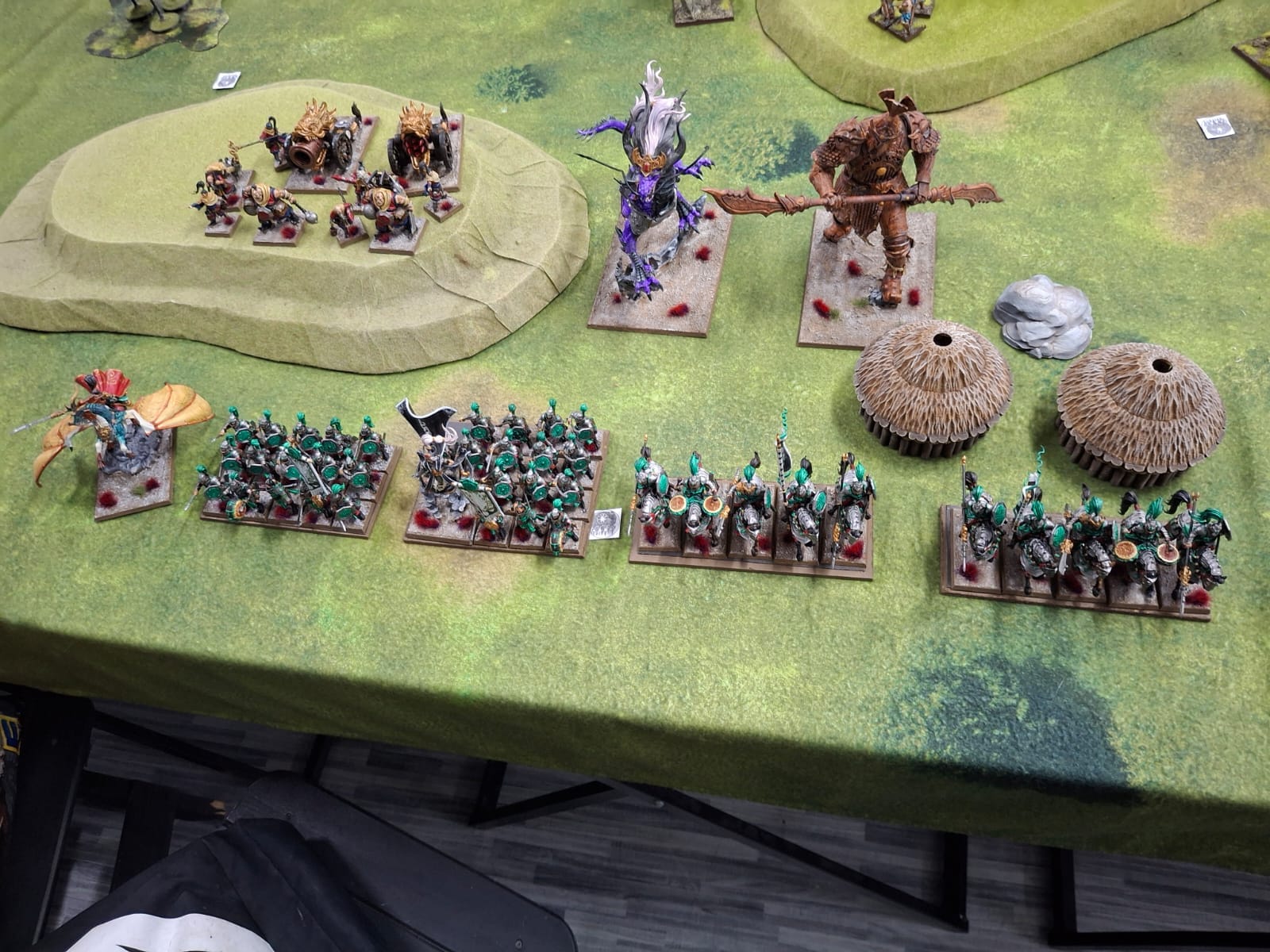
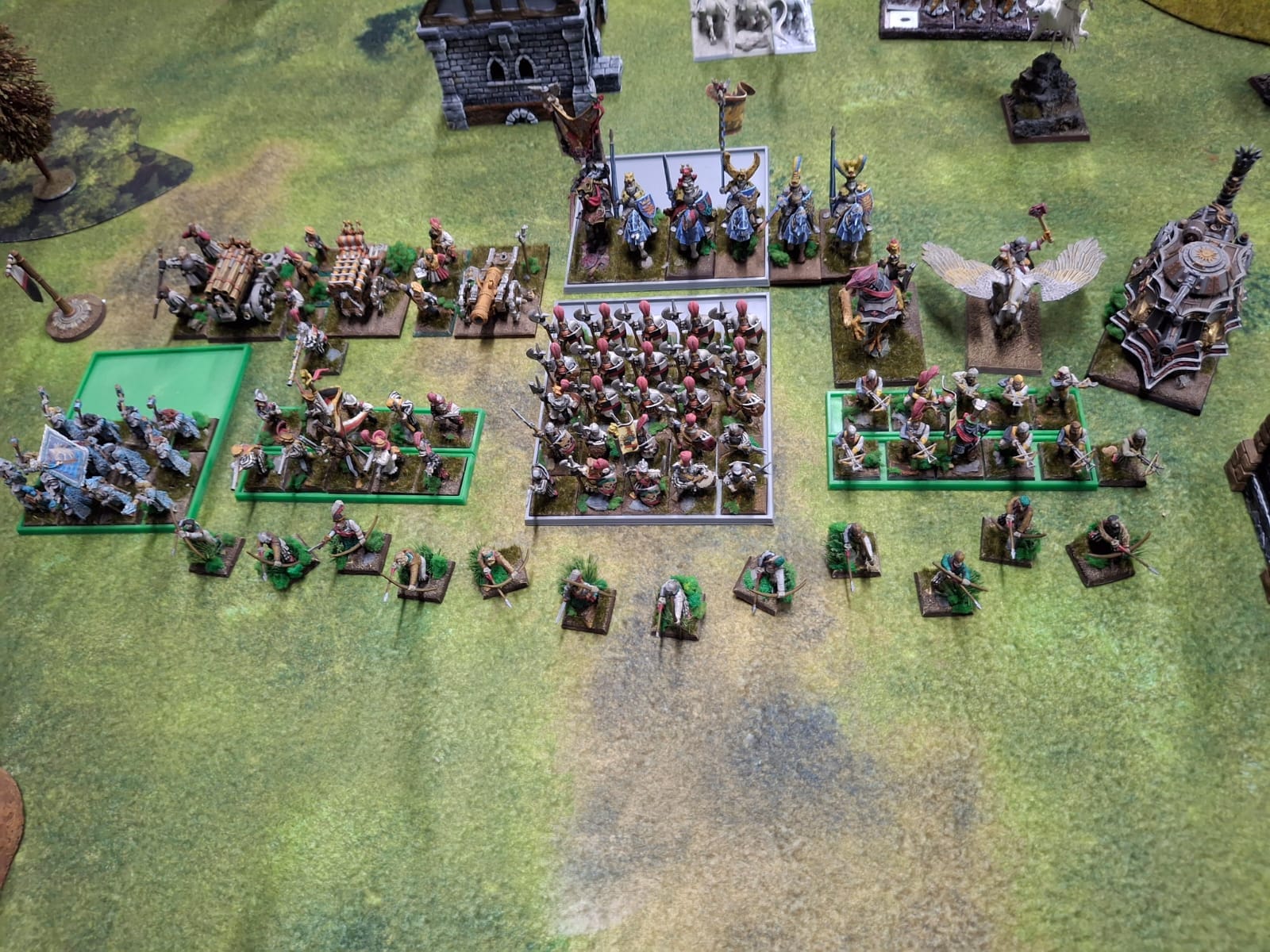
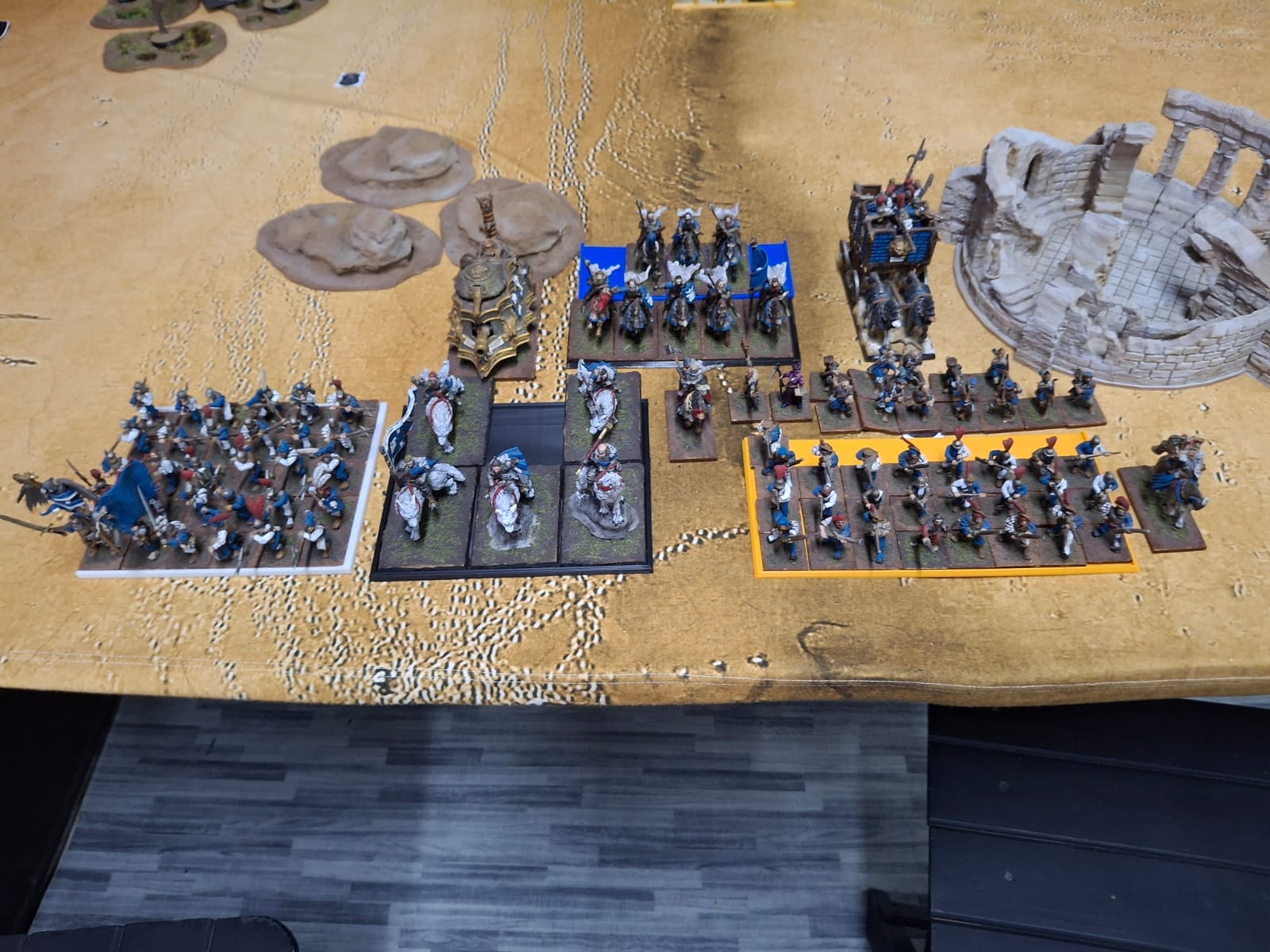
Armies of the Tournament "The Two Crowns".
We all have a silver friend. In my case, that friend was Martín. He bought a starter box of Lizardmen and Bretonnian knights, and that’s how we started playing together. Later, he gifted me the lizard army, and I gradually added more miniatures: the stegadon, a Slann wizard. We also spread the enthusiasm for the game to others: role-playing friends, my cousins, some acquaintances, a ragtag bunch. In the end, we were 6 or 7 players, some with just a handful of miniatures and others with considerable armies. We didn’t buy original models: Luis Cannobio, aka “Captain Thule,” aka “The Cripple from Chacarita” (yes, politically incorrect, but that’s what we called him because he was in a wheelchair), was our supplier of lead miniatures. He had an underground workshop (i.e., not authorized by the franchises) that produced fairly accurate copies of Games Workshop models, which he sold at an iconic stall in Parque Los Andes, in Chacarita. He was a former member of the JP and a pioneer of wargames. Thanks to him, an entire generation of kids from a declining middle class could embrace a British hobby that would otherwise have been out of reach. Luis's life is so interesting that he even has a documentary.
My dad passed away last year. One of my earliest memories of him (or at least, that’s how I want to believe it; memory can be fickle) is of him sitting with his back to me, painting some miniatures under a yellowish lamp. The rest of the room is dark, his table is like a warm island. I’m a five-year-old kid at most, and I’m curious about what he’s doing. It seems important: he’s focused, steady-handed, the brush bristles gently caressing the surface of a tiny tank.
He passed on to me a love for fantasy and strategy games. A childhood filled with books from the Robin Hood collection, Norse mythology, swords. First, he taught me to play chess, then TEG, and later a wargame about World War II. Occasionally, he played it with his friends. I loved being part of the grown-ups' world. I also enjoyed rolling the dice and imagining that a cannon shot had pierced the armor of a German Panzer, or that American Sherman tanks were advancing toward a village controlled by the Nazis. Years later, he also taught me to play Civilization on a Pentium 386.
Maybe I was destined to play Warhammer. It mixed medieval fantasy with strategy, two of my inherited passions.
Back in 2000, I stopped playing it. I started studying political science, got involved in activism, and went out dancing every weekend. Then I became a teacher, and later a writer. The Lizardmen miniatures were packed away in a box that, with each move, I lost sight of and eventually forgot. Warhammer was part of a nerdy adolescence that I no longer identified with. I no longer played with 'little soldiers.'
 Juanma La Volpe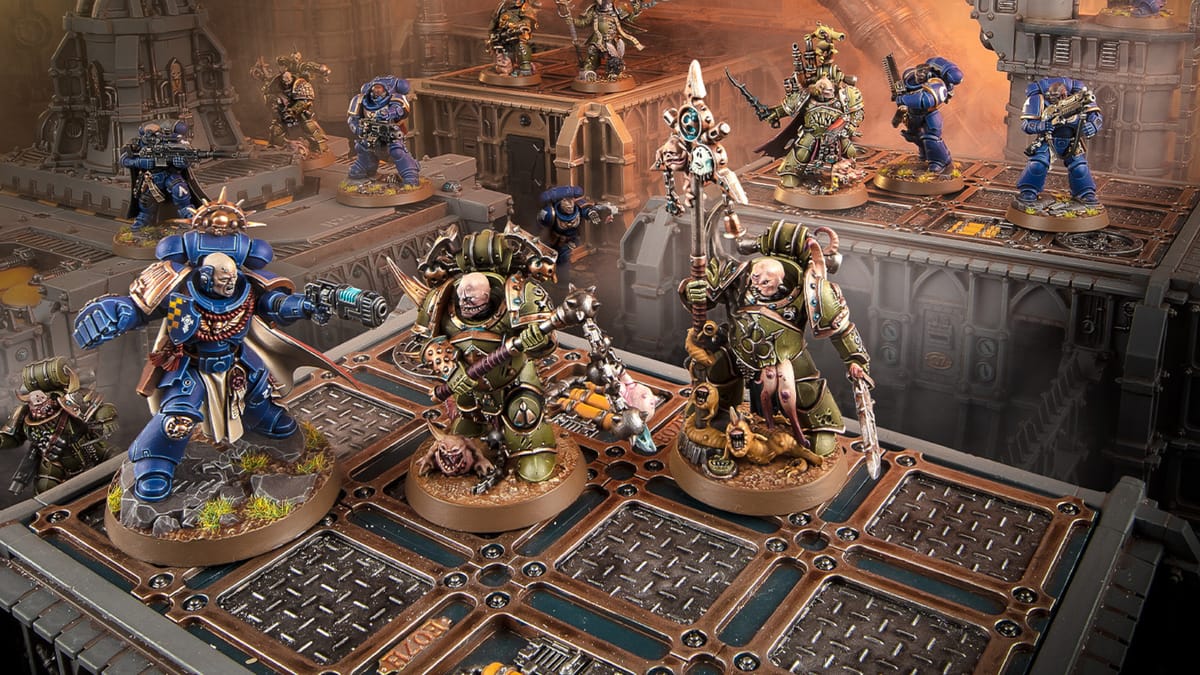
Back then, the franchise gradually lost followers worldwide. It was hardly played in comic shops or role-playing clubs. Only a handful of people kept the game alive, adapting rules and organizing games at home. In 2014, Games Workshop executives debated whether to relaunch their fantasy line or focus solely on Warhammer 40,000, a cyberpunk strategy game with thousands of players around the world and prominent fans like actor Henry Cavill. Since 2010, sales and players of Fantasy had been declining, and in 2015, after three decades, it was discontinued. According to the lore, in an event known as the End Times, the Old World was destroyed in a cataclysm. The franchise was replaced by Age of Sigmar, a similar game but with fewer miniatures and a skirmish dynamic, more akin to Warhammer 40,000. It was the end of an era.
The tournament kicks off at 10 in the morning. It's Saturday, a beautiful March morning. The shop El Imaginario Games is just a few meters from Cabildo and Juramento, in a gallery. I feel guilty about missing a day like this. I also wasn't too keen on coming here. In 2025, not only did my dad pass away, but I also lost my main job (the public institute where I was a researcher was shut down, leaving sixty people on the street), and I was left by a woman I was in love with. It was a full house of bad luck. I had hit rock bottom several times. Staying in bed all Saturday morning was, in my state, a fantastic plan. But someone I care about keeps telling me: “you have to do the opposite of what you feel: if you want to stay home, go out; if you don't want to see anyone, get together with people.” I took their advice and signed up for the Warhammer tournament.
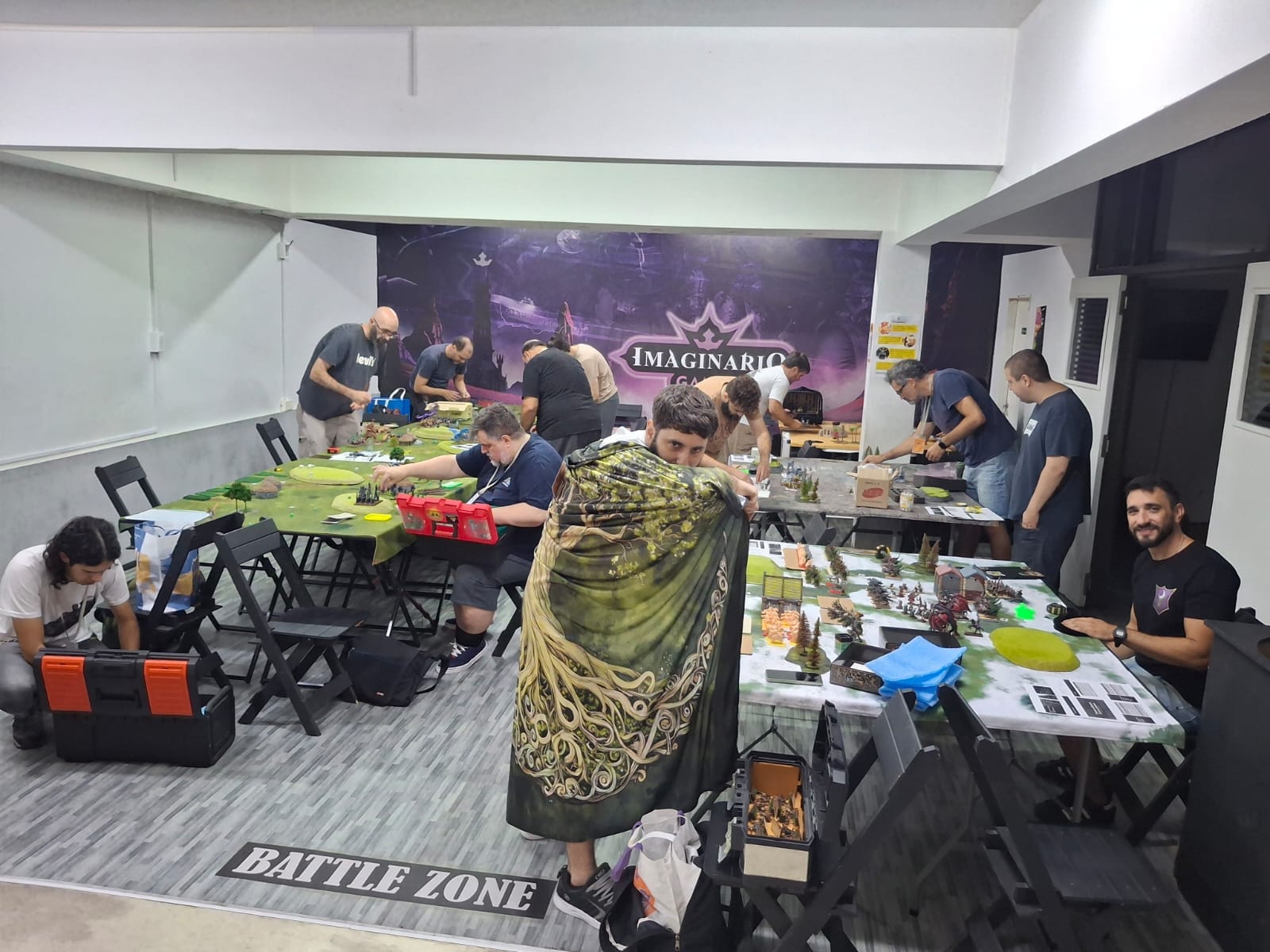
Gustavo, the owner of El Imaginario, opens the door for me. There are miniatures displayed in showcases, imported paint pots neatly arranged on shelves. Gustavo greets me by my last name. He’s about sixty and knew my dad. He played wargames with him back in the eighties. Just like the two or three times we’ve crossed paths before, I still don’t have the courage to ask him about my dad, about what he was like when he was young. The wound hasn’t healed yet. I tell myself there will be time for that, someday. I suppose. I hope.
We head down to the basement, where the tables are. There are six for the twelve participants in the tournament. Overall, the WhatsApp group for the Argentine Warhammer community: Old World has over sixty members, but a dozen usually participate in events. The game isn’t as mainstream as it is in other countries; it remains niche. Plus, many live far from the main shops in the city, and transporting dice, miniatures made of lead or resin, and various other items without damaging anything is a hassle. There’s a pretty active group from Haedo, and three of them are participating in the tournament, but most are from the Capital. These are people who generally have an interest in board games, as well as in medieval fantasy and science fiction. Most are men between 30 and 50 years old, with enough financial means to buy miniatures, modeling paints, and brushes. In other words, Warhammer Fat Guys.
There was a sense of nostalgia, but above all, a desire to play a complex, entertaining board game that required gathering without screens. In a world saturated with virtual interactions and post-pandemic loneliness, getting together to play is almost a political act, a disruptive gesture.
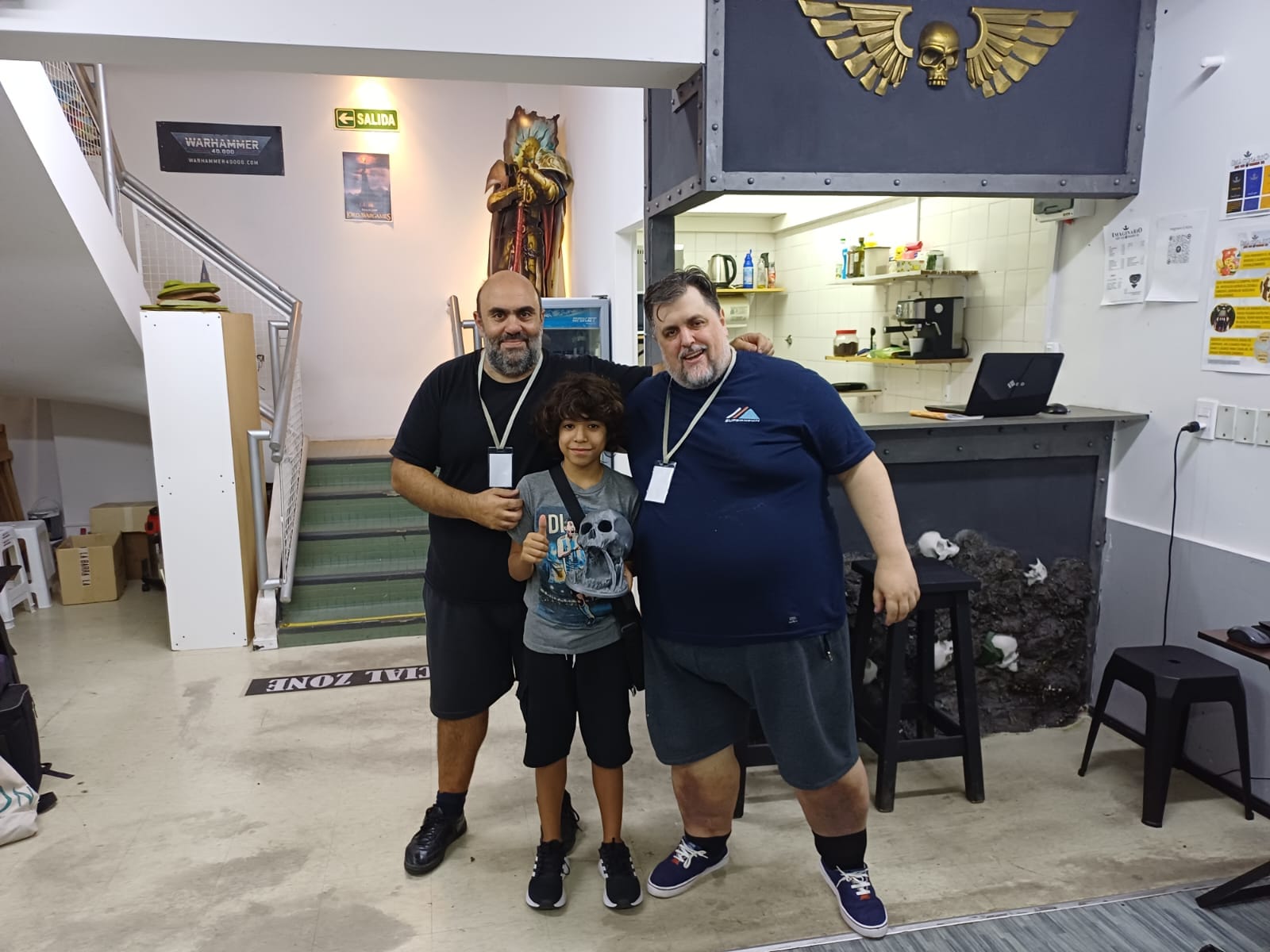
Patrick Glickmann is the one organizing the tournaments. His story is unique: his parents emigrated to Denmark, fleeing the Argentine dictatorship. He grew up there, has a son who is now of age, but decided to return to Argentina. In Copenhagen, he worked for over ten years at a Games Workshop store. He has experience in organizing events and knows the ins and outs. Patrick started playing Warhammer a bit like I did: he was an introverted person, enjoyed indoor hobbies, quieter activities, and through playing, he met a group of people he got along with. A social reason. While working at Games Workshop, he expanded his knowledge of the hobby and included generations of new players. And also painters.
Yes, because Warhammer is also about painting. There are hundreds of videos on YouTube teaching how to do it, and master painters who participate in international painting competitions. It’s not just about playing and rolling dice. The miniatures are made of lead or gray plastic, so there’s a preliminary work of choosing the theme, the color palette, and then painting each of the models. As one of the participants explained to me: “it’s a hobby that allows me to focus on painting and forget about everything else.” I returned to Warhammer, largely for that reason: when my dad was hospitalized after his stroke, painting was a way to connect with him and also to do something manual that cleared my mind. The sublimation of art. A much better escape than antidepressants. In the tournament organized by Patrick, there are also prizes for the two best-painted armies. Cathay and the High Elves win. You can tell the work of skilled painters, expert painters.
As I set up my army, my cousin Juan Manuel does the same at another table. He was one of those who started playing with me in the nineties. He commands the Empire, a mix of German electors and steampunk-style machinery. In the tournament, we play on the same team, number six. He also insisted that I return to play: since it’s a board game, he said, you always have to play against an opponent, there’s interaction, you meet another person, there’s debate and discussion because the rules adapt, partly through conversation and reaching agreements. It pulls you out of your cave. Also out of the algorithm, from the groups you usually move in.
Warhammer Fantasy made a strong comeback in 2024, almost a decade after being discontinued. This was due to the success of the computer game Total War: Warhammer, which renewed interest in the franchise. Games Workshop changed executives, saw a commercial opportunity, and relaunched the fantasy game under the title Warhammer: Old World. At that moment, many players returned, myself included. My cousin did too. We dusted off our armies, repainted our soldiers, and bought new miniatures. There was a sense of nostalgia, but above all, a desire to play a complex, entertaining board game that required gathering without screens. In a world saturated with virtual interactions and post-pandemic loneliness, getting together to play is almost a political act, a disruptive gesture.
At eleven in the morning, my sister arrives at El Imaginario with my nephew. He, influenced by me, collects Lizardmen. He’s five years old, the same age I was when I remember my dad painting the miniature tank. He’s fascinated by Warhammer; he likes having his own collection. I built him a Mesoamerican temple to store his six or seven models, made of styrofoam and glued paper. He constantly asks me who is stronger, a dragon or the Incredible Hulk, whether a Slann wizard is stronger than one of the SuperThings. But this time he gets bored: in a tournament, players are very focused. Some, however, pay attention to him and show him miniatures of dragons and Chaos wizards. After a while, his mother takes him to the park.
The elven prince mounted on the dragon charges against my stegodon. My opponent rolls four dice: he gets a six on one of them. The stegodon dies, pierced by the monster-exterminating sword. A fireball from his sorceress decimates my Kroxigors, beasts the size of trolls, equipped with two-handed hammers. They’re of little use; they don’t even get to face any enemies in combat. The arrows keep raining down on the rest of my troops. It’s no longer even about tying; it’s about not losing by a landslide.
I reach the third turn out of breath. Patrick indicates that time is up. I lost badly. My cousin didn’t fare any better against the Tomb Kings: he played not to die. We ended up fourth. Fourth out of six.
But, for some reason, I’m in a good mood.
It was definitely worth getting out of bed to play with the toy soldiers.