Memecoins and the "social layer" of gambling

31 de oct. de 2024 — Juan Ruocco 🧙♂️
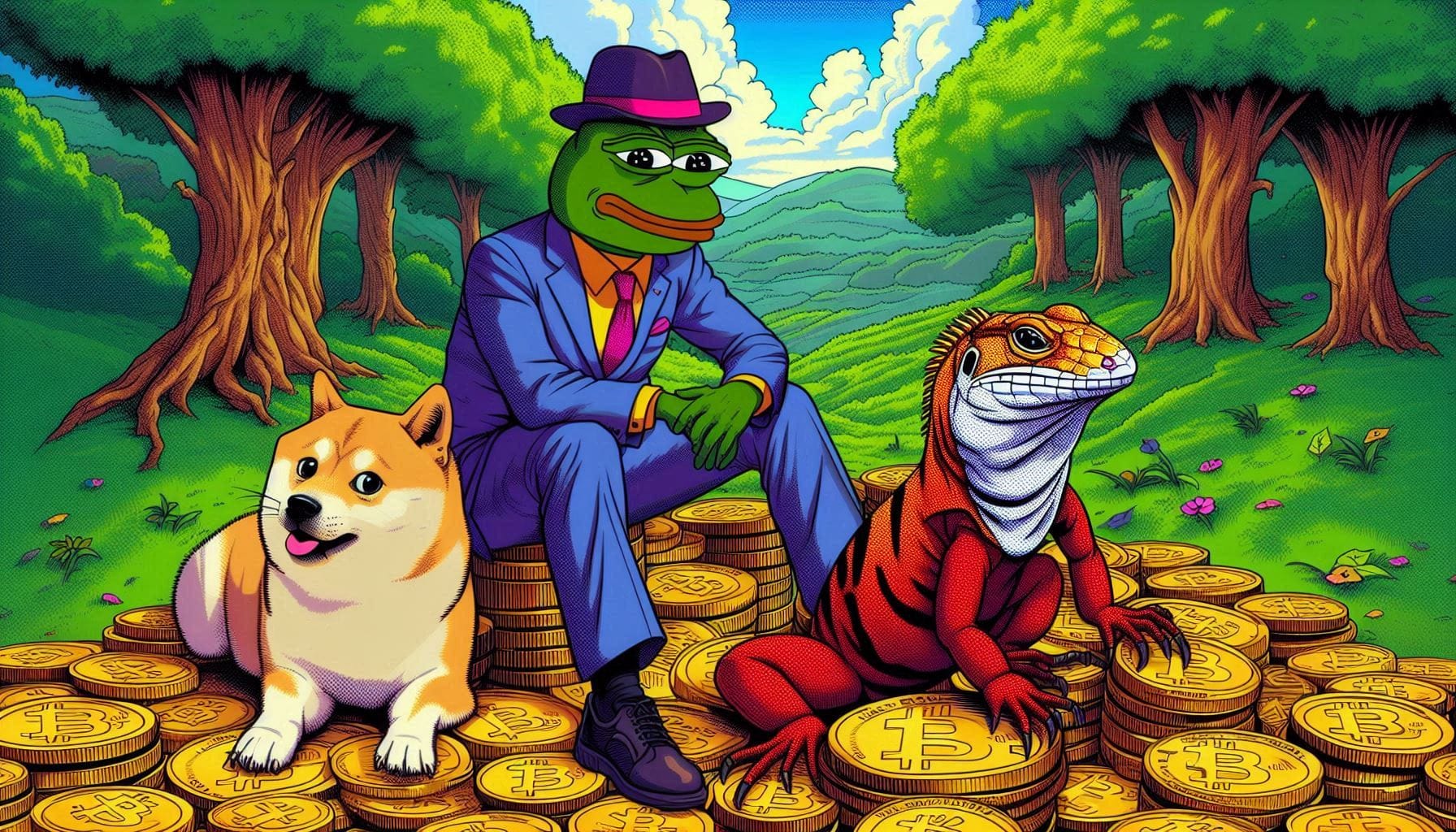
Every cryptocurrency lifecycle has a "new" technology or feature that becomes a buzzword or gimmick to hype up the industry. It happened with every wave. ICOs, DeFi, NFTs, Web3, and Metaverse. Memecoins seem to be the new hype train of this new crypto growth cycle.
That's how the article about Magaiba began. Time to explain this phenomenon a bit better. It seems like every Bitcoin bull cycle is always accompanied by some technical innovation within crypto. The emergence of that novelty, which is always sold to newcomers as "the new Bitcoin," "the latest in blockchain technology," or other hollow promises, tends to push or at least go hand in hand with BTC price rallies and the entire crypto market in general. In other words, each bull cycle comes with a new technical gimmick that seems to explain the reason for the rally, or at least accompany it.
It happened with ICOs (Initial Coin Offerings), which were ways to fund crypto projects in advance; it happened with DeFi (Decentralized Finance); with NFTs (Non-Fungible Tokens); and there was even a kind of gold rush for the "metaverse." A rather revealing name, almost like a verse from another category, from another dimension. Though we shouldn't be too unfair: despite all these innovations being inflated, producing bubbles and gold rushes, each one left something behind within the crypto ecosystem. Destructive innovation, as we say to soften the ethical responsibilities.
In a quick recap: from ICOs came the ability to fund tokens in advance (pump.fun), from DeFi we got decentralized exchanges (jup.ag) and a whole other layer of services, from NFTs we got Milady and that whole scene, and from the metaverse... well, the truth is the metaverse already existed and it's called Roblox, but that's a topic for another article.
All this introduction to support the (not so bold) hypothesis that memecoins are the next gimmick of the upcoming bull cycle. The other option might be Zero Knowledge Proofs, or Zero Knowledge Proofs.
What is a memecoin
Something has been brewing for a while (about a year, more or less) in the memecoin space. These meme coins have existed almost since the beginning of the crypto ecosystem. The first and most fundamental was Dogecoin, which paid tribute to the world-famous dog meme. In a way, Dogecoin was the flip side of Bitcoin, a kind of mockery that supposedly unmasked the purely speculative nature of Bitcoin and altcoins, a term now somewhat fallen out of use for referring to any crypto that isn't Bitcoin.
Abandoned shortly after by its creator, the DOGE joke lasted much longer than he himself could have imagined and became a crypto staple. Until that point, the main argument for explaining Bitcoin's price and value had been its solid fundamentals: predetermined total supply, anti-inflationary, uncensorable, secure, fungible, decentralized. But also from the start, being an asset whose main function ended up being speculation (despite being born as an electronic payment method), the underlying debate was always the same: is Bitcoin just gambling, or do the fundamentals matter?
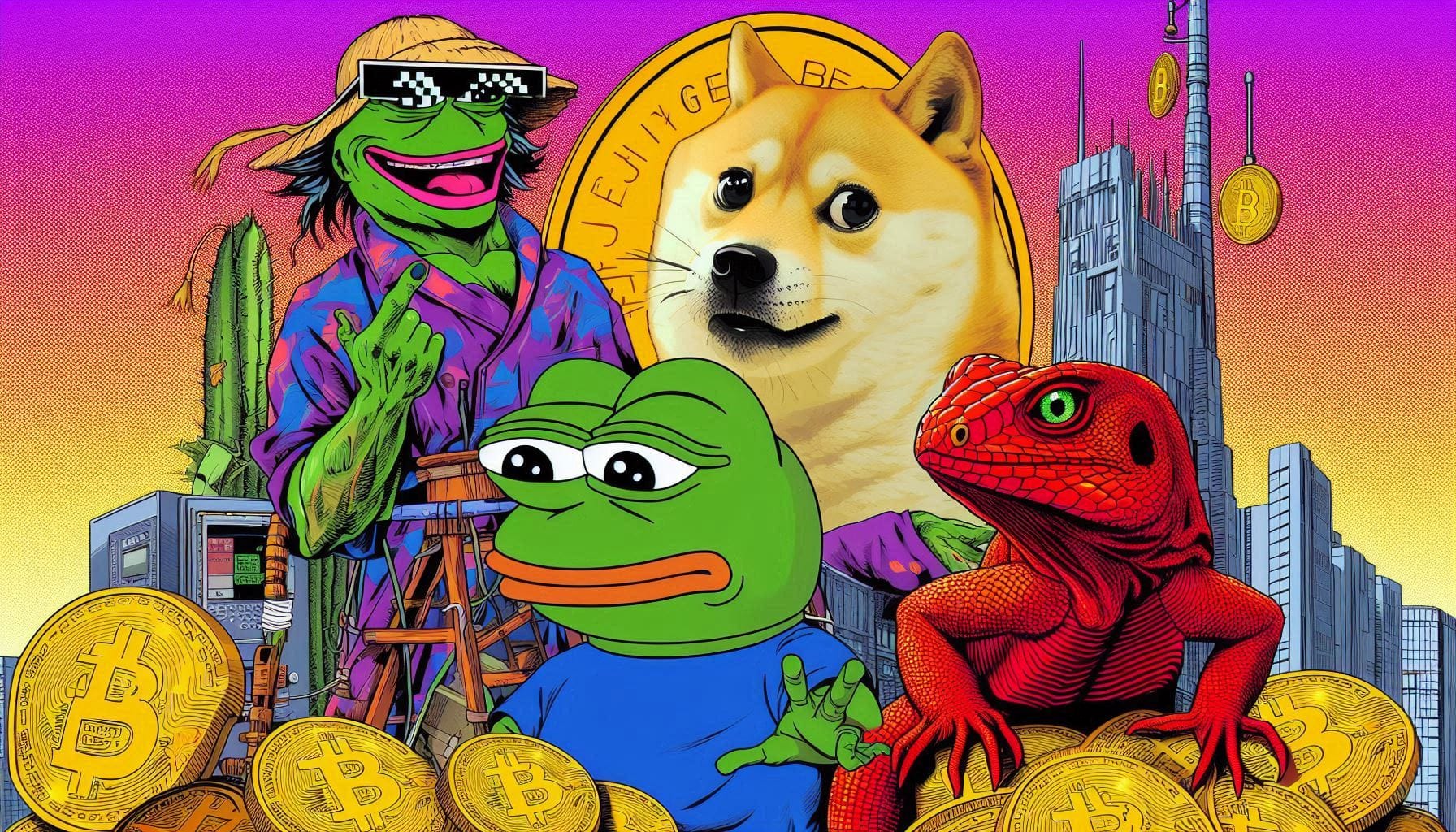
Fast forward: at one point, Elon Musk tweets about Dogecoin, the coin pumps, everyone's happy. Memecoins become canon. After such a move, and fueled by the hope of something new, a new generation of meme coins emerged, like Shiba Inu, a kind of Dogecoin but built on Ethereum's infrastructure; or PEPE, whose goal was to monetize the value of perhaps the most important meme in internet subcultures: Pepe the Frog.
Then came the quantum leap: Solana. It was born as just another crypto network, with the ability to implement smart contracts in an environment with very cheap transaction fees compared to the congested Ethereum network and its costs, which at the time were becoming increasingly prohibitive. Solana took the lead as the cheapest and, all things considered, reliable option for creating, selling, and trading NFTs. But once its legitimacy was proven -- it wasn't a rug pull, although it did stop working for a while, LOL -- it became the ideal environment for creating a whole new generation of meme coins. The third wave: WIF, MOG, Retardio, MAGA, Bome, Jeo Boden, Moo Deng, or Ladyboy, to name a few.
Most of them had a pre-existing life as memes. That is, they already had a community of users who knew the reference beforehand. In a way, all memecoins are a way of putting a price on a community.
The problem with fundamentals
Those who want to hear a more or less lengthy version of the debate about Bitcoin's fundamentals have this episode of Circulo Vicioso. For those who don't, here's a summary that expresses more or less the same thing.
Bitcoin has solid fundamentals. Ethereum is the most compliant coin with the international financial system. The rest of the coins are gambling. Memecoins are gambling. But therein lies their strength in this era. Bitcoin has been around for 15 years and it's nearly impossible for someone to put in 1,000 USD and have it multiply by ten. For that to happen, Bitcoin would have to jump from its current price of about 72K USD to 720K USD. That seems unlikely in the short term. However, there are a quadrillion coins that make those jumps or much more exaggerated ones in 24 hours. And how much can they scale in, say, a year? Memecoins today are a land of opportunity for those who can handle the theoretical framework of gambling. It's not that hard.
The only complicated thing is someone pulling off a scam. This means having enough initial tokens so that when the coin reaches its highest price, they can drain all the liquidity. This is known as a rug pull and it's very common in sketchy projects. Someone manages to inflate a bubble and when it reaches its peak price, they sell everything and take all the money. That's why you should always watch out for wallets that hold a high percentage of a given coin.
But unlike pure gambling, memecoins are permeated by memes. Which reinforces the possibility of generating feedback loops. As people put money in and the price goes up, that stimulates the community to make more memes. The spread of memes can create a contagion effect that brings in more people. It's part of memetic nature, which I won't explain here: I wrote a book about that. It also works in reverse. Panic can destroy a coin. But it's the same thing that happens in bank runs, with the difference that here there are no rules or bailouts. Do your own research.
Memes and communities
While I won't give a definition of meme -- though I could -- it's enough to say that they often function as the digital folklore of a certain internet community, as the native expressions of a group of users. Ultimately, a meme exists as long as it is shared, remixed, and keeps replicating. If the meme doesn't move, it dies. Without a community, memes are inert entities, museum pieces. The same goes for meme coins. As long as there's interaction, as long as there's community, there's life. The moment that community migrates or abandons the coin (the project, whatever it is), that community is dead. That coin is dead.
And this is where a certain "revelation" occurs. What Bitcoin and meme coins have in common, beyond the technical aspects, is intrinsically linked to their ability to exist thanks to a "social layer" that sustains them. In fact, in every story about the origin of BTC, this detail is usually overlooked, and it's associated mostly with the mystery of Nakamoto's identity. But that initial group of cypherpunks who became Bitcoin's first users were the ones who gave the project life and circulated the meme.
And just as it happened at the beginning of the Bitcoin big bang, memes are excellent excuses for users in each community to install a wallet and buy a token just to participate in the meme. It's not far-fetched that playing along with the rest of the community could be a great avenue for bringing even more people into crypto. And isn't this exactly what the entire community has always sought? Isn't it much more honest than selling trading courses, signals, or even coins with "institutional backing" that are useless but pretend otherwise? Ultimately, if there's a social layer, the rest takes care of itself.
Why Memecoins are the future of Crypto Tokens pic.twitter.com/Rr1CBS6bdZ
— Murad 💹🧲 (@MustStopMurad) October 20, 2024
Pump.fun as a case of the times
Such is the nature of pump.fun. An instant casino where anyone, absolutely anyone, can create their own token just by choosing a name, uploading an image, and paying a minimal percentage in a transaction. Then, the platform takes care of everything.
And what happens there is that the token enters a kind of incubator until it reaches a certain funding threshold. Once covered, the coin "launches" and is automatically listed on DexScreener, a memecoin indexer on the Solana network. Think about how technically difficult it was to achieve this just a few years ago. The value of knowing how to create a coin today is literally zero. Which speaks to the fact that we're entering a new era in the ecosystem.
The incredible triumph of the platform lies in the total simplification of the product and putting the ability to launch a memecoin within anyone's reach. With a little skill, a desire to make some edits, and a more or less solid community, you can get some whales to put several thousand dollars into pumping a joke. It also greatly multiplies the possibility that it's all a rug pull. It happens a lot that when a coin is about to complete its funding, or right after it's funded, the creator sells everything and wrecks all the other participants. It's a cruel world.
Ultimately, the only thing that matters to create a more or less successful memecoin is being able to build a community and making the meme good enough to "run on its own." To reach escape velocity. That is, enough contagion speed to quickly break out of the inner circle of insiders and become a global gambling platform. It's not a simple or easy task, but those who pull it off become figures with a certain aura of arcane power. This is, in the end, the current metagame. As Dorothy would say: "Toto, I've a feeling we're not in Kansas anymore."