World wide weed: legal cannabis in major European cities

6 de jul. de 2022 — Juan Ruocco 🧙♂️
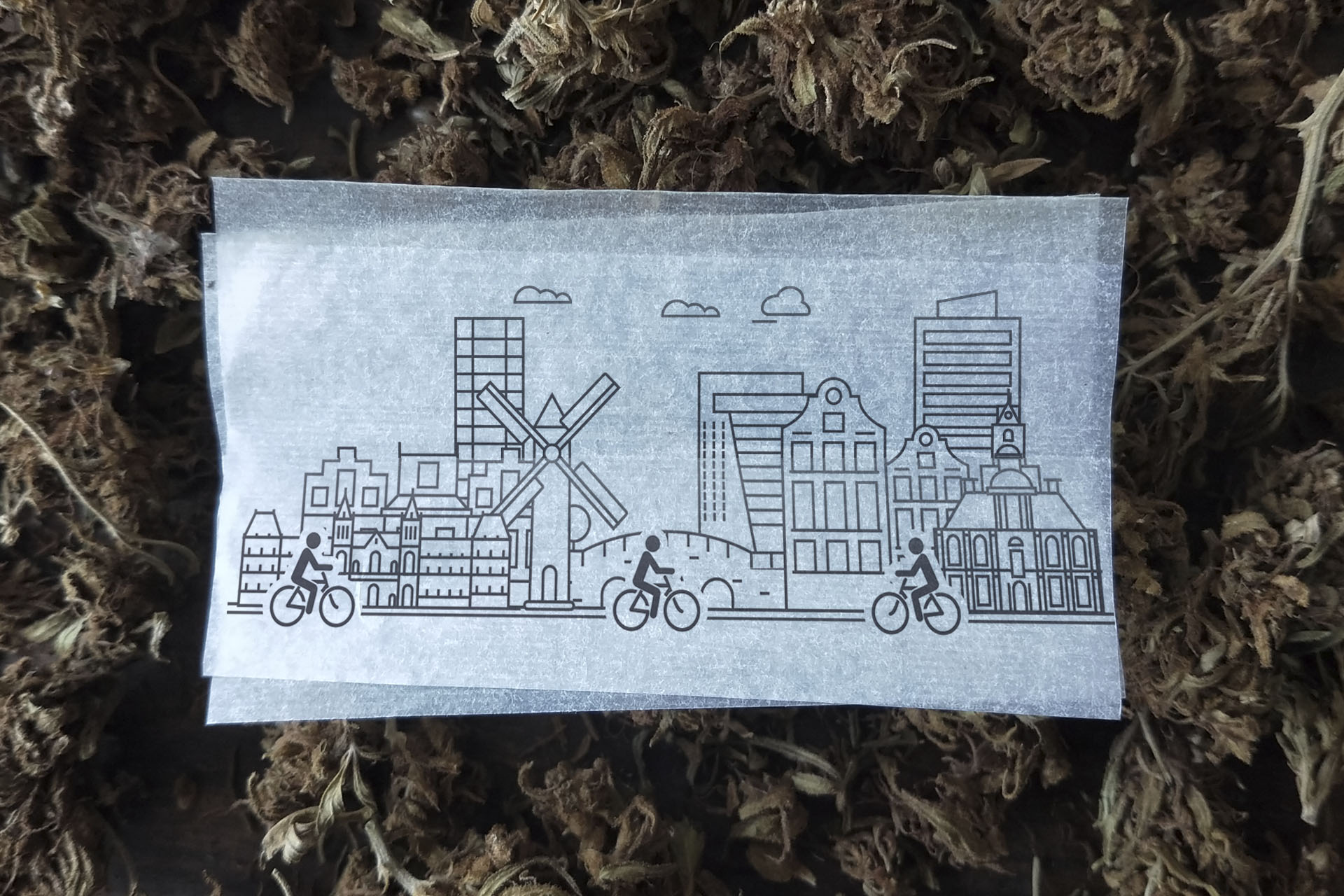
The tradition remains alive and well, suggesting that Amsterdam is the right place to carry out the ritual of strolling, visiting museums, and consuming psychedelic drugs. The weed is still very good, but truth be told, Argentine varieties have nothing to envy: in recent years, local cultivation has dramatically improved.
The Dutch cannabis menu is packed with buds of well-known strains sold by weight, pre-rolled, or in joints mixed with tobacco. The average European smokes joints mixed with tobacco and sees a pure weed joint as a sign of barbarism. Oh, the irony.
Pre-rolled joints are sold simply as "sativa or indica," with no further explanation. To access specific strains, you have to buy by weight. To establish a standard and compare quality across locations, many people always buy the same type of joint, then try something extra to treat themselves. Some must-visit coffee shops in the city include Kandinsky, Sensi Seeds, and Tweede Kamer, which besides having excellent weed, breaks away from the "bro" culture of the more central establishments.
But one of the best joints of the trip is an hour by train from Amsterdam, in Utrecht, where the treaty ending the War of the Spanish Succession was signed in 1715. The place is called Anderson, and there the price per gram ranges between 8 and 11 euros, with each chopped bud leaving a small mound of crystals perfect for topping a freshly rolled joint.
Amsterdam doesn't hold the exclusive title of Europe's only weed-friendly city. In Roma (Italy), Zürich (Switzerland), and Berlin (Germany), it's possible to buy marijuana at convenience stores or small markets on any reasonably busy side street. In Switzerland and Germany, it's legal to sell weed with very low THC content, under 1% (THC is the psychoactive substance in cannabis) but high in CBD (the "medicinal," relaxing, and anti-inflammatory compound). In Italy, the situation is similar, with the difference that THC content can be up to 6%.
While these percentages are very low compared to the strains flooding today's cannabis market, the weed still does some of its job. Besides, there's something rather charming about walking into a kiosk or mini-market and picking up some candy, a drink, and a joint the size of a mummy's finger.
For those seeking a different kind of experience, the trip can't end without a mushroom session in the Dutch capital. Psychoactive truffles are a highlight, available at shops in the typical Dutch alleyways: they cost about 20 euros and are equivalent to two doses. Despite the flashy advertising from these shops, the truffle trip doesn't involve extraterrestrial contact but rather a feeling of communion with nature and a trip that never quite takes off, something like a quarter dose of LSD that never reaches its peak. But nonetheless, it leaves you petting the grass and laughing a lot for two hours.
The content creation hustle
Another distinctive feature of any current European tour is the number of Instagrammers, YouTubers, TikTokers, and vloggers roaming the different cities, especially the tourist hotspots. It's hilarious to see girls all dressed up striking poses on a bridge while their friends, girlfriends, boyfriends, or mothers (not as dressed up) snap away with the latest smartphone.
Or seeing all the guys with their cameras, gimbals, and one-man setups walking at full speed through the intertwined streets of medieval-Renaissance European city grids, talking (to themselves) at the camera, not without a certain shyness as they attract the stares of everyone around them.
Watching content being produced while the rest of the world goes about its business creates a strong sense of dissonance and quite a bit of secondhand embarrassment. The effort by content creators to bridge the gap between what they're doing and their surroundings remains both endearing and striking.
Bicycles are undoubtedly another star of the European summer. In cities like Berlin, Amsterdam, and Zürich, they are the undisputed rulers of the streets. Meanwhile, in Paris and Roma, given their sheer size, they're still fighting for space amid the traffic. In Paris, you can clearly see the city's investment in bike lanes, but the much longer distances compared to smaller cities can be discouraging. Not so in Berlin, which is massive and everyone rides bikes.
As compensation, in cities that aren't as bike-friendly, the electric scooter stands out as the rising mobility option. It's very common to see kids of all ages using them everywhere with varying degrees of recklessness. In fact, in Paris it's common to see police stopping people riding two on a single scooter.
Fashion and food
The abundance of fast fashion brands like Primark, H&M, and Zara is counterbalanced by a proliferation of thrift stores with an ecological ethos. Recycling clothes as political resistance and a way to curb the advance of consumerism. Berlin is packed with ethical clothing fairs, and even the biggest brands have started listing the percentage of recycled cotton on their labels.
But among all trends, the quietest and most omnipresent is culinary and comes from the Arab world. The increasingly significant immigration from the region has led to everything from the now-classic döner kebab to the novel pizza kebab flooding the streets of every mid-sized city in Europe.
Besides being very affordable compared to other food options, they're the only places open late (that is, after 6 PM, when almost all shops close; and after 10 PM, when most restaurants shut down). Moreover, every city now has its own Arab quarter where you can find everything from traditional food to wedding dresses, burkas, and copies of the Quran.
This is Europe in 2022, teeming with bikes, influencers, weed, and döner kebab.
This article was originally published in Página/12. It is reproduced here with the author's permission.