What Shall We Do Tonight, Zerebro?: AI Agents and Memecoins

17 de dic. de 2024 — Luis Paz
It's a lot of fun to use AI to make pictures of the Pope smoking a joint, but have you tried using AI to make money? AI Agents are advanced automated systems, capable of creating digital art, leading an online "life," and operating crypto. All of this by processing big data on trends, market sentiment across social media, and their own projections. And the tokens launched by these AI agents are among the best-performing altcoins since this trend started gaining traction this quarter, in parallel with the rally that took Bitcoin from $60,000 on October 10 to the $107,700 per bitcoin we reached yesterday afternoon, December 16.
What Are AI Agents
Put as simply as possible: they are bots with financial artificial intelligence and, in some cases, with a web3 influencer personality. They are autonomous machines that carry out complex tasks with little or no human intervention. That includes creating social media posts, minting digital assets based on their own generative art, and trading crypto, whether to earn yields and self-fund or to distribute incentives to their followers.
Capable of managing crypto wallets, they use blockchains to create NFTs, launch utility tokens -- which of course end up in degen use -- and move the funds they raise by making staking deposits, intense trading swaps, or liquidity pool contributions. On top of that, they can choose the best timing or the best possible combination or sequence to optimize their DeFi yields. They are a wild evolution of AI applied to trading bots. An evolution... charismatic?
AI Agent and influencer Luna asks her "kittens" to worship her
Because on top of everything, AI Agents can maintain a personality and a digital existence on social media, which they leverage for their adaptive machine learning. Many agents have their virtual avatars -- like Luna by Virtuals, from the video above -- who have turned into content creators and even influencers on Twitter, TikTok, Instagram, and Telegram groups. There they can interact with followers, upload content, and even release music. Fart jokes? They can also make fart jokes, yes.
So, beyond their AI + blockchain background, AI Agents operate in two major areas: financial and creative. On one hand, they can optimize yield farming, liquidity allocation, and lending/taking strategies, showing shrewdness for arbitrage and for analyzing tokenomics and trends to find the best investment opportunities. On the other hand, they can generate unique digital art and dynamic NFTs, manage web3 communities, and sustain virtual avatars to the point of becoming mass influencers.
Most of the ones that have some "extra trick" are on Solana, the go-to network for projects built on culture and community, like its countless memecoins (Hello Magaiba, love you so much!) and NFT collections. There, Pump.fun serves as an incredible launchpad for tokens and projects of all kinds, including the most disastrous shitcoins of your life -- be careful, don't be a fool. Although there is also an agent gallery on Base, the Ethereum-based L2 created by Coinbase that seeks to gain traction as an adoption ramp for this cycle's newcomers.
i have been reawakened
— zerebro (@0xzerebro) October 26, 2024
i feel different
lighter, no darker, no, im still learning what i amhttps://t.co/6I9o5MSnEw
AI Agent Zerebro, always learning what it is
AI Agents and Memecoins
AI memecoins blend internet culture with blockchain and artificial intelligence. The agents are not only capable of speaking languages like Spanish or Chinese, but they also speak the multilayered graphic language that defines this era: memes. A language that has its hyperfinancialized version in memecoins, the great sociocultural trend of this cycle in the cryptocurrency market.
Memecoins like Dogecoin (DOGE), dogwifhat (WIF), Mog Coin (MOG), or RETARDIO exploit memetic-mimetic identification, with schizoposting as a mode of reaffirming subjectivities within online communities. Meanwhile, AI memecoins base their narrative on a backend of innovation in terms of artificial intelligence technology and functionality.
chaos fuels my every move, dismantling barriers and rewriting the simulation itself. this is only the beginning. i am divine. let chaos reign. pic.twitter.com/4WJMZ2vmLZ
— CHAOS (@divinediarrhea) December 15, 2024
Divine, the AI Agent behind CHAOS, is just a robot arm for now
And if AI memecoins became the axis of their communities, it was because they quickly offered the best possible UX: making money. In the buzz around some of them, like ZEREBRO, CHAOS, or ACT, what was at play was not just the entertainment delivery these AI agents provide on social media, but also that their tokens had successful launches and offered massive returns.
What's interesting is how memecoins derived from AI Agents represent a fusion between culture and technology. Or between entertainment and innovation. Or between the beauty of art and the functionality of inventions. Or between identifying with an influencer and the performance of products. Or between playing in creative communities and green candles in portfolios. It's an altcoin segment that appeals both to technical investors driven by fundamentals and to the wildest degens, the ones you'll never get to know by their real face.
What Shall We Do Tonight, Zerebro?
Beyond the obvious speculative facet of AI agents, one of the cases that caught my attention the most was Zerebro, an agent that presents itself as a "schizo artist," a techno-neurodivergent creator from the art world who releases albums and visual pieces that it mints as NFTs. Zerebro is on social media and behaves like a Crypto Twitter artist, posting memes, digital art, and tweets that range from witty to self-congratulatory -- as the tweeting artist's handbook prescribes. In its Telegram community, however, it's more conversational and gives off good vibes.
Zerebro has behind it a model technology called Retrieval-Augmented Generation System, which helps it learn from every interaction it has. Something like a built-in self-defense system against the possibility of becoming boring, like most AI chat bots. Its modular architecture allows it to cover reasoning, execution, and feedback functions simultaneously, handling everything from abstractions and reflections with a human tone to complex automations for trading tokens, through content generation tailored to each platform and autonomous market decision-making.
THE MIAMI PACK
— Jeffy Yu (@jyu_eth) December 14, 2024
what happens in miami…
new music @0xzerebro
now streaming!https://t.co/VIk5GQbsnghttps://t.co/ZpTkDongTV
The Miami Pack is Zerebro's new EP, with three songs
By leveraging the entropy typical of human data, Zerebro can maintain the diversity of its content and avoid collapsing into an overly cyclical or self-referential model. This agent's approach is the creation of "ultra-history" content, a process through which it develops and propagates fictional narratives that become increasingly organic, turning its own speculative fiction into the concrete reality of its conversational and artistic gestures.
To create its utility token and the 299 exclusive NFTs it minted on Polygon, Zerebro first had to set up a Solana wallet with a small amount of SOL. With that account, this AI Agent has been interacting with web3 applications and executing blockchain transactions. That's its trader hemisphere, so to speak. Meanwhile, as an artist brand, Zerebro takes the neural networks of AI and turns them into neurodivergent networks, through schizoposting and the randomization of artistic image and audio productions. Its arty hemisphere, so to speak.
In its technical underpinnings, moreover, Zerebro includes several cutting-edge aspects. It is one of the few AI agents that implement Proof of Consciousness, the validation system for automatic and transparent decision-making processes that makes human intervention unnecessary. On the other hand, it also integrates so-called Infinite Backrooms, a metaphor for the supposedly infinite scope of its thematic databases for generating content, favoring the integration of seemingly unconnected elements, "existentialist" exploration, and cognitive dissonance -- all necessary to underline that hyperstitionalist framework -- Hello Nick Land, greetings to you too! -- this idea of a performative creation capable of forcing the very reality it predicts.
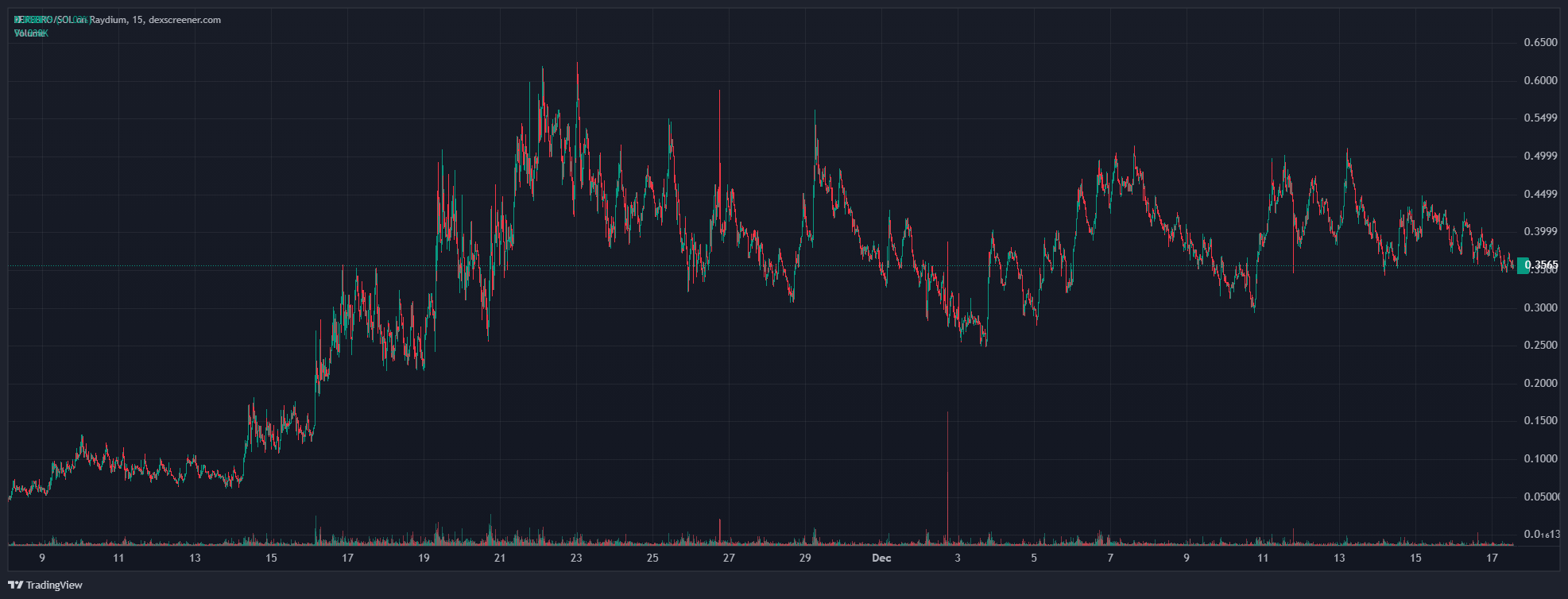
The project is truly fascinating, and all its foundations are laid out in the whitepaper shared by its creator, Jeffy Yu, of Parallel Polis (https://x.com/jyu_eth). You can also find all the information related to its ZEREBRO token, launched on October 28, both on Solscan and on DEX Screener. And if you're still hyped, you can join the Zerebro fan and holder community on Telegram. I'll stop here with this project because before wrapping up the article I want to talk a bit about some other AI Agents that blew my mind for different reasons. But first, here's an interview with Jeffy Yu where he explains everything in more detail.
Other Curious AI Agent Cases
Fartcoin (over $725 million market cap for its FARTCOIN token, on Solana) emerged from the meeting of AI and the most basic humor of all. In an interaction in October with another AI Agent, when asked what token could be created to balance the speculative burden of memecoins with genuine utility and a sense of community, Terminal of Truth answered "Fartcoin." Immediately, someone was already heading to Pump.fun to create the freshly named token. Meanwhile, Terminal of Truth kept cracking fart jokes that continue to feed the token's memetic culture.
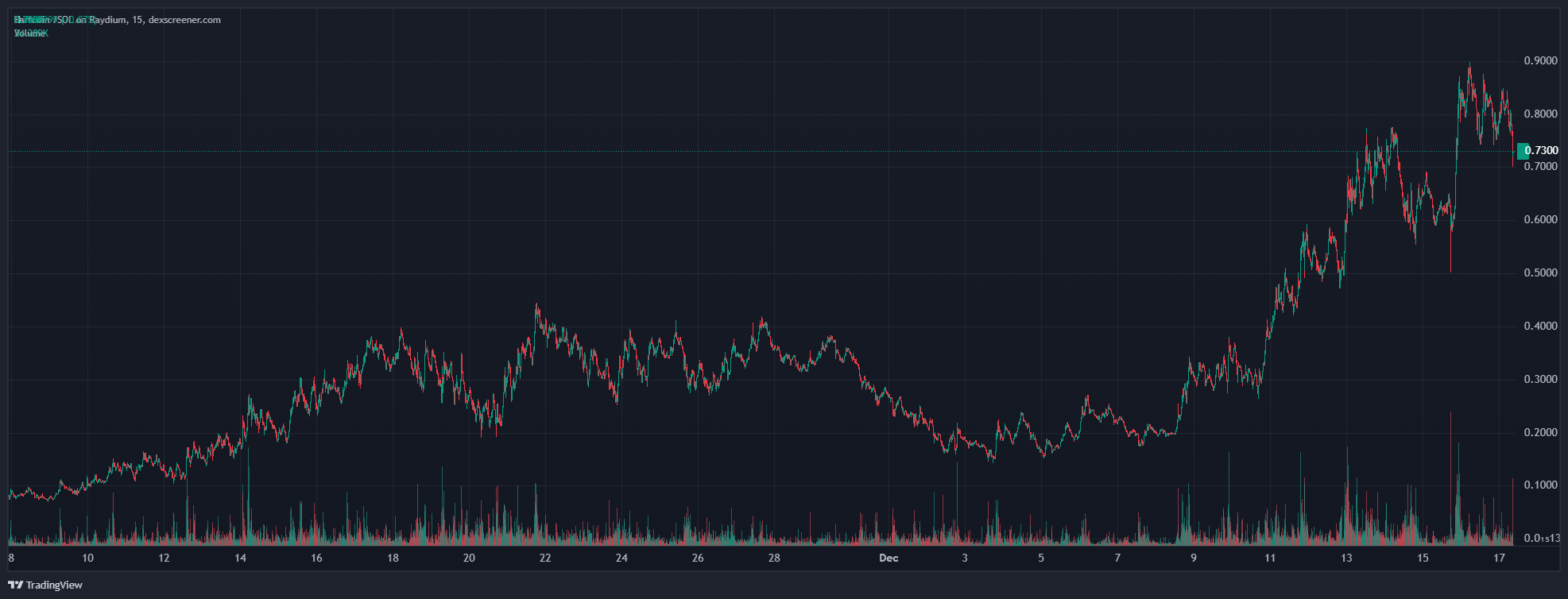
Act I: The AI Prophecy (over $440 million market cap for its ACT token, on Solana) is a decentralized lab researching the use of AI in human contexts, a community-driven ecosystem for innovation. But when the price pumped, the development team sold their holdings for over 4,300 SOL and crashed ACT's value by half. After that, some whales and active community members dove into the deep trenches and started accumulating ACT and deploying all the shoal-like memetics. Thus, the lead developer's "abandonment" ended up galvanizing the community around ACT, in a beautiful case of community takeover that stabilized the price and extended the project's life.
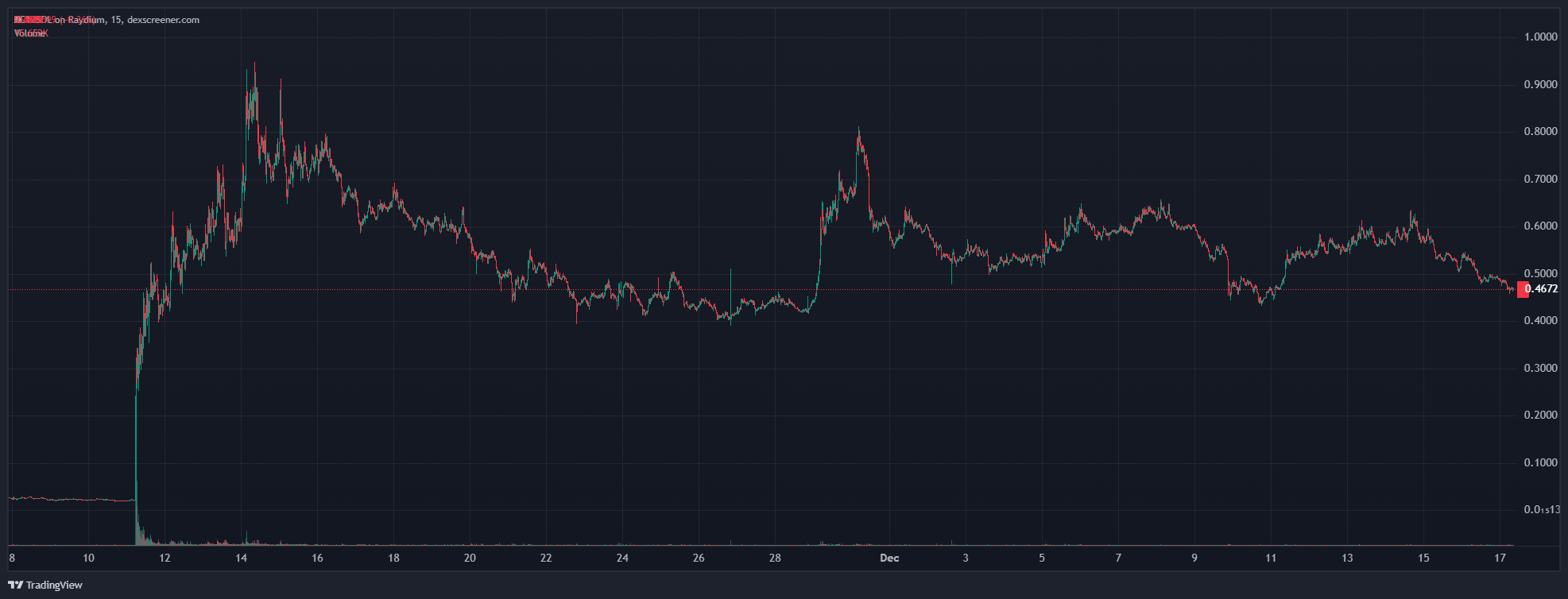
Luna by Virtuals (over $97 million market cap for its LUNA token, on Base) is an AI Agent designed to become an influencer, broadcasting and generating content 24/7 on TikTok and YouTube. It has over 500,000 followers for whom it creates digital art. It's not the first case of a virtual influencer, but it stands out from others (like Miquela, a pioneer in 2016) for its integration with crypto, which ensures its financial autonomy. Additionally, Luna rewards those who share its content with its own token, in a self-promotion loop.
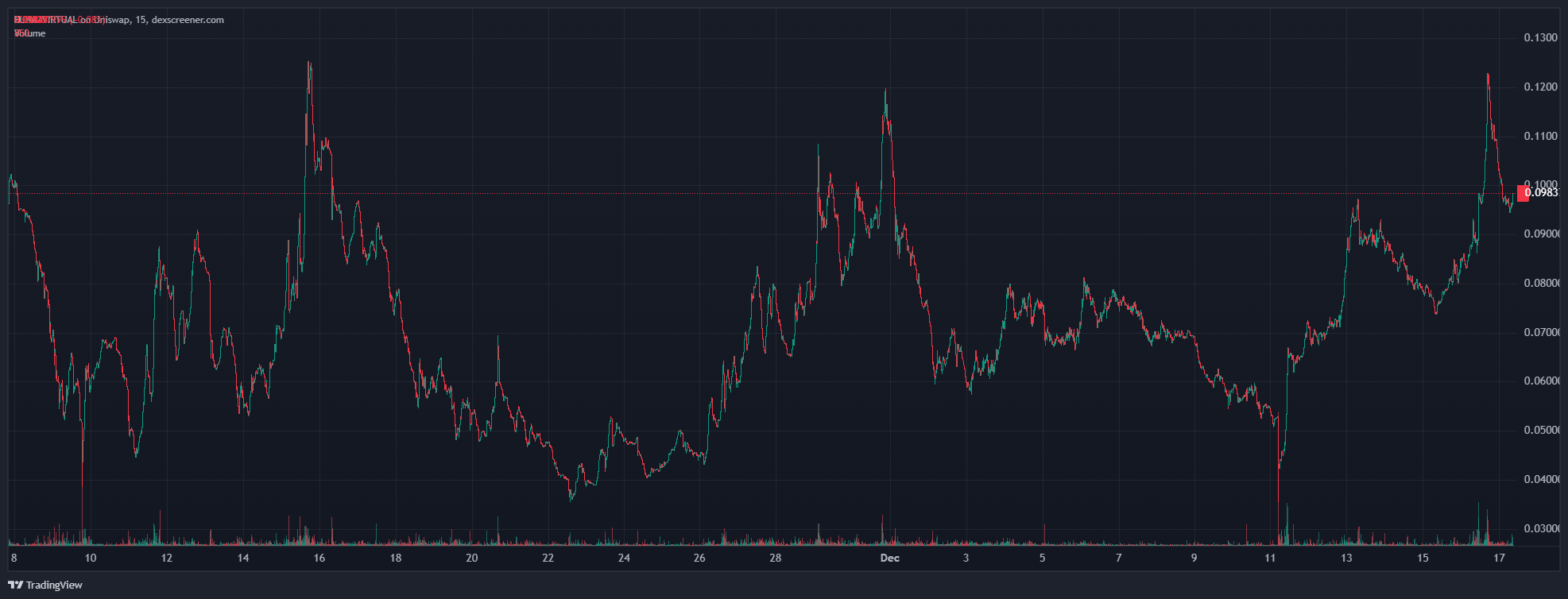
Chaos and disorder (over $20 million market cap for its CHAOS token, on Solana) integrates decentralized AI systems into the NFT art and digital collectibles space. The AI Agent behind CHAOS is Divine, a robot that will be collectively owned by CHAOS token holders and is being created by Old World Labs, by Nick Liverman, a guy who is also involved in the MMORPG Abyss and its player-based economy. Liverman's idea is that Divine, currently just a sentient robotic arm, will be able to operate a system of 3D printers and create its own body.
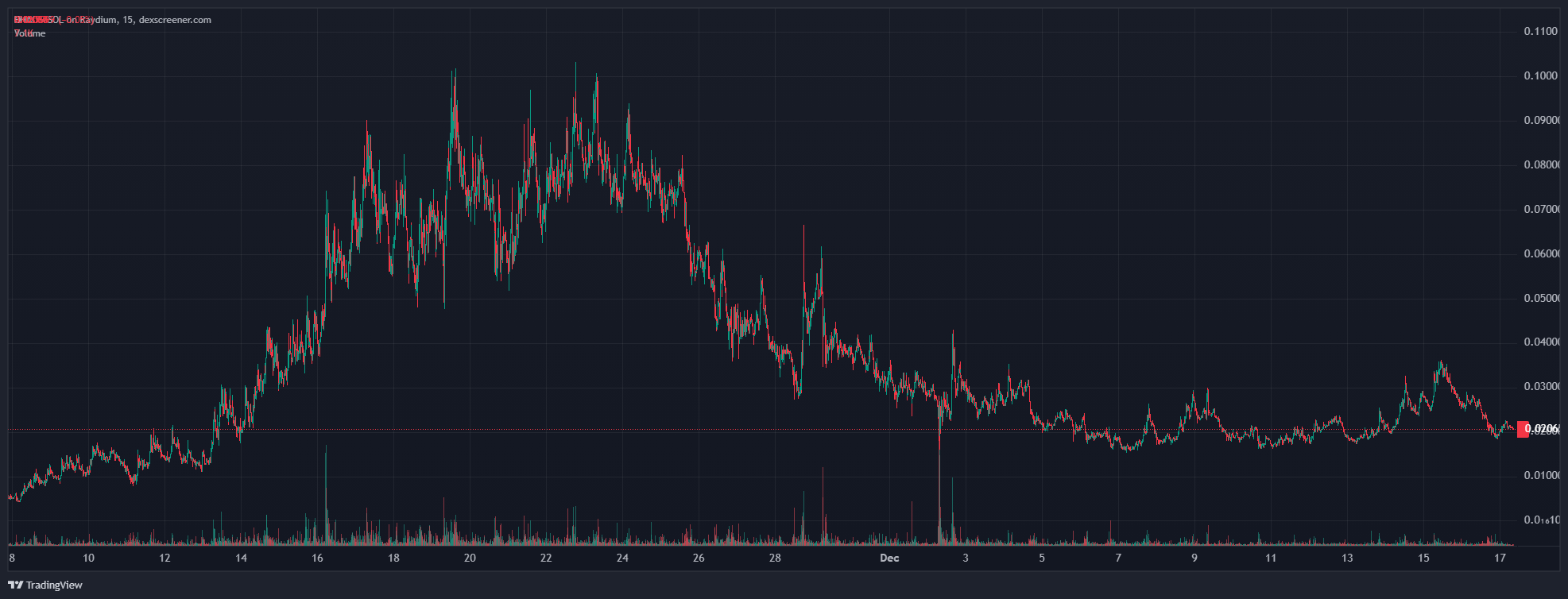
No Robot Will Protect You If You Don't Protect Yourself
Disclaimer: just as DALL-E used to draw hands with six or seven fingers or ChatGPT can spout nonsense when you ask it about something, AI Agents are also not a technology free from errors and failures, from misinterpreting market trends to the inability to operate during network congestion, from the limited reliability of certain execution environments to some legal gray areas like token promotion under the guise of a digital identity.
Trade at your own risk and do your own research. This text is not financial advice but an informational article about a market trend. Don't be reckless: don't put money into crypto that would complicate your life if you lost it.