Fanzines: Let's Make One and I'll Explain Why They Matter

15 de feb. de 2026 — Juanma La Volpe
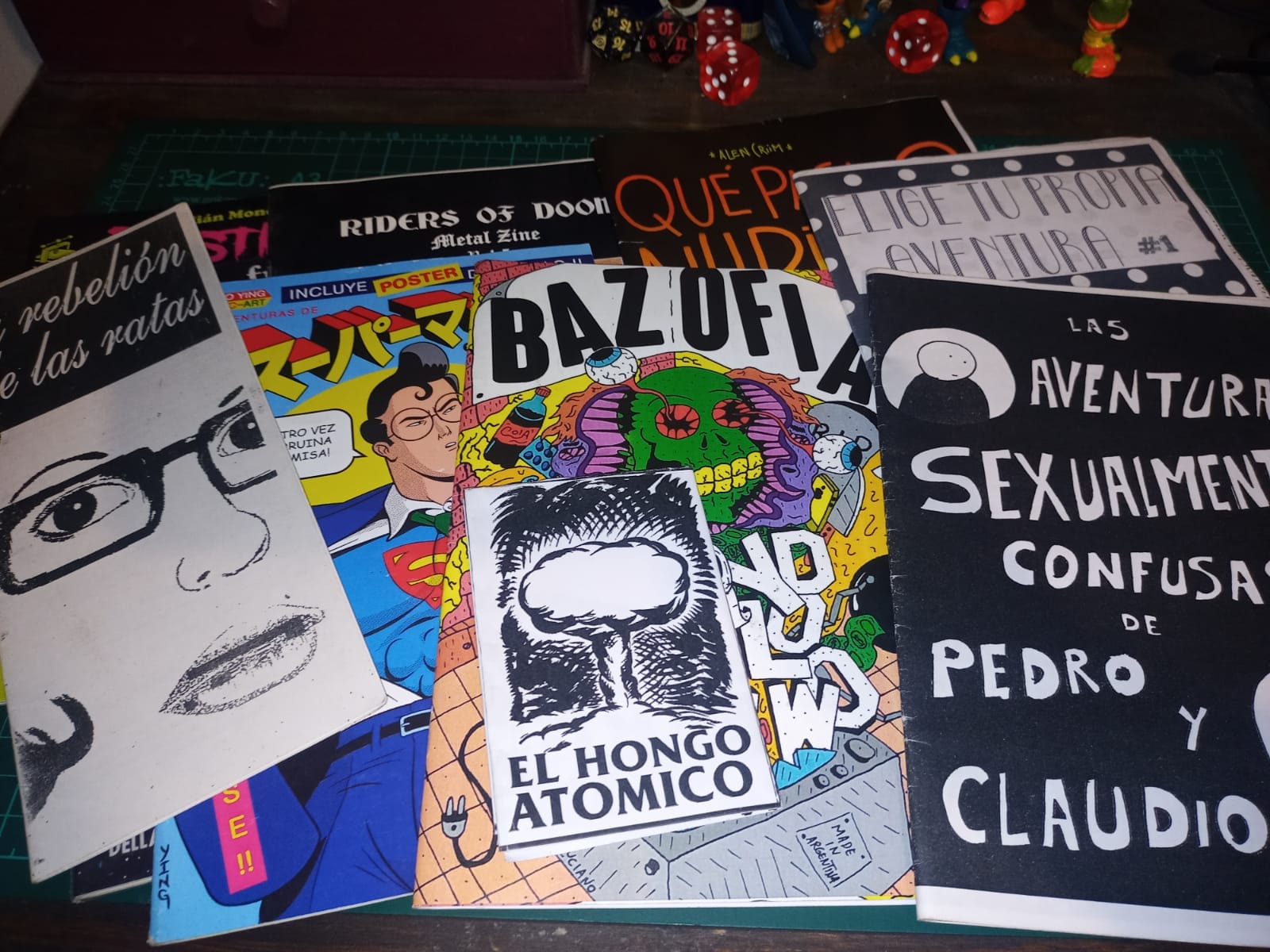
It's always how to make a fanzine, but I want to tell you why it's important to make a fanzine... while we make one.
What is a fanzine
Let's start with the basics: a fanzine is a self-published magazine, usually about a specific topic. Its name comes from the combination of fan (from fan and fandom) and zine (from magazine). The topics and formats are endless, with comic, nonfiction, poetry, rock, and gaming fanzines being the most popular.
Argentina has a massive and beautiful fanzine tradition, from Vaselina, considered the country's first punk fanzine, to the famous magazine Comiqueando which was born in this format, through the prestigious Maldita garcha from the '90s, which was a mix of MAD magazine with comics made by the people who would later form Farsa Producciones. Alongside them, comic artists like Dany de O, Podetti, El Bruno, Bazofia, and more.
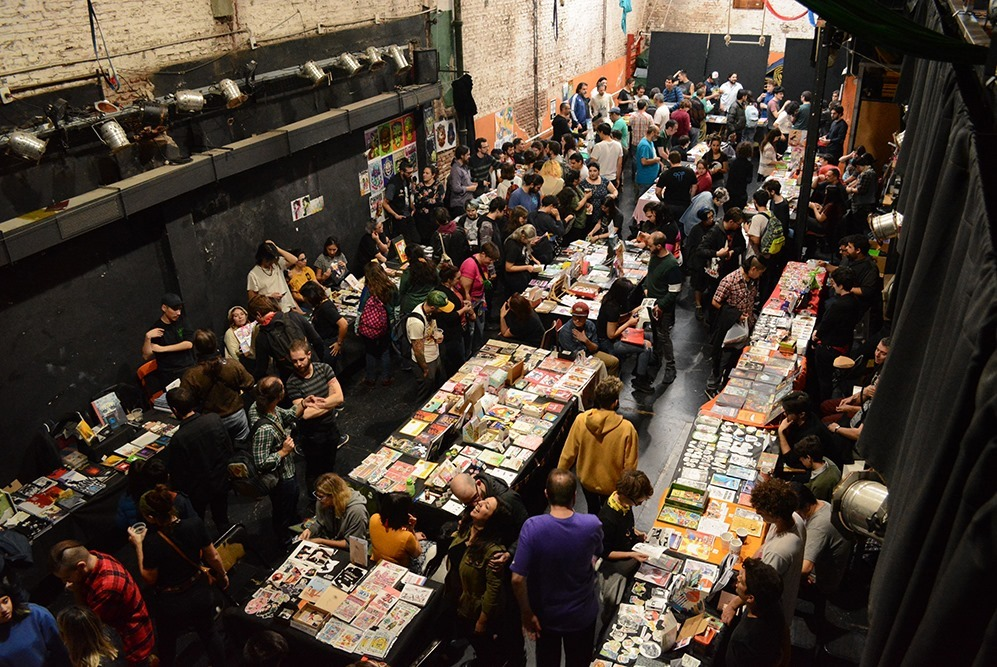
Within this world, dedicated spaces emerged, like the Dibujadxs festival for comic fanzines or the Feria del Libro Punk. And small pockets of resistance keep popping up where you can find and buy them. But today we're not buying one: today, with this article, we're going to make a fanzine from scratch.
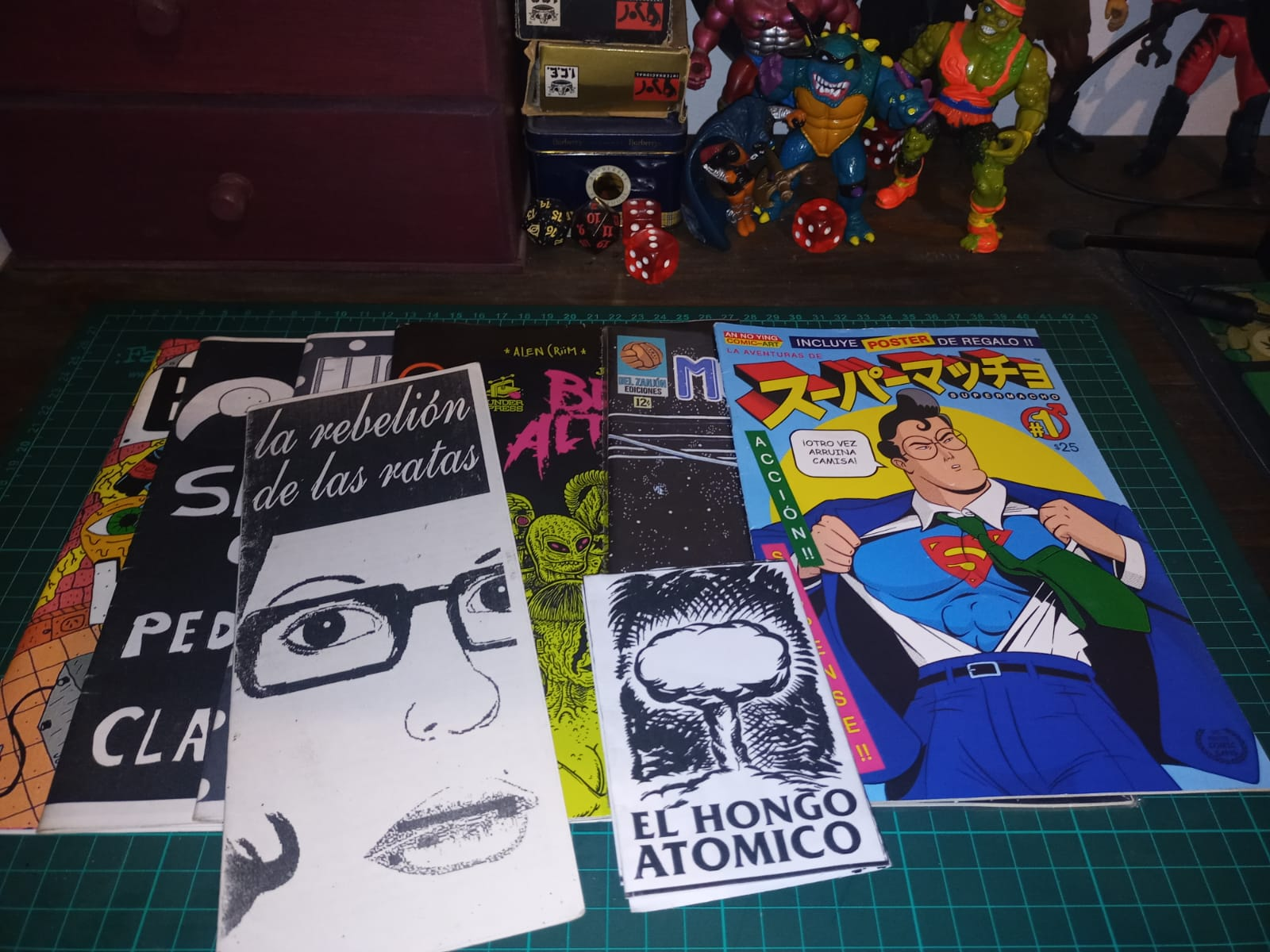
How to make a fanzine, step by step
Step 1: choosing a topic, aesthetics, and content
Let's say we're making the first issue of this 421ZINE with our fellow writer Lucho's article, Football Jerseys, the Ultimate Loot of World Sports. Here the content is already done -- it's a piece about the identity found in football jerseys and how they became a fetish object for different reasons.
In this case, it would be a magazine with more text than images, but since nobody tells us what to do, we can go wild with the design. What matters at this stage is identifying what we want to do and getting ready to start producing. This is our moment to gather references we like, do research, and pre-produce the content.
This is also the time to curate the material and see what makes it into the final edition. This helps us think about the publication's length and set some limits to work with.
Step 2a - Print sizes
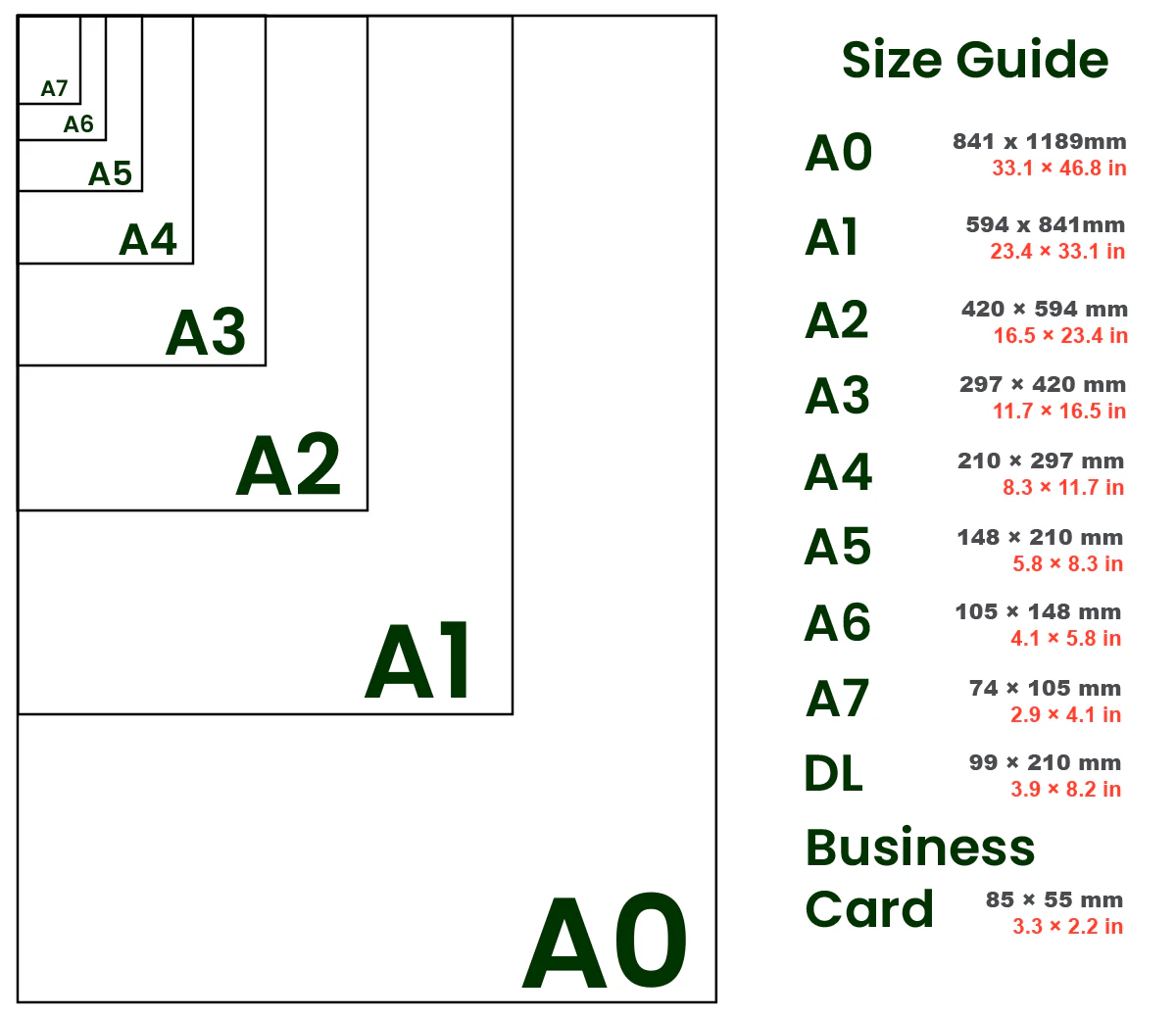
I think most of us learned to make fanzines with an A4 sheet folded to create an A6-sized publication. We all know the size of an A4: well, an A5 is an A4 folded in half, and an A6 is when we fold it again, creating 2 signatures of 4 pages and 8 pages total.
With a single A4, then, you can have a cover, 6 pages of content, and a back cover. Although for the printing to come out right, you need a bit of planning and to trim some sheets. Beyond this, the fanzine format is limitless; there are magazines of any size, color, and even experimental ones (I recommend checking out what Escabeche Ediciones does).
This format is perhaps the most affordable, because you only print one A4 double-sided in black and white. But if you want, you can make a huge A3 fanzine with the best papers and printing methods, like risography, or with a wild number of pages like the beloved No maten al monstruo by the legend Vincent.
Once again, I repeat that there are no limits to this beyond what you can invest, because when you go print you'll always have costs for the raw materials you use. Although you can also do it digitally, in several ways.
Step 2b - Differences in digital editions
PDF or .CBR (comic book reader) is the most fanzine-esque format, because it keeps all the identity of the printable version but in digital form. And while you need apps to read it, generally anything that opens a .pdf works. Here we can go crazy with colors and page count, because there's no money to spend on printing.
Plus, the wonders of the digital world mean it can be read or downloaded from anywhere in the world, and we can even add multimedia elements like the spectacular Happening by Grupo Inou, from Japan, made as a web experience, which to me is a great example of a digital fanzine.
And keep in mind that we can make blogs, websites, or newsletters that align with everything we think a fanzine is -- and maybe they are -- but that's a different discussion. Here the format choice depends on the tools we have and our own whims.
Step 3 - Real and virtual tools for making your fanzine
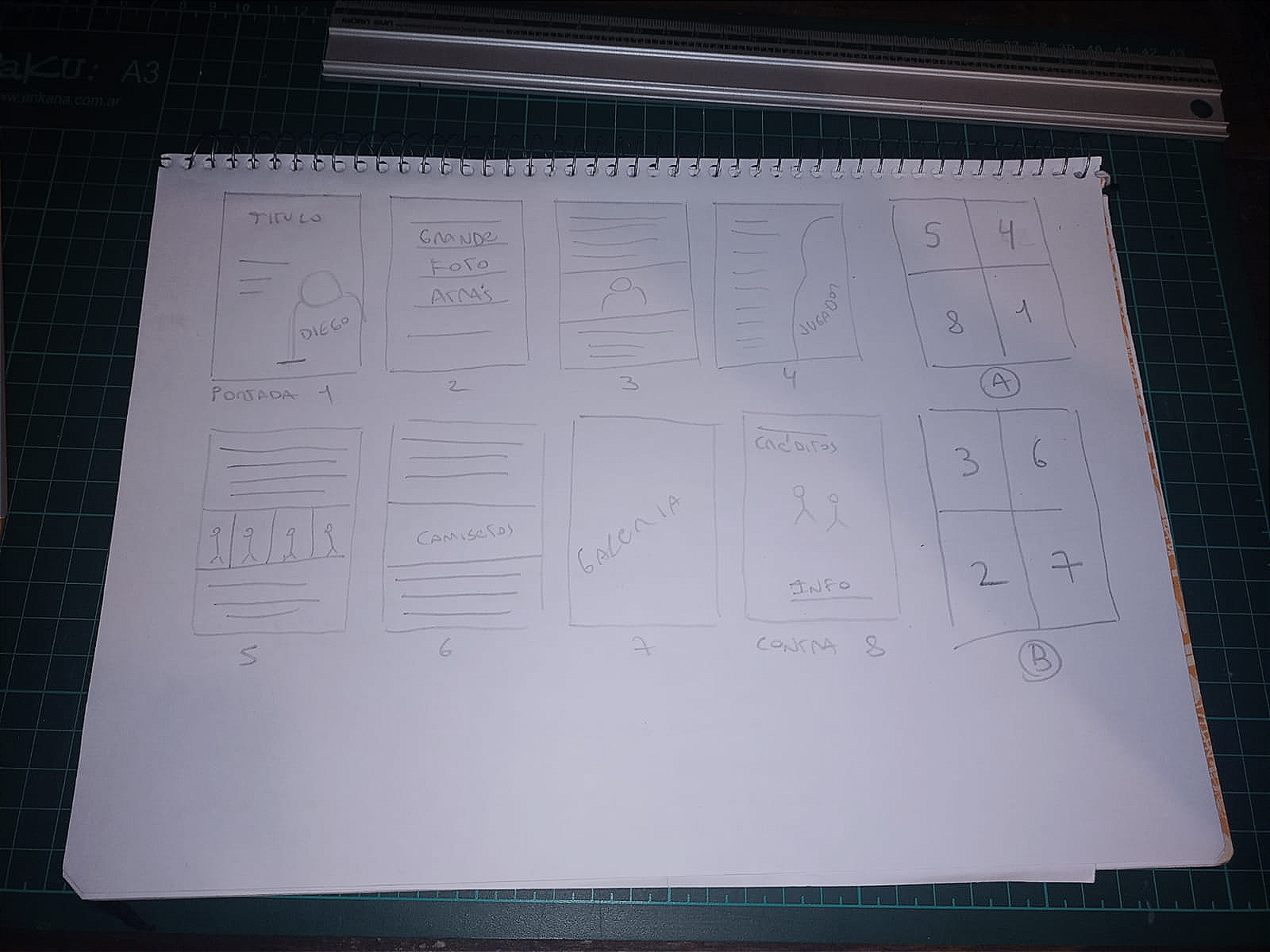
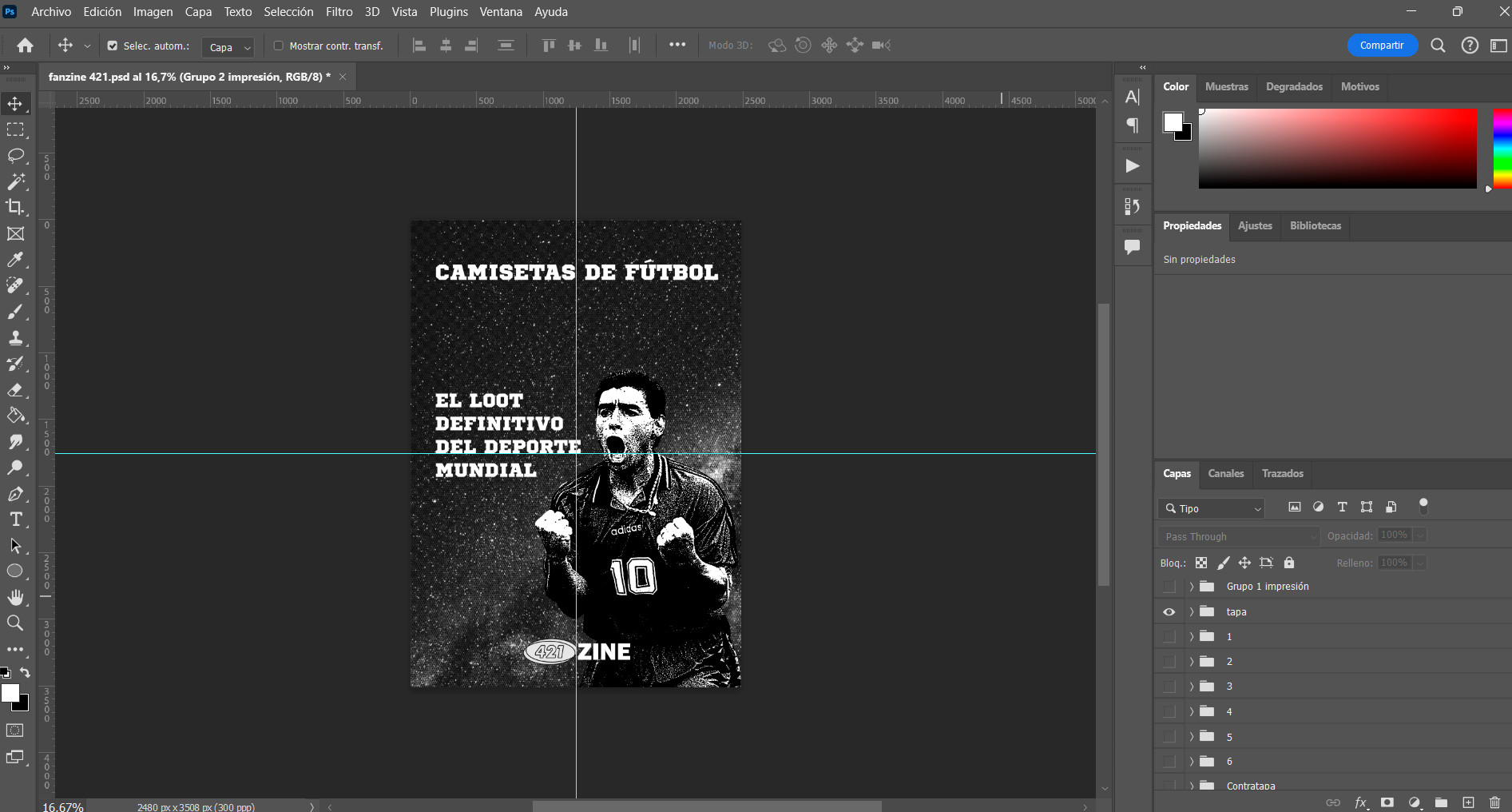
We already have the format and know we're going to put Lucho's text into an A4 with 6 content pages + a cover and back cover. To make it interesting, I'm going to use some handmade elements to organize the article across the pages. And to finish assembling, designing, and arranging the text, we can use a digital tool -- in my case Photoshop, because I still haven't learned how to use InDesign, Adobe's editorial design app.
If you look at the right side of this image, you'll see how you need to arrange the 8 pages for printing, so that when you fold everything it all ends up in the right place.
As for tools, the truth is you just need an A4 sheet and a pencil. Everything else is fluff. Although, depending on the type of fanzine we want to make, we can keep adding gadgets to play with the design. Comics can be hand-inked or you can use collage to build pages. I'll say it one more time: there are no limits.
Nowadays it's not hard to tackle a project like this digitally, because drawing and design programs (both paid and free) offer a ton of options to try things out and undo. They also make assembling the fanzine for printing much easier, since in the traditional method you need to keep in mind how to work the signatures so they don't come out jumbled when you print, photocopy, and assemble.
Step 4 - Printing, assembly, and what's the deal with print shops -- friends or foes?
Oof, what a topic. Generally they're friends, but they'll give you plenty of headaches until you learn to speak their language. Budget also plays a role here in bringing our work to life. For example, in our case the 421ZINE was designed to be printed A4 double-sided in black and white, which I believe is the cheapest format we can do today.
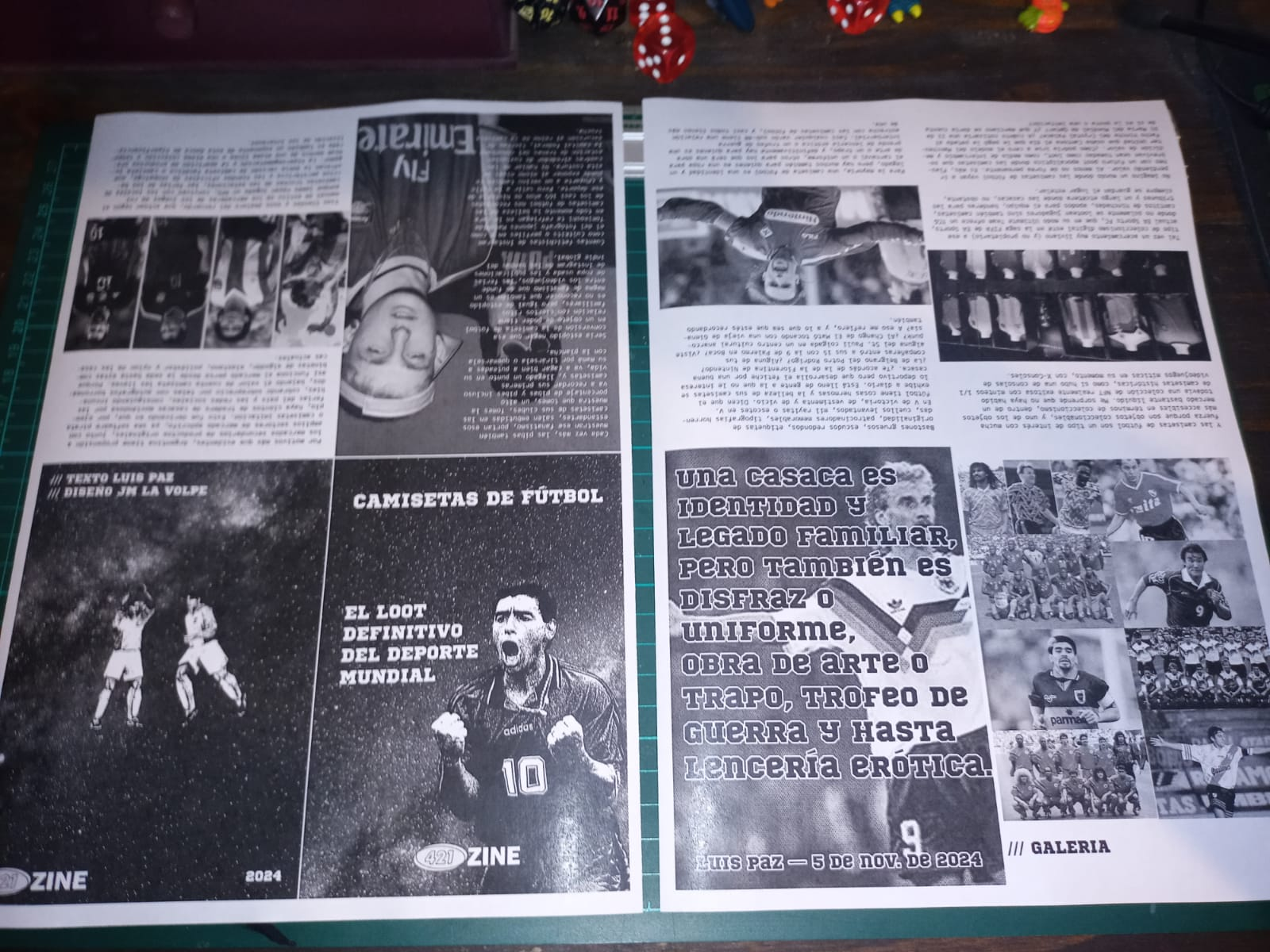
To go to the print shop and ask for copies, I need to prepare the file as 2 .PNG, .JPG, or .PDF files, one for each side of the A4 with the pages in order, so that when printed double-sided everything lines up and with just two scissor cuts we have the fanzine in all its glory. The old-school option was to arrange it manually, and sometimes you needed to shrink A4 sheets to add them to the original signature for photocopying.
If the people at the print shop are cool, I recommend you print just one copy of the files you prepared and then make photocopies from that, which is cheaper than printing and gives it that "old school" feel. Now, the crazier we get at this stage, the more expensive and complicated it gets to work with the print shop: keep that in mind.
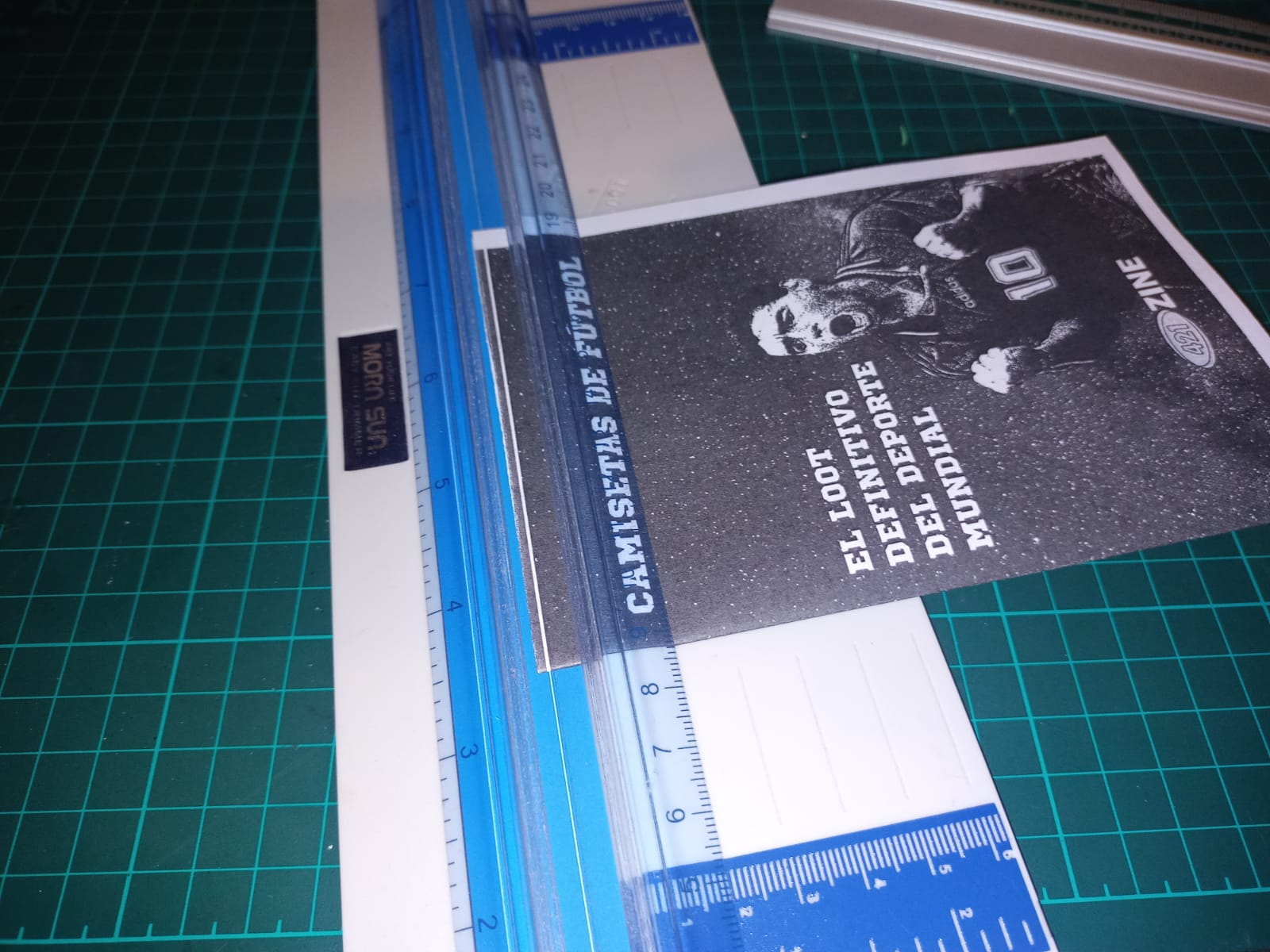
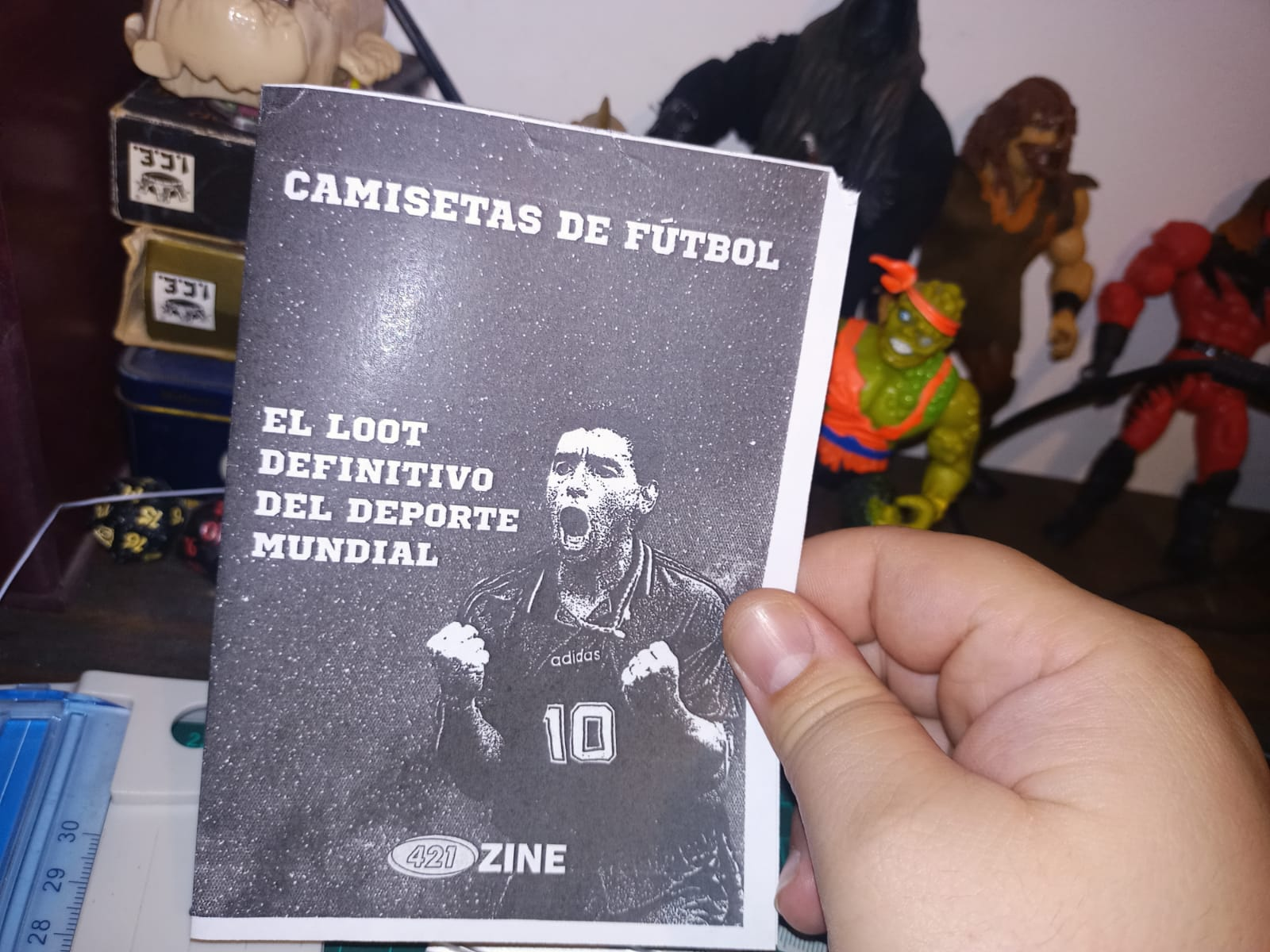
When the print shop hands us the copies, it's time to assemble our fanzines. Luckily we chose a format that only takes a couple of folds and a scissor/paper cutter cut. Depending on the number of pages, we may also need to use basic binding techniques, like stapling the signature or sewing the pages, although I don't recommend sewing. Another common practice is to print the cover separately so it can have color, or to prepare extra materials to include like stickers.
Step 5 - Distribution and sales at fairs and online
OK, we have our fanzines assembled -- now what? Well, little Timmy, it's time to move our copies and get them into people's hands. If we plan to sell them, we can go to fairs, concerts, or events that relate to our material's content. There are many to choose from, but I'd highlight the Feria Pegajosa for sticker formats, Distrito Comics for comic books, film series, or events like Muere Monstruo Muere, etcetera.
Are we going to make money from this? Uh, no, I don't think so, little Timmy. In my experience, the best-case scenario is breaking even so you can keep making more. But it's very likely that whatever you make from selling fanzines, you'll spend on beers or on other fanzines. So, why are we doing this?
Step 6 - Embracing the whim of making things
Making and creating is the most beautiful thing in the universe. Having something where there was nothing, something you made, is a wonderful feeling.
Throughout my years, whenever a project comes along (whether my own or one I'm joining as part of a team) I always ask myself why I have to do it. Sometimes you do things for money (because you need it or because you want it). Sometimes you do things out of love: love for the medium, for friends, for keeping a scene alive. But for me the strongest motivation is perhaps a controversial one: I do things for the sheer whim of creating.
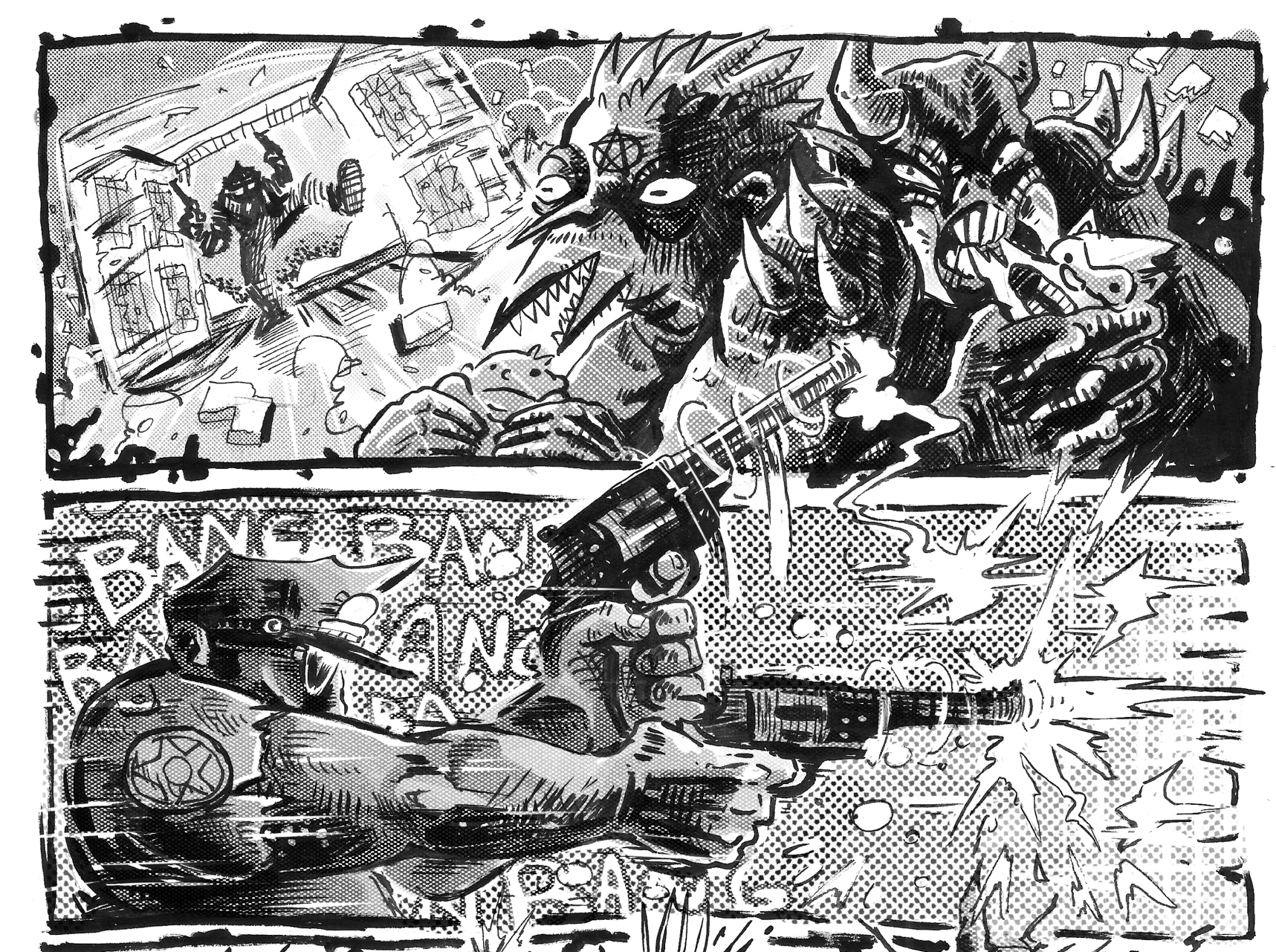
A fanzine, like many other forms of art, doesn't have an inherent reason for existing, but the fact that it's born from a whim makes it even more powerful. Because creating motivates us to study, to improve our processes, to share what we've made, to meet people, and to create new things with those people you shared that fanzine with -- a fanzine that only exists because you made it.
In the end, whether for money, for love, or on a whim, if we're passionate about something, we should always do it for the glory.
To keep going and use as examples, you can download the fanzine I made for this article here and check out some other work of mine here.