Luis "Captain Thule" Cannobio, Argentina's Heavy Metal Hero

15 de feb. de 2026 — Juanma La Volpe
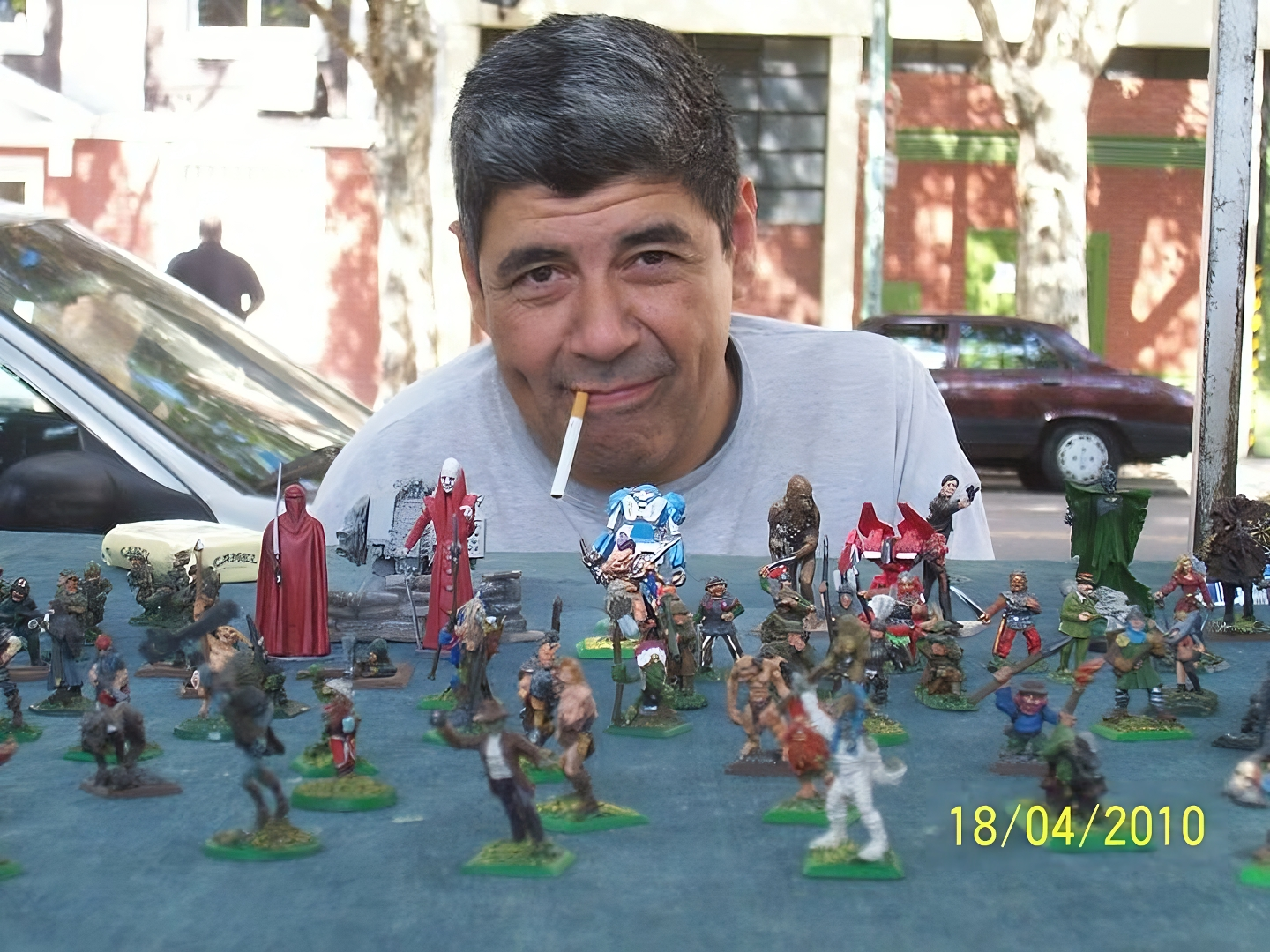
What would our country be without those anonymous heroes who, under a pirate flag, made it possible for us to play Final Fantasy VII for 5 pesos per CD, or who made the Spanish subtitles for that Z-movie you downloaded via Torrent that blew your mind. Argentina has historically consumed culture through a democratization built on piracy and smuggling. There are thousands of stories along the path of cultural corsairs, but today I want to tell you how an English game for the privileged few became popularized and reached neighborhood comic shops thanks to a heavy metal hero.
Luis Cannobio, aka Captain Thule, is one of the people most responsible for Warhammer being widely played in Argentina. That's why I sat down to talk about his story with Mauro Bianchi, the director of the documentary Hombre de Metal (Man of Metal), about Cannobio; and with Koko, from Yunke Miniaturas (@legadometalico), one of his goblins and heir.
Captain Thule Origins
Luis Cannobio was born in 1961 in Villa Recondo, La Matanza, and had a childhood complicated by polio that would leave lasting effects for the rest of his life. As a young man, thanks to his cousin Jujo, he received a gift that would change many people's lives. Jujo was a history fanatic who would later become a teacher -- and one of Captain Thule's first partners -- and he gave him some historical metal soldiers. Luis was fascinated, and with the determination of people who make things happen, he figured out how to copy them to build a bigger army and, along the way, modify their poses.
He trained himself by asking questions, getting his hands dirty, and learning on his own. By the late '80s, needing to make some money, Luis decided to go to Parque Rivadavia and ask for a stall to sell his metal soldiers.
Argentina has always had its share of history fanatics. Beyond those who studied or worked in the field, historical texts about ancient civilizations and wars were already part of a budding nerd culture. Because just as people were starting to read comics or fantasy and horror stories, they were also reading plenty of texts about mythologies, epic events, and -- of course -- armed conflicts.
The first metal soldiers to arrive here were made by European brands and recreated in lead the armies of the World Wars, the Roman Empire, and various civil wars. The business of copying and selling these figures predates Cannobio's arrival at the Park. In that context, his stall thrived and he realized there was a business there.
Day 1 of the Metal Era
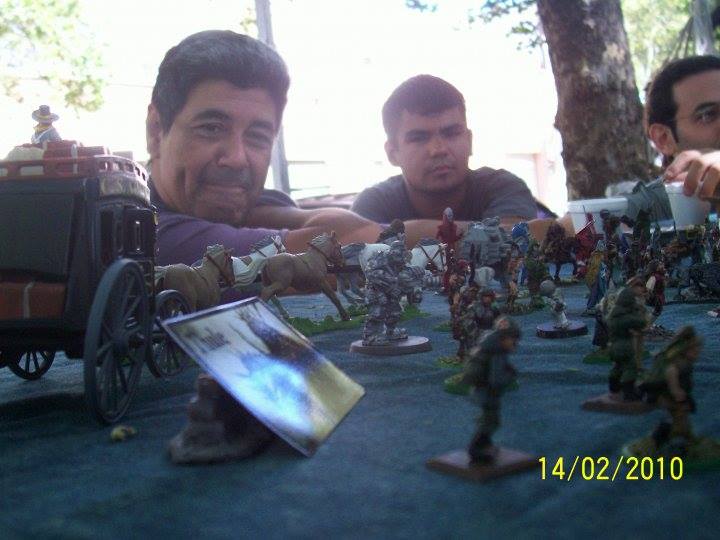
One day, the children of Maria Julia Alsogaray (privatization overseer, government official, and Menemist congresswoman) -- aka the grandchildren of Alvaro Alsogaray (minister under several de facto governments and liberal congressman) -- approached the stall and showed Luis some medieval fantasy lead soldiers. These kids had been playing wargames since the early '80s and had the means to bring originals from abroad. With them, Luis would close the deal of a lifetime: they would let him copy their miniatures in exchange for lead armies.
Warhammer thus made its debut at Luis's stall in Parque Rivadavia, which was not only ahead of its time (early '90s) but also fed another growing monster that was establishing itself in the country at the same time: tabletop RPGs like Dungeons & Dragons.
Over time, the stall would move from Parque Rivadavia to Parque Los Andes, where it would solidify its status as a legendary space for the wargaming and RPG scene. Luis and his family led the production of lead soldier copies, and now, with the new Warhammer and Warhammer 40k miniatures, business kept growing nonstop. A system of trading originals for copies had been established that kept the workshop running around the clock. So much so that his cousins joined the business with a historical soldiers stall in San Telmo, and orders kept pouring in from comic shops and stores. If you ever owned or saw a Warhammer mini in Argentina, chances are it came from Thule's forge.
Around 2000, two very interesting things happened in parallel. Warhammer was establishing itself as a game and hobby worldwide, because not only was Games Workshop's production better, more detailed, and constantly releasing new things, but the game had also progressed in terms of rules and lore. It was still a niche, but it was no longer a hard-to-find secret if you were into tabletop RPGs, Magic: the Gathering, or scale modeling.
The other thing that happened was the birth of online communities. That made it possible to find rulebooks, players, and tips on where to buy miniatures. A community of nerds was born around the Parque Los Andes stall. Adults, kids, and teenagers who would gather to talk about their hobbies, buy from Thule, and wait for him to leave to see if he'd left any miniature bits behind.
The members of that community also became loyal soldiers, and quite a few joined the business -- casting, copying, assembling orders, and selling. During this golden age that lasted from 2002 to 2010, Thule already had about 15 years of experience and prestige in the field, a workshop with loyal goblins, and a network of facilitators who would get him Games Workshop material shortly after it went on sale. A Roman Empire of lead that moved kilos upon kilos of metal every week.

The Traitor and the British Invasion
By 2010, Captain Thule was running a small business infrastructure and orders were shipping to every province. Everyone knew him; he was a rockstar among nerds. Business was booming and the factory never stopped producing. They also continued with historical soldiers and even had the luxury of creating their own collections, like the Battle of the Triple Alliance.
Until the police and a lawyer representing Games Workshop rang the workshop's doorbell. They say it was incredibly hot that day and the goblins' first tactic was to turn off the air conditioning: they made them sweat to death. Games Workshop found kilos upon kilos of metal and molds, and was surprised by both the quality of the copies and the sheer quantity.
They couldn't take everything, but another raid came immediately, this time from New Line Cinema over The Lord of the Rings miniatures. Afterward, Games Workshop showed up at stores like Mordor Toys to confiscate material and pressure them to stop selling copies. Luis ended up with a financial lawsuit that, due to legal technicalities and his disability, he managed to pay off in installments. It was a bomb for the workshop and his business, but it was also a nerd Hiroshima. What was once easily available was cut off. And for a few years, everything went underground.
How did this happen? The story that echoes the loudest is that a hobbyist who owned a store sold Thule out to the British to win the favor of Games Workshop's distribution in the country. Then a fancy store opened that lasted very little, because people couldn't afford originals and most of us played with Luis's copies.
The Final Years and the Documentary
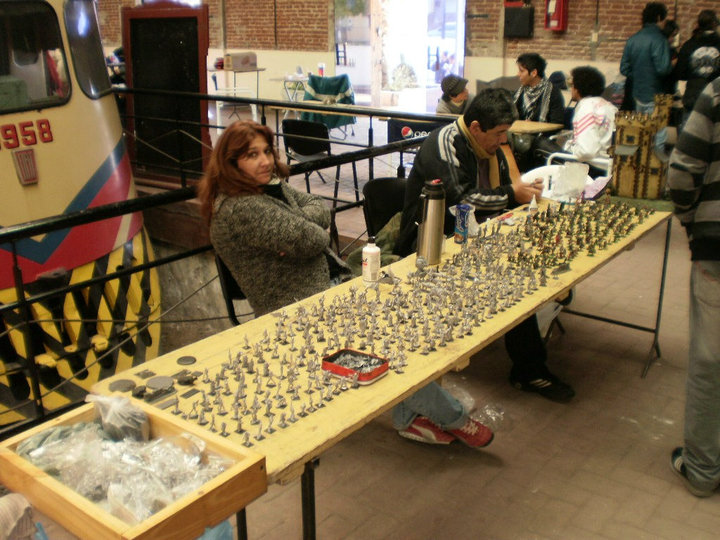
Getting back up from all that was tough. Games Workshop made it clear that copies could no longer be sold in Argentina, and that separated the elite hobbyists, who could buy originals, from those of us who grew up with Thule. Luis's cousins continued with historical soldiers and he kept his famous jumbled stock, taking leftovers and remaining inventory to fairs and provinces.
Mauro Bianchi, who comes from the RPG world and is one of the admins of the famous Frente Rolero Argentino Facebook group, met Luis in 2017 at the Feria del Libro Heavy, after inviting him to the FRA booth. He says he was struck by the fact that people from outside the heavy metal scene came to see Luis. And while chatting with him about his story, he proposed making a documentary about his life. That's how Hombre de Metal (Man of Metal) was born. Captain Thule passed away in November 2019. The documentary is expected to premiere soon, and Bianchi says it will have a surprise that "will immortalize Luis."
"The documentary traces his life story, from his childhood marked by polio, his teenage activism in the Frente de Lisiados Peronistas and his later involvement with the Communist Party, his entry into the craft of miniature artisan work and the legal troubles from copying miniatures, all the way to his physical departure from this world, leaving behind a legacy of adults who grew up by his side, who bear witness and continue his artisan legacy of resistance."
An enormous legacy thanks to which, for example, I -- who grew up in Lomas de Zamora and started playing wargames in 2003 -- was able to access a game that previously only the children of Maria Julia Alsogaray could reach. Thank you, Captain Thule, for the metal and the war.