Reverse-Engineering the Enshittification of the Internet

15 de feb. de 2026 — Juan Brodersen
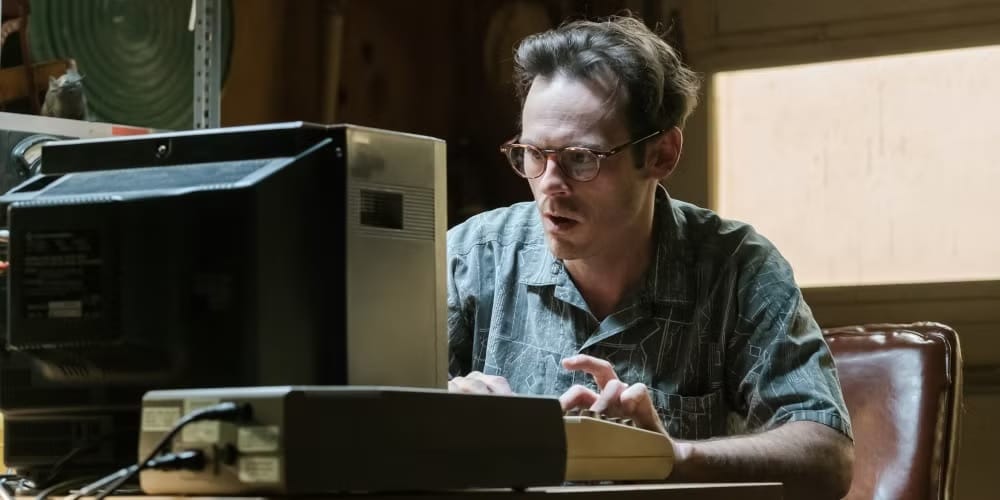
In Halt and Catch Fire, the Mad Men of computer nerds, one of the first scenes shows how former IBM executive Joe MacMillan convinces Gordon Clark, a brilliant engineer frustrated by multiple failed projects, to crack open a computer.
"A PC is a box full of switches and hardware," says Gordon. "IBM, Altair, Apple II... they're all the same junk. Anyone can buy the parts and build their own: they're open architecture. IBM doesn't own any of this stuff inside."
"Except the chip," MacMillan interrupts.
"Except for what's on the chip. The BIOS is on one of these, we just don't know which one. And the ROM BIOS is the only part of all this that IBM actually designed. It's the program, where the magic happens: the bad news is it's protected by copyright. The good news is there's a way around it."
"Reverse engineering."
The internet, apps, computers and phones we use every day have been enshittified. This means that, without realizing it, we are increasingly trapped within the ecosystems of Google, Meta, Amazon, Apple and Microsoft. And while they still serve us, they work worse and worse. But there is an antidote: reverse engineering, a foundational concept in the history of computing.
Below, four theses through the lens of four specialists to try to better understand where we stand. And how to recover that good ol' internet that, at some point along the way, we lost without even noticing.
Before we begin, two disclaimers: this piece was inspired by reading Cory Doctorow's latest book, Picks and Shovels. These topics are central to my journalism at Clarin and at Dark News, my newsletter on cybersecurity, privacy and hacking. You can follow the continuity of these subjects there.
The second disclaimer: we'll translate "enshittification" as Valentín Muro did in Spanish: "Mierdificación" -- perhaps because of how blatant the term is, which is why I recommend adopting it -- and we'll use the verb "to reverse-engineer." As the Italians say, "traduttore traditore": to translate is to betray. Either the original text or the reader. Here, we betray everyone equally.
Thesis 1: the online world is enshittified
Cory Doctorow, writer, journalist and indispensable tech critic, is also a forensic examiner of the era we live in: the internet, as we knew it, is dead. The enshittification of the digital platforms we use daily, which have progressively degraded to the point of becoming garbage, is a central notion in his recent books. It was also the focus of many of his talks, such as his DEF CON talk last year, where the concept served as a guide for the entire edition (the badge they gave you was even a sort of Pokemon to escape the enshittified world).
Examples. Google is saturated with ads and misleading articles, Instagram and Facebook prioritize viral influencer content instead of showing what your friends post, and Microsoft has filled Windows with artificial intelligence tools that hinder the system's usability (bloatware), make it slower, and push users to replace their computers prematurely.
This process is cemented in what, together with copyright expert Rebecca Giblin, Doctorow described as Chokepoint Capitalism. Having not only a monopoly over buyers, but also "monopsony": controlling sellers and content creators (see). For them, all of this is a scam. There is extensive literature on the subject and, in fact, Doctorow's next book -- out in October -- is called Enshittification: Why Everything Suddenly Got Worse and What to Do About It.
This entire process doesn't just apply to platforms, but to all technology in general. "For me, enshittification is not just something you see from the outside, like companies making their services worse. It's a social phenomenon, something structural that changed in the environment and allowed everything to degrade. And above all, it's a material phenomenon," Doctorow explained to 421.
"It's not that suddenly everyone got an MBA, became greedy and started doing bad things. There have always been greedy people. The difference is that services like Uber, Airbnb or Amazon used to be decent, our phones worked reasonably well, computers too... Today, on the other hand, things have become terrible and nothing happens. There are no longer consequences for ruining products or mistreating users. There used to be regulators, competition or workers with power to stop that. But between mass layoffs, deregulation and monopolies, all of that disappeared," the writer continues.
In his latest novel, Picks and Shovels, the third installment of the series starring Martin Hench, a young man from 1980s San Francisco begins to discover how a tech company covers up financial crimes behind the strategic use of computing of that era, enshittifying the computers they sell so that, for example, users can only buy the printer ink cartridges that they manufacture.
The good news: there is a way out of the enshittification of the internet, the platforms and the devices we use every day. It just requires taking a few steps back to see how to fix this whole mess.
Thesis 2: the resistance of reverse engineering
What happens in Doctorow's novel happened IRL, in the early '80s, with the appearance of PC clones -- compatible with IBM but produced by companies like Compaq -- that challenged the monopoly by lowering costs and democratizing access to hardware. For this to happen, the concept of "reverse engineering" was fundamental.
"Reverse engineering is a process that allows you to learn the internal properties of a system by observing it externally. For example, we could deduce certain properties of a house (whether a family lives there, whether there are children, whether they have a pet, what time they leave for work or school) just by observing from outside, without needing to enter the property," exemplifies Augusto Vega, an engineer at IBM's T. J. Watson laboratories in the United States, born and raised in La Pampa, currently residing in San Diego, California.
Speaking to 421, he explained what reverse engineering means in computing: "It consists of determining the internal functionality or constituent elements of a system -- software or hardware -- with the goal of understanding, replicating or improving it, without getting to know the specific internal technical details of said system, such as a program's source code or a chip's microarchitecture."
For the engineer, who organized ISCA -- one of the most important computing conferences in the world -- for the first time in Buenos Aires last year, reverse engineering "has supreme relevance, but not necessarily because of the ability to 'copy' a system or product, but rather it is a critical concept that allows generating knowledge about systems that, for different reasons, cannot be examined internally, for the development of other complementary or extended solutions or to verify their correct functioning."
In the world Doctorow imagines, back in the '80s, the protagonist comes into contact with a collective of women linked to the tech world, marginalized by the dominant system, who form a cell of technopolitical resistance. For the computer nerds who watched Halt and Catch Fire, it's impossible not to think of Donna and Cameron, engineer and hacker: they become the nucleus of one of the novel's most powerful conceptual axes, that of reverse engineering understood as the act of dismantling structures, understanding their logic, and proposing alternatives. Alternatives so that systems can "talk" to each other, even if they aren't manufactured by the same company. That is, so they are interoperable.

Thesis 3: interoperability, the most important battle
Interoperability means that systems, devices and networks can see each other and communicate. If you've ever been frustrated because you needed to charge your Android phone and your friend had an iPhone, it's because Apple used a different charger that it had to abandon recently (and under pressure from the European Union): it wasn't an interoperable system. If you've ever used a PlayStation controller on PC without having to configure or install anything outside of Steam, it's because that controller is interoperable. But it took a long time, under a Zeitgeist of collective synergy among serial device disassemblers, to get there.
"In computing, interoperability is the ability of two or more computing systems to interact in a compatible manner, that is, 'speaking the same language.' In the context of the Internet, it is a very widespread concept, particularly in a highly connected world like the one we live in," explains Vega.
And, in general, big tech companies work against interoperability. In fact, all of this was a very big problem for companies in the '80s and '90s. That opening scene from Halt and Catch Fire shows that everyone was exposed to having their systems reverse-engineered and copied, to be sold more cheaply.
"Another factor that worried companies in the past was interoperability. They worried that someone would reverse-engineer the product they had enshittified to then make it better and compete with them. If you raise the price of printer ink, someone is going to take apart your cartridge to understand it and make an alternative one and sell it on the market," explains Doctorow.
This is why interoperability, always desirable for the user, appears as a threat that can put the big tech players in check. But beyond this, there is a problem that isn't technical but legal: it's the law that stands in the way; in particular, those related to intellectual property.
"What has happened is that, for more than 20 years, the US Trade Representative -- the person in charge of coordinating US trade policy -- has been going around the world convincing trade partners like Argentina, Canada, Australia and even the European Union, to enact laws that prohibit reverse engineering and isolate companies from the consequences when they do things that harm their users," recounts Doctorow.
The book takes place, in the history of Technology, before these laws first appeared in the United States: the first was Section 1201 of the Digital Millennium Copyright Act of 1998, before it became a global legal regime. Since then, the laws have protected the big players, only leaving some room for the user in the last decade, with the European Union as the main ally.
Thesis 4: "leaky abstractions" and the inexorable path of information
Last year, during a trip to Las Vegas to cover DEF CON and Black Hat, the two largest hacker conferences in the Western world, I got to meet and interview Mikko Hypponen, one of the most recognized hackers in the world. In a TED talk he gave, Mikko raises a super interesting idea that is corroborated day after day: "Information will find a way" (watch).
It doesn't matter how many legal prohibitions there are on a technology, from Napster, through torrents to direct book downloads, if there is a possibility that a piece of information -- a bit, at the end of the day -- can travel from one point to another, it will find a way.
Consulted for this article, Hypponen recalls that "openness and the ability to build on other technologies was the key" to the beginnings of computing. "Let me quote you a passage from my latest book," he replied. Here it is:
In the '70s, almost no one had access to computers. Mainframes were only available to universities and large corporations. In the '80s, 8-bit home computers appeared, like the Apple II and the Commodore 64, but they didn't have adequate network access. One more component was needed to change everything: a 'personal computer,' open and standardized. IBM, a computing giant known for its mainframes, introduced the IBM Personal Computer, or PC, in August 1981, with a central processing unit manufactured by Intel and an operating system from a small startup called Microsoft.
Soon, hundreds of manufacturers created compatible computers that could run the same software. The PC's operating system was not entirely open source, but it was open enough. IBM was perhaps the company most surprised by the PC's success, as other manufacturers, such as HP and Dell, soon surpassed their sales volumes.
The PC was a unique and accidental success in terms of openness and standardization. Today, we take it for granted that computers are compatible and open, and we are wrong to do so. In fact, most of our devices, such as cars, refrigerators, video game consoles and cameras, operate in closed ecosystems. The PC is a happy exception to the rule. They gave rise to an open ecosystem that allowed software and accessories to be freely developed without limitations.
"Capable programmers had the ability to reverse-engineer systems to deeply understand how they worked. And, crucially, we were all running more or less the same systems, so all the work invested in developing something could be used again and again. Even closed systems can be converted to open ones if someone is sufficiently interested in opening them," says Hypponen.
This culture of "information will find a way" has its roots in the hacker mentality: beyond the fact that the average user reads "hacker" and thinks "cybercriminal," hacking is a mindset of taking apart systems (and ideas or concepts) to understand how they work. And for all of this to happen, there is a fundamental component that has to do with education: whether formal or informal, sitting down to think about how "something" works is stopping the incessant flow of the infinite content that passes before us every day across the different flavors of every social network we inhabit.
"Reverse engineering is the beginning of computing. Programs were originally written in binary, so there was no other representation. The source code was the bytes: in that sense, in the early days, reversing wasn't really reversing, it was sitting down and reading the program," recalls Nicolas Wolovick, PhD in Computer Science from the National University of Cordoba and specialist in High Performance Computing (HPC).
Also a professor, Wolovick acknowledges the deficit in current curricula: they teach how to make things, but never how to break them. "In the official university curricula, reverse engineering is not taught. There's a programmer who gets a lot out of machines who says abstraction maker, abstraction breaker. The curricula teach how to build, but never how to destroy, to see how things work. And we call all abstractions leaky abstractions. Computing is the art of creating abstractions, increasingly powerful and general, distanced from the hardware. But all those abstractions always leak what's happening underneath, always. For example, Nintendo games that realize they're running on an emulator," he explained to 421.
Wolovick works in the field of HPC, known as "supercomputers," and is a professor at the National University of Cordoba. In addition to having a lab that is an archaeology of bygone equipment -- where the younger ones are surprised that the machines are "all different from each other," speaking of interoperability -- when he can stray a bit from the curriculum he manages to give exercises with physical ET Atari cartridges so students can reverse-engineer them and try to discover those famous bugs.
"Anything that questions and puts you in a critical perspective is a resistance to the hegemonic model of big tech. A single person can take down Goliath, because the computer has imperceptible cracks where, if you stick your finger in, everything can fall apart. Moreover, I don't think it's just resistance: it has always been the way to truly do computing. Abstraction maker, abstraction breaker. You have to break to understand," asserts Wolovick.
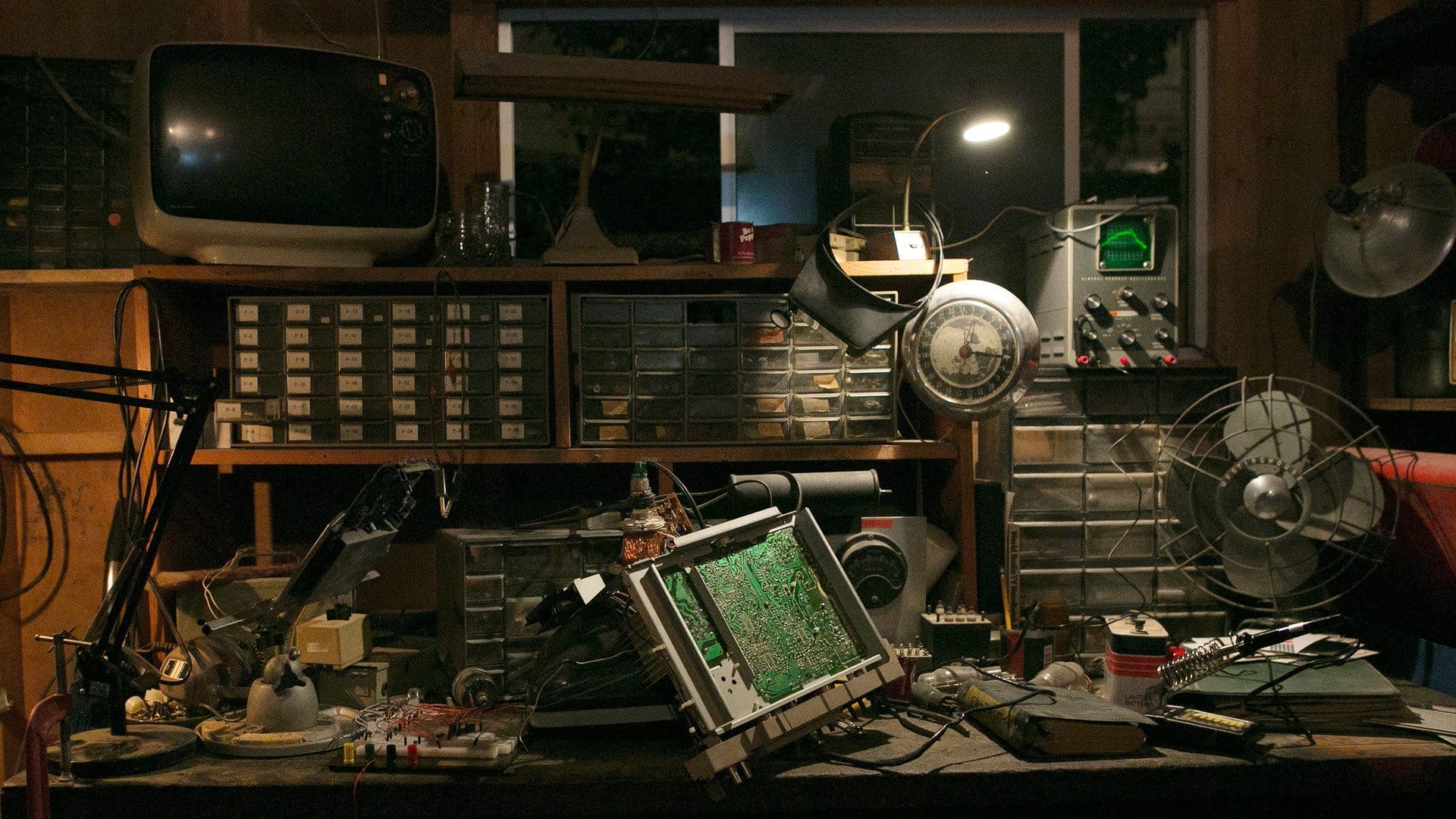
Open, disassemble, break. The history of modern computing is full of experiments without which we wouldn't have much of the technology we use today: technology enshittified to the point where we can't imagine our lives without it.
This is not a call to collectively reverse-engineer everything we use in our day-to-day. Not all of us are engineers or have the soul of Gordon Clark from Halt and Catch Fire. But it is about understanding that, at the end of the day, the hacker mentality is the Rosetta Stone of the phones, computers and devices we use every day of our lives.
Enshittification is reversible. The more we think against the grain of big tech, the more we will emancipate ourselves from the rules they themselves set.