Warhammer 40,000: An Introduction to Wargames

15 de feb. de 2026 — Juanma La Volpe
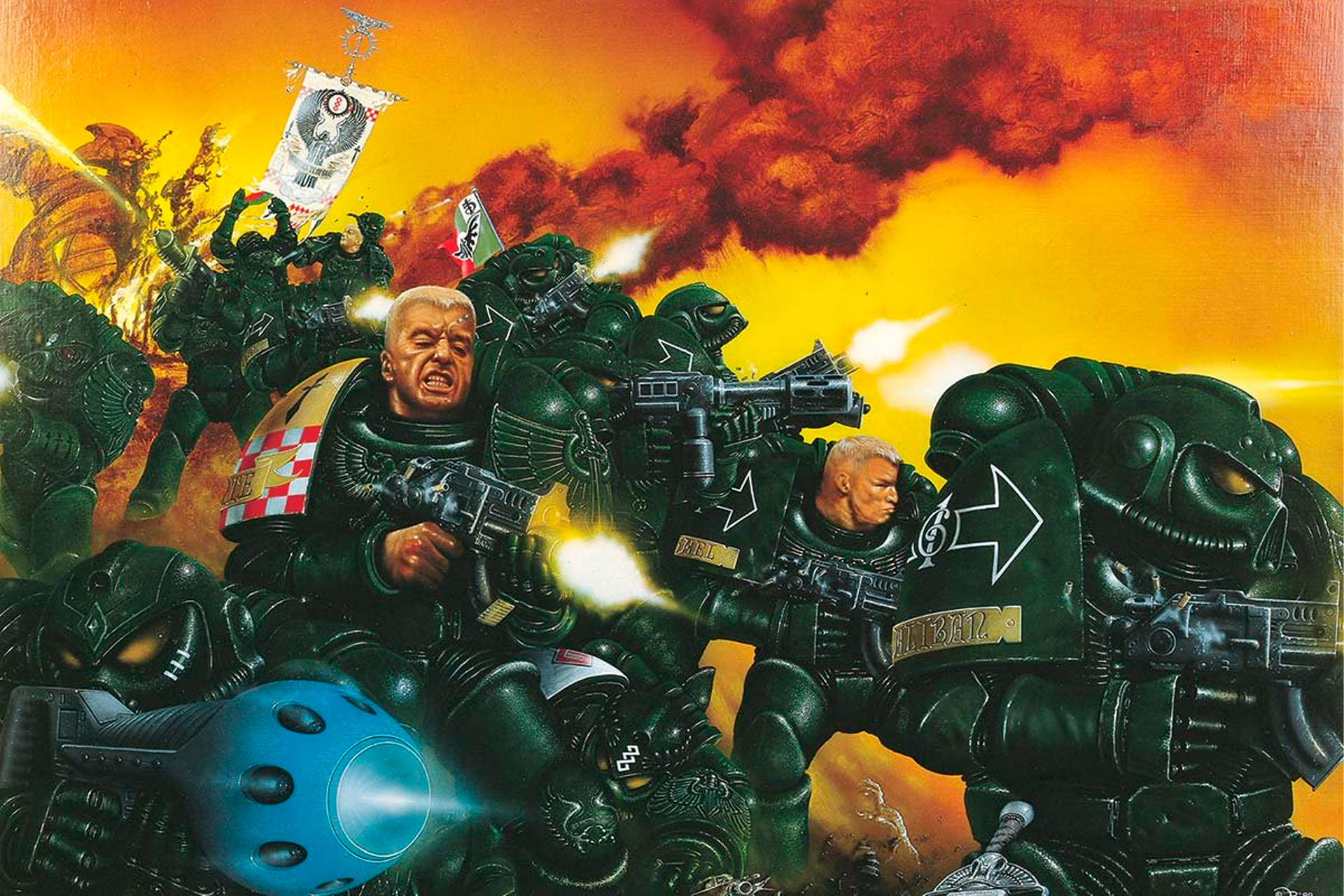
Ever since nerd culture went mainstream, the boundaries of niche hobbies have shifted considerably. And helped along by Stranger Things, the world of tabletop games got a boost among that semi-nerdy/semi-normie youth/adult crowd that hadn't dared to try certain things and now, with general acceptance, took the first step.
So Dungeons & Dragons, which was something fairly marginal within the nerd universe, suddenly became cool and -- POOF! Post Malone and Elijah Wood play Magic: The Gathering, Steve Aoki opens Pokemon boxes on his stream, and Superman (Henry Cavill) says in a somewhat odd interview that he enjoys painting little plastic soldiers from a game called Warhammer... And if these successful humans are into it, why aren't you?
So Warhammer entered many people's lives, not just because of Cavill but because Games Workshop launched a plan years ago to push their most important creation out of its niche and into the mainstream. Today Warhammer, especially its sci-fi universe Warhammer 40,000, has comics published by Marvel, an animated series, tons and tons of video games, action figures by the renowned McFarlane, and even animated parodies like Space King. But behind all of this lies a game -- or rather a wargame -- that started it all, the founding stone of this cathedral of masculinity, war, and darkness that we call Warhammer.
37 years after its first edition, Warhammer still has new things to offer
The Origin of the Beast
Today Warhammer is synonymous with -- and practically a monopoly on -- wargames, but wargames are as old as chess. In fact, an adaptation of the classic game with new rules founded wargaming back in 1780, to recreate the Prussian Wars on a map with wooden tokens. Yes, a game for the upper classes, as it still is today.
In 1975, British tabletop game manufacturer Games Workshop secured the distribution of Dungeons & Dragons in the UK and, to boost the sale of their products, founded the magazine White Dwarf. With the arrival of new fantasy and sci-fi games, they shifted the company's focus and went all in, creating a sister company called Citadel, in charge of manufacturing metal miniatures for these new games.
With a distribution structure in place, proprietary material through Citadel, and outreach via White Dwarf, in 1983 the company published the first rules for Warhammer in its medieval fantasy version, heavily inspired by fantasy literature like The Lord of the Rings, Elric, and Conan, among others. This success was replicated in other company games, but the one that sealed the deal and established Games Workshop as the kings of wargames was the first futuristic version of Warhammer, which they called Warhammer 40,000: Rogue Trader (1987), founding the holy trinity of game, lore, and hobby.
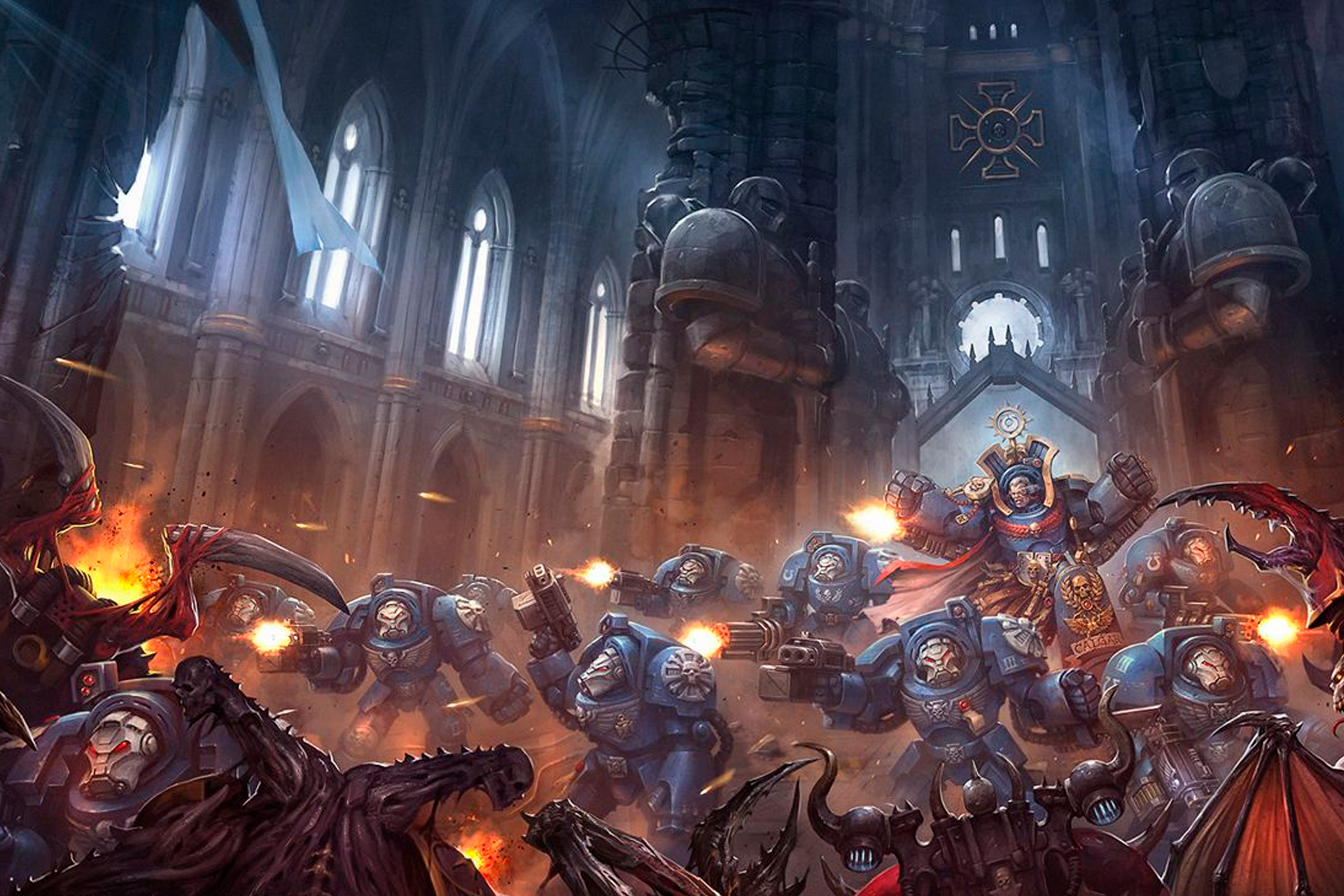
A "Full Time" Game
We currently have 10 updates over nearly 40 years, but Warhammer 40,000 still maintains its essential gameplay. How do you play? The explanation is simple, but in practice it's more complicated.
In W40k we lead an army into battle. We choose a faction and agree with our opponent or play group on how many points we'll use to build our army. These points let us buy units, items, characters... This part of the game is quite RPG-like -- and one of my favorites -- since you're not only building your army with a winning strategy in mind, but you're also getting in direct contact with the game's lore and learning more about its universe. The rulebooks are incredibly rich in world-building information. Every unit, item, and character tells a story.
Once we have our army roster ready, we still need the miniatures. They come unassembled and unpainted from Games Workshop, because this isn't just a game: it's a full-time hobby. Here another universe opens up where artists paint, create scenery, and make mashups. You can get involved in this side of the game without ever having played, or you can be one of those players who send their miniatures out to be painted and don't engage with the modeling side of W40k.
But I'll leave both the game and the hobby there for now, since today they're not the most important part of Warhammer. The rules are quite unbalanced and the painting hobby is a difficult experience that requires time and a lot of enthusiasm to end up with a miniature that looks halfway decent. The business of war lies in writing the story, which transcends both the game and the hobby. Today Games Workshop sells an experience, and its greatest virtue lies in the lore and the universe that contains it.
Getting (and painting) the miniatures adds hours and hours to the game
The Imperium of Mankind and the Horus Heresy
"In The Grim Darkness of the Far Future There is Only War," reads the tagline upon which the franchise built the game's story. W40k takes place in a future where Humanity lives under the word of an absent Galactic Emperor. His followers are made up of space marines, religious leaders who worship machines, and ordinary people forced into armed conflict. And they are constantly at war against the xenos (their term for extraterrestrial life) and the forces of Chaos.
The Imperium of Mankind is a faction-destroying killing machine that needs war to survive. While over time the human race in this universe got a facelift to portray us as "the good guys," originally there were no good guys. Humans blindly follow a leader worshipped as a god who claims thousands of souls per day to maintain the status quo. Being born in the Imperium, all your paths lead to war, to a forge world (industrial planet) where you work as a slave, or you end up a victim of one of the countless threats that exist.
The most important event in the game takes place 10,000 years before the era where Warhammer is set and is called The Horus Heresy: a civil war that divided the Imperium between those loyal to the Emperor and the traitors who followed his son Horus in the pursuit of a new "truth" for Humanity, empowered and guided through whispers by the forces of Chaos.
This holy war has ten published books and its own games so far, and it's undoubtedly an event that has transcended the wargame. As a personal comment/experience, something that has always fascinated me about the Heresy is how players tell the story and how the word of Horus spreads among sci-fi fans with such weight that many times Warhammer itself isn't even mentioned.
This universe draws inspiration from countless sci-fi tropes and cliches, but it also doesn't abandon high medieval fantasy. In that fusion -- which allows us to have giant robots and orcs in the same lore -- is where W40k starts winning the battle and setting its grim dark agenda.
The video games of Warhammer, by @EryxChannel2160
Masculine Fantasies Then and Now
In the year wargames became popular, the demographic was very segmented and exclusionary: it was a game for men, and moreover, one about war. In the early years of Warhammer 40,000, everything around the product was a celebration of masculinity and violence, there were no important women in the story, and the main regiments of the Imperium were made up entirely of white men with European names. And it stayed that way for a long time.
Until 1990, when the Sisters of Battle arrived, the first women's regiment in the Imperium, essentially super warrior nuns who worship the Emperor. Later, the lore added hints that there are women in the Astra Militarum, the Inquisition, and the Adeptus Mechanicus, important factions but with minimal female participation.
On top of that, the Imperium is conceived as an ultra-fascist state (some say with parodic intent from Games Workshop) and this attracted a complex community -- to put it mildly, rather than say "nazi" -- that seeks to gatekeep their safe space, where they can be as far-right as they want. And it stayed that way for a long time -- again -- with Games Workshop fully immersed in the military aspect while creating factions resembling real armies without making it very clear where the line between parody and tribute lay.
At some point, demographic lines started being questioned and games like Dungeons & Dragons or Magic: The Gathering began opening up their aesthetics and lore to attract new communities. Warhammer started doing this very timidly and slowly, but in recent years more women and gender-diverse people have been joining the community and actively participating in outreach, talking about the game, or as artists, teaching how to paint or tackle the hobby's more hands-on projects.
After an incident where a player showed up at a tournament wearing a swastika, Games Workshop issued its first statement saying it did not condone that kind of behavior. And in 2024, after the announcement that there are women in a new regiment of the Imperium, they had to release another one basically saying that "Warhammer is for everyone." That rattled the brains of more than a few true nazi Warhammer fans.
This article was a general overview of what Warhammer is, the company that created it, its lore, and its controversies. But if you want to dive deeper, you'll have no choice but to keep reading.