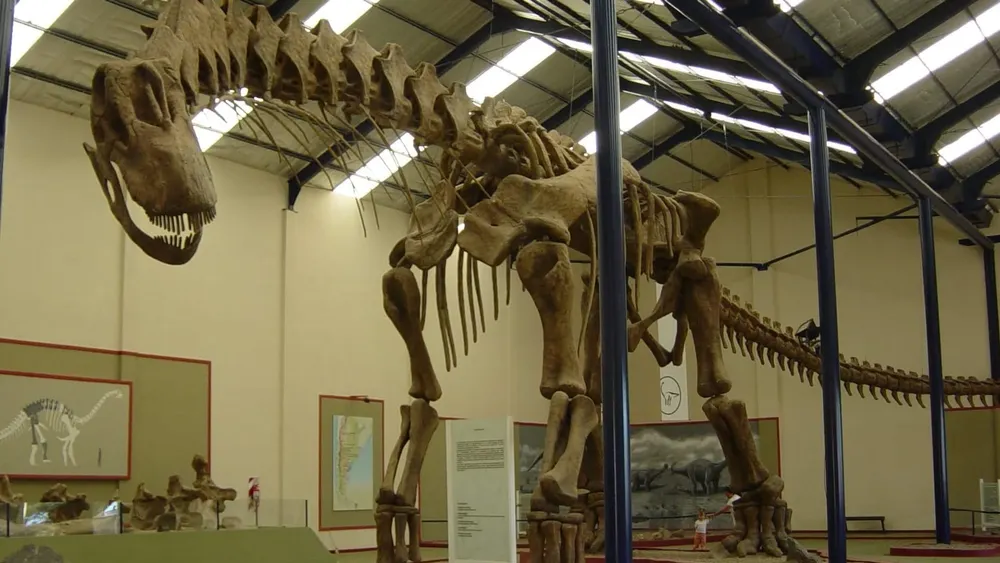
At 35 meters long and weighing 75 tons, the Argentinosaurus defied the laws of physics. Learn how its hollow bones, fast metabolism, and biological efficiency made it the largest land-dwelling colossus in history. Discover the secrets of the Argentine titan.
Argentinian Patagonia is world-renowned for its iconic dinosaurs, such as the Carnotaurus sastrei. However, what stands out most in our region is that it is home to true titans. Among them, one name shines as a milestone of gigantism: Argentinosaurus huinculensis. Measuring 31 meters long and weighing up to 75 tons, it was the ultimate representative of the heavyweight land animals. But how does one achieve such size? Gigantism requires a combination of osteological and anatomical characteristics along with unique environmental factors to be realized. What evolutionary factors led this dinosaur to become the true titan of the end of the world?
The story of the discovery of this dinosaur began between 1987 and 1988 at the "Las Overas" ranch, near Plaza Huincul, Neuquén, Argentina. There, Guillermo Heredia, a ranch worker, stumbled upon some enormous objects that, at first glance, appeared to be petrified logs. After informing the Carmen Funes Municipal Museum, the institution proceeded to extract a long bone that they initially cataloged as a tibia, although later studies would reveal it was an unprecedentedly large fibula.
Gigantism requires a combination of osteological and anatomical characteristics along with unique environmental factors to be realized. What evolutionary factors led this dinosaur to become the true titan of the end of the world?
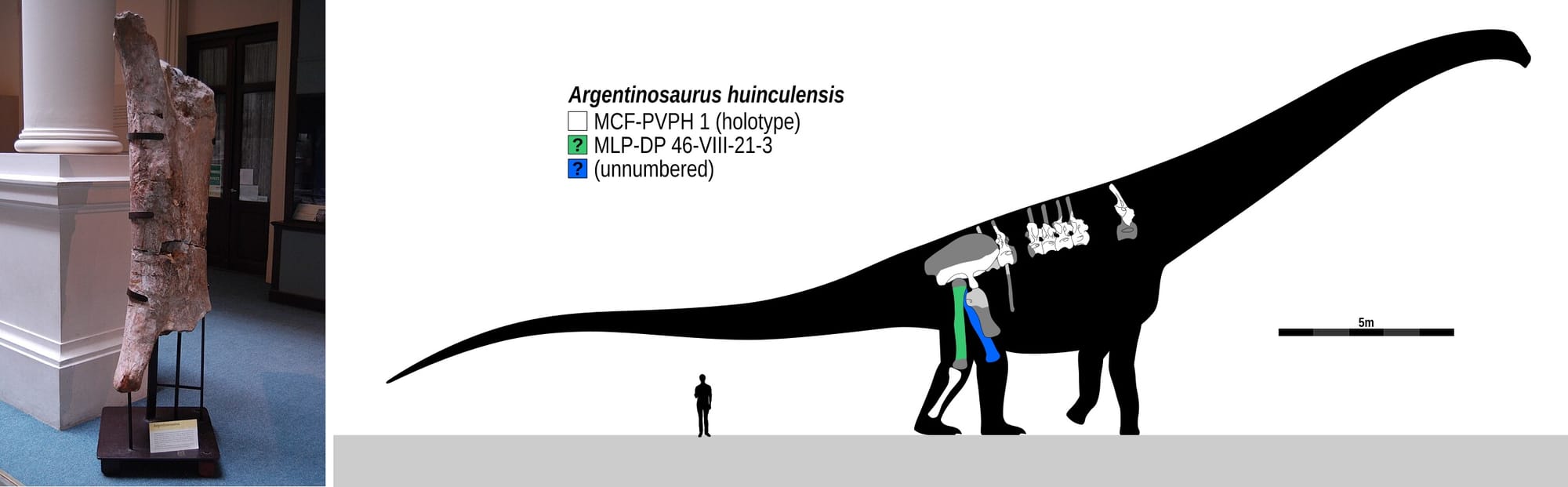
The true significance of the find became evident in early 1989 when paleontologist José Bonaparte organized a large-scale campaign. This mission was a collaborative effort that brought together a large team: the Argentine Museum of Natural Sciences, the Cipolletti Museum, the National University of Comahue, and the YPF excavation team. The result of this joint work was the recovery of additional bone pieces belonging to the same specimen, which became the holotype of the species under the number MCF-PVPH 1. Finally, in 1993, Bonaparte and Rodolfo Coria presented the official description of this titan to the world under the name Argentinosaurus huinculensis, “the Argentine reptile from Plaza Huincul.”
The sediments from which the remains of the Argentinosaurus come belong to the Huincul Formation, which was deposited during the Cretaceous period between 97 and 93.5 million years ago. In that ecosystem, the Argentinosaurus stood as the ultimate representative of the titanosaurs, the group of sauropods that dominated the landscapes of the Southern Hemisphere until the end of the age of dinosaurs.
An incomplete femur (MLP-DP 46-VIII-21-3) housed at the Museum of La Plata, and a skeletal reconstruction showing all the bones found from Argentinosaurus. Source: Wikimedia Commons
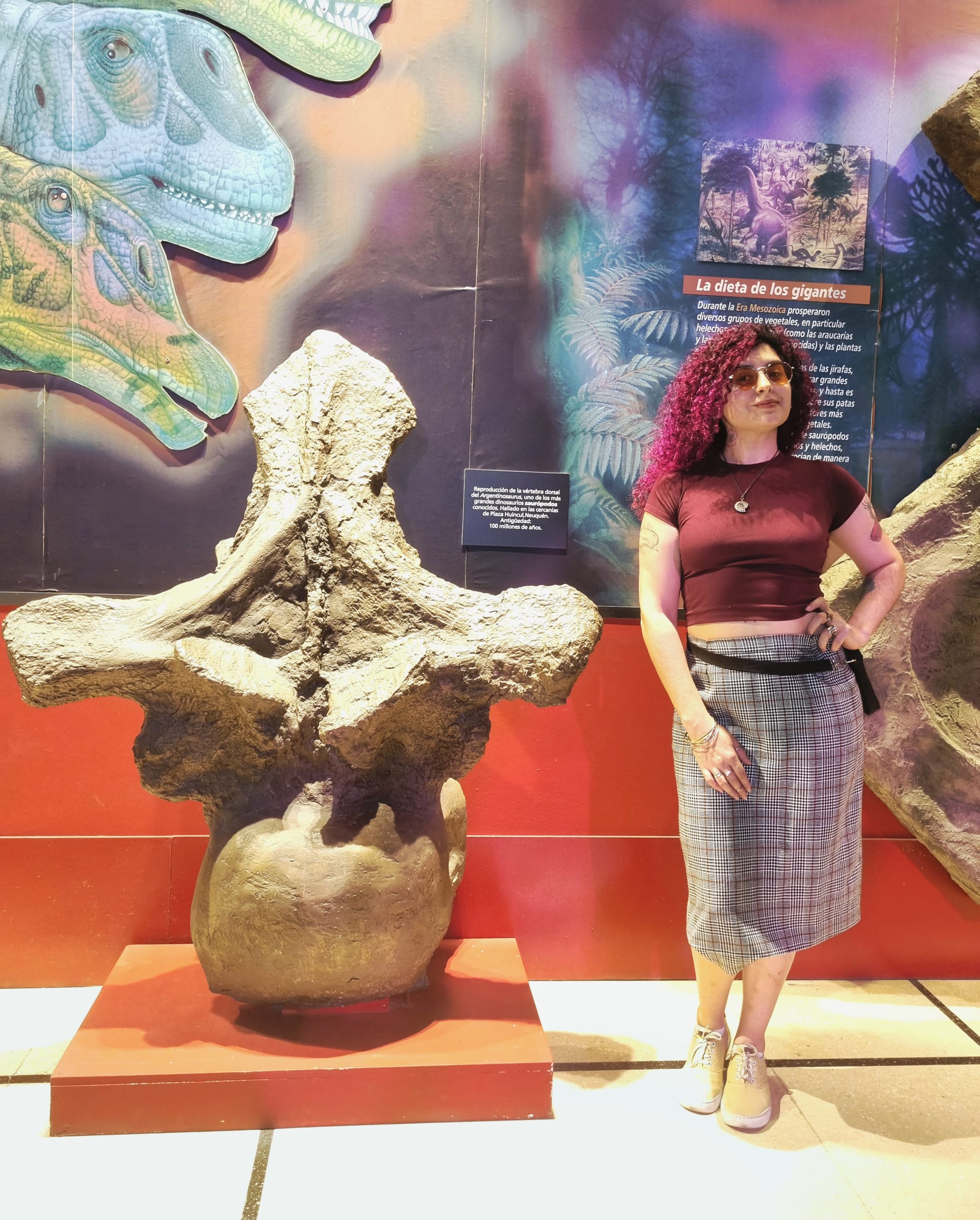
What truly defines the Argentinosaurus as iconic is its almost unbelievable scale, because, although known from fragmentary materials, each recovered bone piece is gigantic. The dorsal vertebrae stand 1.6 meters tall, while the femur measures between 2.5 and 2.57 meters. Even elements we might consider minor, like the fibula (or perone), which measures 1.55 meters (a human fibula measures 40 cm), surpass the size of complete limbs of other large dinosaurs. With estimates ranging from 30 to 35 meters in length and a calculated body mass of between 65 and 75 tons, this dinosaur stands as one of the largest land animals of all time.
Replica of an Argentinosaurus vertebra on display at the “Bernardino Rivadavia” Argentine Museum of Natural Sciences in Buenos Aires (for scale, a paleontologist). Source: personal archive
The lineage of the colossi
The Argentinosaurus, as I mentioned, is “one of the largest animals” because it was not the only giant. It was part of the titanosaurs, the last great group of sauropods that thrived until the mass extinction of the Cretaceous (66 million years ago). These herbivores represented about a third of the total diversity of known sauropods and achieved a global distribution, with remains found on every continent, including Antarctica. Ironically, despite their evolutionary success, the fossil record of this group has always been fragmentary. Finding complete skeletons is a rarity, their skulls are extremely scarce, and only three complete necks are known worldwide, one being the specimen of Futalognkosaurus found in Argentina.
Within this vast group, the Argentinosaurus is grouped in a lineage known as the Lognkosauria. This clade includes the largest dinosaurs to ever walk the Earth, most of which have been discovered on Argentine soil, such as Patagotitan and Futalognkosaurus. The lognkosaurs are distinguished by unique anatomical adaptations, with cervical vertebrae that possess unusually thick and wide ribs, and their massive, arched neural arches have an anatomical structure adapted to large sizes. Additionally, they have narrow neural canals and dorsal vertebrae that feature lateral processes shaped like wings. All these characteristics result in extremely wide rib cages designed to house a digestive system capable of processing tons of vegetation. The lognkosaurs dominated the ecosystems of the Cretaceous and set the maximum standard of gigantism in the history of terrestrial life.
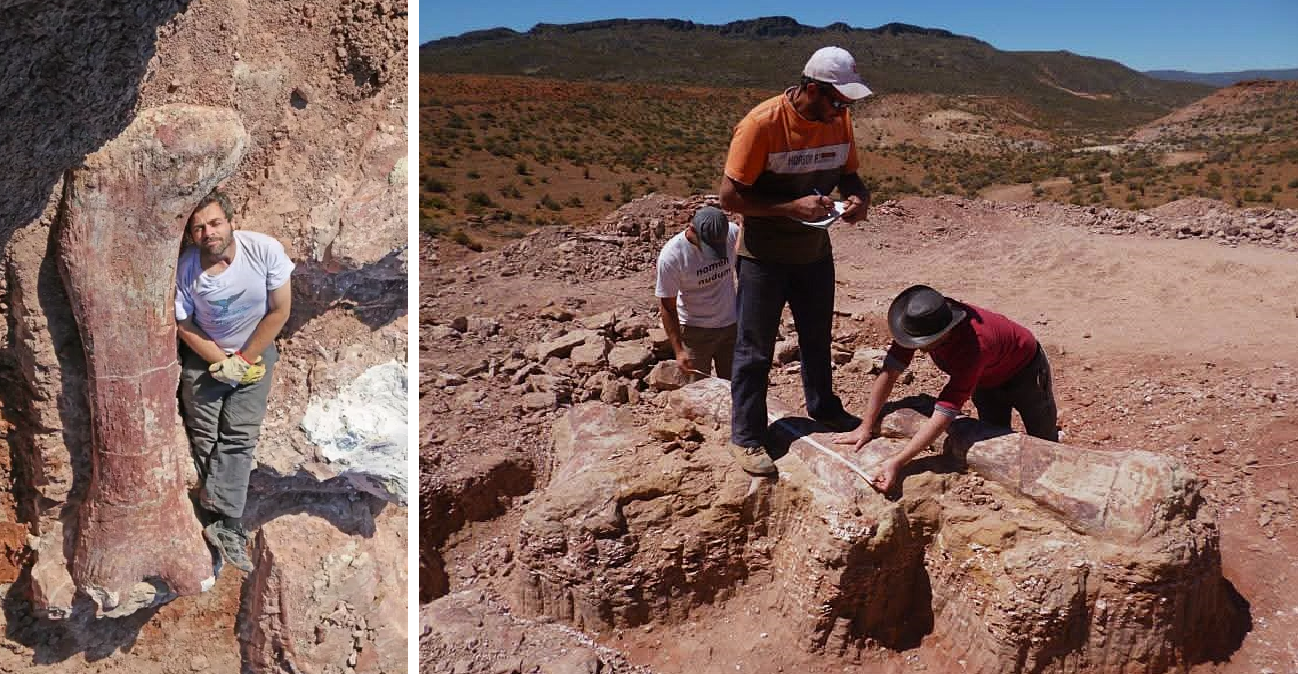
Among the notable species of lognkosaurs, we have Patagotitan mayorum, whose remains come from the Cerro Barcino Formation in Chubut province. Although initially presented as the top contender for the throne of Argentinosaurus, recent scientific revisions have adjusted its dimensions, estimating a length of 31 meters and a weight ranging between 50 and 60 tons. These figures suggest that Patagotitan was of similar size, though possibly slightly smaller.
Photographs of Patagotitan bones at the excavation site. Source: Photograph taken from the internet and personal archives
In this same line of giants, we find Futalognkosaurus dukei, which inhabited present-day Neuquén province between 93 and 85 million years ago. Its remains, from the Portezuelo Formation, show us an animal that was slightly more "slender" than its larger cousins. Estimates of body mass for the specimen have varied over the years: while calculations based on the circumference of the humerus and femur initially suggested around 38 tons, more recent studies have refined the figure to a more conservative range of between 29 and 30 tons, with an estimated length of 24 meters.
There are other species of lognkosaurs that complete this map of giants, but to avoid digressing, I recommend checking out the catalog of Argentine dinosaurs. The important thing is that these fossils demonstrate that, far from being exceptions, titanic-sized dinosaurs were a constant in the ecosystems of Cretaceous Argentina. But what is the purpose of being so large? Being big has many advantages. The enormous size of titanosaurs and other giant sauropods helped them protect themselves from predators. Additionally, they could feed on vegetation that was out of reach for other animals and were capable of covering long distances, which helped them find new sources of food, water, and mates.
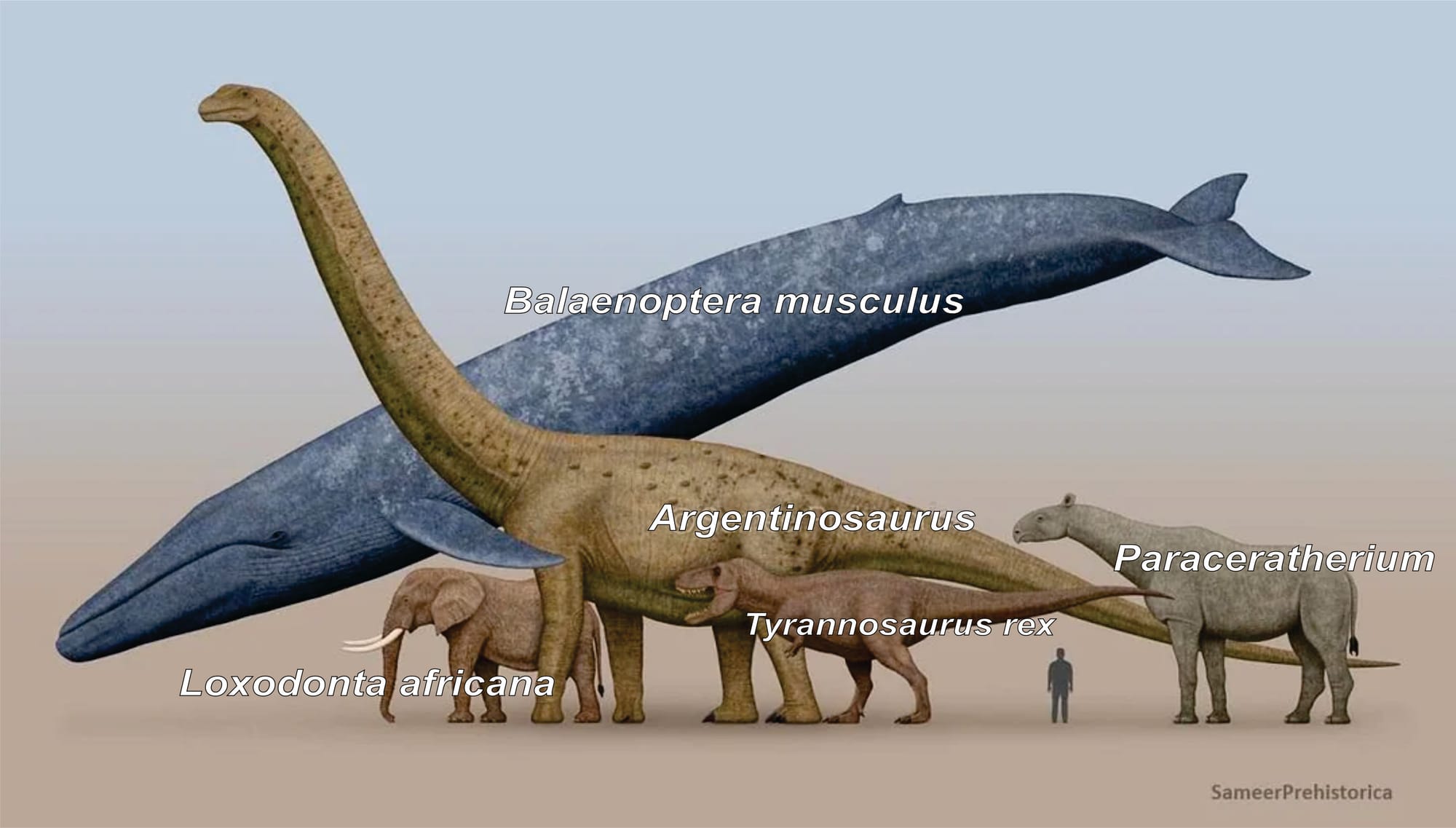
Throughout evolution, many lineages of dinosaurs tended to develop giant species. Even mammals have had their own colossi. The blue whale (Balaenoptera musculus) is the largest animal to ever exist on the face of the Earth, reaching lengths of 27 meters and weighing between 130 and 150 tons. However, it is much easier for the whale to be so large because it lives in water, where the buoyancy of the fluid helps support its mass. On solid ground, the challenge is infinitely greater, as the animal must bear its own weight and move against gravity. If we limit the comparison to terrestrial organisms, mammals (like elephants or the extinct paraceratheriums) do not even reach a fraction of the size achieved by the great dinosaurs.
Comparative illustration of the largest animals that ever lived on Earth (modified from SameerPrehistorica). Source: Devianart.
But then, how did dinosaurs manage to reach sizes that defy biological limits? The answer lies not in a single factor, but in a combination of different adaptations that I will explain in detail.
Development and bone histology of a titan
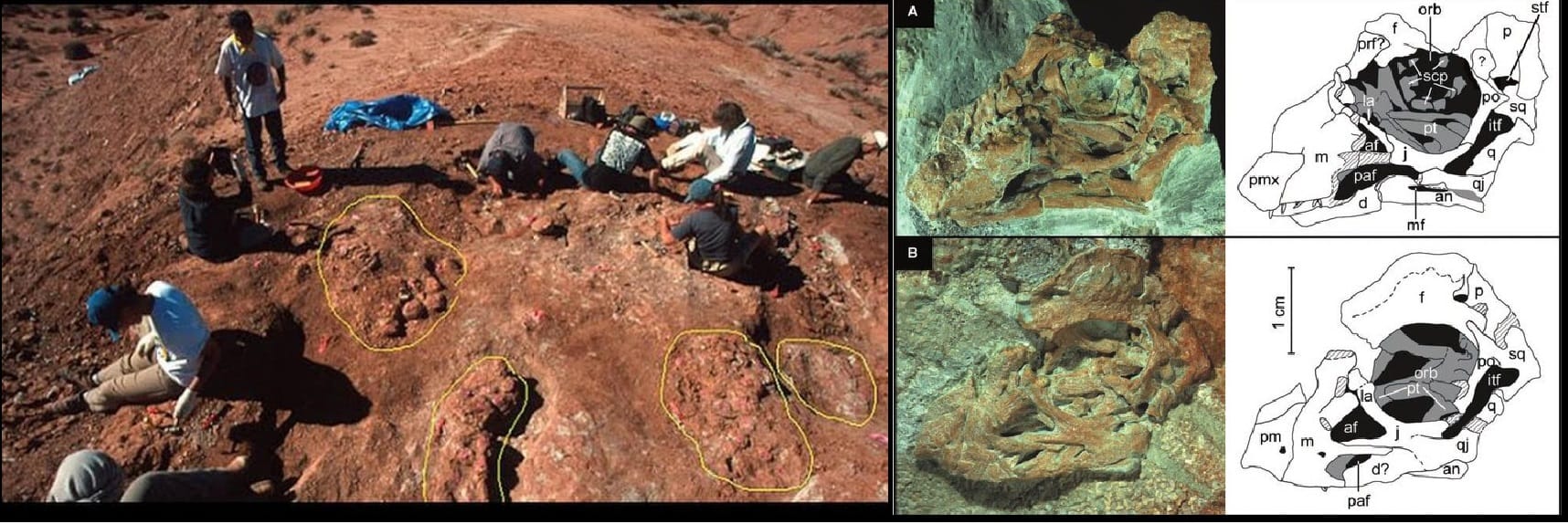
We know that these titans started their lives very small, thanks to the discovery at Auca Mahuevo in Neuquén. This exceptional site is one of the most important dinosaur nesting sites in the world. This place is remarkable because it not only preserves round fossil eggs measuring between 12 and 14 centimeters, but it even has preserved sauropod embryos in situ. The females laid them in nests dug into the ground, forming gigantic colonies that stretched for kilometers. Since many levels of overlapping nests were found, it is clear that the herds had a "site fidelity": they returned time and again to the same corner of Patagonia to lay their eggs.
On the left, a detail of the excavation site at Auca Mahuevo. On the left, a detail of a sauropod embryo. Source: Chiappe et al. (2001).
Now, the real biological challenge was to grow from a small newborn just a few dozen centimeters long to an adult weighing 75 tons, which required an unparalleled growth rate in the animal kingdom. Through histological studies of the microstructure of their bones, we see that the predominant tissue is of the fibrolamellar type, which is exactly what you need if you are an organism with a "fast-paced" metabolism seeking to increase your size as quickly as possible. This tissue is a strategic mix that combines disordered collagen fibers (woven bone) that are deposited quickly, with organized bone lamellae that provide strength, creating a dense and highly vascularized pattern for blood circulation.
The real biological challenge was to grow from a small newborn just a few dozen centimeters long to an adult weighing 75 tons, which required an unparalleled growth rate in the animal kingdom.
What is most impressive about South American titanosaurs is that their bones show extremely high remodeling throughout their lives. This process, where old bone is constantly replaced by new bone, indicates that they maintained a very active basal metabolism even as adults. Additionally, growth marks suggest that these giants reached sexual maturity much earlier than they achieved their final size; basically, this ensured early offspring, before their bodies reached those massive sizes that are so difficult to maintain. They were such efficient biological machines that an animal would go from weighing just a couple of kilos at birth to carrying dozens of tons in just a couple of decades.
Pneumaticity: the air to support a giant
If the bones of an Argentinosaurus had been solid, the animal would have been so heavy that its own legs would have broken (and don't even get me started on trying to lift that neck). One of the fundamental anatomical features that prevented this from happening was postcranial pneumaticity, a characteristic shared by both sauropods and theropods, and the main reason they reached such titanic sizes.
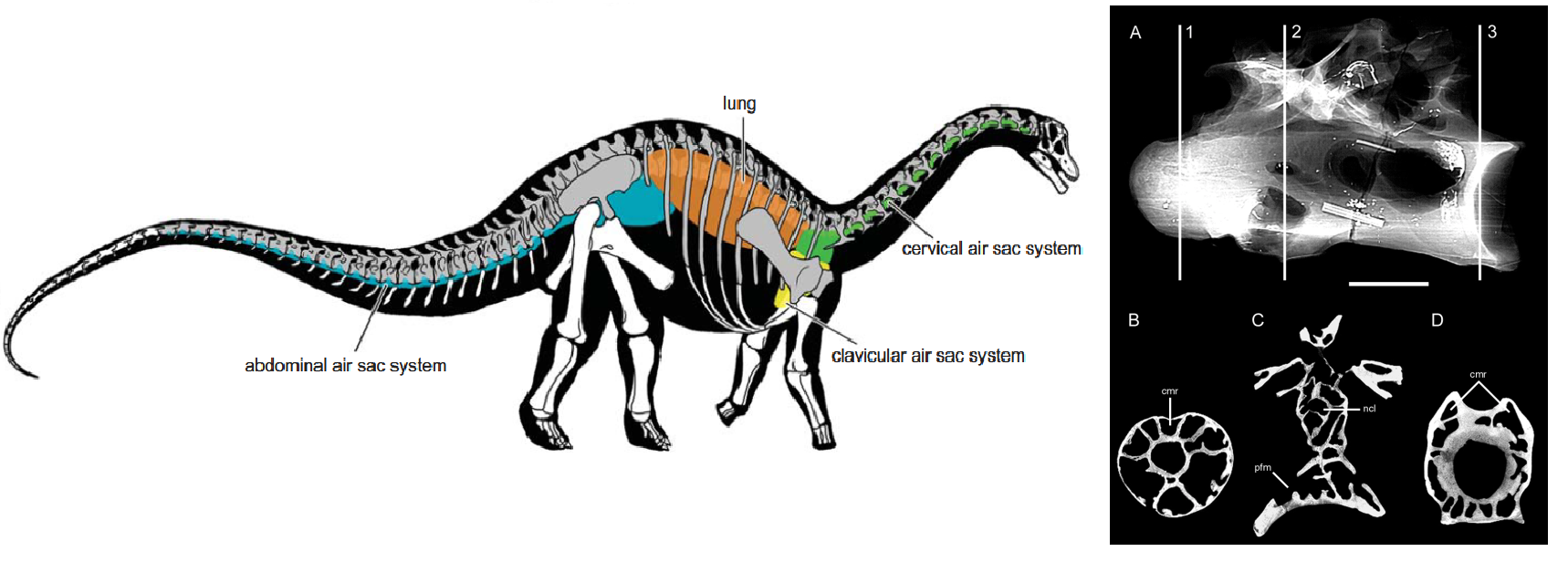
This system is based on air sacs, which are structures with very thin, flexible walls and low vascularization that act like bellows. It's the same system that modern birds have (which, in fact, they inherited from dinosaurs). These sacs, usually numbering between 9 and 11, do not perform gas exchange themselves, but instead store air and allow for a unidirectional and continuous flow through the lungs. But the most incredible part is how these sacs interacted with the skeleton. As they expanded, these air sacs "invaded" the bones, hollowing them out and lightening them from the inside. This adaptation was key for three reasons:
Weight reduction without losing strength: The vertebrae of these dinosaurs, especially those in the neck and back, appeared massive from the outside, but were filled with chambers and cavities (cameration) on the inside. This allowed the skeleton to be much lighter without sacrificing the necessary strength to support tons of muscles and organs.
An internal radiator: An animal weighing 70 tons generates a lot of internal heat (gigantothermy). These air sacs, distributed throughout the body, acted as a cooling system, helping to dissipate excess heat from the inside out.
High-efficiency breathing: Thanks to this system, titanosaurids had a unidirectional airflow. This means they always had fresh oxygen-rich air passing through their lungs, both when inhaling and exhaling, providing them with the energy needed to maintain that high metabolism we mentioned earlier.
Left: Reconstruction of the respiratory system in a sauropod, with the lungs shown in orange and the air sacs in green, yellow, and blue. Right: CT scans at different heights along a sauropod vertebra. Source: Wedel (2003).
In South American titanosaurs, pneumaticity reached extremely high levels. According to García and collaborators (2015), in the most derived groups, air was not just confined to the neck or back, but even invaded the bones of the hips and scapulae. Ultimately, pneumaticity was the key adaptation that allowed them to reach giant sizes, move, breathe, and dominate the Cretaceous ecosystems efficiently.
The "wide-gauge" posture
Titanosaurs not only had to be efficient to reach dozens of tons, but they also had to support and move their bodies, and moving a 75-ton body is no joke. These giants developed what paleontology describes as a "wide-gauge" posture (wide-gauge).
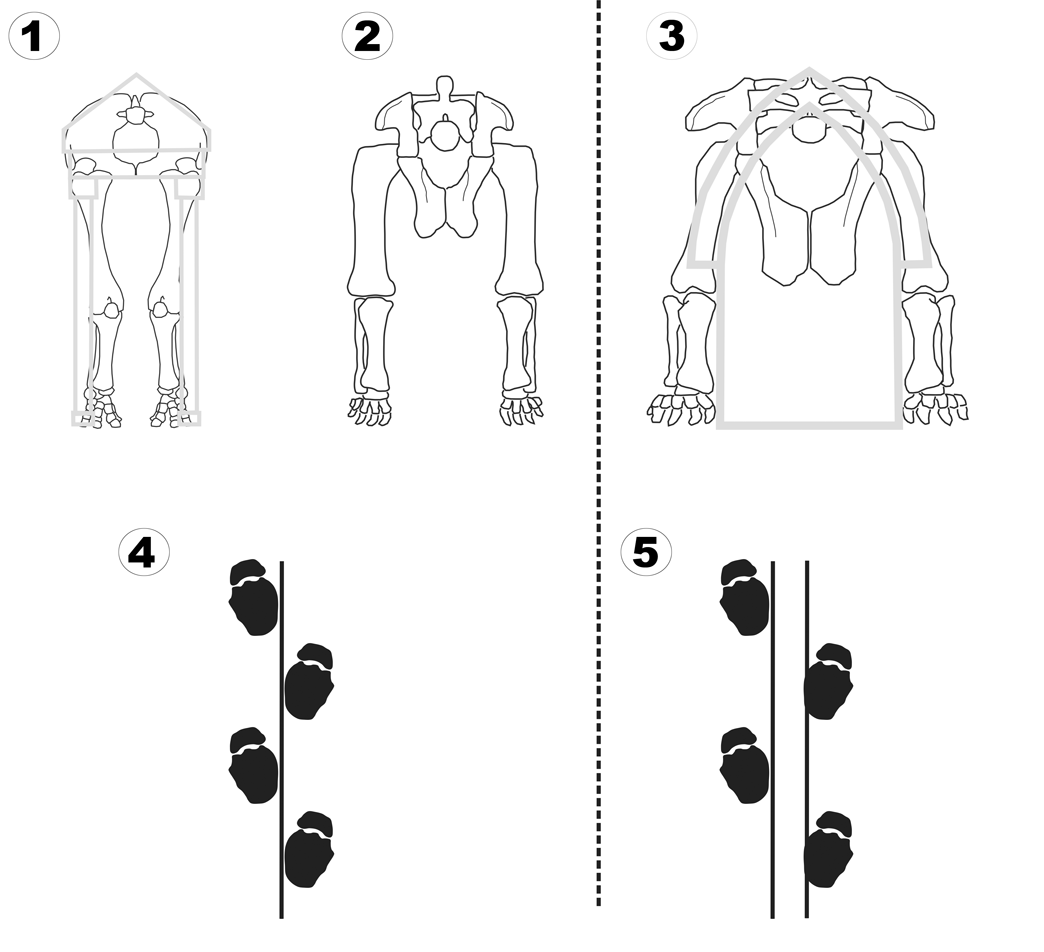
Unlike more primitive sauropods, which left footprints very close to the midline of their bodies, titanosaurs walked with their legs much farther apart. This wide-gauge posture is clearly reflected in the anatomy of their femurs and how they fit with the pelvis, allowing weight to be distributed outward. Morphological analyses among sauropods show that the humeri of titanosaurs were proportionally more slender and had their heads oriented inward, which naturally displaced the entire arm outward. Additionally, their femurs were much wider laterally than those of other dinosaurs, increasing mechanical stability.
Top: Reconstructions of the hips and legs of an elephant (1), a basal sauropod (2), and a titanosaur (3). Bottom: A trackway of a “narrow-track” sauropod and tracks of a “wide-track” sauropod. Source: García y colaboradores (2015).
Another very particular detail is their hands. The more advanced titanosaurs, like those we have here in Argentina, almost completely lost their fingers and phalanges. They walked directly on a semicircular "stub" formed by the metacarpals (the bones of the palm) arranged in a vertical column. They were columns ending in a soft tissue pad that cushioned the impact against the ground. Shape analyses also indicate that even the crest where the chest muscles insert shifted upward so that the animal wouldn't have to expend so much energy moving such columns, prioritizing step efficiency over strength. In the hind legs, however, they did retain claws, which they likely used for a bit more traction.
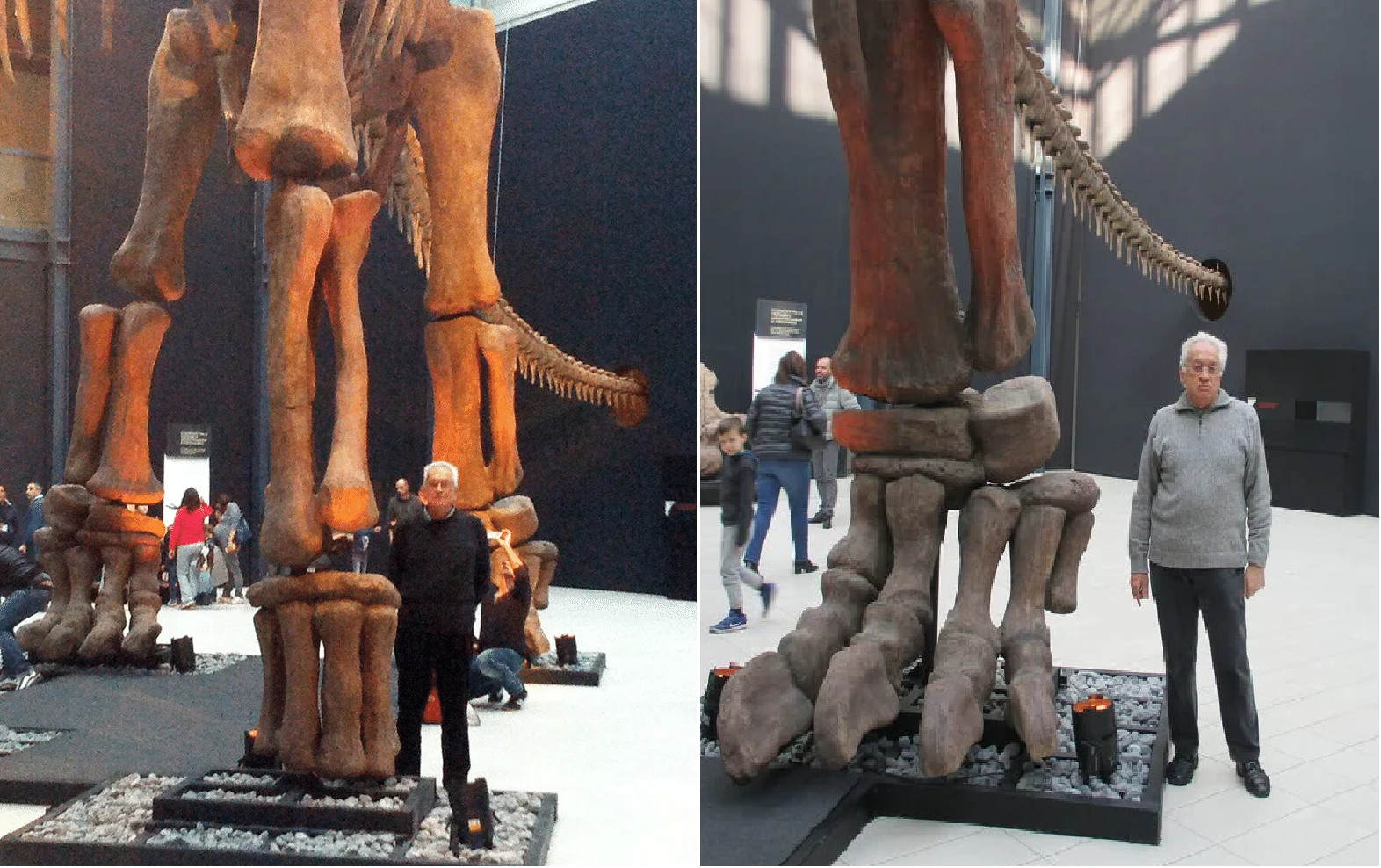
Left: Reconstruction of the forelimb of Argentinosaurus. Right: the hind limb, both with a person for scale. Source: Lockley y colaboradores (2002).
When it comes to speed, it's clear that the Argentinosaurus doesn't look like a runner. Sauropods were limited to a slow walk; their enormous body mass prevented them from having a "suspension phase" (when the animal lifts all its feet off the ground at the same time), which technically means they couldn't run. They were walking animals, designed for efficient locomotion at a slow but steady pace. Footprint analyses of these giants indicate they had a walking speed of about 4.7 - 4.9 km/h.
Ecological Context
The success of titanosaurs was no accident; it was the result of an ecological context conducive to their size increase. During the Early Jurassic, the landscape of Patagonia transformed from a lush fern-filled paradise to a seasonally dry and warm environment. The flora changed drastically: forests dominated by hard conifers from the families of araucarias, cypresses, and the now-extinct Cheirolepidiaceae appeared.
This new scenario was fully exploited by the sauropods. Their long necks were the key strategic piece, functioning like cranes that allowed them to sweep a vast area of vegetation without having to move an inch. This design enabled them to continuously gather food with a very low energy cost, which was vital to sustain a body mass of dozens of tons that required truly titanic volumes of food.
The Argentinosaurus was not only the largest animal to walk the Earth; it was the result of millions of years of evolutionary engineering.
Moreover, titanosaurs optimized their feeding time by eliminating chewing. They had robust jaws and specialized teeth with thick enamel, ideal for stripping leaves from branches and swallowing the material whole in a mechanical manner. The real processing work was handled by a gigantic digestive system that worked in conjunction with ingested stones called gastroliths. These stones helped grind the fibrous plant material, functioning as an internal mill that, combined with bacterial fermentation, allowed them to break down tougher fibers and extract the necessary energy.
In short, the gigantism achieved by titanosaurs is the result of a combination of unique characteristics that evolved in these dinosaurs and were favored by the environmental context of their time. The Argentinosaurus was not only the largest animal to walk the Earth; it was the result of millions of years of evolutionary engineering that found in ancient Patagonia the ideal stage to rewrite the rules of life, achieving a perfect balance between the spectacularity of a kaijuand biological efficiency. The fossil remains of titanosaurs are unique evidence of an era when Argentina was, quite literally, the land of giants.
✦ Suscribite
Las notas de 421 no tienen paywall
Y a cada colaborador se le paga por su trabajo. Las dos cosas dependen de los suscriptores.
Paleontologa y doctora en Ciencias Aplicadas. Trabajo en investigación de cinodontes del Triásico. Hago divulgación en insta y tiktok sobre paleontología y evolución.