Dragon Ball: From Chinese Myth to Global Pop Icon
28 de feb. de 2026 — Juan Vera Visotsky
Dragon Ball is a series that we love, especially those of us who grew up with just one screen (maybe two, if we were lucky) at home. We watched it over and over despite the challenges of the time: the scheduling, the absence of on-demand viewing, the repeated and annoying reruns, and parents who didn’t like or understand it... What is it about this work that still captivates us today?
Forty years ago, when it first aired, it was impossible to foresee that it would become one of the biggest cultural evergreen products of the 21st century. While today it boasts over 600 episodes across all its series (DB, DBZ, GT, SUPER, KAI, DAIMA, and more than 20 movies including OVAs, feature films, and specials), in its early days it was merely a loose and humorous reinterpretation of a traditional Chinese legend that gradually absorbed the cultural products of its time.
During the last decades of the Cold War, Hollywood (the American cultural battering ram) created an imaginary of space fantasies (born from the space race), futuristic apocalypses (a product of nuclear risk), and beings whose goal was to destroy humanity (aliens, humanoid cyborgs). The author combined these elements with martial arts cinema (which was hugely successful in the East) to create the most successful modern adaptation of the Chinese myth of Sun Wukong. All these elements danced to the rhythm of an author who knew how to condense adrenaline and tension within the confines of comic panels, with a touch of unique Japanese humor (which in the West skirted the edge of morality).
 Ezequiel Vila
Dragon Ball thus became, without intending to, a cultural device that translated a global imaginary for an entire generation shaped by color television. Perhaps the first animated product entirely born of globalization that solidified at the end of the Short Century.
Returning to Dragon Ball in a context where China is rising as the leading political and economic power is to rediscover a sample of cultural soft power, even if it’s more lateral and involuntary: at a time when television was just another member of households, anime taught us the Eastern worldview and mythology without us even realizing it. And like any creative process, Toriyama found the story amidst manga drawings, trips to the cinema, and the creative pressure from his editors.
The mythological beginning, humor, and martial arts
“Journey to the West” is one of the most widespread Chinese myths in East Asia, akin to “Don Quixote” for the Spanish-speaking world. It tells the story of the Monkey King Sun Wukong (known as Son Goku in Japan), a mythical being from the Chinese mountains who becomes obsessed with achieving immortality and, in that quest, grows increasingly powerful, to the point of challenging deities and disrupting the balance between the earthly and divine worlds. On the other hand, the myth also mentions the journey of the monk Xuanzang from the capital of the empire to India along the Silk Road in search of the sutras, sacred scrolls containing Buddha's teachings.
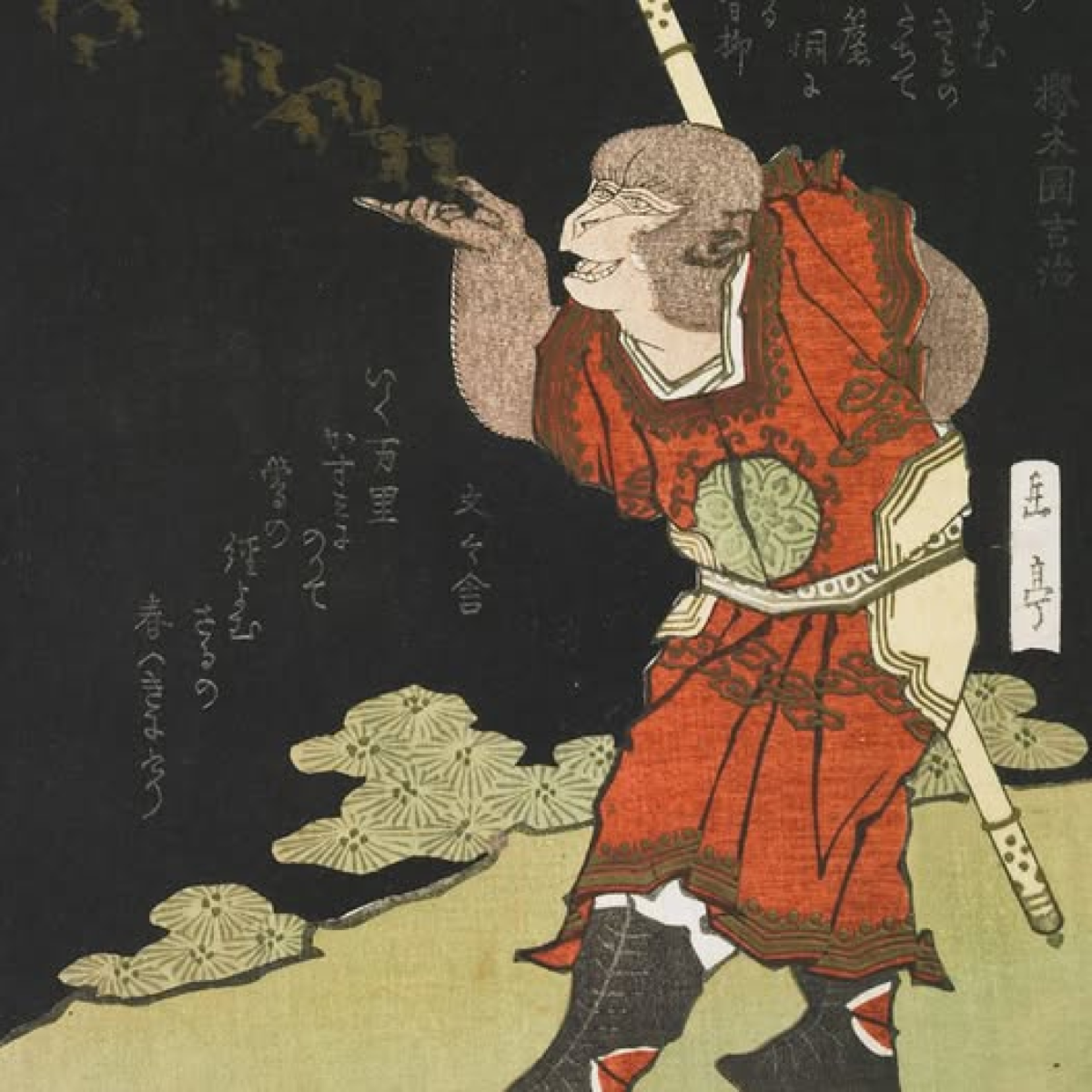
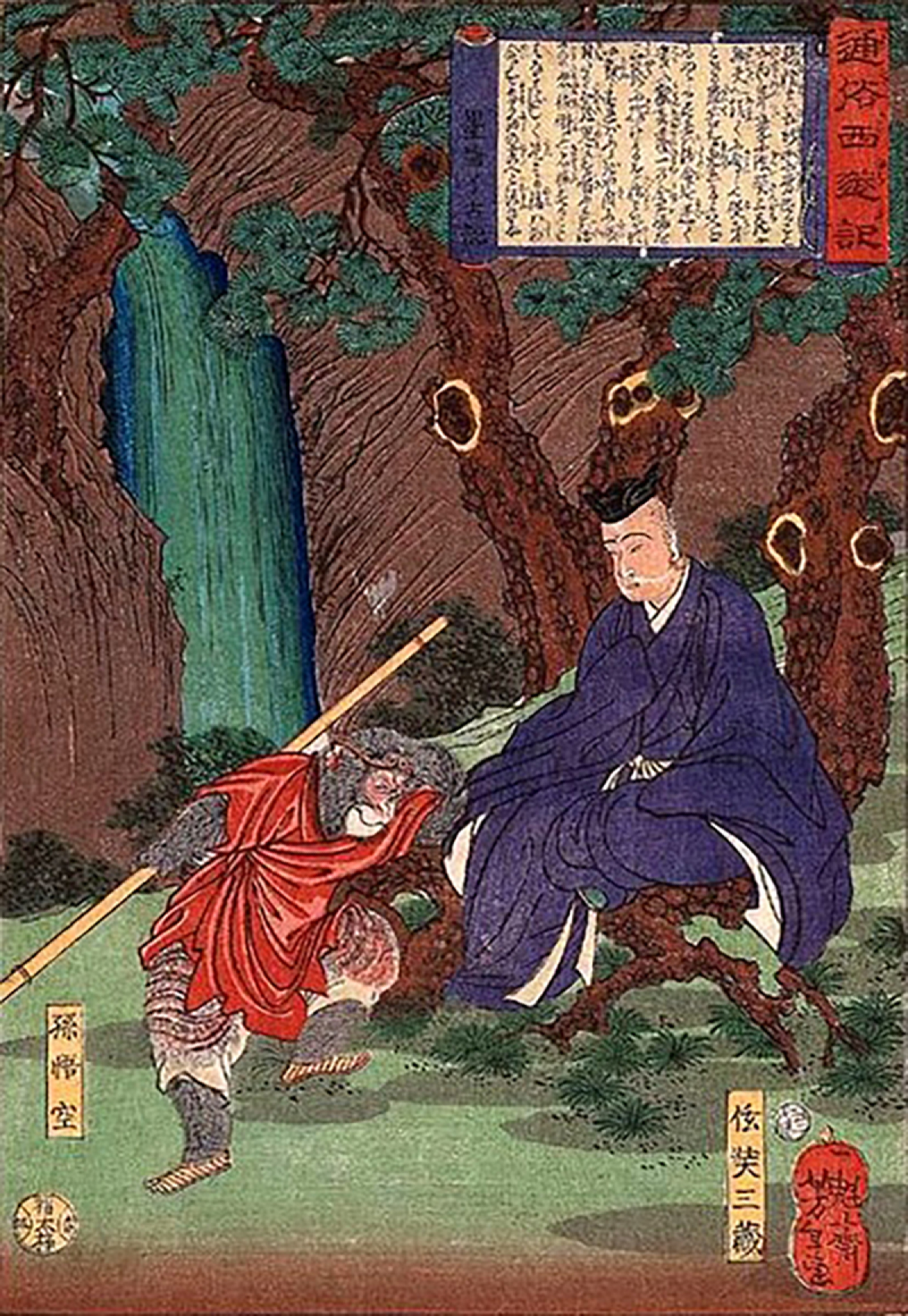
Historical studies agree that the monk Xuanzang existed and that his journey lasted 16 years between 629 and 645 A.D. during the Tang dynasty. Upon his return, he brought back over 657 Buddhist texts, making a fundamental contribution to the expansion and dissemination of Buddhism in that part of Asia. The story of Xuanzang and his adventures in India became part of oral history in China (with its magical and mythical distortions), until in the 16th century, the writer Wu Cheng'en put it on paper, transforming it into a fundamental literary work.
Wukong (recently adapted into a successful video game) is typically depicted as an anthropomorphic monkey in medieval clothing, characterized by his great strength, confidence, boldness, and rebellious spirit. He is illustrated with the divine objects he acquires on his journey, such as a cloud he rides through the skies and a staff that can change size, becoming infinite or fitting between his teeth or inside his ear like a pin.
His story traverses an arc of redemption after his face-to-face encounter with Buddha, who humiliates him and transforms his egotistical obsession into a curse: immortal and powerful as he was, he had to live trapped in a mountain for 500 years as punishment for the chaos he caused in the universal balance. At this point, the narrative leads us directly to the moment when the monk Xuanzang (or Hsuan Tsang, depending on the translation) begins his pilgrimage and finds him on the Mountain of the Five Elements in China. As a condition for his freedom, Wukong must become the monk's first disciple and accompany him on his quest for the sutras.
In 1984, a young Akira Toriyama began drawing a new comic strip after the temporary end of the successful Dr. Slump. Pressured by his editors at Shonen Jump to create a story that would connect with the youth audience, he came up with the idea of recreating the famous “Journey to the West” but with contemporary characters.
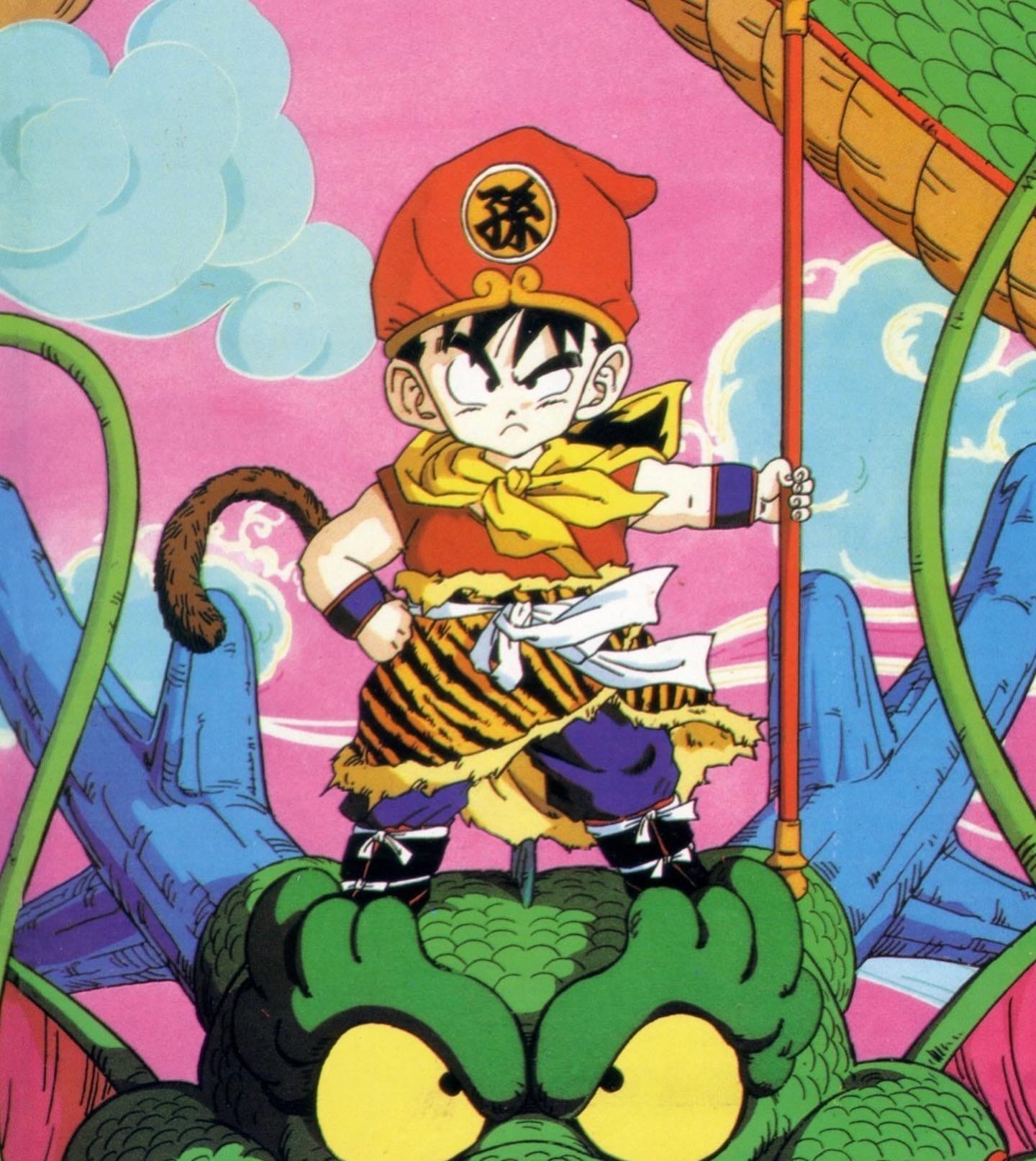
The first sketches of the protagonist depicted a small monkey dressed in medieval clothing, riding on a cloud with a staff in hand. But it needed to be more relatable to the youth manga readers of the 1980s.
The next version would then be a child, more resembling Japanese kids. But to maintain the mythological essence, Toriyama drew him with a monkey tail (in the myth, Wukong could transform into any being while retaining his tail in any form), dressed him in farmer's clothes, and left his hair spiky and messy.
Thus, the Goku we all knew at the beginning of the series was born, but something was still missing: the child's outfit wasn't suitable for an action and adventure story. Toriyama then opted to draw him in a martial artist's dogi, like those worn by characters in the martial arts films of that time. Obviously, the child would have the characteristics of Wukong from the myth: immense strength, daring, a rebellious spirit, adventurousness, stubbornness, and extreme confidence in his abilities.
Bulma would be the one to seek out these magical sacred objects and the one responsible for gathering "disciples" for their journey. Tomás Eliaschev, a journalist specializing in animated series, points out that the pop culture of that era "had already experimented with and popularized feminized or very androgynous versions" of the monk Xuanzang, which is why Toriyama leaned towards creating a character of this gender. Besides Wukong, the monk had other disciples, such as the anthropomorphic pig Zhu Bashie and Sha Wujing, who in the series are none other than Oolong and Yamcha. Obviously, they are not the only mythical beings represented in the work.
The Dragon Balls function as a pop translation of Buddhist sutras: sacred objects that compel a journey, promise transformation, and remind us that all power requires a prior path. Meanwhile, Shénlóng is one of the oldest and most revered celestial dragons, associated in Chinese mythology with weather, rain, and the balance between heaven and earth. The author decided to introduce and adapt it into his narrative.
The explicit reference to the Monkey King is complemented by the transformation into Ozharu under the full moon, a metamorphosis that directly engages with one of the symbolic cores of "Journey to the West": the conflict between power and self-control. Sun Wukong is invincible, but his greatest enemy is not an external adversary but his inability to master his own strength. For Hernán Panessi, a journalist specializing in pop culture, this part of the plot is "the most authentic" in the Dragon Ball series, as it "enthrones Toriyama's childlike spirit, his love for adventures, and his humor."
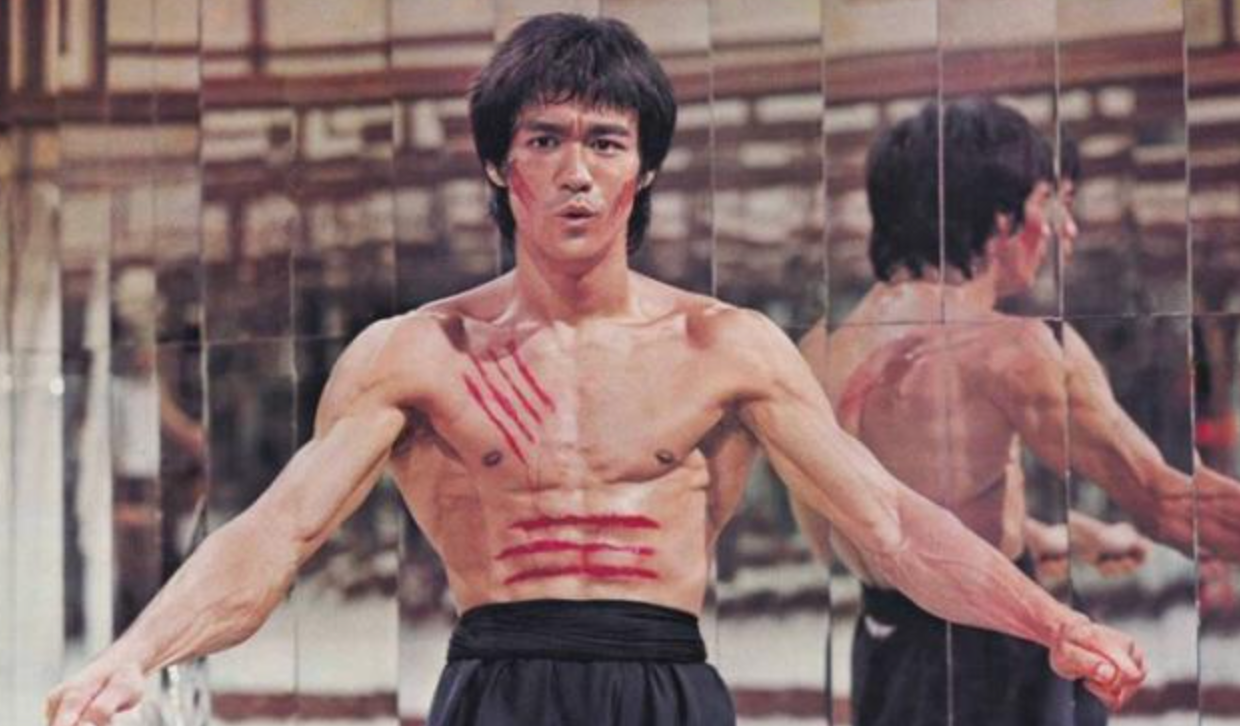
By the end of the first arc, the reception of the manga and anime had been acceptable, so the series had to continue. If the backbone was Chinese, the muscles and movements came from Hong Kong and Hollywood martial arts cinema: the Sensei proposed to his editors (Kazuhiko Torishima at the time) to follow the trend of the films of the era. The formula was the design of the battles, emphasizing stances, shouted attack names, and choreography reminiscent of Bruce Lee. Also, the action plots with a touch of physical humor from Jackie Chan (of whom Toriyama was particularly a fan).
In the Budokai Tenkaichi (Martial Arts Tournaments), Bruce Lee is very present (the slow and cumulative energy form of the Kamehameha resembles the Dragon Fist), but there is also something of the Karate Kid plots: its representation of the bond between master and apprentice with Master Roshi, the training sequence focused on humility and discipline, and the different schools with their varying values clashing (especially in the 22nd tournament against Master Tsuru's disciples). The scheme of "hard training as a path to improvement" resonated with a global generation that grew up with those films.
In this plot of constant self-improvement, Goku encounters increasingly stronger rivals that force him to train to increase his strength. A reference to the sociopolitical context subtly appears in the Red Ribbon Army plot, as a characterization of 20th-century totalitarianism, particularly that of Nazism.
Goku's hero's journey is one of constant self-overcoming: once he defeats earthly enemies, it is only logical that the threat escalates to the level of deities or, rather, demons. With the Piccolo Daimaō saga, Dragon Ball definitively abandons the tone of childlike adventure and cheeky comedy to enter a darker territory, where evil is no longer an episodic obstacle but a structural force that jeopardizes the world's order.
Unlike previous antagonists, Piccolo seeks neither wealth nor prestige: he wants to dominate the world and subjugate it through terror. It is the first time that the threat is truly global and that death (real, irreversible) intrudes harshly into the story.
The appearance of Piccolo Daimaō also explicitly introduces the axis of the afterlife and spiritual hierarchies for the first time. Goku trains with Kamisama, a deity who is not omnipotent but a guardian of balance, and whose existence is tied (in a deeply Eastern paradox) to that of the very demon he seeks to contain. God and demon as two sides of the same entity: without one, the other cannot exist.
In mythological terms, Piccolo Daimaō embodies the idea that evil cannot be completely eradicated, only transformed. His defeat does not mean his definitive disappearance, but rather his reincarnation in Piccolo Jr., a figure that will carry that internal conflict throughout the entire saga. With this character, Toriyama brings forth one of the most persistent concepts of Dragon Ball and Journey to the West: the possibility of redemption. The demon is not destroyed; he is reabsorbed into the cycle of life, foreshadowing the long path that other antagonists will take toward integration, learning, and eventually, the protection of the world they once sought to destroy.
DBZ: the emergence of sci-fi cinema while maintaining mythic foundations
After the Piccolo saga (known in the anime as Dragon Ball Z; it never changed its name in the manga), martial arts warriors were no longer a challenge for Goku, and more powerful rivals could only come from space. Starting with the Saiyan arc, Toriyama abandons the relative intimacy of the martial world and explodes into space opera and cyberpunk dystopia. And he does so while looking directly at the box office of the seventies and eighties.
"When one writes, one always writes about oneself," theorized writer Kurt Vonnegut. The introduction of Gohan is one of the many Copernican turns that Toriyama makes in DBZ. He had become a father to Sasuke Toriyama in 1987, and with Goku as an adult, the series needed a character that connected with childhood.
For a parent, there is nothing more beautiful than seeing a child happy doing what they love. Although if one is selfish, they want their child to surpass them in their own abilities. Toriyama loved his work as much as he loved his son and fulfilled that desire for his main character: Gohan (and, in a way, Goten through Gotenks) would end the series being much stronger than his father.
Goku's story as the survivor of an extinct race of warriors from a destroyed planet echoes the plot of Superman. While Vegeta is his alter ego, a representation in opposition of what Goku could have been but is not. But also the abysmal difference between caste and plebe: Goku's rebellion and audacity in challenging his race's caste is the same as Wukong's in confronting the deities.
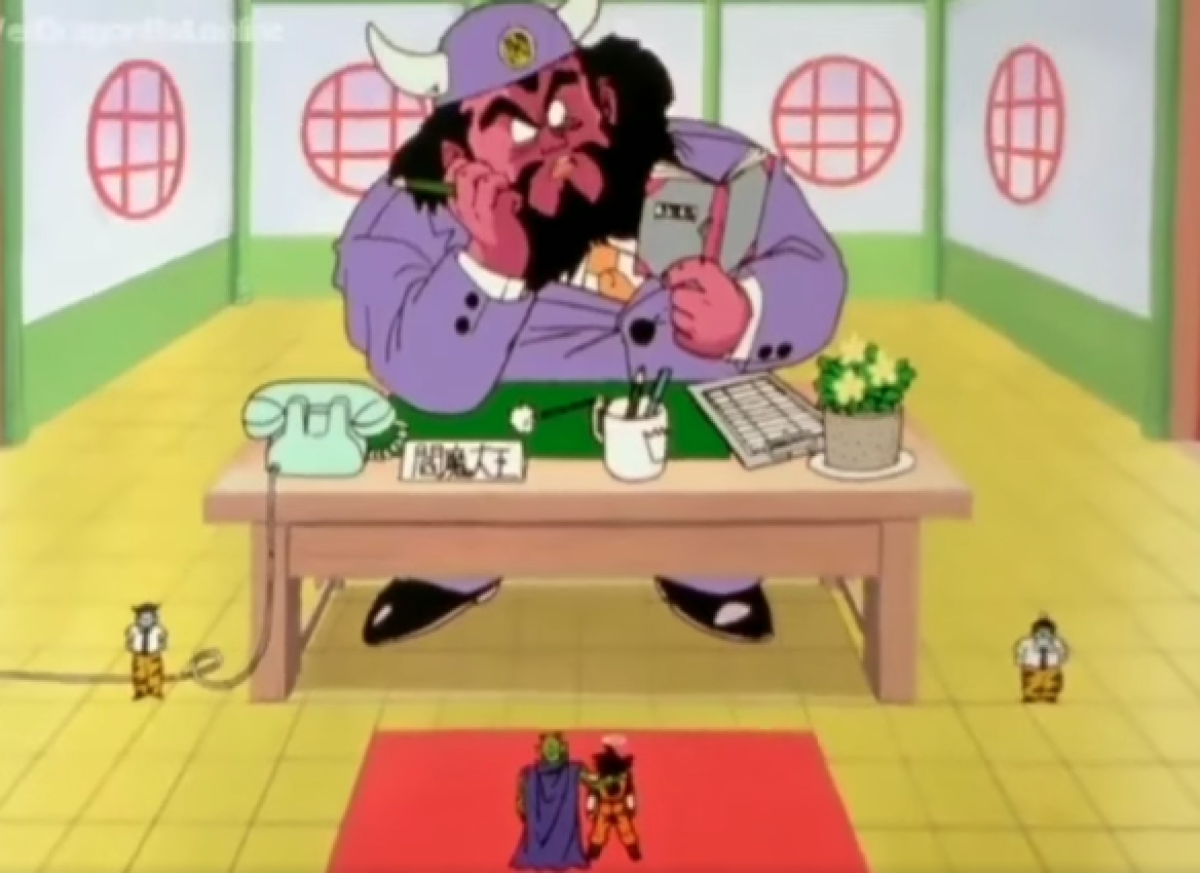
The Chinese mythological world remains and deepens in the series with the representation of the Other World, its structure and organization (with Kaio-sama as the God of the galaxy, superior to Kamisama, who is only in charge of Earth; and Enma Daio as the deity responsible for administering the fate of the dead). In Dragon Ball, dying is not the end of something, but rather another part of the cycle of existence in the universe; and the gods that inhabit this world resemble more immortal public officials tasked with maintaining that order.
In the next saga, the main villain is a universe emperor in the style of Star Wars who rivals a race of warriors, the Saiyans, whose prince is his main threat (Vegeta is also related to Paul Atreides, the protagonist of Dune). However, he is not a classic conqueror: he is a space real estate speculator who turns planets into assets.
During the second half of the eighties, Japan experienced one of the largest financial and real estate bubbles of the 20th century. Land prices in Tokyo skyrocketed, and at the peak of neoliberalism worldwide, businessmen in Japan bought land not to use it, but to resell it, and it was said that a few square meters in Tokyo were worth more than entire countries. In 1991, this speculative bubble burst, leading to what was called Japan's "lost decade." Freezer appears in the manga at that temporal threshold.
It cannot be said that Toriyama "thought of the bubble" to create Freezer, but the cultural climate was there. Like speculative capital, Freezer does not care about planets or life; he only cares about exchange value. His way of speaking is educated, polite, and businesslike. Freezer does not shout like a tyrant: he smiles like an ambitious CEO, much to the chagrin of certain political sectors who love Dragon Ball and admire or aspire to be speculators.
Although it may seem hard to believe today, Dragon Ball was almost finished several times. One of those imminent endings was glimpsed at the twilight of the Freezer arc. It was 1991, and it would have been a perfect closure for a legendary saga: reaching the level of super saiyan, Goku defeated the emperor of the universe and died in the explosion of the Namekusei planet. However, neither Shonen Jump nor Toei Animation were going to let a golden goose die. They asked the Sensei to continue the saga no matter what. What could come after defeating the very emperor of the universe?
The answer was once again in science fiction and in the trailers for upcoming movies that were shown in theaters. One of the most anticipated releases that year was the sequel to “The Terminator,” the film that had launched Arnold Schwarzenegger into the Hollywood Olympus. The second part, “Judgment Day,” premiered in U.S. theaters in early August of that year. A month earlier, on July 15, 1991, Toriyama brought his own version of John Connor/Kyle Reese to life.
Like Connor, Trunks represented humanity's hope against the impending extermination genocide of the machines; and, like Reese, he travels back in time in a time machine to prevent a tragedy and change history. The editors loved the idea and gave the green light to continue, although they would heavily revise the saga's script.
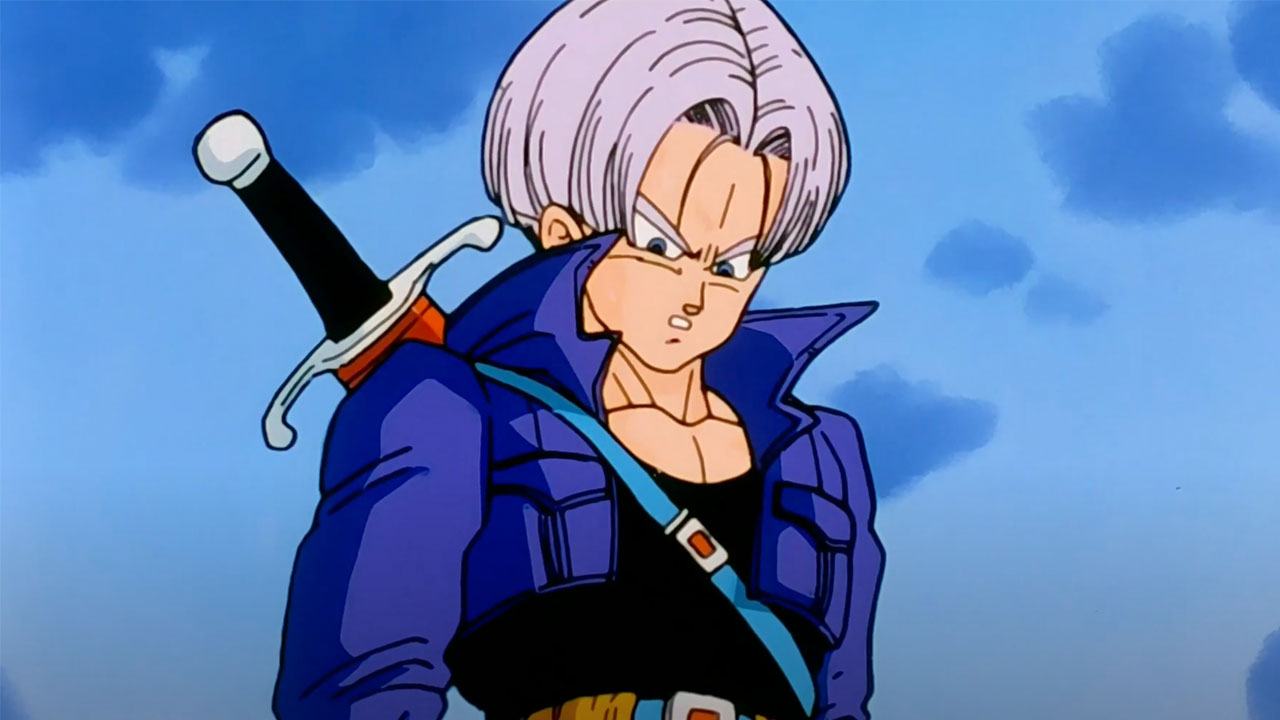
Talking about Toriyama's work also means discussing the editors who accompanied him through the different stages: Kazuhiko Torishima, Yū Kondō, and Fuyuto Takeda. While all three were involved at different times in the series, Toriyama consulted with all of them (especially Torishima, who was the most demanding). Freezer had set the bar very high as a villain due to his charisma, presence, and the fear he instilled. Androids 19 and 20, whom Toriyama initially envisioned as the main enemies, lacked charisma and did not convey fear or respect; 17 and 18 were stereotypically beautiful and didn’t seem that evil (in fact, the author quickly ships 18 with our beloved Krillin).
Toriyama found the answer in another branch of sci-fi: Cell is an android but biotechnological, a product of unethical bioengineering, combining characteristics from Alien (from its origin as a larva to a monstrous creature) and Predator (in its physical form), embodying the fear of technological chaos stemming from scientific advancements at the end of the Cold War. Kondo, the editor at that time, insisted that he refine this character and add transformations like Freezer. Thus, they arrived at the design of Perfect Cell that we know, which is certainly as memorable as the emperor of space.
Buu and the mythological closure
The other possible ending, of course, was with Cell. With Goku dead and Gohan surpassing him, everything was set to wrap up the story: the hero had fulfilled his mission, and the next generation was ready to take the baton. However, once again, the editors (this time, Fuyuto Takeda) insisted on continuing. Toriyama agreed on one condition: greater creative freedom. He was tired, felt that ideas were starting to run dry, and wanted to write scripts with more humor, like in the beginning.
The answer to give a definitive closure to the saga lay in returning to its origins: Eastern mythology. Majin Buu is not a political or technological villain, but a primal, chaotic force that predates the very order of the universe, whose concept echoes the "puni" or "mazoku" from Japanese folklore. Its mere existence disrupts the harmony between the world of the living and the other world, forcing the Supreme Gods to intervene in the realm of mortals. This return to the mythical was also the most organic narrative path to bring Goku back from the dead. Additionally, there was a character arc that needed closure: Vegeta's.
One of the great lessons of Dragon Ball is that coexistence requires setting aside ego. In Journey to the West, this idea crystallizes when Sun Wukong understands that his strength and rebellion only make sense when they serve a collective good, and he agrees to become a disciple of Buddha. This arc of redemption is a constant in Toriyama's work and is particularly clear in two characters who start as antagonists and end up being protectors of balance: Piccolo and, in a deeper and more painful way, Vegeta.
Surprisingly, the hero at the end is not Goku, Gohan, Vegeta, Vegetto, or Gotenks. The hero is collective. Once Vegeta admits that Goku is number one, not for defeating others but for constantly surpassing himself, he manages to let go of his pride (ego). And thus he finds the strategy to defeat Majin Buu.
He himself had taken the hit from a nerfed Genkidama that nearly killed him. But Freezer, weaker than Buu, also suffered that power and was able to withstand it. Only a Super Genkidama formed with the energy of all humanity could defeat an enemy of that magnitude. Goku executes the attack, Vegeta designs the strategy, Mr. Satan (who started as comic relief and ended up embodying the symbolic power of popular idols) convinces humanity to participate, and millions of people give their energy. The collective hero. Perhaps, as Panessi points out, “the greatest unintentional legacy of Toriyama's work.”
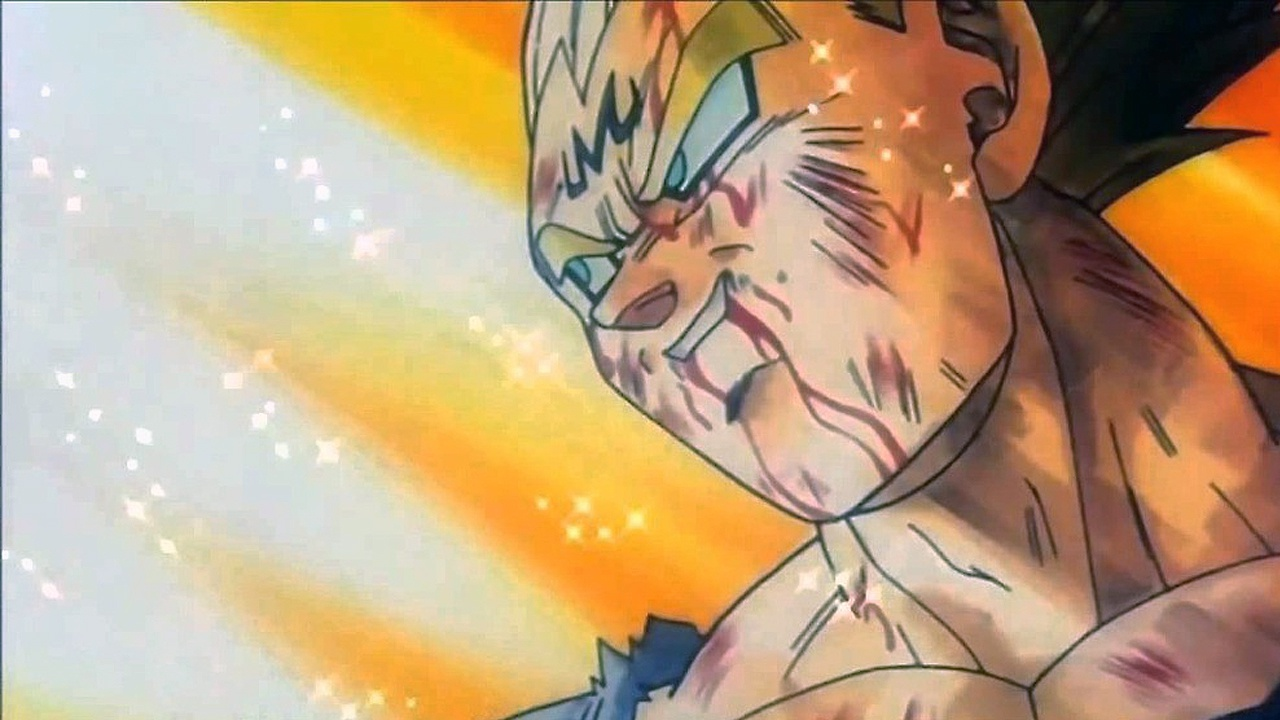
In the East (and particularly in China), the idea of organized community is not a discussion but a principle. Each part occupies its place in function of a greater balance, even at the cost of individual desires. Perhaps Toriyama himself went through a similar process by setting aside his creative exhaustion after the android saga to write a worthy closure. His editors gave him the chance to complete the journey of his Son Goku in an epic way. In the end, the one who fulfills Goku's last wish is not Sheng Long, but Enma Daiō-sama, who returns his most formidable rival purified and transformed into a kind being, to fight, learn, and grow as a guardian of life and universal balance.
It is a reality that the series has been pigeonholed into a masculine consumption due to the representation of masculinities and the plots tied to the physical strength of the protagonists. But far from being just that, with Dragon Ball, Akira Toriyama adapted the Monkey King and confronted him with the challenges, fears, and imaginary threats of the late 20th century. Sun Wukong's obsession with immortality, impossible in the physical realm, was fulfilled in cultural terms thanks to Toriyama.