Blade Runner (1982)
In this third installment of Canon, we revisit Philip K. Dick's novel and Ridley Scott's film that helped define cyberpunk.

In this third installment of Canon, we revisit Philip K. Dick's novel and Ridley Scott's film that helped define cyberpunk.
I'm very happy to have a monthly cadence for Canon. It's something I'd tried –and failed– before, so it feels great now. It also lets me rewatch classics to bring them into this beloved space. Those who follow 421 articles are also going to find that on Friday of last week I posted some sort of science fiction, fantastic literature and horror reading guide. Which is basically the perfect combination of the three genres that drove me crazy. The list works as a great complement to the articles in the Canon and, eventually, I will have no choice but to do the same thing I do here with the movies, but with the books mentioned there. And maybe at some point edit it as a book. Hardcover. By Taschen. Dreaming is free.
As I said in other editions of the Canon, this entry had become mandatory and perhaps it should have been the second (which it was Ghost in the Shell) or even the first (Akira). Nothing we have been reviewing in these columns would exist without the invaluable contribution of Blade Runner to the cyberpunk universe. I could pile on superlatives and call it a monumental work, but it's better to explain –and only then decide– what kind of monument it is, what Blade Runner builds, and why it holds its place in audiovisual culture and in Canon in particular.
Blade Runner isn't actually called Blade Runner. It is based on the novel Do Androids Dream of Electric Sheep?, original of Philip K. Dick. But due to the film's untold popularity, the book is now sold under the title Ridley Scott gave to the movie so as not to have to explain this to readers. That's how the industry works.
The novel is set in the city of San Francisco after the nuclear war, the World War Terminus. Rick Deckard –a bounty hunter working for the San Francisco police– stumbles upon an unusual job: chasing and annihilating six Nexus-6 model replicants that entered Earth illegally. If catching one is already a quasi-legendary job, catching six in the span of 24 hours is beyond possibility. Replicants are near-human androids that represent the most advanced in imitation of human life. Only subjected to the epistemic rigor of the Voight-Kampff test can its synthetic origin be determined. Deckard's adventures lead him to go through a series of inner states that move him.
In a San Francisco under nuclear winter, animals are a strange way of life. They are almost extinct and, in fact, have very high value, which makes them luxury objects. That is why the vast majority of humans have replicating versions of animals. Synthetic animals, apparently real. Everyone knows it. Nobody is rich enough to have a real animal. Halfway through their mission, and to deal with the conflict generated by killing the quasi-human Nexus-6, Rick Deckard use the reward money to buy a real goat. Thus, the assumed risk, which almost leads to death, becomes social status. So if humans dream of owning real animals… do androids dream of electric sheep?. CINEMA 🚬.
But the novel does not end there. As always, Dick's stories are composed of several layers of frames and stacked subframes. In this version of the world, humans exercise their collective empathy through a device where they connect and can see the projection of the life of a supposed prophet or religious leader, climbing a mountain in the manner of Sisyphus, while the crowd stones him. This is Mercer and the spread of his message takes the name of mercerism. The ability to feel a kind of collective communion through the vicarious feeling of Mercer, who suffers for all of humanity, is what distinguishes humans from the Nexus-6.
At the end of the novel, the population discovers that Mercer is a fraud, at the same time Deckard travels to the desolate outskirts of San Francisco, a post-nuclear wasteland, and suffers a similar religious experience as Mercer's. When he is returning to his car he comes across a real toad that he takes home as a symbol of the authenticity of his message. In the last pages, the couple of Deckard –in this version, Rachael is the lover– discovers that the toad is electronic. Deckard understands that he can also be moved by electronic beings and that they deserve his respect.
As usually happens in the novels of Dick, what is always at stake is the relationship between simulation and reality. At least in those we point out in the list, like Ubik and The Man in the Castle –there's always one more twist about what's real and what's not, and how the characters relate to it. The comings and goings. Deckard despises mercerism until he embraces it, and there his fictitious character is revealed. The same with animals: as soon as you feel empathy, fictional nature appears. It also happens with Rachael, who plays the role of femme fatale and lover of Deckard in his 24-hour adventure and, before erasing herself from existence, she kills his newly purchased goat. Reality and simulation seem to be stacked recursively, almost like the plots of the book.
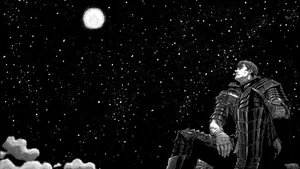
In 1982, Ridley Scott –shortly after filming Alien– premiered his version of Dick's book, which he named Blade Runner, a title he took from the novel of a novel by Alan E. Nourse (1974), later adapted into an unproduced script by William S. Burroughs. Scott mentioned several times that the third piece of inspiration for the film was The Long Tomorrow, a short comic story drawn by the comic master Moebius and written by Dan O'Bannon, screenwriter of Alien.
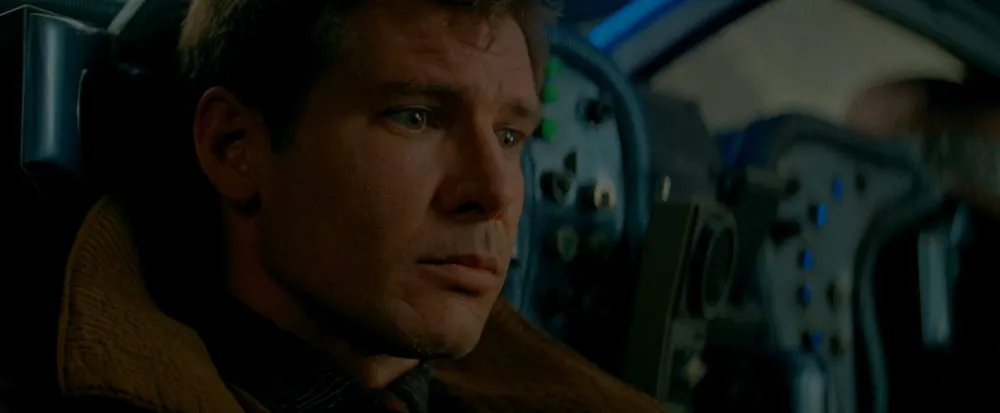
The film tells of a day in the life of a detective who receives the unusual job of catching a spy who comes from off-world, which happens in a future city of towering high-rises where altitude mirrors status. The 199th floor is rubbish and the 8th floor is the place of aristocrats. A little film noir in the future.
Since its release, and partly as a result of its popularity, there have been several versions of the film. The original is the one that was released in theaters in 1982, but there are even some differences between the one that came out in the United States (domestic cut) and the one that came out for the rest of the world (international cut). Then there is the Director's Cut but that is a version of the study, not fully supervised by Scott. And finally, there is the 2007 version, remastered, approved by Scott and known as Final Cut. This is the version referenced throughout this piece.
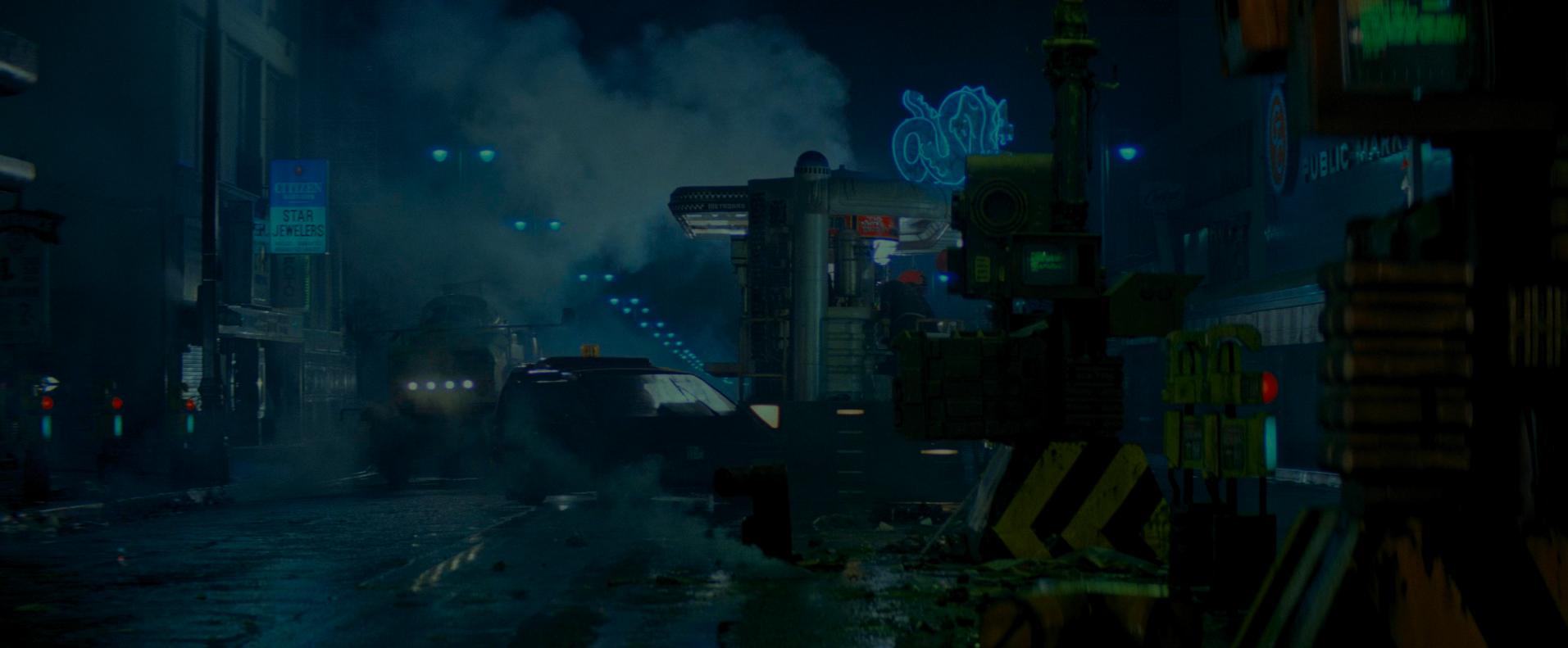
With all these elements on the table, Ridley Scott delivered with what would be in many ways a masterpiece. In particular by the conjugation of three aspects: the visual setting, the imagination of the future and the exploration of the limits of human experience. It is worth making a small clarification about this. Los Angeles, under the gaze of Scott, is a multicultural megalopolis with flying cars and strong Asian influence, almost as if it were Hong Kong. Acid rain, bright umbrellas, smoke-filled environments, backlighting everywhere. The monumental megacorporation buildings contrast with the thousands of abandoned nooks, full of dirt, filth, and human remains. Black market for organs, human anthill. The very image of decadence and exhaustion aestheticized with rain and neon and East Asian motifs. All these keys would be what would define a large part of the imagination of audiovisual futures, as well as the cyberpunk genre in general.
The primacy of megacorporations over the quality of life of the common man, the combination of advanced technology with very poor life (the reverse of low tech high life), buildings of pharaonic scale and cities that seem to have no end. The aesthetic setting, seen in 4K under the latest remastering, inevitably makes you think about the decline in practical craftsmanship in cinema in the last quarter of a century. The same thing happens with Alien, with Terminator, almost with any work of the Canon. There was a capacity for visual display and manufacturing of real things that were seen on the screen that mark an unavoidable milestone. Perhaps it is just the prism of time and that, with distance, one gains the ability to select the best of each era. Although if I get a little picky, the 1982 release list is really a massacre: Blade Runner, E.T., Poltergeist, Rambo, Rocky III, Conan the Barbarian, Tron, The Thing, Fitzcarraldo, The Wall and Koyaanisqatsi. Special mention to The Swamp Thing: if you didn't see it, look at it –or at lest read its comics. I think that on a contemporary level, the only thing I can think of is that perhaps Dune is on par with Blade Runner, as well as the respective films of each cinematic master: Killers of the Flower Moon, Once Upon a Time in Hollywood, and so on.
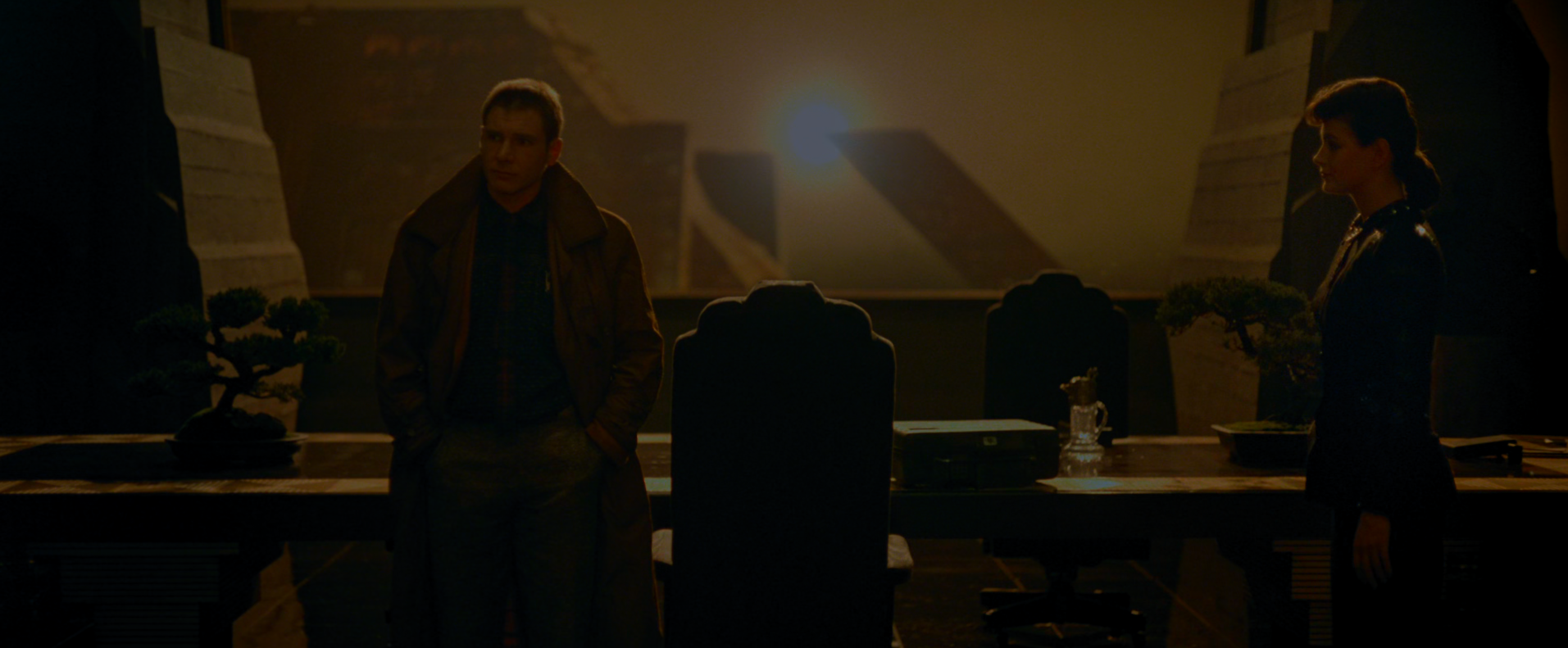
But the setting is in itself a sufficient argument to understand the impact of this film on everything that came after. The imagination of the future is totally connected with the setting. The great success of Ridley Scott it's making this movie a film noir, a conceptual framework that establishes certain gender conventions that already accommodate much of the story. Rick Deckard acts almost like a private investigator, and the scenario of a decadent future creates a great atmosphere. Rachael, the Nexus-6 created by Tyrell himself, plays the role of the femme fatale, and Tyrell himself (from the great megacorporation of the same name) acts as the aristocrat in the subtle spheres. Thus giving that cross section where the entire society is part of this scenario of disintegration and there is no moral reserve for anything, anywhere. Anchored in the tradition of film noir of the '40s and '50s, which in turn is anchored in the genre of black police and hardboiled: police literature with a strong focus on the world of crime, moral corruption, gruesome scenes bordering on gore, and all embedded in pulp literature. Raymond Chandler, Humphrey Bogart, that whole sequence. Top-shelf stuff, folks.
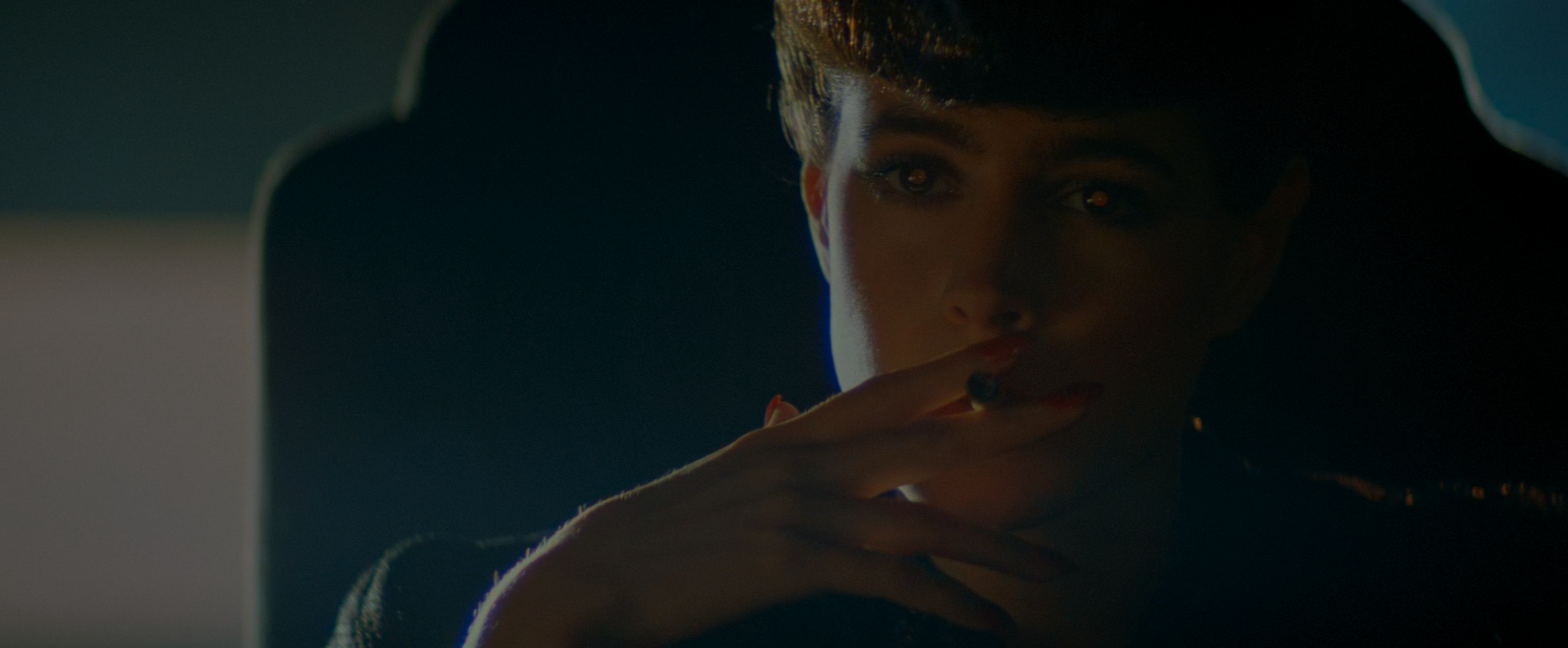
And last, but not least, we have the existential drama, on that mattress of noir fine herbs. Because the strong –and perhaps what catapulted Blade Runner to the status of classic despite the devastating opinions of critics of the time such as Roger Ebert and Pauline Kael– is in the explorations of the human condition. Just as we saw in Ghost in the Shell, replicants are subject to the implantation of other people's memories, in order to steer their emotional growth and prevent them from going completely off the rails in the process. They are such good copies that it is inevitable that they develop complex emotional levels. That is why you have to direct them. Now, if memories are implanted, how do you know if you are a replicant or not? For this, there is the Voight-Kampff test, a standardized test that attempts to discern between humans and replicants based on a series of questions and certain visible bodily manifestations (anxiety, pupil dilation). However, with Rachael the test took almost an hour and more than 100 questions. Which opens the possibility of thinking if the possibility of passing the test depends on how well tuned a Nexus-6 is or how inquisitive the interviewer is.
The replicants that enter Earth illegally, and therefore must be eliminated, make up a rather peculiar group. Especially the group's leader, Roy Batty, who seems to have an understanding of human-replicating tragedy beyond the ordinary. Replicants only live four years because genetic engineers at Tyrell Corporation were unable to solve a problem with cellular reproduction, which is entering a stage of irreversible degradation. This leads the group of six replicants from the film to flee the colonies, enter Earth and search for their creator to extend their lives.
Batty primarily plays the role of the avenging son. In a scene for all time –SPOILER ALERT–, Tyrell claims that it is impossible to extend his life, Batty kisses him and kills him, by gouging out his eyes. Eyes that are quite a theme in themselves in the film: they are the organ that can give away the replicants, the creator of the eyes is the first target of the group and it is what Batty bursts first at his creator.
Batty's great monologue remains for last where he claims to have seen things so extraordinary the human mind can barely conceive them and yet they will be lost in time like tears in the rain. The same Batty who pierces a nail in one hand to prevent it from being rendered useless by deterioration, and who carries a white dove in his other hand. Frankenstein again? Again religious reasons with a Christian basis? Of course. In a final act of compassion, Batty would rather go out and die than take the poor man's life Rick Deckard.
It thus closes a Shakespearean in tone film, where the story is quite schematic but is an excuse to explore the thematic depth of human existential drama. The inevitability of death, the ephemerality of the beautiful, the fragility of memory. In Blade Runner what differentiates masterpieces from simple works is manifested in an almost perfect way: the way a particular drama speaks to universal human drama.
Y a cada colaborador se le paga por su trabajo. Las dos cosas dependen de los suscriptores.