Godzilla in Santa Fe: A Self-Organized, Budget-Friendly Movie Screening
27 de mar. de 2026 — Ricky Paum Paum
I'm not a film buff, I don't have an account on Letterboxd, I'm not up to date with the latest cinema news, and I don't have a sophisticated critique filled with references to discuss a movie. But once upon a time, I was punk, I learned the principles of DIY, and I spent countless hours of my life making home videos with friends where we brainstormed a script, created sets, filmed scenes, and edited with our makeshift desktop computers.
This text isn’t a review, because there are surely people much more skilled and trained for that task. Rather, it’s a sort of chronicle and a collection of feelings (hopefully some hopeful ones) that I experienced after watching Godzilla in Santa Fe, the great cinematic event that gives rise to a new genre: Santa Fe super cinema.
 Juan Ruocco 🧙♂️
What is Godzilla in Santa Fe?
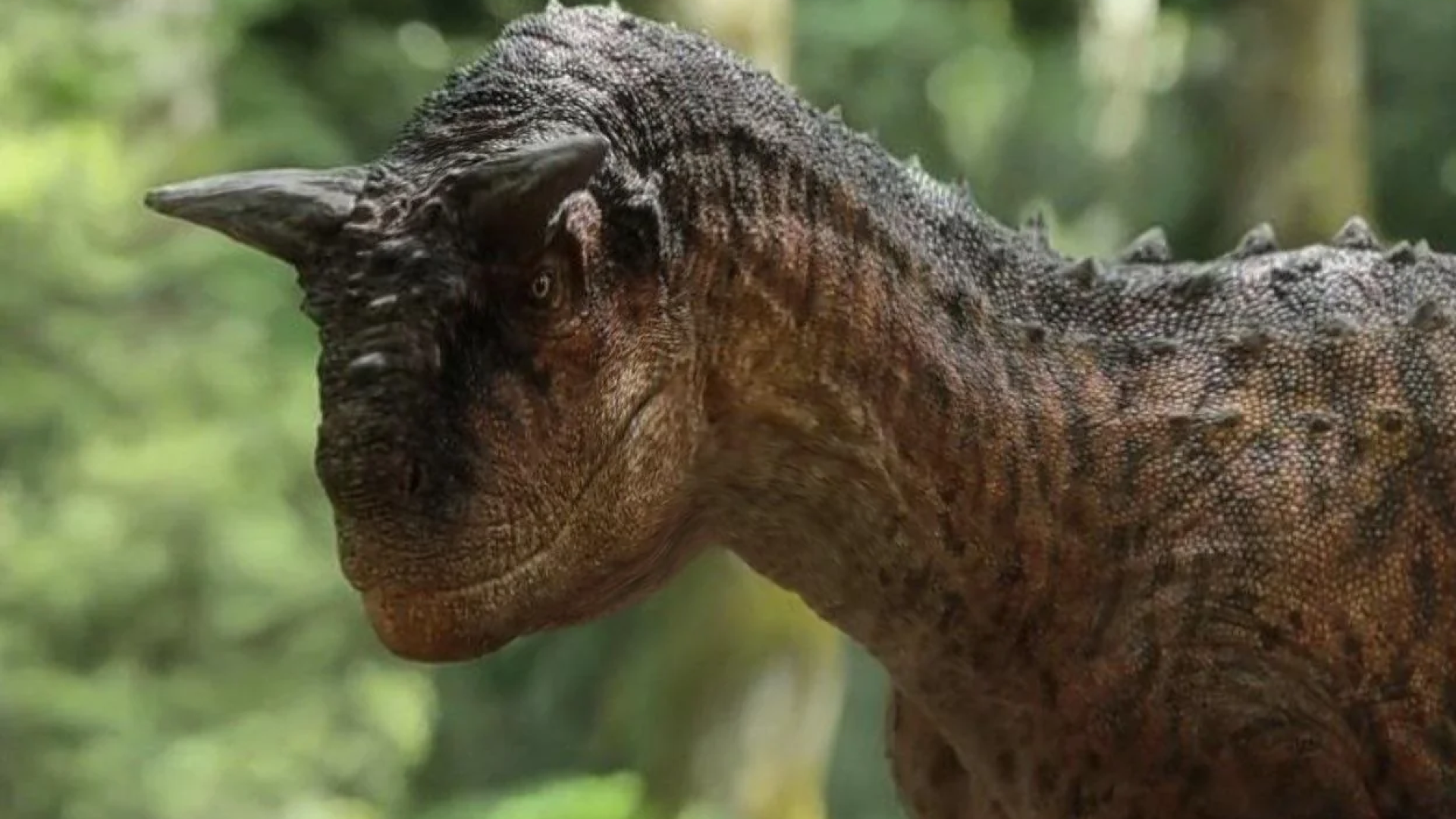
It’s a 100% homemade film, made 100% through self-management. Something that started as a dream of its director, Alexander Duré, and came to fruition thanks to the teamwork of the most beautiful thing in this world: friends. Alexander shares that at first it was just him and Gastón Zuñiga, and as the process went on, more people joined in. I highlight this because action is as contagious as apathy. Want to start a project but feel like no one will back you up? Just start, I swear nothing is as contagious as seeing someone super excited and enthusiastic doing something.
It’s a 100% homemade film, made 100% through self-management. Something that started as a dream of its director, Alexander Duré, and came to fruition thanks to the teamwork of the most beautiful thing in this world: friends.
The opening credits announce that there’s no commercial interest in making the film, just a pure desire to create a movie about Godzilla among friends. And yes, I know that money is a big issue and I don’t want to fall into a somewhat controversial discourse where we romanticize not wanting to make money with the things we create, but sometimes I feel like we go overboard and become incapable of thinking about anything outside of commercial circuits. Why should I do something if it doesn’t make me money? Godzilla in Santa Fe comes to tell us: yes, dude, money is super important, but not everything in life is about money. And get used to the idea that you probably won’t make much money if you don’t come from a well-off family with enough resources to support your hobbies, but the solution can’t be to give up on a dream: get together with your friends and DO SOMETHING anyway. And they got together, with cameras they had at home, without a dime, some audio issues, toy dinosaurs, and said: let’s make a movie. And what happened? They made it to the Gaumont, filled the theaters, those things that only happen when you finally overcome your fear and get to work.
That night at the Gaumont
The theater was filled with those quirky and unique people you never quite know where they hide in the city, but when you see them, you get the feeling that you’re in the right place.
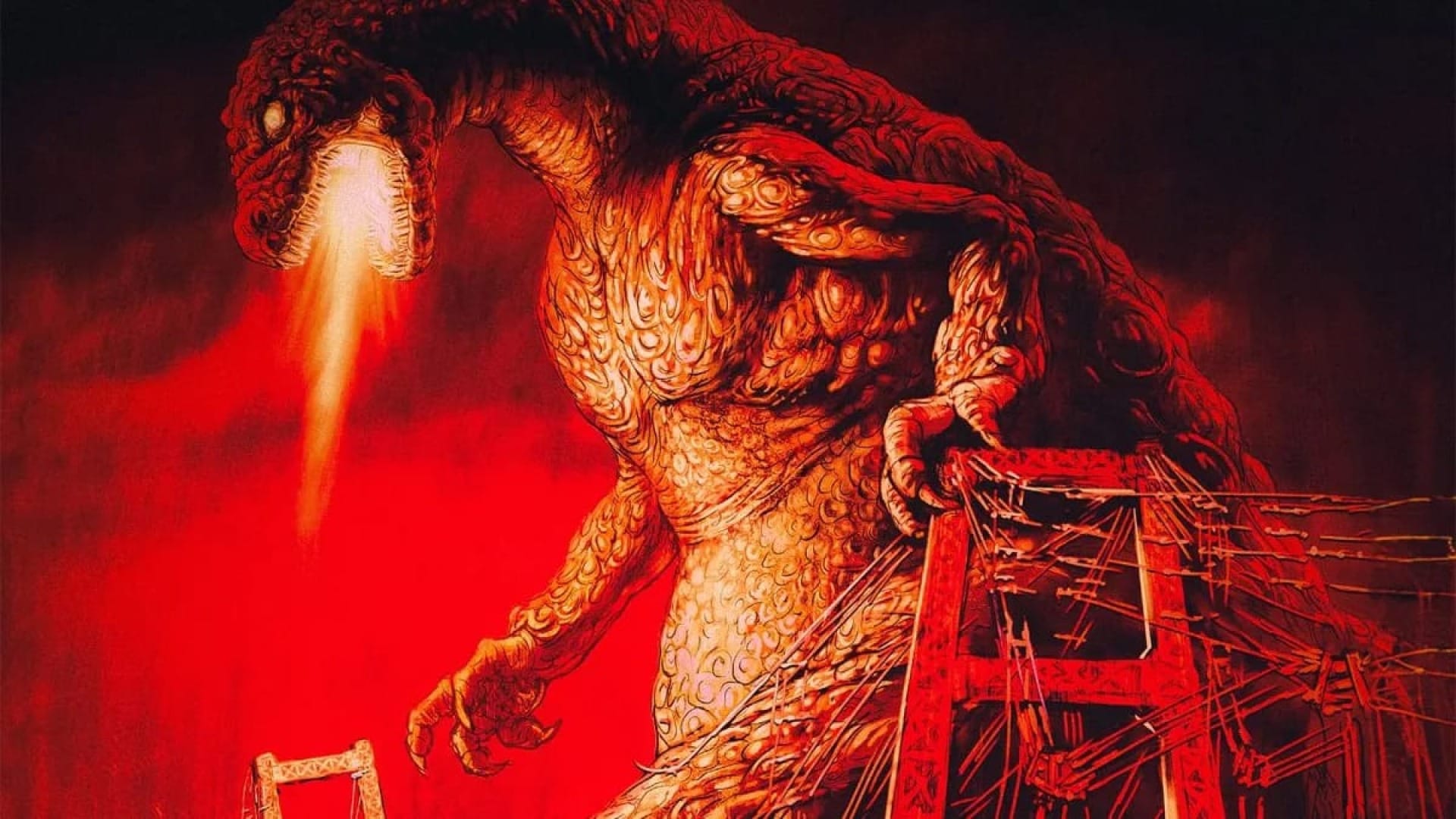
Before the movie started, they introduced the team that made it possible: a group of very young kids (VERY young). That’s when I felt my first boost of hope: there are still kids who get together at someone’s house to brainstorm and decide to create things from that inspiration. Before starting the movie, they announced that at the end, the audience could buy the official merch. Of course, when the movie ended, my friend and I decided to go get that blessed official merch, which was being sold at the cinema entrance by one of the film's actors, Esteban Corva. He’s also a visual artist, so he designed the posters. This is what I mean when I say this film is the best example of self-management and DIY: everyone does a bit of everything and they do it very well, because beyond talent, there’s a genuine desire to bring an idea to life.
Working ingenuity, laborer cunning
This film is pure ingenuity. In every sense: in its production, in the way they manage to tell so much with so little, and in a humor that has a very well-targeted social critique.
The critique of the State's inefficiency is brilliant, effective, sharp, and accurate without taking an anti-statist liberal stance. On the contrary, it makes one thing clear: no one saves themselves alone, and when the State doesn’t respond, we must activate community ties, but above all, we need to give the State a good kick in the ass.
Godzilla in Santa Fe is so full of details that one viewing isn’t enough. When my friend and I left the cinema, we were recapping the different elements that appeared in the film, which showcase an extremely keen eye for the everyday experiences of the average Argentine. It’s also clear that those who made this film are part of what we romantically call the working class. No, seriously: workers and children of workers, who capture the detail that only someone who has spent a lot of time trapped in the unbearable nets of municipal bureaucracy can. A computer resting on a blue file box that says 'FOLIOS', crucial meetings to save the province held in offices filled with mate and half-empty yerba packages, a battered electric kettle, the local news with its dramatic and humorous headlines supporting a journalism that’s lacking in substance... All of this creates an amazing contemporary folkloric composition.
It’s the ingenuity of those of us living paycheck to paycheck, we’re fed up, and we already know that every damn step we want to take in our lives is a real pain in the ass because we’re broke.
The critique of the State's inefficiency is brilliant, effective, sharp, and accurate without taking an anti-statist liberal stance. On the contrary, it makes one thing clear: no one saves themselves alone, and when the State doesn’t respond, we must activate community ties, but above all, we need to give the State a good kick in the ass.
It's a movie about love
For me, this movie is love. It's community; it's clear proof that when we come together selflessly and collaboratively, we can create fascinating things. And I'm not just saying that because of the plot (which touches on this a bit), but because of the whole production phenomenon that happened behind the scenes. The extras and actors are friends and family who got involved. The risky shoot on the bridge depended on the drivers that day understanding that a group of friends was filming a movie and not getting upset, and surprisingly, they understood. There's also love and community in the audience. An audience that supports the film not just from the perspective of a freaky fan obsessed with a little gem of independent cinema, but also from a place of tenderness, affection, and the desire to believe that we can still do things just because and say, 'Let’s support the kids from Godzilla in Santa Fe, man!' In a system that imposes efficiency and hyper-productivity as a mandate, where we go around with our smartwatches trying to present our best selves through metric optimization (How much did you sleep? How many steps did you take? How much water did you drink today? What were your heart rate values?), having something done just for the sake of it, because there's free time (scarce, but free), because there's enthusiasm, because it's fun, because it's good, period—not only is it a relief, but also an injection of desire.
Support your friends, support the people doing cool things
Yes, many times supporting our friends doing things means sitting through five hours of a performance poetry event in a cultural center where the toilet always gets clogged and you have to throw the paper in a bin that triples in size with waste. Yes, it’s not always great, but we have to support. There’s no other choice; we have to support self-management, we have to support independent spaces (the real ones, not the pseudo-corporate lies that Fama and Guita have already done a great job of tearing down on YouTube), support proposals that escape commercial circuits and marketing pretensions. Not because we’re fans of austerity and don’t care about money; of course, we want money, we need money to sustain this lifestyle where we read blog articles, subscribe to a fat newsletter, and go watch independent films, but something more has to drive us in this life. Just as not having money conditions us in many ways, doing and creating just for money conditions us in the same manner. There are ideas, feelings, and experiences that can only be expressed when we finally let go of that damn obsession with wanting to make it big.
Not everything can be aesthetic, cool, and full of likes. In fact, a significant part of the buzz around Godzilla in Santa Fe was word of mouth. Every person who saw the movie would tell a friend: NO WAY, MAN, YOU HAVE TO SEE GODZILLA IN SANTA FE. Another point to regain a bit of faith in humanity: we can still reach places without relying 100% on going viral on social media; word of mouth still works, and forcing your friend who’s been holed up playing video games for five days to step out of the house for something other than work still happens.
Every time we choose to consume something born from self-management and independent production, outside that universe of centralized platforms where we no longer own anything, except for a handful of unbearable subscriptions, we make a little noise. Just a bit.
Some of us still believe in the power of trash, of the homemade, of the manual. DIY hasn’t died, but it’s at risk of extinction. The good news is that it’s still in our hands to keep it alive, and it’s not such a hard task. In fact, it’s the best way to meet class after class of weird and ugly people, UGLY like you and me. In an interview, Alexander Duré says the film is partly about 'mocking the fact that we don’t have money and we do it anyway.' Not having money and doing it anyway—that’s the way to go. In a world ruled by money, doing things anyway, even when you don’t have a dime, is a beautiful act of rebellion (at least, in poetic terms, since no one is yet willing to carry out somewhat more violent actions). We need to embrace the beauty of the messy, of what isn’t finely polished by AI or the design trends of 2026 that pop up on your Pinterest board. The pretty and refined bores me more every day. Please, someone has to be a little tired of everything having to be an aesthetic experience. Create, make, support, get together with friends, don’t be afraid to make mistakes, don’t be afraid to cringe, trust in the power of things made with love (or from a hatred that overflows so much you need to do something about it: hating is good).
Even if all is lost, there’s always the option of causing a stir. Who is Godzilla going to bother in Santa Fe? Sure, I get that he won’t bother anyone directly, but I think that every time we choose to consume something that’s the product of self-management and independent production—outside that universe of centralized platforms where we no longer own anything, except for a handful of unbearable subscriptions—we cause a stir. Just a little. We’re not starting a revolution; we’re not changing reality, but we do cause a little trouble. We build communities; we allow other things to take their place in a world where space, though vast, is limited. These are the ways we make our existence a presence and a form of resistance against a production system that wants you both inside and outside.