Netrunner: The Cyberpunk Card Game That Survived It All

10 de abr. de 2026 — Luciano Casamajor
"That's king hell ice, Case, black as the grave and slick as glass. Fry your brain the moment you look at it. If we get any closer now, it'll have tracers up our ass and out both ears, telling the boys in the T-A boardroom the size of your shoes and how long your dick is."
—Dixie Flatline, "Neuromancer"
Everything you know is a lie created by the corpos. If you want to know the truth, you have to hack through layers of firewalls, get past sentinels, barriers, and the constant chatter of the media.
The megacorporations are built on lies, and the blood and sweat of ordinary guys who can't defend themselves. They'll kill whoever it takes to maintain their lie, broadcasting from Broadcast Square to outer space.
Want the truth? Talk to a runner. They call us criminals, sure, but that's just because the megacorporations don't live under the law: they make it up. They manufacture reality. But anything they think they can build, I can tear down.
There's only one real truth: the net is everywhere. Everything is on the net. Your bank accounts, your shopping history, your favorite shows, your dirty laundry. If you dig deep enough, if you run fast enough, you can find anything... and be whoever you want.
Welcome to Netrunner.
How do you play?
Explaining how to play Netrunner is both very difficult and very easy at the same time. Very difficult because it doesn't resemble 95% of dueling card games at all. This is simply because 95% of dueling card games rip off Magic, and Richard Garfield didn't want to reinvent Magic when he designed Netrunner (and you'll understand why in a bit). But it's also very easy because Netrunner is one of the most immersive games out there. As we've said, it's a race between a corporation trying to advance its secret plans and a runner (a hacker) looking to steal those same plans. What's our goal in the game? Exactly that: the corporation has a series of cards, called Agendas, that start in its deck. Its goal is to play them and advance them until they're complete. The runner, on the other hand, wants to find out which server these agendas are hiding in (whether it's an external one where the corpo has them installed or an internal one: their hand, deck, or discard pile). Once found, they're going to steal them. Whoever does their thing first with a certain number of agenda cards wins.
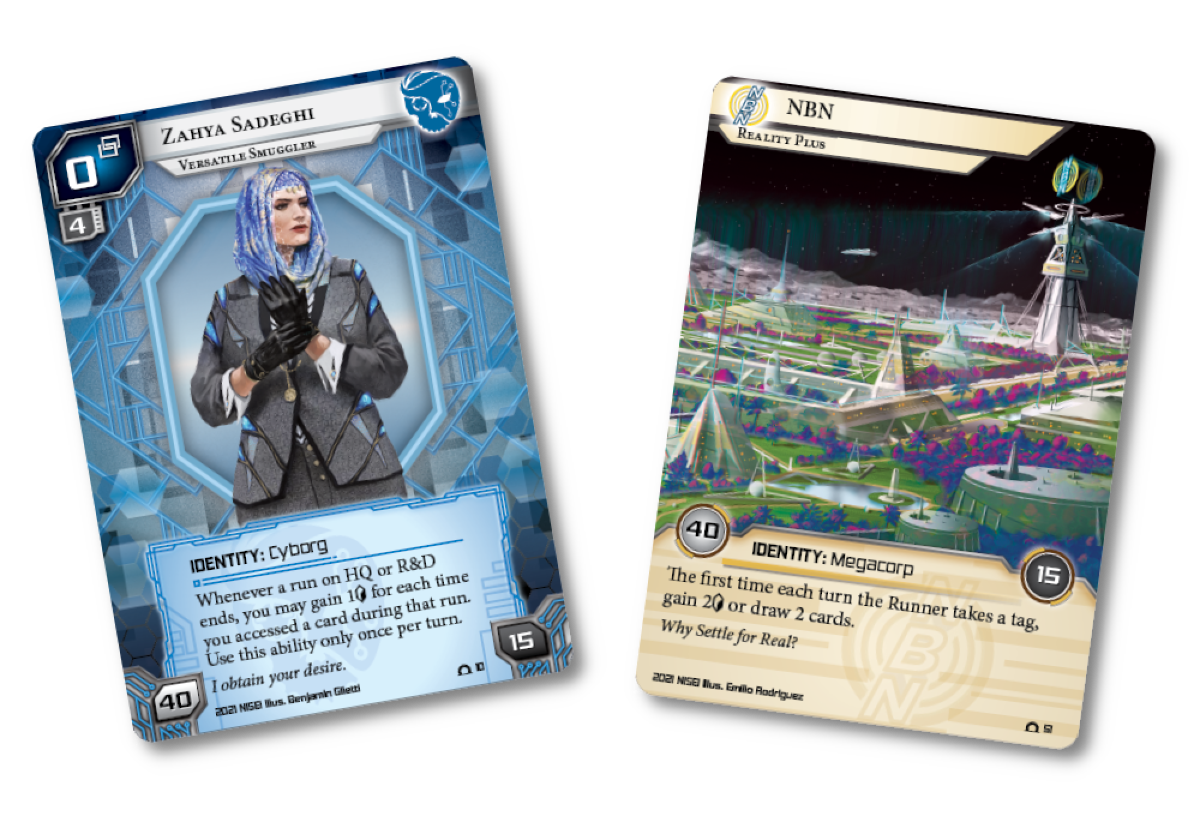
Note two disruptive elements. First, Netrunner is an asymmetric game, meaning both players play with different rules and objectives. This trait isn't that uncommon in modern board games, but it is in dueling card games, where the zero axiom is that players compete on equal terms. The idea that each side plays differently sounds, then, at least strange. But in Netrunner, it makes perfect sense. The corporation plays defensively, with two major advantages: money, which it has plenty of, and secrecy, as all its cards enter play face down.
The runner, on the other hand, attacks by running on the corporation's servers, which are all the places where it has or has played cards. What's the purpose of a run? To access the root of the server to see the card or cards hidden there. If it's an agenda, the runner instantly steals it and gets closer to their victory condition. If it's something else, they can pay money to discard it from their capitalist nemesis.
Netrunner is an asymmetric game, meaning both players play with different rules and objectives. This trait isn't that uncommon in modern board games, but it is in dueling card games.
Up to this point, Netrunner might seem like a punk power fantasy and a very masochistic experience for the player taking on the corporation. Is everything I play at risk of being stolen or discarded, even my deck and hand? What is this, Esper's wet dream? Relax, there's still a piece of the puzzle missing. Because, in every server, waiting for the runner, the corporation can install one or more pieces (standing, cyberpunk lovers) of Intrusion Countermeasures Electronics, or ICE, for short.
What is ICE? Just as Maddox envisioned and Gibson popularized, ICE are the trippy and treacherous virtual defenses behind which corporations conduct their dirty business. They are the software that every console cowboy longs to challenge, literally. In magical terms, we should say that ICE are equivalent to walls, as they are defensive cards that only act when the runner tries to bypass them; but that would be disrespecting their wonderful mechanical design. A piece of ICE has one or more subroutines: instructions that, when the runner encounters them, they must obey. Most ICE include the instruction "End the Run," thus fulfilling their neutralizing objective. But many ICE hide other tricks, from damaging the runner (who defends by discarding cards and, if they run out, loses the game) to destroying permanents, draining credits, or installing new assets for the corporation. And, remember, the runner doesn't know exactly what they'll encounter until it's too late, as the corpo plays everything face down.
 Juan Ruocco 🧙♂️
What can our hacker do about it? Up to now, we haven't talked much about their cards, but the main type is programs, which allow them to break ICE subroutines, with two big IFs: activating them costs credits (a resource that hackers never have enough of) and each program interacts with one type of ICE out of three possible ones. If you don't have the right one, you're done for. To challenge the system, you have to stay up to date with technology.
The resolution of a run is structured like a knife fight, a back-and-forth where each side decides whether to go for the kill or wait for the other to make a mistake. In a beautiful ludo-narrative translation of what Gibson imagined in Neuromancer: the runner begins by "approaching" the first ICE of a server. The corporation chooses whether to pay to rez it (slang for resolve, meaning to activate it) or let the runner pass to the next level, which could be the root of the server (where the prize awaits) or more ICE. If it rezes, the runner checks if they have any programs that can interact with that ICE and, if so, decides which subroutines to break. Because it's likely they won't have enough credits to deal with everything. Do they prevent the ICE from stopping the run at the cost of taking on another damaging subroutine? Or the other way around, preventing that damage but ending the fun? Or maybe they spend everything, completely nullifying that ICE but ending up broke and thus ripe for the corporation to crush them at the next level. But perhaps the corporation ends up not rezing the next ICE (either because they prefer to spend the money elsewhere or because they want to keep that surprise for another time? The mysteries of bluffing!) and lets the runner through, who can't believe they finally made it to the heart of the server and found… an Upgrade, a card that face down looks indistinguishable from an Agenda but once rezed affects the entire server and can do very nasty things to anyone who approaches. Or maybe what was there was an Asset, not exactly what they were looking for but still something very valuable to the corporation that the hacker, if they have credits left, can discard. Or there was indeed an Agenda and now the runner is much closer to winning and the corporation has to explain to their board of investors why they let the cyber heist happen. Or none of this happened because the runner chickened out, decided to abandon the run, and spend the rest of their turn preparing better, gathering more credits, and “downloading” some rich, more advanced programs for the next turn to break subroutines left and right. But of course, maybe there won't be a next turn. Maybe the corporation just bought just enough time to advance their last Agenda, score it, and win the game. Maybe, maybe, maybe…
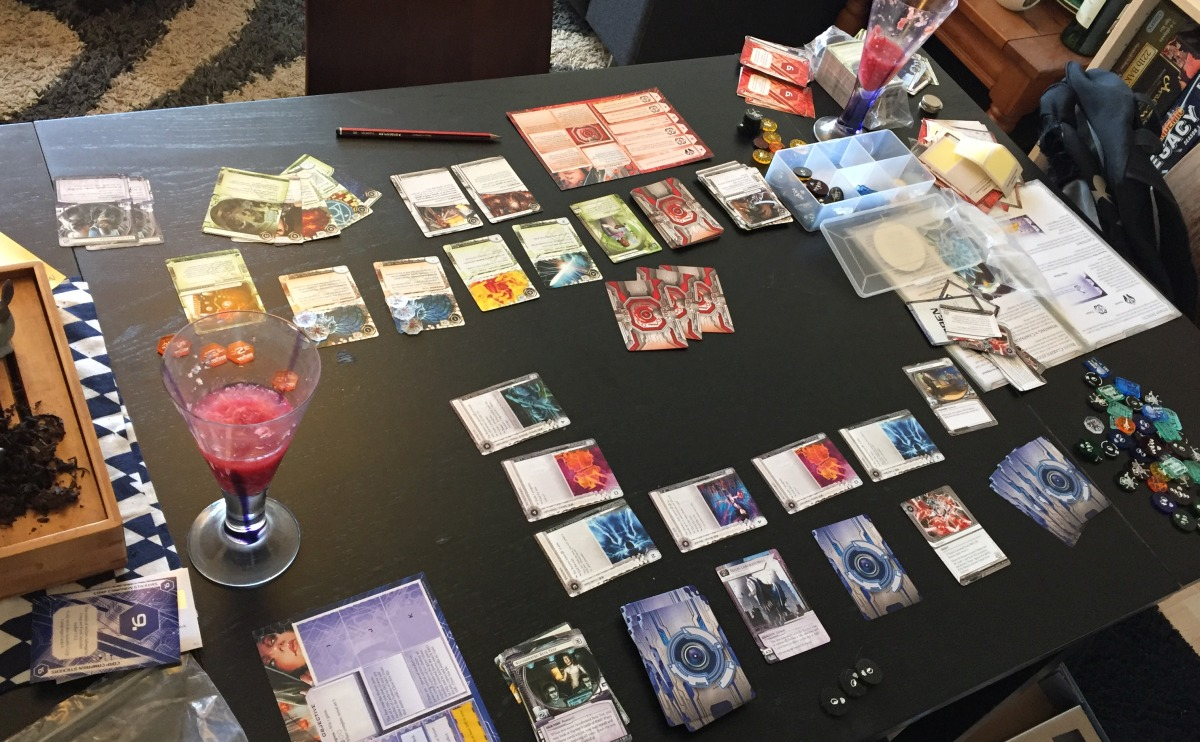
A game of Netrunner can end at any moment (generally, each side only needs to steal/advance 3 Agendas) and that provides much of the tension in every play. At the same time, each turn is inscribed in well-defined dramatic curves for each player. The early game is open to anyone, as the corporation starts vulnerable: remember that their servers are vulnerable from the very start and, if the corporation passes their first turn without protecting them, the runner can successfully raid them and be lucky enough to find and steal agendas. Not to mention installing a lone card in an external server. Paraphrasing the best villain from Big Brother, first comes the trap, then the agenda. On the other hand, eating a very destructive ICE at the beginning of the game can leave the hacker virtually out of the game, so just one defense can make even the most punk hesitate. The midgame favors the corporation, which will be swimming in money while installing a ton of cards, at which point the hacker will be looking for the important pieces of their deck, starting with at least one program for each type of ICE, and managing their scarce wallet between cards to install and runs to fund. But in the long run, the pendulum swings back to the runner, who, in the late game, will always be able to nullify any type of defense.
Juan Brodersen
I have a devotion to asymmetric games. Perhaps because they resemble real conflicts more closely, where we rarely act, think, and seek the same things. Or maybe simply because sitting on one side or the other feels like trying out a new game. It’s the 2-for-1 of game design. And the essential hallmark of a quality asymmetric game is that each side feels the other is more powerful and has the advantage, except for fleeting moments when you manage to surprise your opponent with something they never thought you could do. Netrunner embodies the epitome of this feeling thanks to its constant subversion of its own dynamics: yes, the runner attacks and the corporation defends; but sometimes the best defense is baiting, and a wild hunter can end up being hunted.
When we remove their thematic and emotional elements, all games have an economic matrix; all games can be understood based on their resources. When a Fat Magic talks about card advantage, tempo, or value, they are talking about the efficiency of their resources: life points, permanents, and cards. Netrunner is no exception and, in a way, has a much more explicit economy that is closer to euro-style board games than to dueling card games, because each player on their turn receives a number of clicks (3 for the corporation + draw 1 card, 4 for the runner but without drawing anything) with which they can pay for actions. What can you do with a click? Everything else. For one click, you can draw a card, play an Event/Operation (similar to a Spell in magic terms), install a permanent card, gain a credit (the currency used to pay for anything with a cost), or, in the case of the runner, initiate a run. Whether you access resources or not is not determined by chance; there is no manascrew or manaflood (you learned quickly, Richard). And, moreover, there is a very clear pattern by which to evaluate the efficiency of everything else. If obtaining a credit costs me one click and playing a card also costs one click, and I have a card that gives me 2 credits when played, the value of that card is mathematically evident.
A game of Netrunner can end at any moment (generally, each side only needs to steal/advance 3 Agendas) and that provides much of the tension in every play. At the same time, each turn is inscribed in well-defined dramatic curves for each player.
Where does the uncertainty come from, that X factor that brings life to these cold economic schemes? Partly from the random order in which the cards from your deck come out. But the main element is a resource, though less explicit, more important than all the rest: information. Because, remember, the corporation plays their cards face down. When the runner attacks a server, they are not only looking for what card is hidden there but also what ICE awaits them. And the first revelation will be a very nasty surprise but, once past that unpleasantness, the runner now knows what defenses they will have to overcome to return there. Of course, the corporation can add more ICE, but each installed piece increases the cost of the subsequent ones. Also, a corporation deck usually only carries 3 or 4 types of ICE. Of course, the runner can also abandon a run halfway through, fearing the fuck around and find out, but then they will have spent 1 click (25% of their turn) on nothing. This is summed up by Lukas Litzsinger, lead developer of Netrunner during its Android era:
"At its core, Android: Netrunner is a game of bluffing and taking risks. Its heart is the run. Everything else is secondary."
A Brief History of Netrunner
If what I’ve shared so far about the game has left you wanting more (and it’s just the surface, there’s much more to explore in terms of mechanics), jump to the end of the article where I explain the easiest way to start playing (spoiler, it’s 100% free). But how to play Netrunner is only half the reason I wanted to write this note. Because the history of this game, from its invention in the nineties to its recent resurrection, is a cyberpunk adventure in itself, where wars between commercial giants, corporate secrets, bursting bubbles, and community hacking intertwine.
Luciano Casamajor
It was 1996 and the nerdy American scene was wrapped up in a small cultural-commercial revolution: Trading Card Games (TCGs). It turns out that 3 years earlier, Richard Garfield was desperate to publish a family board game about clumsy little robots crashing into walls and had approached a nascent indie publisher, Wizards of the Coast. “Look, Richard, your idea is cute but we don’t have a dime to produce a board game. Why don’t you whip up something simple and cheap, with cards, and if we raise some money with that, we’ll publish your game?” Mr. Garfield, who by day was a PhD student in Mathematics, half-fulfilled the request and transformed another abandoned prototype called ManaClash into a game that was anything but simple but was played entirely with cards, Magic: The Gathering. And the rest is history. A very long history that I will someday write an archaeology of.
The important thing is that this game, while complex yet engaging, had a brilliant business model: we sell you the cards in randomized packs. Why does this matter? Because not all cards are created equal. Some are better than others, and those better cards are rarer. But who knows, if you buy a lot of packs, you might just find the one you’re looking for.
This formula fit perfectly for game stores, which were coming off a commercial disappointment: TTRPGs. Despite their cultural impact and creative explosion in the eighties, role-playing games translated into few sales. It made sense: in a traditional RPG group, only the Master buys the manual and then gathers with friends to play at home. It's hard for them to try other systems because they’re a stubborn nerd. Maybe a supplement with an extra adventure will trigger some interest, and that’s it. Perhaps they don’t even play tabletop RPGs anymore because they got hooked on Ultima, Might & Magic, or Neverwinter Nights. In comparison, TCGs packed stores with nerds eager to open lots of packs and trade cards or engage in endless matches at the shop.
Luciano Casamajor
The immediate consequence was that everyone started editing their TCGs, starting with Wizards of the Coast, which promised to release a staggering 2 per year. Have you ever wondered why all Magic cards say “Deckmaster” on their back? That was the sub-brand they wanted to launch a line of TCGs, of which Magic was just the first. Richard Garfield wanted to show that he hadn’t just invented a hit, but a new genre, as diverse and deep as board games. That’s why he came up with two more TCGs that played completely differently from Magic. And, partly to neutralize certain competitors and partly to give McLuhan some credit, they filled them with content from the now displaced predecessor: role-playing games. Thus were born Deckmaster 2 and 3: Vampire: The Eternal Struggle (initially called Jyhad... Oh, the nineties!), set in White Wolf's World of Darkness, and Netrunner, set in Talsorian Games' Cyberpunk.
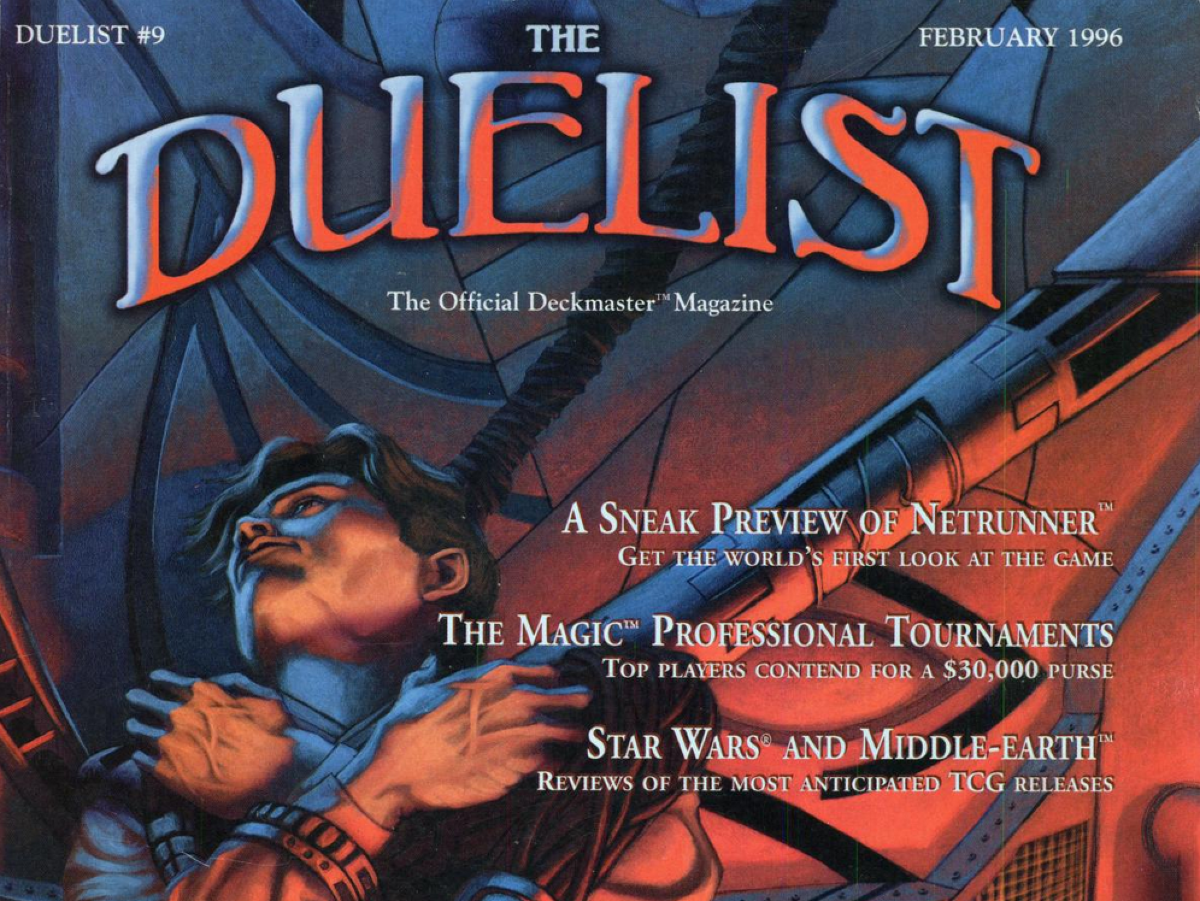
The explosion of TCGs was as powerful and fleeting as an atomic bomb. While researching for this piece, I read several issues of The Duelist, a magazine exclusively dedicated to TCGs, published by Wizards of the Coast to promote their products. The feeling is like peeking into a parallel reality or a sketch from Rick and Morty where Dan Harmon improvises game names. There were TCGs even for Sim City. And, in just 3 years, they all failed. And when I say all, I mean all. From the Star Wars one to the Marvel one. TSR Inc., the publishers of Dungeons & Dragons, created the second TCG in history, Spellfire, and even tried to invent a Trading Dice Game (yes, they sold you booster packs of dice). None hit it big, and in fact, TSR Inc. went bankrupt, leading Wizards of the Coast to buy one of the most important IPs in the gaming world. Netrunner, of course, fell in the massacre along with Vampire. It was clear that no one cared about the Deckmasters line. By 1997, the only survivor of this “new genre” was Magic the Gathering.
That same year, a comic book importer named Christian T. Petersen self-published his first board game under his label Fantasy Flight Games (FFG). The game was Twilight Imperium, a space opera whose sessions lasted at least 6 hours (let’s say, about as long as a game of TEG). The game was a hit, Christian sold out his print run and pushed forward with his mega indie publishing house.
Juan von Zeschau
Eleven years later, Fantasy Flight had grown to the point of acquiring a super powerful weapon, the Warhammer license, and wanted to fully capitalize on that fanbase with a new model of card games: Living Card Games. The pitch was simple and, to all appearances, very consumer-friendly: imagine Magic, but I also sell you each set in a box containing 4 copies of every card. No more chasing the rare ones, no more pay-to-win. We all have access to the same card distribution. And instead of designing huge sets a couple of times a year, I release generous starter sets and constantly feed them with mini expansions that also include all their cards. The idea was very tempting for those who liked dueling card games but didn’t have the money or time to keep up with the booster mania; not so much for those who enjoyed secondary markets and collecting. Additionally, Fantasy Flight Games invented a twist: cooperative LCGs, where each player has their own deck and fights together against a common enemy. An experience similar to playing RPGs but with the simplicity and excitement of card games, where each booster we buy brings a new level to conquer, fully exploiting the storytelling potential that Magic had already proven possible in card games. This formula fit perfectly with universes of good vs. evil like Lord of the Rings, Marvel, and the mythology of Lovecraft. In fact, those three are the only LCGs that survive today under the label because, spoiler alert, time is a flat circle and this new trend was also doomed to burn bright and ephemeral.
Rafael Molinero Rosa
But we’re still in the 2010s, the creative peak of Fantasy Flight Games, where everyone looks to this label for the Ameritrash ambrosia: epic games with rich narratives, lots of tokens, plenty of rules with exceptions, and a whole lot of dice rolling or cards with powers. Arkham Horror, Star Wars Rebellion, Cosmic Encounter, Battlestar Galactica, Descent: it’s impossible not to have come across one of these titles even today, not only because they populate the most nostalgic rankings and threads on BGG but also because many remain the best representatives of their IPs. And those IPs have tons and tons of fans.
But, as I said, we’re still in a Fantasy Flight that believes in taking risks and, why not, founding its own IP. That’s how Android was born, a very unique game, a sort of detective mystery simulator set in a grand love letter to science fiction. Suffice it to say that there are androids indistinguishable from humans, mega-corporations govern every aspect of life, and there’s a colony on the Moon called Heinlein. Not to mention, it also has flashes of originality, like a city called New Angeles, built on the equator and equipped with a space elevator. Fantasy Flight sought ways to populate this new world and expand its LCG business. Netrunner, which had always been a cyberpunk game, was the perfect match, and they were already coming off securing much spicier licenses, like Star Wars and Game of Thrones. So, after business negotiations with WotC, Android: Netrunner was born in 2012.
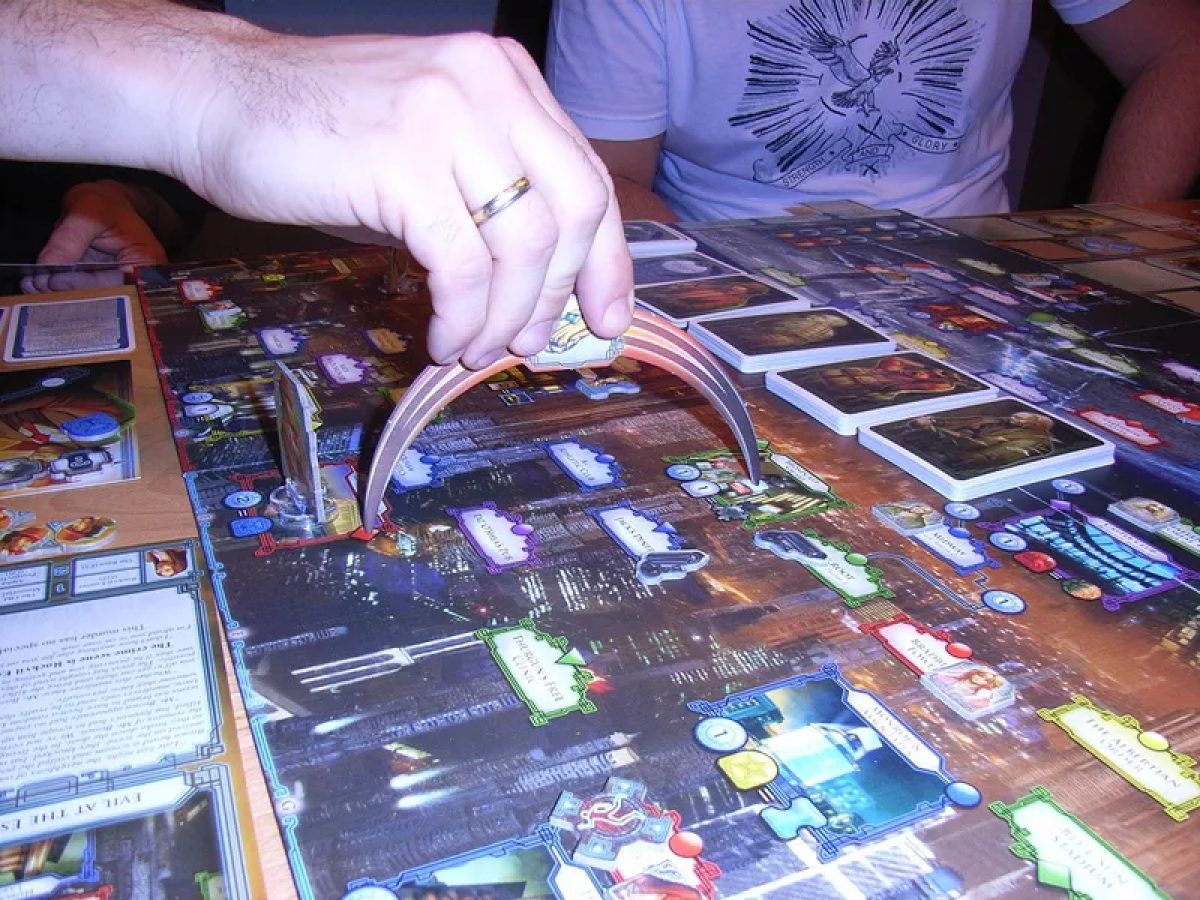
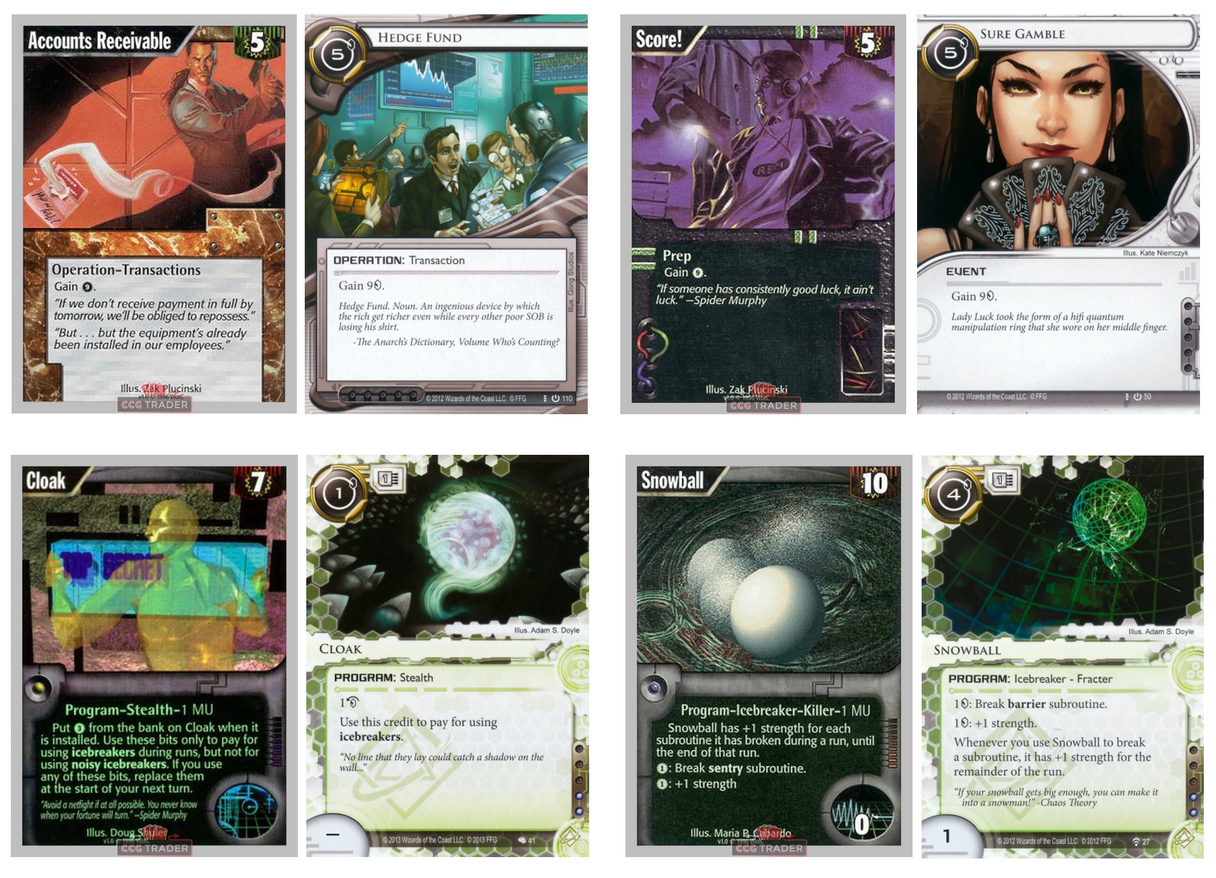
Fantasy Flight made it very clear from the first announcement that, while they would be working alongside Richard Garfield and the folks at WotC, their intention was not to reprint the original game but to “reimagine” it, starting with the transition to the LCG format. They outlined the possibilities of this change: “When you eliminate the concept of card rarity, you’re no longer forced to design more powerful versions that do the same thing as their common counterparts, but better. You can get rid of the excess cards that serve almost the same function. Instead, the focus can shift to the variety of tools available, ensuring that players have a wide range of options to explore in deck building.” To the pleasant surprise of the more skeptical fans, Fantasy Flight’s approach was more along the lines of “if it’s not broken, don’t fix it.” The priorities were to simplify some rules, refine deck-building conditions (including a limit of 3 copies per card), and, of course, re-theme everything to the Android universe, inventing in the process its most iconic corporations, characters, and locations. Meanwhile, as for the cards, many were copied exactly from the 90s version. Where they did innovate was in creating 7 factions (the equivalent of Magic's colors) and adding identities: a character (in the case of the runner) or an aspect of a corporation that gives you a unique power throughout the game. Thus were born iconic names from the game like the Runner Kate "Mac" McCaffrey or the corps Haas-Bioroid, Jinteki, NBN, and Weyland.
Android: Netrunner gained a lot of popularity and received excellent reviews. To this day, it still holds the 82nd spot in the global board game rankings on BGG (Magic The Gathering is at 167, woo woo woo). Fantasy Flight designed over 3,000 cards, spread across monthly “Data packs” (which in turn made up 8 “cycles”) and more substantial expansions. They even had the pleasure of remastering the core set and designing a rotation system for its young but energetic competitive scene. Clearly, Netrunner had come to stay in the pantheon of dueling card games. That’s why it was a bitter surprise when on June 8, 2018, FFG announced that the WotC license was coming to an end and, therefore, Netrunner too. They shut down the Matrix and left all the runners jacked out.
Android: Netrunner gained a lot of popularity and received excellent reviews. To this day, it still holds the 82nd spot in the global board game rankings on BGG.
As of today, it’s unclear why Fantasy Flight and WotC didn’t renew their commercial agreement. One theory is that after being acquired by the giant Asmodee in 2014, the former shifted its focus to the licenses that were raking in big bucks, namely Star Wars and Marvel. Another is that the Wizards of the Coast began to view the “shadow” (small but very dark) that Netrunner cast over Magic with its innovative design and much friendlier pricing model with suspicion, and demanded a usurious price from Fantasy Flight for the license renewal. It wouldn’t be their lowest point, coming from the company that patented “turning cards 90 degrees” as intellectual property and sent the Pinkertons after a streamer for leaking a Magic set.
The most hopeful leaned towards a third alternative: the hype for the recently announced Cyberpunk 2077 was total, its IP was the original from the 90s Netrunner, and everyone expected a new card game within the game, following the success of Gwent in Witcher III. It made sense all around, and honestly, it would have been beautiful. But none of that happened. CD Projekt Red didn’t pick up the gauntlet thrown down by Fantasy Flight, and WotC couldn’t (or wouldn’t) sell the license again nor did anything with it. Official tournaments were discontinued. The last designed expansion, Reign and Reverie, sold out in minutes, and for a few months, copies were resold on eBay at astronomical prices. Then, Netrunner became an out of print game once again, relegated to the status of a relic from a better time. The game that embodied a world controlled by corporations was destroyed by a disagreement between competitors.
Or so everyone thought.
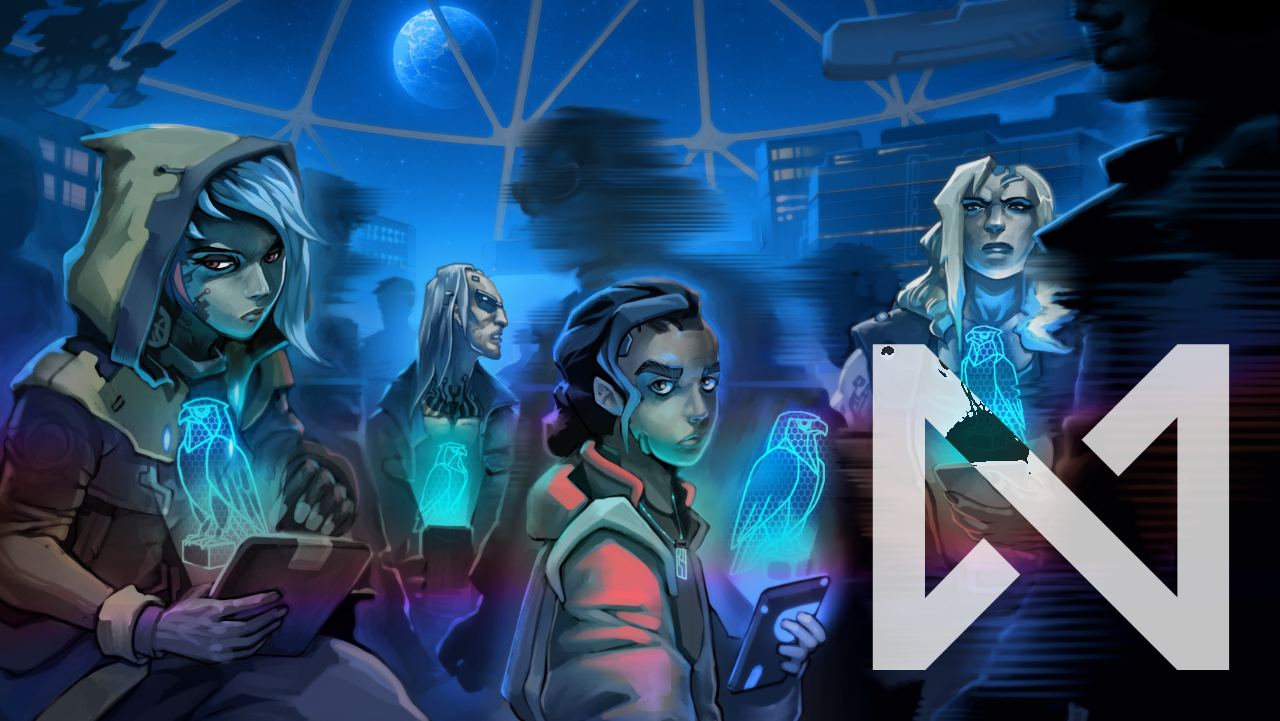
Just a year later, a group of fans under the name Null Signal Games (at that time they were called Project NISEI, in honor of an iconic card from the game) decided it was in their hands to rescue Netrunner and edited a new expansion of the game, along with a revised core set. They created their own illustrations and card format and polished up the wording a bit, but other than that, the rules remained the same because the idea was to continue the game that everyone loved. And the best part (and probably what saved them from corporate claws): they published it in a free print-and-play format. That is, any player can print the cards without paying a dime, and proxies are legal in all tournament formats (yes, they also revived the competitive scene, manage a ban list, and organize a world championship). In other words, they hacked the game and set it free to the community.
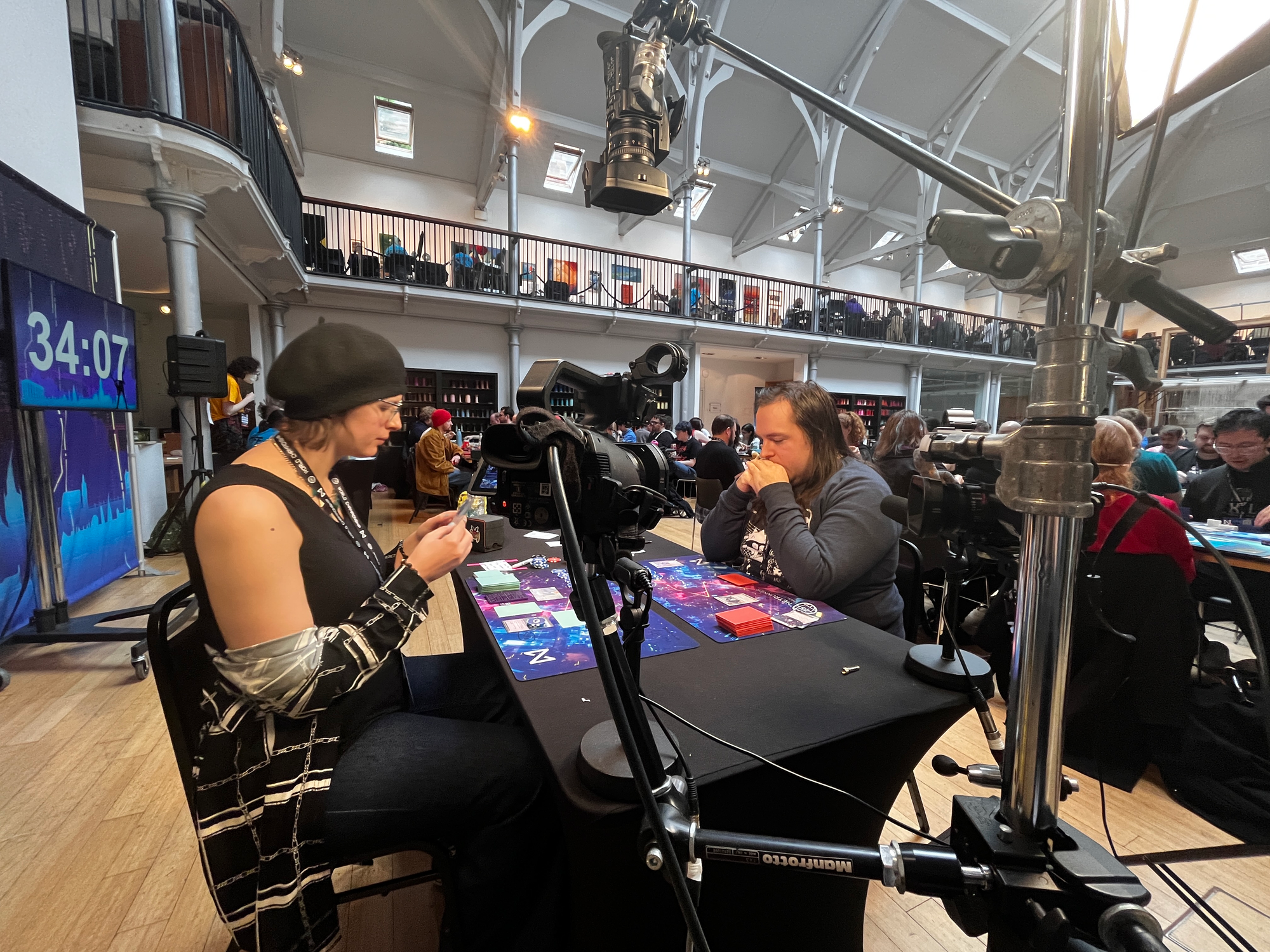
Null Signal Games has released 8 expansions. They just put one out a month ago. All of them remain free. And for many Netrunner players, several are much better designed than those from Fantasy Flight. How did these beautiful anarchists not get hit with a legal kamehameha? It’s another great mystery of this story, and again, theories abound. Some speak of a "gentleman’s agreement": Null Signal promises to remain a non-profit, and in return, they’re allowed to operate quietly, keeping alive a product that perhaps its "owners" may wish to reclaim one day. Others say that, in truth, none of the three companies still have a solid legal argument, due to Fantasy Flight’s abandonment of the IP and the expiration of WotC’s patent, which shouldn’t be problematic anyway since game mechanics can’t really be patented. What’s certain is that the folks at Null Signal have been acting with the mix of caution and confidence of any good runner: they changed the art, the card format, the wording, and steered the lore to new horizons, while asserting in all forums that Netrunner will continue to exist until the day they die. And in the last part of this article, I’ll help you understand why.
Start Playing
To try Netrunner, all you need to do is print and cut out the cards from the System Gateway, the starter set from Null Signal Games. It comes with two decks to learn and extra cards to add later. When you’re comfortable, you can move on to Elevation, another of their products that expands System Gateway, together forming the core set of Netrunner. Alternatively, you can learn online at this rustic but reliable web app, which is now developing a roguelike solo mode. The AI works, but don’t expect a huge challenge. It’s great for understanding the rules.
If you want to find players, there are online games at jinteki.net. The UX is rough, and there’s no ELO matchmaking, but it works. Of course, the best part is playing in person, and for that, there’s a Telegram group for playing in Buenos Aires.
See you in the Network. Watch out for the ICE, down with the corps, and up with the runners.