Digital Watches: Retro Is Back –and Collectible

14 de ene. de 2026 — Juanma La Volpe
For those of us who grew up in the ’80s or ’90s, wearing a watch was normal. “Grown-ups” wore analog watches with hands —pieces that didn’t just tell the time but also signaled status and style. For kids (or the rebellious), there were digital watches: more practical for everyday life, with features like a backlight, a stopwatch, or even a calculator.
When I got my first cell phone, the first thing I ditched was my watch. My thinking was simple: if the time is on my screen, why do I need it on my wrist too? From that point on, I started seeing the watch as a waste of money, since its main purpose had been absorbed by another device that, in fact, did much more. But everything comes full circle, and time puts us in different places.
In 2025, I started wearing a watch again, and —purely for aesthetic reasons— I decided to see what was happening in the digital world. Why, after almost 25 years, did I choose to go back? Let’s take it step by step —I’ll explain along the way.
Retro Works
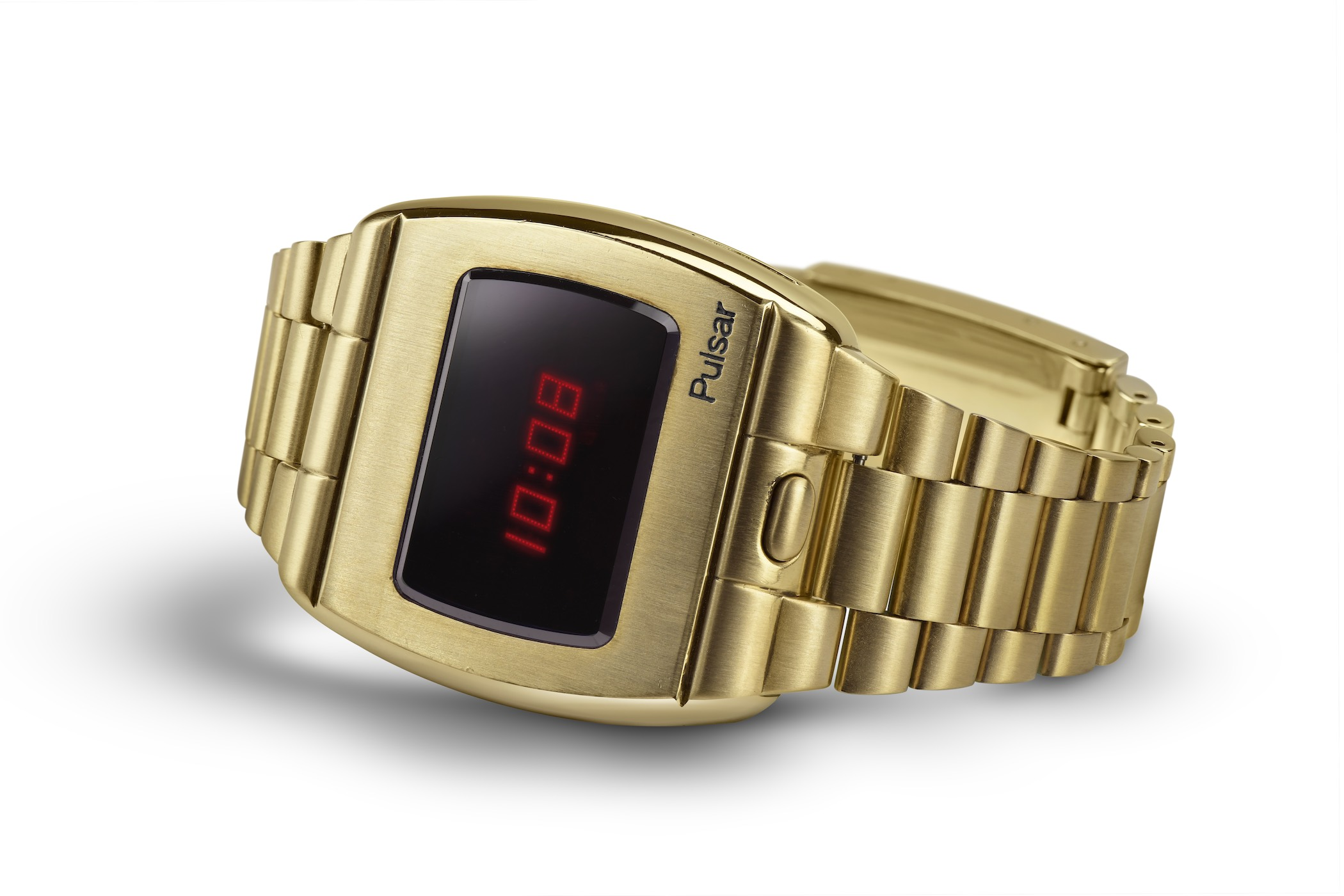
In recent years, I kept running into watches at fairs and realized there was a niche of people starting to collect them. As a naturally curious person, I followed the thread and began discovering models I genuinely liked —especially digital ones. Today, three brands form the backbone of this kind of watchmaking: Casio, Seiko, and Timex. But the story really kicks off with Hamilton’s Pulsar P1 in 1972, the first watch to use an LED display and quartz technology.
Not long after, Seiko and Casio refined the concept, replacing LED displays with LCD screens and improving the “magic” of quartz: a tiny crystal vibrates when powered by the battery, and the watch’s chip translates that vibration into seconds. But let’s be honest —while quartz precision is incredible from an engineering standpoint, what really hooks people is the design and the features, often delightfully over-the-top for everyday use.
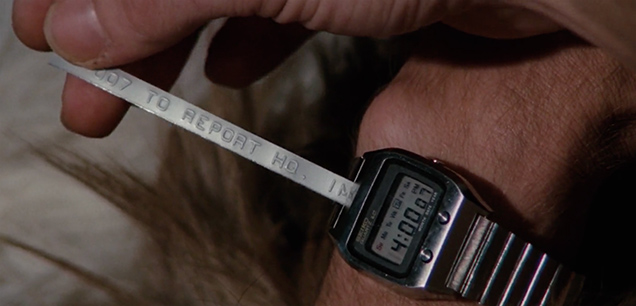
Seiko even placed its 0674 LC in a James Bond film, The Spy Who Loved Me (1977) —Bond, for whom watches were always part of the gadget lineup. Seiko’s win wasn’t just that Roger Moore wore it; it was that the brand displaced Rolex, one of the most prestigious names in the industry.
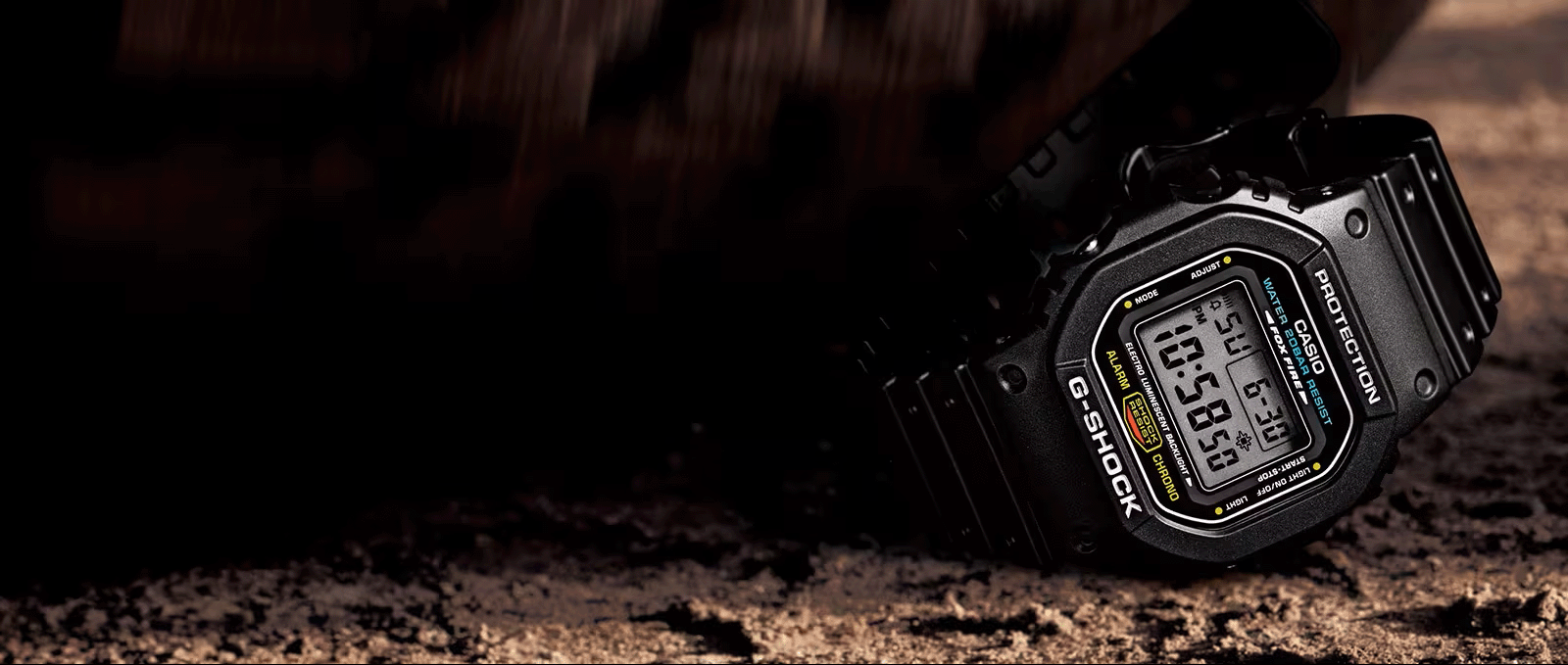
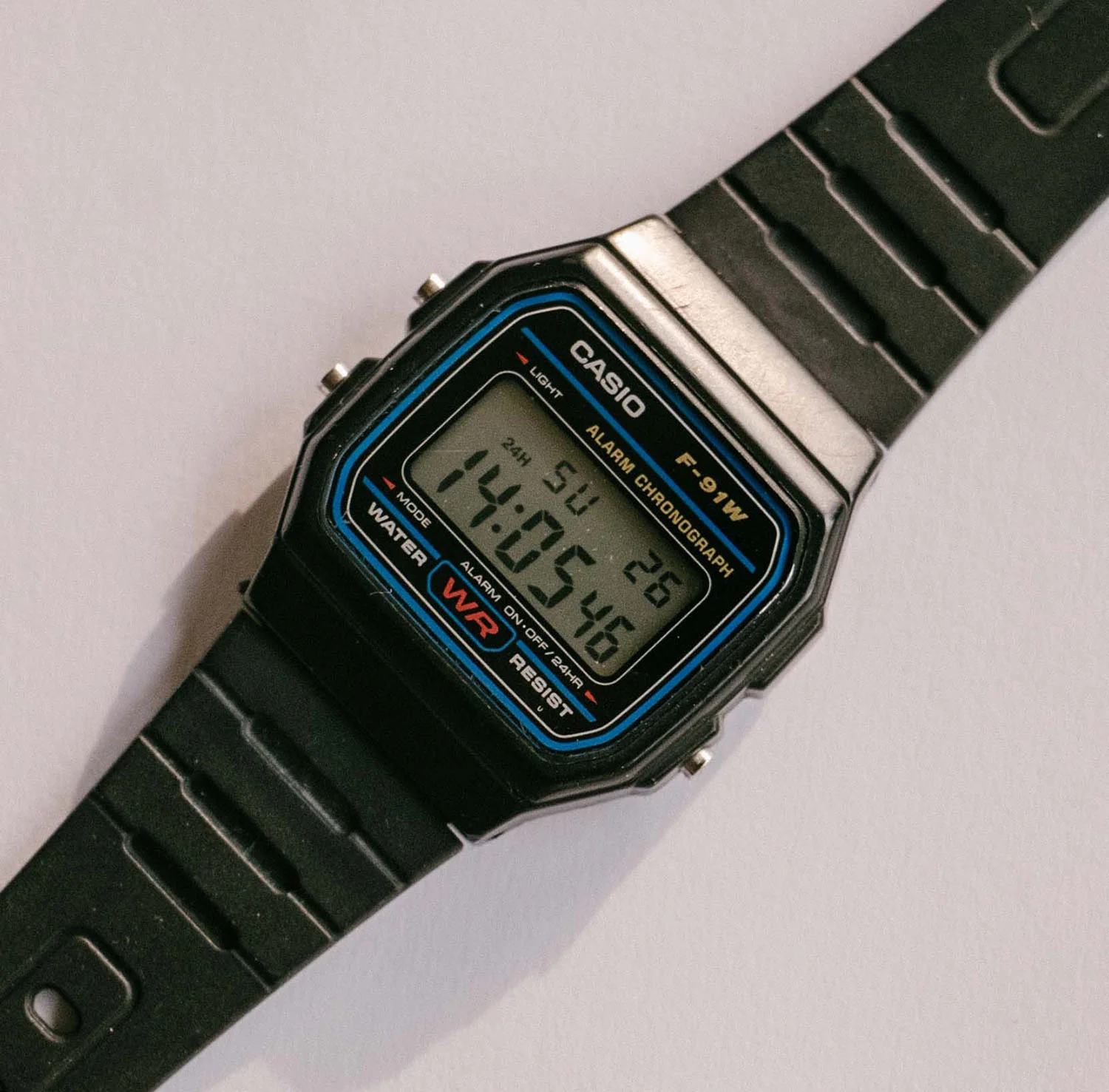
Casio, meanwhile, developed two ’80s models that people still wear today. On one hand, the iconic and immortal F-91W that we all had: cheap, nearly indestructible, and somehow on wrists all over the world. On the other, Casio’s big move: the G-Shock, the company’s ultimate take on the digital watch. The G-Shock came with the famous “Triple 10” concept: a 10-year battery, 10-bar water resistance, and 10-meter drop resistance.
From there, Casio and Seiko went wild experimenting with everything: calculator watches, mini-games, ultra-rugged builds, brighter lights, printers, even TVs. The design language caught that energy too, giving us some of the most futuristic watches the ’80s and ’90s could imagine.
And it’s worth pausing on design for a second. Back then, the future had many competing images, but one aspirational blend dominated: cyberpunk meets corporate futurism. The result was a wave of models that look like they came straight out of Blade Runner or Alien.
Why Go Back to an Older Technology?
In 2026, Apple-led smartwatches are already part of everyday life. These devices don’t just give us the time; they include everything a classic digital watch can do, plus a long list of health features (step counts, sleep tracking) and social integrations, since they can sync email and apps to deliver notifications.
This is where I hit the brakes. Every time I checked the time on my phone, I’d run into things I didn’t want to see: messages I wasn’t in the mood to answer, work requests, overdue bills. When I check the time on my watch, I only see the time. It might sound like denial, but we live in front of screens that bombard us with stimuli all day. Being able to rest from that—even a little—helps.
And then there’s the fashion and design side. Digital watches look fantastic. They evoke a future that never arrived and probably never will: a vision of today imagined decades ago. If you’re into sci-fi or anime, you’ll give me that—they look incredibly cool. Indulging that fantasy a little never hurts.
Collectibles
And speaking of fantasy: collecting. In a world where nostalgia turns almost anything into a collectible, it was only a matter of time before watches became part of the hunt again. In the digital-watch world, Casio and Seiko are the kings.
On the Casio side, the most popular model is the F-91W: the cheapest option, but also a platform with countless variations. If you want something rarer, there’s the A100WEG-9EF —or one of my favorites, the AE-1200, a “tribute” to the Seiko G757 seen in Octopussy, another Bond film.
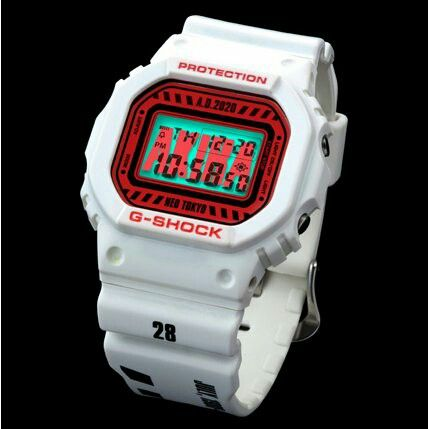
If you want to go full hardcore Casio, you enter the huge, beautiful universe of G-Shock: not only bold designs, but also impressive collaborations with franchises of all kinds, including Akira, Evangelion, One Piece, Pac-Man, or Gorillaz, among many others.
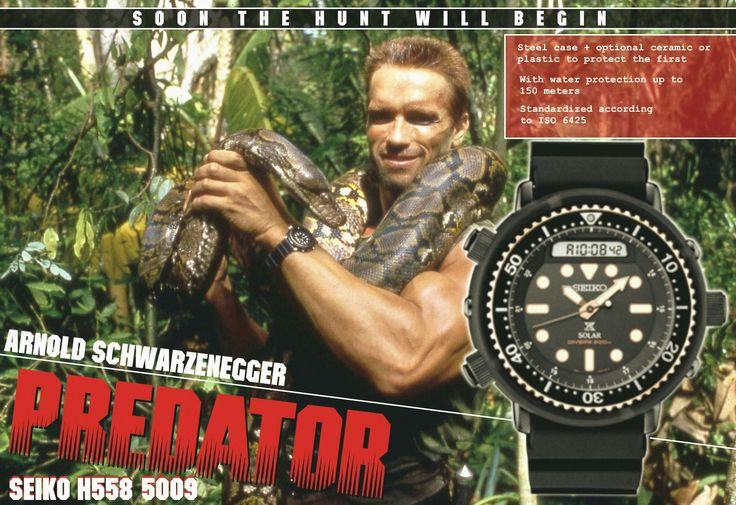
Seiko has great models too —especially pieces tied to films that shaped the aesthetic. The H558, nicknamed the “Arnie”, was worn by Arnold Schwarzenegger in Predator and Commando. It’s since been updated into a newer model, the SNJ025, which remains one of the brand’s most popular.
And since we’re talking movies: Seiko hired a car designer to create the watches worn by Bishop and Ripley in Aliens (1986), and also the M516 model used in Ghostbusters. The Japanese brand has also collaborated with anime and pop culture properties such as JoJo’s Bizarre Adventure, Golgo 13, and Studio Ghibli.
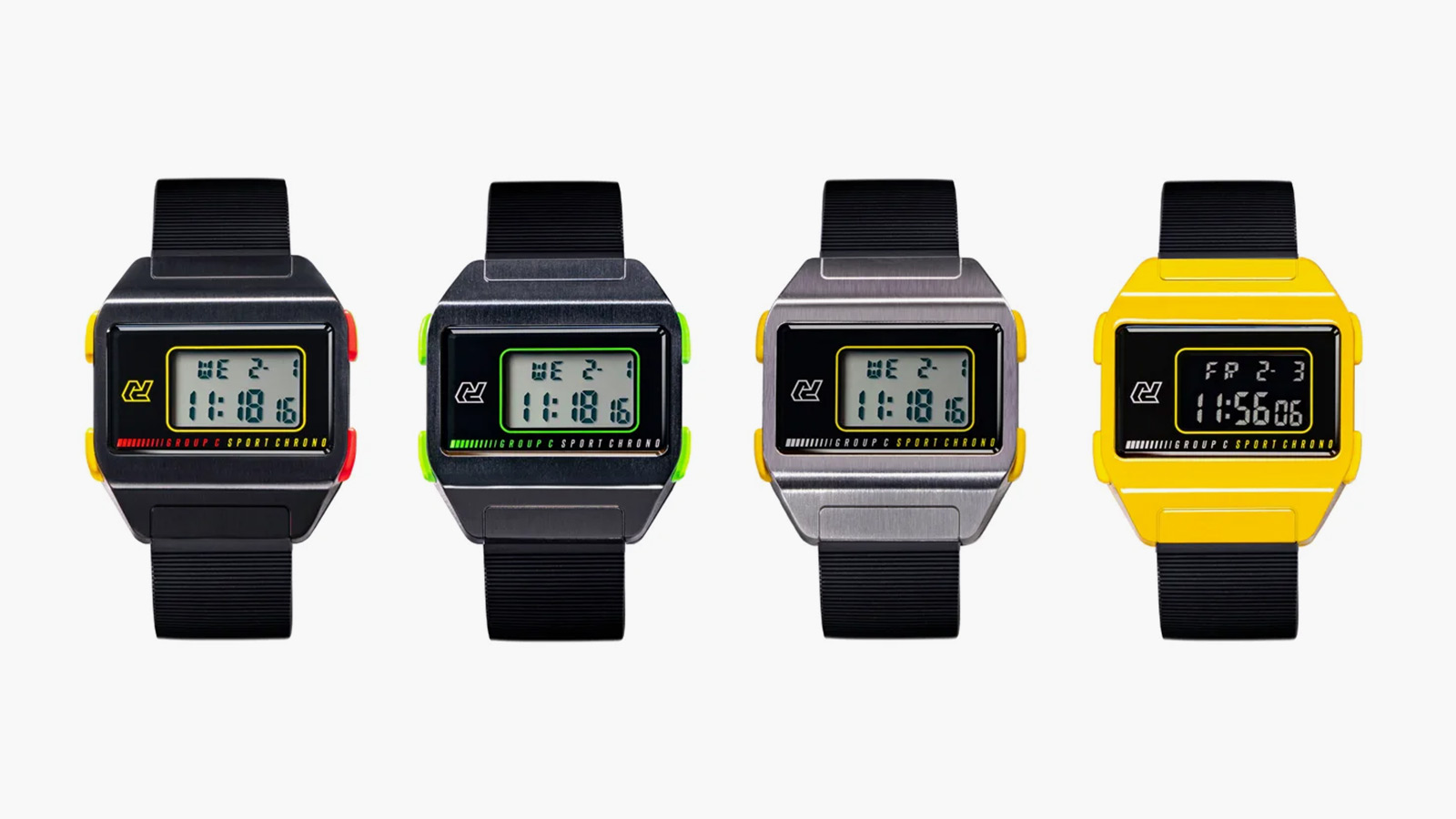
Outside the big three, there’s the Timex T80 —often seen as a more “premium” take on the classic F-91W— and the Timex Expedition line, built for greater durability and toughness. And, of course, if you want to spend serious money, there are niche brands with incredible designs, like the Autodromo Group C, which starts at around $500.
It’s also worth remembering the thousands of licensed digital watches released over the past 40 years —pieces based on Star Wars, Snoopy, Batman, and more. These aren’t usually made by major brands and often feel closer to toys, but they’ve become collectible in recent years. And who doesn’t remember those ’90s Jurassic Park watches?
Another angle in the digital-watch world is modding: a hobby with countless YouTube tutorials, focused on physical and functional changes, mostly to cheap or vintage watches. Some mods are simple —swapping straps— while others go deeper, like changing LCD colors or even replacing the chip to transform a G-Shock into another model while keeping the essentials intact. It’s one more layer of fun for collectors.
This is just a quick snapshot of the scene. Hopefully it sparked your curiosity —and maybe made you want to dig through your drawers to see if you have an old digital watch worth rescuing and wearing again. Let’s live a little bit of the future we once wanted.