Telefonica suffers the biggest cyberattack in its history. No user has access to the system. News breaks of hard drives exploding through the air. The crackers demand a ransom and insist that payment be made in bitcoins. Nogoya and Helguera, the heart of Villa del Parque. A retiree looks at the window of a new shop and walks in; the sign reads: buying and selling bitcoins. Emiliano plays World of Warcraft. He needs the sacred dragon sword to defeat the level 900 dungeon boss. He buys it on the internet and pays in bitcoins.
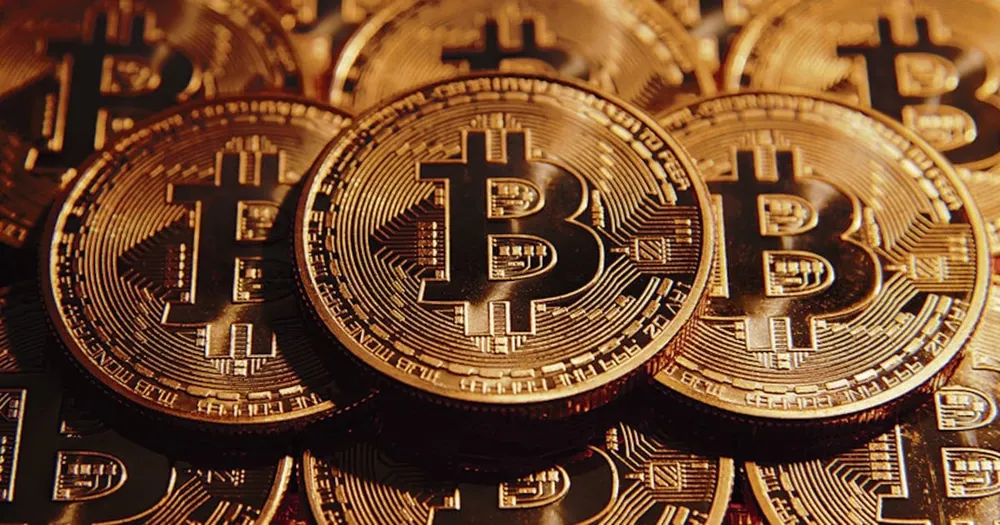
The word bitcoin refers to two things: the digital currency and the network that supports it. It is impossible to understand anything without this basic concept. Bitcoin is a currency but it is also a network. A P2P exchange network --you may remember it from films like eMule and Napster--, meaning direct exchange between users. Except instead of sharing movies, here a digital currency is exchanged: bitcoin. It is not an ordinary currency, since it has no backing in the physical world. But just as we give value to money because we use it, bitcoin works the same way: it acquires its value through use, through exchange.
Bitcoin operates on certain basic principles. The goal of a digital currency is to prevent by all means anyone from using it without authorization. The system works by capturing every transaction in a file that all users have a copy of but that no one can modify. All copies are updated simultaneously, so all users can see the entire transaction history. This prevents the same bitcoin from being spent twice.
When a new transaction is added, a new block is generated that includes the original file, referenced by a generated number that is very difficult to copy. This guarantees the authenticity of the current block. Bitcoin is ultimately a ledger where every transaction is recorded and shared with all users. This chain of blocks grouping transactions is called "blockchain" (literally block-chain) and is the pillar of Bitcoin.
The design of this network also stipulates adding a fixed amount of bitcoins per year until reaching the limit of 21 million. That is the available cap. A bitcoin can be divided eight times down to the fraction of 0.00000001, which is named Satoshi after its creator, who remains anonymous.
Bitcoins are created through a process called "mining," which basically consists of putting your computer to work processing bitcoin transactions. Through an algorithm, each computer validates transactions and receives in return a very small percentage of bitcoins.
Bitcoin is inspired by the crypto-anarchist manifesto written by Timothy C. May in 1992, in which he proposed the creation of a user network that eliminates all forms of state or private intermediation. May argued that the impact of creating such a network, safeguarded through encryption systems, would weaken the power of financial entities just as the printing press weakened the power of medieval guilds.
Bitcoin is a currency and therefore a payment system. While some use it as an investment, Bitcoin is not actually one. What Bitcoin needs is circulation and a greater number of payments made through the system. Bitcoin's success does not lie in its rising price but in the number of users who join the network.
It is not the first time these promises travel through fiber optic networks and the minds of those who use them to communicate. From the invention of Napster to the establishment of streaming services as mainstream, 15 years passed and a lot of water under the bridge. Netflix would not exist without the assault of entertainment giants against the networks that shared their content for free. The destruction of Megaupload and prison for the creators of The Pirate Bay were the nails in the coffin of the dream of a free internet.
Blockchain advocates argue that this problem is solved by design, by the very architecture of the system. No one can, in theory, take over the entire network. But just as with the early stages of the internet, this will be debated in the heat of capital and corporate interests.
Critics claim it is a bubble, while its advocates warn it is the next technological revolution to come. The truth is that Bitcoin's emergence triggered the appearance of other cryptocurrencies that are already competing for market share.
We will have to see what happens first. But beyond Bitcoin's future, the emergence of blockchain technology opens the possibility of transforming any social practice in which the identity and authenticity of a document must be safeguarded. Its potential applications are the hottest topic within the programming community, whose members claim that in less than five years it will transform enormous areas of everyday life such as passports, mass online storage, and even electoral processes.
This article was originally published in Pagina/12 on August 9, 2017.
Las notas de 421 no tienen paywall
Y a cada colaborador se le paga por su trabajo. Las dos cosas dependen de los suscriptores.