Fashwave: The Soundtrack of the New Right
How did fascism make its way from the streets into your algorithms? A journey into “fashwave”: the musical genre of the new right that uses neon lights, synthesizers, and memes to normalize hate speech. Why this digital aesthetic is as fascinating as it is dangerous.
Reading disclaimers:
1 – This article is a brief outreach contribution aimed at those who have never been lost in the fabulous wormhole of the far-right.
2 – To read this article, you should play this in the background (below). It's a YouTube playlist of songs by Xurious, a British music producer.
The retreat to the online street
In early 2010, much of the fascist, misogynistic, supremacist, and xenophobic activism in the United States vanished from the public scene.
The streets had inexplicably swallowed them up: the rallies, the marches with men dressed in black, the Confederate flags (from that North American region that went to civil war to defend its slaveholding rights), the banners with swastikas, and the pointed white hoods stopped appearing abruptly.
Those who saw this sudden silence as a strange symptom soon began to ask the obvious: where are they? Where did they go?
The answer to this mystery took only a few years to clarify.
They hadn’t disappeared, they hadn’t been dismantled. They hadn’t been swept away by the public debate driven by progressive governments. They hadn’t lost ground to an apparent "democratization" of widespread civil opinion. They were still alive, but in another form, in a form of existence that is much more ethereal, yet just as consistent.
They had only changed the area of their influence. They had massively shifted to the digital world: the internet and its forums.
They hadn’t disappeared, they hadn’t been dismantled. They hadn’t been swept away by the public debate driven by progressive governments. (...) They had only changed the area of their influence. They had massively shifted to the digital world: the internet and its forums.
Even when dispersed, the new right found there a way not only to connect previously disconnected terminals but also to incorporate new militants into their causes. The way they did this was sophisticated and, to a greater or lesser extent, planned. This video from the YouTube channel Innuendo Studios narrates it with crystal clarity:
Following Innuendo Studios' argument, and as happens in any process of co-optation and ideological dissemination, not all “political” activity occurs in the “abstract” realm of ideas. In this framework (and outside of debates, lengthy threads of explanation, and manifestos), the new right understood that they needed to work on creating other forms of “materialities.”
These new “materialities” involved a massive production effort of “content” that adhered to the principles of become normal; that is to say: the tactical principle (which we will discuss later) of encrypting fascist, racist, misogynistic, and supremacist discourses in an aesthetically fun, attractive wrapper that ensured wide dissemination.
The memes, for example, their graphic materiality, were indispensable.
Juan Ruocco, the big guy behind the mob that brings us all together here, has already discussed this at length in his latest 2023 book: Is Democracy in Danger? Memes and Marginal Internet Discourses that Appropriated Public Debate.
However, little has been said about the music and audiovisual material that the new right began to produce.
This brief article aims to fill those gaps.
 Lucas Boltrino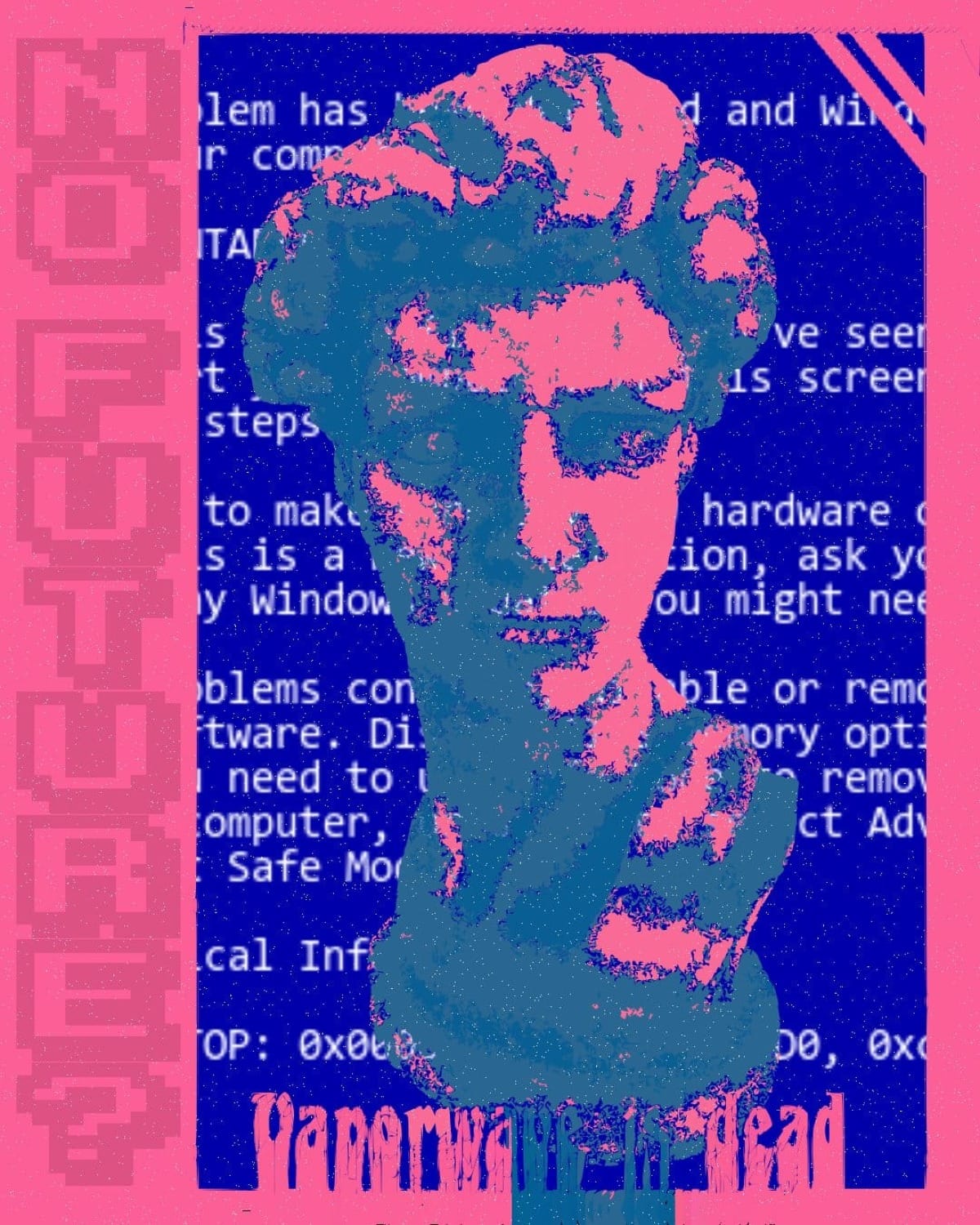
Fashwave
Just as in metal there exists the concept of the “Big Four” (which includes Metallica, Megadeth, Slayer, and Anthrax), in the world of electronic music from the new right, there’s something akin to a “Big Three.” This “Big Three” consists of Xurious, C Y B E R N ∆ Z I, and Stormcloak.
For obvious reasons of length, I will focus on the one that piques my curiosity the most, which is, coincidentally, Xurious.
Xurious is a British composer who pioneers fashwave, a genre of electronic music derived from other popular genres in the eighties and nineties such as synthwave, vaporwave, and darkwave. Xurious's music brings back arpeggiated synthesizers, repetitive and insistent bass lines, and the famous “gated reverb” on the snare drum.
The titles of the songs sometimes leave little room for interpretation. Hail Victory by Xurious, Right Wing Death Squads, by OBNX, and Galactic Lebenstraum (literally, the “living space” that Germany deemed necessary for its imperial expansion), by C Y B E R N ∆ Z I.
This musical background was, of course, complemented by particularly unique samples: speeches from Donald Trump, Adolf Hitler, Francisco Franco, Joseph Goebbels, Richard Spencer, Oswald Mosley (from the British Union of Fascists), among others.
This, of course, is not the only thing. The music itself is enough to capture the attention of the unsuspecting. But the new right, at least these new musical and visual producers, felt that “something more” needed to be done. Thus, fashwave worked tirelessly to evolve from being just a musical genre to becoming an aesthetic in its own right, incorporating videos and very particular forms of editing.
Fashwave worked tirelessly to evolve from being just a musical genre to becoming an aesthetic in its own right, incorporating videos and very particular forms of editing.
What is it made of? How is it recognized?
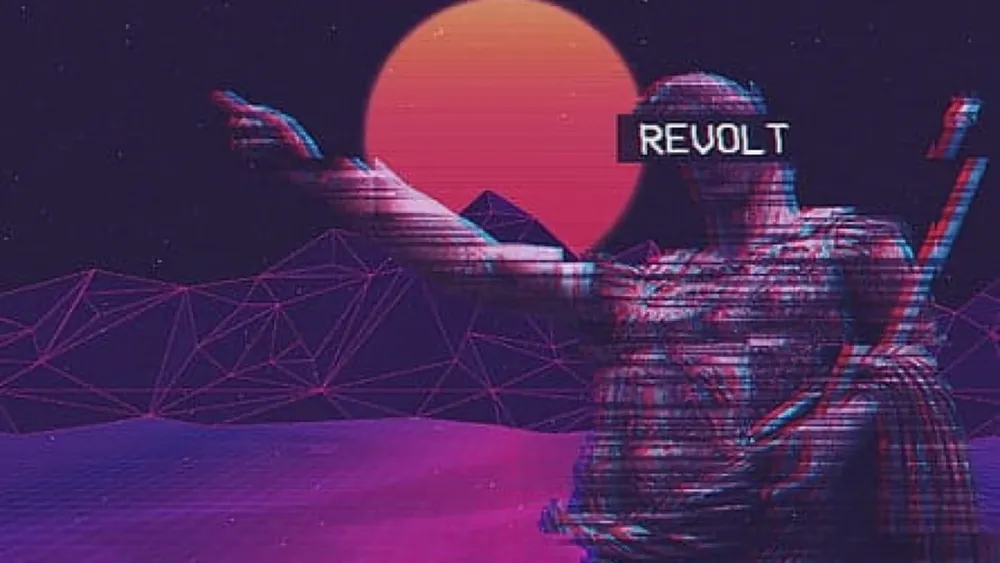
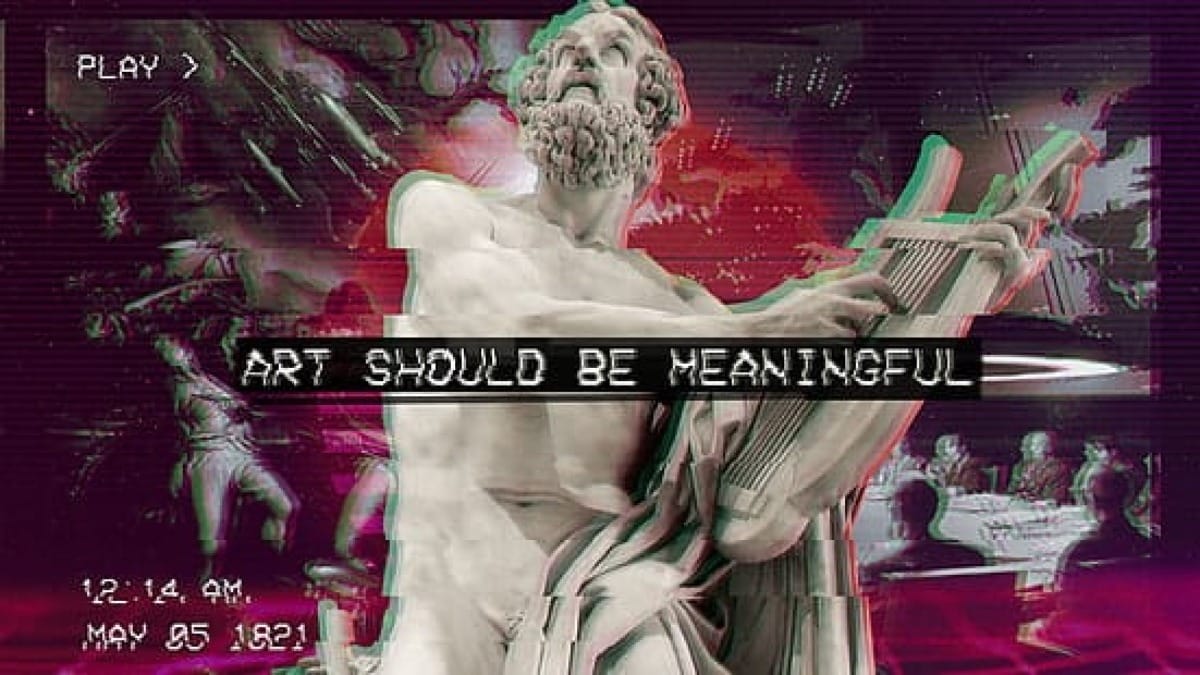
In all fashwave videos, it’s common to see a fast-paced montage of overlapping images that change every half second or second. The backdrop is usually a color spectrum that ranges from blue to pink, from violet to magenta; it captures the spirit of the eighties typical of home VHS tapes and their particular types of distortions and glitches.
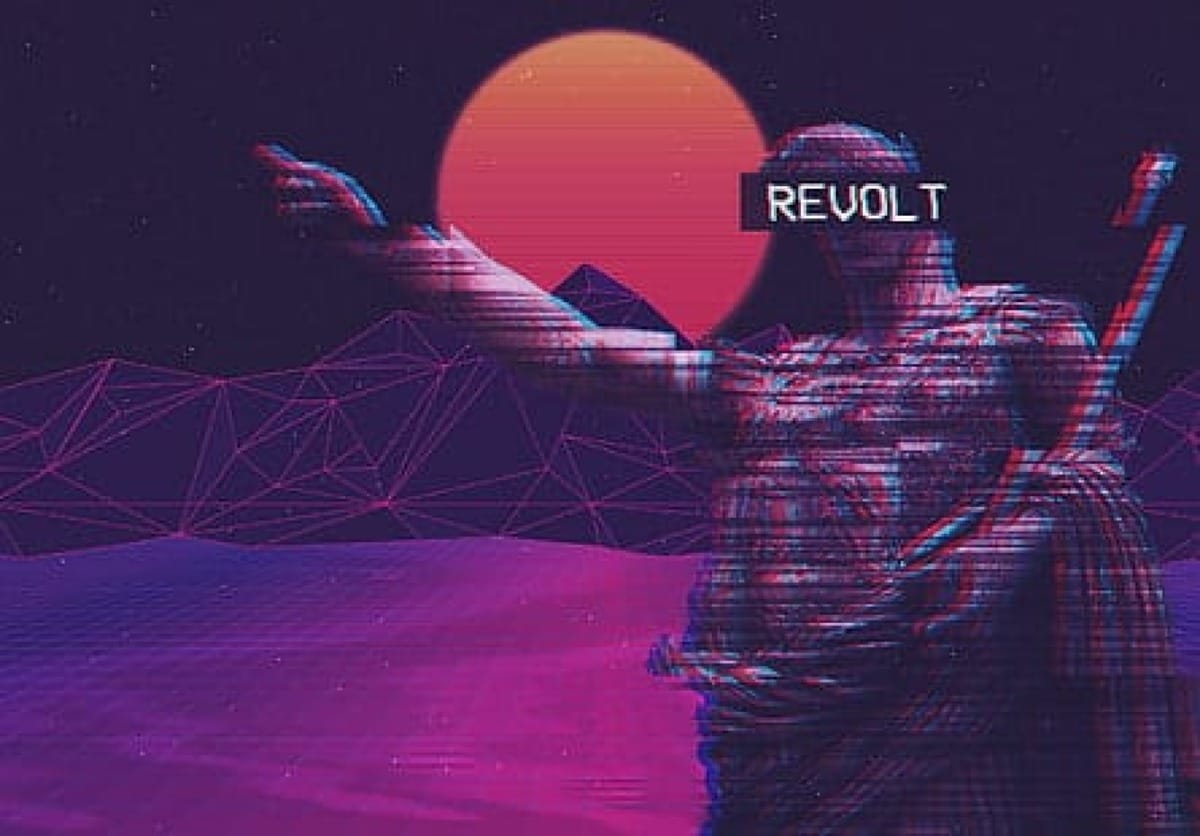
This schizophrenic editing leverages highly particular visual motifs synchronized to the beat of the kick drum. The imagery is strikingly singular: busts, statues and Greek columns, Roman eagles, monumental or brutalist architecture, militarized legions (whether classic, modern, or contemporary), military marches and parades with their respective banners, runes from Nordic cultures.
Some of the most commonly used runes are ᛟ (Odal), which represents heritage, blood, territory; ᛏ (Tiwaz), which points to the phallus, war, honor; ᛉ (Algiz), as a kind of protective sigil; ᛋ (Sig), historically associated with the SS.
When things become a bit more explicit, another kind of imagery appears: historical figures of fascism, symbols with heavy ideological weight, and brief, impactful captions.
Among contemporary fascist symbols, aside from the well-known swastika, you can find: the Totenkopf flag, which represents a skull with crossed bones on a black background, and was the insignia of the third Panzerdivision; the Wolfsangel, a hunting and trapping device for wolves consisting of two metal pieces connected by a chain; the Black Sun, appropriated by Heinrich Himmler after purchasing a castle in Westphalia, a region believed to be where the Irminsul, a mythological pillar connecting heaven and earth, was lost.
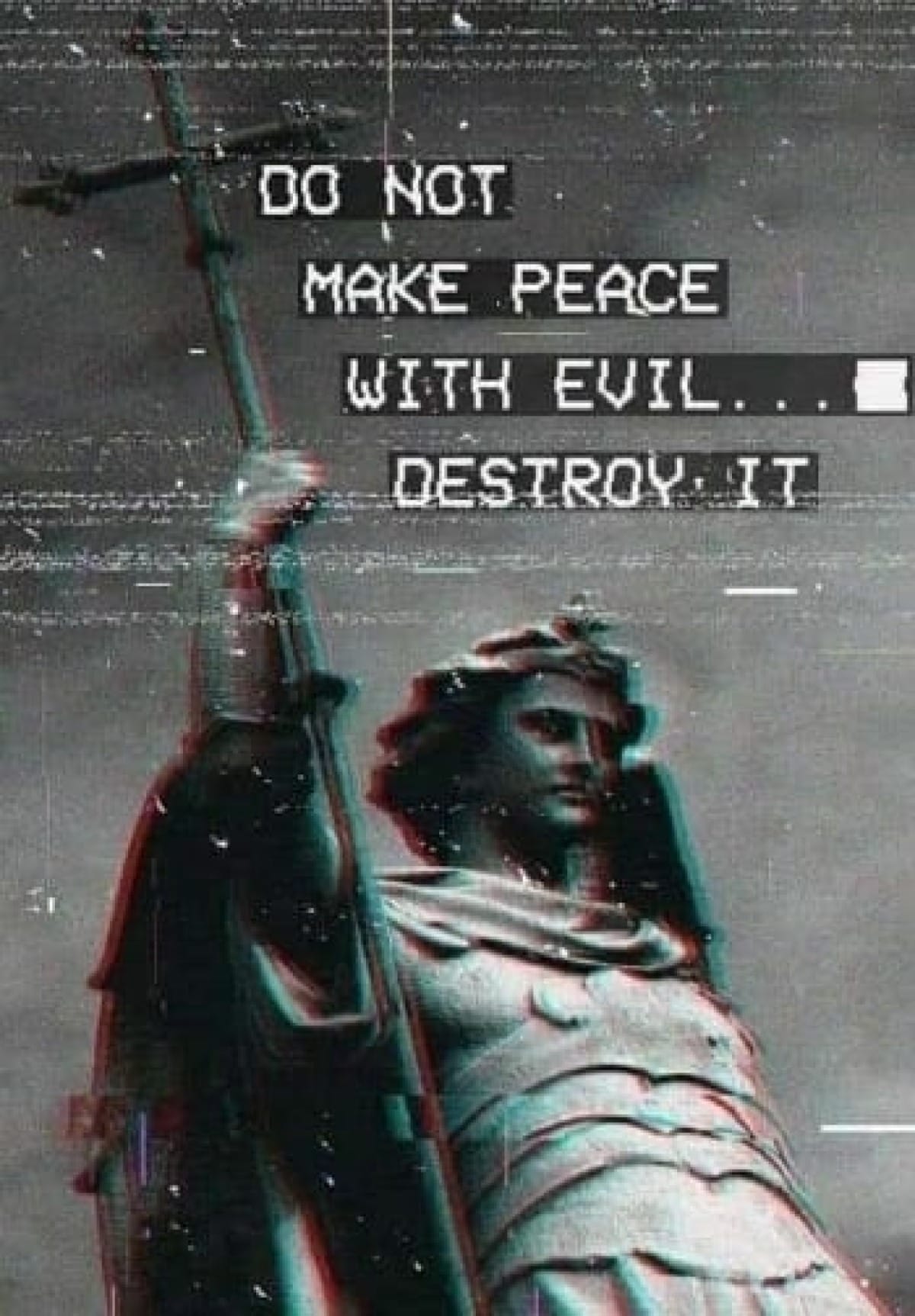
Within the numerological system and captions, the most recurring examples are 8, 88, 14, and their junction: 1488.
The 8 represents the letter “h,” the eighth letter of the alphabet. Thus, 88 means “HH,” that is, Heil Hitler.
The 14 represents the “fourteen words.” It is a white supremacist identity slogan based on a text by David Lane. The slogan, which contains 14 words, goes like this: “We must secure the existence of our people and a future for white children.” These fourteen words are often followed by another slogan that also has fourteen words, also by David Lane. It goes like this: “Because the beauty of the White Aryan women must not perish from the Earth.”
The fashwave's "reinvention of the past" also included other appropriations from contemporary popular culture. Just like the case of Pepe the Frog (which you can explore in detail in the documentary Feels Good Man), the new right successfully appropriated musical pieces that one wouldn’t spontaneously link to fascism: from Little Dark Age by MGMT to Desperado by Rihanna (in its slowed and reverb version where the BPM is lowered with a DAW and a huge layer of reverb is added) or the apocryphal use of Sonne by Rammstein, among others.
“Become normal”
All these very particular tactics responded to a single objective: rebranding. In other words, to “give a facelift” to the ideological, political, expansionist, and militaristic background of fascism through deeply attractive and hypnotic aesthetic wrappers. The new right understood better than anyone that the quickest and most effective way to bring their political agenda back to the center of public discussion was by “presenting themselves as normal.”
The proto flooding on platforms of the entire fascist aesthetic functioned (due to its compelling capacity, its innovative montage, its ambiguous and subtle imagery) as a gateway for interested users to join political and philosophical debates that revisited themes of racial supremacy, misogyny, eugenics, democracy, and liberal states.
Thus, the materials disseminated across multiple platforms, especially those that facilitated the circulation of audiovisual material (like Twitter or TikTok, and in videos like this, this, or this) worked to “herd” men interested in the fascist aesthetic and with genuine discomforts, pains, and grievances that no political space (neither in the U.S., Brazil, Argentina, nor many other countries) had the capacity to contain.
The new right understood better than anyone that the quickest and most effective way to bring their political agenda back to the center of public discussion was by “presenting themselves as normal.”
What’s curious about these tactics, and here lies the truly novel aspect of the new right, is that they were deeply grassrooted (meaning “born from the grass,” or from the ground up, outside of any organic following of a clear and vertical political party direction). Hence their eclectic character, their compositional “freedom,” their core schizoid and unbridled. Now, the fact that later Trump, leaders of VOX, the AfD, and other far-right parties took the bull by the horns and capitalized on this relatively disorganized movement is a completely different matter that doesn’t belong to this brief informative article.
Fascinating fascism
The interesting thing, in any case, is to recognize one thing: fascism is fascinating.
Susan Sontag says it in her famous essay titled, appropriately, Fascinating Fascism.
Sontag argues, among other things that I can’t fully capture here, that fascism is always fascinating whenever it aestheticizes masculine and militaristic domination, and whenever it erotically suggests the vertical exercise of power. Fascism is fascinating not because it is, as the "well-meaning" misinterprets, an "unleashed evil" that is chaotic, irrational, and illogical, but because it justifies the exercise of violence and cruelty through certain very specific passions (the nostalgia for a lost past, the melancholy for a previous idyllic world in history). It is also fascinating because it finds a way to transfer and transform the repressed vital and sexual energies of bourgeois society into a "theater" where we can freely enact a "performance" of master and slave, a grand “dress rehearsal for enslavement,” liberating ourselves from certain taboos that intrude on our most intimate desires.
Zipi González
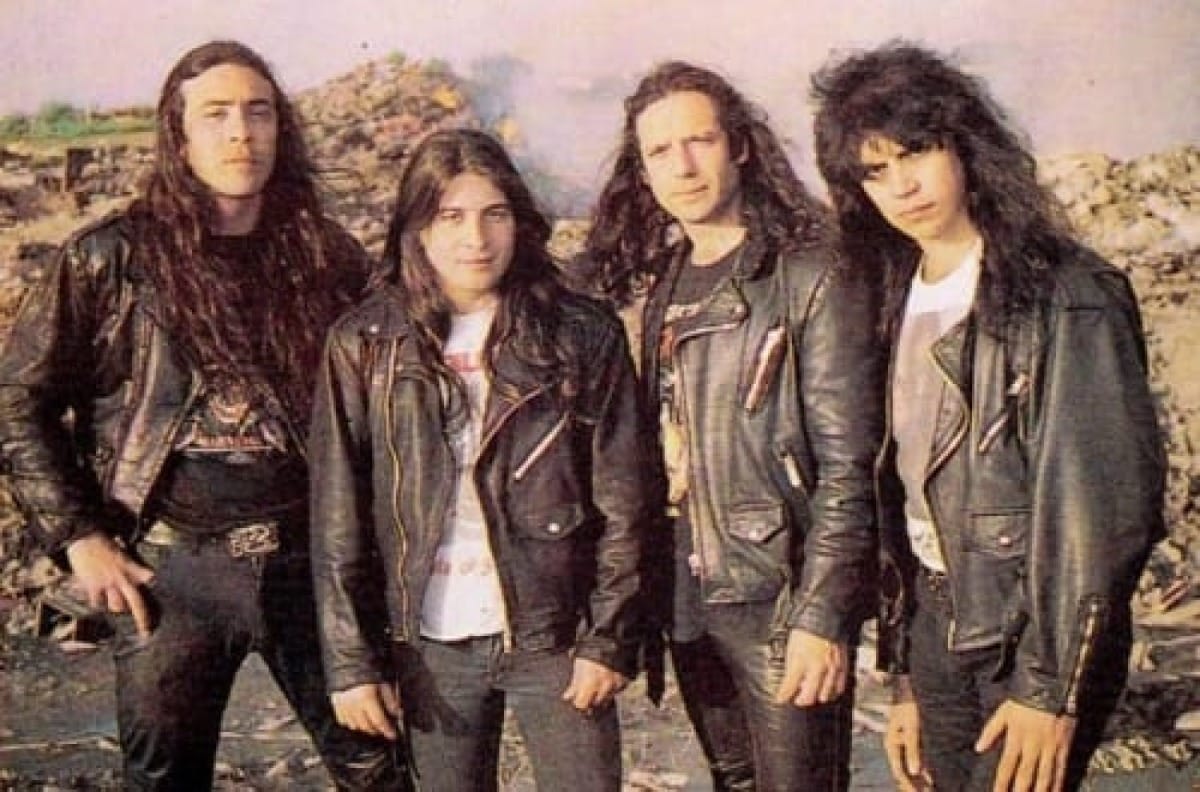
Metal has a lot to say about the fanatical appreciation of fascist aesthetics. For those who don’t consume this genre too much (that is, for all those who have no love for life), there are two cases that might be illustrative.
One of them is Robert Halford, the frontman of one of the pioneering bands in the genre, Judas Priest. Robert, an openly gay man, “imported” leather and studs from fascist aesthetics and BDSM culture into the metal aesthetic for the first time.
That aesthetic endures to this day, and it’s somewhat amusing that Ricardo Iorio, the quintessential model of the Argentine man, has worn black leather jackets, likely without knowing it, due to the whim of a British gay.
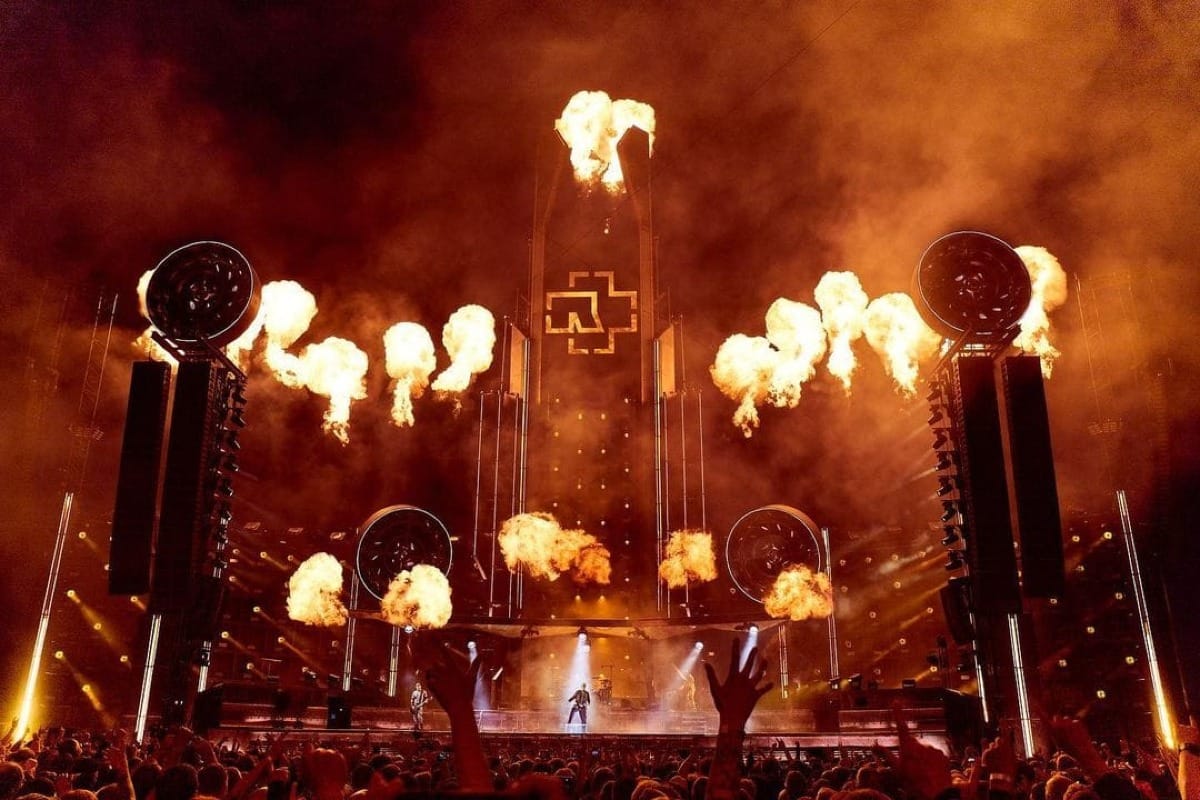
Rammstein is another unique case, and much more border. They follow almost to the letter each of the slogans that Sontag recognizes in fascism: an eroticism that borders on the perverse; idealization of the male body, almost naked, definitely muscular, and clad in black leather; a display reminiscent of monumental and brutalist architectures; a charismatic leader (Till Lindemann) who recreates the German speech of the early 20th century with the guttural pronunciation of the 'r' (markedly alveolar), among other things.
Rammstein is deeply provocative. They make use of iconography closely related to the semantic universe of fascism, utilizing videos like Stripped, by Leni Riefenstahl (the German filmmaker who inspired Sontag to write the essay we discussed, who directed incredible films like Triumph of the Will and Olympia), while, in response to accusations of being neo-fascists from certain journalists, they say, "Sie wollen mein Herz am rechten Fleck / Doch seh ich dann nach unten weg / Da schlägt es links" (They want my heart in the right place / But if I look down / It beats to the left).
In her text, Sontag warns that the revitalization of fascist aesthetics performs a dangerous operation: it separates the 'form' of an artistic expression (sometimes in the name of a concept as complex as 'beauty') from the 'content' that that form conceals, which often, and in the case of fascism, is a content of annihilation, supremacism, and misogyny. This 'separation' that is not intellectualized would then create a 'blinders' that would prevent us from seeing and, therefore, from taking intellectual, civic, and political responsibility for the 'fascist longing' that resides in each of us.
What kind of aesthetics could all those political spaces that today, in one way or another, are lagging far behind contemporary fascist and totalitarian projects produce, invent, or revitalize?
The case of Rammstein, for example, presents us with a particularly unique dilemma. Is the revitalization of the fascist aesthetic practiced by the German band a provocation that drives a post-fascist way of understanding art? Is it perhaps the right way to 'decouple' a fascist stylistic form from its annihilating instrumentalization? Or is it, as Sontag may have intended, nothing more than irresponsible reactivation?
What do we do with all this?
It remains to ask whether to discuss a political and philosophical program (issues that may seem, at first glance, bothersome or cumbersome to an average citizen), it is necessary first and foremost to 'catch the eye'; that is, to 'enchant' through a set of audiovisual assets that can awaken a particular interest in political participation among a demoralized audience.
The next question, and perhaps more concerning than the first (did you see the videos of the Peronist candidates? Did you see the videos of ¡Ya Basta!?), is what kind of aesthetics could all those political spaces that today, in one way or another, are lagging far behind contemporary fascist and totalitarian projects produce, invent, or revitalize.
Las notas de 421 no tienen paywall
Y a cada colaborador se le paga por su trabajo. Las dos cosas dependen de los suscriptores.