Interviews with the Computer Underground – Episode II: Yuko, Creator of Fanzineclub.com
Meet Yuko, the punk hacktivist who traded pharmacy for free software. From making fanzines to setting up community servers, she tells us how to overcome our fear of technology and build a self-managed Internet free from the control of GAFAM.
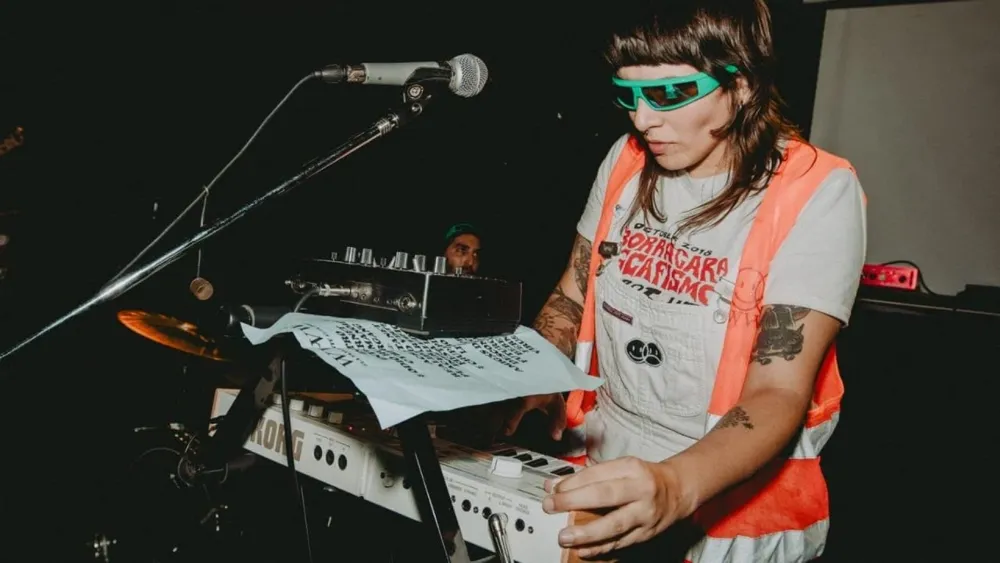
Continuing with the series of interviews with hackers and hacktivists who fight for and propose alternatives to our digital habits, today we speak with Yuko, a punk rocker, creator of fanzineclub.com, and feminist hacktivist.
For the second installment of this series, we continue in the vein of chatting with people who work towards thinking about alternatives and community and self-managed infrastructures that allow us to inhabit spaces on the Internet away from the extractive and policing practices of the computing oligarchs. Today we talk with Yuko, a woman from Corrientes living in Buenos Aires, a punk rocker on the WWW, an IT worker in infrastructure, a fanzine creator, a free software activist, an electronic artist, and a workshop facilitator.
We’ve crossed paths at events, concerts, and in cyberspace, but we’ve never had the chance to chat in depth. How did you get into free software? Plus, you have the unique aspect of being punk. For me, free software and punk go hand in hand, there’s no other way. Being punk and Linux-savvy are almost synonymous.
Absolutely! It was precisely through the punk scene that I discovered free software. When I give talks, I always mention this, which relates to making the following visible: there’s an idea that to get close to technology, you have to be connected to “systems,” having had a computer as a kid... Not to mention the gender issue. But in my case, it wasn’t like that. I come from the punk and fanzine scene. I’ve been making fanzines since I was 17, when I moved from Corrientes to study pharmacy. One day, at some concert, I suppose, I came across the fanzine “Hack Your Mind,” which talks about free software and Linux. When I read this, I thought: what the hell? This came to me later in life, in my twenties. When I read the fanzine and saw the word “free.” It discussed the freedoms of software, sharing, understanding how the code is composed, being able to access it. Plus, that fanzine was obviously very punk and anarchist, talking about taking ownership of technologies; that completely changed my perspective because it made me understand that I could own my devices and do whatever I wanted with them.
There’s an idea that to get close to technology, you have to be connected to “systems,” having had a computer as a kid... Not to mention the gender issue. But in my case, it wasn’t like that. I come from the punk and fanzine scene.
As a woman, and culturally from where I come from, I always thought that due to gender, I couldn’t repair or specialize in something technical. That fanzine was like a trigger for me to realize that I could do those things that men did. I could take things apart, try to fix them, modify them. I didn’t study anything about electronics; I learned all that by getting hands-on. Over time, all that made me understand how all proprietary software companies work, how they extract information, why they do it, and for what purpose. And that’s when I realized: I don’t want that for my life. I’m not saying it’s right or wrong. I just don’t want it, and I work so that people can also at least see it, understand it, and make a decision, like I did, like several of us did. The same goes for veganism; it’s a choice. If I can choose not to eat meat products, I won’t. The essence of punk is being countercultural, and free software is just that.
Exactly, it’s about not doing things by default, being able to choose. And as time goes by, I reaffirm this more... Well, that’s something inherent to punk. Now, one thing is entering Linux 15 or 20 years ago, when there were different debates, and another is now. When do you start to see that, besides whether to share the code or not, the constant tracking, surveillance, and algorithms become a big question mark?
When I fully dove into that fanzine, it obviously sparked a lot of searches, and I started arriving at other discussions: anonymity, hacktivism, and things like that. At the same time, I started working in IT, directly in infrastructure. I left pharmacy because I realized, while working, that I liked fixing computers more than the career, haha! I was already deep into the IT field, and I came across Marta Peirano and her TED talks, where she popularizes the acronym GAFAM (Google, Amazon, Facebook, Apple, and Microsoft) to label these five companies that dominate the Internet. The dissemination she did (also being a woman) on these topics, explaining how Google and all these corporations resell our information, making us work for free on their platforms, was very illustrative for me. In one of her books, I’m talking about 2016, and now it’s been 10 years, she shows several studies and evidence of how phones are created not only by teams of engineers but by psychologists working to create a device that ultimately generates addiction. All that information blew my mind, and I got to know even more people who were asking the same questions, who were disseminating and at the same time denouncing. For a long time, this manipulation, this data extraction, and the algorithmic logic have made us feel a lot of anxiety, that we feel depressed or addicted. And we have to understand that it’s not our fault because these devices are designed precisely to generate that; it’s part of the current social context. Marta was, in that sense, a tremendous trigger: you can be a woman and be in technology, you can be a woman and disseminate, and that’s what I’ve been doing: organizing workshops on how to set up your infrastructure at home.
Before moving on to the workshops and the fanzineclub.com project, how do you see the hacktivism scene in the region? Sometimes it feels like we’re like Don Quixote shouting into the wind against windmills.
In 2019, Marta Peirano came to Argentina. At that time, I was very angry, very tangled up. I had left all social media, I was tired of the manipulation and data extraction, but in a state of anger. Plus, I felt very alone; I didn’t have anyone to talk to about these things, I didn’t know if there were people thinking along these lines. Marta came on a tour of South America and also visited a space for hacktivists. It was a more private talk; we were a small group of 20 people. There, I had the chance to chat with her personally and share my idea: I wanted to go to Germany, where this whole movement was completely thriving. And what she told me was categorical: “There are plenty of people like you in Germany; why do you want to go? Stay here; we need more people like you.” That completely opened my perspective. And she was right. Sometimes we complain a lot because it seems like nothing happens here. Who is here doing awareness work, dissemination? It’s the responsibility of those of us who have that knowledge to spread it. So I started digging, and yes, there were indeed people doing things: the folks from R-Lab, PiP, Cybercirujas, AlterMundi, and even FLISOL. Or, for example, Acción Colmena from La Plata, which is a project by a girl who repairs printers and prints the weirdest formats of fanzines. That’s just to name a couple of projects.
There’s also a reality. With the labor exploitation that exists, people working fourteen hours, without leisure time (which is crucial), without the possibility of having time to be bored (which I also think is key), the phone ends up being a sort of escape.
Sometimes one feels hopeless because they see people glued to their screens for ten hours scrolling. Often, it seems like the accusatory discourse prevails, which doesn’t help at all but is usually the first reaction. But ideally, it’s about speaking from explanation, raising awareness. If later people decide to stay in that, that’s their issue. There’s also a reality. With the labor exploitation that exists, people working fourteen hours, without leisure time (which is crucial), without the possibility of having time to be bored (which I also think is key), the phone ends up being a sort of escape. How am I going to tell someone who has worked fourteen hours, traveled exhausted on a train, got home, and now has to take care of their family, “hey, you need to use your phone less”? That’s why I think we need to go back to the basics: how the Internet and these devices work.
Well, that leads me to another question I always ask myself: do you think there could be another model of phone, another type of ecosystem, that doesn’t have all these problems?
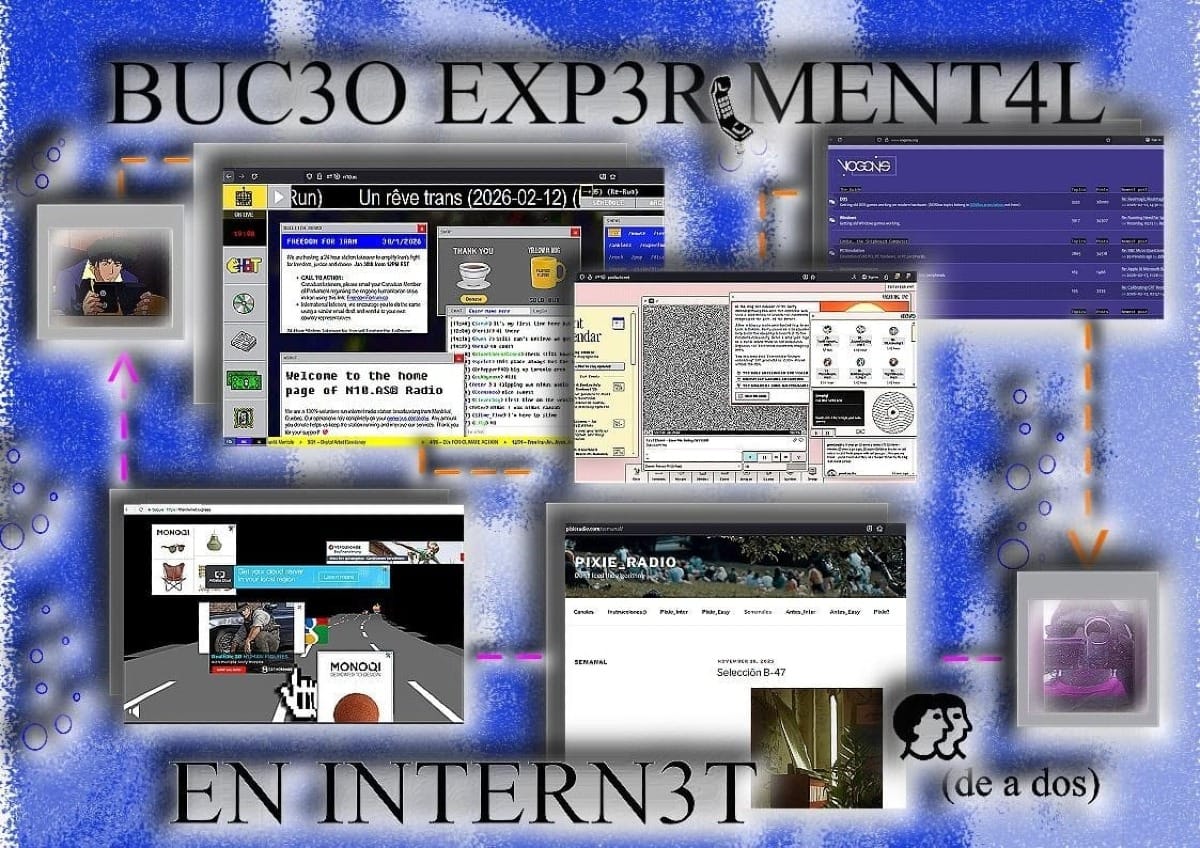
I believe so, but we should ask another question. Is it necessary for mobile devices to have so many functions? Why can’t we use them for what they are: to call and respond to messages? The mobile device has stopped being a tool for communication and has become an entertainment device, as if you had a “television” with endless videos. As I say, it’s not so much the user’s fault but a design idea. That’s why one of the projects I recently started is the Experimental Internet Diving, precisely to “recover” a bit of that idea of the network. What I do is quite simple. With someone interested, we coordinate to have a video call, share a link, some concern, whatever, and we start digging into that. But digging in the sense of searching for data on the Web, jumping from link to link, chatting, debating, discussing. This obviously forces you to use the computer to navigate, which is a practice many have already lost, but it’s the foundation of the Internet. Not out of nostalgia, but because it’s a practice we’ve always done, and it doesn’t depend on any of those mega extractive corporations.
To wrap up, tell me a bit about how these last two projects of yours came about: fanzineclub.com and the community infrastructure workshops.
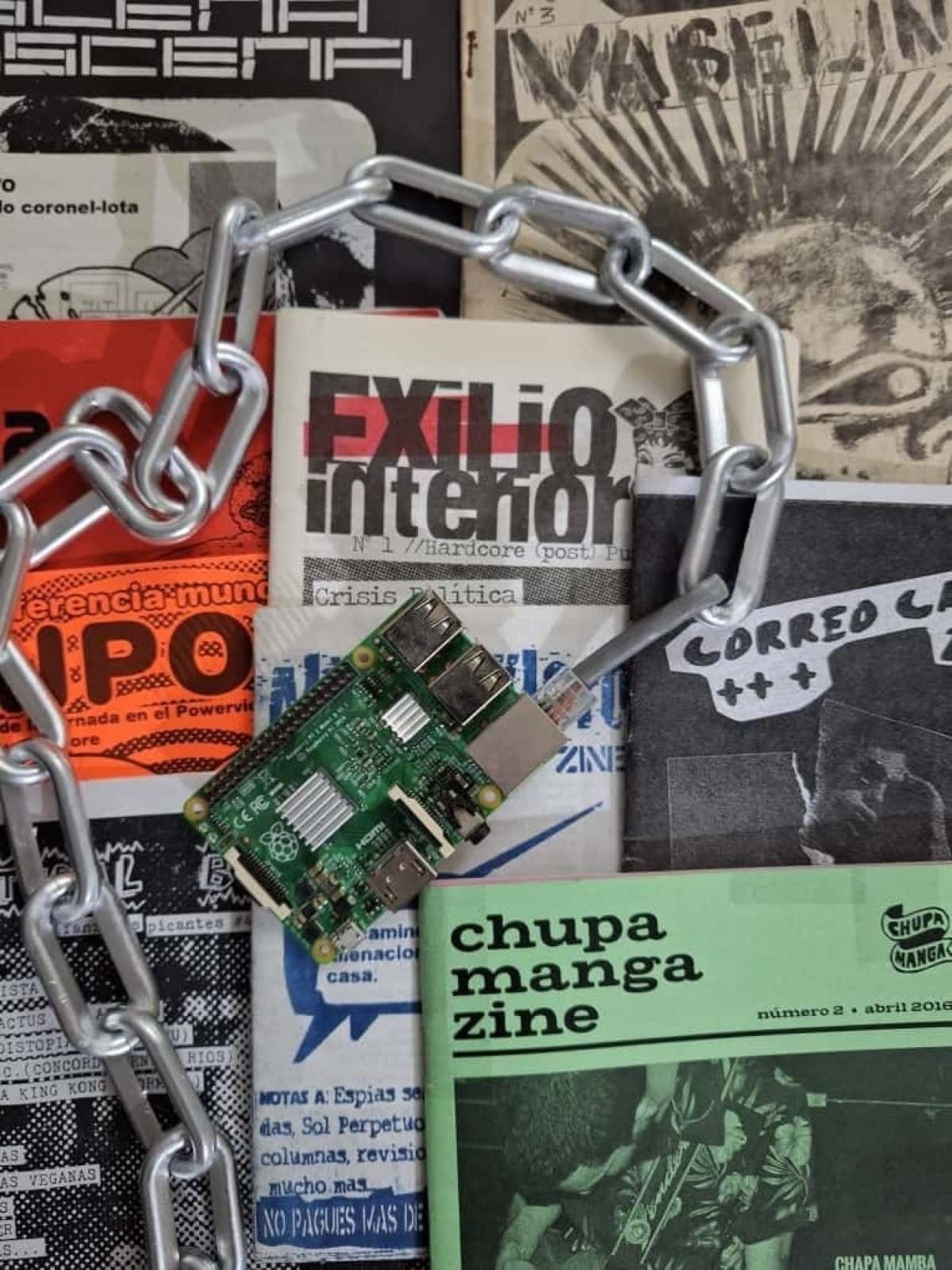
As I said, I’ve been making physical fanzines forever; I always scan them and then upload them somewhere. But every time you upload something, you have to create an account or go through some more or less cumbersome process. So, I wondered: how can we, as fanzine editors, have some kind of online archive where we can upload our productions and have them accessible for free and openly? The first thing I thought of when tackling that idea is that, when uploading a file, you shouldn’t need to register. I hate having to register for services on the Internet. By not requiring registration, the direct consequence of that is that there’s no data collection or anything like that. And, of course, it should be a community and self-managed infrastructure. It doesn’t depend on third-party services, it’s not hosted in the U.S. We manage it collectively. If someone wants to upload a fanzine, they fill out the form, which is not a Google Form, and we review it manually; because, of course, someone might want to upload malicious or inappropriate content. Today we have over 500 fanzines from all over the world, and for me, that’s super important because we’re creating an archive. Sometimes it seems like only books and papers are study materials, but fanzines, which have a tradition of over 50 years, are also research material, and that’s why it’s super important to have projects like this.
For me, it’s key to enable conversation, to ask people what emails they use, what messaging they use, how they relate to technology, but fundamentally to help them shed their fear. We need to desacralize technology. There’s still a belief that understanding this is only for someone who “gets it.”
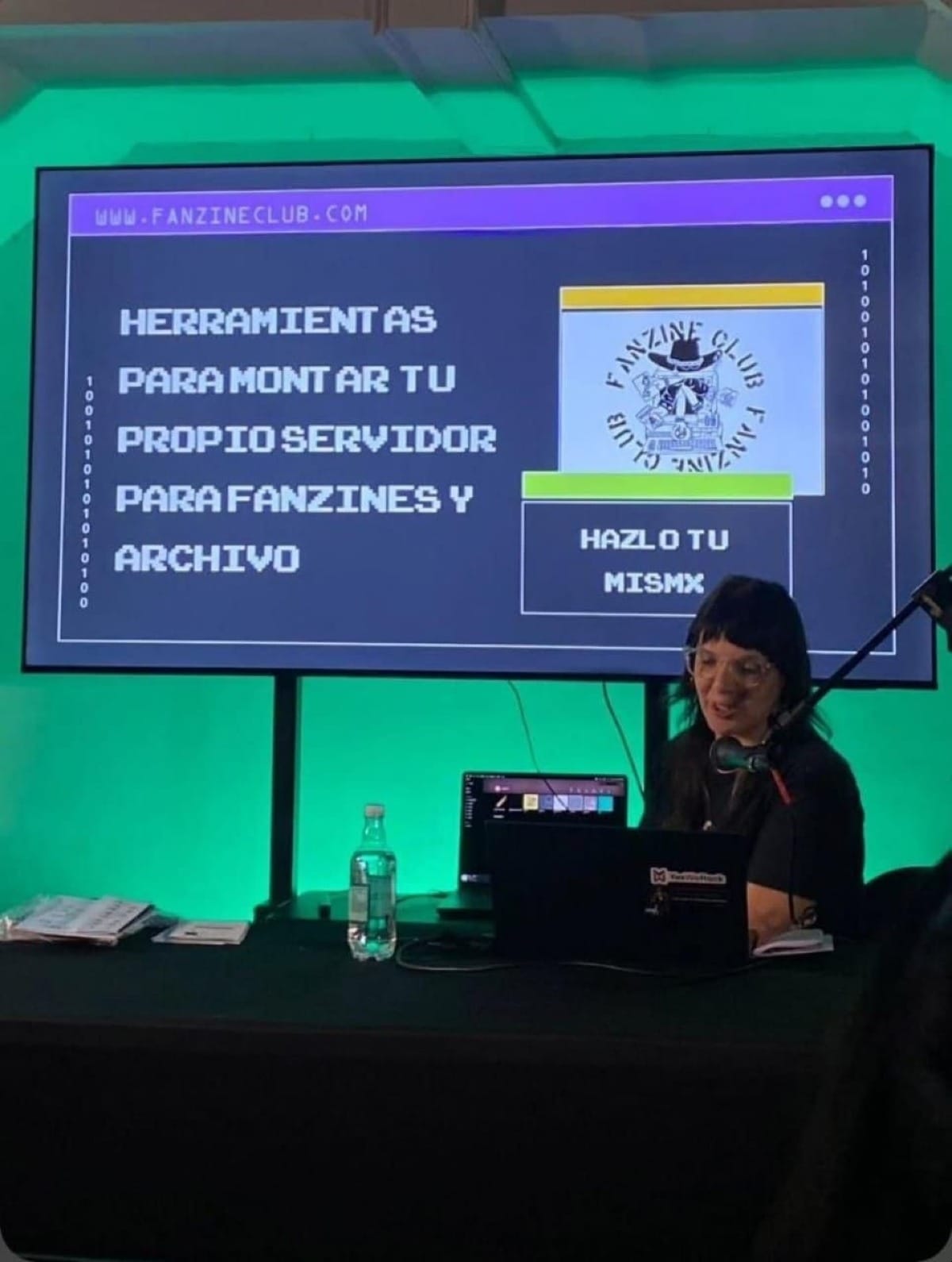
And then there’s the topic of the workshops, which is also closely related to this. Fanzineclub.com is just a raspberry pi with an external hard drive, nothing more than that. Yes, of course, it has a backup mechanism and all that, but that simplicity serves to demonstrate that setting up home, community, and self-managed infrastructure is not impossible. But specifically for the workshops and talks, I have a friend who organizes the Punk Book Fair, and she insisted that I had to participate in some way. I was working on an installation Habitar Internet - Collective Infrastructures, and so in addition to presenting that, I also gave a talk. The audience had nothing to do with technology, which is ideal because it’s not useful to always talk among ourselves, who are already in the know. That’s how I started, and now I’m doing other virtual ones, where over 200 people have already signed up. For me, it’s key to enable conversation, to ask people what emails they use, what messaging they use, how they relate to technology, but fundamentally to help them shed their fear. We need to desacralize technology. There’s still a belief that understanding this is only for someone who “gets it.” You tell someone to set up their server, and they say, “no, server, what’s that?” It’s a computer; it’s the same, but you manage it! Today, with any computer like a raspberry pi or whatever you have on hand, you can set up your server to create your file cloud, your music server, fanzines, whatever you want.
I believe that the idea of IT professionals as the only elite who can touch on these topics is an idea imposed precisely by the big companies. What I seek with the talks is for people to feel encouraged to try, to say, “oh, I can do this,” or simply to do nothing but have the information on how things work. After that, it’s a matter of choice. I believe this is a good path. In the future, I would like to have my own data center, but a data center to host artistic projects, outside of corporations, that is self-managed, community-based, collective... It will happen!
Las notas de 421 no tienen paywall
Y a cada colaborador se le paga por su trabajo. Las dos cosas dependen de los suscriptores.