From Miracle to Danger? In the 1990s, gene therapy promised to cure incurable diseases, but a tragedy derailed its future. Today, with multimillion-dollar treatments and the precision of CRISPR, science is seeking to revive that promise.
Clearly, growing up in the nineties left its mark on me in some way, because looking back at my previous notes on 421, I realized that I always start by talking about that decade. And, of course, this will be no exception. It must be the midlife crisis, which I just hit not long ago.
On September 13, 1999, Jesse Gelsinger, an 18-year-old American, began an experimental treatment for his illness, a deficiency of ornithine transcarbamylase (OTC), an enzyme in the liver with a union name that processes ammonia and affects one in every 40,000 newborns.
Ammonia is produced when digesting proteins and, since it’s toxic, the OTC enzyme processes it to transform it into urea, which is then eliminated in urine. Jesse didn’t have the devastating form of the disease that appears in newborns and usually kills within days. In his case, his OTC was malfunctioning, but it wasn’t completely absent; with a strict diet, medication—lots of medication—and certain care, he could lead a relatively normal life.
The experimental therapy Jesse underwent was the great promise of that time, set to revolutionize everything.
A few years earlier, at the dawn of the decade, Ashanti DeSilva, a four-year-old girl with severe immunodeficiency, accessed an experimental treatment. In her case, she was lacking an enzyme called ADA, which is crucial in the metabolism of lymphocytes, the immune system cells. With this deficiency, lymphocytes end up dying, and people with this disease are highly vulnerable to any illness; they are known as 'bubble children' and generally live only a few years.
The therapy they tried with Ashanti involved taking her cells, infecting them with a modified retrovirus that corrected the error, and reintroducing them back into her body, now corrected.
The idea behind the treatment tested on Ashanti was quite simple: take immune system cells and somehow insert the correct version of the ADA enzyme gene. This concept had been floating around for several decades, but now some interesting new players had emerged: retroviruses.
For millions of years, retroviruses have altered the DNA of the cells they infect; the virus of HIV, for example, changes the DNA of immune system cells by inserting its own genetic information.
If we could modify the virus's genome, something that was starting to become possible in the nineties, and instead of viral genes insert a correct version of the ADA gene, we would be almost there.
The therapy they tried with Ashanti involved taking her cells, infecting them with a modified retrovirus that corrected the error, and reintroducing them back into her body, now corrected. Although the therapy didn’t work 100%, the girl’s immunodeficiency improved, and Ashanti is alive today at 40 years old; perhaps everything for her also harkens back to the nineties, who knows?
Her case was the first approved clinical trial of gene therapy, and all signs pointed to it being the start of a revolution.
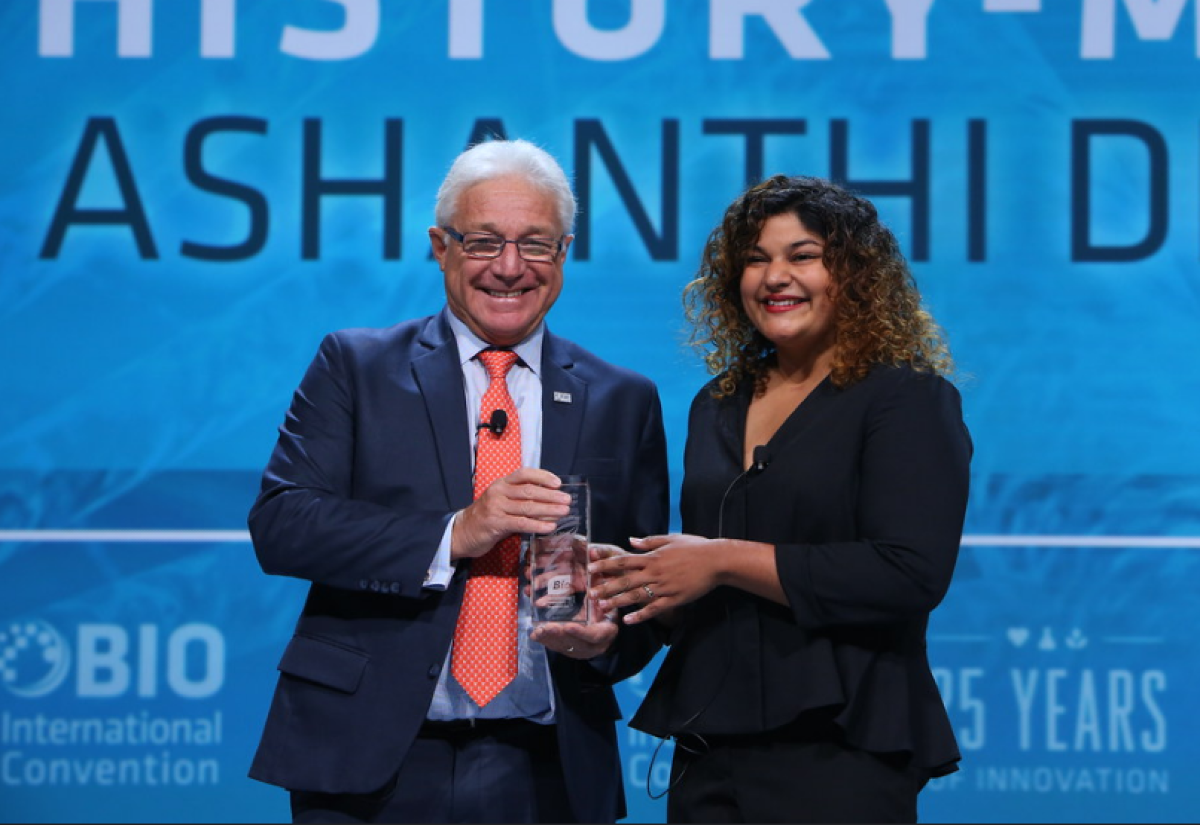
Ashanti DeSilva Today
It can fail
In 1998, Jesse Gelsinger learned from his doctor that the University of Pennsylvania was developing a Phase 1 study of a gene therapy for his illness.
In this case, the therapy involved injecting adenoviruses, one of the viruses that cause colds, into his liver, modified to carry the correct version of the OTC, the enzyme with a union name. The idea of the treatment was that the virus, upon entering the cell and unloading its genetic material, would correct the error in those cells that need that enzyme to break down ammonia.
In this case, they didn’t use retroviruses but rather viruses that do not integrate their genome into the infected cell's. This, they assumed, made them safer. The virus's DNA, in this case, remains in the cell like a tiny chromosome.
Jesse was the last of 18 volunteers. Phase 1 trials usually involve a small number of people and primarily assess the safety of the treatment. Apparently, Jesse had high ammonia levels in his blood at the time of the trial, but the doctors decided to proceed. Just hours after receiving the injection, problems began; Jesse exhibited neurological symptoms, and his organs started to fail. Four days after the injection, he died.
Just hours after receiving the injection, problems began; Jesse exhibited neurological symptoms, and his organs started to fail. Four days after the injection, he died.
Agents from the U.S. Food and Drug Administration (FDA) found some oddities. Among them, that the researchers had completed eligibility forms after Jesse's death, that some serious adverse effects in previous patients had not been reported in time, and that there were doubts about whether he should have received the treatment given his ammonia levels. It wasn’t entirely unexpected. In fact, they had observed exacerbated reactions in monkeys when using similar viruses to those tested on Jesse, but the researchers claimed that in those cases they used a much larger amount than would later be used in humans.
The University of Pennsylvania defended its actions, stating that many of those issues were administrative. They later compensated the family with an undisclosed amount. However, the case had already turned into a sort of nuclear accident for gene therapy. For decades, gene therapies were in decline.
Slowly coming back
In 2012, Europe approved Glybera, a treatment for a very rare disease, lipoprotein lipase deficiency, an enzyme crucial for processing triglycerides, a type of fat that circulates in the blood; when this enzyme fails, those fats accumulate and can lead to severe pancreatitis. It was the first gene therapy approved in the European Union. The idea was to use another modified virus, gentler than the adenovirus in the Jesse case, to deliver the correct copy of the gene. The problem was that only one person used it, the therapy cost over a million euros, and gene therapies had a bad reputation. It was withdrawn from the market in 2017.
In 2019, Zolgensma was approved, a therapy for spinal muscular atrophy, a devastating disease in which the neurons that control muscles die. Zolgensma was presented as a one-time treatment, with a price exceeding two million dollars, making it one of the most expensive medications in the world.
Hemgenix, for hemophilia B, appeared with a price tag of 3.5 million dollars. And Lenmeldy, for metachromatic leukodystrophy, a rare childhood disease, reached 4.25 million dollars.
Then came others. Hemgenix, for hemophilia B, appeared with a price tag of 3.5 million dollars. And Lenmeldy, for metachromatic leukodystrophy, a rare childhood disease that hit 4.25 million dollars per treatment, positioning it as the most expensive medication in the world and a nightmare for health insurance providers. The issue is that they are very specific, and creating the modified viruses tends to be extremely costly.
That's when CRISPR came onto the scene
CRISPR is a technology that allows for gene editing with impressive precision. It doesn't always require viruses: in some cases, like Casgevy, cells are taken from the patient, edited outside, and then reintroduced.
In 2023, the FDA approved Casgevy for sickle cell anemia, marking the first therapy approved in the United States that uses CRISPR/Cas9. It's not that simple; it requires prior chemotherapy and high-complexity centers. It remains expensive, around 2.2 million dollars, but there are hundreds of companies testing this technology.
Will it be another promise of a future that will never arrive? I don't know. Maybe the difference now is that it's better to promise less and look more closely. Perhaps that's why I'm nostalgic for the nineties: because we could still believe in a future without fine print. I think this article served as therapy for me.
✦ Suscribite
Las notas de 421 no tienen paywall
Y a cada colaborador se le paga por su trabajo. Las dos cosas dependen de los suscriptores.
Soy biólogo y me gusta contar historias. El día más importante de mi vida fue cuando compré en un mayorista una horma de queso mal pesada a 16 centavos.