From the mischievousness of the ’80s to the aloofness of Sheldon Cooper, how capitalism turned knowledge into a sexual fetish. But is it sapiosexuality, or just an attempt to sexualize consumption? Find out why the nerd is the key to contemporary desire.
In its February 9, 2024 edition, 032c magazine (an online publication dedicated to examining fashion from a cultural sociology perspective, while still selling products from its own prêt-à-porter clothing line) published a very interesting article about the role of the nerd in discussing erotic issues. In other words, the current power of the nerd as a hyper-eroticized subjectivity, to the point where the specialized discourse of researchers or fans of mass culture (two possible offshoots of nerds, although clearly brushing against what we might call geek) seems to emulate, and here I borrow the words of Slovenian philosopher Slavoj Žižek, a discourse with high "sexy" content. Žižek's reading is certainly stimulating (and watch out for that adjective), but it's also worth noting that it isn't outside the true symbolic field that includes all the others, or better yet, we can say it with the words of philosopher Gilles Deleuze and psychologist Felix Guattari: the machine of machines that makes everything work. Yes, you guessed it: capitalism. In 2003, Žižek put together a sort of aphoristic essay on the symbolic link between knowledge and sexuality in a catalog for the "casual and all-purpose" brand Abercrombie & Fitch, the A&F Quarterly, where he said things like the following:
"No way to escape sex—Even in pure mathematics, it will haunt you: How much energy is released when two bodies hit each other? Or is it that pure mathematics is much sexier than sex?"
"There’s no way to escape sex. Even in pure mathematics, it will keep haunting you: how much energy is released when two bodies collide? Could it be that pure mathematics is sexier than sex?"
The catalog featured young people emulating teenagers "going back to school" who, besides focusing on vigorous, exuberant bodies and looks that followed the "James Dean with glasses" pattern, also included a soft pornvibe with warm colors that today would be a bit more complicated to propose due to its obvious relationship between minors and sex. But what it undoubtedly highlighted was the prominent role of knowledge, of certain knowledge at least, when it comes to thinking about sexual attraction. The flip side of what Žižek proposes is evident: sex is not an intuitive practice; it requires study, trial, patience, and application. What in the 18th century, with the Marquis de Sade at the helm, could be thought of as a motto of libertines, today (in the last twenty-five years) must be articulated as a "nerd's knowledge," a specific type of knowledge from which the figure of the knowledgeable can serve as a metaphor: the nerd shares with the libertine an application to a specific knowledge, hence the similarity that enables the rhetorical figure.
One of the pages from the A&F Quarterly catalog
The curious thing about this whole process is that it is far from new. At least, it exceeds the usual framing of the 2000s. The note from 032c presents a brief genealogy of the nerd as sexy, situating it in the late nineties, with the imminence of the turn of the millennium and the so-called "Y2K effect" regarding this new topic. The publication states that it shifted from "looking nerdy" at the beginning of the 2000s, with glasses, the idea of presenting oneself as a specific expert in something (not just books or math) or wearing clothing identified with nerd culture but tailored to slim bodies and poses that were completely premeditated, to "being nerdy": the more of an expert a person from stardom could appear, the more chances they had to grow within an audience eager to see their star talking, as it often happens now, about activities identified with nerd culture, like playing LOL, D&D or any TCG. Machines can be sexy, as we see in some films by David Cronenberg, a director attentive to the "expanded libido," but subjects (have they become machines?) can be even sexier.
The nerd shares with the libertine an application to a specific knowledge, hence the similarity that enables the rhetorical figure.
Democratizing effect or market effect (or both at once), the practice of a few began to expand in such a way that today it's not uncommon to spend a weekend with friends or partners playing a board gamewhile some novice asks about Marvel lore to not feel so out of the loop regarding the latest movie or series (even though superhero movies seem to be on the decline). And from there: having something nerdy seems to have become an attractive element. Even its opposite, the incel, seems to operate under the same logic of sexualizing the nerd. There would be no opposition here, but rather a complement: the hatred, stemming from the frustration of the incel identity, would have more to do with fascist refluxes of a pre-established subjectivity predominant in the market. Like all reflux, it can last a long or short time, but it responds to something much more complex, which is this sexualization or vocal repression of late capitalist subjectivity. The nerd is the consumer pattern; analyzing it is to understand how contemporary capitalism works and, in turn, the contradictions it feeds on or organizes around.
But if this model is not new, what would its "origin" be? Or better yet, to avoid submitting ourselves to an interpretive reading that explains the current by its zero point: what precedents can we find in mass culture from previous decades regarding the sexualization of the nerd?
Revenge will be terrible
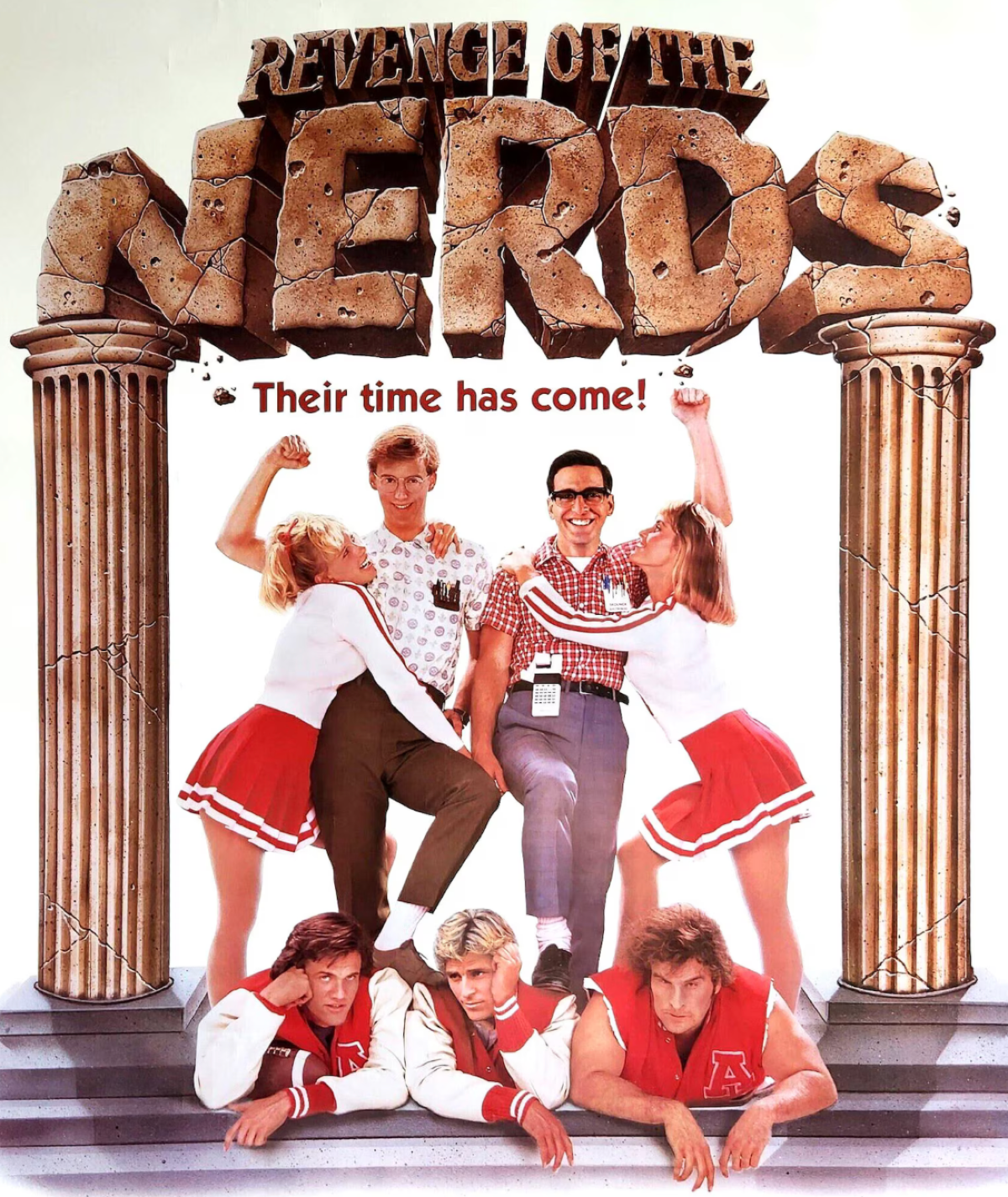
Poster for the movie *Revenge of the Nerds* (1984)
Released in 1984, Revenge of the Nerds (translated here as La venganza de los nerds), directed by Jeff Kanew, was a film that initiated a franchise composed of four movies, which followed a bit the trend of films revolving around that other thing that accompanies the nerd identity, or at least accompanied it at this tumultuous starting point we've chosen: sexual initiation. Titles like Porky's (1981), The Last American Virgin (1982), and Fast Times at Ridgemont High (1982) had already been successful works that showcased the "spicy humor" of having sex for the first time, while also dealing with the social relationships of young people, their interpretations of reality, and the frustrations that would shape their personalities (much more evident in the last film on this humble list, directed by a young Cameron Crowe). Now, in all those films, the nerd is just one more: he is not at the center of the scene and, if he is, he is more of a comicrelief than the character who holds the humorous plot. Which, as we all know from Aristotle, indicates that a comedy starts badly and ends well (unlike tragedy, of course). It may happen that the protagonist has "some nerdy traits," but he is not fully integrated into a type, meaning he does not embody a typology. He always has other traits that make him more of a character than a stereotype, at least at the beginning: in that sense, the character of Judge Reinhold, the goofy looking Brad Hamilton, possesses only that characteristic of what will later become a more closed and seemingly more one-dimensional model of nerd.
Unlike the previous films, Revenge of the Nerd fully showcases the nerd stereotype, consolidating an image that had been building since the fifties and sixties, and had begun to acquire a much more widespread use in American culture of the seventies. In that film, Lewis Skolnick (played by the recently deceased Robert Carradine, yes, the brother of the protagonist from Kung Fu) and Gilbert Lowe (Anthony Edwards, who would later find a medical path in the drama E.R.) enter Adams College with clear interests in studying programming and robotics. The members of the Alpha Beta fraternity, led by Stan Gable and whose "champion" was none other than Frederick Aloysius "Ogre" Palowaski, represented a group more friendly to American football than to any minimal empathy.
Nerdiness ceased to be merely a form of identification for someone with limited social skills and admirable knowledge (about one specific thing) to become a platform for new erotic inquiries that embraced desire.
Due to the story's circumstances, they proceeded to take the rooms of the newcomers rejected by all the other fraternities, and thus a group of misfits ends up forming a lasting friendship, first on the basketball court and later in a brand new house, now adopted by the Lambda Lambda Lambda (a fraternity of African descendants). Lewis and Gilbert represent the two spectrums of nerdiness: the former is extroverted, confident, and clearly understands that university life involves the possibility of meeting girls. Gilbert, on the other hand, is shy, struggles with social relationships, and will ultimately become the true hero of the film, as he transitions from being closed off to becoming a spokesperson for equality between opposing groups. On the nerd side, we also find a strong presence of African descendants, not only because of the fraternity that chooses to protect them but also due to the presence of characters like Lamar, played by Larry B. Scott, who also confidently embraces his queer identity, creating a strong contrast with the white, heterosexual, and violent members of Alpha Beta.
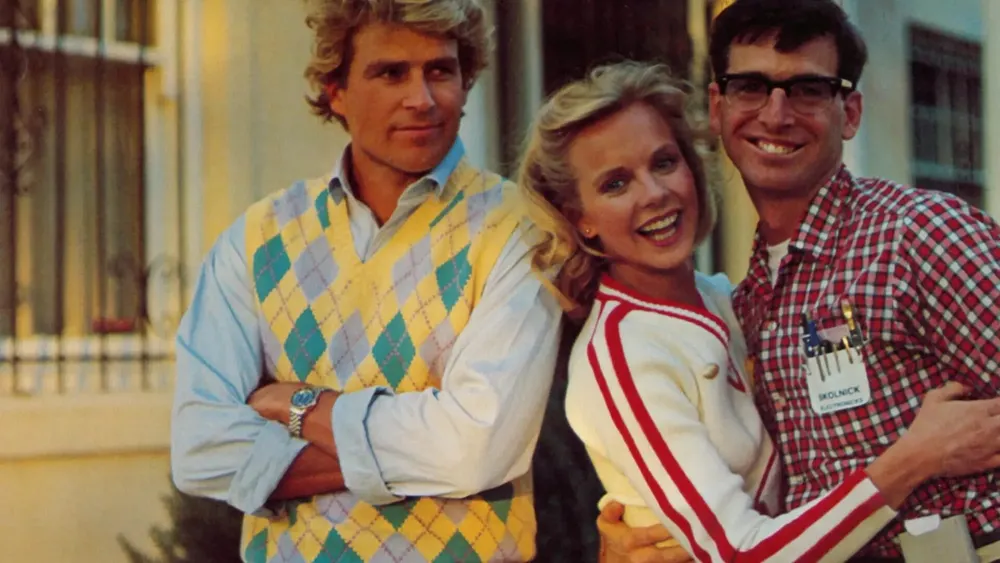
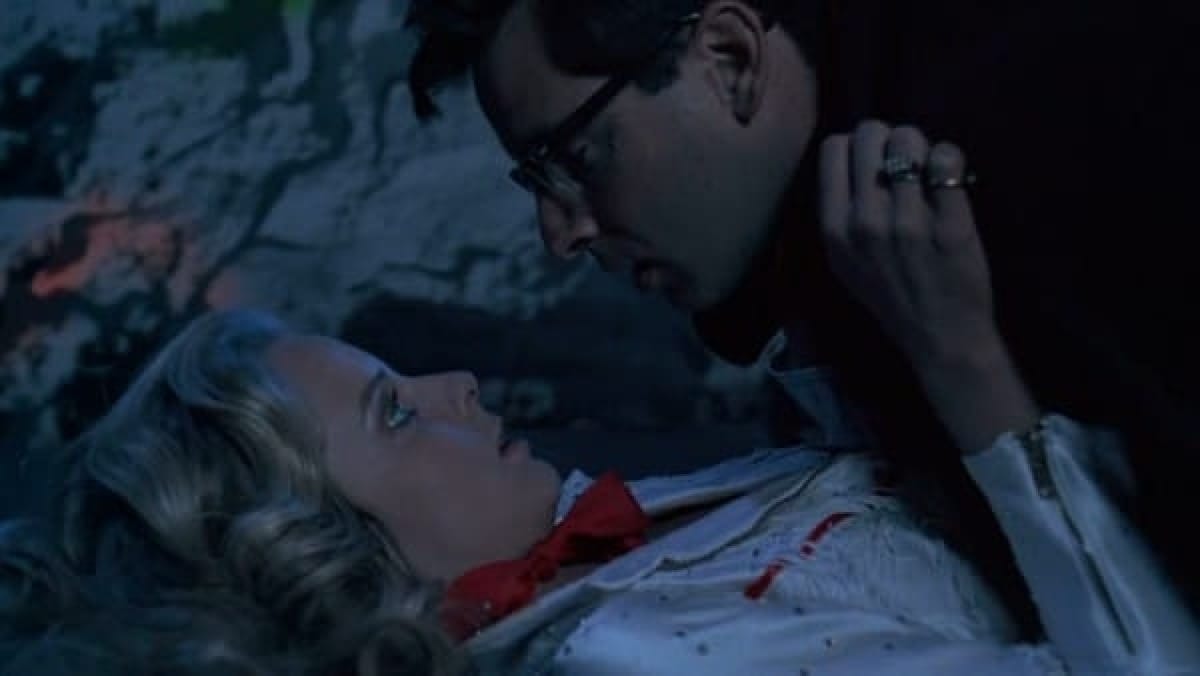
Lewis and Betty after their first (and controversial) sexual encounter
Through Lewis, we find the sexualization of nerdiness in all its glory: the character is optimistic, knows who he wants to win over, and does everything possible to connect with Betty Childs, Stan's girlfriend, which he achieves in a fair game dressed as Darth Vader. In that first sexual encounter, which concludes Lewis's journey (Gilbert will have, as mentioned in the previous paragraph, a more politically traditional fate), the character asserts that he is good at making love (forgive the use of a neutral Spanish from an eighties movie) because he is a nerd, and nerds think about sex all the time, in contrast to the "athletes" who think about sports all the time. It's interesting to see how Lewis, with all the clearly critiquable aspects (from a movie made 42 years ago!) regarding the very idea of "conquering" Betty, which involves identity deception, prioritizes the erotic dimension over the more orderly and structured bodily life of athletes: they are two different uses of bodies, one for love, the other for war (because, of course, the Alpha Betas are rigorously trained in something that seems less like a sport and more like military service, commanded by coach John Goodman).
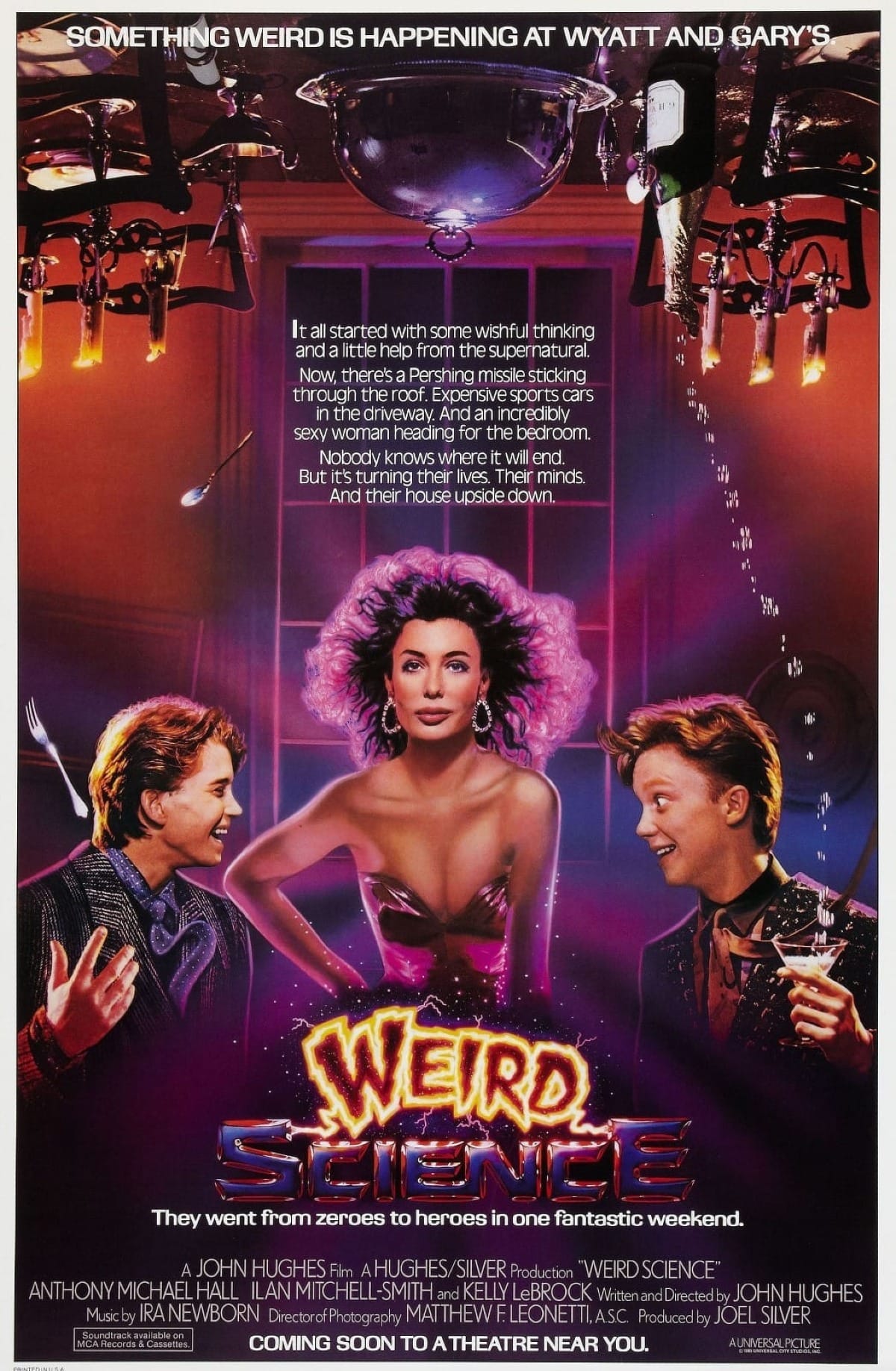
Poster for Weird Science (1985).
This sexualization of nerdiness begins to function strongly, from this film onward, as a subgenre of teenage sexual initiation films, with milestones like Weird Science (1985) and more elaborate forms of youth drama that include nerd identity, now much less stereotyped, like The Breakfast Club (also from 1985). Indeed, in that same film, directed by the prolific John Hughes (who directed both), the story of the five teenagers ends with them assuming their social tag (the jock, the rebel, the princess, the weirdo, the nerd) while underscoring the futility of those identifications, as if there were a much more complex background behind each of those names.
But the process of sexualization had already begun: being nerdy was no longer just a way to identify someone with limited social skills and an admirable knowledge (about one specific thing); it transformed into a platform for new erotic inquiries that embraced desire. Lewis Skolnick starts to become the model of a sexualized, erotic, attractive nerd who puts desire at the forefront instead of repressing it in some sort of social shell. Although there was an attempt to turn the famous movie into a television series (with a pilot that even used footage from the original film), we had to wait until the 2000s for the nerd figure to take on a strong role, no longer as comic relief, as was the case in several '90s shows, but as characters with contradictions and challenges to overcome. In other words, narratively, subjectivities with a sexuality different from this cheeky representation of the '80s.
No flag
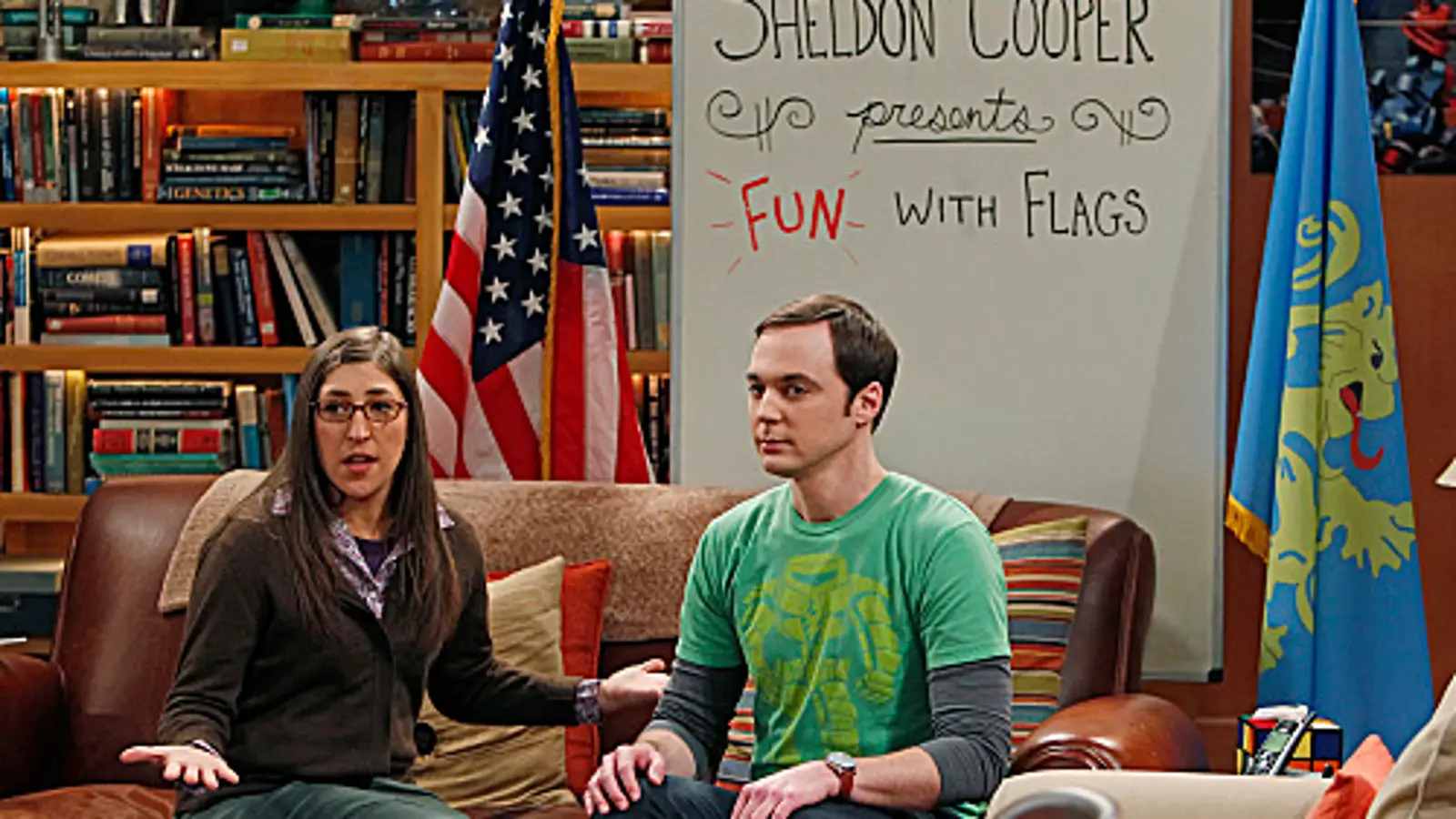
The major milestone in American television representing the nerd figure is undoubtedly The Big Bang Theory (2007-2019). With nearly 300 episodes to its name, this story features four friends, Leonard, Sheldon, Howard, and Raj, who see their closed and incel world (at least for three of the four) shaken by the presence of a neighbor, Peggy, who embodies the white trash of the West Coast of the northern country. She represented in every sense the place of sexuality in that monad of hard science nerds: close by, in the apartment across the hall, but difficult to understand and mysterious in itself.
Escena de The Big Bang Theory: "Fun with Flags".
What does she want? How does she behave? What could happen if the interaction with that ominous figure opens up? The exuberant Peggy will soon become the object of Leonard's affection, the series' protagonist, who will gradually lose ground as Sheldon, a sort of "nerd of nerds," begins his particular journey of transformation. Sheldon represents the most abstract of the abstract, even in his orientation towards knowledge: a theoretical physicist who discredits any practical application of knowledge (hence the tension with Howard, merely an engineer). It’s even paradoxical and totally in character that Sheldon is a fan of world flags: the only thing he knows about reality are symbols; he doesn’t engage with anything specific, preserving his intimacy and even advocating for maintaining as much as possible the daily routine he built with his roommate Leonard. The series' dynamic between the feminine and the masculine somewhat replicates the model of Friends, where we also have two apartments identified with the place of the woman and the place of the man, except here, at least in the initial premise of the series (which had a female nerd from the start), the masculine is closed and plural while the feminine is open (to social contact) and singular.
Since the '80s, the nerd identity has become the standard for subjectivities, redirecting libidinal energy towards consumption rather than the erotic (which always involves contact with the other).
The transformation process of the nerd thus starts to become symptomatic of this shift from the sexualized nerd of the '80s to the asexual nerd of the 2000s: Sheldon, as a model of nerdiness, while still following the logic of the stereotype, seems to epitomize the lack of contact with desire focused on sex and transforms that into a foundational trait of his personality. He doesn’t want his life to change, he doesn’t want to meet anyone, he rejects any type of relationship that involves physical contact. Knowledge is not positioned as a path towards the erotic but rather as a way for him to close in on himself and openly reject that condition. That doesn’t mean that later, when he meets Amy, in the expected development of such a long series, he won’t face a challenge: to come to terms with his libidinal nature in the fullest sense and redirect that energy towards physical acts and friendship. Sheldon’s entire arc involves that opening towards the other, towards the outside: just as female characters are added to the series, equating the plurality of male members, the contagion effect also brings in the question of social relationships for someone who rejected all attempts at connection. The success of the series relies more on subjective identification with a character who doesn’t prioritize the sexual as his main pursuit. I insist: that character's journey, later marked by the series, his transformation and adaptation to that social life he postponed for so long, doesn’t negate the fact that the presentation of those individualistic traits has promoted the product's popularity. One could speak of an "evolution" of the nerd figure, as suggested by a brief video on the IMDB page about such a possible phenomenon, but that would imply that one model of nerd is better than another. In truth, there is only a different functioning of that figure. What could account for that transformation?
Sheldon Cooper (CBS).
With all the complexities involved, it’s likely that we need to think of it in tune with the libidinal organization of late capitalism. Even though we live in times of a fascist reflux of subjectivities (I mean: the return of the hetero-cis man who assumes violence as a path, the world of "incel athletes"), it’s interesting to see how the logic of commodity consumption aligns with that model of the nerd that redirects the libidinal towards a specific knowledge. Knowledge does not "open" to the sexual, as in the cheeky logic (we can’t say "picaresque", that would be something else) of the '80s, but rather "closes" around what it knows, deepening the development of his mode of consumption. Sheldon always knows exactly what he wants, what he reads, what he drinks, what he eats, how he dresses: such a neuroticization of his daily life responds to this mode of concentration on the elements of his routine, transforming him into the hyper-specific consumer of our present. Aren’t we all "nerds" in that we clearly know what we want in exquisite detail? And that what we want can be requested with such specificity in our consumption routines, both in how we buy products (more online) and in what we expect to see in a good from the so-called "cultural industry" (a term coined by Adorno and Horkheimer that seems to have lost its critical capacity to become a positive concept)?
Thus, Sheldon is the historical diachronic opposite of Lewis: he doesn’t want anything to do with the other, he prefers to consume in solitude, he sticks to his knowledge. That he ends the series winning the Nobel Prize and admitting his feelings with nuances, or that he opens up to sexual exchange (almost as a favor) with an Amy who at times seems very close to the behavior of Lewis from Revenge of the Nerds reveals nothing other than the most irritating truth: since the '80s, the nerd identity has become the standard for subjectivities, redirecting libidinal energy towards consumption rather than the erotic (which always implies contact with the other). What we saw at the beginning becomes more complex: the nerd is erotic because he is impossible, an object of desire that does not desire.
We should consider how variations in forms of sexuality and self-perception, in their clear advancement over heteronormative modes of identification, still have, like everything within capitalism, their ambiguous and even concerning functioning: the need to place the label before the subject itself, the typology before real beings. The closure of sexuality within nerdiness, the incel logic implanted today as a model for thinking about the extreme right, coexists with a world where other forms of sexual-affective life are recognized and respected. These internal political tensions are already present in the representation of nerds on the small or big screen: the allure of the distant and self-contained has replaced the mystery of knowing another. The very apps for meeting people follow this model: eroticism has lost the question of getting to know someone and has transformed into a rather routine consumption logic. Before knowing the other, we need to have them identified in a perfect grid that allows me to know what I want before encountering reality. Nerdiness allows us to think the worst: the becoming a consumer object of an activity so human and seemingly far removed from the fetishism of commodities as (melodramatic drumroll) love.
✦ Suscribite
Las notas de 421 no tienen paywall
Y a cada colaborador se le paga por su trabajo. Las dos cosas dependen de los suscriptores.
Colabora en Radar de Página/12. Publicó, entre otros, los libros Jazmín paraguayo (poesía) y Lebensraum (novela), y la historieta Las guerras metódicas. Lleva adelante el podcast El cuartito de Bogado. Da clases en la UBA. Juega Mono Red.