Alexander the Great and the Trap of Charisma: The Empire That Died With Its Leader
Epic hero or political failure? Alexander the Great crushed empires, but his glory faded upon his death. He made a fatal mistake: relying entirely on his charisma rather than on stable institutions. The challenges of ensuring that an organization survives the man who created it.
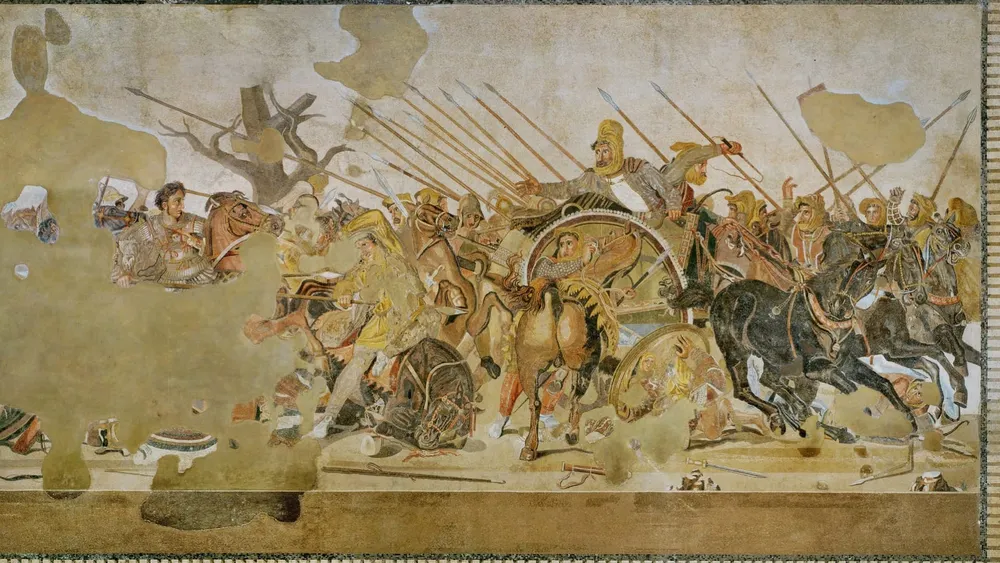
What do we know about Alexander the Great, that thirty-year-old guy who conquered almost the entire known world in less than a decade? Everything we imagine when we think of the Macedonian conqueror (the brilliant young man, the infallible strategist, the king advancing from Europe to India as if history had cleared the way for him) comes to us filtered through a rather precise literary operation. Arrian, a Greek author from the Roman era (who is one of the main testimonies), wrote his Anabasis of Alexander several centuries after the Macedonian's death, and he didn't choose that title by chance. The word immediately refers to Anabasis by Xenophon, that rare Greek who was both a historian, a disciple of Socrates, and a military commander. Arrian not only used a prestigious name: he also copied a narrative style associated equally with philosophy and military success.
The maneuver is elegant. Just as Xenophon had narrated the march of the Ten Thousand, their retreat, their discipline, their spirit, and their practical intelligence, Arrian presents Alexander as the protagonist of a grand expedition led by an exceptional man. And not only that. Behind his portrait, there are also echoes of another work by Xenophon, the Cyropaedia, that blend of biography, political philosophy, and adventure novel where Cyrus appears as the founder of the Persian Empire, a king capable of commanding, seducing, and organizing. Arrian writes history, yes, but a history shaped by literary forms of thinking about command, virtue, and imperial expansion.
How can two empires fall? How can the Persian Empire, that gigantic apparatus that had dominated the Near and Middle East for two centuries, collapse, and how can the empire of the one who conquered it also fall, almost immediately?
Alexander comes to us shaped by a prose that makes him exemplary. He is no longer just a Macedonian king with military talent, boundless ambition, and a significant dose of violence; he is also the hero of a march, the leader of an enterprise: like Achilles, the flame that chose to burn brighter at the cost of being consumed quickly.
The interesting part begins when we shift the focus a bit. Because the problem of the epic narrative of Alexander, and how it was constructed, obscures another, much sharper one: how can two empires fall? How can the Persian Empire, that gigantic apparatus that had dominated the Near and Middle East for two centuries, collapse, and how can the empire of the one who conquered it also fall, almost immediately? And, more importantly, how can power be maintained?
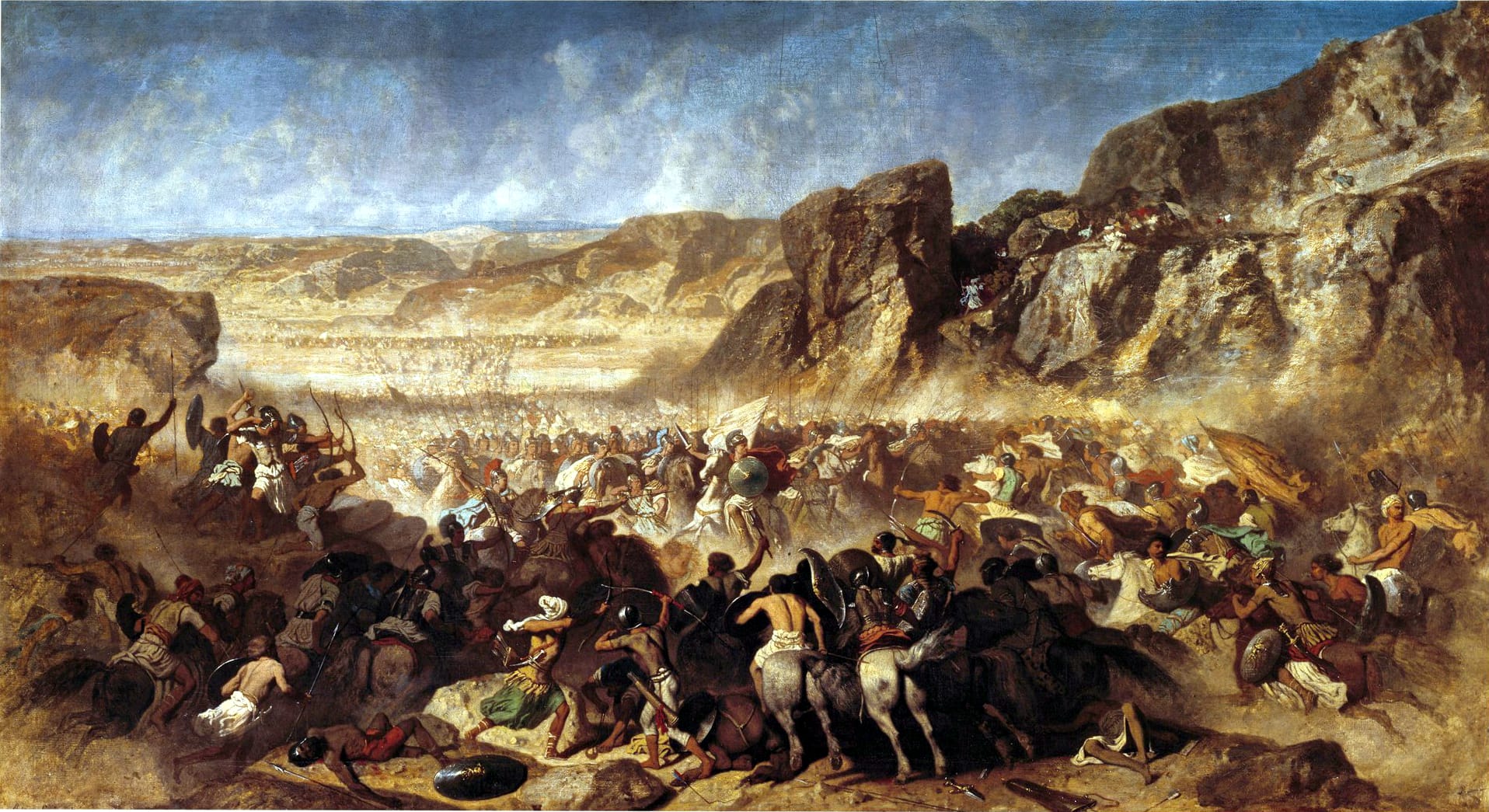
To think about this, it's worth revisiting an essential reading: Machiavelli in The Prince. Machiavelli pauses in a famous chapter to discuss why Darius's kingdom, once defeated by Alexander, did not immediately rebel against the Macedonian's successors. In that discussion, he constructs a simple and devastating typology. He says, more or less, that there are two main forms of dominion. One is that of kingdoms ruled by a prince surrounded by servants: officials who have borrowed power, who command as long as the sovereign supports them (excursus: this is one of the themes debated by Maer Alveron and Kvothe in The Wise Man's Fear by Patrick Rothfuss). The other is that of kingdoms where the monarch coexists with great lords, barons, nobles, or local powers that have their own lineage and prestige. Two models, two types of power structures.
The example of the first type, for Machiavelli, is Darius's Persian Empire; the second type is feudal France. The analytical consequence is brilliant. Regimes of the first type are harder to conquer because everything is centralized, and no one important can open the door from the inside. But once the ruler is defeated, they are easier to maintain because when the center disappears, there are no intermediate powers with enough legitimacy to reorganize the resistance. The second type, on the other hand, is easier to invade, precisely because there is always some resentful noble willing to help you; but afterward, they are much harder to retain because those same local powers survive the king's fall and become permanent sources of conflict.
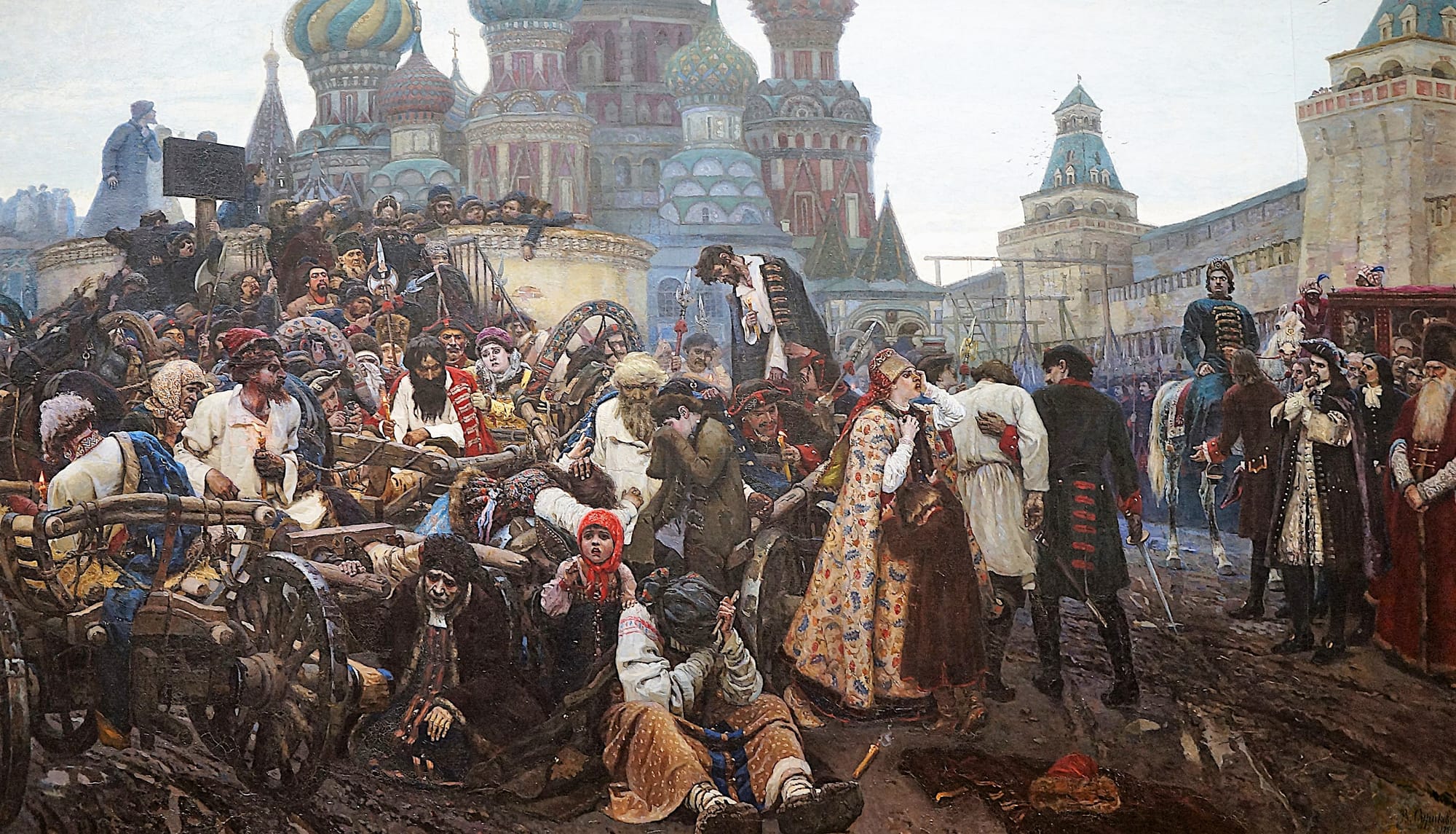
Brutally put: there are empires that fall by decapitation. And there are empires that, even when defeated, continue to fight from their members who, amputated, keep moving. That is what Machiavelli sees in the fall of Persia. The Achaemenid Empire was an immense, sophisticated, administratively complex structure, but politically ordered around the figure of the Great King, Darius III at the time of the Macedonian invasion. It was not an Oriental chaos, that more Hollywood narrative; it was, rather, a governing machine with satrapies, tributes, roads, armies, and a court capable of ordering very different territories. But precisely because of that, its strength hid a weakness. The extreme centralization made the system formidable as long as the center resisted; once that center was broken, the energy of the structure became disorganized.
And it is there that Alexander appears, also the third of his name. The story is well-known, although it's worth repeating for the uniqueness of the narrative. Alexander ascended to the throne of Macedonia in 336 BC, after the assassination of Philip II. He inherited a militarized kingdom, a warrior nobility, and, above all, a formidable tool: the army reformed by his father, with the Macedonian phalanx, heavy cavalry, and a level of coordination that the Greek world had not seen many times. Before marching against Persia, he had to secure his rear. He quelled revolts in Greece and razed Thebes to send a very clear signal: the Asian expedition was not going to start under the sign of hesitation. Two years after becoming king, in 334 BC, he crossed the Hellespont. From there, what was already a living legend turned into pure magic. He conquered the Persian Empire in just a few years, and when Darius's own men betrayed their lord, the Macedonian did something very characteristic of him: he turned that death into legitimacy for himself by seeking to avenge the Great King's death. He was no longer just the destroyer of the Persian Empire: he was constructing himself as its heir and leader.
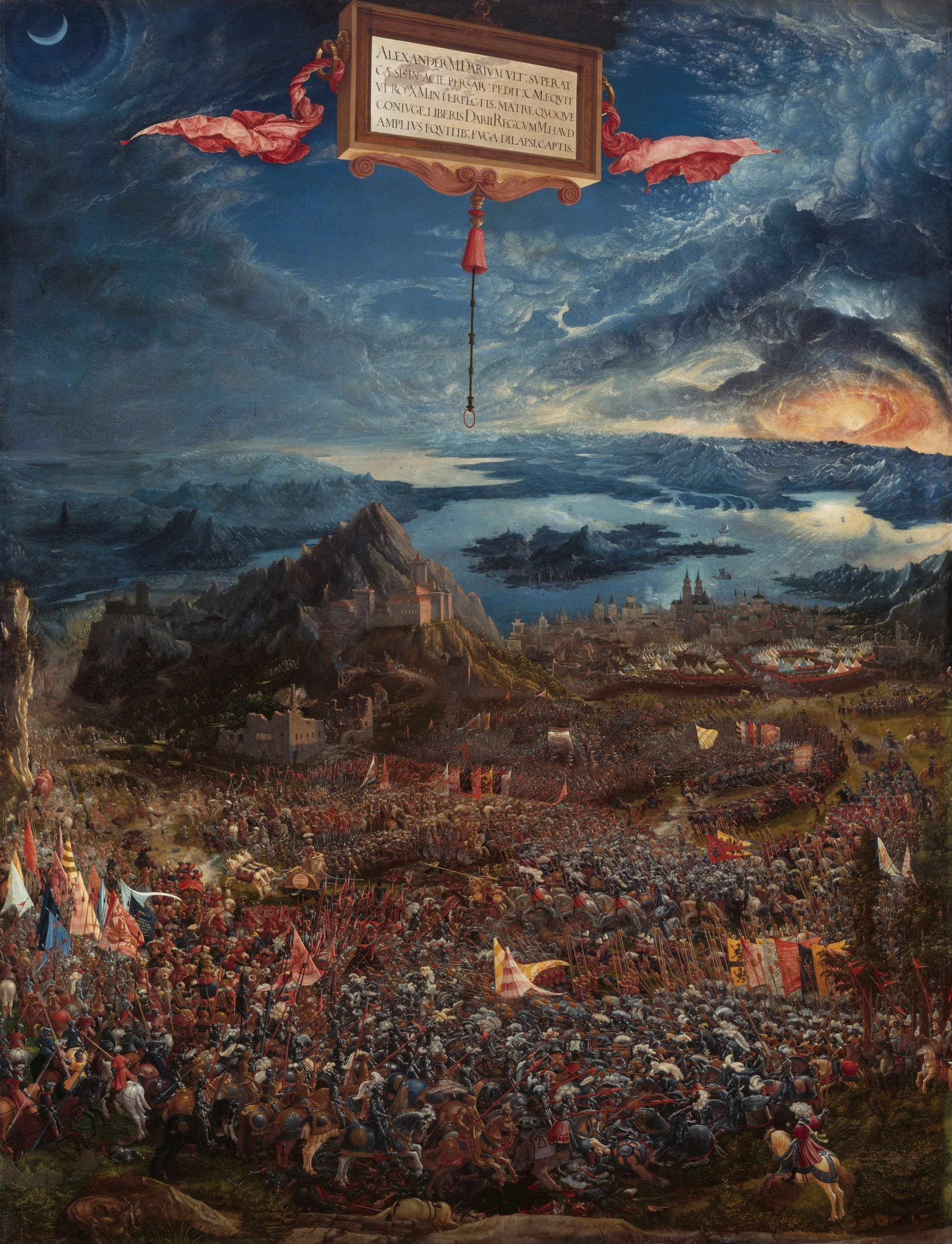
This is important. Alexander did not defeat Persia to leave a void. He defeated Persia to take its place. That’s why after the great victories, he did not withdraw. He kept advancing, crushed resistances, founded cities, incorporated local elites, adopted Persian customs, and began to play a dangerous game: transforming a Macedonian monarchy based on conquest into a universal empire, half Greek, half Asian, sustained by his personal figure. He stopped when his own army said enough. Not due to military defeat, but due to exhaustion. The limit of the empire was not set by the enemy; it was set by the fatigue of his own men. Sometimes that happens: the very ones who mark the border that cannot be crossed. These are lines that must be felt, whispers that must be listened to.
Alexander died in Babylon at just over thirty years old. He had conquered half the known world, defeated the greatest empire of his time, founded cities, displaced populations, accumulated treasures, reordered the geopolitics of the Eastern Mediterranean and Asia. But he had not resolved a basic problem, which is the problem of almost all great personalisms: how to ensure that an organization survives the man who embodies it.
He left no clear succession. He did not build institutions capable of disciplining his generals after his death. He did not produce a stable form in which Macedonians, Greeks, and Eastern elites could recognize themselves. He had built an immense empire, but not a political machine capable of overcoming time. Alexander died, and the Diadochi arrived: the successors. Always the successors, those who grab the warm bodies of leaders and parcel out their legacies. So, what had seemed like an empire destined to endure turned out to be, to a large extent, the biographical extension of a single man. The empire died with him.
 Dante Sabatto
There lies the uncomfortable lesson, the one that often gets lost behind the shine of campaigns and military epic. All empires are provisional. Some last centuries, others a few decades; some have more solid bureaucracies, others live off plunder, speed, and fear; some manage to produce institutions that postpone their fall, while others collapse as soon as the founder's signature is missing. But none escape a rather earthly truth: the passage of time is always a war of attrition. Like one of the riddles from Gollum to Bilbo: there is only one thing that can devour all things, time.
What does change is the form that provisionality takes and the causes of its end. The Persian Empire fell as structures that are too concentrated do: when the center breaks, the rest loses coordination. Alexander's fell as too personal projects do: when the charismatic leader disappears, so does the only principle of unity.
He had conquered half the known world (...). But he had not resolved a basic problem, which is the problem of almost all great personalisms: how to ensure that an organization survives the man who embodies it.
This doesn't just apply to antiquity. It holds true, under different names and scales, for almost any political organization that considers itself eternal simply because it wins elections today. There’s always something a bit childish about the fantasy of infinite duration. Regimes, parties, companies, and movements can easily confuse stability with manifest destiny; or, conversely, they might mistake failures for definitive breaks. Therefore, the underlying issue isn’t about conquering. The real challenge is building institutional forms that don’t rely entirely on extraordinary charisma. Forms that can manage conflicts, process transitions, tolerate mediocre leadership, and still keep functioning. In other words: organizations that can withstand the test of time.
Personalism, on the other hand, almost always offers the opposite. It’s more seductive, more theatrical. It creates heroic images and intense loyalties. But it has a structural flaw: it places the burden of endurance on one person, while true longevity can only be achieved if it’s distributed across rules, positions, habits, principles, and values. When the leader disappears, fragility is revealed. This isn’t a critique of charismatic figures, but a warning that such charisma must serve something greater.
The example of antiquity helps us think about similar contemporary cases. There are cycles that seem unshakeable while the leader is alive, and when they’re gone, we discover that their power was tied to their unique biography, which supported emotional organizational structures: Yugoslavia after 1980, Chavismo after 2013, Nasserism after 1970. The names and contexts change, but the question remains the same: what remains when the conductor no longer organizes the movement? What guarantees the survival of an organization?
Rocco Fregoti
Arrian, with his prose inherited from Xenophon, turned Alexander into a figure of military conquest and greatness. Machiavelli, with much more malice, helps us read something else. He reminds us that after any epic, even the greatest, there comes an organizational problem, and that the fall of an empire doesn’t always begin when it loses a battle, but when it can no longer envision a future without the man who leads it.
Darius lost an empire because he was defeated. Alexander lost another because he failed to create an organization that could exist beyond himself. Between one fall and the other, we see, perhaps better than in many treatises, the crack in all political ambition: conquering the world does not mean founding something enduring.
Las notas de 421 no tienen paywall
Y a cada colaborador se le paga por su trabajo. Las dos cosas dependen de los suscriptores.