A Peronist Golem: Argentina’s Great Failed Act
Can a monument that was never built be more real than one made of stone? The epic story of the Monument to the Descamisado, a thwarted utopia that functions as a national “failed act.” Between psychoanalysis and the myth of the Golem, this unfinished work reveals the truth of the people’s desire.
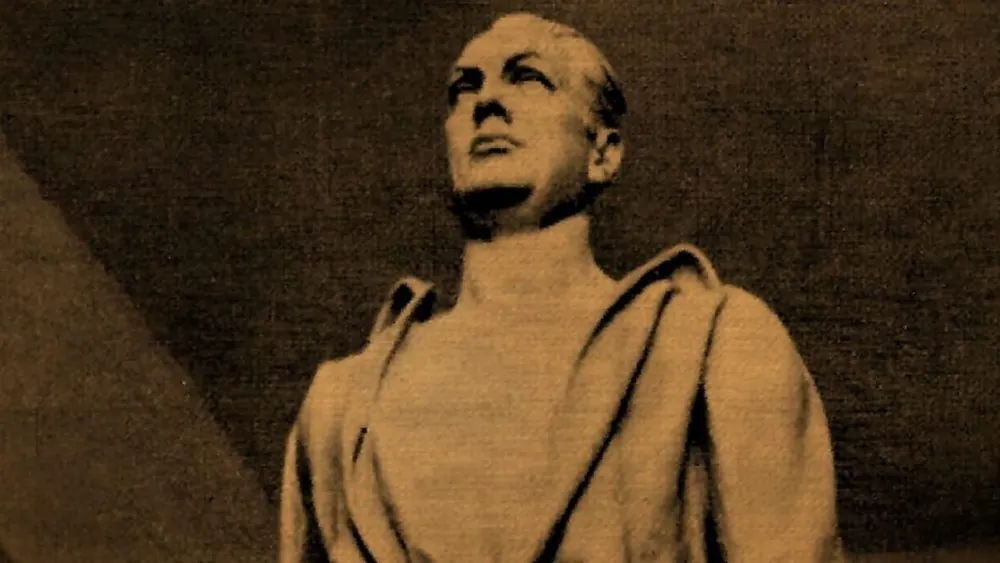
Between 1946 and 1951, the idea of erecting a grand monument in Argentina was conceived, which would be the tallest in the world: the Monument to the Descamisado (“descamisado” is a term used to refer to a “shirtless” worker—that is, someone who works in a factory rather than than in a neat, tidy office). In 1954, construction began but was interrupted by the civic-military coup of '55. Movements of a Monument (2023) is the reconstruction of that story. The book is based on research conducted by Rodrigo Claramonte between 2016 and 2022, featuring over 12,000 documents: testimonies, sketches, plans, and photographs. The result is a colossal atlas of this unfinished epic. It provides access to archival material, previously scattered, but also seeks to reflect on an epic that was on the verge of leaving us a monument 137 meters tall.
The book also includes texts by Daniel Santoro, Natalí Incaminato, and the author. What follows is a review but also a political, doctrinal, and clinical update, in line with a Freudian Justicialism: the poetics of the failed attempt, the anguish and desire, the words and symptoms of the Argentine people, the symbol that is effective reality, the unfinished dream of upward social mobility.

Failed Revolution
Is the Monument to the Descamisado so important because it was cut short? As a provisional thesis, it is tempting yet partial. However, it allows for a lateral reading: there is nothing great, memorable, or enduring that does not include the failed. We enter a paradoxical terrain, as promoted by psychoanalysis and Peronism: the conjunction of the enduring and the ephemeral of acts that are performed precisely in their impossibility. Example: “Perón returns” was is the slogan of a future triumph but rooted in a return that is always failed.
Between 1946 and 1951, the idea of erecting a grand monument in Argentina was conceived, which would be the tallest in the world: the Monument to the Descamisado. In 1954, construction began but was interrupted by the civic-military coup of '55.
We often refer to Peronism as an unfinished revolution, as a living force that acts in the present time, even in the worst moments of repression or proscription. This raises a question: is it unfinished because of what was lacking, because of what existed and was lost/destroyed, or rather due to a fundamental fact, namely, that the feasibility of that impossible (the happiness of the people and the greatness of the Nation) lies in the assumption/utilization of the unfinished? If we lean towards this latter option, that failed monument is much more than a nostalgic metaphor: it is the very truth at stake since that October 17, 1945.
Peronism: the failed act of the bourgeois country
Thus, the monument takes on the value of real fiction: the first term surpasses the second, or rather, enhances it and brings it to effective reality. An example of real fiction is the just, free, and sovereign homeland. This quality of the fictional-justicialist allows the monument to exist even without having been built, and this is because it was never conceived as a memorial or a deadly pantheon. In the words of Agamben and Debord, a history that resists having its heritage museified.
We will say that the monument, the Descamisado, is our golem. Why not think that it was [a project of] a monument but ceased to be one, gaining (in)material life to fulfill its failed destiny as a champion and standard-bearer of the humble? If we agree that the repressed is compelled to return and that, as Borges once said, “the only paradises not forbidden to man are the lost paradises,” this thesis becomes remarkably enlightening.
Talmud and Modernity
In the monotheistic tradition (Psalms 139:16 and in Talmudic literature), the golem is defined as formless and unfinished matter: we speak of the complexity, power, and danger of a revolutionary yet unfinished invention. It is the personification of an animated being made from inanimate matter, usually clay or mud, which becomes a stone colossus. In modern Hebrew, the name comes from the word guélem (גלם), “matter,” with the expression jómer guélem (חומר גלם) meaning “raw material.” The most famous folktale involves the illustrious Judah Loew, the Maharal of Prague, a 16th-century rabbi. He is credited with having created the golem to defend the ghetto of Prague.
Let’s move to the last century. Gustav Meyrink was, according to Borges, “a good terrorist of fantastic literature.” In his novel A Golem (1915), he presents a mysterious story set in the old Jewish quarter of Prague, where the figure of the golem comes to life. It was one of the first best sellers and included advertising strategies for dissemination (note: Borges once claimed to have learned German by reading, with the help of a dictionary, Meyrink's novel). It is also considered an exponent of the first era of occult genre, long before its banal degradation; hence it was classified as a work of initiation, in the style of The Magic Flute by Mozart.
Meyrink was a reader of Freud: not coincidentally, the novel begins with a dream. He draws inspiration from the Jewish Kabbalistic tradition of the golem but transforms it into a psychological fiction, using themes like the double, the dreamlike, or the unconscious. The story centers on Athanasius Pernath, a solitary and enigmatic man who, after being presumed dead for three days, undergoes a transformation: he begins to have strange visions that lead him to a parallel world, a surreal Prague where the golem comes to life. The figure of the golem, which was originally a protective symbol of the Jewish people, becomes an analogy for Pernath's unconscious and for the psychic power to create reality, in the best style of the Freudian Literary Creator and Fantasy (1908).
Heir to Dickens in his description of the great city, he makes a crucial displacement with the underlying mythology: the protagonist is not the golem or the creator but the Jewish quarter of Prague, as a metaphor for the border between the new and the old. Popular mythology, praise for common identity: the golem is no longer the creation of the mystic or prophet but the embodiment of a collective soul. In Meyrink, the tradition survives, becoming popular without diluting into a mass pamphlet. The golem, that which is double and therefore a symptom of a people, brings redemption through a collective self. Because tradition, according to Chesterton, is not the worship of ashes but the transmission of fire.
The golem is defined as formless and unfinished matter: we speak of the complexity, power, and danger of a revolutionary yet unfinished invention.
The addition of secular elements renews the vitality of tradition while critically resisting a futurism that was near: mechanized subjectivity, the golem as a technical-individual creation of the inventor-entrepreneur. The technocapitalist Frankenstein that betrays and kills the creator not out of malice or revenge but out of mere rational impulse. In contrast, we can appreciate in Meyrink a lucid resistance to the messianism of technique through the appreciation of a communal spiritualism. A democratization of the mystery, distanced from both religious obscurantism and technoscience, which turned his work into a part of popular imagination.
I mention two contemporary, pop, and secularized versions of the myth:
- Sergeant Donny Donowitz (Eli Roth),the “Jewish Bear” from Inglourious Basterds (2009), who, due to his extreme violence, instills such terror in the Nazi troops and high command that it creates the superstition of a new return of the Hebrew golem.
- In No Man's Land (2023), a comic by Roberto Barreiro and Edu Molina that mixes the war genre with horror (the horror within horror), we find the story “A Jewish Village,” where the rabbis of a small town erect dolls made of clay and snow inscribed with emet ( אמת, truth), which come to life and decimate the German invaders.
Returning to Meyrink, his golem illustrates a double metaphor. On one hand, it represents the dark side of the Creator and is an allegory of the collective consciousness of a neighborhood, whether the ghetto of Prague or La Matanza. On the other hand, the metaphorical conflict lies in overcoming the material, from the material, towards the spiritual. Like in Peronism or in psychoanalysis: a spiritual materialism, an embodied spirituality. A mystique of the concrete, counter-masonry in symbols, popular mythology against gorilla sectarianism.
The other, the golem
In The Other, the Same (1964), there is a poem from 1958 titled The Golem. In his preliminary words, Borges notes that "the golem is to the rabbi who created it what man is to God; and it is also what the poem is to the poet,” alluding to the quote from Plato's Cratylus ("the name is the archetype of the thing").
From these references, some readings:
- It is a relationship of creation where the other references the same. Repetition does not return upon itself; it demands/generates novelty.
- It is a forcing, a contranatural act of biblical proportions but also of an emotional-terrestrial nature. This prolongation of the creator's soul/psyche, its unconscious ghost, is manipulated so that it loses some of its meaning and can thus be constituted as a real and necessarily failed work.
- Talking about a Peronist golem and ending up with Borges, the anti-Peronist genius, is not contradictory but rather a way of proceeding that borders on alchemy: to create an impossible, it is necessary to fuse and appropriate, in a poetic key, what was once immeasurable.
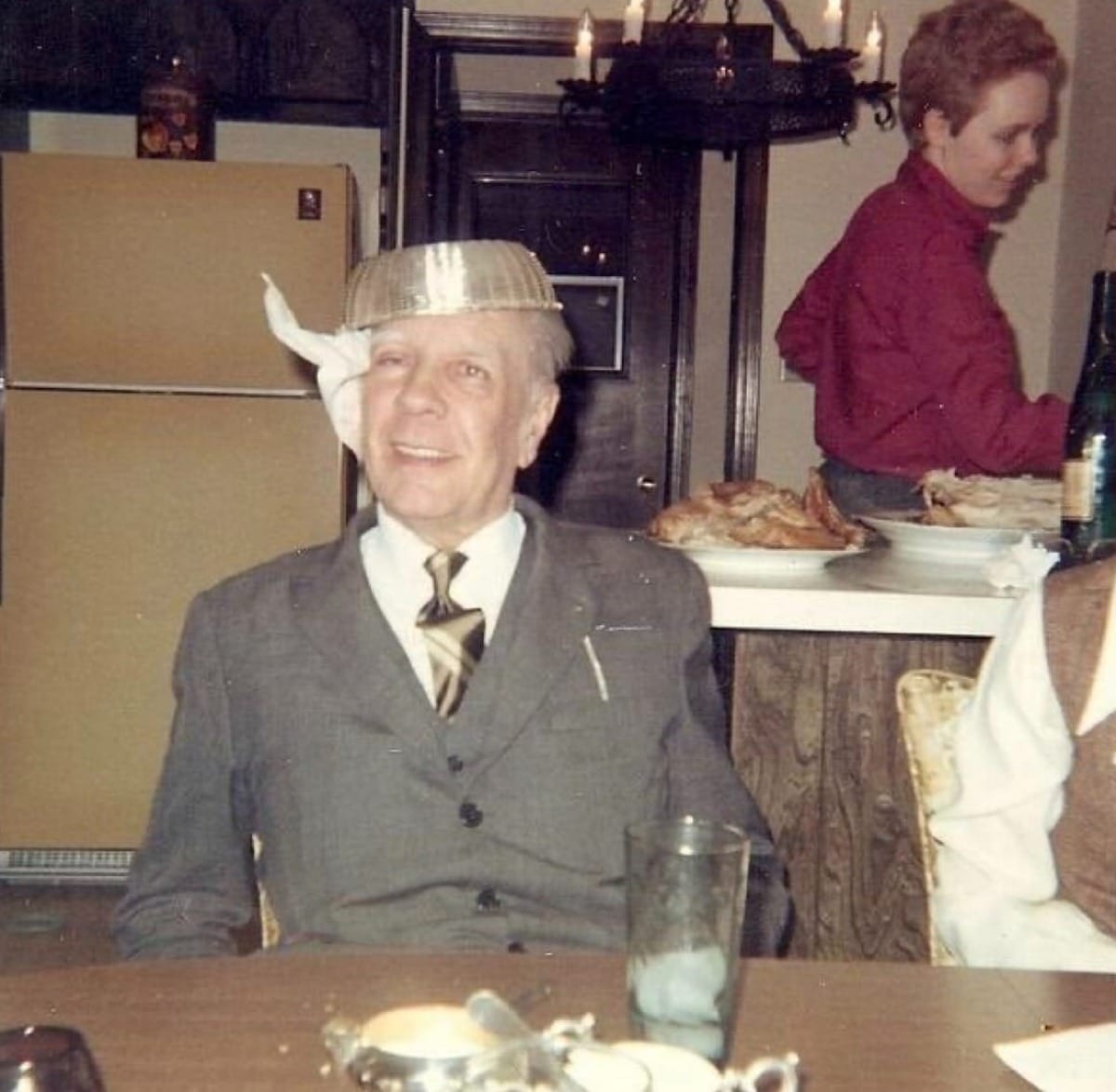
Legend has it that one day Borges was helped to cross the street by a young man who, while guiding him by the arm, warned him:
—I’m a Peronist…
—And I’m also blind.
A great joke that only serves to demonstrate his relationship with the unconscious, Peronism, and the Nation. Because making people laugh despite being a gorilla is an achievement. Likewise, a vindication of blindness as a sign of lucidity and political friendship, very far from the current libertarian “they don’t see it.”
The discussion is not about the visible but about the ability to look: “to look is not to see” is one of the many ways to delve into the field of scopic drive (Lacan said), an indispensable rudiment for thinking about capture techniques via image. It is identification (the minimal form of that mirage that is scrolling) and not identity (which, properly understood, always includes a collective potential) that condemns us to stare at our own belly button. Not to mention projective identification (Melanie Klein said), a defense mechanism in which aspects of the self (precious or abominable) are split off and attributed (projected) to another or an external object to harm, endure, or possess it. Here we would find a possible explanation for the enshittification.
Talking about a Peronist golem and ending up with Borges, the anti-Peronist genius, is not contradictory but rather a way of proceeding that borders on alchemy: to create an impossible, it is necessary to fuse and appropriate, in a poetic key, what was once immeasurable.
Fabián Casas suggests that the true and deepest difference between Borges and Perón was not strictly ideological, but purely literary (and for the purposes of this writing, also architectural): poetic-rational minimalism versus earthly-spiritual maximalism. Far from the dialectical vice of wanting to force synthesis, a possible symptomatic confluence would be to posit that nothing resembles a minimalist verse more than a gigantic monument.
Peronist dream
Peronist artifice: an exercise in the evocative power of words with the potential for reality. That a need gives birth to a right speaks of this powerful nominalist act. A psychoanalysis also proceeds this way: the miracle of touching the thing with a word.
In Freudian language, trauma and dream are the same; rather, dream is trauma (Traum), and hence the title of the book that inaugurates the century, The Interpretation of Dreams (Traumdeutung) from 1900. Operating this knot is the fundamental trait of the Freudian procedure: it is its politics.
 Mariano Vilar
For some, Peronism evokes dreams; for others, traumas. In any case, it is evident that every trauma is as real as it is dreamlike, and that every dream ultimately gives birth to a trauma: the awakening, which is also a grand failed act. It is not an exaggeration to say that the shirtless golem is structured like a [Peronist] dream and that, as such, we must pay attention to its awakening: the moment when (in)conclusion and the future, anguish and desire, tragedy and pleasure, enjoyment and communion merge.
Speaking of Peronism, we inevitably return once again to Borges: that dream that dreams, the golem dreamed by the leader, the spiritual chief and her people, turns the giant Descamisado into a circular ruin, whose first brick or prehistory implies a primary experience of satisfaction: that first time which, so mythical, becomes too real, to the point of leaving an indelible mark called desire. An experience that never existed, or rather, an experience without a subject: a ruin without materiality. Knowing how to navigate this fact, and the audacity to celebrate monuments that never existed, is a trait of justicialism that is less romantic and more logical.
The uncanny, the anguish, and the gorilla
To believe that dreams are individual and fade upon waking could be a definition of [gorilla] neurosis, or what we call rejection of the unconscious [popular].
We said that dreaming causes desire, but also trauma. A monument that comes to life immaterially seems, for many, although harmless, frankly sinister in its Freudian sense: the familiar that proves strange (unheimliche); the intrusive inhabiting one's own home. Cortázar captured that gorilla feeling in his famous Casa tomada. That friendly guest who refuses to be tamed, just like the domestic worker who asserts herself as a worker with rights, achieving something that seems unheard of for many: working with dignity.
The golem of Jewish tradition is an archetype of this transmutation from artificial constructions to cognitive beings capable of rebellion. And, in that poetic sense, what is the subsoil of the rebellious homeland, alluded to by Raúl Scalabrini Ortiz to define October 17, if not a metaphor for clay becoming flesh?
What is alive, what is self-aware, what is original and what is artificial, and all their possible combinations, delineate a zone of ambiguities, nuances, and, in the words of Mark Fisher, of strange and eerie things. The Freudian uncanny aims to delineate that the cause of anguish lies there, with neurosis being an inability to tolerate ambiguity.
Horacio González said that a gorilla is someone who, due to prejudice, refuses to think. We will say here that “gorilla,” before being ideology or aesthetics, is a way of responding to anguish: a reading that is not entirely elective but also not forced, which yields the certainty that the unbearably alive is a threat that must be buried and eventually desecrated.
The quintessential neurotic ghost, “the other enjoys at my expense,” or in the words of Daniel Santoro, “the dark-skinned guy enjoying himself next door in Mar del Plata,” contemplates the moment of maximum impotence in the face of the complex of the similar: that which was believed (and needed to be) subordinate appears in one’s own home and demands the same rights and privileges as the middle class. The reaction: a desecratory push. A death without a grave, a humiliating proscription. Deadly forms that reject life as they close off what the Greeks called “second death.”
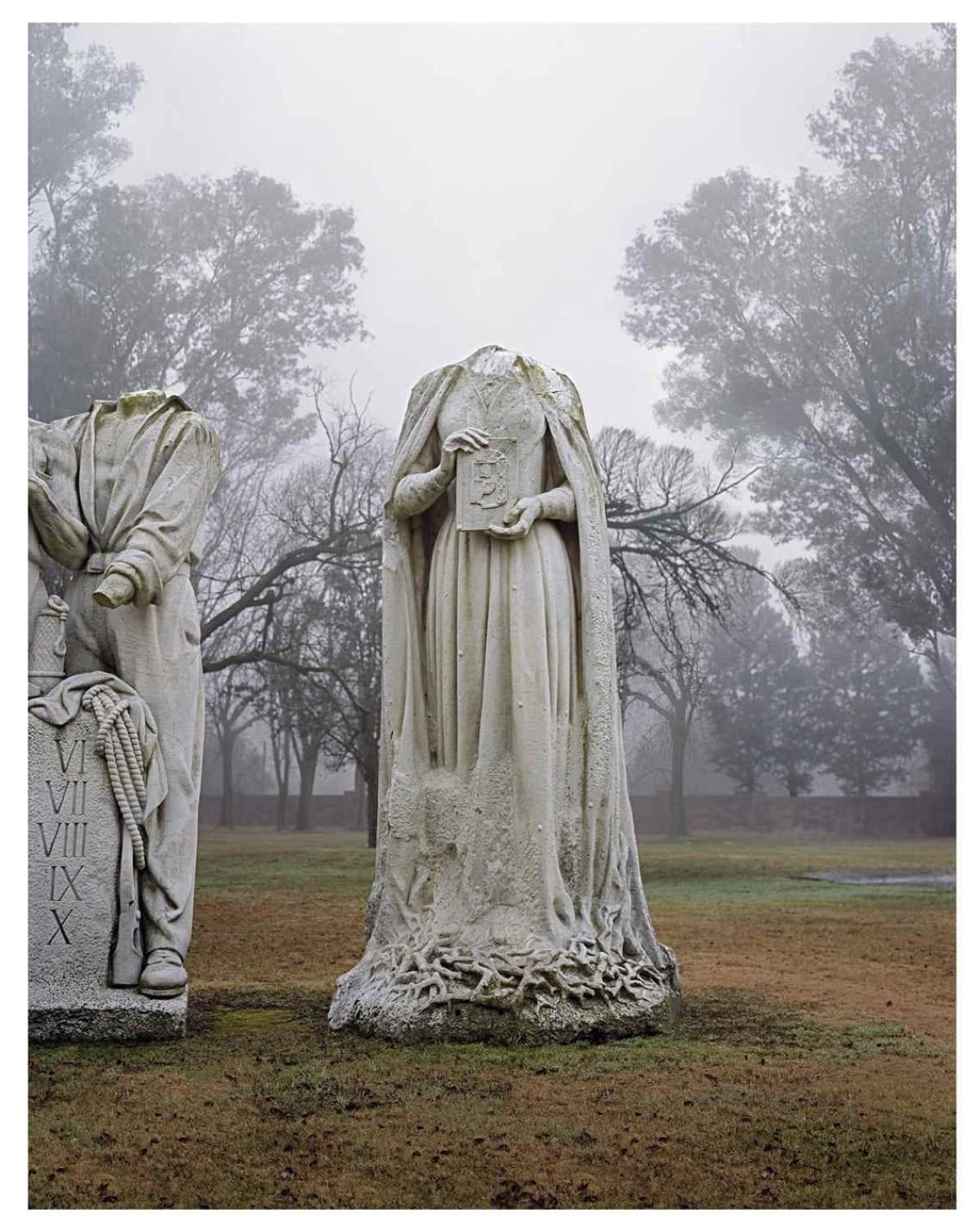
Let us imagine the anguishing potential of the monument: the giant Descamisado that in its majesty would remind everyone that there is only one class of men, those who work. It had to be killed before it was born. Nevertheless, what is the primary function of a monument if not to gather community in the face of the reality of death? A failed victory over finitude: inventing things that cannot be killed.
The discourse of the golem
In mythology, the golem has, like the neurotic with the symptom, its word gagged, which is the cause of the subsequent betrayal of the Master/Creator. The divine word, an enigma to be unveiled, creates it: the name of God, which in ancient Hebrew is close to “truth.” It is given a truth that it does not know, which is why it can only speak rudimentarily.
To betray the Creator, the great Other of the word, is precisely the task of the one who undergoes psychoanalysis. Thus, we find another analogy between the discourse of the golem and what Lacan called hysterization of discourse: subverting the discourse of the Master by introducing a body that, so flawed, speaks and produces symptoms that link it to other bodies.
It is a disobedience to tradition, to symbolic legacies, to the father or the employer, to whom one does not disregard but operates on, transmutes, appropriates. Fighting capital would mean using it contranatura, for associative rather than lucrative purposes. The discourse of the golem is also a bet on the pledged word, hence the saying that has no turning back. A slip of the tongue can be defined as a relationship of loyalty to the word, one’s own but at the same time foreign. Let us remember that our colossus is a monument to loyalty, not to obsequiousness.
The decree-law 4161 of '56, which prohibited uttering the words “Perón,” “Evita,” singing the Peronist march, and so on, was a pathetic demonstration of impotence and a pre-Freudian rhetorical-political exercise: negating those signifiers only served to liberate them and promote popular creativity, which, in an exercise bordering on Alan Moore's chaos magic, would turn “Christ conquers” (painted on the planes of the navy that bombed the square) into the most present political isotype in all of Argentine history: “Perón returns.” What is repressed returns.
“I carry in my ears the most wonderful music that for me is the voice of the Argentine People” may have been Perón's final poetic operation, namely, to convey to us that the enigma, the divine truth, lies only in the popular word.
“The myth of the man who creates something that comes to life and takes control of its creator,” Lacan proposes, “is the deepest expression of the need for an existence that self-generates (...) It is the myth of the golem, and it is also the myth of the phallus, which stands alone, without the help of any other principle but itself.” The monument is to any descamisado, as is the nature of the signifier: any one with the power to represent a subject-people for another signifier. One can kill a descamisado, disappear 30,000, but the semantic limit imposes itself: the One is not-all. In the same vein, having prevented the monument to a descamisado turned out to be an ingenuous and paradoxical task, as the possibility always remains that millions may emerge, whether of stone, marble, clay, or coal.
The empty signifier is, according to Ernesto Laclau, the most powerful, because it can articulate diverse and even contradictory demands. It is not the abstract Freedom made statue. It is a descamisado, any one, and it exists: impossible to ignore.
Conquest of the useless
“The greatest monument we can erect to Perón is the realization of his work,” said Evita, who not only separated work from author but also warned of the convenience of the former surpassing the latter. She likely intuited that a large part of the material icons would be destroyed (destroying paintings, breaking busts and monuments, burning books, desecrating corpses) but that they could not destroy those symbols conjured in and by the masses.
The oligarchy knew: if the monument had been realized, there would have been no limits to the Justicialist revolution and its counterfactual power. This is demonstrated by The Justicialist Colossus (2021) by Juan Ruocco, a science fiction tale where our Descamisado was not a monument project but a thirty-meter Mazinger made of quinquenal steel, which, while thwarting the Fusiladora Revolution, guaranteed the dream of a super-industrialized Argentina, with full social justice and intergalactic power. Our monument is Peronist in its baroque character: it fuses science and fiction, technique and poetry.
Reviving the relevance of the Peronist golem is our only hope against the automatism of Big Data and its inevitable rational, posthuman chaos. It is another incarnation of Megaphone. The solid that does not fade: the terror of Marxists and anarcho-capitalists.
Preventing the monument to a descamisado turned out to be an innocent and paradoxical task, as the possibility always lingers that millions may emerge, whether of stone, marble, clay, or coal.
As I write, I'm wearing a hipster brand t-shirt that features the silhouette of the monument. Criticism of the fetish is common, and this shirt could be yet another expression of aesthetic frivolity. However, the fetish implies a very accomplished operation, a metonymic cleverness, and what was frivolous can become an object of cult, kitsch, and bizarre yet majestically enigmatic, a password that sparks curious desire: unexpected forms of the return of our gigantic descamisado.
The monument is what serves no purpose, a waste in every sense. A psychoanalysis leads to a reaffirmation or, as Werner Herzog puts it, a conquest of the useless, that which serves no purpose but, precisely, enriches. The symptom is the useless, and it concerns its political-aesthetic utilization. In this case, the failed uselessness as the truly accomplished, which returns and re-emerges as a novel tradition. The culminating and inaugural moment of Justicialist subjectivation: the majestic that serves no purpose but still produces happiness and, therefore, work and even development. Paradox, Peronist mystique: to discover and declare that happiness produces work and not the other way around.
Grief or melancholy
The Floralis Genérica was placed in the spot of the Monument to the Descamisado. It is precisely the generic-gorilla, a rejection of the majestic that requires bad taste to generate a inutility for tourism. A ghost that assumes the excess of Peronism is dangerous, when in truth it is the only excess that produces distributive spillover.
They put a flower there as if they had decreed that there is a tomb. Again, the fantasy of profanation realized and even aestheticized. But, according to Lévi-Strauss, it is not the monuments that write history, but history that erects monuments.
What was the hope for Perón's return, his comeback as a result of struggle and loyalty, if not the invocation of a people to their golem? There are those who, with the benefit of hindsight, say that this return was useless, that it turned into tragedy, that it was futile or failed. The myth of the golem teaches us that all of that is true but only partially: from the incomplete can emerge truth, triumph, and legacy.
In times of super-egoic secularity and the lumpenization of symbolic inheritances ("we must let go," "let the new come"), celebrating historical deeds is restorative, especially when one realizes that in their failed character lies the key to their updated realization. Exhuming those remains, far from a melancholic position (rejection of origins and history), is vital: a hard work of mourning to reclaim what we have lost and rebuild what we can become.
See also: Catalog of Argentine Dinosaurs: 50 Discoveries of the Third Millennium
Las notas de 421 no tienen paywall
Y a cada colaborador se le paga por su trabajo. Las dos cosas dependen de los suscriptores.