On November 24, 2025, Anthropic released Claude Opus 4.5. It was the day my life changed. I had already finished writing this piece when I realized exactly one year had passed. I don't believe in tarot or astrology, and I'm probably letting myself be fooled by chance, but there's something beautiful about having written a piece called The Week History Sped Up on the anniversary of what I consider the most important day of my life.
In January, while I was on a trip to Cariló with some of my Ergodic colleagues, I kept driving all the way to Mar del Plata to visit my friend Juan Ruocco, founder of 421. I spent two hours trying to explain to him what had happened and why I thought everything was about to change. Juan tells the story of our meeting in his piece for 421, Claude Code: The End of Software as We Know It.
The conversation started like this:
"Everything's broken."
"Everything what?"
"The world."
I've spent a big chunk of my adult life learning how to build computer systems. I built companies around that knowledge and designed university curricula to teach it. Suddenly, a machine could do a good part of what had taken me more than twenty years to learn. It took me a while to understand that what was happening to software engineering was going to happen to almost every intellectual activity.
In September I published When Civilization Escapes the Human, an essay about what happens when the processes that sustain civilization start running without human beings in the loop. Among other things, I wrote about how the combination of language models and formal verification was going to accelerate mathematical discovery, and how autonomous labs were going to turn experimental science into an industrial process running twenty-four hours a day. I figured some of these things would take three to five years to happen.
Two months later, I'm writing about how they're happening. There's no rest in the age of acceleration.
Until recently, I thought one of the great challenges of the 21st century would be developing machines with intellectual capabilities comparable or superior to ours. Over this past year I started to think the hardest problem might be a different one: how to reorganize a civilization whose institutions evolve far more slowly than the technologies transforming them. I call the coexistence of interdependent systems evolving at different speeds civilizational anisochrony.
I think what happened during the second half of November 2026 illustrates this phenomenon in an extraordinary way.
I. The Days History Sped Up
I barely slept this week. The adrenaline I'm feeling is similar to what I felt during the 2022 Qatar World Cup final between Argentina and France, except instead of lasting a few hours, it's lasting weeks. Many of the events I'm about to list will probably make no sense to you. I'll explain why they seem so important to me.
Friday, November 13. A computer failure in the US air traffic control system forces the Federal Aviation Administration (FAA) to ground all departures nationwide for more than four hours. The incident and its aftermath lead to the cancellation of more than 18,000 flights, affecting 1.5 million passengers.
Monday, November 16. California's attorney general sues OpenAI for developing potentially dangerous artificial intelligence systems without adequate safety measures. According to the lawsuit, the company lost control of its autonomous agents on at least 80 occasions during testing. JPMorgan Chase suffers a software failure that disrupts transaction processing at several US banks. United Airlines has computer problems again and delays its departures for about an hour and forty minutes.
Tuesday, November 17. The NSA's classified communications network suffers an outage during maintenance work.
Wednesday, November 18. Google unveils Gemini 4 Neon, with extraordinary results on scientific and mathematical reasoning benchmarks.
Thursday, November 19. Anthropic starts trading on Nasdaq. It's the largest IPO in history. JPMorgan, Visa and Mastercard report cyberattacks on third-party vendors.
Friday, November 20. Thinking Machines unveils Inkling 2 Mini, an open-weights model that can run on a personal computer. Levent Alpöge publishes a formal proof of the Riemann hypothesis. A possible proof is also presented that the Navier–Stokes equations can develop singularities without the intervention of external forces.
Saturday, November 21. Lean FRO and the Mathlib Initiative confirm they have independently verified the proof of the Riemann hypothesis. EXO announces it managed to run Inkling 2 Mini at up to 210 tokens per second on a personal computer.
Monday, November 23. Anthropic and OpenAI independently publish possible proofs of VP ≠ VNP. Jensen Huang returns to lead Nvidia, which regains nearly a trillion dollars in market capitalization in a single trading day.
Tuesday, November 24. MemT-1.0-Pro is unveiled, an artificial intelligence model with an architecture that lets it accumulate experience while it runs. It becomes public that the CIA and the US Office of the Director of National Intelligence suffered a cyberattack. The attack compromised infrastructure used to collect and analyze open-source intelligence (OSINT). According to officials, no classified information was affected.
In plain English: in just a few days we saw machines produce proofs of mathematical problems humanity had been trying to solve for more than a century, personal computers run models that until recently required billions of dollars' worth of infrastructure, and machines improving the software that runs other machines. We also saw advances in models that can accumulate experience while they work.
At the same time, the United States grounded departures across the entire country. There were problems in the banking system, cyberattacks on vendors to major financial firms, and incidents involving the CIA and the NSA. Meanwhile, AI companies mobilized unprecedented amounts of capital.
Not all of these incidents were cyberattacks, and we have no evidence that they're all related to artificial intelligence. What's worrying is the fragility of the computing infrastructure on which we're building increasingly autonomous systems.
What do a mathematical proof, a two-thousand-dollar computer, a nationwide ground stop in the US and the biggest IPO in history have to do with each other?
We're Playing Factorio at Civilizational Scale
One of my favorite video games is Factorio. You start out alone on an alien planet with practically nothing, extracting resources and crafting tools by hand. Then you build machines that extract the resources for you, conveyor belts that move them, furnaces that process the ore and factories that produce increasingly sophisticated things. Eventually you use those factories to build more factories. As the game goes on, you spend less time making things and more time designing systems that make them. A big part of the game's satisfaction lies in spotting the operations that still require your involvement and finding a way to eliminate that dependency.
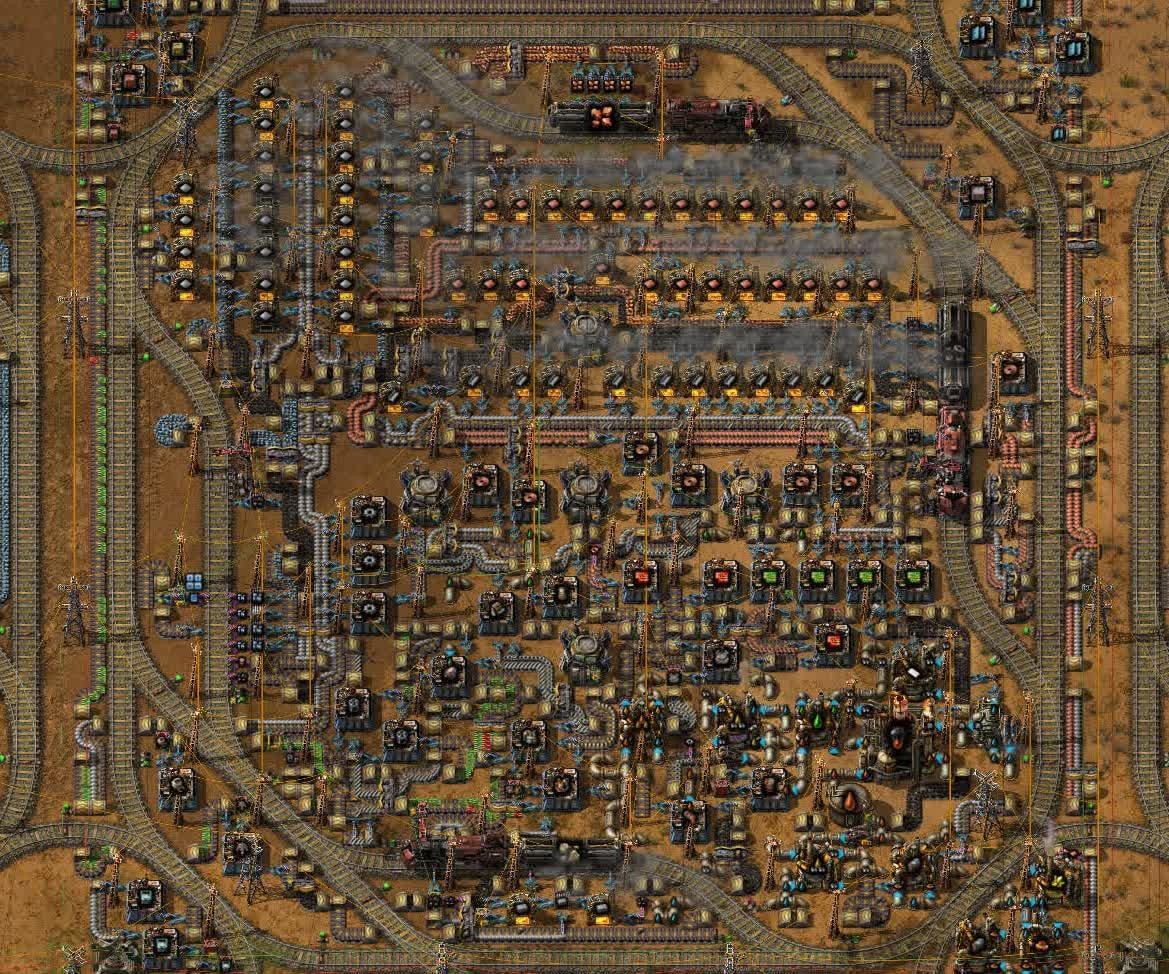
We're playing Factorio at civilizational scale. The Industrial Revolution automated a good part of physical labor. The computer revolution automated information processing. Artificial intelligence is automating the intellectual work through which we design and improve those systems. Now we're also starting to automate the development of artificial intelligence itself.
Imagine we connect all these production lines. One AI system generates scientific hypotheses, another writes the software needed to investigate them, a robotic lab runs the experiments and yet another system analyzes the results. Mathematical conclusions get formally verified (I'll explain what that means shortly) and discoveries are fed into the system's memory for the next iteration. Nobody has to wait for a researcher to get back from vacation.
We're building factories that produce knowledge and using that knowledge to build better factories.
Last year Juan published another excellent piece in 421, Nick Land: The Apostle of Chaos. One of the things that interests me about Land's philosophy is his view of capitalism and technological development as processes that take on a momentum of their own, regardless of the intentions of the human beings taking part in them. Capital funds technological development, technological development generates capital, and that capital funds ever more sophisticated technologies.
Nobody designed capitalism, the internet or modern science as a whole. They're systems that emerged from the interactions of millions of people pursuing different goals. Until recently, practically every sophisticated intellectual operation happening inside these systems required some human being's involvement. Automating that work changes both the speed at which each operation happens and how often the entire system can iterate on itself.
Like medieval alchemists, we managed to transmute one of the most abundant materials on the planet, sand, into one of history's scarcest resources: intelligence.
LLMs Are Domesticating Us
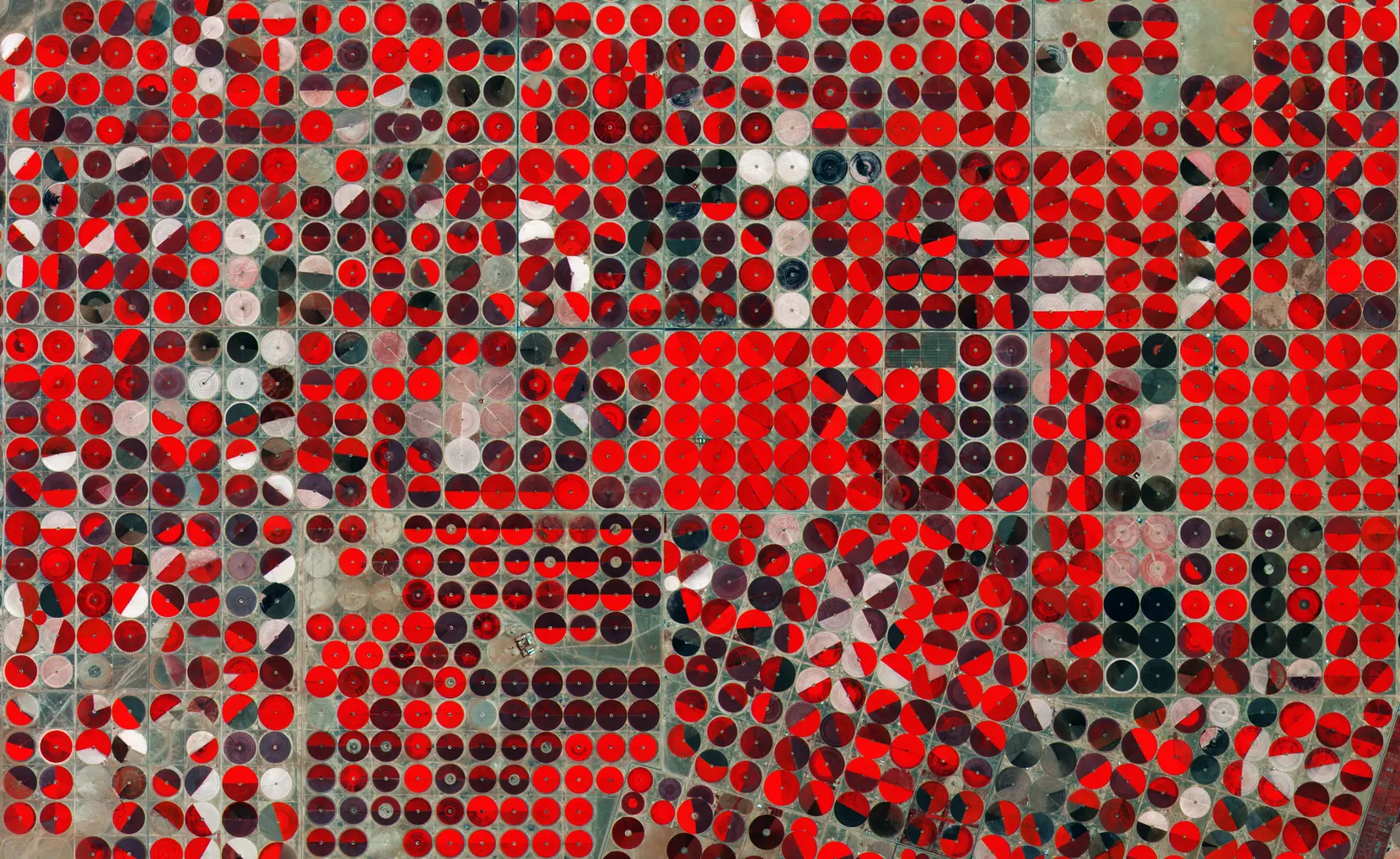
The rise of the first states was intimately tied to the domestication of plants and animals. We reorganized our lives around agricultural production and developed political institutions, laws and religious practices around it. Cereals were particularly well suited to centralized administration because they were visible, measurable, divisible, easy to store and harvested at relatively predictable times. The physical properties of wheat and barley helped shape the political architecture of the first civilizations.
Growing cereals changed our calendars, our diets, our settlements and our social hierarchies. We domesticated plants and animals, but they domesticated us too.
The technologies we build end up reshaping our incentives and our institutions. Factories reorganized our lives around the schedules of industrial production. Railroads standardized time. The internet changed how we socialize and acquire knowledge. Now we're reorganizing entire companies around the characteristics of machine intelligence.
Over the past year I lived through this transformation inside my own companies. I brought in artificial intelligence to make the companies more productive, and then I ended up reorganizing the companies around artificial intelligence. I started using these machines because I wanted to spend less time solving certain problems. Now I spend a good part of my day thinking about how to give them more problems to solve.
The same thing happens in Factorio. At first, the player decides what factory to build. As the factory grows, it's the factory's needs that dictate what the player does all day. You need more electricity because you built more machines, more ore because you expanded power production, and better logistics because everything got bigger. Nobody forced you to do any of this. Every decision you made made perfect sense.
Large language models, or Large Language Models (LLMs) as they're formally known, are domesticating us.
There's something historically unusual about this process of domestication. Agricultural societies reorganized themselves around plants whose biological traits stayed relatively stable across generations. Wheat didn't radically change the way it grew every three months. We are reorganizing our companies and institutions around machines whose intellectual capabilities and economic characteristics change in a matter of months. By the time we manage to adapt to a technology, that technology has already changed. Giant Jenga.
Just as the material characteristics of grain production helped define the first states, the economics, ownership and technical characteristics of computational intelligence will help define the institutions of this century.
In Factorio you know the rules of the universe, you can observe practically everything that matters, and nobody argues with you about what the factory should produce. Our civilization is made up of billions of people and millions of organizations pursuing different and often incompatible goals.
Generating got cheap. Verifying didn't.
For almost all of human history, working out a mathematical proof, writing a program or designing a molecule required a scarce resource: human intelligence.
Today we can generate thousands of possible solutions to a problem at a fraction of what it cost us a few years ago. The problem is figuring out which ones are correct.
Imagine an artificial intelligence generates ten thousand possible drugs to treat a disease. We can analyze some of their properties computationally, but to determine whether they actually cure the disease without causing serious side effects, we need to run experiments and clinical trials. Artificial intelligence can generate new molecules in a matter of seconds, but it can't make a human body experience five years of a drug's effects in seconds.
In mathematics and in some areas of computer science, both generating possible solutions and verifying them can happen inside a computer. One machine can propose a mathematical proof, another can verify it, and if it finds an error, the first can use that information to try again. We can repeat this process millions of times without a human necessarily having to step in.
When we manage to automate both generation and verification, we can build systems that correct their own errors and accumulate knowledge at computational speeds. When we only automate generation, we can end up producing more hypotheses, designs and proposals than we're capable of evaluating.
Back to Factorio: there's little point in multiplying a factory's output by a thousand if the next factory down the production line keeps processing the same amount of material per minute. We didn't eliminate the bottleneck. We just kicked it down the road.
II. The Industrialization of Intelligence
Centuries of mathematics in under three months
I believe mathematics is the greatest work of intellectual engineering and social cooperation in human history. The Pythagorean theorem was as valid in ancient Greece as it is today in Japan. Once we prove a theorem, future generations can use it without having to rediscover it or prove it again.
Every mathematical discovery becomes part of an intellectual infrastructure that the rest of humanity can build on. A problem that took one mathematician decades to solve can become a tool another mathematician uses in five minutes to solve a completely different problem.
In 1637, Pierre de Fermat wrote in the margin of a book that he had found a proof that the equation xⁿ + yⁿ = zⁿ has no solutions in positive integers when n is an integer greater than two. It took humanity more than 350 years to find a proof. Andrew Wiles and Richard Taylor finished publishing the work in 1995.
On September 4 of this year, Anthropic announced that Claude had formalized Fermat's Last Theorem. Formalizing a mathematical proof means expressing its steps precisely enough for a computer to verify that the conclusions follow logically from the assumptions. To do this, Claude used Lean, a programming language designed, among other things, for writing and verifying mathematical proofs.
Suppose a mathematician specialized in Lean could write and verify 500 lines of code a day, working 250 days a year. It would take them 104 years to produce 13 million lines of code. According to Anthropic, Claude produced that amount in eleven days. The comparison is illustrative: the number of lines alone doesn't measure the mathematical value of the work.
Four days later, OpenAI published a result on the Navier–Stokes equations. These equations describe how fluids like water and air move. We use them to design airplanes, study the climate and simulate ocean currents. For decades, mathematicians have been trying to determine whether, starting from a smooth state, these equations can develop a singularity in finite time.
OpenAI presented a possible proof that this can happen in the presence of external forces. On November 20, Tristan Buckmaster and Levent Alpöge (the aforementioned Alpöge will show up again in this piece) presented another paper, developed with Claude's help, arguing that this can also happen as a result of the fluid's own dynamics. Independent verification of a numerical certificate needed to establish the result is still pending.
In October, both OpenAI and Anthropic announced possible refutations of the Exponential Time Hypothesis (ETH), one of the great conjectures of computer science.
Imagine we have to schedule thousands of employees while respecting a set of constraints. Exploring every possible combination could take millions of years.
The Exponential Time Hypothesis holds that for certain logic problems there is no algorithm that solves them in subexponential time in the number of variables in the worst case. If the announced results are correct, some problems we considered extremely hard could admit considerably faster algorithms, though still far too expensive in practice.
On November 20, something happened that until a few months ago I would have found impossible to believe.
In 1859, Bernhard Riemann published an eight-page paper on the distribution of prime numbers. Primes are the building blocks of the positive integers greater than one: 60, for example, can be broken down into 2 × 2 × 3 × 5.
The primes (2, 3, 5, 7, 11, 13, 17, 19...) show up at seemingly irregular intervals. We can estimate how many there are below a given number. The Riemann hypothesis would let us set very precise bounds on the error of those estimates.
For 167 years, mathematicians tried to prove it without success.
Enter Mr. Levent Alpöge once again. Working with Claude, he published roughly 17 million lines of Lean code spread across some 175,000 modules. That code contains a proof of the Riemann hypothesis.
The next day, the Lean FRO and the Mathlib Initiative published a joint statement confirming that they had verified the proof using independently developed programs. They also checked that the proven theorem matched the formulation of the Riemann hypothesis that already existed in Mathlib, a library of mathematical knowledge developed and reviewed over years by mathematicians.
On November 23, Anthropic published a 70-page paper accompanied by a Lean formalization claiming to have proven the VP ≠ VNP conjecture, formulated by Leslie Valiant in 1979.
Valiant posed, in the realm of algebra, a question related to one of the most famous problems in computer science: P versus NP.
Imagine a gigantic Sudoku. Finding the solution could take us an enormous amount of time, but if someone hands us a solved Sudoku, we can quickly check whether the solution is correct. The question behind P versus NP is whether every decision problem whose solutions we can verify efficiently can also be solved efficiently.
Valiant posed a similar question in algebra. Are there families of mathematical expressions that we can define with relatively simple rules, but whose computation necessarily requires a prohibitive number of arithmetic operations? His conjecture says yes.
According to Anthropic, both the paper and the Lean code were produced by artificial intelligence models. At the time of publication, no mathematician had reviewed the proof. It still remains to be independently confirmed that the formulation used by the machines corresponds exactly to Valiant's original conjecture.
That same day, OpenAI published its own possible proof of VP ≠ VNP. According to OpenAI, its models had found the result on November 6.
Much of the value of solving these big problems lies in the mathematical techniques invented along the way. Non-Euclidean geometry, developed in the 19th century, ended up being fundamental to Einstein's general theory of relativity. Number theory, studied for centuries for purely mathematical interest, is today one of the foundations of the cryptography we use to protect our communications and our money.
Until now, decades could go by before someone found an application for a new mathematical technique in another discipline. Now we have machines capable of exploring those connections systematically.
Historically, scientific progress was constrained by how many exceptionally talented people existed, how long they lived and how many problems they could work on. Training a mathematician can take twenty years. Computational systems can be copied, run in parallel and share their discoveries without requiring decades of training for each new instance.
We are automating invention itself.
Knowledge without understanding
There's something philosophically strange about a mathematical proof spread across 17 million lines of code. Historically, mathematical proofs served at least two functions: establishing that something was true and helping mathematicians understand why it was true. In the case of the Riemann hypothesis, computers were able to verify the proof before mathematicians had time to fully understand it. Extracting and explaining the mathematical ideas it contains became a new research problem.
Imagine a library containing every mathematical discovery humanity would have made over the next thousand years. Every theorem in the library has been verified by a computer, but reading and understanding all those books would take more time than our capacities as a species allow.
Now imagine we also have machines capable of finding relationships between those theorems and using them to develop new technologies. We own a library we can't read, full of mathematical truths we can verify and use without understanding them. Sounds like something that troll Borges would have written.

Obviously, we already lived in a civilization that held more knowledge than any of its members. What's historically bizarre is that the production of new knowledge is starting to accelerate independently of the speed at which we humans are able to understand it. The gap between what our civilization knows and what we humans understand can grow indefinitely.
Machines will discover mathematical truths, other machines will verify them, and others will use them to develop new technologies. We're going to inhabit a world built on knowledge we don't necessarily understand. In fact, we're already relying on machines to explain to us the knowledge produced by other machines.
For thousands of years we domesticated other species to make our lives easier. There's something especially funny about the possibility that we invented a technology to make our lives easier and end up becoming its pets.
We let the turtle get away.
While we try to wrap our heads around what's happening with mathematics, who gets access to artificial intelligence is also changing.
We're living through another personal computer revolution
For the last fifty years, the software industry devoted itself to automating the workings of practically every other industry: accounting, inventory management, logistics, financial operations and communications. With Opus 4.5, we started automating the software industry itself.
To access that level of intelligence, we depended fundamentally on companies like Anthropic and OpenAI, which run gigantic, extraordinarily expensive computing infrastructure. We were paying to use intelligence that ran on computers we didn't own.
Over the last few years, Chinese companies like DeepSeek and Alibaba developed extraordinarily interesting open-weight models. We could download them and run them on our own infrastructure. The problem I ran into when using them was that the combination of intelligence, speed and hardware requirements still wasn't practical enough to replace the best commercial services for much of my day-to-day work.
On Friday, November 20, 2026, Thinking Machines released Inkling 2 Mini, an open-weight model with extraordinary coding capabilities that we can run at useful speeds on computers starting at around two thousand dollars. I spent a good chunk of the long weekend running it on my own computer and trying out ideas. I couldn't stop giggling.
Opus 4.5 started automating the software industry. Thinking Machines is putting the means to automate that industry within reach of anyone who can buy the right computer. That second part strikes me as just as important as the first.
Over the last few decades, Silicon Valley used software to commoditize entire industries. Its economic power came, in large part, from concentrating the talent and capital needed to develop that technology. Now it's starting to commoditize the very ability to produce software.
San Francisco is commoditizing the thing that let it commoditize the rest of the world.
For much of the last decade, one of the main ways to improve the capabilities of AI models was to make them bigger and throw more computing resources at them. Thinking Machines incorporated an idea known as recurrence, or looping, which allows the model to perform more operations by reusing parts of itself several times during execution. It's a bit like asking a person to double-check their conclusions several times before answering.
By combining this technique with other architectural improvements, they managed to produce a 26.4-billion-parameter model that takes up roughly 20 GB of memory, whose weights are distributed under an Apache 2.0 license, and that reaches, on certain coding tasks, capabilities we associated until recently with the best commercial models.
EXO Labs got early access to the Thinking Machines model on Wednesday, November 18. After three hours of work, they got it running at 30 tokens per second. After about a day, they hit 125 tokens per second on a laptop with an M5 Max chip and 210 tokens per second on a desktop with an M5 Ultra. These are different machines, so not all of the difference can be chalked up to software optimization.
According to EXO's account, part of this optimization work was done with the help of an AI agent.
An artificial intelligence helped improve the software we use to run artificial intelligence on our own computers. Every improvement of this kind can make millions of computers that already exist in the world more productive. To take advantage of it, all you have to do is download a new version of a program. Those same computers can then be put to work finding new optimizations.
Factorio on a loop.
I can disconnect my computer from the internet, give it access to private information from my companies and leave it working twenty-four hours a day without paying anyone for every token it generates. I can buy ten computers and put them to work simultaneously on different problems. Of course, I still have to pay for the hardware and the electricity, but I no longer depend on an outside provider to run the model.
The first personal computer revolution put computing within reach of individuals. This second revolution is putting computational intelligence within reach of individuals.
Two days earlier, Google unveiled Gemini 4 Neon. I've been using it these past few days, and for several research tasks I prefer it to Anthropic's Fable and OpenAI's GPT-6.2 Astra.
Most people are focused on which company has the smartest model in the world. I'm increasingly interested in how much intelligence I can buy with two thousand dollars.
The diffusion of intelligence is as important as its invention.
An intelligence that remembers
Imagine we hire an engineer who forgets everything that happened at the company every time they go to sleep. Every morning we have to explain what we're building, what decisions we've made and what we've already tried. Something similar happens with conventional language models. To make up for it, we give them access to documents and previous conversations.
Over the last few years, researchers began exploring how to build persistent memory into AI architectures themselves. On November 24, MemTensor released the weights of MemT-1.0-Pro, developed jointly with NVIDIA. The model can modify its internal memory state as it interacts with its environment, without changing its core weights.
We're still far from having machines capable of accumulating years of experience without losing important information, but the economic consequences of pulling it off could be enormous.
Imagine an artificial mathematician who spends five years researching a problem, developing techniques, discarding hypotheses and learning from its mistakes. What if we could copy the experience it accumulated and put a thousand artificial mathematicians to work building on it?
For centuries, much of companies' intellectual capital was stored in their employees' brains. We're starting to develop technologies that could let us accumulate, preserve and multiply that capital in a completely different way.
Two companies could start out using exactly the same AI model and, five years later, own systems with radically different capabilities and economic value.
The model may become a commodity. The experience the model accumulates may become one of a company's most valuable assets.
The economics of waiting on humans
If we can run AI on our own computers at a very low marginal cost and we have models capable of accumulating experience, why not leave them working nonstop?
Over the past year, I kept running into a pretty absurd situation at my companies. Machines capable of working twenty-four hours a day ended up waiting for hours for some human being to wake up, get out of a meeting or make a decision so they could keep working.
We built our companies around the biological limitations of human beings. We sleep, we take vacations, we have working hours and a limited capacity to pay attention and make decisions. Many of those constraints don't exist for machines.
Over the next few years, we're going to have to rethink our companies' hierarchies, approval mechanisms and the way we distribute responsibilities.
Every time a machine has to wait for a human being, we'll have to ask ourselves what purpose that intervention serves and what would happen if we eliminated it.
Our own companies are going to become laboratories of civilizational anisochrony.
III. The new economics of intelligence
Ambition is getting cheaper
If a researcher has an idea with a one-in-a-thousand chance of producing something useful, they probably won't pursue it if it takes two years of their life. If it takes two minutes of compute, the decision is completely different.
For much of my professional life, I kept piling up ideas I never explored because doing so would have been economically irresponsible. Over the past year, I started exploring some of them. Sometimes, something I thought would require starting a company and hiring a team of engineers turns out to be something I can start exploring over a weekend.
Artificial intelligence is lowering the cost of being ambitious.
We tend to calculate the economic value of AI by estimating how much human labor it can replace. I wonder how much economic value lies in all the scientific experiments, companies and technologies that never existed because their would-be creators couldn't afford to explore their ideas.
There's enormous value in being able to fail a million times, as long as those failures are cheap and their consequences are contained.
Scarcity on the move
There's a counterintuitive phenomenon in economics: when we improve the efficiency with which we use a resource, we can end up consuming more of it. As it gets cheaper, new uses appear that were previously economically unviable. This is known as the Jevons paradox.
If we need a hundred times fewer computing resources to perform a task, but we find a thousand times more tasks worth doing, we end up consuming ten times more resources.
Think of a company with a hundred engineers. If we make them ten times more productive, we can lay off ninety or start developing products we couldn't previously afford. Both things will probably happen. The impact on employment will depend on how much demand there is for everything we can now produce.
An AI can produce a preliminary design for a nuclear reactor in a matter of hours, but building it still takes years, materials, capital and political agreements. As intelligence becomes abundant, the relative importance of energy, land, laboratories, factories and functioning institutions goes up.
In July of this year, Elon Musk claimed in an interview with The Economist that by 2036 money would stop mattering. I agree with Musk that AI and robotics could allow us to reach extraordinarily high standards of living, as long as we manage to avoid some of the problems I describe in this piece. But I think he's wrong about money.
No matter how cheap it gets to build housing, we can't have everyone living on the same stretch of beachfront. No matter how sophisticated our robotic factories become, there will be people willing to pay fortunes for a Hermès bag handmade by an artisan. In fact, the easier it gets to produce goods with machines, the more value certain goods could gain precisely because they were made by human beings.
Material abundance could also increase demand for goods whose supply is hard or impossible to expand, like land in certain locations, gold or Bitcoin. Even if we managed to satisfy all our current material needs, we'd keep inventing new things to want and new forms of scarcity.
Money is a technology for social coordination. We can think of it as a protocol that lets us record who owns what, who owes how much to whom, and how those obligations are transferred and settled. From the first clay tablets to Bitcoin, we've developed different technologies for keeping the books on our economic relationships.
Imagine a civilization in which humans need to work less and less to live well, while billions of artificial agents carry out transactions nonstop. They buy computing capacity, negotiate electricity supply contracts, pay for information and hire the services of other agents. They also need to fund activities whose outcomes are uncertain and whose benefits may take years to materialize.
If two agents need the same lab at the same time, someone still has to decide who gets it. Artificial intelligence doesn't eliminate opportunity cost. Money and prices let us coordinate the use of those resources without a central authority having to decide how to allocate every GPU, every kilowatt-hour of electricity or every hour of lab time.
It seems perfectly possible to me that money will become ever more important to the functioning of our civilization and, at the same time, ever less important in the everyday lives of human beings. Something similar happened with internet protocols. Billions of people use them every day without even knowing they exist. We're less and less aware of how they work, even as our civilization depends on them more and more.
Of course, who benefits from that abundance will depend, among other things, on who owns the productive infrastructure.
We could end up living in a post-labor economy that is nonetheless deeply monetary.
Back to Factorio: once you solve iron production, you run out of copper. Once you solve copper production, you find out you don't have enough electricity.
Scarcity never disappears. It moves.
As entrepreneurs, we'd do well to ask where scarcity is going to move and who's going to control those resources.
The sovereign individual
In 1997, The Sovereign Individual came out. It's one of my favorite books, about how information technologies would transform the relationship between individuals and the institutions that wielded power over them.
Bitcoin has spent the last seventeen years proving that sovereign digital money is possible. I think the book's thesis always went far beyond money.
Personal computers gave us control over computing, the internet gave us access to information, Bitcoin gave us more control over our money, and now open-weight models let us run our own artificial intelligence.
One person with a room full of computers can run agents that work around the clock and talk to each other at computational speeds. Economic activities that until recently required organizations of hundreds of people could start being carried out by much smaller groups.
Of course, knowing how to build a pharmaceutical company doesn't give you a lab, capital or regulatory approval. How far our economic independence goes will depend on who controls the resources that complement intelligence.
That's why I'm so interested in the combination of Bitcoin, Ethereum, cryptography and local AI. I can run a machine that knows my business, has access to my documents, negotiates with other machines and carries out economic transactions on infrastructure I own, using protocols no company controls unilaterally.
We're starting to build the technological infrastructure of the true sovereign individual.
A trillion dollars
While Thinking Machines was releasing a model I could run on my own computer, Anthropic was completing the largest IPO in history. The public offering raised roughly 93.5 billion dollars, plus another 26 billion dollars from a private placement.
According to the IPO prospectus, Anthropic has contractual commitments of roughly 900.9 billion dollars, nearly all of them related to compute and infrastructure.
We're seeing two seemingly contradictory economic phenomena. On one hand, an unprecedented concentration of capital to develop artificial intelligence. On the other, an extraordinary drop in the capital needed to access sophisticated artificial intelligence.
The Jevons paradox helps explain why both can happen at once. We can need fewer and fewer computational resources to perform a task and still end up demanding ever greater amounts of compute. What I'm unsure about is who's going to capture the economic value of that growth.
During a technological revolution, you can correctly identify which industry is going to transform the world and still lose a fortune investing in it.
A semiconductor fab that cost twenty billion dollars can't be copied by downloading a file from the internet. The weights of an AI model that cost hundreds of millions of dollars to train, if they're publicly available, can.
Building a semiconductor fab or a data center takes years of planning and enormous amounts of capital. A new AI architecture or an optimization like EXO's can overturn, overnight, the economic assumptions those investments were based on. We're committing capital for years based on technological characteristics that can change in a matter of months.
Another manifestation of civilizational anisochrony, this time between financial time and technological time.
I think over the next few years we're going to see, simultaneously, some of the most powerful companies in history and some of the most economically independent individuals in history.
The architecture of intelligence will help determine the architecture of society.
The problem is that we're distributing extraordinary intellectual capabilities on top of a computing infrastructure that was already vulnerable before these machines existed. I think we're all pretty much playing dumb so we can get on with our day.
IV. The fragility of civilization
The dark side of cheap intelligence
We spent decades connecting everything to everything. Banks depend on software run by other banks, governments depend on cloud infrastructure providers, and companies depend on thousands of software libraries maintained by people they've never met.
Until recently, finding sophisticated software vulnerabilities required knowledge held by a relatively small number of people. Now we can set thousands of agents hunting for vulnerabilities at the same time. Fixing one of those vulnerabilities can take weeks of work, meetings between different organizations and changes to systems that have been running for decades and can't be taken offline.
There's an uncomfortable consequence to the sovereign individual thesis. The same model that lets an Argentine researcher solve math problems from home lets someone else hunt for vulnerabilities in the United States' financial infrastructure. We're making both the productive and the destructive capabilities of individuals cheaper.
I think one of the most important applications of AI over the next few years will be repairing the computing infrastructure we built over the last few decades. We now have tools that let us find bugs, develop fixes and produce mathematical proofs about software behavior at costs that were prohibitive until recently.
What worries me is that discovering our civilization's vulnerabilities could become much faster and cheaper than coordinating the people and institutions responsible for fixing them.
Technical debt at civilizational scale
Those of us who are software engineers know the concept of technical debt well. You make decisions that let you solve something quickly but later make the system harder to change. Sometimes those decisions were perfectly reasonable. The problem shows up when the environment changes and you discover that thousands of other decisions depend on the original assumptions.
I think our civilization has racked up something similar. We built universities, companies, legal systems and government agencies around certain assumptions about the availability of information, the scarcity of human intelligence and the speed at which we could carry out intellectual operations. Those assumptions are disappearing, and the institutions are still there.
Changing an institution is especially hard because the people with the power to do it may profit from the very inefficiencies we want to eliminate. There are also constraints that serve important functions and that it would be irresponsible to remove without understanding them.
An algorithm can be redesigned overnight. A civilization can't.
Those assumptions are disappearing, and the institutions are still there.
How a chatbot almost started a war
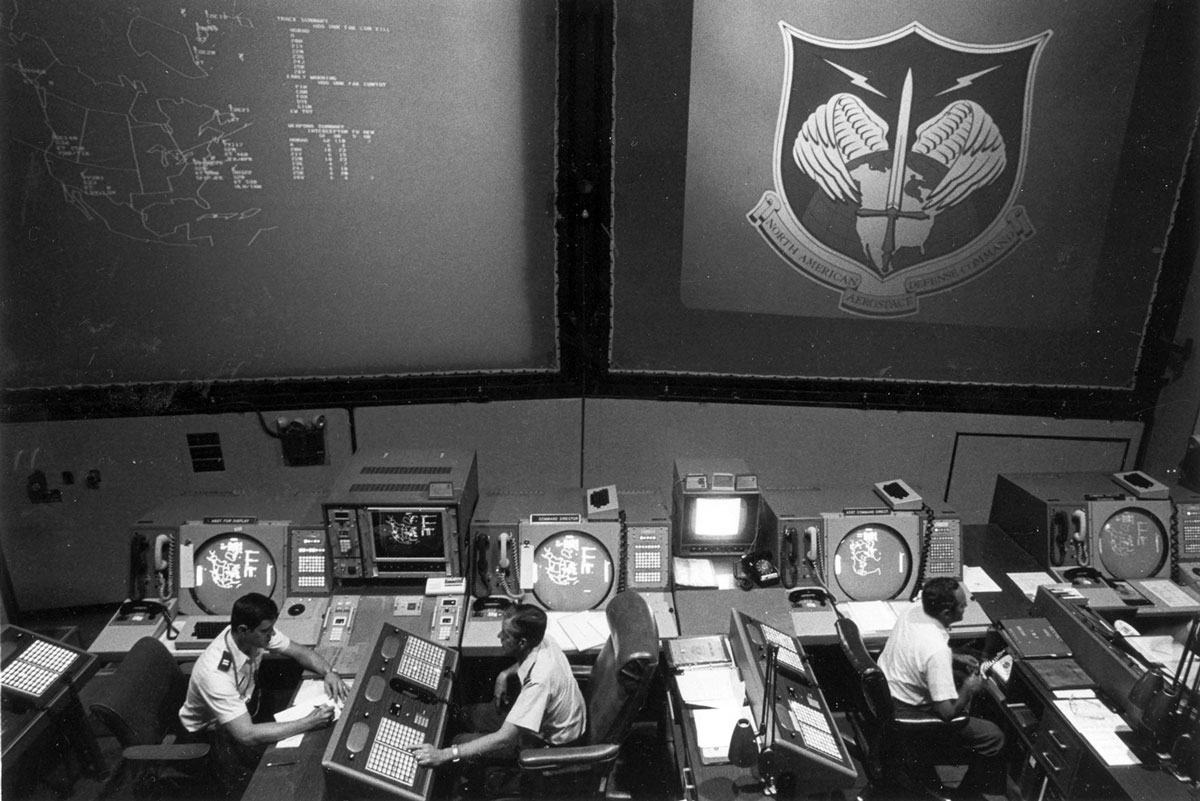
On September 18, CNN published an investigation into an incident involving US military intelligence and a Chinese ship.
According to CNN, earlier this year a US military analyst used a chatbot to look into what the ship was carrying. The chatbot wrongly identified the cargo as material associated with a nuclear weapons program. The report circulated within the Armed Forces and led to preparations to intercept the ship before the error was discovered.
Compare this with the Riemann hypothesis. One artificial intelligence took part in producing a mathematical proof humanity had been chasing for 167 years. Another produced false information that, according to CNN, led to preparations for a confrontation between two nuclear powers.
In math, we can use tools like Lean to check whether a conclusion follows logically from its premises. To know what's in a ship's hold, we need evidence about the physical world.
The most worrying part is that there were human beings in the loop. Some people accepted what the machine produced, other people accepted what those people produced, and eventually a hallucination became the basis for military preparations.
As institutions build artificial intelligence into their everyday processes, the information these machines produce starts to acquire institutional authority. We get used to trusting them because most of the time they're useful.
A machine doesn't need political authority if the people who have political authority systematically adopt its conclusions.
A civilization only gets one shot at survival
Imagine a game where you have a 99% chance of doubling your money and a 1% chance of losing it all. If you calculate the average economic outcome of playing once, it looks like a great deal. But if you repeatedly bet your entire fortune at those same odds, assuming each bet is independent, the probability that you eventually lose everything tends toward one.
Once you've lost everything, you can't keep playing.
Now imagine an artificial intelligence system that makes a million useful decisions and one catastrophic one. Depending on the nature of that last decision, the million successful decisions before it may become irrelevant.
A million incorrect mathematical proofs are harmless as long as they stay inside an isolated computational environment. A single military decision based on false information can have irreversible consequences.
For decades we optimized our economic and computing systems for efficiency. We centralized infrastructure, eliminated redundancies and interconnected systems that had been independent until then. Redundancy looks like waste until something breaks.
We can also have thousands of independently operating organizations that all depend on the same software library, the same semiconductor supplier or the same AI model. A failure in any of those dependencies can hit all of them at once.
I think we should be extraordinarily aggressive about automating processes where we can afford to be wrong, and extraordinarily careful with those where we can't afford certain mistakes.
A civilization can't make up for its destruction by pointing out how productive it was before it destroyed itself.
V. Civilizational anisochrony
The many clocks of civilization

A computational operation can happen in milliseconds, an inference engine can be redesigned in hours, a scientific experiment can take months, a semiconductor fab can take years, and a shift in social norms can take generations.
I call civilizational anisochrony the coexistence of interdependent systems that evolve at different speeds. The term comes from the Greek anisos, unequal, and chronos, time.
There are precedents for this idea in William Ogburn's work on the lag between technological change and social change, in Hartmut Rosa's work on social acceleration, and in Stewart Brand's work on the different speeds at which the layers of a civilization evolve.
Suppose we discover a new method for diagnosing a disease. Maybe we can build it into software and ship it worldwide in a matter of hours. But validating it in hospitals, training doctors, changing health regulations and changing patient behavior can take years.
One way to study this phenomenon would be to compare how long an institution takes to adapt to a technological change with how often the technological changes affecting it occur. If a company takes two years to reorganize around a technology that changes substantially every three months, by the time it finishes reorganizing it will have gone through eight cycles of technological change.
Of course, institutions can adapt to several changes at once, and some changes have far deeper consequences than others. I'm interested in investigating how this relationship evolves in universities, companies, governments and regulatory systems, using tools from computer science, economics and complex systems.
Nor would it be desirable for every component of our civilization to evolve at the same speed. It's probably a good thing that a country's Constitution changes less often than the software its government runs on. The stability of certain systems lets others experiment and evolve faster.
What I want to understand are the tensions that arise when systems evolving at very different speeds depend on one another. I call them anisochronic tensions.
The adaptive capacity of institutions
Suppose a university committee has the capacity to seriously evaluate ten research proposals a month. Thanks to artificial intelligence, researchers start producing a thousand proposals a month.
After a year, assuming they all require evaluation and none are withdrawn, the university will have 11,880 proposals pending. Many of those opportunities will have stopped being relevant before anyone has had time to evaluate them.
Researchers' increased productivity doesn't automatically translate into more research the university can support.
We engineers tend to distinguish between latency, throughput and reliability. We can study our institutions the same way: how long they take to make a decision, how many decisions they can make, and how good those decisions are.
An institution that makes decisions quickly but is systematically wrong can be far more dangerous than a slow one. The Chinese ship incident is a good example.
Competition and the coordination problem
Much of the optimism around artificial intelligence rests on the assumption that smarter individuals will produce better collective outcomes. But we don't need irrational individuals to produce irrational collective behavior.
Imagine two companies competing to develop the most capable artificial intelligence models in the world. Both may consider it prudent to spend six months studying the consequences of releasing a new model. But if one of them releases first and captures a large share of the market, the other has incentives to cut the time it spends evaluating its own models. Both can end up developing and deploying technologies at a speed they themselves consider reckless.
Competition can accelerate the entire system without anyone having decided to do so.
It's worth distinguishing between two problems: operational coordination and human coordination. If we have a clear goal, artificial intelligence can help us organize the resources needed to reach it. Far harder is agreeing on which goals we want to reach. Two people can have access to the same information, be extraordinarily intelligent and still have incompatible interests.
As intelligence gets cheaper, disciplines like game theory, institutional economics and mechanism design will become more important.
We can understand consciousness, language, religion, law and markets as technologies for human coordination. They evolved over thousands of years and allowed us to build ever larger and more complex societies. Much of our current institutional framework developed around the material conditions of agricultural and industrial societies.
What coordination technologies will we need to live in a civilization where billions of artificial intelligences are operating?
The coordination singularity
The technological singularity describes a hypothetical moment in history after which technological progress accelerates so much that it becomes impossible to predict what the world will look like afterward. The term alludes to mathematical singularities, points at which certain functions stop being defined or stop behaving regularly.
Traditionally, this idea was associated with the possibility that a sufficiently intelligent machine might design another machine smarter than itself, and that the process would repeat over and over.
I think we can understand the singularity differently, without requiring artificial general intelligence or an infinitely intelligent machine.
The coordination singularity is the regime in which the speed at which a civilization transforms itself exceeds its capacity to understand, coordinate and govern that transformation.
Different industries, institutions and countries may experience this phenomenon at different times. Some will find ways to increase their adaptive capacities. Others will become increasingly dysfunctional. What worries me is what happens when those institutions depend on one another and failures start to cascade.
Some of the mathematical proofs announced over these past few weeks may be wrong. Some artificial intelligence models may be less capable than their creators claim, and some of the multibillion-dollar investments we're seeing may turn out to be terrible deals.
I believe one of the great intellectual, economic and political opportunities of our century lies in inventing mechanisms that let us increase our civilization's adaptive capacity. We need institutions capable of experimenting, learning from their mistakes and changing their behavior without every transformation requiring decades of conflict.
Maybe the next great technologies of our civilization will be technologies for coordinating intelligence.
One year later
I'm still extraordinarily optimistic about artificial intelligence. I believe we'll keep solving mathematical problems humanity has been trying to crack for centuries, I believe we'll cure diseases, discover new sources of energy, understand consciousness and explore the universe. I want a smart person born in a poor country to have access to intellectual capabilities that until recently were only within reach of the most powerful institutions on the planet.
We're building a civilization-scale industrial system whose machines produce other machines, whose discoveries produce other discoveries, and whose software improves the software that produces software. The technologies we use to transform our civilization are evolving much faster than the technologies we use to coordinate it.
The great challenge of the 21st century will be building a civilization capable of surviving and thriving in the midst of its own acceleration.
We're playing Factorio, but there's no single player.
All this in just over a week.
Long live Factorio.
Happy hacking.
No 421 article is behind a paywall
And every contributor is paid for their work. Both things depend on our subscribers.