Why isn't there an AIDS vaccine yet?
Science Against HIV. A journey through the nostalgia of the 1990s, the mystery of retroviruses, and why, after 40 years and 250 attempts, the vaccine remains humanity’s greatest challenge.
My childhood and youth took place in the ‘90s in Villa Urquiza, in the City of Buenos Aires. The Friday night plan with my friends was to stroll down Monroe Street, grab a few Quilmes (which were of much better quality than the ones you find today and cost just a peso at the kiosks), and almost always end up at Las Grietas. Las Grietas was a sort of pub with grease stains on the ceiling where bands played with a pretty rough sound. In fact, the venue's drum set had the bass drum head patched up with a huge Isenbeck beer sticker on the inside. One of those nights, we saw a band that sounded particularly good. The drummer brought his own snare and cymbals, which were much more expensive than what we were used to seeing. Plus, he sang and interacted with the audience in a striking Spanish accent.
 Juan Ruocco 🧙♂️
Since we were the only ones paying attention, probably because we were the only ones there, when the musicians finished, they came over to chat with us. The band was called Dukakis, and the bassist casually mentioned that the drummer was from Los Rodríguez.
In disbelief, when I got home, I searched for the album Sin Documentos (a fantastic album), pulled out the booklet, and there it was: it was true, Germán Vilela, the same guy I had just seen playing with the bass drum patched up with the Isenbeck sticker, was the drummer for Los Rodríguez. It was an incredible moment. The seventh song on that album, Salud (money and love), my favorite, ended with a line that resonated with me a lot: “I toast to cirrhosis for the AIDS vaccine.”
As the first cases concentrated in the homosexual community, the stigmatization was quite striking. They talked about “gay plague,” “pink pest,” and things like that.
In the nineties, there were video rental stores, cassettes, phone booths, and a life that was still quite analog. There was also a lot of talk about AIDS: in the media, at school, in prevention campaigns, with a constant mix of fear, misinformation, and concern.
A few years earlier, in the early eighties, the first patients with a sudden and severe immunodeficiency had appeared. It was unclear what was causing this disease, but more and more cases were popping up in more countries. The affected individuals suffered a drastic decrease in T lymphocytes, which are crucial for organizing the immune response. Since the first cases concentrated in the homosexual community, the stigmatization was quite striking. They talked about “gay plague,” “pink pest,” and things like that. Before it was known that the protagonist, as often happens in human history, was a virus. In fact, a retrovirus.
Retrovirus
A few years before the epidemic began, retroviruses had been discovered.
Our cells store genetic information in long strands of DNA inside the nucleus (we talked about this in the CRISPR article). This information is transcribed to RNA and then translated into proteins. This path, from DNA to RNA and from RNA to protein, occurs in all organisms. Or in almost all. Because viruses sometimes do unexpected things. In the early seventies, retroviruses were discovered: viruses that can synthesize DNA by reading RNA, exactly the opposite of what our cells do. That's why they're called retro, because they go in the opposite direction of what is expected. In 1974, the first one was described, HTLV-1, which can cause leukemia.
In the early eighties, seeing that cases of the strange immunodeficiency continued to rise, a team of researchers from the Pasteur Institute in Paris wondered if this drop in T lymphocytes was being caused by one of those newly discovered rare viruses. And they set out to find it. How? Well, they took T lymphocytes from a person with symptoms, cultured them, and specifically looked for retrotranscriptase activity, that is, the ability to convert RNA into DNA, something that only retroviruses do. Now it was known that the immunodeficiency was caused by a human retrovirus.
They thought it was an HTLV (Human T-Lymphotropic Virus), but when they isolated it and found it was quite different, they named it the human immunodeficiency virus, HIV.
All of this happened incredibly quickly.
By 1983, just two years after the first cases, it was already known what caused the disease.
Treatments
AZT, which inhibits reverse transcriptase, was the first specific treatment for HIV. It was launched in 1987 and marked a paradigm shift because before that, the prognosis was terrible: there was nothing to do, just wait to see what opportunistic disease would affect immunosuppressed individuals. The development of treatments has been incredible; today there are about 25 available that inhibit each step of the viral cycle and can be combined. In fact, people on these combined treatments have a normal quality of life, and the amount of virus in their bodies is usually below the detection limits of diagnostic tests (meaning, undetectable). Although treatment cannot be stopped, studies that have closely followed thousands of affected individuals for decades have shown that if the virus is undetectable, it is also untransmittable.
The Vaccine
With the virus isolated so quickly, a vaccine seemed like an easy goal to achieve.
In fact, on April 23, 1984, U.S. Secretary of Health Margaret Heckler announced that a test for diagnosing HIV had been developed and that a vaccine was expected in about two years.
But more than forty years have passed, and we still don't have it. And it's not that there weren't attempts: there were over 250 vaccine candidates, and several were tested on thousands of people, but none proved effective.
HIV is the most studied virus in the history of humanity. Publications dedicated to HIV exceed half a million, which is staggering. We know it well: the virus enters the cell by interacting with a receptor on the cell surface called CD4 and a co-receptor, CCR5. Upon entry, the virus releases its genetic material (RNA) and a protein it carries inside (reverse transcriptase), which reverse transcribes it to DNA, and through an incredibly orchestrated series of steps, that viral DNA ultimately integrates into the rest of the human cell's genome.
And there lies the first problem. That cell, now with its own genetic information as well as that of the virus, can go unnoticed, doing nothing unusual for a long time. These cells are extremely difficult for the immune system to recognize because they don't behave differently from the rest; they just have a tiny little piece of extra information that, compared to the rest of the genome, is about 0.00015%. These cells that have their own information but also that of the virus are known as reservoirs. So, the virus is very difficult to eliminate from the body.
Juan Carballeda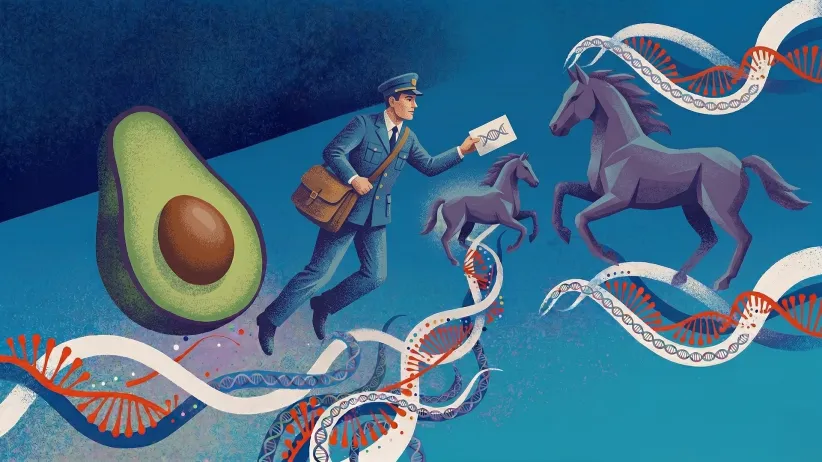
But that's not the only problem.
The first vaccines aimed to induce antibodies against the envelope protein, the most exposed part of the virus, which made sense at first. The problem is that HIV evolves very quickly, and those proteins change and stop being recognized by the antibodies.
Other candidates tried to activate T lymphocytes to locate infected cells, but that didn't work either due to the reservoirs, because they are impossible to detect. Vaccines with attenuated viruses, which work for other pathogens, are also not an option in this case, because they would require the DNA of those vaccines to integrate into the genome of the infected cell, which could lead to more than one problem.
Nevertheless, the search for a vaccine continues. There are new technologies using genetically modified viruses, RNA vaccines, and many others.
Those Who Were Cured
So far, only 7 people have been cured. Considering that today there are over 40 million living with the virus, that seems like a small number. These individuals are very specific cases, as they also had a type of cancer whose treatment involves receiving a bone marrow transplant, and they just happened to receive transplants from people who have a mutation in the CCR5 co-receptor, which the virus uses to enter the cell. That mutation is found in 1% of the human population and makes them naturally immune to HIV because the virus cannot enter those cells. Therefore, these cured individuals, who stopped treatment and whose virus remained undetectable, are very specific cases, and for now, it's not feasible to think about treatments of this kind on a large scale.
The first vaccines aimed to induce antibodies against the envelope protein. The problem is that HIV evolves very quickly, and those proteins change and stop being recognized by the antibodies.
Of those 40 million, it's estimated that 15% are unaware of their status, and among those who are aware, 76% are on antiviral treatment. Of those, 71% have an undetectable viral load, meaning they do not transmit the virus sexually.
The global strategy of the World Health Organization, known as 95-95-95, aims for 2030 to have 95% of people living with HIV aware of their status. Of that percentage, 95% should be on antiviral treatment, and in turn, 95% should have an undetectable viral load. With this, we would be very close to stopping the epidemic, even if the vaccine we will provide until cirrhosis does not appear.
Las notas de 421 no tienen paywall
Y a cada colaborador se le paga por su trabajo. Las dos cosas dependen de los suscriptores.