2026 World Cup Report: Crossing the United States by Bus
A journey through the heart of America: the 2026 World Cup from aboard the legendary Greyhound buses, amid characters on the edge and scenes of urban decay.

A journey through the heart of America: the 2026 World Cup from aboard the legendary Greyhound buses, amid characters on the edge and scenes of urban decay.

It's 4 in the morning and the N2434 has arrived on time at the Atlanta Bus Station, downtown in the capital of the State of Georgia. Getting off the Greyhound is slow; after all, there's nowhere to go until my Airbnb opens up at noon. The terminal is packed, I catch a whiff of ammonia from the restroom, and I notice a spot has opened up next to an African American woman with wild gray hair clutching a shopping bag. I suspect she's been sleeping there for days. In front of us, on a filthy floor, a girl is playing loudly, or maybe just the latter. The woman sighs heavily at first, opens her eyes, turns to her left, and gives the mother a lecture. She explains that the girl lacks discipline and shows her how it's done. She yells a couple of times at the little one, but also cracks a few jokes and convinces her to start drawing. She glances at me, seeking solidarity, and drifts back to sleep with the smile of experience and a job well done.
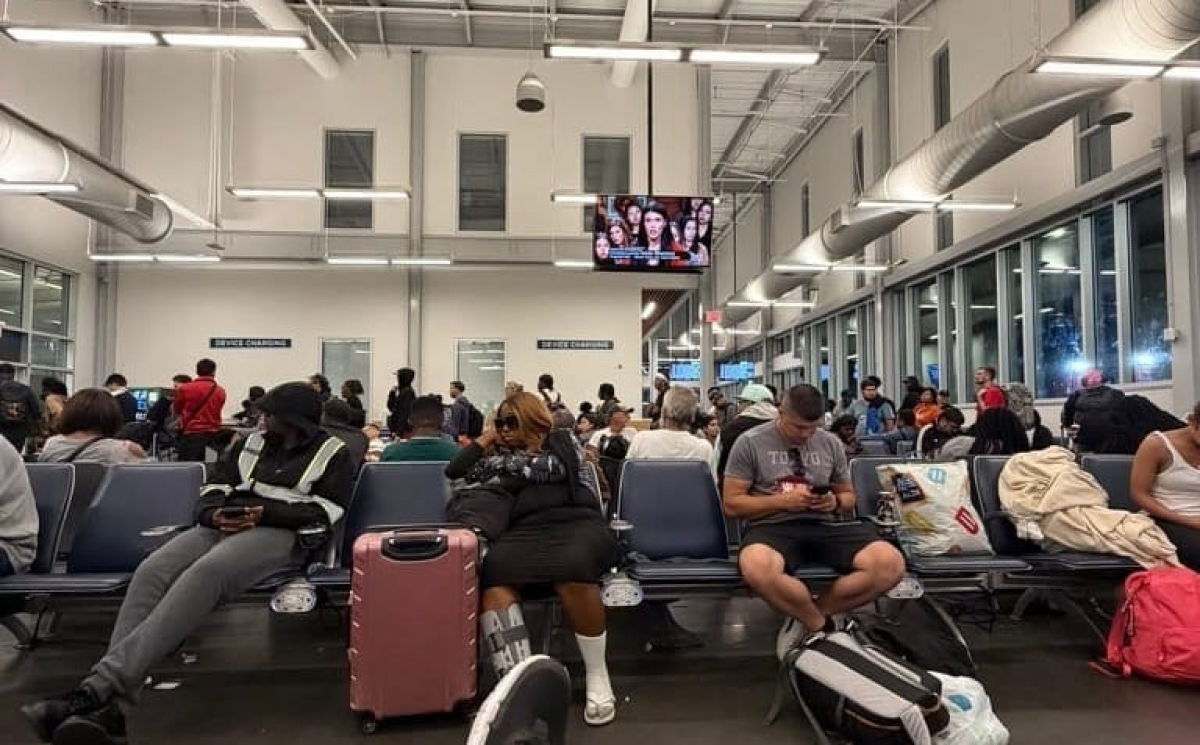
People are constantly coming and going, but what catches my attention the most are the drivers announcing their routes, some with aggression, others putting on a stand-up show. Also shouting. Airports are my favorite no-place in the world; I can wait there for hours. Clean carpets, a variety of dining options, hotel-like restrooms, spacious and open areas. There’s nowhere to go, but there’s no rush or obligations once you’ve passed through security. Long-distance bus stations in the United States are the exact opposite. It’s not even 5 yet, and every minute feels heavy; everything is uncomfortable. I can’t even think about pulling out a book, let alone my laptop. But going outside isn’t a good idea either; the streets surrounding the station are the territory of homeless people and fentanyl zombies, part of the landscape and, at first glance, not something that seems dangerous, but it’s better to wait for the sun to come up a bit.
Airports are my favorite no-place in the world; I can wait there for hours. Clean carpets, a variety of dining options (...). Long-distance bus stations in the United States are the exact opposite.
"The Greyhound station in Atlanta: a small hole of dirt filled with misery, desperation, and rage. It’s like visiting a prison. An interesting scene, a portal to a different perspective and way of life." This was written by Stuart Hendrick in 2007 in his master's thesis: "Chronicles of a Greyhound Gypsy," a journey of over 14,000 miles through 39 states, using buses as a microcosm to observe class, race, and religious tensions in a nation marked by war and technological rise. In his thesis, he describes passengers worn down by fatigue, poverty, and lack of leisure time.
The week Argentina played against Austria and Jordan in Dallas, I took a quick trip to see Portugal vs. Uzbekistan in Houston, just four hours away in the same state of Texas. I analyzed the plane, but the airports are far away; it doesn’t make sense for a short trip. There, I found some overnight bus trips that worked for me, so I wouldn’t have to pay for another accommodation.
Arriving at the station at midnight was my first contact with suburban America. A half-empty metro where someone tried to sell me something, crossing under a highway in complete darkness, a gas station where a slow-moving car stopped to tell me it was closed.
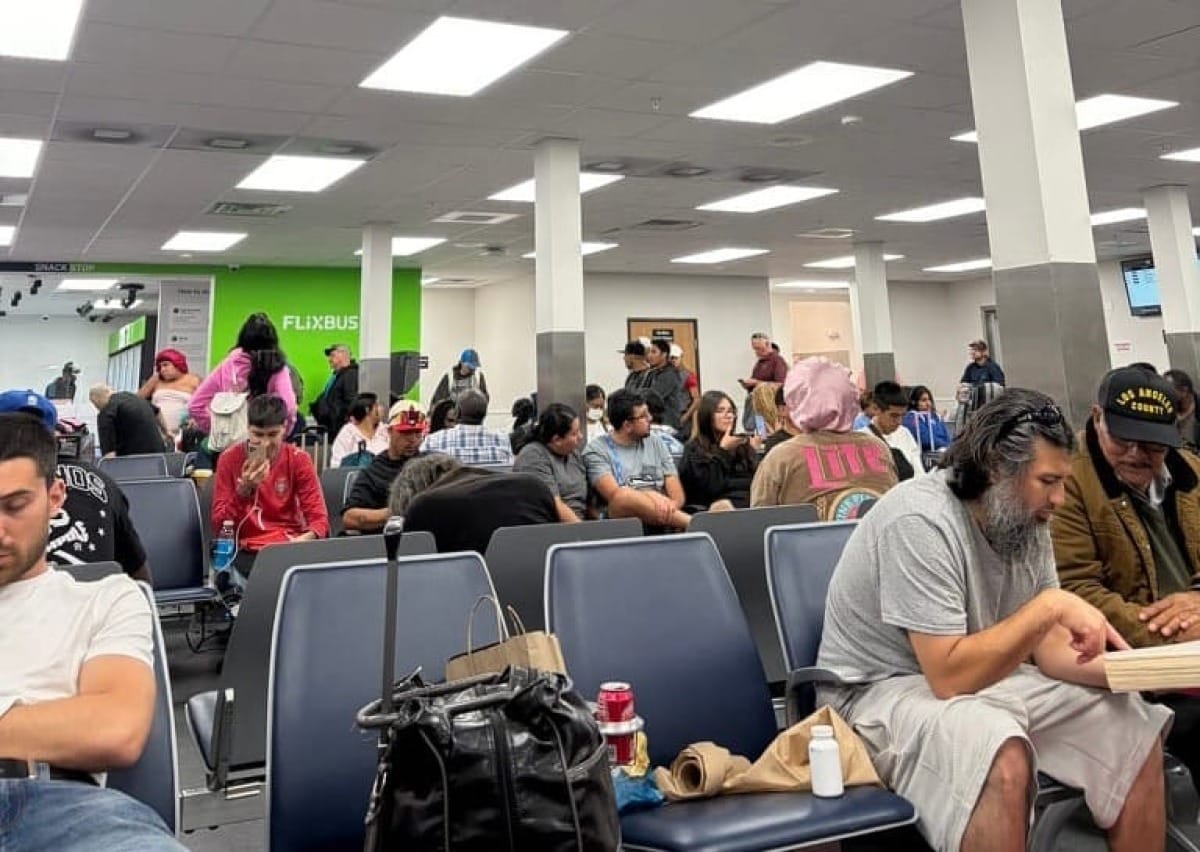
Once I find the station, I feel reassured to see a Brazilian photographer, a Mexican wearing a Cristiano Ronaldo jersey, a few Japanese tourists, and another guy with a mate in his backpack. But soon, these World Cup characters get mixed up in a noisy station, with some Mexicans reading the Bible out loud, the security guard repeatedly asking people to clear their belongings from the seats to make room, and an alarm from a system like Amazon Go for grabbing snacks.
Once on the bus, the driver lays down the rules: no alcohol or drugs on board. No smoking or vaping, but above all, no talking on the phone on speaker or watching videos with sound, he tells us, use headphones. I would hear this speech over and over again on the 7,000 kilometers I traveled. With different styles, but always conveying who’s in charge. The seat barely reclines, but it’s late and I can’t keep my eyes open, so I fall asleep easily.
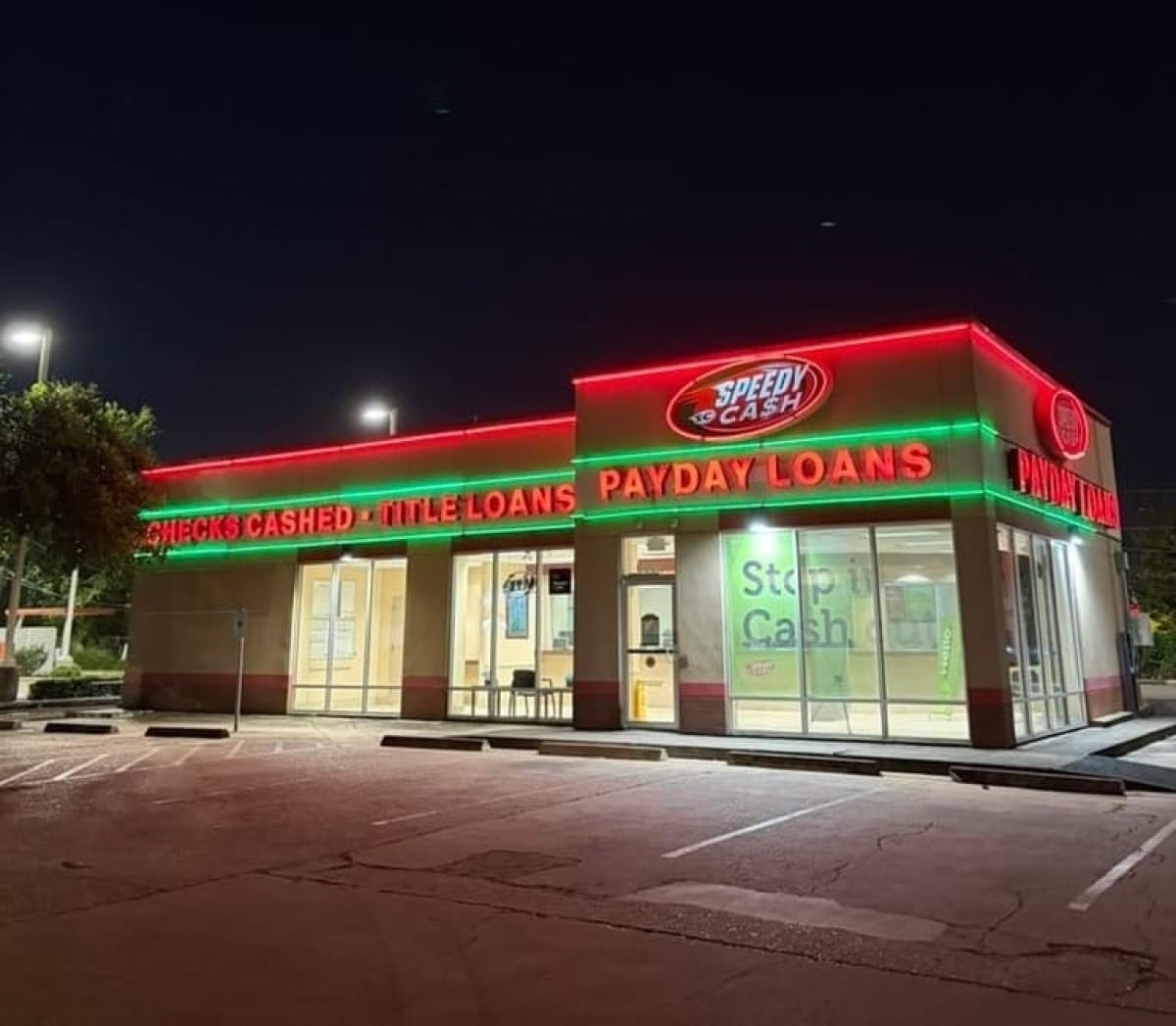
Around 4:30, the lights come on, signaling that we’ve arrived in Houston. The station is very small, and they make us exit to a hall that barely has any space. Most people order rides; I have no idea what to do. I wait a bit and step outside to see if there’s anywhere open to wait for dawn. I see some lights on, but it’s a “Speedy Cash,” a loan shop during the day with high-interest rates.
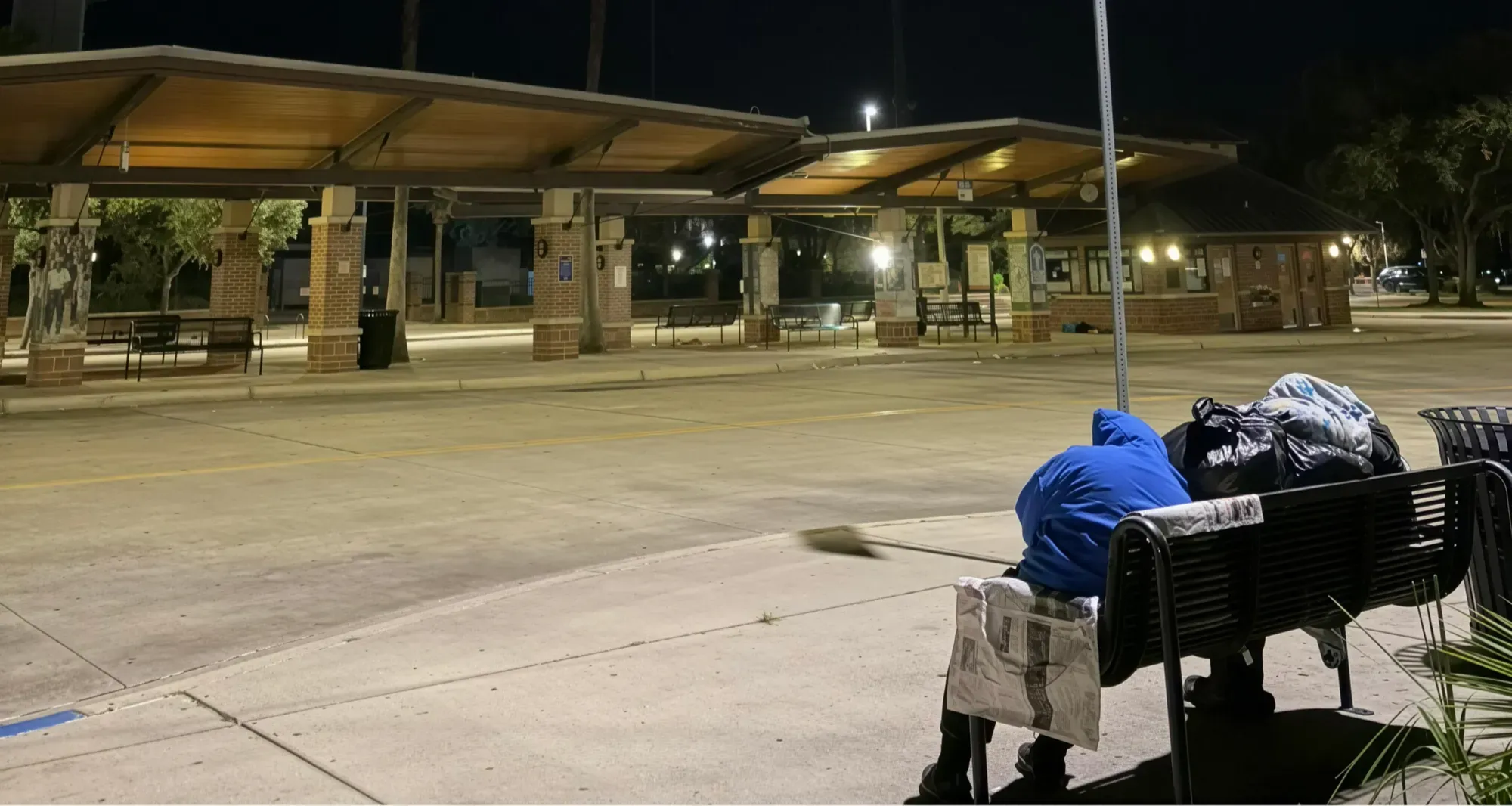
I step into a huge, completely empty parking lot. "There’s something deeply unsettling about staying too long in places designed solely for transit," Ana Iriarte wrote in her article about liminal spaces. I linger for a while, watching and filming a blinking light. There’s definitely something that obsesses me about that place, but I feel a bit like I’m in The Wire; something doesn’t sit right. After a while, the metro comes by, and I think it’s better to take it and move on. A well-dressed Latino gets on behind me. He tells me he’s Ecuadorian, that he’s a teacher, but soon he’ll start his shift as staff at the Marriott. He warns me to be careful if I’m out at this hour, not to look at my phone, to stay alert, that there are a lot of crazies around. He also tells me that the blinking lights are a sign of a lack of safety; the state itself does this to warn that it’s a dangerous area without coverage.
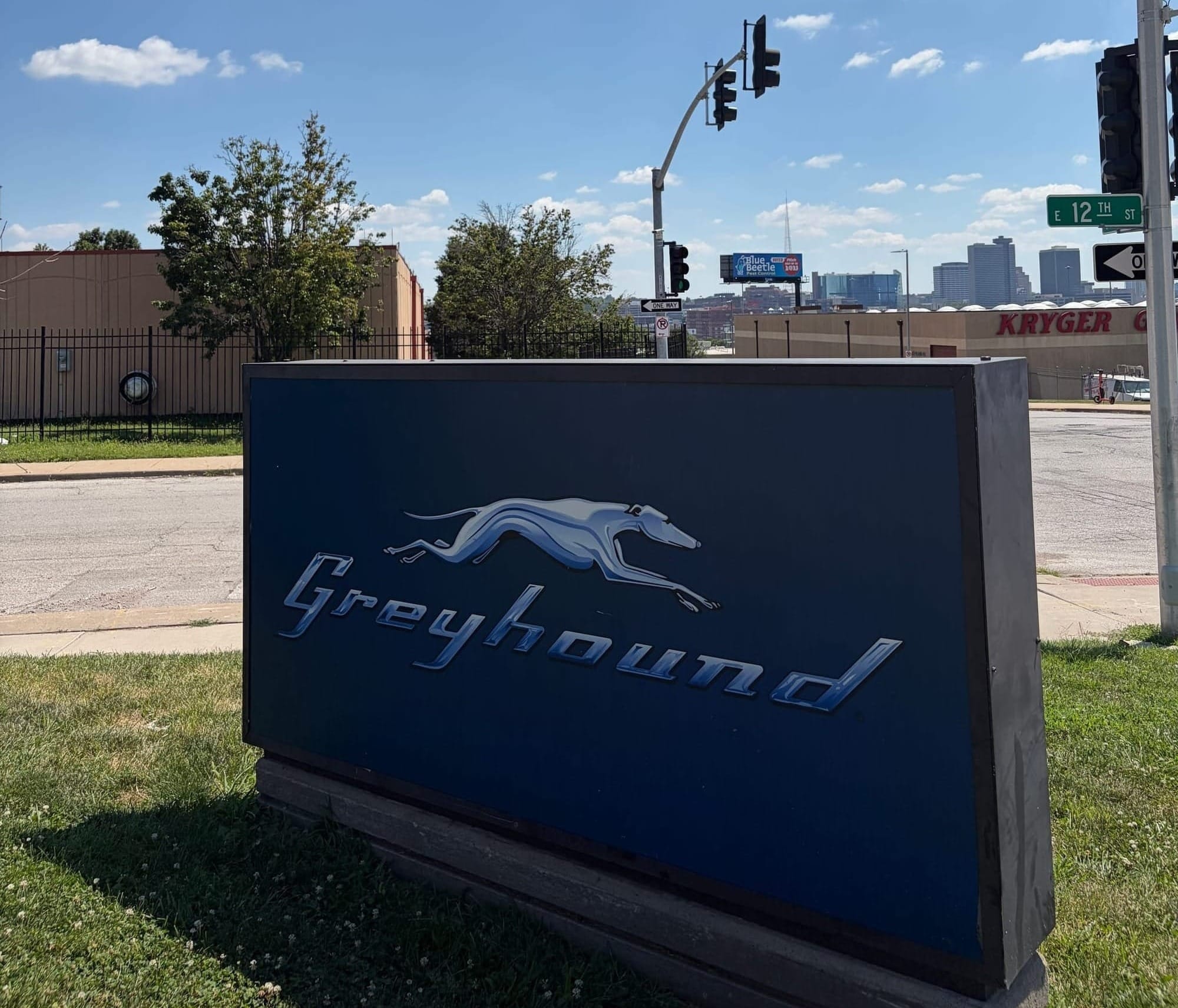
Greyhound was born in 1914, in Hibbing, Minnesota, when the Swede Carl Wickman, recently laid off from the iron mine, started charging fifteen cents to take miners from one town to another. In 1926, he merged a handful of scattered lines to create the Motor Transit Corporation, which in 1930, with the purchase of another 100 companies, became Greyhound. It grew so quickly that in 1936, the state itself, fearing it would be left without competition, pushed a hundred small operators to unite under the name Trailways to provide a counterbalance. They coexisted for six decades until in 1987, with Trailways bankrupt, it absorbed them as well. In 2007, the British First Group paid $3.6 billion for a company that controls the entire market, and in 2021, it sold it for $172 million to Flix Mobility, a German startup.
A 1957 spot features three characters on a bus: a businessman, a middle-aged woman, and another man in a suit who’s sleeping. The businessman can work, the woman is calmly and confidently on her way to visit her children, and the other is so chill that he’s taking a nap. "Relax while you travel, leave the driving to us." An aspirational message that remains just that. One hundred twelve years after the first trip, the logic remains intact: it’s the transport for those who have no other option.
One hundred twelve years after the first trip, the logic remains intact: it’s the transport for those who have no other option.
In "Me and the Devil Blues”, written in 1937 by Robert Johnson, the legendary blues singer who is said to have made a pact with the devil to learn to play, he asks whoever finds him to bury his body by the roadside, so his "old evil spirit" can catch a Greyhound and keep traveling after he’s dead. The final destination of a wandering soul.
Baby, I don't care where you bury my body when I'm dead and gone
You may bury my body, hoo
Down by the highway side
So my old evil spirit
You can catch a Greyhound bus and ride.
The accredited journalist experiences the World Cup like a football-themed Disneyland. Qatar was the pinnacle, with free subways and the chance to catch two matches in one day, but Russia handled the territorial challenge well with the Trans-Siberian train at the service of journalists and even fans: you could travel Moscow-Kazan-Moscow for free, with a bed included. In the 2026 World Cup, even within the United States, each city managed its own rules. New Jersey, for example, raised the subway fare between New York and the stadium from $10 to almost $100. Moving between venues was left to the invisible hand of the market.
The train had a boom before 1930, but then it became increasingly decorative. In all of 2025, Amtrak transported about 34.5 million passengers, nothing compared to flights: 845 million reported by Bureau Transportation Statistics during the same year. Flying from city to city in the United States is straightforward; there are plenty of options, and prices match any other mode of transport. The problem is that if suddenly Cuti Romero heads in a 3-2 goal in extra time against Cape Verde, and twenty thousand fans rush to find the Miami-Atlanta route at the same time, the price skyrockets.
But the game of supply and demand wasn't the only logistical complication of the World Cup. The initial Argentina vs. Algeria match in Kansas City welcomed fans and journalists with canceled flights due to a tornado alert, forcing many to seek alternatives like renting a car or, for the more solitary travelers, taking the Greyhound bus.
For the Round of 16, I arrived in Miami on a flight from Dallas that I almost missed because the rideshare cars wouldn’t pick up the trip to the airport. So, when Argentina barely made it through the Round of 32, I had already decided that my World Cup journey would continue by bus. With the experience of Dallas-Houston behind me, I arrived early at the Golden Glades terminal with the idea of having breakfast and buying some supplies for the trip, but I found everything closed.
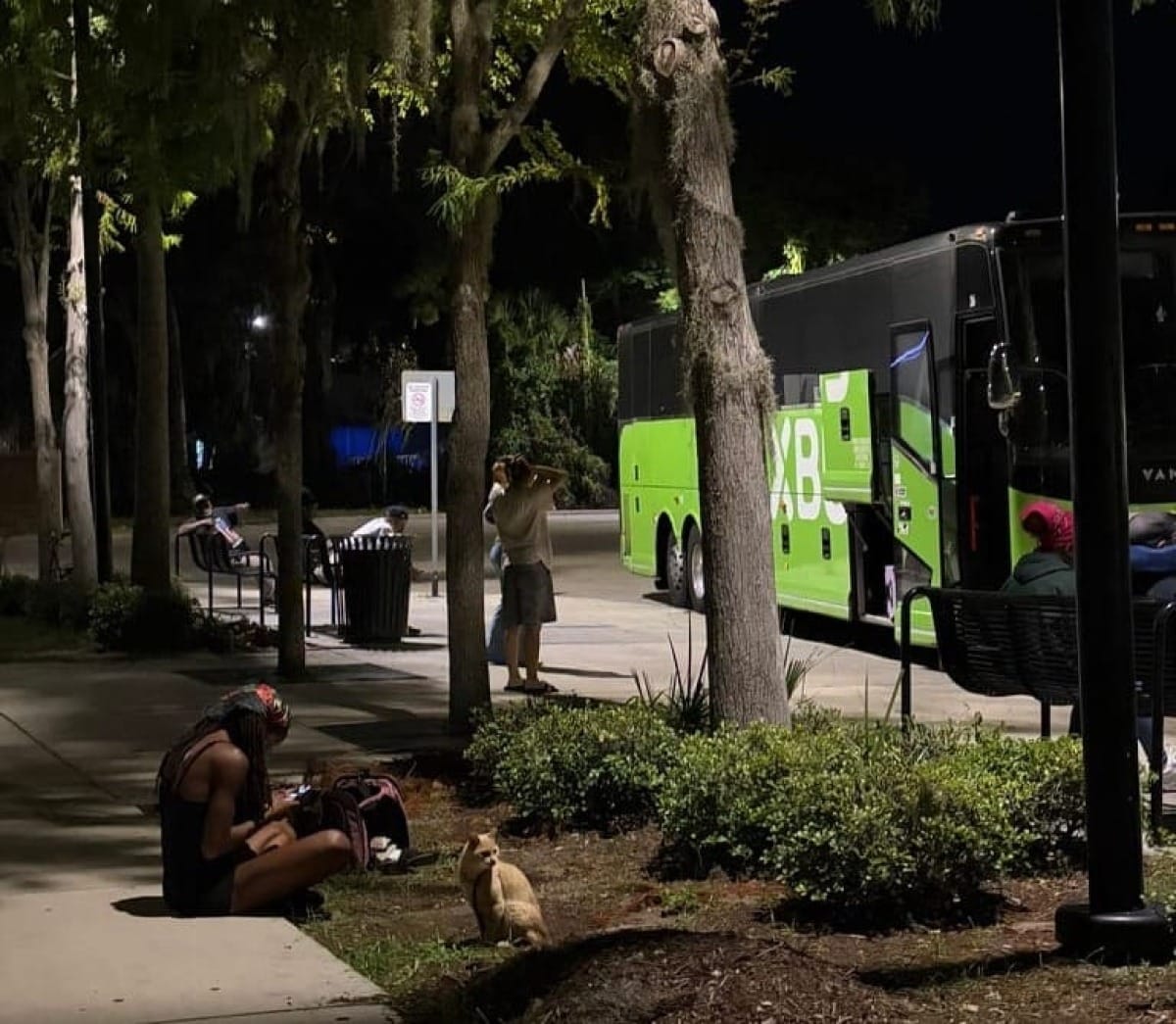
Maybe it has to do with it being Sunday, July 5, but the nearest open store is 40 minutes away. In the land of consumption, there are suddenly places where the market withdraws. A Temporarily Autonomous Zone, but it doesn’t make me feel much freedom; rather, it alerts me that I not only need caffeine but also don’t have a single bottle of water.
I just saw a reel from journalist Sergio Levinsky, where he shares that he attempted to travel Kansas-Dallas on the Greyhound. While crossing Mississippi, still 4 hours from his final destination, he realized there was a stop for food and got off to use the restroom. When he returned, the bus had left with his belongings. He managed to reach his destination and cover Argentina's second match thanks to a truck driver who picked him up.
Only at 5 PM did we stop for 20 minutes in some lost place in Florida. I grabbed one of those cold canned coffees because the line was super long, and I was worried about the time. Another major challenge with Greyhound is the seating. The ticket comes with a seat number, but depending on the situation, it can just be a suggestion. On most buses, the numbers are intermittent, inaccurate, sometimes nonexistent, so the correlation with the assigned number depends on your willingness and tools to find and/or defend it.
In Jacksonville, we changed buses, and this one has some numbers painted by hand, so I do rough counts to explain to a lady that I’m in the right spot. Greyhound makes it very clear that you’re not alone. There are always two or three people looking for solidarity to complain about the driver, someone needing to change seats or who thinks they have yours. Another person needs a charger or wants you to move because you’re sitting on the only working outlet.
Greyhound makes it very clear that you’re not alone. There are always two or three people looking for solidarity to complain about the driver, someone needing to change seats or who thinks they have yours.
For the first two hours of this leg, I traveled with a sort of Avril Lavigne lookalike, with dark circles, a hooked nose, and a deep voice that couldn’t stop moving, sending voice notes, or talking to herself. She’s going to see her occasional partner and is very excited. Or angry; I can’t quite tell. I also can’t figure out if she wants me to keep the conversation going or if she’s talking to her phone. Later, the guy in front of me spends 2 hours on a loud video call with his partner. I could put on headphones and try to sleep, which I do, but at midnight we stop in Macon, Georgia, and they make us get off for who knows what reason.
The guy from Neuquén, @GervaArnesis, tells me he did Kansas-Dallas on a Greyhound and traveled with a heavily muscled guy “for his safety,” a Mexican with two dogs (one hidden in a backpack) who paid a bit more to use two seats, but still ended up with a guy who accused him of being a racist for not letting him sit next to him.
After the miracle against Egypt, I managed to catch a ride to the match against Switzerland in Kansas, and after the 3-1, it was time to head back to Atlanta for the battle against England. The quarter-finals were the cheapest match; resale tickets ended up at $500-600, largely due to how difficult it is to get to Kansas, a medium-sized airport, but especially an area plagued by severe storms. Air travel isn’t a safe option, so I returned south by road, also by bus. Luckily, I didn’t encounter anyone heavily armed, but I did meet some Amish folks while crossing Missouri.
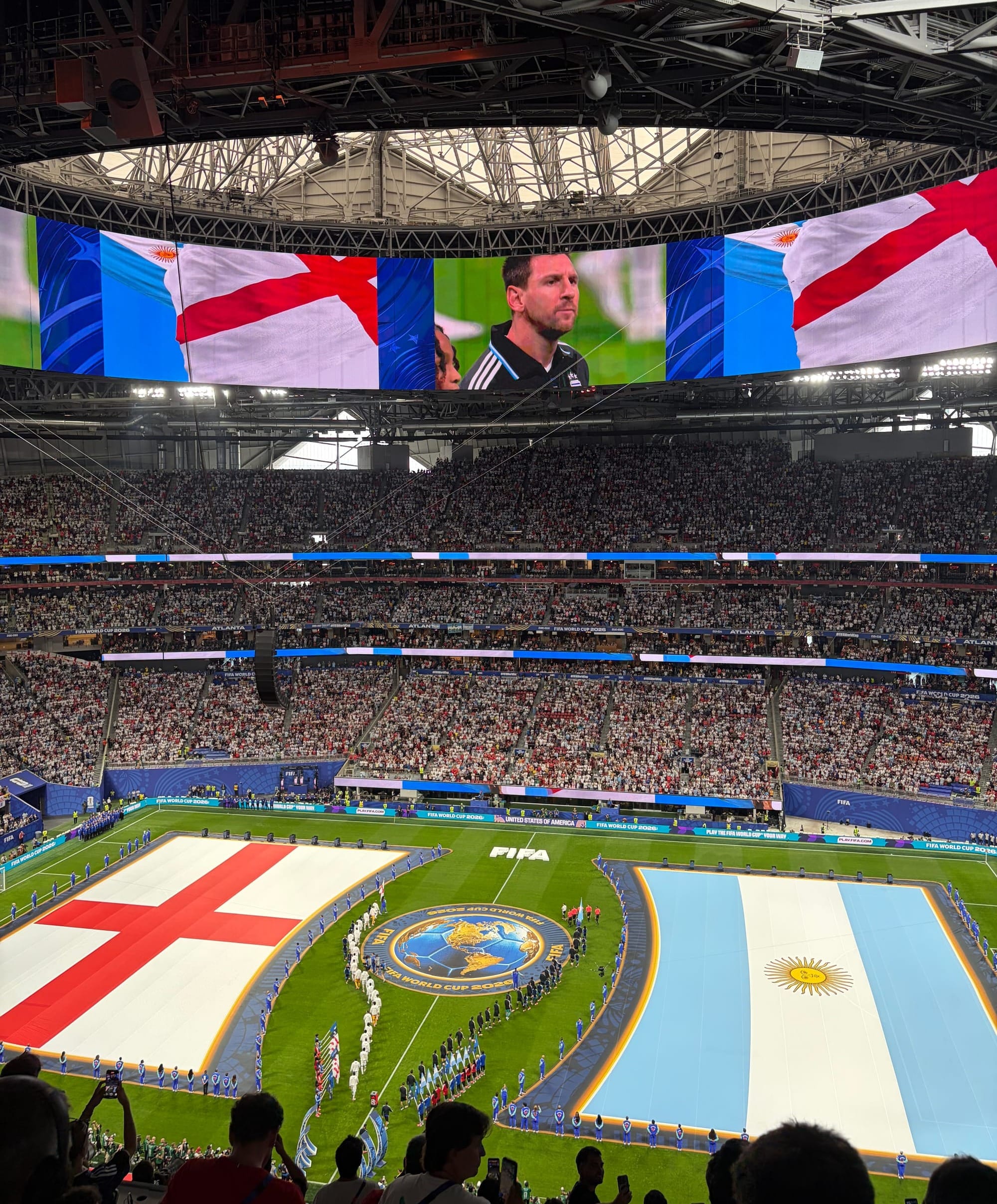
The victory against England at the Mercedes Benz Arena is perhaps the most exciting moment I’ve ever experienced in a stadium, but there’s not much time to celebrate when logistics need to be sorted out. It’s like the decisive penalty; it’s not a moment for risks or improvisation; 20 hours to New York seems reasonable. For luck, for the story: straight down the middle.
Early the next morning, without giving myself time to take a detour to the Coca-Cola factory or the house where Martin Luther King was born, I’m back at the Greyhound station. I board and head straight to the back, where I find, somewhat lost, Sergio Levinsky himself. Although there are no marked numbers, I realize that row 14 we have doesn’t exist. I look for the driver, and he reassures me: “They switched me to a smaller bus, but no one is getting left behind on my watch.” He finds me a spot next to Tina, a Vietnamese woman who studied in Dallas, is doing a postgraduate degree in Atlanta, and is now heading to Charlotte to visit a cousin. I show her the Malvinas on Google Maps, and when I mention Messi, the guy in front of us, looking like an NBA player, turns around and tells us he loves him, that yesterday when he saw Argentina was down 0-1, he bet everything he had, so now he’s ecstatic.
At the first stop, a lady with a bunch of bags heads for my seat, but I don’t budge an inch: I explain that the driver put me there because there’s a problem with the numbers, so she can sort it out. While there are always characters looking to argue, Greyhound is the territory of beaten men and women. Behind me, Levinsky talks to a young Honduran woman who tells him she’s been traveling for 3 days, missed a connection, and had to stay stranded for a day and a half in intermediate destinations. We’re moving slowly, and the weather is heavy; the air conditioning, almost always freezing, isn’t working well. It’s getting dark, but we’re delayed on the outskirts of Washington DC, where we have a stop; the entrances to the cities mix rush hour with construction and trucks.
It doesn’t seem like we’re going to arrive on time, and there’s a risk of missing the Washington-New York leg; Levinsky is getting more and more worried. He calls the company, and they don’t give him any guarantees; they say we’ll arrive just in time, but he mainly fears the delay in getting off the bus. He has a point: it’s really difficult to get off the Greyhound. For every 5 passengers, there’s always one who walks with difficulty due to an injury, a limp, or being overweight, and a lot of young people with canes.
Even though we arrive after midnight, the next bus is also delayed. We wait for it standing in a sort of shopping parking lot with few signs, but quite a few people and a staff member who decided not to answer questions. For 20 minutes, I approach each bus to see if any is mine until I find it. Washington-New York, the final leg. To the Final. After the speech, the driver turns off the lights, and I try to sleep a bit, but in an hour we arrive in Baltimore, and they make us get off. The Honduran woman gets off behind me, and we stand by the side of the bus, but a guard comes and shouts at us to get back in, all to the station, unless we’re smoking. We don’t have cigarettes. While we wait, she tells me that ICE shut down the business she had set up with her family in Louisiana, deported her brother and cousin, and now she’s traveling to New Jersey to seek refuge with other relatives.
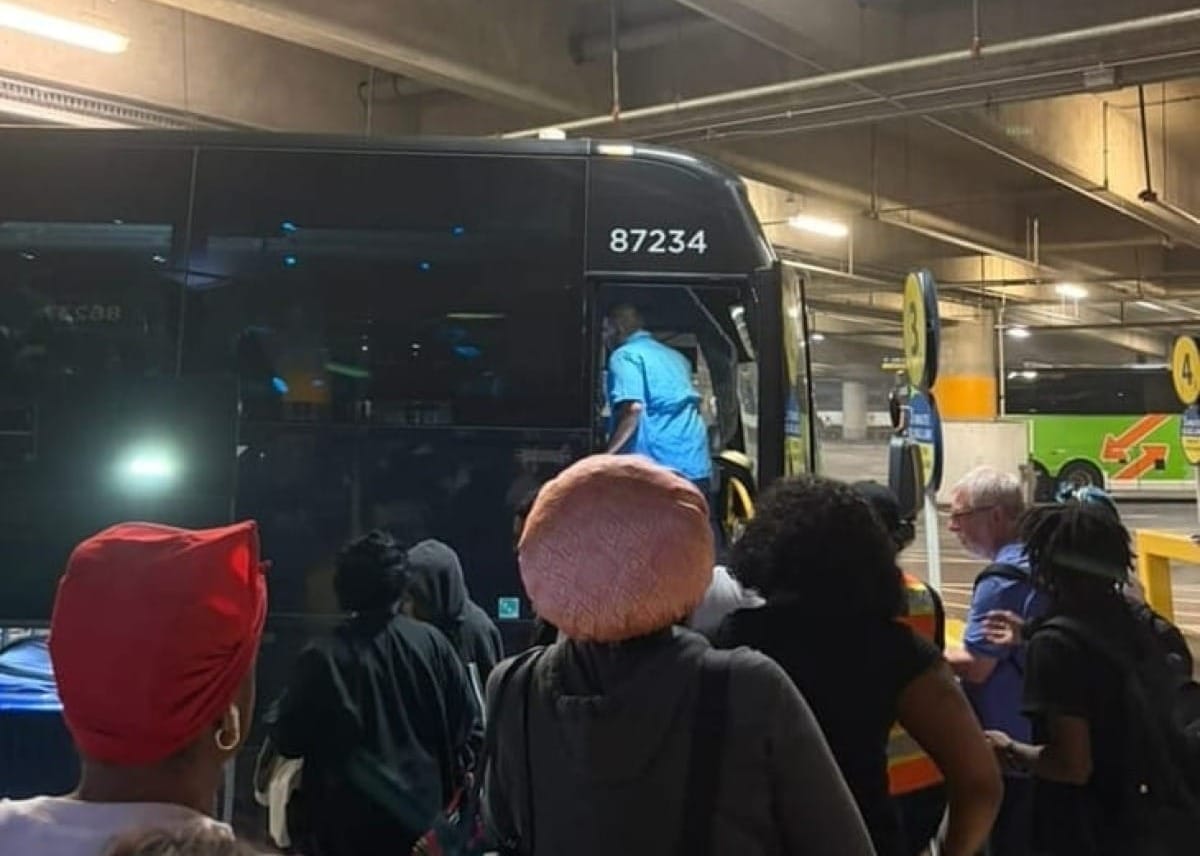
I think I managed to sleep for about an hour, maybe an hour and a half, until we entered New York State and the stops started again. Luckily, this city never sleeps, so I have no trouble finding a café open in the early hours.
My return ticket was for early June, but those 15 minutes of Messi against Egypt, playing as a right winger like he did at 20, changed my plans. Flights from New York after the final are impossible, but staying for too long in one of the most expensive cities in the world is also complicated. I find a more reasonable flight from Miami the following Friday and plan to get there by Greyhound; at this point, I can't think of another alternative. Plus, I save myself two nights of accommodation. A 40-hour journey that will end up being something more.
The return trip kicks off on a Wednesday night in Chinatown, with an enthusiastic Asian driver. I'm traveling with an African American guy heading to Baltimore, dressed in a sharp suit, top hat, and carrying a pizza box. I don't know if it's the blow we took from Spain or the fact that I've been on the move for a month and a half, but I sleep incredibly well despite my seat not locking properly. Across the aisle, there's a guy with a limp who had already apologized to half the bus upon boarding, explaining his leg problem and how he was moving around looking for a better position. He befriends someone who got on in the morning and complained emphatically, on the verge of aggression, about a seat he thought he had but didn't. They're like Jack Nicholson and Morgan Freeman in The Bucket List, but with several fewer players. As the morning progresses, so does his indignation towards the Asian driver, whose announcements about the stops are incomprehensible, and who doesn't respond to questions about when we're stopping for breakfast or a bathroom break.
The return trip kicks off on a Wednesday night in Chinatown, with an enthusiastic Asian driver. I'm traveling with an African American guy heading to Baltimore, dressed in a sharp suit, top hat, and carrying a pizza box.
I get an email from Flixbus: “You might miss your connection; unfortunately, we don't have a suitable rebooking, call this number.” Shortly after, I hear an argument; one woman starts yelling at the driver, who has already lost any semblance of authority. An hour later, we stop in the middle of nowhere, and the driver gets out and leaves; another Asian driver comes in, taller and in a better mood. We're two hours late, and it's raining in North Carolina, there's traffic. It's a given that I'm going to miss my connection.
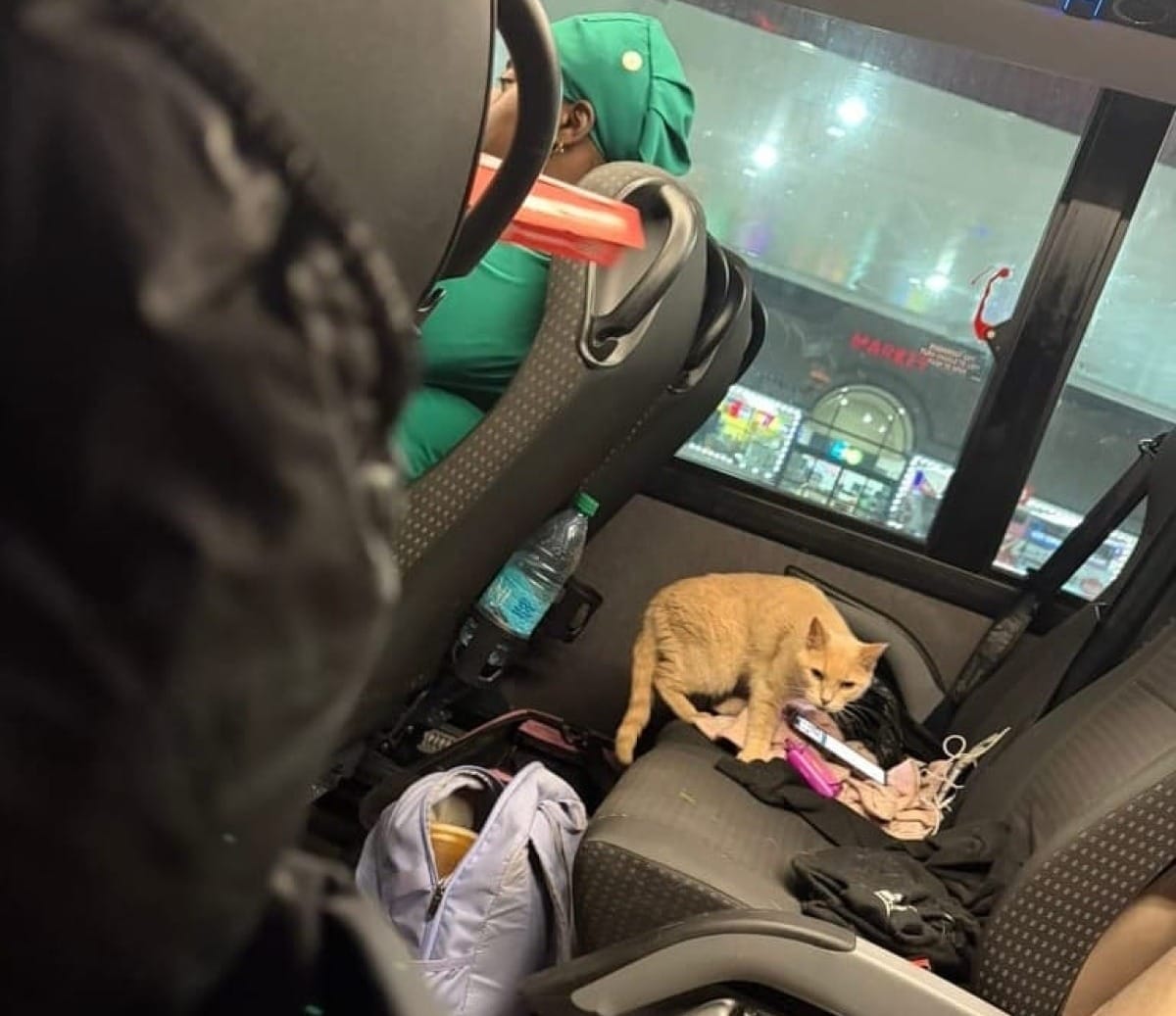
I manage to get another later route Atlanta-Orlando-Miami; if all goes well, I arrive an hour and a half before my flight. But nothing can go wrong; across the aisle is an IT Girl in a Georgia style, with black glasses and dreadlocks. She claims there's a confusion with the almost nonexistent seat numbers and announces to the entire bus that she's going to sit wherever she pleases. She spreads out some blankets, pulls a cat out of her backpack, lays it down, and starts vaping. At each stop, she takes it out for some fresh air, but at 1 AM in Valdosta, she gets off, and the cat stays chill in its spot. Once again, sleeping isn't on the agenda; at 3 AM, we stop in Gainesville and have to wait half an hour outside. We're already in Florida, and you can feel the humidity in the air; I try to see if there's a bathroom at the station, but I can't find anything open. There's quite a few people sleeping on benches or under the terminal's awning. The cat gets down to stretch its legs. Around 6 AM, we stop again, this time at a 7 Eleven on the outskirts of Orlando; we have a bit of time to grab breakfast. I spot someone who has been with me since New York; I tried to help him with the travel change after we missed our connection, but his son ended up sorting it out for him, getting him a ticket to visit. He just bought a giant coffee with a hamburger: “It's the breakfast of my dreams,” he smiles at me. It's true; everything feels like a big dream.
“These are tough times for the American wanderer's vagabonding. Police surveillance has increased on roads and highways, at train stations, along coasts, river basins, docks, and in the thousand hideouts of the industrial night.” This is how the last chapter of "The Lonely Traveler" begins, a collection of texts by Jack Kerouac, one of the quintessential American travelers, who hitchhiked across the United States in the late forties, traveling by trains, trucks, and some buses, an adventure he immortalized in “On the Road.”
For him, moving around was always a quest for intensity, for being alive in the present. But also, through his adventures with his beatnik and bohemian friends, filled with alcohol, drugs, sex, and jazz, he narrates the stories of those marginalized by the system, those whom Western progress forgets in the interwar period: “The floors of bus stations are the same all over the country, always covered in cigarette butts and spit, and they convey a sadness that only bus stations have,” one can read in a passage from the book.
Chronicles, like the one by Aron Lake Smith in Vice, draw a line between the legendary Greyhound closest to Kerouac's travels and the current one. “The Dirty Dog” or “The Hell Hound” used to be a refuge for restless people, fugitives, undocumented individuals, kids running away from home, one of the last places where you could still disappear from the system, in a pre-digital era without 5G networks and scannable tickets. After 2007, it was rebranded to try to attract a professional and urban audience, adding wifi, leather seats, clean bathrooms, and an app, killing off the old “vagabonds” at the back of the bus and also the unspoken pact of sharing your failures with a stranger (who no longer listens because they're on their phone).
While I spent a large part of the trips on my phone or computer, the experience is far from that of a car or plane. I could never get the wi-fi to work, at times the data also drops out, the bathroom is almost always out of order, and the disputes over seats or stops force a certain interaction and closeness, a 'otherness' that throws you back into the hell of reality. The leather seats are torn, and the air is thick and unbearable. Perhaps that’s what it means to be in the Land of Opportunity: traveling for days without knowing for sure if you’ll arrive on time, when and where you’ll be able to buy more junk food, if your phone battery will last, or what character you’ll end up sharing the journey with.
Y a cada colaborador se le paga por su trabajo. Las dos cosas dependen de los suscriptores.