2026 World Cup: The United States Sets Out to Conquer Soccer
From Kissinger to Messi, via FIFA Gate and Trump, ten milestones that explain how soccer became mainstream in the United States and part of its cultural apparatus of power.

From Kissinger to Messi, via FIFA Gate and Trump, ten milestones that explain how soccer became mainstream in the United States and part of its cultural apparatus of power.
The organization of the FIFA World Cup 2026 by the United States solidifies a process that began fifty years ago, when the superpower turned its attention to soccer. Here we show you the main highlights of that journey.
Let's start with the first one:
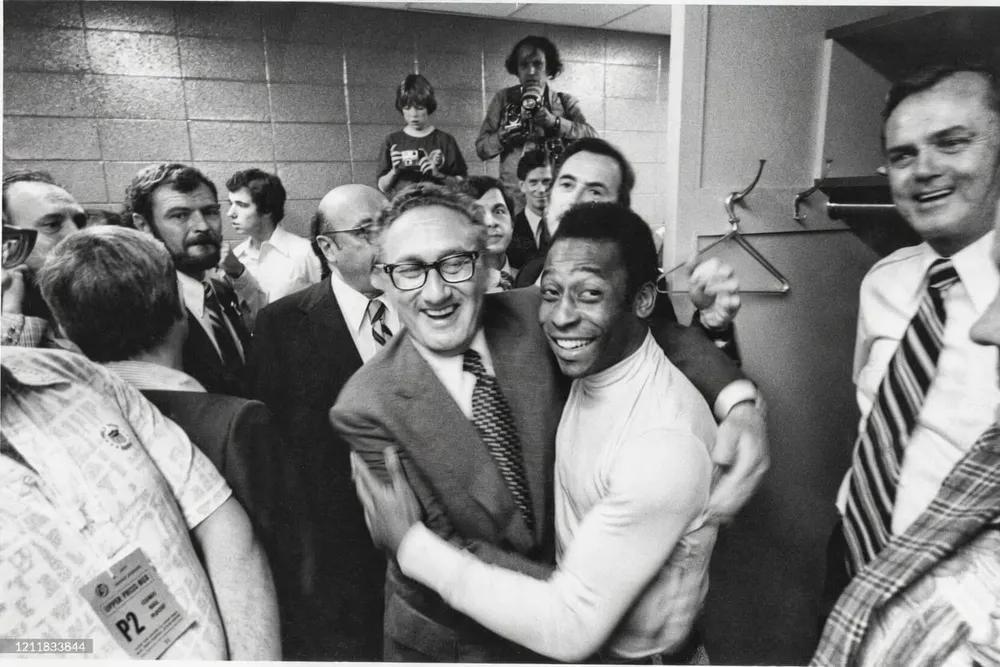
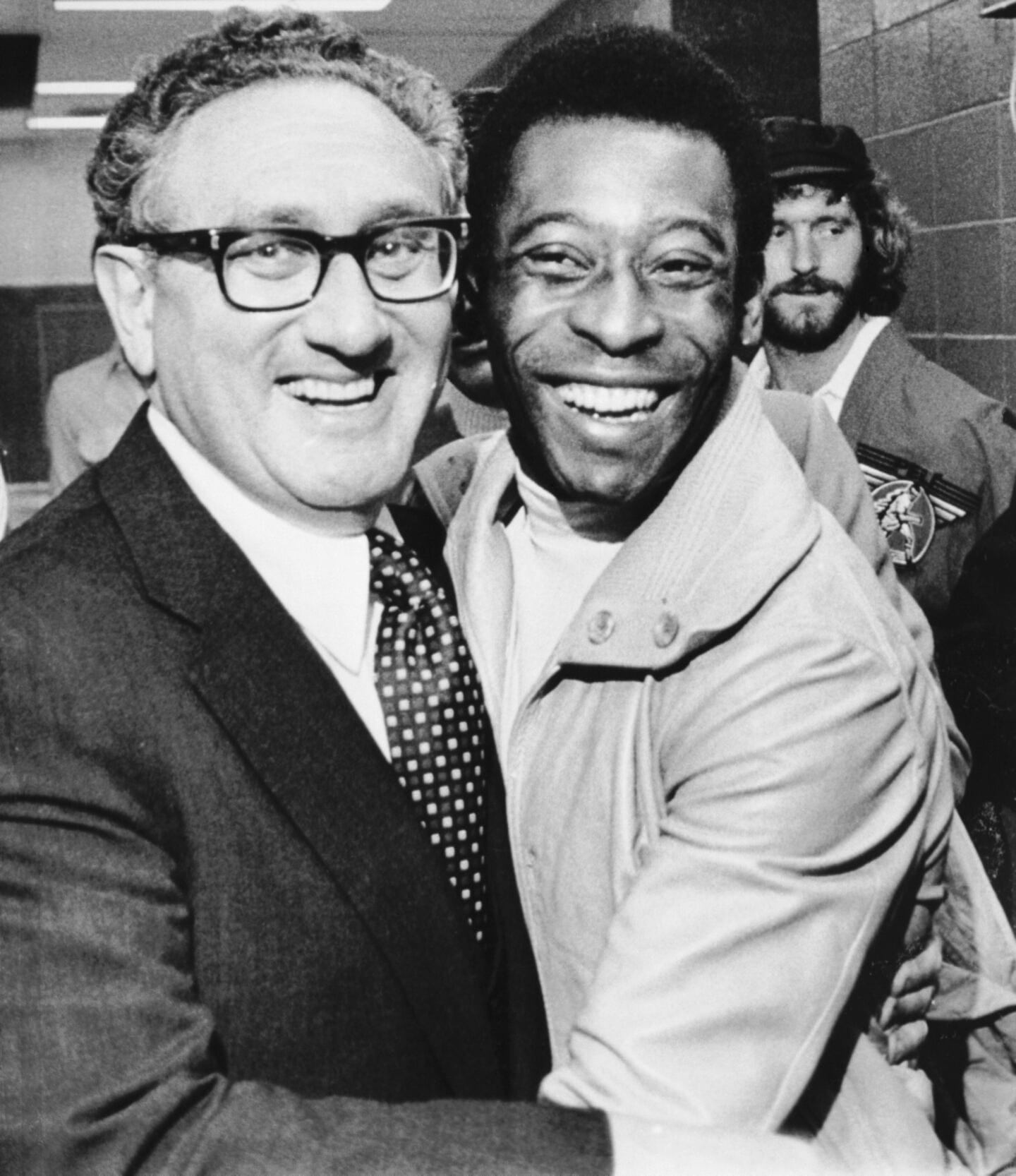
1) New York, 1975. Pelé makes his debut with the New York Cosmos, owned by the media conglomerate Warner Communications (Warner Bros., Warner Music Group). As the star himself would acknowledge, a call from Henry Kissinger had lifted the ban imposed by the Brazilian military government, which considered him a "Non-Exportable National Treasure." Pelé's arrival in the “Big Apple” as the highest-paid athlete in the world would demonstrate that soccer could capture the attention of Americans and become an event, especially for New York's social elite, attracting celebrities like Andy Warhol, Muhammad Ali, and Liza Minelli. His role in the famous “Victory” starring Sylvester Stallone and Michael Caine would be part of the efforts to establish this still marginal and niche sport in the United States through Hollywood. A lifelong soccer fan from his childhood in Germany, a Kissinger already “retired from politics” would be invited to witness the final matches of the 1978 World Cup at the stadiums of Rosario Central and River Plate, marking his only visit to Argentina.
2) Zurich, 1988. After Colombia declined to host the 1986 World Cup, the United States stepped up as a replacement: but Pelé's support and Kissinger's influence could do little against a bid that FIFA deemed weak, ultimately awarding the tournament to Mexico. Following this setback, the United States aimed for the 1994 World Cup, with a more professional project that included two key interventions from President Ronald Reagan: a personal letter to João Havelange and a two-minute appearance in the bid's promotional video. Aware of the potential of the U.S. market, FIFA chose a suggestive July 4, 1988, to announce the winning country. However, the designation of the United States was not without controversy, as it would be the host with the least soccer tradition up to that point. The U.S. Soccer Federation would commit to FIFA to create a professional league, established in 1996, Major League Soccer, while in a nod to an American audience for whom soccer still seemed boring and unappealing (something that The Simpsons captured perfectly in the opening of their episode “A Dangerous Family”), the 1994 World Cup would introduce a series of regulatory changes: three points for a win and a prohibition on the goalkeeper handling the ball after a teammate's pass, which led to the adoption of more offensive tactics, sped up the game, and resulted in more goals.
Pelé's role in the famous “Victory,” starring Sylvester Stallone and Michael Caine, would be part of the efforts to establish this still marginal and niche sport in the United States through Hollywood.
3) Port of Spain, 1989. Ten days after the fall of the Berlin Wall, a shot from outside the box by Paul Caligiuri sealed the U.S. victory over Trinidad and Tobago, marking the first qualification of the United States to the World Cup since its last participation in 1950. That goal became immortalized as “the shot heard around the world,” a phrase included in the Concord Hymn, a poem by Ralph Emerson referring to the Battle of Concord, the second in a series of skirmishes that would lead to the American Revolution of 1776, highlighting that, as in much of the world, soccer in the United States could also represent a patriotic feat.
“The shot heard around the world.”
4) Los Angeles, 1999. Between June and July of that year, the third edition of the Women's World Cup was held in the United States: originally conceived to be played in stadiums with a maximum capacity of 10,000 spectators, the interest generated led to many matches being held in the stadiums that had hosted the men's World Cup in 1994. The final, played in Pasadena with a record attendance of 90,185 spectators, would pit China against the United States, set against the backdrop of a diplomatic crisis between the two countries following the bombing on May 7 by a B-2 Spirit of the U.S. Air Force on the Chinese embassy in Yugoslavia, during NATO's military intervention in Kosovo. After a nail-biting penalty shootout, the hosts would win 5 to 4, thanks to Brandi Chastain's conversion, whose iconic celebration of taking off her jersey became a symbol of liberation and inspiration for thousands of future players.
5) Boston, 2001. In the foundation of the nascent MLS, the best U.S. men's team of all time would emerge. That team forged a special patriotic character after the 9/11, when just weeks after the terrorist attacks and during the qualifiers for the 2002 World Cup in Korea-Japan, they became the first U.S. representative, in any sport, to face international competition. The victory over Jamaica on October 7, 2001, by 2 to 1 would not only secure qualification in front of 40,000 fans at Foxboro Stadium but also transform soccer into a balm amid national mourning. Reaffirming the team's identification with its people, that squad would receive a phone call from President George W. Bush before the U.S. victory of 2 to 0 over Mexico in the round of 16 of the 2002 World Cup. That match was historic for the United States as it ended the traditional dominance of their neighbors and, in line with the rising tensions between the governments of both countries due to increased border and immigration controls, it would provoke an increase in soccer rivalry.
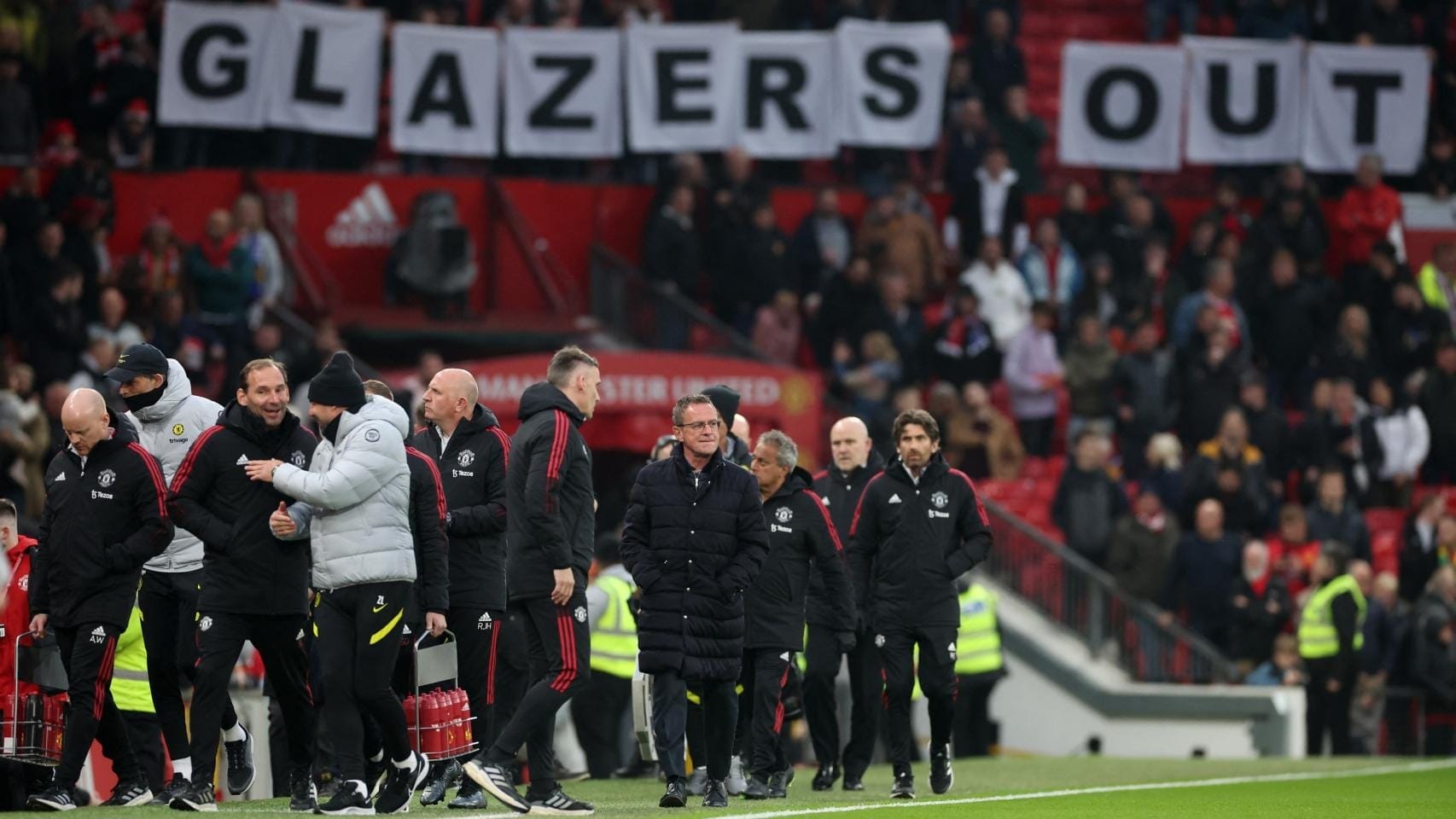
6) Manchester, 2005. The American Glazer family, owners of an investment fund and a football franchise, completed the purchase of Manchester United, the English club that had understood the globalization of soccer better than any other. The arrival of the magnates triggered an unexpected split, with the founding of FC United of Manchester by a group of disenchanted fans. However, in the following years, American investors would go shopping across Europe, acquiring stakes in over a hundred teams, including several iconic ones (Arsenal, Chelsea, and Liverpool in England, Inter, Milan, and Roma in Italy, Atlético Madrid and Sevilla in Spain…) thereby consolidating the advance of the United States on the soccer board. These operations were not without geopolitical implications: in 2022, amid the war between Russia and Ukraine, Russian Roman Abramovich was forced to divest his stake in Chelsea, whose new owner, American Todd Boehly, signed Ukrainian Mykhailo Mudryk from Shakhtar Donetsk for a whopping $100 million. This club would donate 25% of the sale to the Heart of Azovstal, a charitable organization providing medical, psychological, and financial support to Ukrainian soldiers and their families.
7) Zurich, 2010 (and 2015). Confirming the growing interest in soccer from the U.S. establishment , in a letter sent to FIFA in 2009, newly elected President Barack Obama proposed his country as a candidate to host the World Cup. In December 2010, during the vote held at the organization's headquarters, Qatar defeated the United States by 14 votes to 8, sparking a scandal given the country's scant soccer tradition, which has a population smaller than New York City and half the size of the province of Tucumán. Rumors pointed to a geopolitical operation between France and the emirate, which would have included the acquisition of Paris Saint Germain by a Qatari fund, the transfer of Ligue 1 broadcasting rights to BeIN Sports, and even the sale of 24 military Rafale aircraft, all in exchange for the support of UEFA representatives, then headed by French Michel Platini. On May 27, 2015, FIFA Gate would erupt: at the behest of Federal Prosecutor Loretta Lynch, the FBI coordinated with Swiss police for a raid at the luxurious Baur au Lac hotel, targeting the organization's top officials, accused of various acts of corruption. “The United States wants to ensure that world soccer operates with integrity,” Obama declared at the time. In 2018, the United States would be confirmed along with Mexico and Canada as hosts of the 2026 World Cup, with FIFA President Gianni Infantino conveying the news to the new U.S. president, Donald Trump.
8) Washington DC, 2022. Megan Rapinoe becomes the first female soccer player to receive the Presidential Medal of Freedom, the highest civilian honor awarded by the United States since 1963 to those who make a "particularly meritorious contribution to national security or interests, world peace, culture, or other significant public or private efforts." The player received the distinction from Joe Biden, in recognition of her contributions to racial and gender equality and to the rights of the LGTBIQ+ community. As captain of the national championship team, in 2019 Rapinoe had declined an invitation to the White House from then-President Donald Trump. In a tit-for-tat, Trump attributed Rapinoe's missed penalty shot in the round of 16 match against Sweden, which led to the U.S. team's elimination from the 2023 World Cup, to the player's "wokeness." The backdrop of this back-and-forth highlighted that soccer in the United States had reached the public stage, permeating political discourse and contributing to the polarization between liberals and the MAGA movement.
The backdrop of the back-and-forth between Trump and Megan Rapinoe highlighted that soccer in the United States had reached the public stage, permeating political discourse and contributing to the polarization between liberals and the MAGA movement.
9) Miami, 2023. The greatest milestone in the conquest of soccer by the United States would occur with Lionel Messi's arrival at Inter Miami, the star player of the Argentinian team that won the World Cup in Qatar the previous year. His arrival was so impactful that just a year and a half later, he was awarded the Presidential Medal of Freedom, becoming the first Argentine citizen and the second soccer player to receive it. In a confusing justification citing scheduling issues, the Rosario native did not appear at the White House nor send a representative to receive the award. One possible interpretation suggests he sought to avoid a photo op with the outgoing Biden, especially considering that the brothers Jorge and José Mas Santos, owners of “Las Garzas” alongside David Beckham, are the sons of the late Cuban exile leader Jorge Mas Canosa, who was a presidential advisor to Reagan and Bush Sr. and mentor of the Cuban American National Foundation. This year, during the presidential tribute to the MLS Cup champions, Messi had a friendly chat with Trump at the White House, provoking criticism regarding the exposure of the soccer star in the context of U.S. military actions in the Middle East. 10) Washington DC, 2025. After meeting with the leaders of the Democratic Republic of the Congo and Rwanda to sign an agreement reconciling both nations, Trump received the “FIFA Peace” award, given for the first time in the entity's history. With Village People performing Y.M.C.A. live, Infantino fulfilled, in a way, a long-held wish of the U.S. president, who had publicly expressed his desire to receive the Nobel Prize awarded by Norway. Beyond the anecdotal, the president of the world's most powerful country and the highest authority of the most popular sport on the planet have intertwined their agendas in an unprecedented way in the diplomatic history of sports, sealing an alliance that allows the United States to expand soccer within its borders (in 2025 it also hosted the Club World Cup) and FIFA to benefit from American know-how in organizational capacity and entertainment (which explains the introduction of innovations in its tournaments that are foreign to soccer tradition and typical of American sports, such as the entry of all team members for the initial presentation, the cooling break, and the halftime show).
BONUS TRACK: Beijing, 2026. Less than a month before the start of the World Cup and after arduous negotiations, FIFA announces an agreement with China Media Group whereby this state-owned company acquires the broadcasting rights for the event at a figure much lower than initially demanded by the entity. The announcement coincided with Trump's state visit to the Chinese capital. Did diplomacy between the two powers unlock the stagnation in which the agreement found itself? Impossible to know. In any case, without the pressure of having their team qualified for the tournament and amid bilateral trade tensions, the Chinese could have used the delays with FIFA to demonstrate that, in the new global context, they also set the rules of the game.
Y a cada colaborador se le paga por su trabajo. Las dos cosas dependen de los suscriptores.