Why Are We Obsessed with Liminal Spaces?
Empty schools, deserted shopping malls? What are liminal spaces—that unsettling aesthetic that went viral online.

Empty schools, deserted shopping malls? What are liminal spaces—that unsettling aesthetic that went viral online.

Why is it that on an ordinary Tuesday, after a monotonous day at the office, instead of looking for a movie or a series, I feel like opening YouTube and watching a half-hour compilation of strange photographs? What am I searching for when I stop to look at images of deserted hotel hallways, empty schoolyards, or gas stations lit up in the middle of the night? Why do some of these videos rack up hundreds of thousands of views? What explains the increasing presence of this aesthetic in video games, movies, and other contemporary cultural experiences? And, above all, how can I share such a specific emotion with someone reading this who has no idea what I’m talking about?
Maybe it’s easier to show than to explain.
What feeling does this image evoke for you?
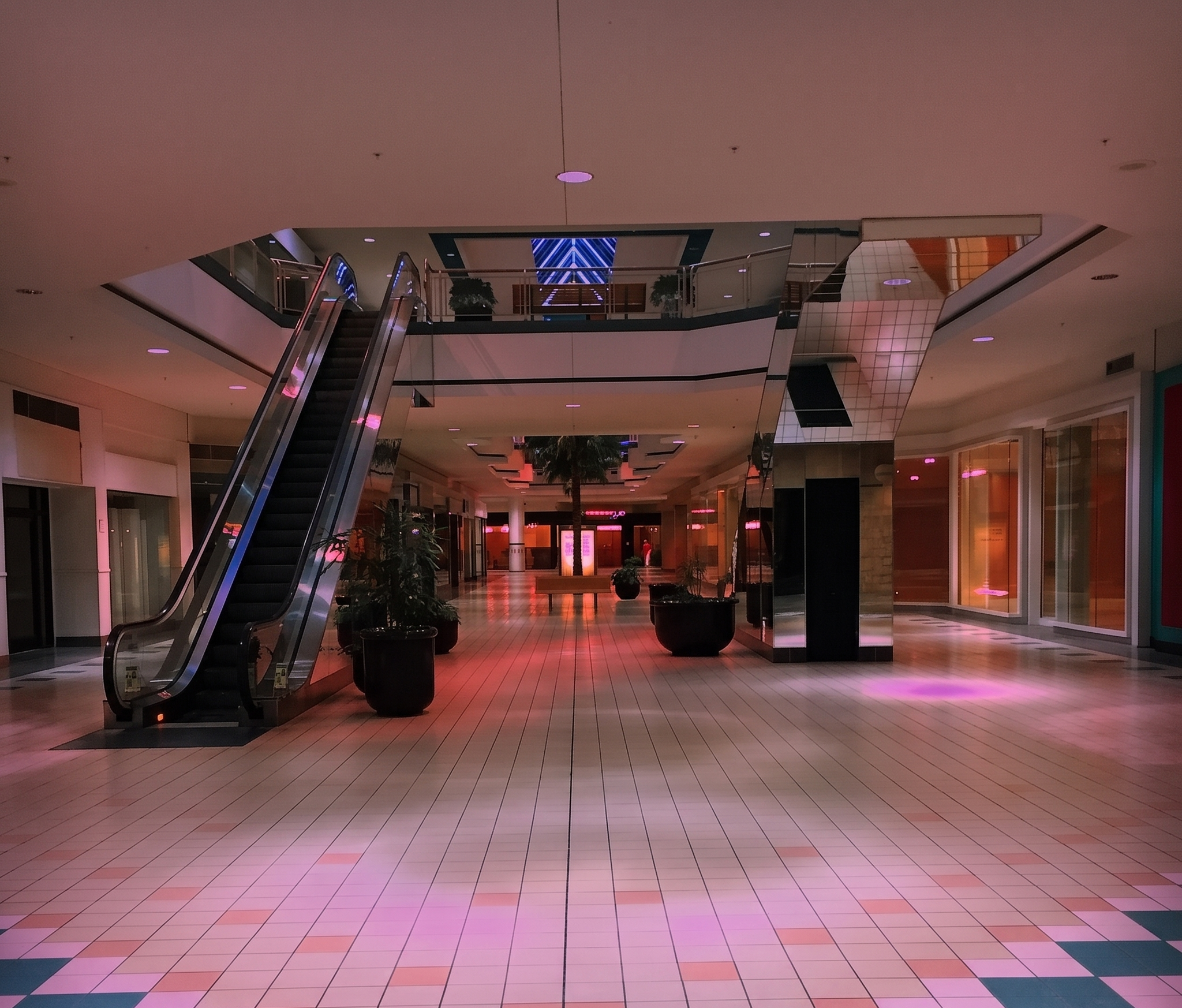
The sensation might be hard to describe. There could be a hint of unease, but also curiosity. A touch of nostalgia, even if we’re not quite sure why. Some people say these places seem pulled from a dream; others feel like they’ve been there before, even though they know it’s impossible. These images create a very particular atmosphere, a blend of fascination and strangeness that defies any simple explanation, and today we recognize them as liminal spaces.
Valentina Tenni, in her book *Liminal Aesthetics*, recently published by Caja Negra, argues that the element that unites these images is clearly that atmosphere: one that oscillates between "a vague sense of desolation, intense discomfort, or generalized nostalgia." It matters less what place is depicted than the feeling it leaves behind. Tenni explains that it even unconsciously triggers certain questions: What made the people disappear? Will the world look like this when humanity has extinguished?
I don’t intend to say anything particularly original about the origin of the concept of fashion, but I do think it’s necessary to give a brief recap for the uninitiated reader. The word liminal comes from the Latin limen, meaning "threshold." Long before it became an internet aesthetic, the concept belonged to anthropology. In the early 20th century, Arnold Van Gennep used it to describe the intermediate stage of rites of passage: that ambiguous moment when someone stops being who they were but hasn’t yet become who they will be, with adolescence being the most typical example. Decades later, Victor Turner developed the idea and turned liminality into a category for thinking about all transitional experiences. Originally, then, liminality didn’t describe a place but a state. It was the "between": between childhood and adulthood, between one identity and another, between one life and the next.
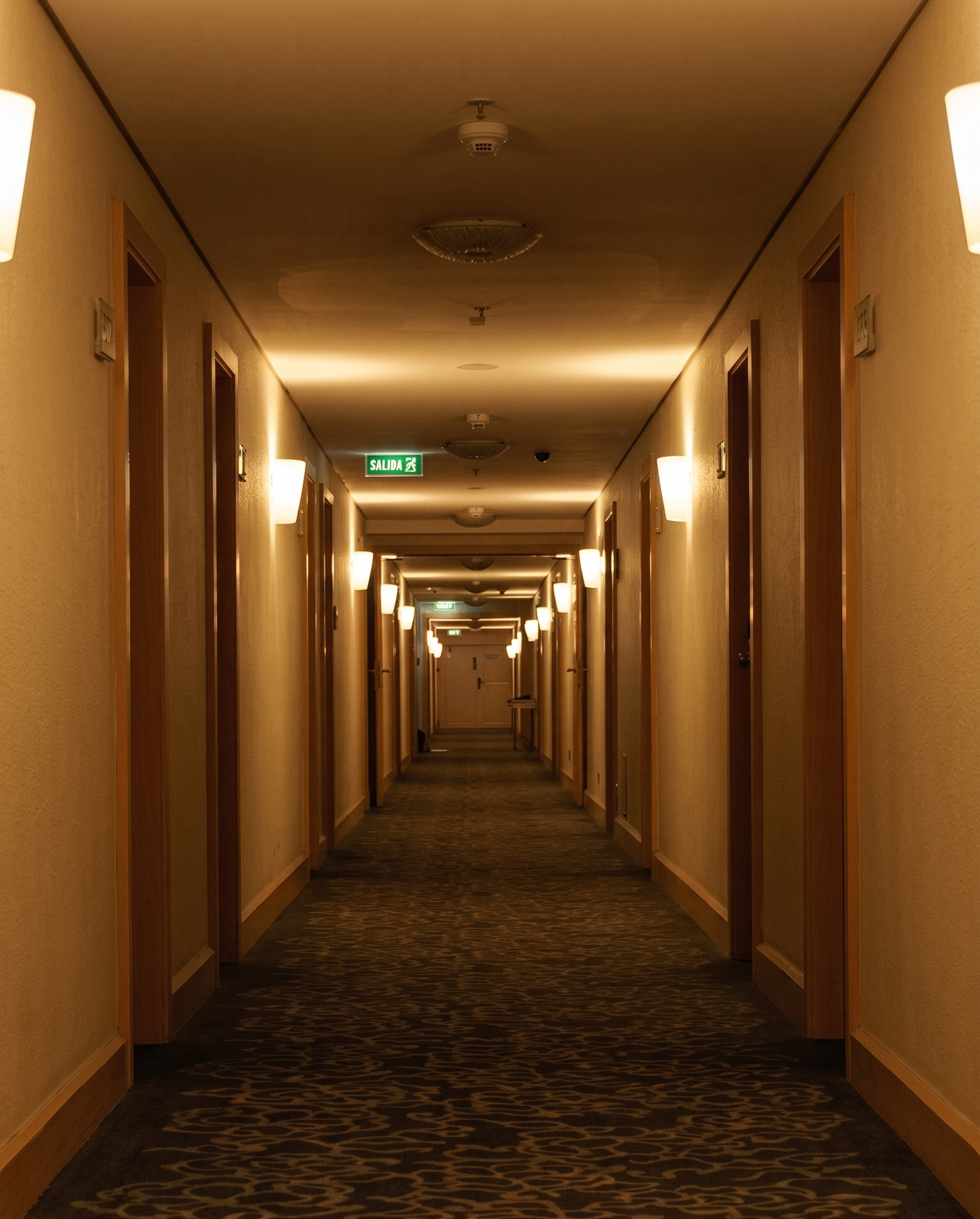
What am I searching for when I stop to look at images of deserted hotel hallways, empty schoolyards, or gas stations lit up in the middle of the night? Why do some of these videos rack up hundreds of thousands of views?
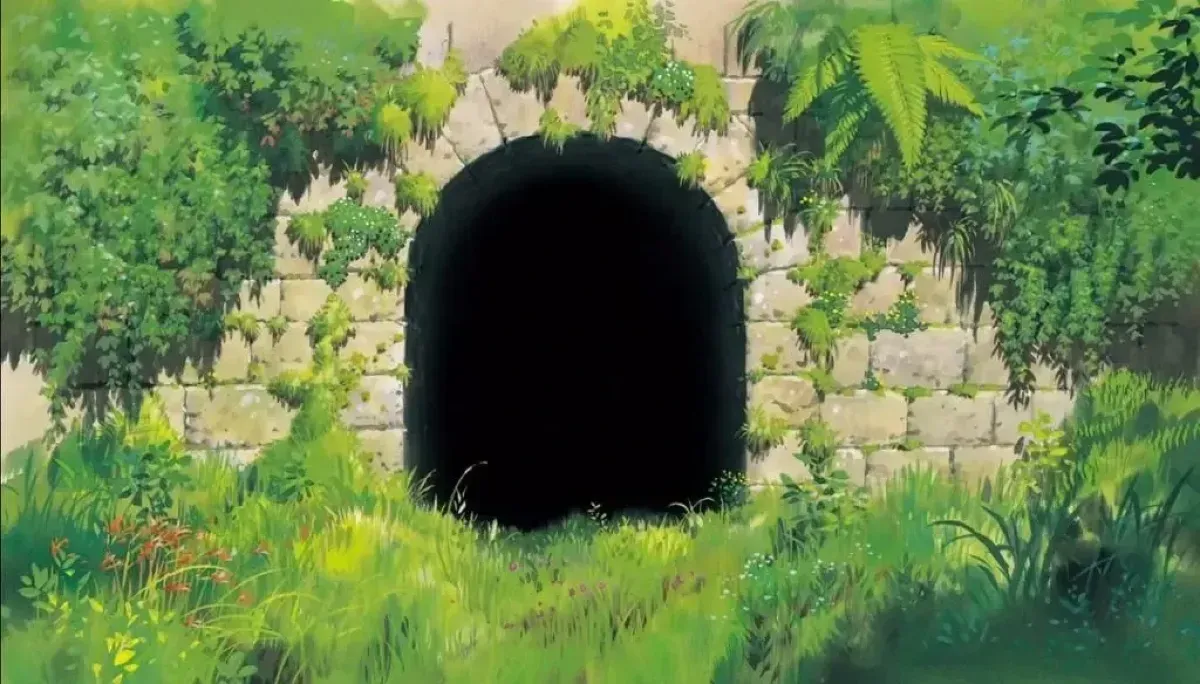
It’s no coincidence that so many fantastic stories begin by crossing a threshold. Alice falls down the rabbit hole. Lucy enters Narnia through a wardrobe. Harry Potter crosses Platform Nine and Three-Quarters. Chihiro passes through the tunnel to the spirit world. David and Lisa cross a bridge to Terabithia. Before the adventure begins, there’s always a transitional space: a hallway, a tunnel, a door, a bridge. Places where the usual rules stop applying.
The internet reclaimed that idea and turned it into an aesthetic. It all started around 2019 when various users on 4chan began sharing photographs of "strangely familiar" places. They weren’t natural landscapes or spectacular ruins. They were schools during vacation, empty offices, hotels, gas stations, supermarkets open at dawn, or completely deserted malls. Everyday spaces that were simply captured by the camera at a time when they’re rarely seen.
Perhaps that’s why many people feel these images are familiar even if they’ve never been to those places. We can also add that capitalism has replaced the specifics of geography with places that are replicas of one another, like supermarket chains or malls (the non-places of Marc Augé). We don’t recognize the specific site; we recognize the experience. As Valentina Tenni writes, they are such archetypal settings that they seem to be part of a shared memory. Images we’ve never seen before but that feel familiar because they tap into something akin to a collective unconscious.
Since the birth of this aesthetic, there have been certain unwritten rules for identifying a photograph of a liminal space as such. The places had to be artificial, constructed by humans, and, above all, be empty. The yellowish lighting, low photographic quality, graininess of the image, and out-of-focus elements all contributed to that feeling of slightly displaced reality.
The pandemic did the rest. For months, the entire world began to resemble a liminal photograph. Empty streets. Vacant airports. Theaters without audiences. What was once an aesthetic curiosity suddenly became an everyday experience. And since then, the collection of these photographs on the subreddit r/LiminalSpace or on YouTube has continued to grow.
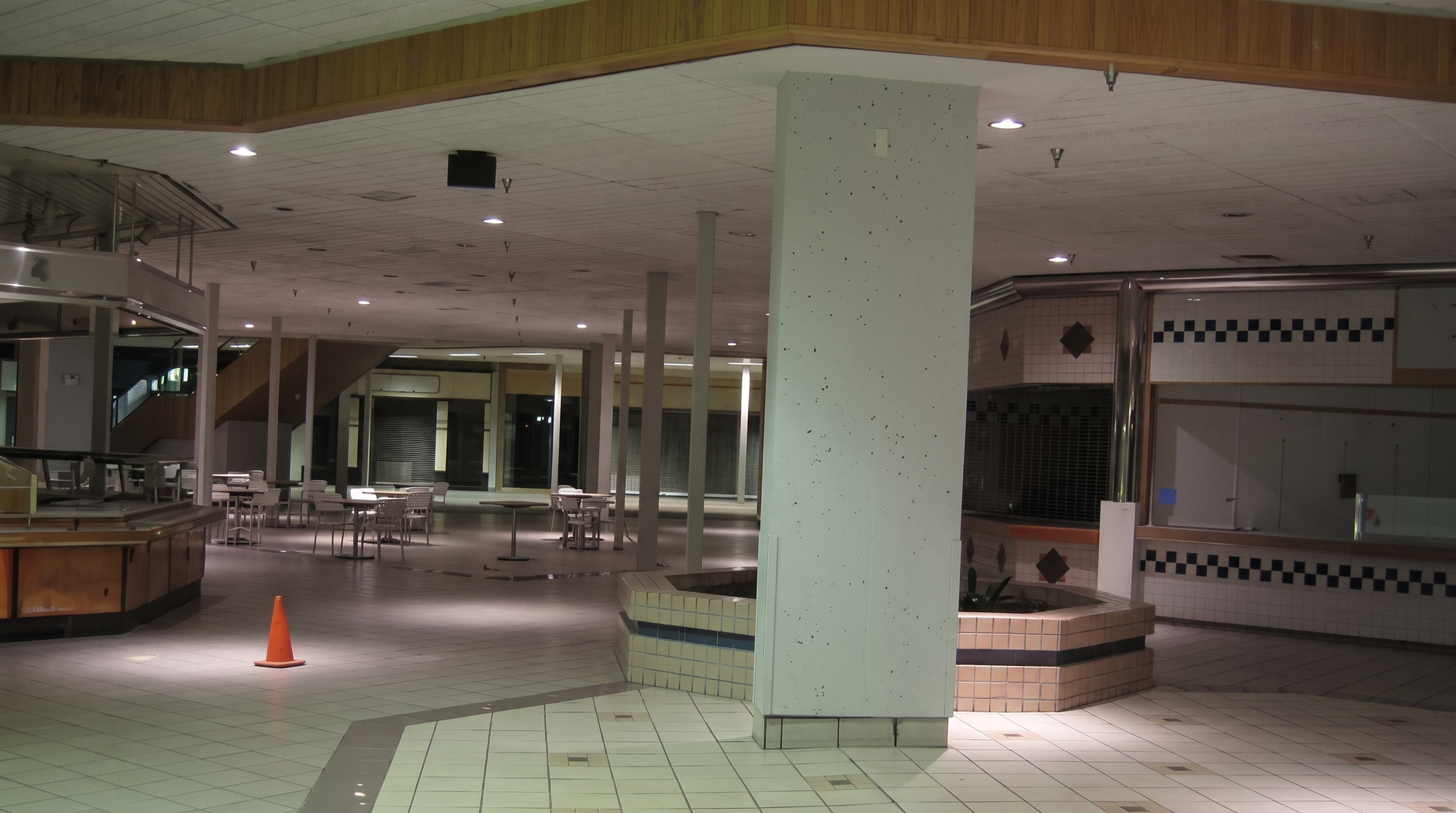
If liminal spaces produce such a hard-to-describe sensation, it’s because they don’t exactly belong to the realm of fear. They aren’t monstrous or violent, and unlike what happens in the backrooms, there’s no visible or latent threat. What they generate is something else: the impression that something is just slightly out of place.
In his essay *The Uncanny* (*Das Unheimliche*), Sigmund Freud attempted to explain precisely that kind of experience. The uncanny is not something completely unknown, but rather something that was once familiar and for some reason has ceased to be so. The German word unheimlich plays with that ambiguity: it designates something that should feel "homey" (heimlich) but suddenly appears estranged, displaced, as if hiding a secret.
Liminal spaces function in that way. A school hallway isn’t special. Neither is a waiting room, an airport, or a supermarket. However, when those places appear completely empty, lit by fluorescent tubes or photographed from a slightly odd angle, they stop being everyday settings and become something difficult to classify.
They aren’t monstrous or violent, and unlike what happens in the backrooms, there’s no visible or latent threat. What they generate is something else: the impression that something is just slightly out of place.
There’s something deeply unsettling about lingering too long in places designed solely for transit. A hallway is meant to be passed through, not to linger in. A parking lot doesn’t invite you to contemplate the scenery. A gas station exists to continue the journey. Liminal spaces suspend that logic. They force us to stop exactly where we should keep moving.
What’s unsettling, on the other hand, doesn’t arise from something being present, but rather from something that should be there being absent. A school without students. A square without children. A shopping mall without shoppers. The absence itself becomes the main character. And it suddenly makes us realize that the world can also exist without us.
There’s even a word for that feeling: kenopsia. It’s the term used to describe the particular atmosphere of a place that is usually full of life but appears completely deserted for some reason. Cultural critic Mark Fisher revisited this idea in The Weird and the Eerie. He distinguishes between the strange (the weird) and the unsettling (the eerie). While the strange introduces something that shouldn’t exist, the unsettling appears when we perceive a failure of presence or absence: when someone who should be there is missing or when there seems to be a presence where there shouldn’t be anyone. Liminal spaces belong to the first category.
The absence of people becomes almost tangible, as if the emptiness were underlined.
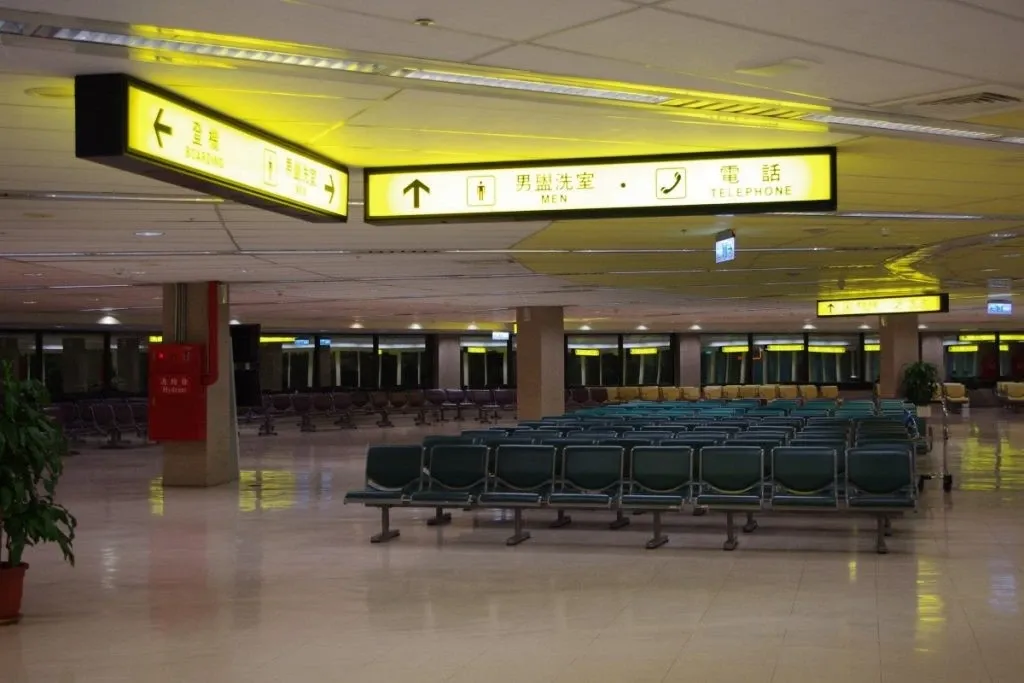
Many liminal images seem to have been found in a forgotten box of memories. The resolution is often low. The colors appear muted. There’s digital noise, blurriness, overly bright flashes, and slightly twisted, off-center framing. Even when taken just a few years ago, they seem to come from another era.
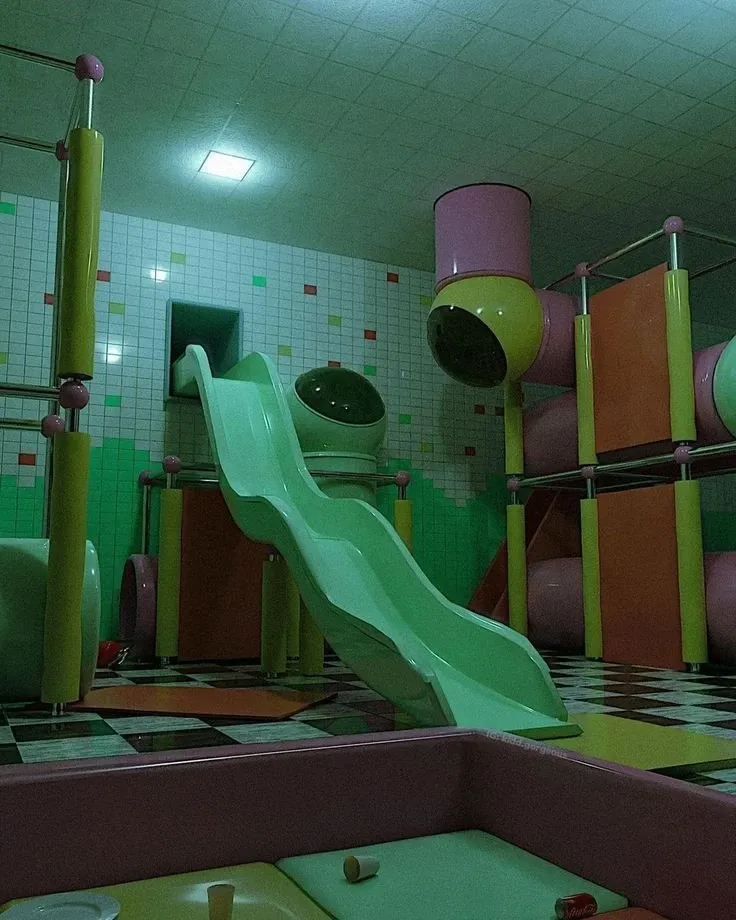
This aesthetic produces a curious sensation: it evokes nostalgia without necessarily referring to a specific memory. There’s a relatively recent term to describe that experience: anemoia, the nostalgia for a time that we never lived. Many liminal spaces draw on aesthetics from the eighties and nineties (geometric carpets, fluorescent lights, plastic signs, fast-food chains) that evoke an idealized childhood even for those born afterward. We don’t remember those places exactly as they were; we remember the idea of having inhabited them at some point.
However, reducing the fascination with liminal spaces to mere nostalgia would overlook something important. Traditional nostalgia tends to look backward. It assumes there was a better past to which we should desire to return. It’s a deeply conservative emotion because it seeks answers to the present in a time that has already closed. It’s no coincidence that much of contemporary culture seems obsessed with remakes, revivals, retro aesthetics, or even political phenomena that promise to restore a supposed Golden Age. From fantasies of returning to traditional gender roles, like TikTok tradwives, to the musical aesthetics of the new right, fashwave, much of contemporary imagination seems directed toward an idealized past.
Liminal spaces operate differently. They are nostalgic too, but that nostalgia is never comfortable. There’s something unsettling about those images, as if the past appeared emptied of what made it livable. The lights are still on, the buildings remain intact, but life is no longer there.
Valentina Tenni writes that "the past is gone forever, and even if we could return, it would be empty." That phrase perfectly captures the liminal experience. There’s no desire to go back. What exists, rather, is the melancholic awareness that time allows to die even the places that seemed eternal.
Here it’s useful to revisit another concept from Mark Fisher: hauntology, which in turn takes up an idea from Jacques Derrida. For Fisher, the present is haunted not only by the past but also by the futures we once imagined and that never came to exist. We live surrounded by the ghosts of unfulfilled promises: futuristic cities that were never built, abandoned political utopias, technologies that were supposed to change everything but ended up reproducing the same old logics.
There’s no desire to go back. What exists, rather, is the melancholic awareness that time allows to die even the places that seemed eternal.
That might explain why so many contemporary works seem incapable of imagining something truly new. In Capitalist Realism, Fisher, quoting Jameson, argues that our era has naturalized capitalism to such an extent that it’s easier to imagine the end of the world than the end of the system (yes, I know, we need to stop borrowing from Fisher for two years, sorry). But one consequence of this is that the future has stopped feeling open and has begun to seem like an indefinite extension of the present.
Perhaps therein lies the strange political power of liminal spaces. Although they look back, they do not idealize the past. They present it as something definitively lost. And precisely because that past no longer offers refuge, they compel us to look forward. They do not promise an impossible return; they open a question.
"Even if they force me, I will never say / that all time past was better. / Tomorrow is better."
Spinetta.
There’s something in these images that resists any easy description and is almost impossible to capture in words. But one thing that can be said is this: in a liminal space, there’s no one to look at, and therefore no identity to judge. Race, gender, class; everything that organizes our social life becomes, for a moment, irrelevant. Not because the world has resolved it, but because the world, there, is empty.
This vacancy recovers something of the original sense of the word. The liminal, for Van Gennep and Turner, as we said, was not a place but a state: the threshold between one identity and another. Philosopher and YouTuber Contrapoints pointed out something similar when discussing the experience of gender transition: it is also a liminal state, a transit where one is not yet what one will become. A move, adolescence, an airport corridor: all are forms of the same threshold. And this questioning of binary categories, which should be immutable, says Contrapoints, also poses a direct threat to the symbolic order.
Although they look back, they do not idealize the past. They present it as something definitively lost. And precisely because that past no longer offers refuge, they compel us to look forward. They do not promise an impossible return; they open a question.
Mark Fisher, referring to the psychedelics, speaks of a perception that can also be thought of from the liminal: that of a reality in mutation, malleable, that no longer feels closed or definitive. The Russian formalists spoke of desautomatization: literature as a way to interrupt the autopilot with which we navigate language. Liminal images do something similar, but with the perception of space.
That's why I believe I find more affinity between the liminal and the imagination than between the liminal and nostalgia. As we said, nostalgia looks back at a closed world: it assumes that the answers lie behind us and that we can only try to replicate them in the present. Imagination, on the other hand, requires that meaning remains open. It needs thresholds.
Perhaps that's why liminal spaces seem so fascinating to me (and to us). Not because they hide a secret meaning, but because they momentarily suspend the meanings we take for granted. An airport stops being an airport and becomes something else, impossible to fully name. A hallway no longer just leads from one place to another: it becomes a place in itself. The world ceases to function as a collection of objects with defined uses and regains some of the indeterminacy it probably had when we were kids.
Maybe that's why these images evoke such a difficult-to-classify mix for me, oscillating between sadness and relief. They remind me that everything passes, that places outlast those who inhabit them, and that no way of organizing the world is eternal. There’s something profoundly melancholic in that certainty. But also something liberating. Perhaps imagination begins precisely there: at the moment we stop viewing the world as something finished.
A few final notes, as a hypothesis.
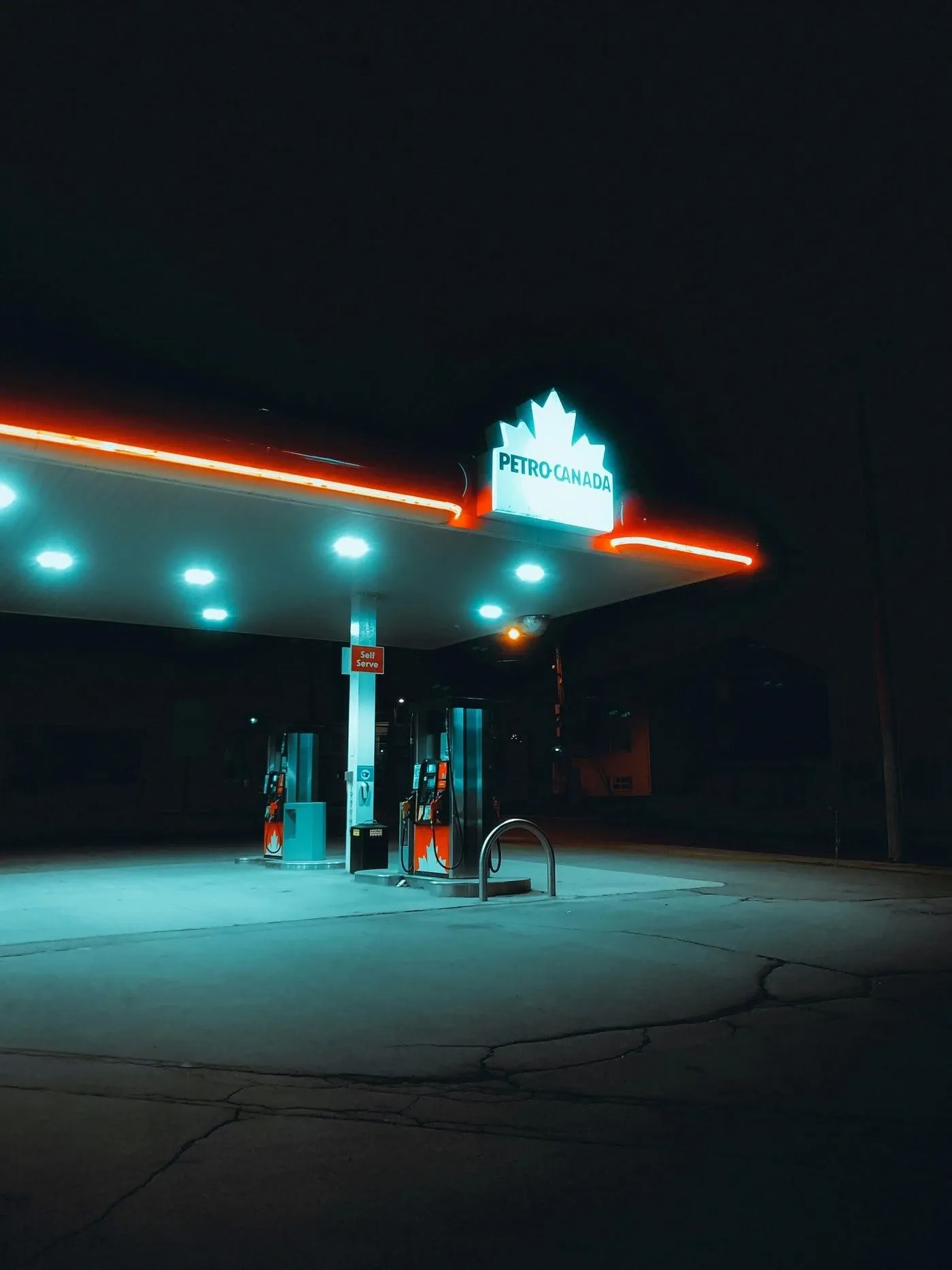
Liminal spaces are often described as empty places. I think the opposite is true. They are full of possibilities. When everything stops being defined for a moment, when a mall ceases to be a mall, a school stops being a school, and a gas station seems like the very edge of the world, we too stop being exactly who we were. For a few seconds, reality regains some of its mystery. Things start to feel strange again and, precisely for that reason, changing them seems possible once more.
Everything passes, places outlast those who inhabit them, and no way of organizing the world is eternal. There’s something profoundly melancholic in that certainty. But also something liberating.
I then think that the most radical imagination might not begin by inventing completely new worlds, but merely by looking at this world of ours as if it could still be different. Liminal spaces gift us, for a moment, that perspective, and they allow me to clearly feel that emotion that only appears in the face of mystery. They don’t offer answers or promise better futures. They merely suspend the certainty that everything is decided. And that suspension, as brief as the time it takes to walk down an empty hallway or look at a grainy photograph of an empty mall, is enough to remind us that the present isn’t finished either.
Perhaps that’s the true power of this aesthetic of thresholds: not to invite us to escape reality, but to restore its capacity to surprise us. To open a crack in the middle of the everyday, on just another office day. To remind us that the world always holds more possibilities than we usually grant it. And that, as Spinetta sang, the past doesn’t have to be our horizon. Tomorrow is better.
Y a cada colaborador se le paga por su trabajo. Las dos cosas dependen de los suscriptores.