FUTCON 2026: The Festival of Soccer Passion
A Renaissance Maradona, vintage jerseys, and choripán vs. cops. Ten things to check out at FUTCON 2026, November 14 and 15 at the Konex.
The second edition of FUTCON is coming up — the big annual festival of soccer culture returns to the Konex on November 14 and 15 with a packed lineup.
There's genuinely a ton of interesting stuff, from talks by leading figures in soccer's creative universe to an expanded fair with more than 50 stands of vintage jerseys and every kind of merch, plus art exhibits, video games, a newsstand with magazines from all over the world, live music and more.
Here's a little guide to ten things you'll be able to find there, put together especially for us by our friends at FUTCON.
1. Devoción: César Gondor's thousand Diegos
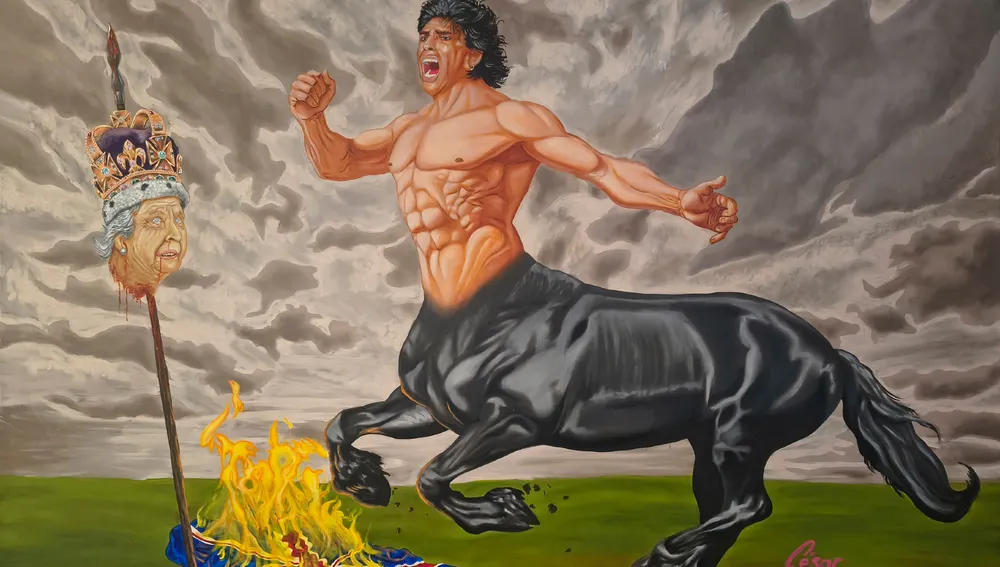
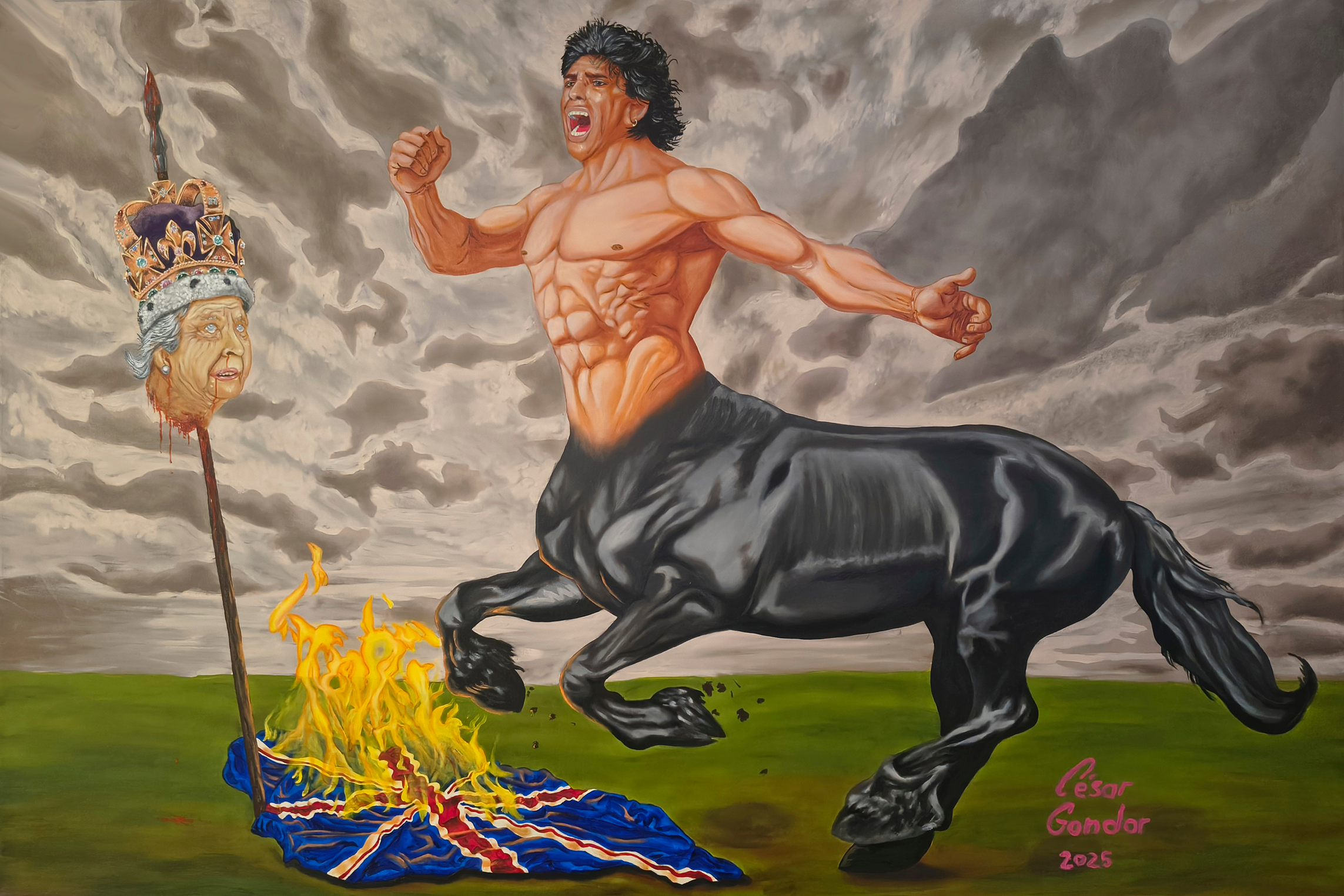
There's no way to be Argentine and have a trip to Naples not end in a revelation. It happened to César Gondor after weeks of hopping from museum to museum across Italy, tripping out on the Renaissance, the Baroque and Impressionism. One day, walking around the city, he came across a mural of Diego wearing a crown of thorns. “I started seeing something much more rebellious and revolutionary in the complexity of classical art than in modern art,” he says. “And when I saw that mural I thought: ‘Of course, you idiot! I have to mix the two.’”
There's a crucified Diego, a Diego in sword and armor leading an army of Templars, a centaur Diego. There are always a thousand Diegos.
The result is Devoción, a series of paintings that starts from works by Michelangelo, Caravaggio or Van Gogh and drops our tragic hero par excellence right into them. There's a crucified Diego, a Diego in sword and armor leading an army of Templars, a centaur Diego. There are always a thousand Diegos. “It's a love letter to classical art,” says Gondor, “that takes Maradona as our hero and our God.”
The underlying idea works almost like a manifesto: today, the old is more rebellious than the new. And for that, a face of the Number 10 gazing at the horizon wasn't going to cut it. “It's not a calm show: it's a really rowdy, explosive show... just like Diego was,” says César.
2. Sabrina Aguirre takes her vision of soccer from Jujuy to the world
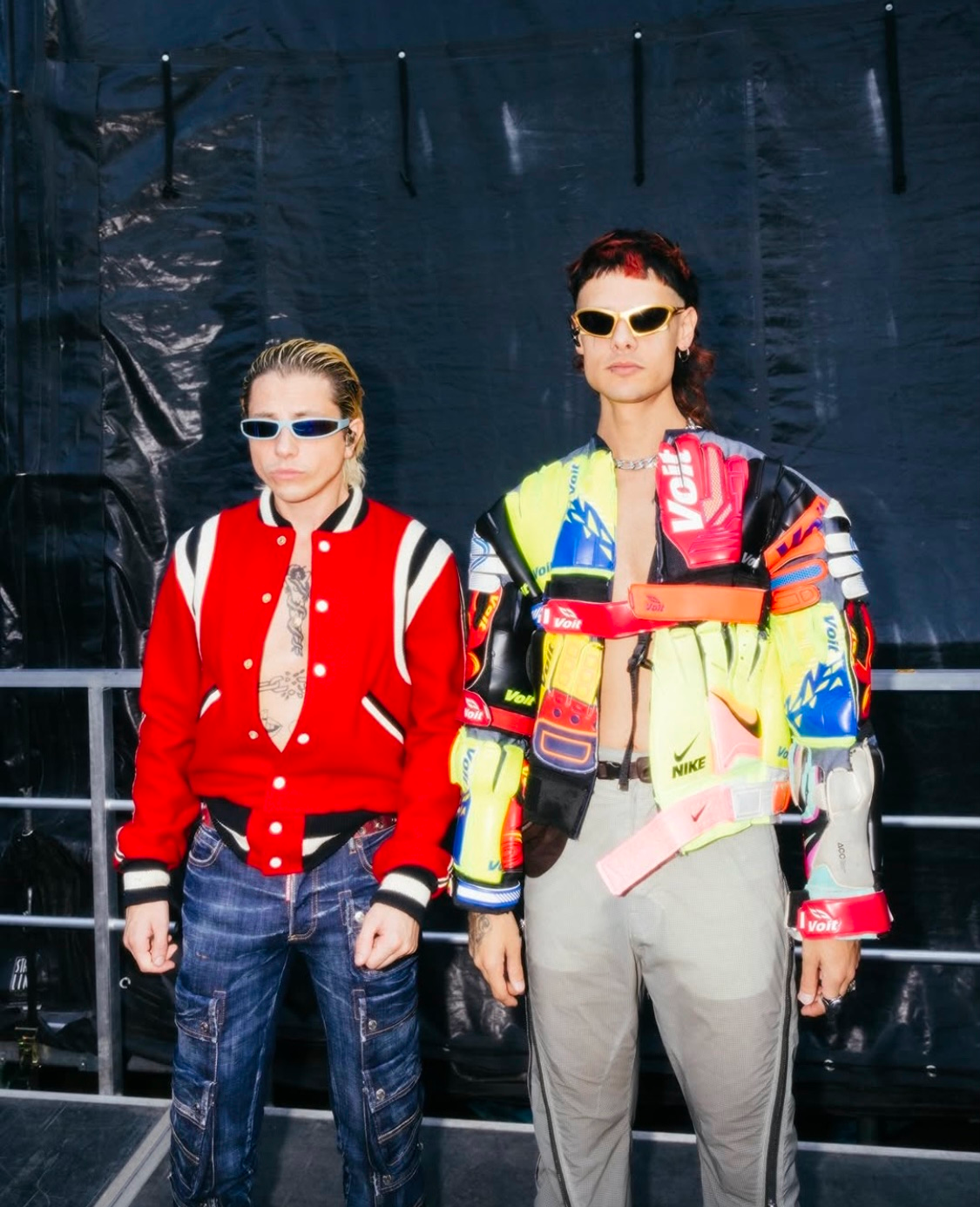
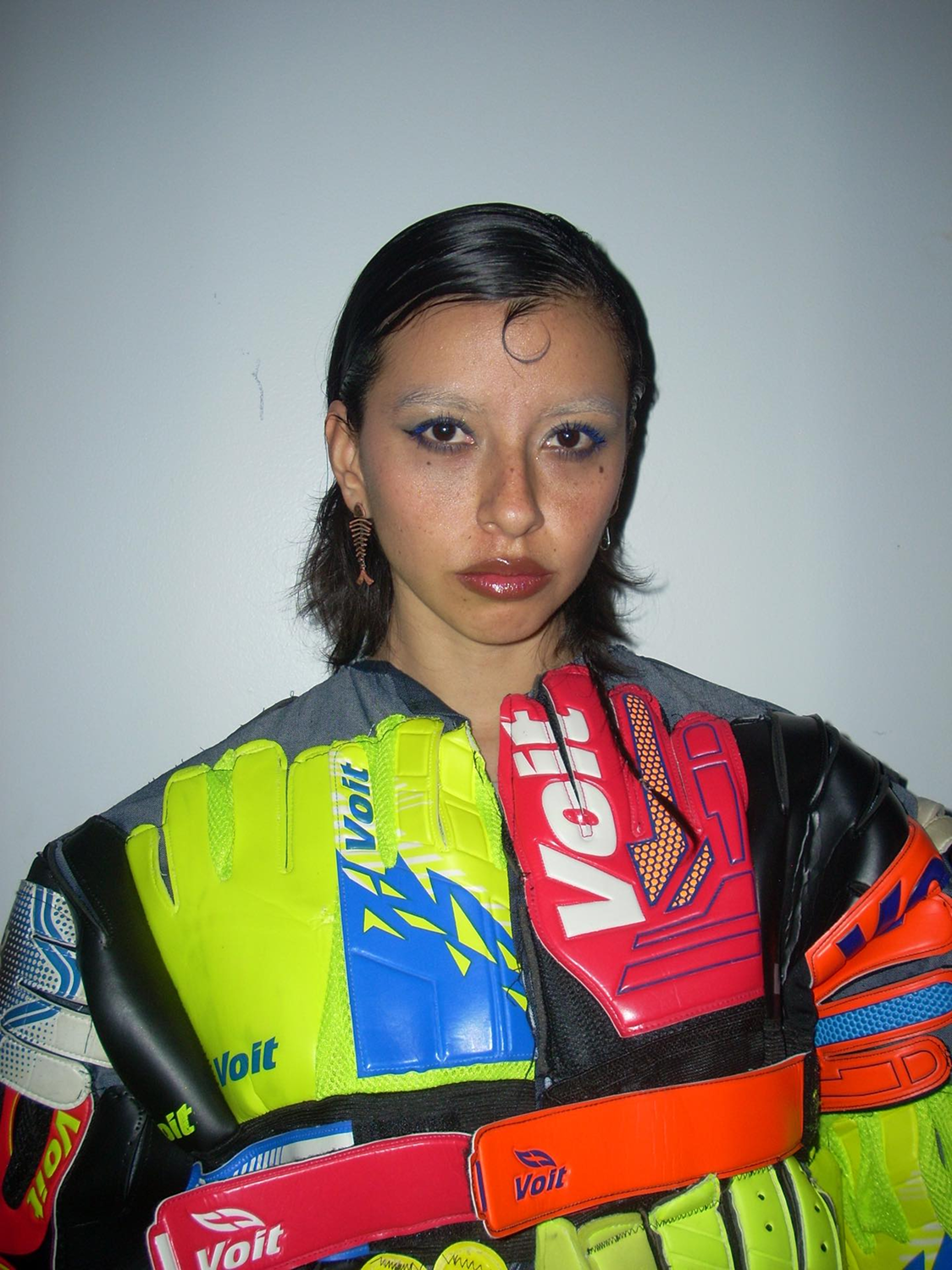
Some childhoods explain an entire career. “My parents are PE teachers, so at my house in Jujuy there were balls everywhere,” Sabri Aguirre says from Mexico, where she lives after a stint in New York. “So I'd think: ‘Huh, maybe I could use these balls to make a jacket.’”
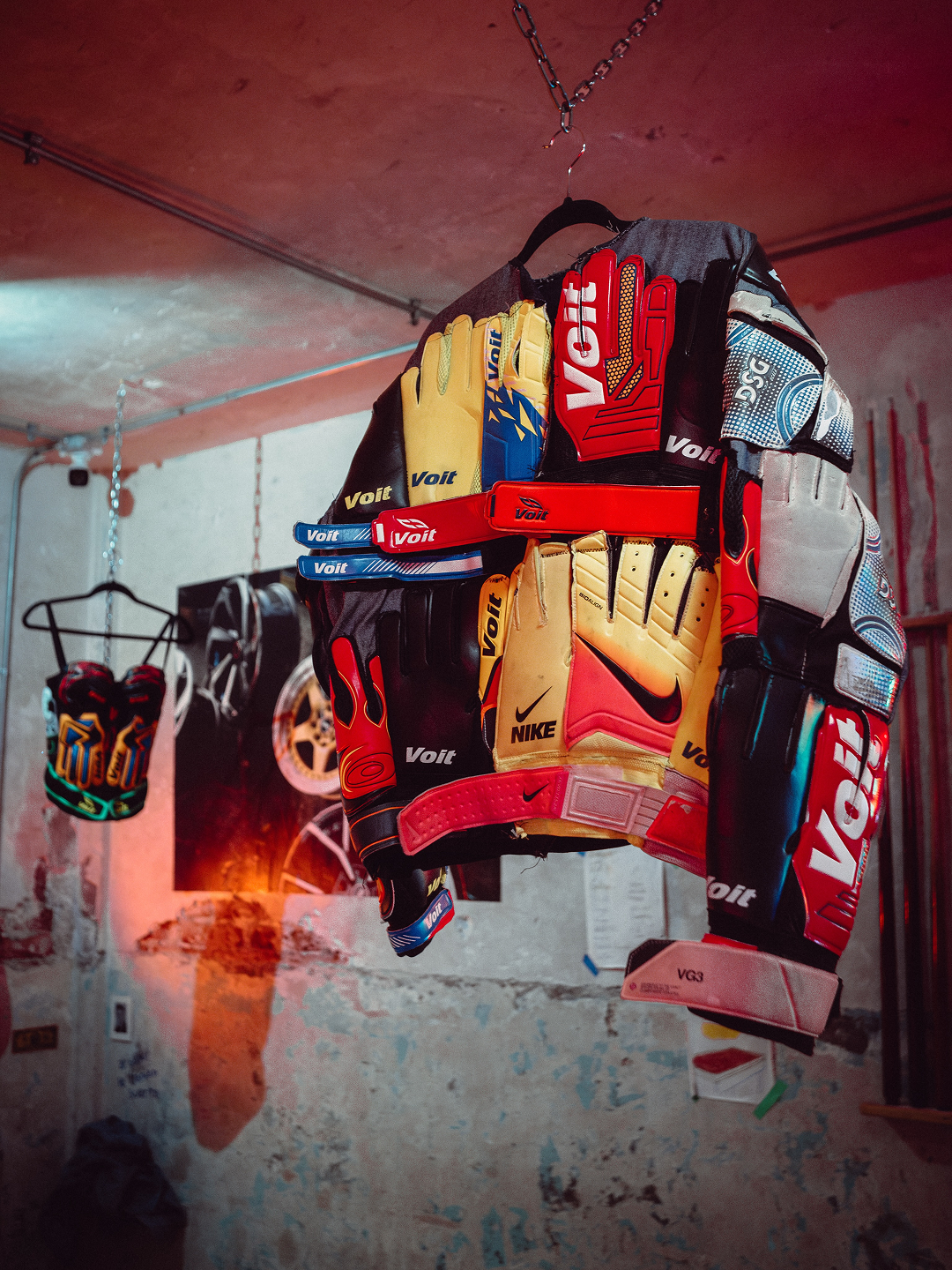
At AGUIRRRRE, her brand, the colors of Jujuy's carnival collide with a new way of imagining sports aesthetics. The piece that sums her up best is a jacket made from goalkeeper gloves, the same one Ca7riel wore at Lollapalooza Chicago. The story is straight out of the DIY playbook: Ca7riel and Paco Amoroso's stylist told her the duo was heading out on a US tour, and Sabri set out to have something ready by the time they arrived. She found several pairs of Voit gloves at a Walmart, bought them all, started taking them apart on a Sunday and finished sewing them on Tuesday, on the plane from Mexico to the United States.
During the World Cup she designed Argentina's look for Kid Super's runway show on Inter Miami's pitch. And yet she's never shown her work here: the brand was born when she was already abroad, and everything happened too fast. That's why this is one of the big highlights of the lineup. FUTCON will host AGUIRRRRE's first-ever runway show on home soil, plus a talk about her journey from Jujuy to the world.
3. Not Even Death Will Part Us, a fanzine by Emiliano Gobello
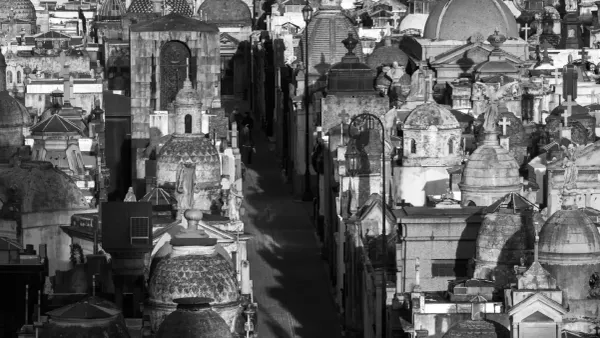
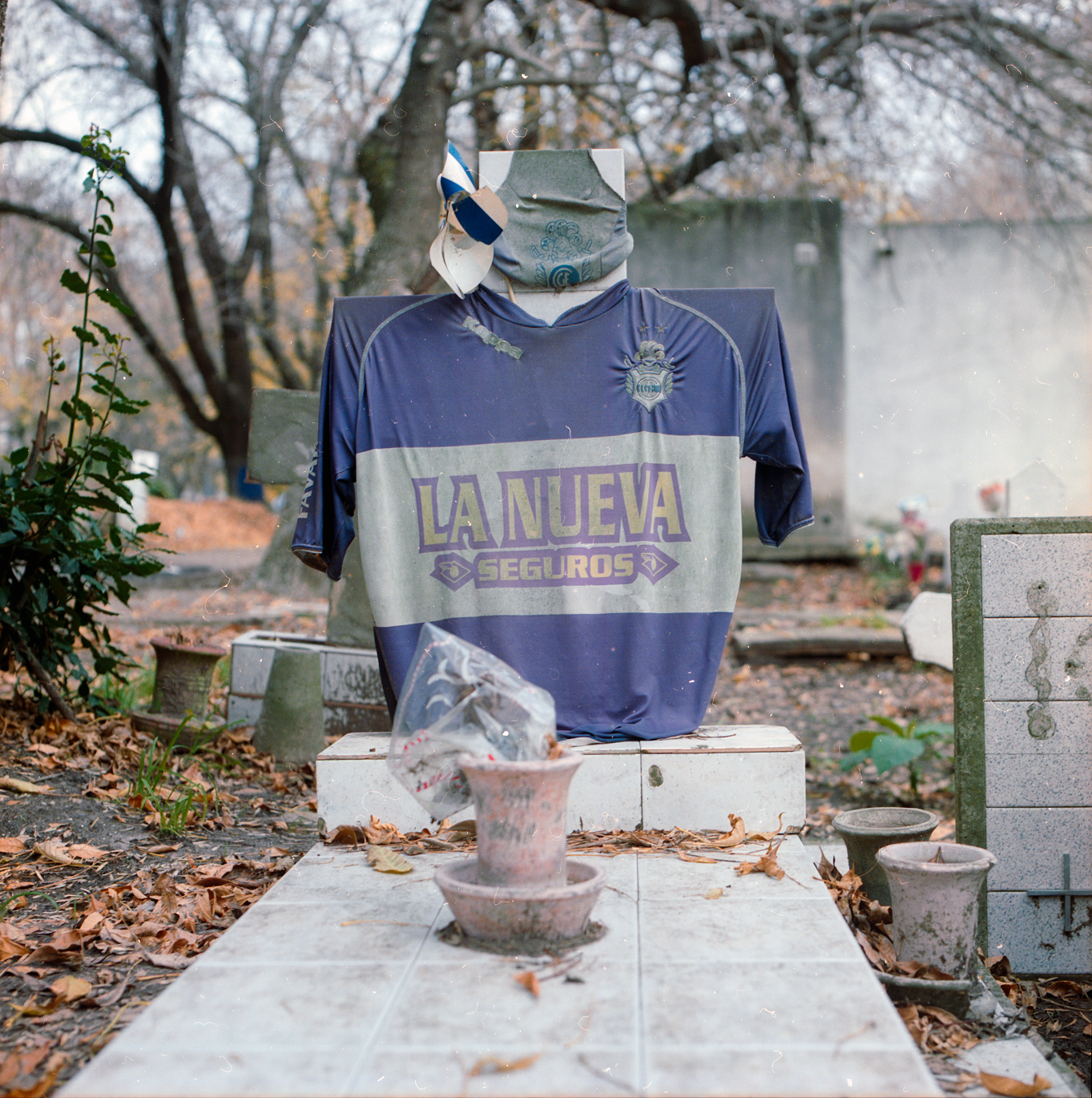
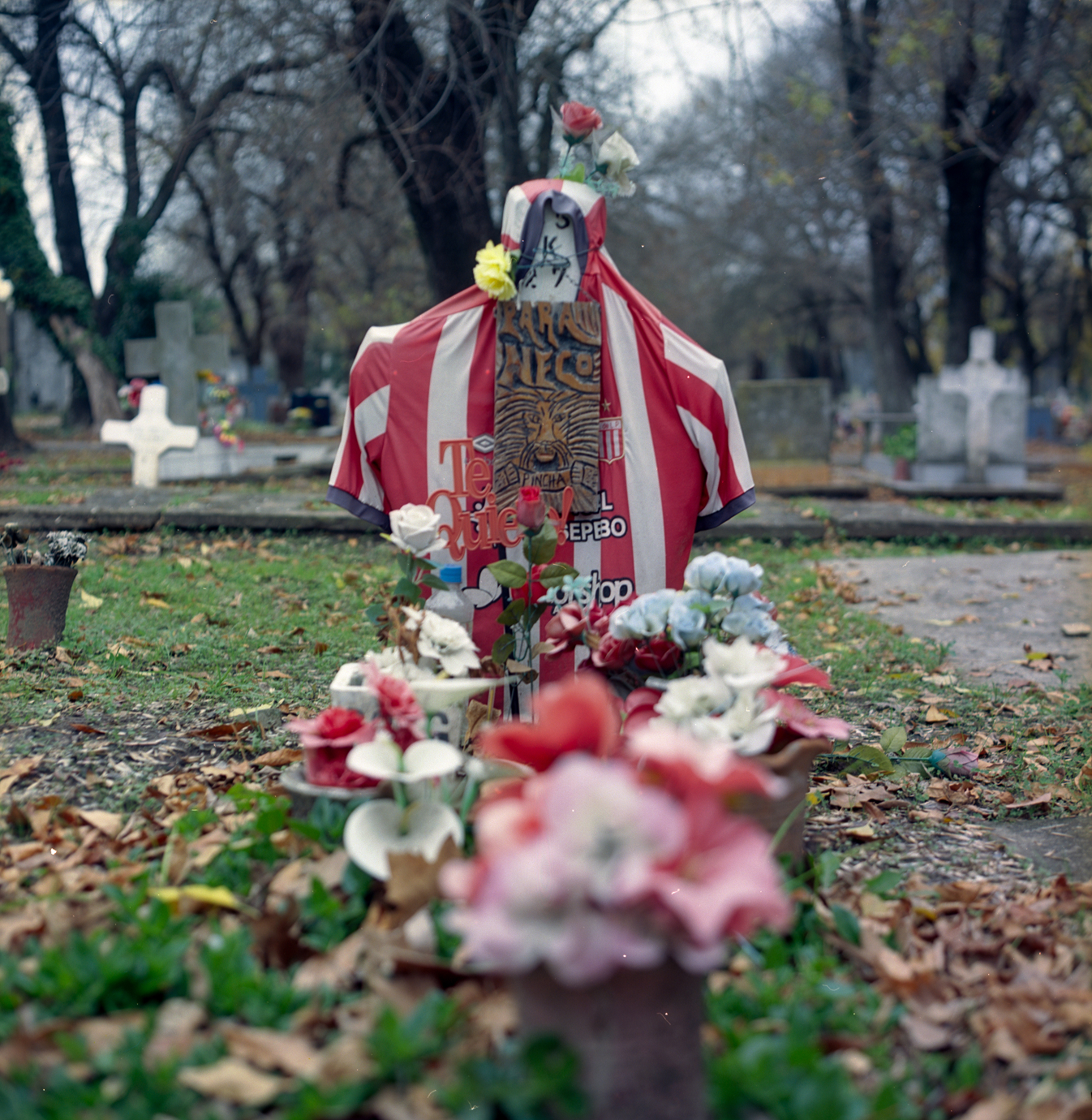
At the stadium people swear a lot of eternal love, loyalty till death, “from the cradle to the grave,” etc. Well, photographer Emiliano Gobello wondered what happens to those promises when the grave part actually comes, and he went looking for the answer at the La Plata Municipal Cemetery. “When you walk through the cemetery, those promises show up made tangible in a jersey, a flag, a flower,” he says.
Not Even Death Will Part Us is the result of those walks: a photo fanzine showing how soccer, besides taking up a central place in a lot of people's lives, also shapes the way those people are remembered. Headstones with club crests and niches painted in team colors work as documentary proof of something we already sensed: passion outlives death.
“I've always been interested in folk saints, shrines, stories that turn into phenomena of worship and belonging,” says Emi. And what's it like taking pictures among the graves? “I really liked it. I went several times, always respectfully and asking permission, focusing on conveying everything I feel as a fan.”
The fanzine will be on sale at the FUTCON fair.
4. Soccer gods painted in Ghana, via A Store Like 94
If you've ever found yourself at three in the morning scrolling through knockoff Ronaldinho jerseys with his name misspelled, you've probably passed through A Store Like 94, the British site devoted exclusively to soccer's most unhinged bootleg merch. This year Josh, the guy behind it, is coming to FUTCON — and he's not coming alone.
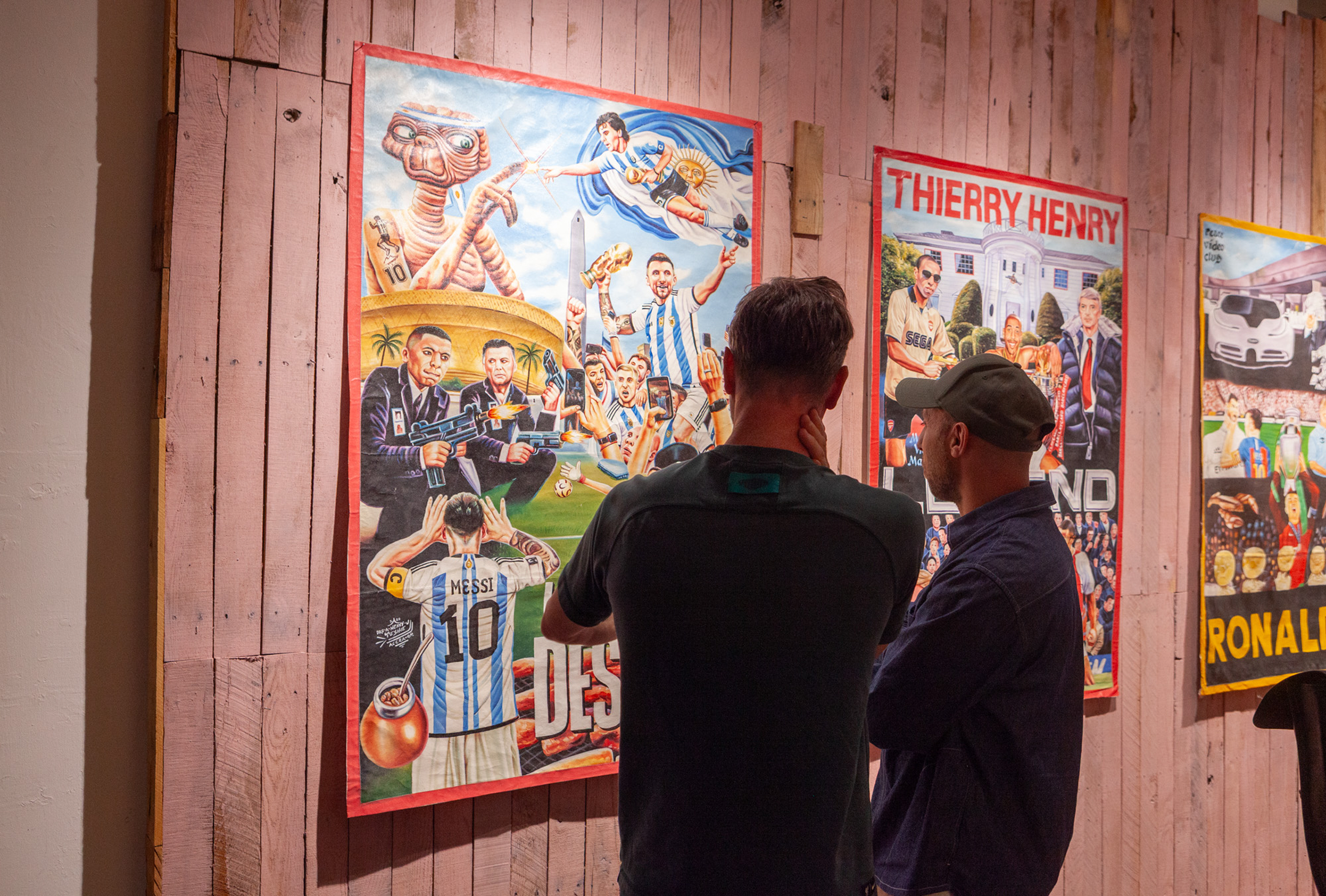
Over the past year he's worked with Deadly Prey, a gallery that represents Ghanaian artists who paint movie posters. The tradition has a history of its own: in the late eighties, traveling video clubs toured Ghana with a TV, a VCR and a generator, and since printing was super expensive, the posters were hand-painted, often on stitched-together flour sacks. The more blood and the more over-the-top, the more tickets sold. Josh asked those artists to make their own version of a soccer god.
Out came Maradona, Zidane, Ronaldo, Messi, Beckham, Ronaldinho, Henry and Pelé, all with the look of a video-store action flick. “They have so many niche references that it takes your brain a while to process them,” says Josh. “And because of the paint finish, with that glossy, kind of 3D quality, they leave a really intense memory if you see them in person. It's the imperfections that make them so good. Sometimes I feel like no other kind of art hits quite as hard.”
At the Konex there'll be the originals, prints for sale (half the proceeds go back to Ghana) and other gems from A Store Like 94's catalog.
5. Maradona, style icon, according to Lu Levy
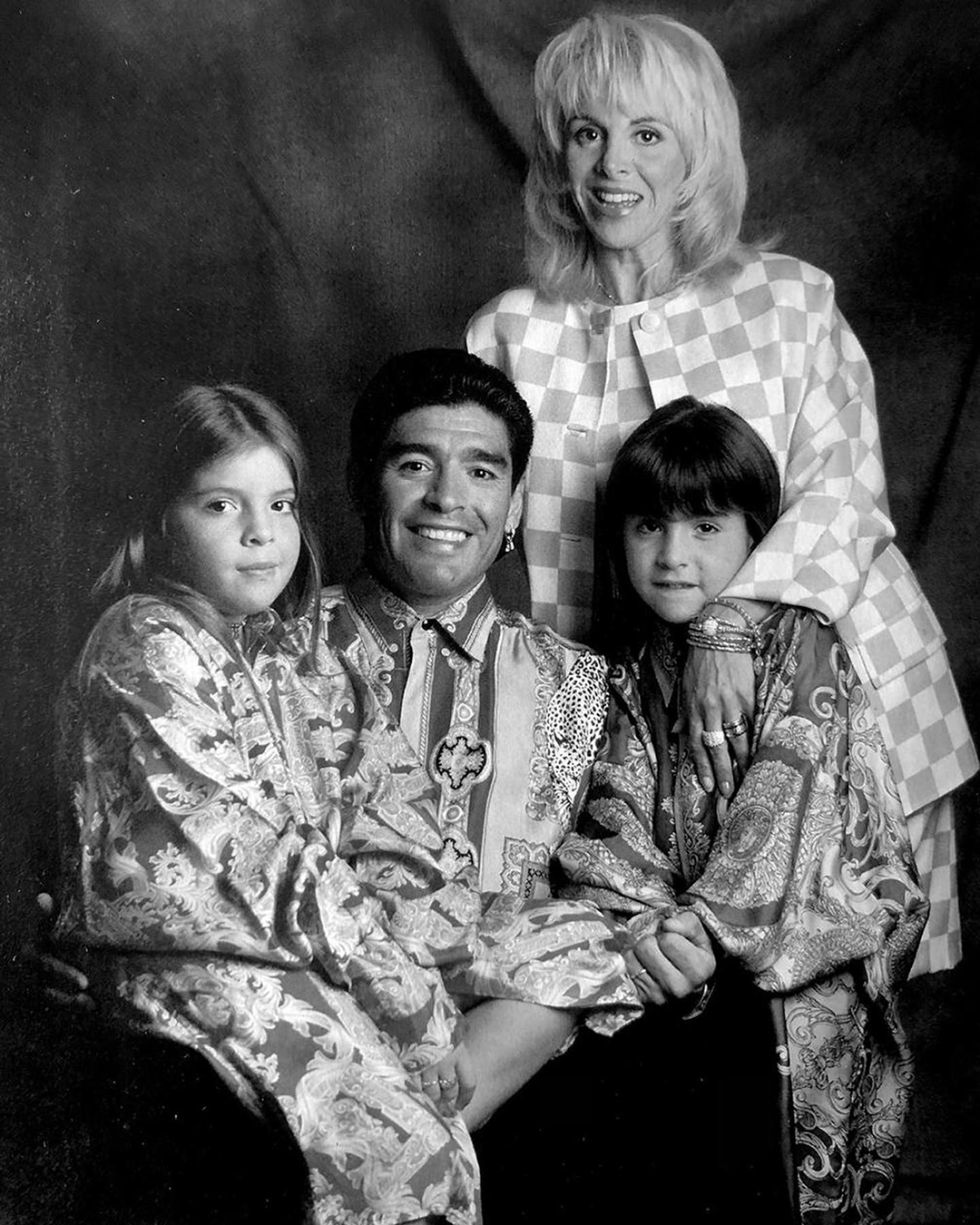
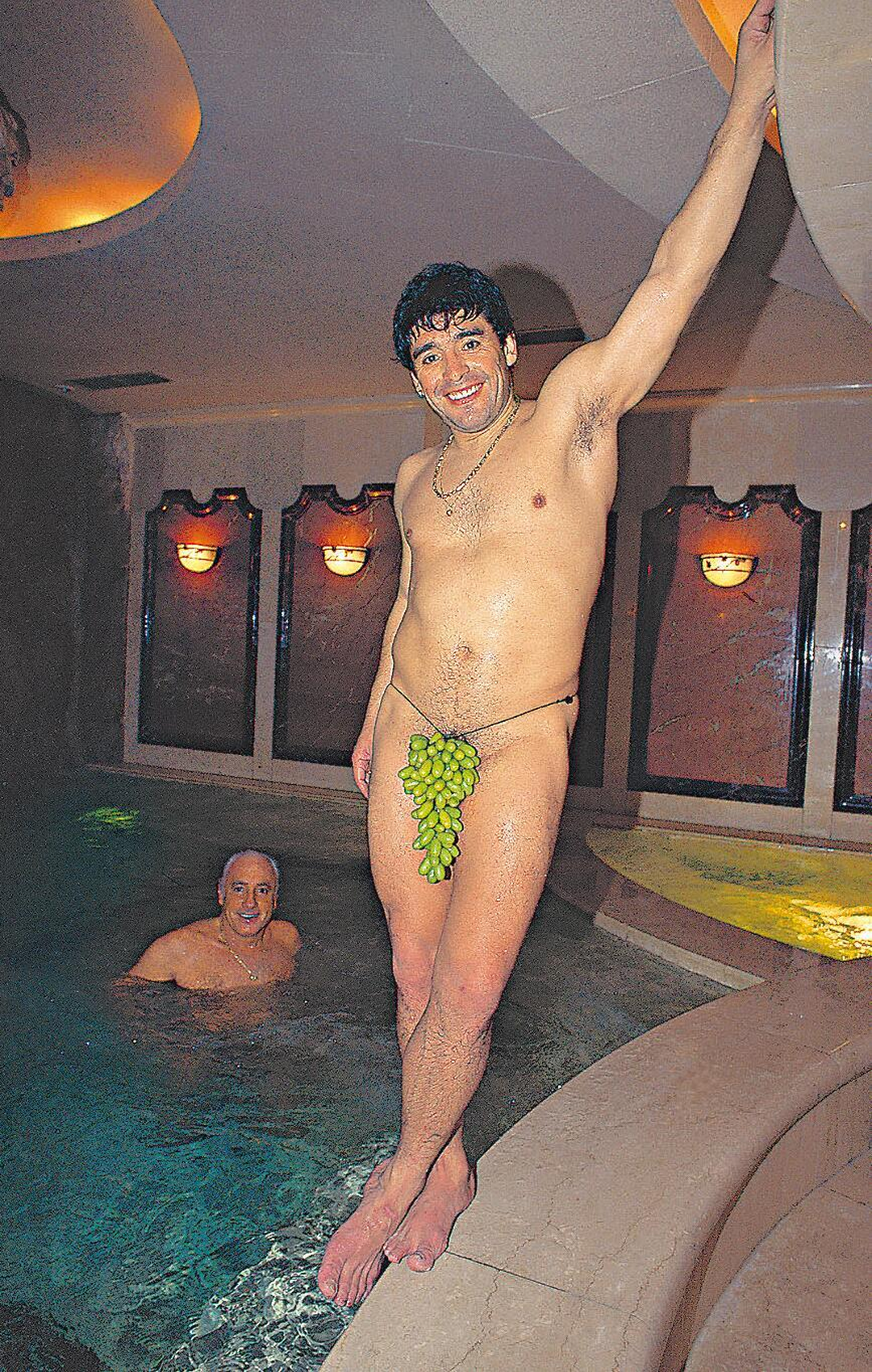
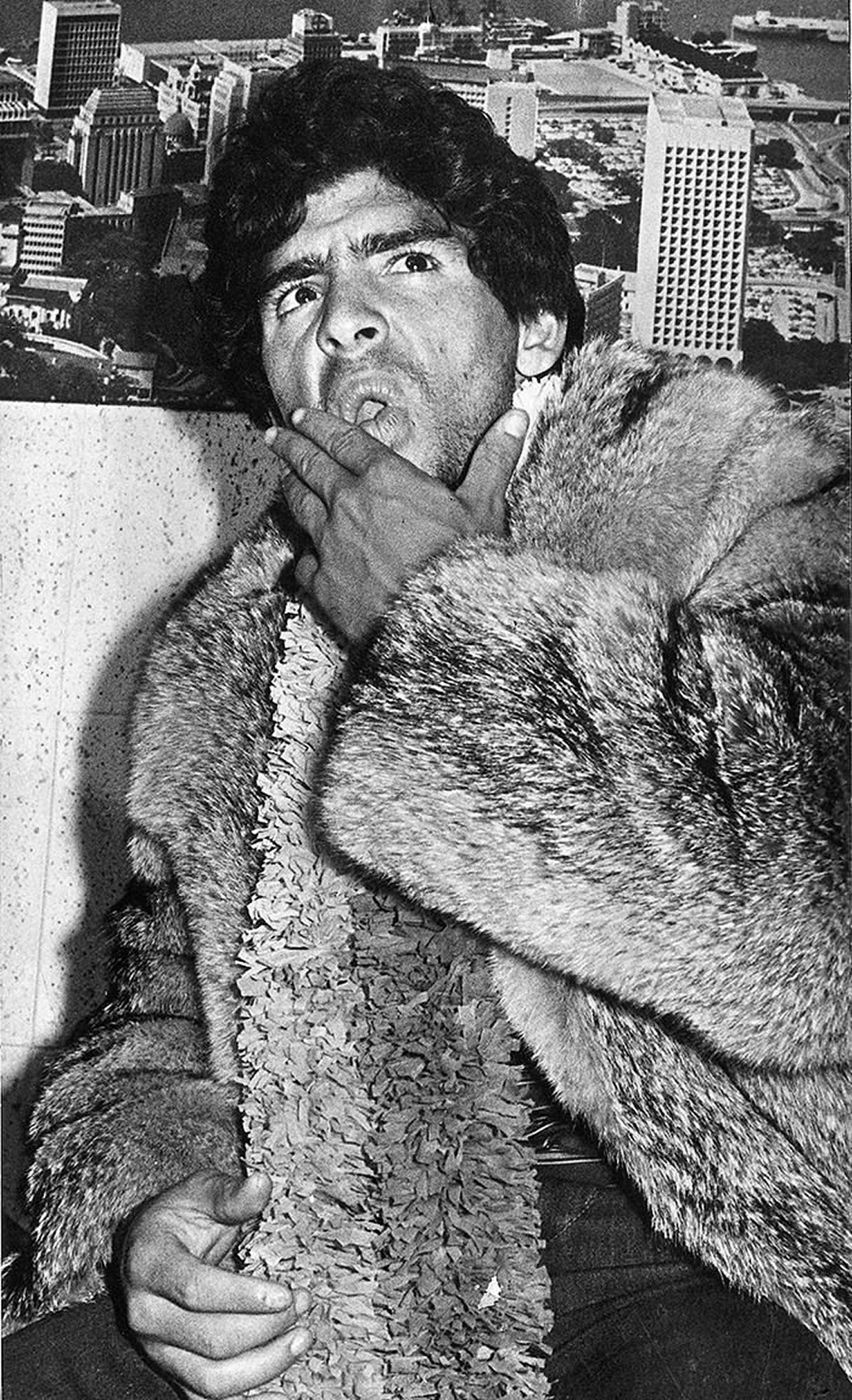
Is there anything left to say about Diego Armando Maradona? Always, especially when it comes to style. “To understand how we dress in this country, you first have to talk about soccer,” says Lu Levy, creator of La curva de la moda. “Diego defied the standards of taste and masculinity, and his style is still a reference point for Argentine visual identity and modern pop culture.”
Diego defied the standards of taste and masculinity, and his style is still a reference point for Argentine visual identity and modern pop culture.
Think of the earring, the watch on each wrist, the loud blazers, the obsession with Versace. For Maradona, clothes were a communication tool, and he used them to build his own myth. “Diego always used fashion's huge power to signal status to his advantage,” Lu explains. “His style was a statement of principles, a way of taking ownership of the symbols he'd been denied as a kid.” And no image consultants!
“Diego realized right away that if his photos were going to go around the world, he'd better be dressed sharp,” says Lu. He also used clothes as protest signs: there are dozens of T-shirts with slogans he came up with himself, a sort of Twitter account before Twitter. Through La curva, Lu has been rethinking fashion and beauty consumption patterns, something Diego did his whole life without asking anyone's permission. Her talk at FUTCON will rummage through that closet with her trademark mix of rigor and cheek.
6. Total Mob: vintage jerseys with Counter-Strike graphics
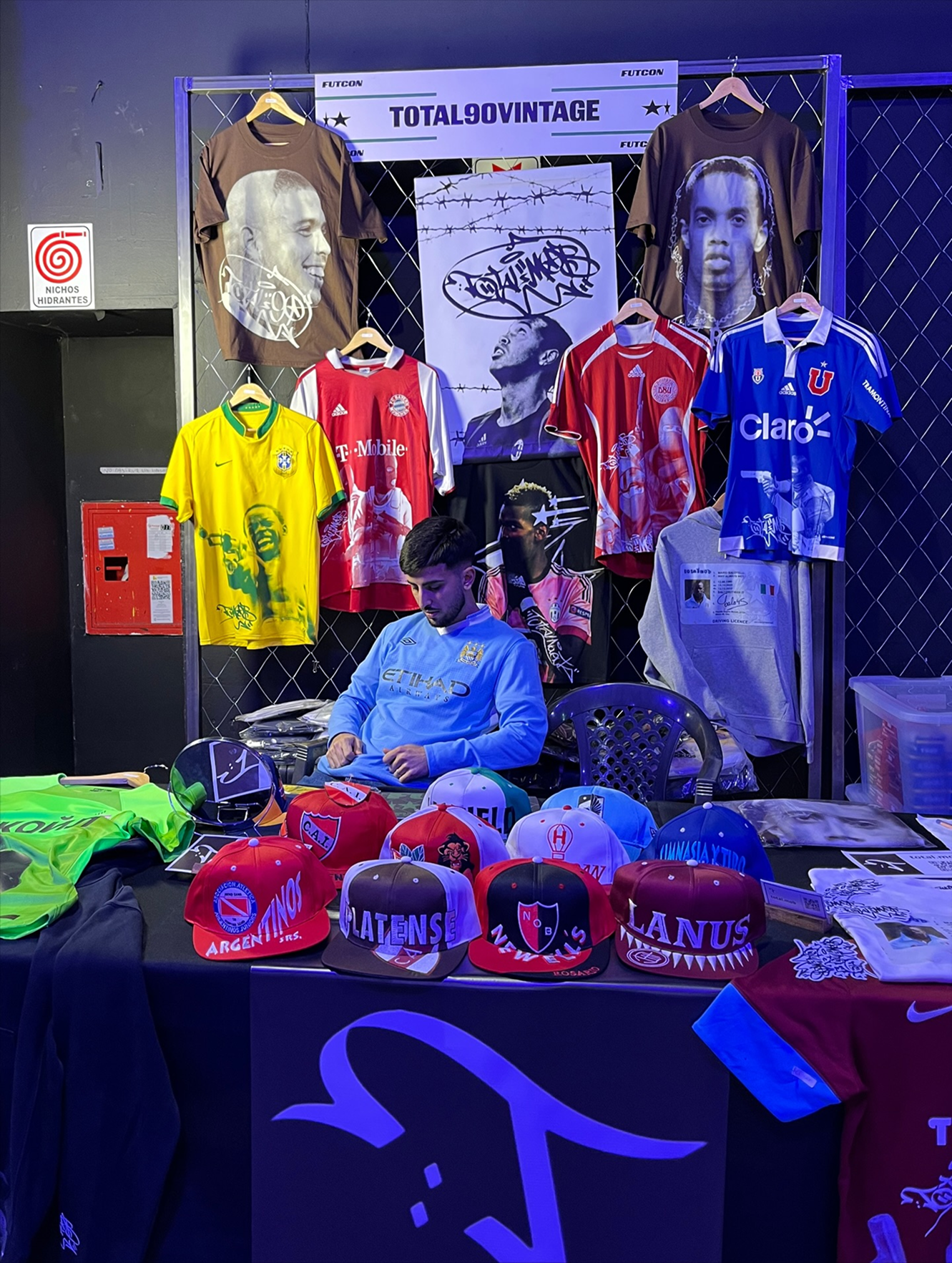
A week before the first FUTCON, Thiago Cortez was printing the clothes for his stand as fast as he could when his heat press broke. “No repair guy would give me the time of day, so I had to buy a new one at the last minute and I went three days without sleeping: it was all press, press, press,” he recalls. It paid off: he sold a ton and picked up followers who still buy from him.
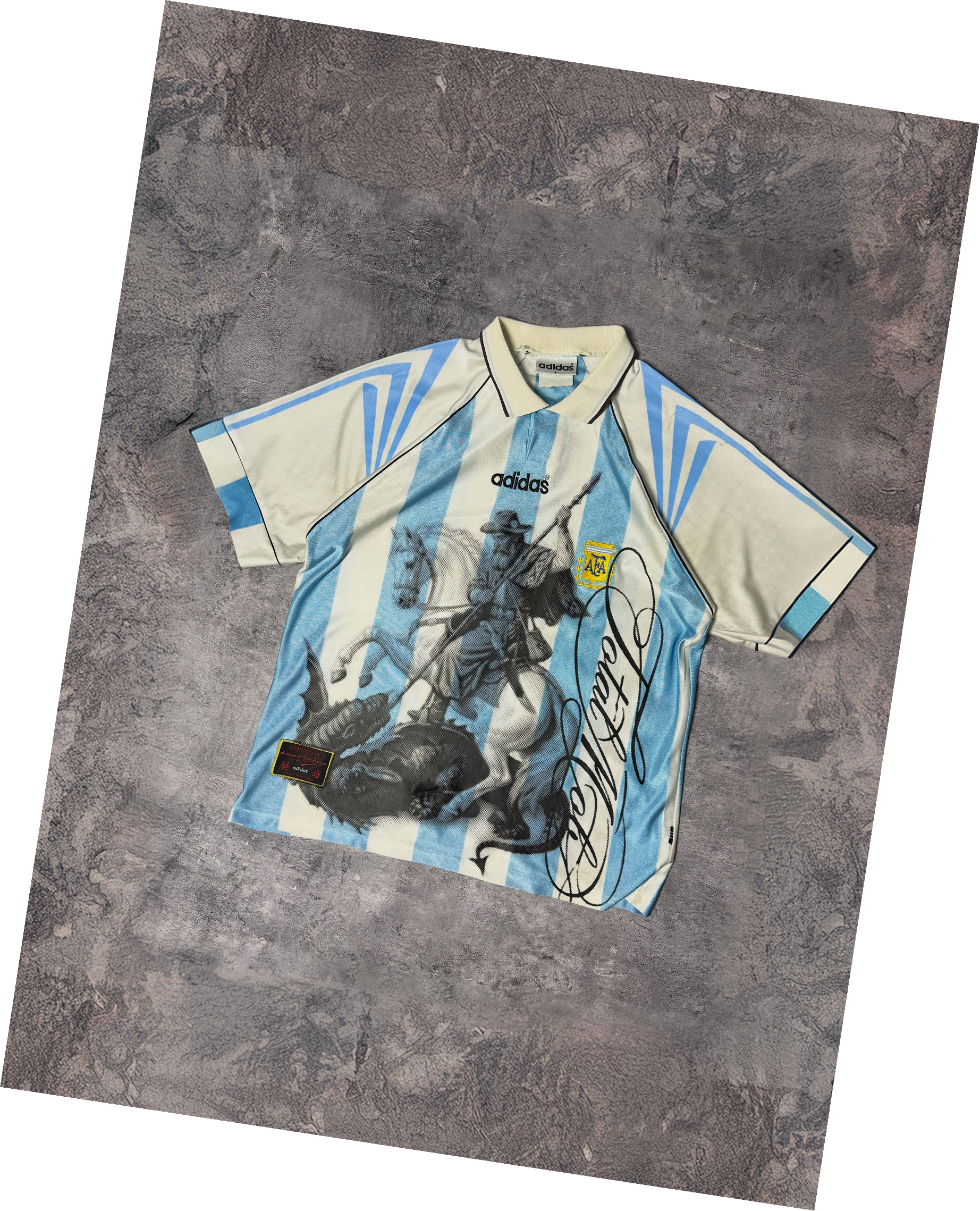
Thiago is 24 and has been designing since he was 13, when he taught himself on a pirated copy of Photoshop CS3 (the true baptism of an entire generation). He did graffiti, by 20 he was already buying and selling clothes, and little by little he started customizing them with his own tags, inspired by 90s and 2000s internet culture. One morning he woke up with a crystal-clear idea: “I had a Colombia jersey at home and I said: ‘I have to slap a huge Counter-Strike graphic on it.’” He posted it on Instagram and it blew up. That's how Total Mob was born.
Today he gets orders from Australia, Eastern Europe and Japan. It grew so much that he handed the vintage business over to his brother and now focuses only on custom work. It'd be easier to customize Chinese replicas, but like any true fan he prefers original jerseys, which he hunts down at flea markets. He's also putting out bootleg tees: “I just dropped my version of Gauchito from the '78 World Cup. And I've got a couple more in mind that I'm definitely bringing to FUTCON in November,” he says.
7. Luis Abadi and the humanizing power of the stadium choripán
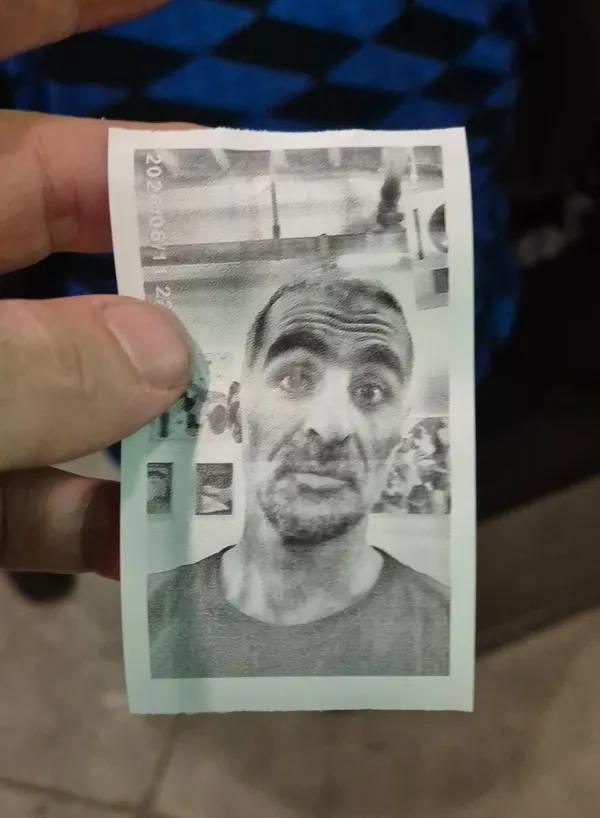
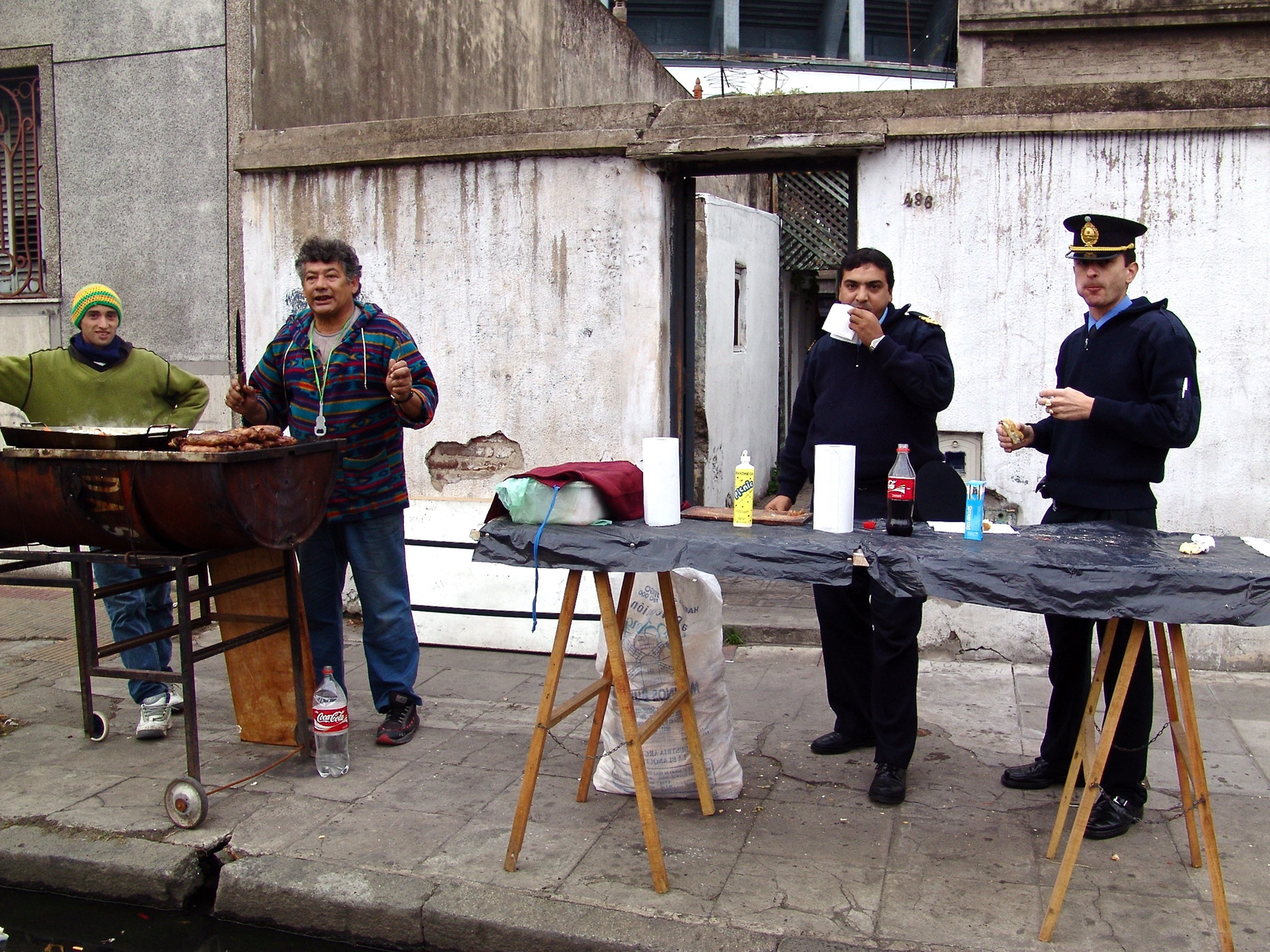
Remember when the Buenos Aires city government ordered the choripán stands around the stadiums shut down because, supposedly, they were funding the barras bravas? Luis Abadi grabbed his camera and went to see what was going on. He found something no security protocol had anticipated. “There are many ways to transcend the law, and one of them is seduction,” he says. “And nothing seduces like a stadium chori.”
CHORIPÁN, his latest fanzine, published by Punta Lara and Club Atlético Luis Abadi, is a tribute to that power. Not even the cops can resist it. “None of the police officers I photographed complained. Actually, I'd say they even kind of enjoyed being seen that way, humanized,” he says. “That very human desire to be recognized goes beyond the uniform, so they let their guard down and go with it.”
Like almost everything Abadi does, the project aims straight at the heart of relationships between people, power relationships included. “Power is vulnerable,” says Luis. “They have the weapons, but we can seduce them.” In his world, the grill guy is packing too.
At FUTCON he'll give a talk on the many fronts of Club Atlético Luis Abadi: his series of African immigrants posing with the World Cup trophy, his fanzine about Estudiantes, and the day he took his camera to Fiorito because Maradona appeared to him in a dream after dying.
8. A live muraltar by San Spiga
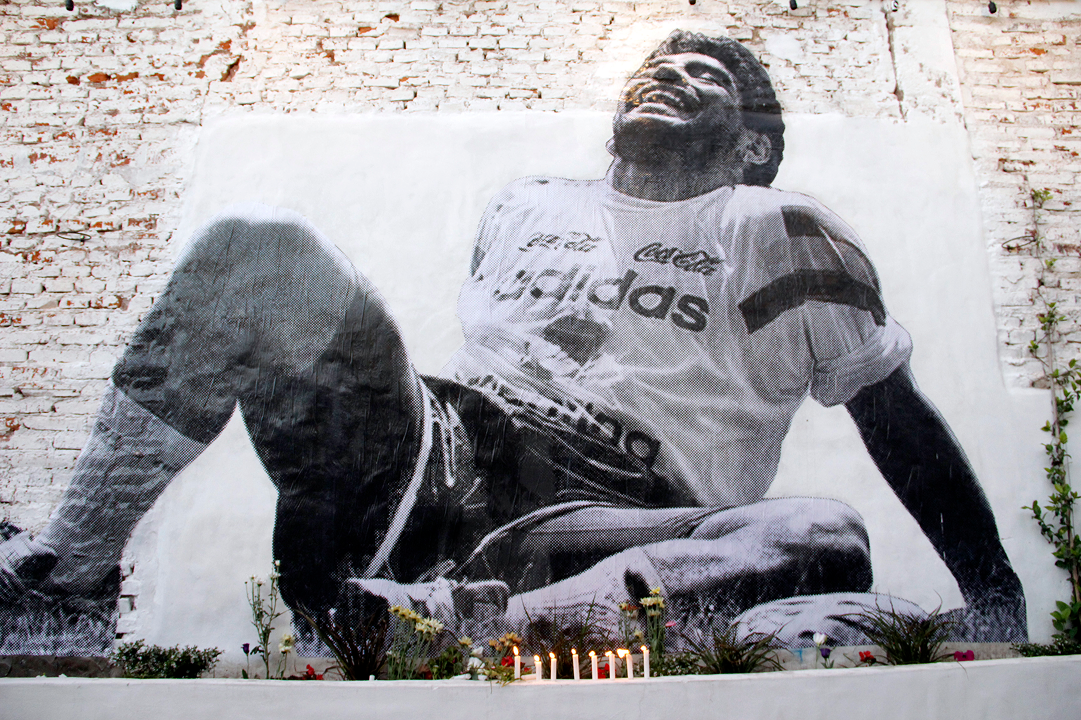
When Diego died in November 2020, something happened that San Spiga hadn't planned. “People spontaneously gathered at the murals I'd made in different parts of the world and left flowers, candles, jerseys,” he recalls. “It was really intense.” His paper-and-paste murals stopped being images stuck on a wall and became places of gathering and popular memory. “That's when the idea of the muraltar came to me: a mix of mural and altar.” Like almost everything Maradona-related, the spark came in Naples. In 2016 San put up a mural there and it caused a huge stir, back when there weren't that many yet. When he got back he started replicating them in Fiorito, in La Paternal and then all over the country. Odds are you've walked past one without knowing whose it was.
“Today I think of them as a collective ritual, a space that everyone builds together, that people come to and come back to, and keep coming back to,” says San.
Today I think of them as a collective ritual, a space that everyone builds together, that people come to and come back to, and keep coming back to.
At FUTCON, San will give a talk on muralism and collective participation: how you conceive a large-scale piece, what happens when the street takes ownership of a work, and why everything Diego touches becomes sacred. And, of course, he'll be making a muraltar at the Konex.
9. Pink jerseys: Valentina Gálvez's obsession
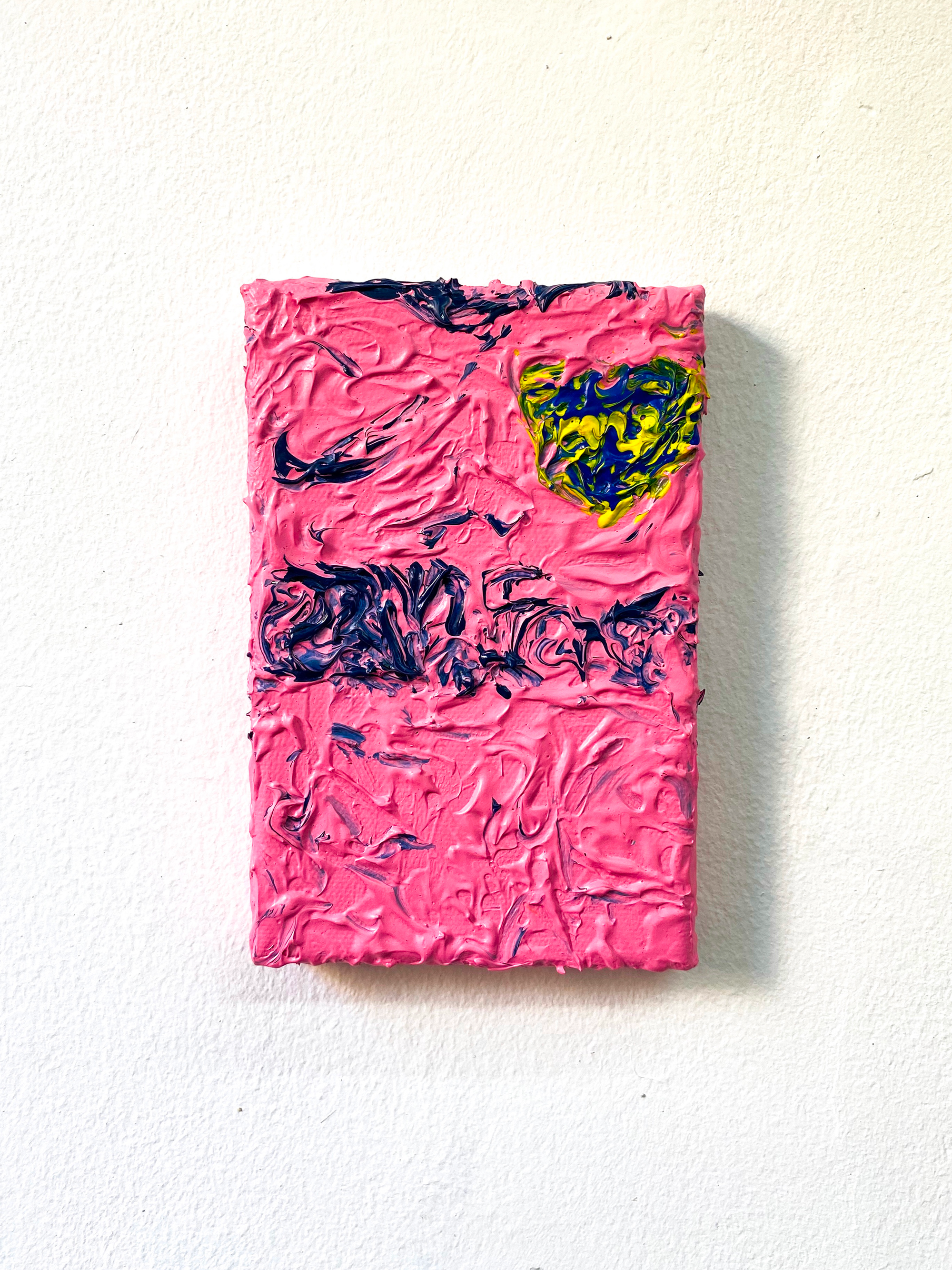
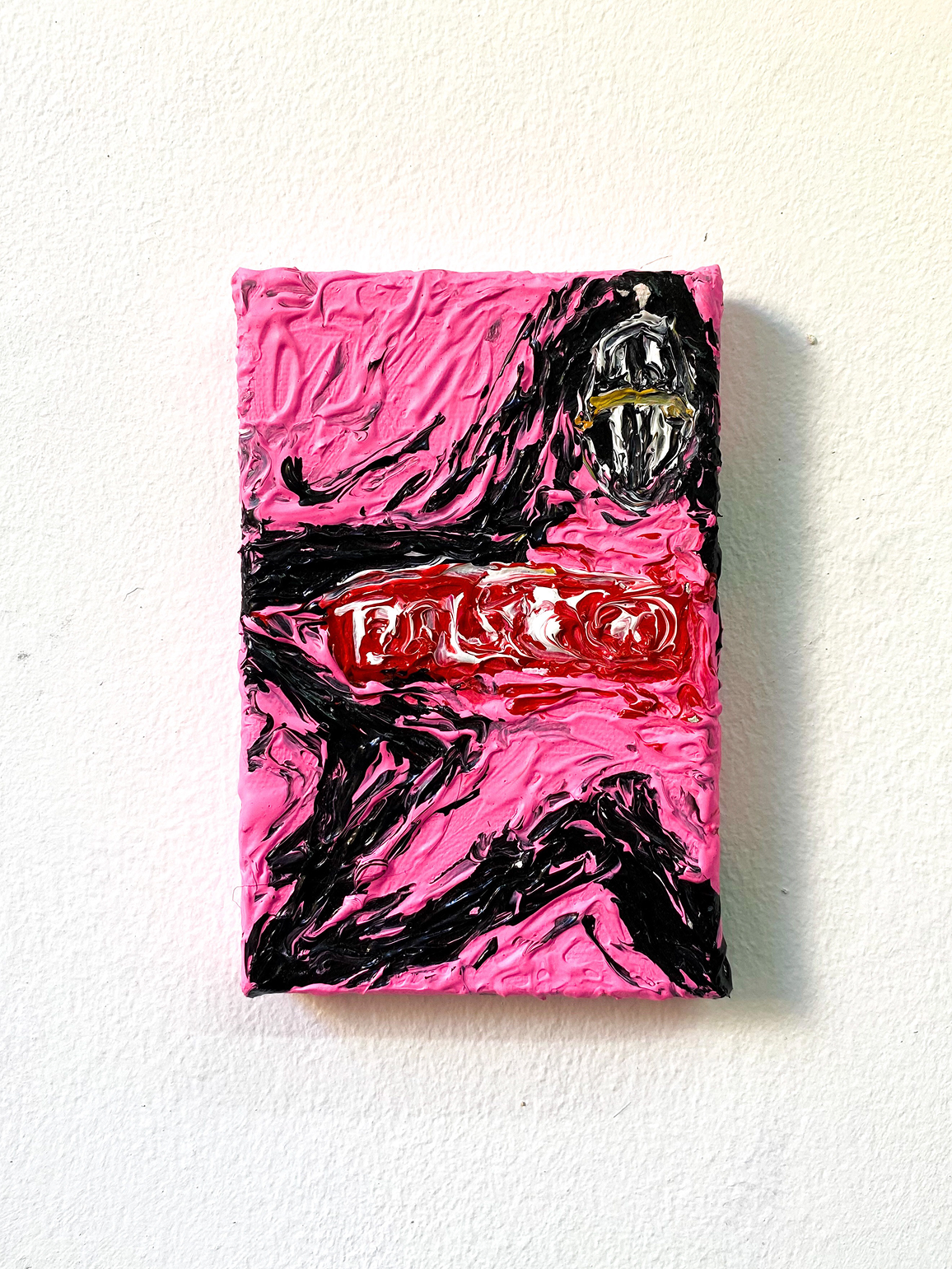
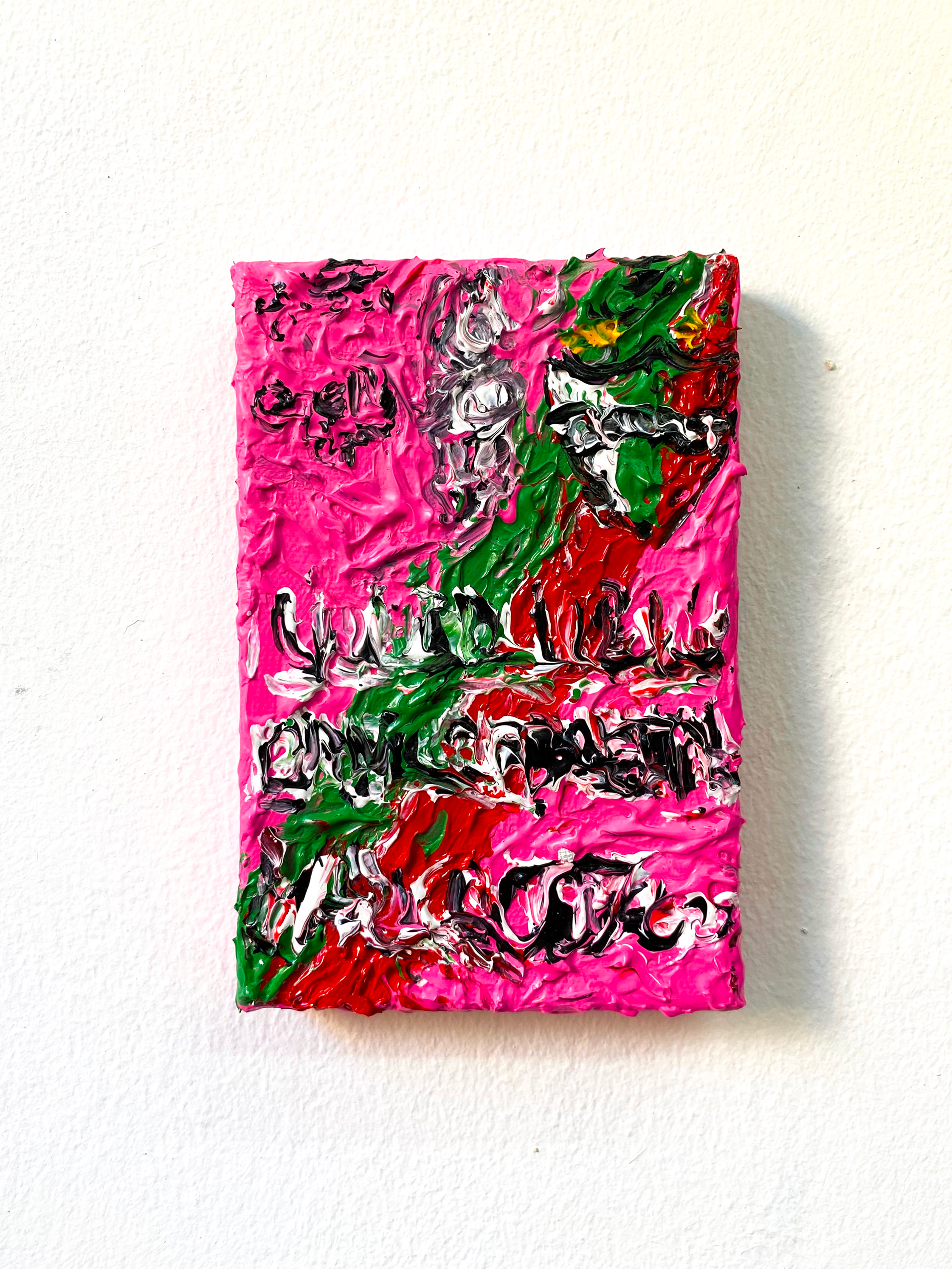
Chilean artist Valentina Gálvez always liked pink. One day, sprawled on the couch watching Colo-Colo, she saw her club's goalkeeper in a jersey that color and something clicked. “It sparked my interest in looking for pink within soccer,” she says. “It immediately turned into an obsession: I wanted to find all those jerseys, which for me represent the feminine in the sport.” She found more than twenty. And she painted every one of them.
That's how Camisetas rosadas (Pink Jerseys) was born, a series that squeezes everything out of the vibrant, textured intensity of her painting. Along the way, Valentina discovered two things. First, that pink is used to raise awareness of breast cancer, which is why so many teams release special editions in October: “It's good to put the focus on information,” she says. Second, that there was a before and after Messi. “Ever since he got to Inter Miami, boys started wearing pink without anyone making fun of them. I teach at a school and I see it every day.”
The full series will be at FUTCON, with all the jerseys she's painted over the years and a little something extra.
10. Hinchas x Hinchas: rivals behind the same camera
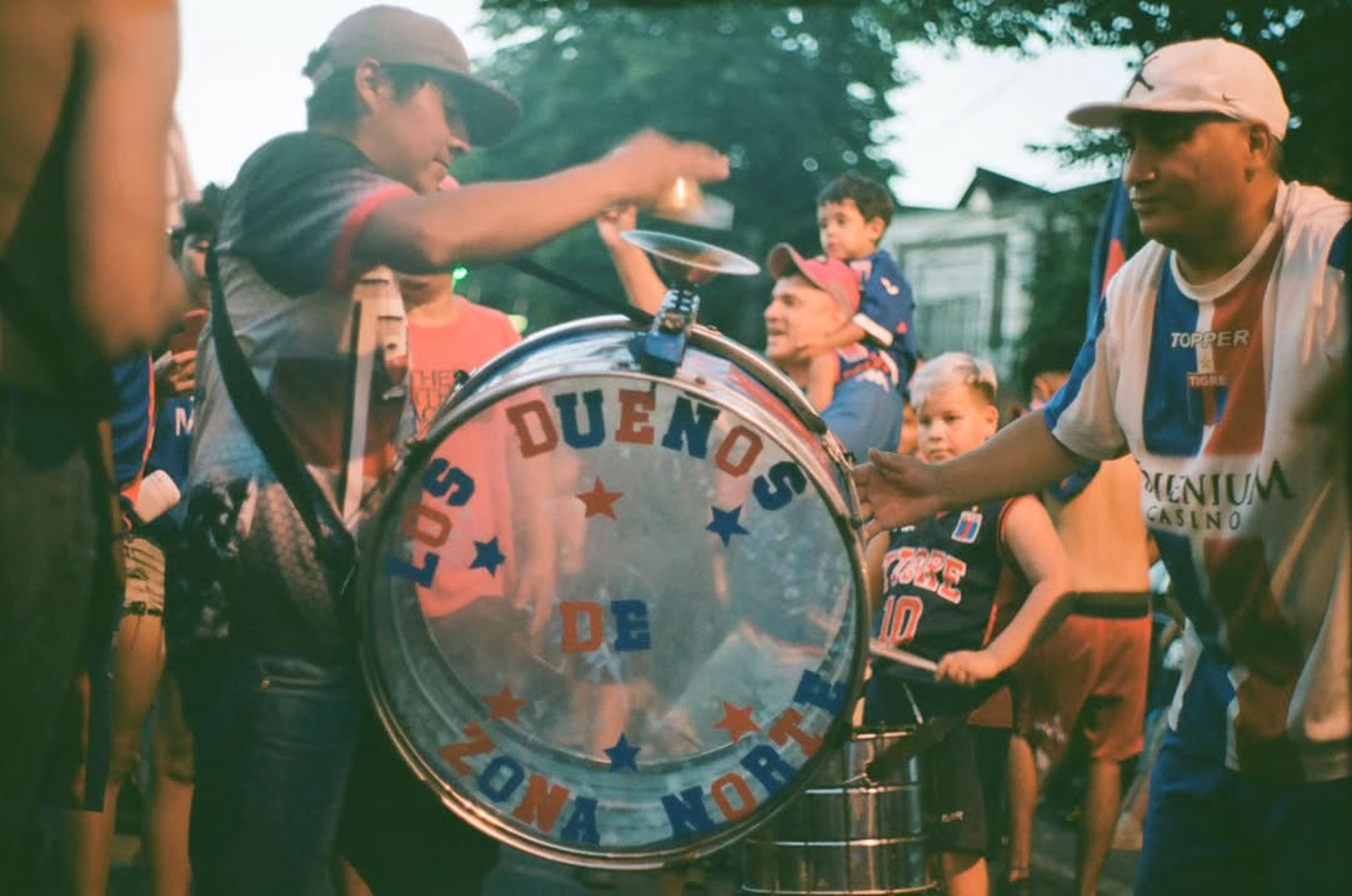
“The first time we got together, we went without jerseys, so there wouldn't be any trouble,” says Daniel Schenone, of Chicago Analógico. “Mostly because of our history of violence, it seemed impossible that things would end well.” But they did end well. That day in 2025, fans of Tigre, Estudiantes, Chacarita and other clubs got together, and instead of fighting they decided to join forces: “We walked out convinced we were a group, colors aside.”
That's how Hinchas x Hinchas was born, a collective that brings together analog soccer photography projects. They first met online, inspiring each other as accounts like Pincha Analógico and Tigre Analógico multiplied on Instagram. By the first FUTCON they were already friends, and they were part of the festival. “Our clubs are our identity,” says Daniel, “and in analog photography we found a refuge from which to show the emotions that run through us as fans.”
This year they're back with a joint talk about their project, interviewed by Luis Abadi. “Even though our colors and histories are different, we realized this is the best way to tell how we live,” says Daniel. “And above all, to break down prejudices about our clubs.”
FUTCON 2026. Saturday, November 14 and Sunday, November 15, Ciudad Cultural Konex (Sarmiento 3131, Buenos Aires). Tickets at Venti.
Las notas de 421 no tienen paywall
Y a cada colaborador se le paga por su trabajo. Las dos cosas dependen de los suscriptores.