One Battle After Another: When Social Criticism Becomes Pure Entertainment
Paul Thomas Anderson’s Oscar win sparks this review of A battle after another: a Pynchon adaptation that misses an opportunity to portray a nation addicted to entertainment.

Paul Thomas Anderson’s Oscar win sparks this review of A battle after another: a Pynchon adaptation that misses an opportunity to portray a nation addicted to entertainment.
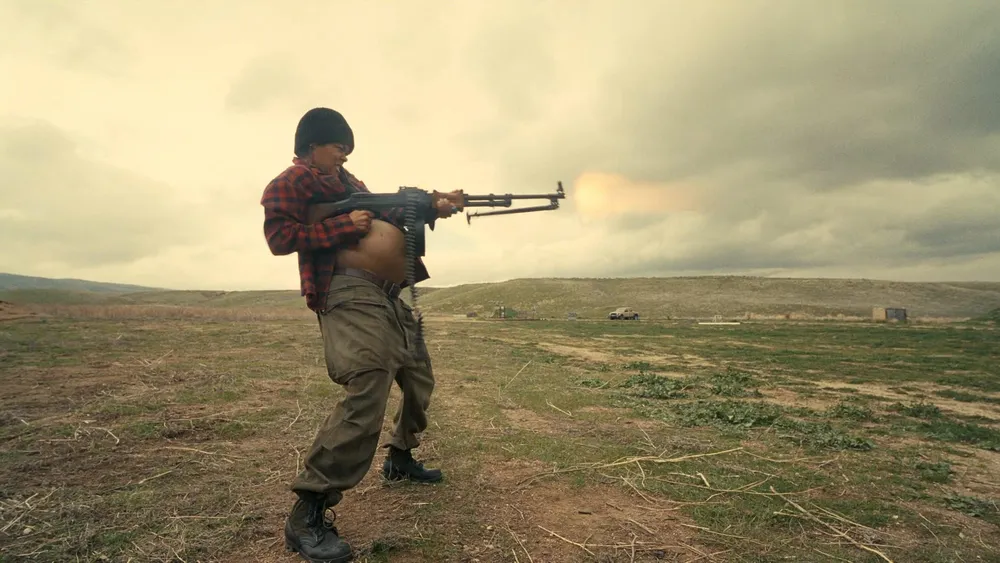
Paraphrasing Mark Fisher, the Oscar for Best Picture awarded to One battle after another is a symptomatically interesting fact. Paul Thomas Anderson's film seems to test the machines of irony and their ability to function as a model of social critique. The operation would be as follows: to display on screen atrophied traits of the recent history of the United States in such a way that they seem strange to us, and then we are compelled to think about them, from scratch, once again.
But this type of procedure has its limits, as David Foster Wallace perceived back in 1993:
“Sarcasm, parody, absurdity, and irony are brilliant ways to strip the mask off things to show the unpleasant reality behind them. The problem is that once the rules of art are discredited, and once the unpleasant realities that irony diagnoses are revealed and diagnosed, what do we do then?”
It is this reflexive impotence that seems to be at play in the film that won the Oscar. Because, following Wallace himself, apparently all we want is to keep ridiculing things, so that postmodern irony has become an end in itself, a mode of cultural sophistication and, we could add, an identity gesture with which we recognize each other in the echo chambers that are our socialities.
The operation would be as follows: to display on screen atrophied traits of the recent history of the United States in such a way that they seem strange to us, and then we are compelled to think about them, from scratch, once again.
Anderson, it seems, would like to rehabilitate that cultural core where irony became a critical tool, at the heart of postmodernism, the territory of the “commercial avant-garde,” as Wallace would say.
The question would be whether, at this historical juncture (and arriving at Hollywood, at the mainstream, at the Oscar), this operation is still valid or has already become so worn out that it has started to function in reverse.
Irony would then be, from this perspective, a reactionary machine.
But one way or another, we are entering the self-aware zone of the United States. We can perceive the texture of the Trump era, for example, in the image of immigrants confined in what we assume are makeshift prisons under military supervision. And we also recognize elements that hark back to the Nixon era when we see the infiltration of revolutionary organizations in the late sixties; or traces of the War on Drugs in clear allusion to the Reagan era. The story narrated by Anderson employs certain anachronisms (in technologies, in objects, in clothing) that prevent us from dating the scenes accurately. Eras coexist and overlap without excluding each other. Like in a dream, in the United States we see on screen, the peaceful coexistence of multiple timelines is possible simultaneously.
 Ana Iriarte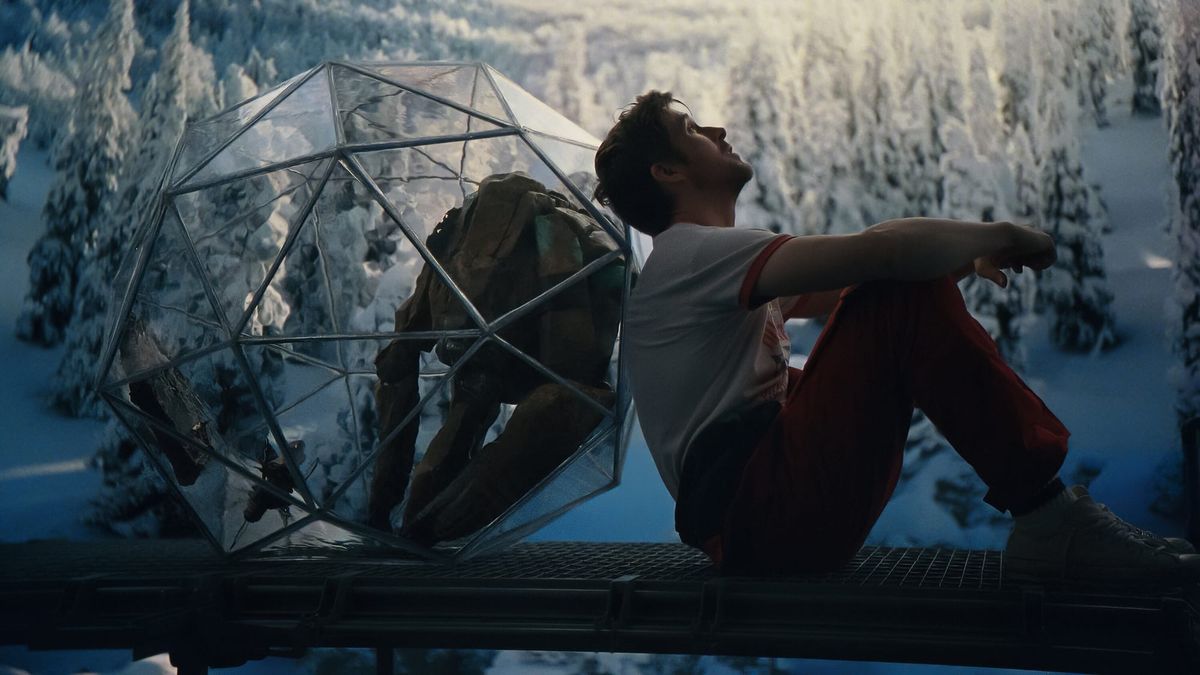
It is the effort of a nation trying to look at itself with enough lack of compassion not to fall into the lethargy of indulgence.
This temporal decomposition proposed by Anderson is, in a way, the license he needs to connect the present of 2025 with Vineland, by Thomas Pynchon, the novel published in 1990 on which One battle after another is based.
It is also one of its symptoms.
The traits of the Trump era that are, by necessity, added, and function as updates to the original fiction, also describe an era. Significant elements placed in orbit within the reference system alongside others already present in Thomas Pynchon, which distort and mutilate Vineland.
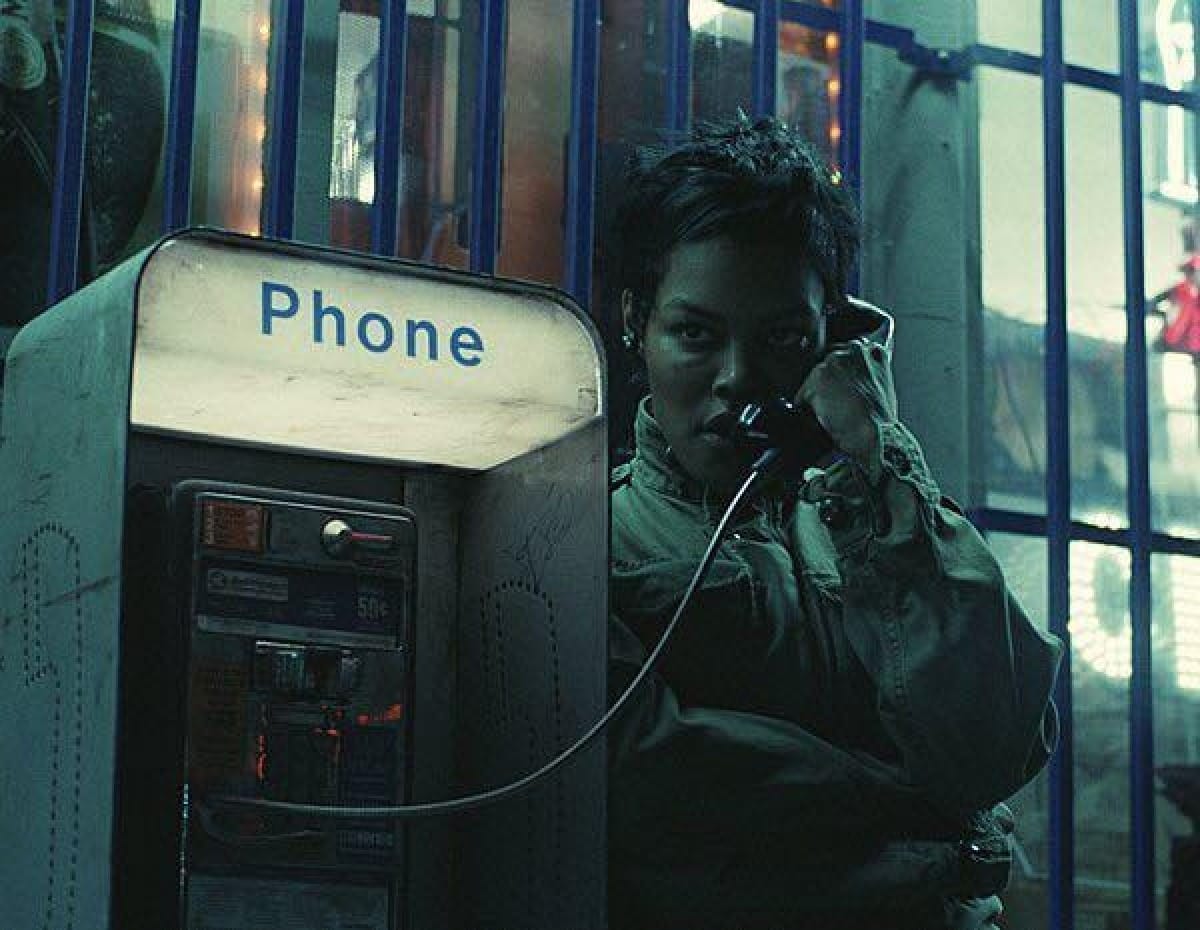
As in any adaptation, the film is a personal underline of the book, and it is worth asking what Anderson chose to emphasize and what to exclude. Familiarity, parody, the diurnal residue of historicity. That is what remains. We could even think that the return of internal political violence to the United States under the Trump administration serves as a link for Anderson between Thomas Pynchon's novel and his film. After what we might consider the (false) neoliberal pacification, ICE troops kidnapping migrants to load them into unmarked cars and transport them to detention centers from where they will be deported, brings to collective memory the political arrests during the sixties and seventies. There are even videos circulating where we witness the resurrection of Black Panthers (is that a zombie?) resisting ICE arrests on the streets of Philadelphia.
What is lacking, on the other hand, is harder to pinpoint. But it's clear that Vineland subtly reflects on a subject that One battle after another cannot capture: entertainment as an ideological and sensitive battleground.
Zipi González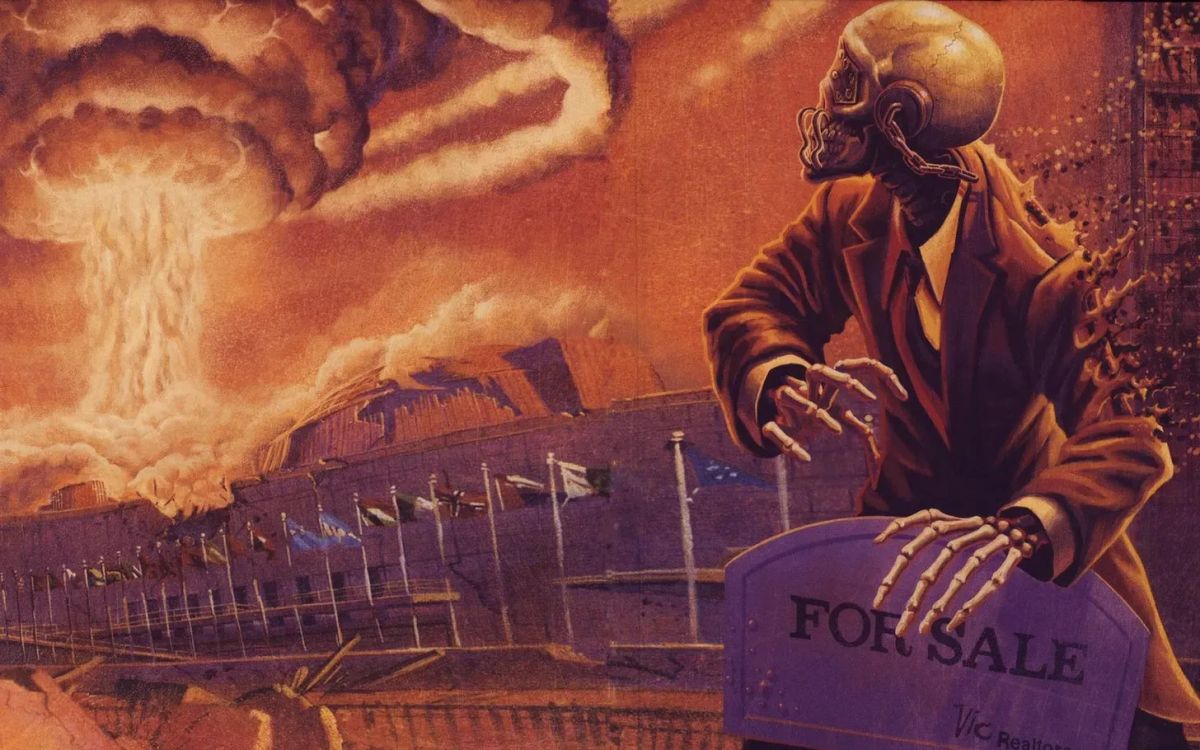
Thomas Pynchon's novel assumes that between the Nixon era and the Reagan era, there is a foundational modulation that does not occur in the realm of direct repression but in the fantasies supplied by entertainment.
It’s the shift from the logic of film to the logic of television.
Irony and anachronisms, it must be acknowledged, are two constructive functions that were already present in Vineland. For instance, Pynchon imagines Hector Zuniga, a DEA field agent who is, in turn, addicted to TV and undergoing withdrawal under the supervision of Dr. Deeply at the Foundation for the Education and Rehabilitation of the Viewer. This event seems to take place in the future of 1984, the year in which the present of the novel is set, and not in the diagram of historical remnants belonging to the past. These brief displacements proposed by Pynchon are multiplied and amplified by Anderson in the film.
Zuniga's addiction is based on the illusions provided to him:
“It was disheartening to see how much he depended on those fantasies about his profession with which television incessantly poured out the propagandistic message that cops-are-human-they-have-to-do-their-job, transforming agents of government repression into compassionate heroes.”
Hector drives on the highways of California with a wireless TV on in the back seat so he can keep watching in the rearview mirror, fearing to miss out on something. Our time resonates in his emotional configuration.
Six years after the release of Vineland, with an entire generation born and raised in the confines of cable television, an experience that ranged from MTV to ESPN, offering 24/7 visions, Infinite Jest by David Foster Wallace was published, where there exists a movie that is impossible to stop watching. The viewer, once they come into contact with it, simply loses all physical or mental control and watches the film until they die. The realms of the novel also refer back to Pynchon's fiction: a tennis academy where teenage boys become addicted to training their bodies and a circle of Alcoholics Anonymous.
Problematic consumptions.
The pulsional constitution of the nation.
Both Pynchon and Wallace perceive what Anderson excludes: (...) the sentimental structure of a country that cannot abstain, that compulsively moves toward pleasure even at the risk of its own death, that is capable of stopping eating, sleeping, and talking just to watch the next episode of the series.
In the geopolitics of Infinite Jest, the United States has annexed Mexico and Canada. Then a group of Quebec separatists wants to distribute the movie-virus to destroy the population of their invader. An intelligence agent meets with a member of Les Assassins des Fauteuils Roulants who explains:
“This appetite for choosing death through pleasure is indeed available, that appetite of your people unable to choose their appetites, that is death.”
And shortly after in the same conversation:
“It is the raison d'être of this cell of Quebecers and this danger of Entertainment so fine that it will kill the viewer no matter how. The exact moment of death and the way of dying, that no longer matters. Do you want to protect them? But you can only delay it. Not save. Entertainment exists. The addendum and the gendarmes of the arterial incident are proof. It’s there, it exists. The option for a brain-dead pleasure now exists and your authorities know it, otherwise you wouldn’t be trying to stop the pleasure.”
Both Pynchon and Wallace perceive what Anderson excludes: the names of the administrations (Nixon, Reagan, Trump) are less important than the sentimental structure of a country that cannot abstain, that compulsively seeks pleasure even at the risk of its own demise, capable of forgoing food, sleep, and speech just to watch the next episode of the series.
Entertainment is the damned fact of the Global Gendarme.
But there is an Other Side. Negativity. Revolution. If in Infinite Jest it’s Les Assassins des Fauteuils Roulants, in Vineland it’s the group 24ips, a “guerrilla filmmaking team” that
“sought out disorders, found them, filmed them, and quickly took the record of their testimony to a safe place. They especially believed in the revealing and devastating power of close-ups. Power, when it corrupts, inscribes its development on the human face, the most sensitive of memory devices. Who could withstand the light?”
A project where political and artistic ambitions coexist (the notion of avant-garde hovering over both fields), and where technology is susceptible to revolutionary uses. Or, at least, that faith underpins the cinema proposed by 24ips. A poetics born in the era of the French May and the student and worker uprisings around the world. But Thomas Pynchon is not interested in narrating the dreams of the Counterculture but rather the nightmares of its decomposition. Less concerned with heroism than with betrayal, he chooses to narrate the exact moment when the revolution is infiltrated by money, betrayal, and personal egos.
Within 24ips is Frenesí Gates, an activist trying to capture the black moment of the uprising through the lens of her camera:
“Frenesí dreamed of a mysterious unity of the people, a shared attraction towards the best opportunities for illumination, which she had reached once or twice on the street, in brief, timeless bursts, all trajectories, both human and projectile, accurate, people as a single presence, the police equally simple, like a moving blade.”
In David Foster Wallace's imagination, however, the avant-garde art loses all connection with reality and only functions as a mirror or self-aware element. In one of James Incandenza's films (the director who will ultimately compose the virus-film)
“what was seen on the wide public screen was a wide-angle, binocular projection of the very audience of art and essay entering with espresso coffees in hand, choosing seats, sitting down, looking around, getting comfortable, and making brief pre-movie comments to their thick-glassed companions about the I Didn’t Pay to See This (…). The total duration was exactly until the last cross-legged spectator, fed up with contemplating their own immense, projected image, left the room, feeling a special sense of malaise, fraud, and indignation, all of which lasted about twenty minutes at most, unless there were critics or film academics.”
If Pynchon’s irony, via Frenesí Gates, falls on the innocence of artistic projects born from political activism, Wallace uses James Incandenza to narrate Caliban's rage in the mirror: the snobbery of a social class that consumes itself (its own image) when it believes it is consuming avant-garde art. A scene of cultural cannibalism. But both are aware that, ultimately, the novels they write are not excluded from the realm of Entertainment. The critique they exert is, in turn, exerted by their own fictions. Anderson, on the other hand, avoids referring in his film to one poetic or another (even renouncing to show any artistic form on screen) because he himself is involved with one of the extremes and, this is my hypothesis, does not have the strength to bear the reflection of his own image.
The irony in One battle after another, like a zenithal light, is directed at others when they are seated in the interrogation chair, but never turns against the interrogator.
Between Zuñiga and Frenesí lies not only the distance of a repression agent and a political activist but also the impulses of one era and the next. Héctor is addicted to television in 1984 (the present where Frenesí became a traitor and lives in the underground corridors of a witness protection program), but before that, he was an active agent in infiltration operations into revolutionary organizations. The Reagan era brought budget cuts, automation of repressive tasks into the hands of computers, and an seemingly endless supply in television guides. Depression and anhedonia for Héctor Zuñiga.
The fundamental difference between the two eras can be summarized in a simple question: who is there?
When we watch a film, we assume that the cuts, the editing, the order in the sequence of images was decided by a subject (let’s call them the director) who chose the shots, the angles, the chronology with the aim of generating a specific effect. There is, we could say, an agent. And although they do not show us their face, they are, in a spectral way, the one who speaks to us.
The presence behind the camera is so intense that in Vineland, Frenesí's daughter, Pirrie, who never knew her mother because she fled when she was a baby to hide in the witness protection program, manages to find the film archive of 24ips and then this happens:
“with as many meters of film of Frenesí as she had seen, all the shots born from her eye and body, that harsh and fearsome light, that white flood, was what had shown the young girl the true face of her mother with greater accuracy and less mercy.”
The teenager that is Pirrie recognizes her mother not in images that portray her, but in those she took of the uprisings, the ghostly presence of her mother speaks to her personality, tells her who was there, behind, off-screen.
The shift from cinema to television seems, even, more important than the shift from television to the Internet. Cinema, as the last moment where human agency predominated, is a good representative of the insurgent political imaginary of the last century.
Cinema still functions as the voice of another speaking to us. Even when that other is so submerged in ideological oceans that what they say can only be heard as propaganda. On television, however, the question who's there becomes blurred. Zapping (like today's doomscrolling) seems to depend entirely on the viewer. Watching television isn't about any particular content, but rather that strange montage that occurs during the abrupt channel changes at the speed of our anxieties and moods. There’s no one there. And yet, that emptiness (there's nothing where there should be something) speaks to us too. And, as the algorithm improves, it speaks to us with increasing precision.
So, there is someone: the market.
A structure, it’s true, not a human agency, but a structure capable of ordering advertising sequences, content, durations; that uses our own reactions to regulate and improve itself. Closer to Incandeza's film than to the guerrilla cinema of 24ips, what we see on our devices' screens is a vast mirror of our conscious and unconscious habits.
In this sense, the shift from cinema to television seems even more significant than the transition from television to the Internet. Cinema, as the last moment where human agency prevailed, is a fitting representative of last century's insurgent political imagination. It’s no coincidence that the group 24ips takes its motto from Ernesto Guevara: “Wherever death may find us.” And television, with its impersonal automatons, also seems a fitting metaphor for the increasingly abstract movements of capital during neoliberal hegemony. Because behind the chaotic appearance of zapping, the market was already murmuring as a structure.
The television guide was never, though it seemed, infinite. What we watched was preselected and directed. From Prime Time to late-night hours, from commercial breaks to the established order of channels. There was a design.
That rudimentary form, it’s true, and now replaced by the algorithm, marked a new stage in the “battle of Entertainment.”
A battle that is still ongoing and which, perhaps for that reason, One battle after another, the Oscar-winning film, either couldn’t or didn’t want to narrate.
See also: The Voice of the Dead: Hauntology, Divinity, and Disintegration
Y a cada colaborador se le paga por su trabajo. Las dos cosas dependen de los suscriptores.