Nolan's The Odyssey (2026) once again calls into question the idea of “textual purism.” Why the Homeric poems are not fossils, but rather something alive that has been modified over the centuries.
We don't know for sure if Homer existed, and that uncertainty is, to a large extent, one of the issues that gave rise to classical philology, the discipline that studies Greece and Rome through their texts. Under the name "Homer," almost anything can fall: an exceptional poet, two distinct poets, a family of singers, a guild of rhapsodes, the label used to designate an entire tradition, or a figure invented later to embody centuries of oral poetry. There are even those who suspect that "Homer" was a construct of the Homeridae, a group that presented itself as the heir of the poet and needed an illustrious ancestor to legitimize their craft.
The study of the original orality of the poems (since they were memorized and sung, like the Martín Fierro) reinforced that suspicion. The Iliad and the Odyssey hardly could have been born from a single author who wrote, in one go, a completed work. From that perspective, they would rather be the product of a long tradition of composition in performance: generations of singers who inherited formulas, scenes, characters, and narrative structures and reorganized them in each new interpretation of the poem. From this logic, that of slow but constant transmission, we would be looking at a process that extended over many centuries, from the Bronze Age to the 6th century BC.
The Iliad and the Odyssey hardly could have been born from a single author who wrote, in one go, a completed work. From that perspective, they would rather be the product of a long tradition of composition.
Let’s keep all this in mind, along with what follows, now that Christopher Nolan is releasing The Odyssey (2026). A new version, in a new format (IMAX 70mm), aimed at a new audience. Nothing strange under the sun: it’s exactly the kind of operation that the Homeric tradition has been performing for about two thousand seven hundred years.
The poem as an archaeological site
It can be useful to imagine the Homeric poems as an excavation with at least three layers. The image has a limit that I must point out: it’s not about neatly stacked floors, so that lifting a layer from the 8th century BC reveals an intact Mycenaean level below that speaks of something akin to the Trojan War. The layers contaminate each other, mix, and reinterpret, and it is precisely that mixture that makes the Homeric problem interesting and serves as a case study to think about other processes of transmission and reconversion of traditions.
First layer: the Mycenaean palaces
The first layer corresponds to the world that the poems aim to evoke: the Bronze Age and the heroic age associated with Troy, the Mycenaean palaces, the great Achaean kings. For the audience that listened to the monumental pieces of the Iliad and the Odyssey around the 8th century BC, that past was already remote. The poems preserved memories, objects, and practices from then, but they preserved them in the way one keeps a distant and blurry family history: with certain facts, distortions, forgetfulness, and some relative who swears they were there even though they were born thirty years later.
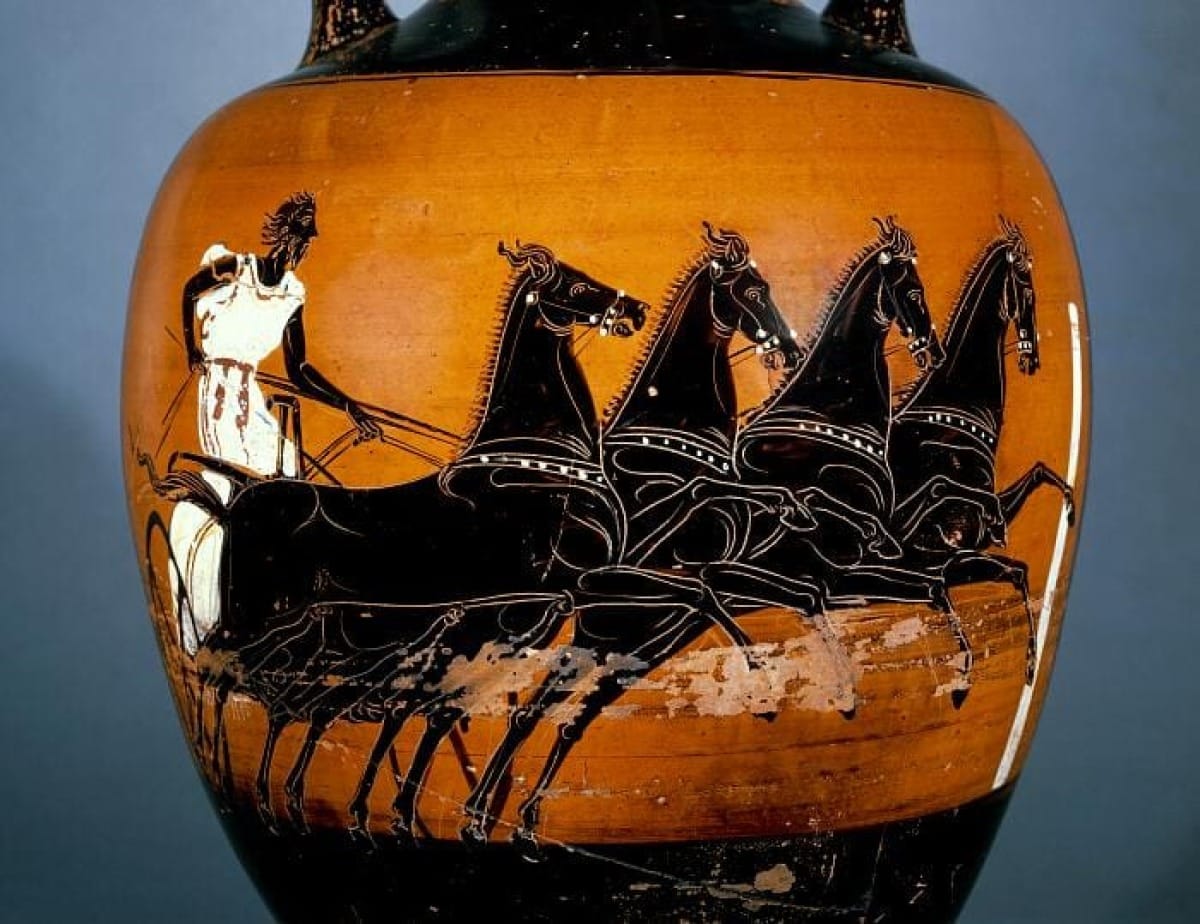
The case of the war chariots is particularly telling, as by the time the Homeric poems were composed, their use was not as widespread as it is understood to have been during the Mycenaean period associated with Troy. It is revealing how they function within the Iliad. Squadrons of chariots do not charge against infantry; generally, the chariot transports the hero to the combat zone, where he dismounts and fights on foot, while a charioteer remains in charge of the vehicle. Achilles and Hector, for instance, face each other running and fighting on their own feet, not crossing spears from moving chariots.
The Homeric chariot functions, above all, as a sort of aristocratic transport: it carries the king from the tents to the front lines, saves him from arriving exhausted, and allows him to withdraw with dignity when the situation becomes complicated. It retains the prestige of a technology of the past, but it no longer reproduces the complete military system to which that technology belonged, either because tradition has forgotten it or because it is not interested in recovering it.
In this mechanism, the logic of the first layer is recognized: the poem knows that the heroes of old used chariots and thus places them in them, but it makes them fight in a way recognizable to its own audience. Rather than falsifying the past, the tradition translates it into a language that new audiences can understand.
Second layer: the artist formerly known as the Dark Age
On top of that remote memory lay the centuries that followed the collapse of the Mycenaean palaces: the period that scholarly tradition called the Greek Dark Age, a term now out of use. It is the immediate past of the Homeric tradition itself, a past of reduced villages and extended family structures, somewhat resembling Celtic tribal structures. Relatively small groups united around a strong military figure and associated with him and his main warriors through ties of kinship, friendship, trust, and reciprocity.
In those centuries, institutions changed, power relations, ways of waging war, funerary rites, and circuits of exchange. The words with which the singers understood their heroes also changed. Therefore, when the poem evokes Agamemnon, it does not simply restore a Mycenaean monarch: it makes him intelligible for later societies, with their own tensions between chiefs, councils, assemblies, and warrior communities. The disputes, jealousies, and anger, for example, over the distribution of loot (meat, metals, slaves) among members of the warrior elite depicted in the Homeric poems seem to be drawn from this past. Oral tradition resembled less an archive that preserved the past intact and more a kitchen where each generation received the ingredients from the previous one and prepared the dish in its own way.
Third layer: the present of the poem
Finally, there remains the time when the poems acquired their recognizable great forms, towards the end of the 8th century BC, in what is known as Archaic Greece. That present also left its marks: the political concerns of the new Greek communities, competition among elites, the formation of collective identities, and the need to provide a common past. A past that had to serve peoples who spoke different dialects, lived in rival cities, and were perfectly capable of hating each other while proclaiming to belong to the same culture.
Homer, in summary, does not function as a transparent window to any precise past. It resembles more a vitreaux composed of crystals from different eras, some of them deliberately opaque.
The result, as we have seen, is not a photograph of a precise era, but an operation of assembly and superimposition of various takes. A helmet may come from the memory of the Bronze Age; the scene in which it appears may reflect practices from the more recent past; and the moral dilemma that organizes it may respond to the concerns of the audience listening to the bard at that moment. Homer, in summary, does not function as a transparent window to any precise past. It resembles more a vitreaux composed of crystals from different eras, some of them deliberately opaque, that seeks to present a narrative capable of operating in its time.
Pisistratus or the construction of the canon
To these historical layers, a fourth is added: that of the political transmission of the poem. The textbook version holds that Pisistratus, the tyrant of Athens in the 6th century BC, gathered the scattered songs, ordered them to be written down, and established the edition of the Iliad and the Odyssey that reaches us today. It’s a tidy story, easy to remember, but we need to revisit it to show the complexities of the history of the works.
Ancient sources attributed a decisive role to the Pisistratids in the organization of the poems, and modern research understands that sixth-century Athens was a key place for their stabilization and dissemination, especially through the regulated recitations at the Panathenaic Festivals and some measures attributed to Hipparchus, son of Pisistratus, around 520 B.C. The truth is that, while it is a key instance, it is not clear that there is a single 'Pisistratic edition,' and the Homeric poems will reach us heavily edited by the Alexandrian editors (workers of the famous Library and Museum of Alexandria) of the Hellenistic period, centuries later.
To claim that we owe the preservation of the poems to Pisistratus is not entirely false, but it is a simplification. Think of it as a kind of bottleneck, a moment that served as a filter and separator: popular festivals, recitation rules, circulation of copies, and the growing authority of certain versions. For quite some time, transmission remained partly oral and, now, partly written, producing variants that are still recognized in ancient citations. Not to mention, Plato, one of Homer’s great readers, cites Homeric verses that do not exactly match the text we have today.
The ancients themselves, moreover, warned that the text could be manipulated for political purposes. Plutarch, between the 1st and 2nd centuries A.D., recounts the anecdote that Solon interpolated a verse in the Catalogue of Ships to associate Salamis with the Athenian contingent and thus reinforce Athens' claim over the island. Whether that addition actually occurred is another question, but what matters here is that ancient readers found it entirely plausible that a verse of Homer could be used as a political maneuver to support claims of territorial sovereignty.
In short, Athens added its own layer, and it did so not necessarily through a rewriting dictated by a tyrant, but through selection, regulation, interpretation, and canonization. Deciding which version to recite, in what order, and before what audience is, in its own way, another form of writing the poem.
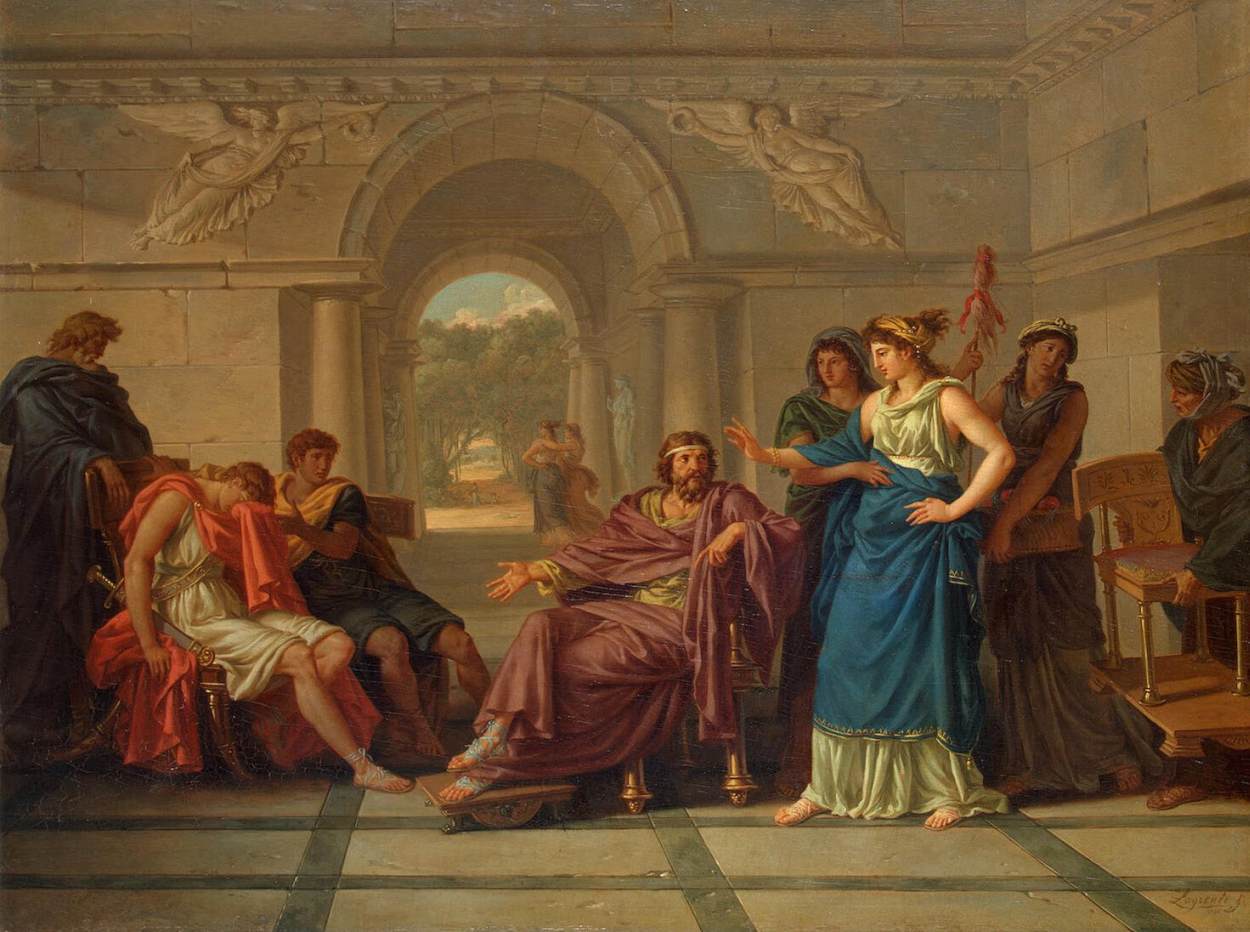
Jean-Jacques Lagrenée, Helena Recognizes Telemachus (1795).
A past for my empire
Transformed into Western classics, the Homeric poems were not locked away in a showcase; instead, they became political, literary, and cultural instruments. Each subsequent society that inherited them found in them a way to speak about itself and engage with its time.
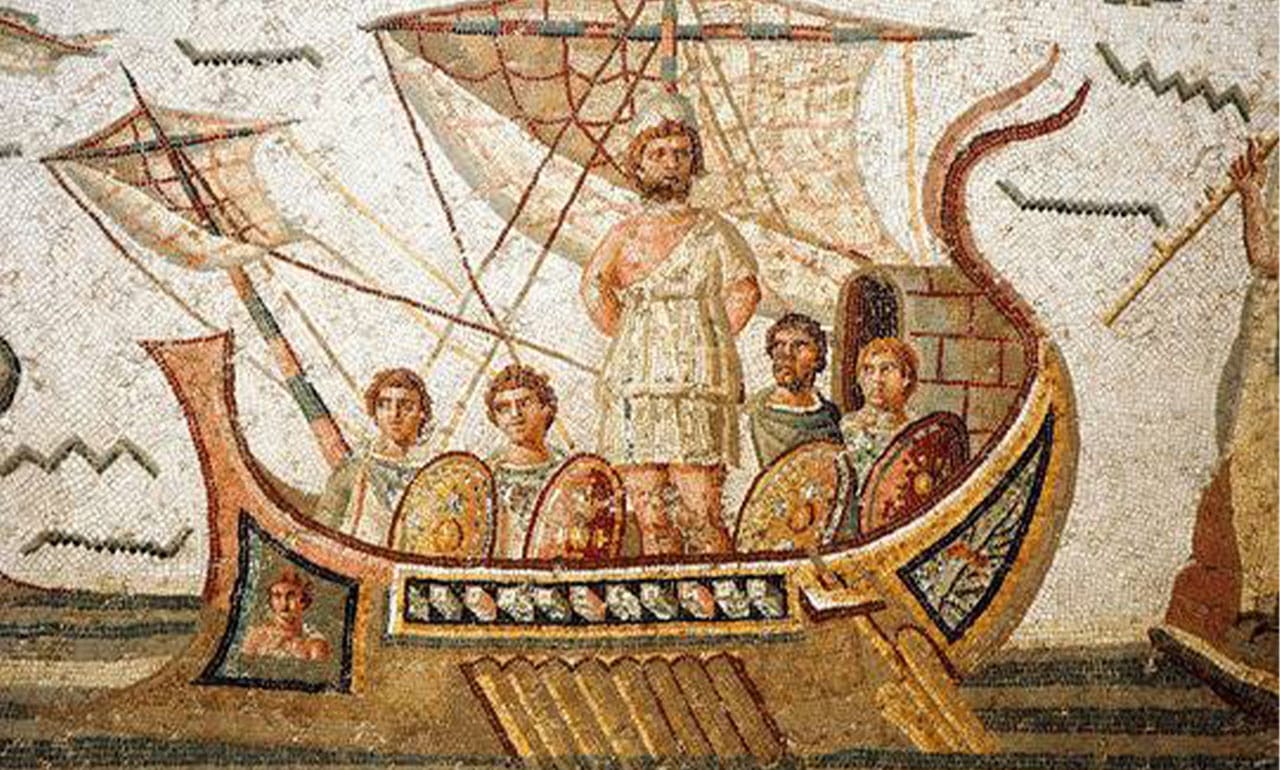
The most famous operation is that of Virgil in the Aeneid. He takes materials, structures, and characters from Homer, assimilates and rearranges them to narrate the rise of Rome. Aeneas is both a new Odysseus and a new Homeric warrior, but his journey no longer solely leads him back home or toward personal glory; it leads him toward Rome's imperial future. Literary appropriation thus marches in step with the political project of Octavian Augustus, son of Julius Caesar: Rome does not merely conquer territories; it also appropriates its own literary genealogy and makes it the ideological foundation of its imperial project.
In 1699, Fénelon published The Adventures of Telemachus. This imaginary continuation of Odysseus' son's journey was conceived as an educational tool for the Duke of Burgundy, then a possible heir to the French throne, but beneath its Greek guise lay an allegorical critique of absolutism, war, and the luxury of Louis XIV, the Sun King, accompanied by proposals on government, taxes, trade, relations between States, and the education of princes. Telemachus travels across the Mediterranean, although the real recipient of the lesson was in Versailles.
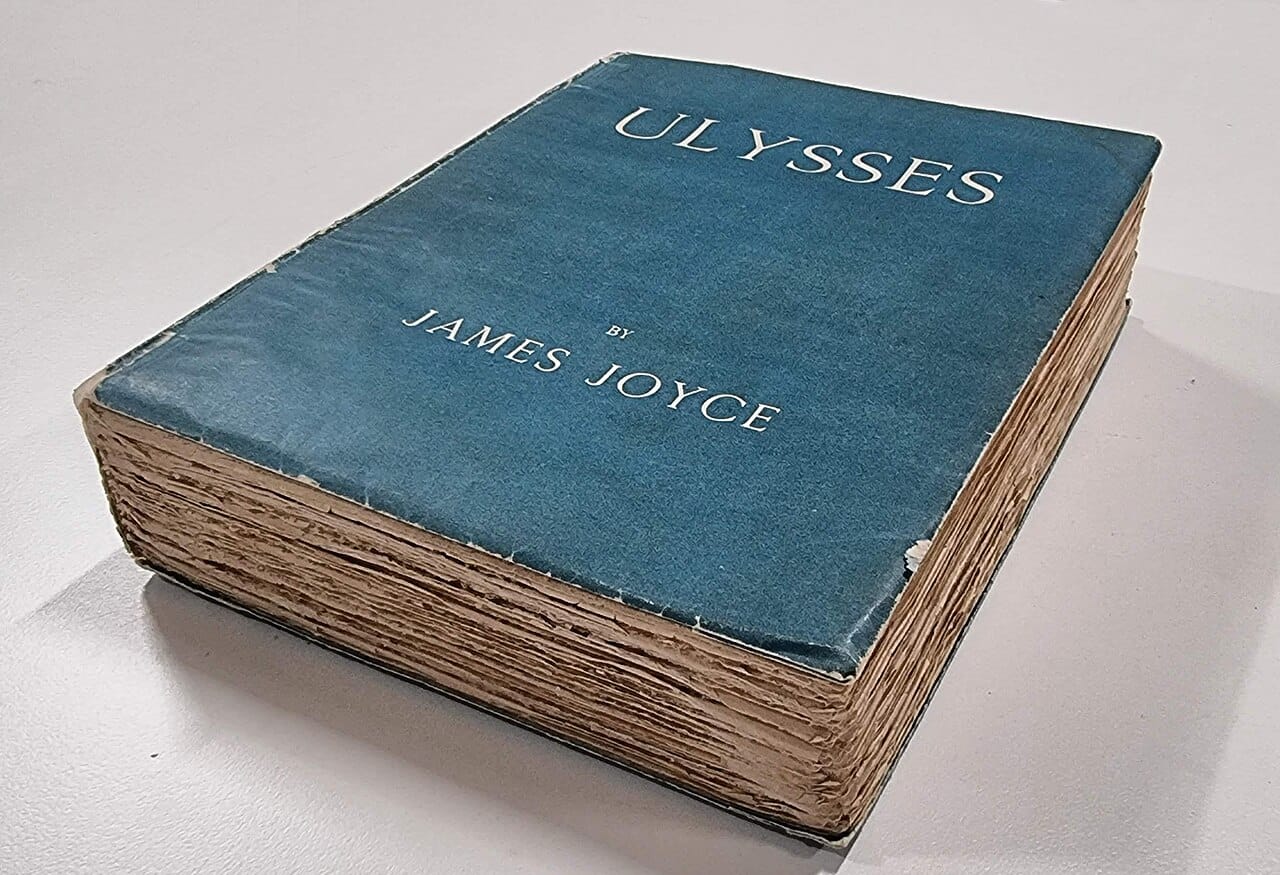
In the 20th century, James Joyce condensed his Ulysses into a single day in 1904 in Dublin, where Leopold Bloom traverses the modern city. Decades later, Derek Walcott carried the tradition to Saint Lucia in Omeros and used epic to reflect on Caribbean experience, slavery, language, and colonial heritage. During World War II, Simone Weil read the Illiad to contemplate the barbarism of her own present. Horkheimer and Adorno, for their part, made Odysseus an important figure in the Dialectic of Enlightenment. His cunning, self-control, and ability to subdue both nature and his own desires helped them trace the origins of modern rationality and its inclination toward control.
Each of the re-readings, rewritings, or works on the Homeric poems projected onto them the questions of their own times. None of them respected Homer in the sacralizing sense that could be given to the word. In any case, they respected him in the most noble and demanding way possible: by engaging in dialogue with him, using his work to reorganize it according to their own times.
Revisiting Homer, an ancient task
It is also unwise to imagine the ancient Greeks reverently bowing before an untouchable text. They themselves used, criticized, corrected, and reordered Homer, and they did so, particularly, as a pedagogical tool.
In Xenophon's Symposium, Nicercatos recounts how his father made him memorize The Iliad and The Odyssey to make him a good man, boasting that Homer, having addressed almost all human issues, can teach from the art of war to household management. Nicercatos perhaps reflects the most widespread and traditional opinion in Classical Greece. On the other hand, Plato is much less complacent. In the Republic, Socrates examines the poets' narratives, condemns morally inconvenient passages, and proposes to exclude or modify those that could miseducate future citizens. The Platonic procedure does not merely reject Homeric poetry: Socrates selects, silences, and recomposes the materials until he effectively produces a different Homer. The Socrates of Plato who denounces the poets ends up acting as another poet, designing a new Homeric poetry that serves the construction of a society of philosophers.
Each of the re-readings, rewritings, or works on the Homeric poems projected the questions of their own times. None respected Homer in the sacralizing sense that could be given to the word.
Aristotle takes up that legacy from another angle. In the Poetics, he repeatedly presents Homer as the great model of epic composition: he praises his choice of a unified action, his distribution of episodes, and his ability to dramatize characters. While Plato sought to correct Homer, Aristotle aimed to understand why he worked so well, to comprehend his mastery.
Two millennia later, Nietzsche revisited Homer and Plato to think about rivalry, the creation of values, and Greek culture. Weil, Adorno, Horkheimer, and others continued to use the poems as instruments to reflect on their time. Historians, like M. I. Finley, traced the footprints of ancient societies within them; anthropologists, like Jean-Pierre Vernant, studied from them the categories of Greek thought that live on to this day.
We return again and again to Homer not because his poems are well-preserved fossils, but because they remain living problems.
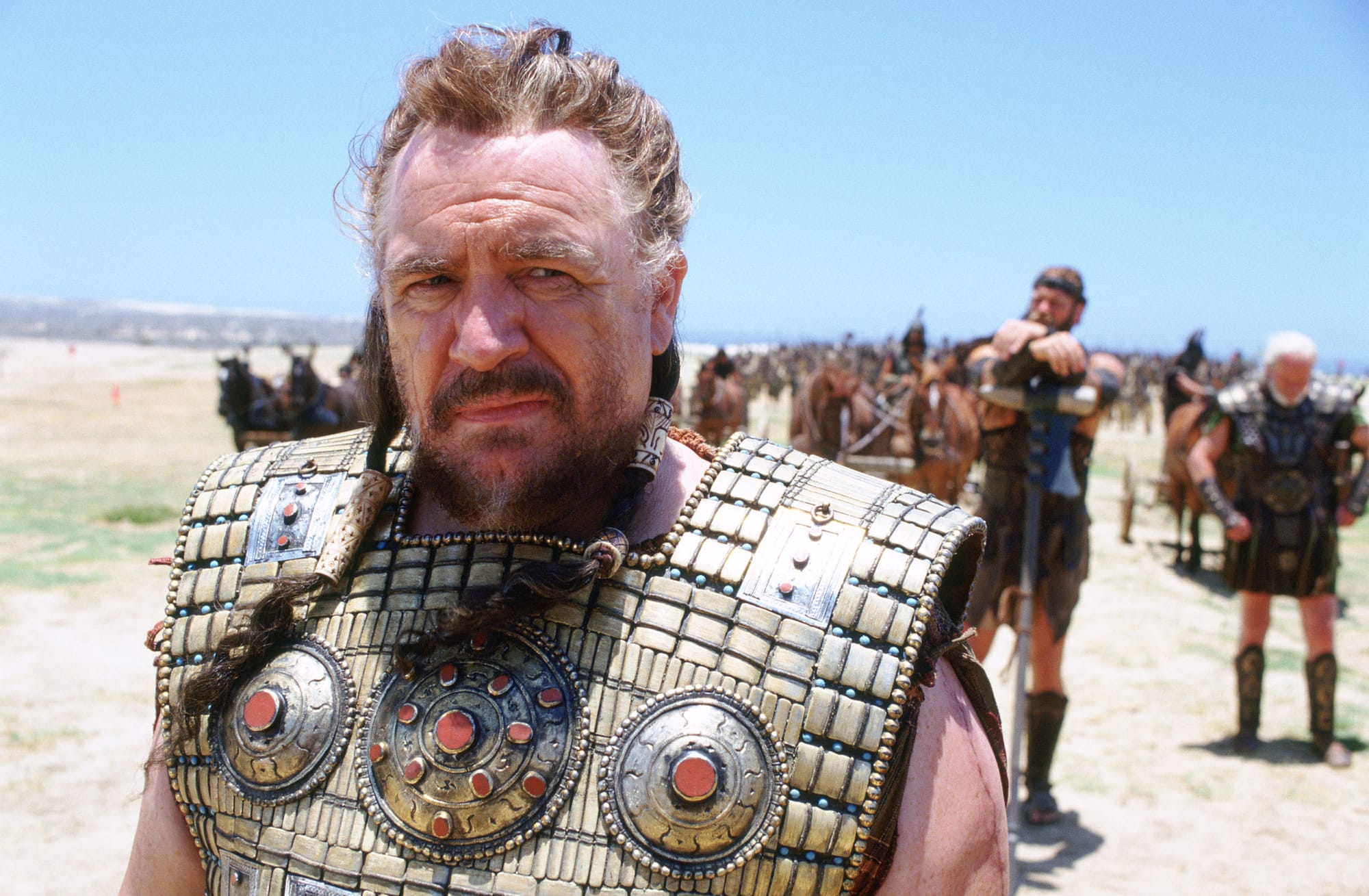
Troy ((2004).
Against purity certificates
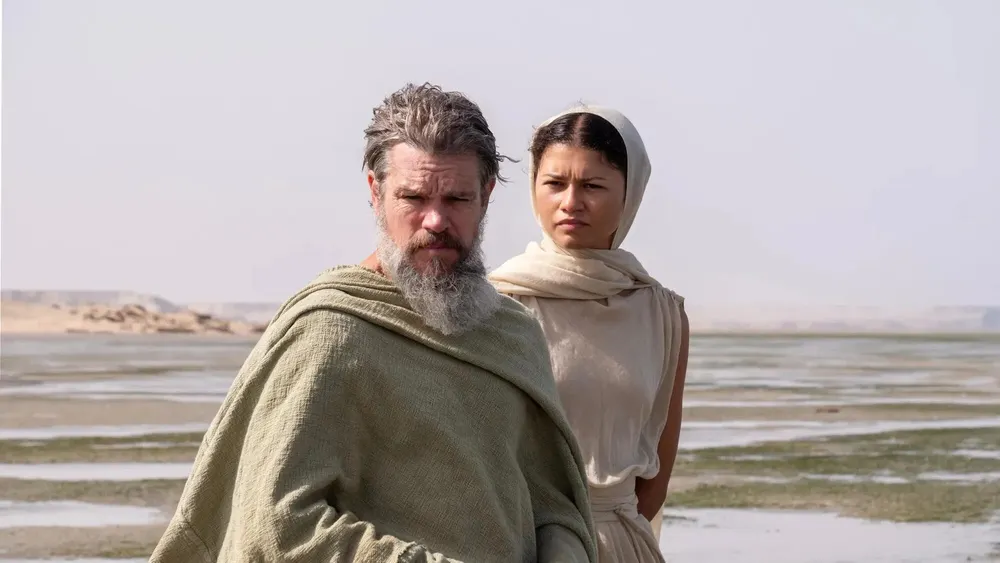
Allow me a caricature of a social media purist: some photo of a Roman statue or a Corinthian helmet and the unyielding certainty that Zendaya cannot be Athena because of her features. Here lies the paradox that drives this little guide: those who claim to defend the integrity of Homer reduce a plural, millennia-old, and multifaceted tradition to something like a manual of stereotypical aesthetics. They are outraged by a new interpretation that comes after countless centuries of rhapsodes, politicians, festivals, copyists, Alexandrian librarians, philosophers, emperors, theologians, translators, novelists, and filmmakers who have never stopped reinterpreting the poems.
Allow me a caricature of a social media purist: some photo of a Roman statue or a Corinthian helmet and the unyielding certainty that Zendaya cannot be Athena because of her features.
Zendaya portraying Athena in a 2026 film doesn't disrupt anything eternal in Homer's poems because, precisely, if there's anything eternal in them, it's their ability to speak to every era and, therefore, their richness to be taken according to the times to be rewritten, reinterpreted, and debated. It is in this capacity to generate discussion that the inexhaustible wealth of the classics lies.
In any case, what is truly alien to Homer's poems is not the skin tones of the characters or the color palette of the armors, but the assumption that a story transmitted for nearly three millennia belongs to a single legitimate interpretation. It is in the battle for that interpretation, in the debates that arise, where the power that keeps Homer relevant resides.
With the release of The Odyssey, we need to get back to basics: read the Illiad and the Odyssey. Before rushing to defend a supposed textual purity, it's wise to find out which text is being defended. Homer doesn't need anyone to safeguard his verses. But it's always good to have readers who dare to look at the eternal and debate it, seeking the essentially human that is encoded in his lines.
✦ Suscribite
Las notas de 421 no tienen paywall
Y a cada colaborador se le paga por su trabajo. Las dos cosas dependen de los suscriptores.