We look back at Stay Free, the blog that took on the record labels and built a community around P2P downloads and alternative curation in Argentina. A journey into the DIY ethos and the digital archive that changed the way we listen to music.
Breaking through the confines of what comes by default served as a formative experience for those of us trying to dig beneath the surface of mainstream music in the early 2000s. I understand that for the previous generation, it was intriguing to learn (let's say) from a Spanish magazine like Rockdelux that one of Kurt Cobain's favorite bands was an obscure Scottish group called The Vaselines. But how could one access that material in the mid-nineties without a privileged environment?
The emergence of mp3 download blogs quenched the curiosity about everything happening (and that had happened) outside of the major record labels, that which wasn’t played in Argentina on MTV, MuchMusic, or Rock & Pop. The golden age of Blogspot provided a unique framework for the P2P exchange logic that Napster and Soulseek had established. It wasn't just about searching for a file; it wasn't simply clicking a link that took you to Mediafire or Rapidshare. There was something more, and that was the reviews, comments, chronicles, and the back-and-forth that began to build community.
In the early years of the blogger explosion, a new form of consumption also took shape. For many, curation was key. For the first time, it was possible to access independent label releases from anywhere in the world immediately. In my case, the “New Folder” section of Los Inrockuptibles served as a filter. That intersection between the physical object (a monthly magazine) and digital access is unlikely to be repeated. At the same time, the first online radio shows (still far from being popularly known as podcasts) also played their part: Encerrados Afuera and, above all, PinkMoon Radio, were key nodes for finding information.
I didn't screw the system, but at least I tried.
Year 2006. Twin surpluses, conflict with Uruguay over the paper mills, debt repayment, and a change that still stings: Cuchu for Román. The disappearance of Julio López and the second album of the trilogy by Él Mató a un Policía Motorizado. In that context, what would become one of the most important Argentine download blogs for alternative rock, punk, and other genres took shape: stayfree.blogspot.com.
In the early years of the blogger explosion, a new form of consumption also took shape. For many, curation was key. For the first time, it was possible to access independent label releases from anywhere in the world immediately.
Stay Free didn't start out as what it later became. Before turning into that blog that circulated under password and reached 100,000 daily visits, it had a more chaotic first phase. "Between 2003 and 2005, it was a music blog, but pretty random, with unordered posts and much more messy," recalls Kristian, its creator, in conversation with 421. He adds: "In those years, blogs were all the rage, and there were all kinds. In Argentina, it was just starting, but I realized there weren't any download blogs like the ones I found in other countries. I thought it would be cool to do something like that with music I liked, including local music, which those blogs from abroad didn't have."
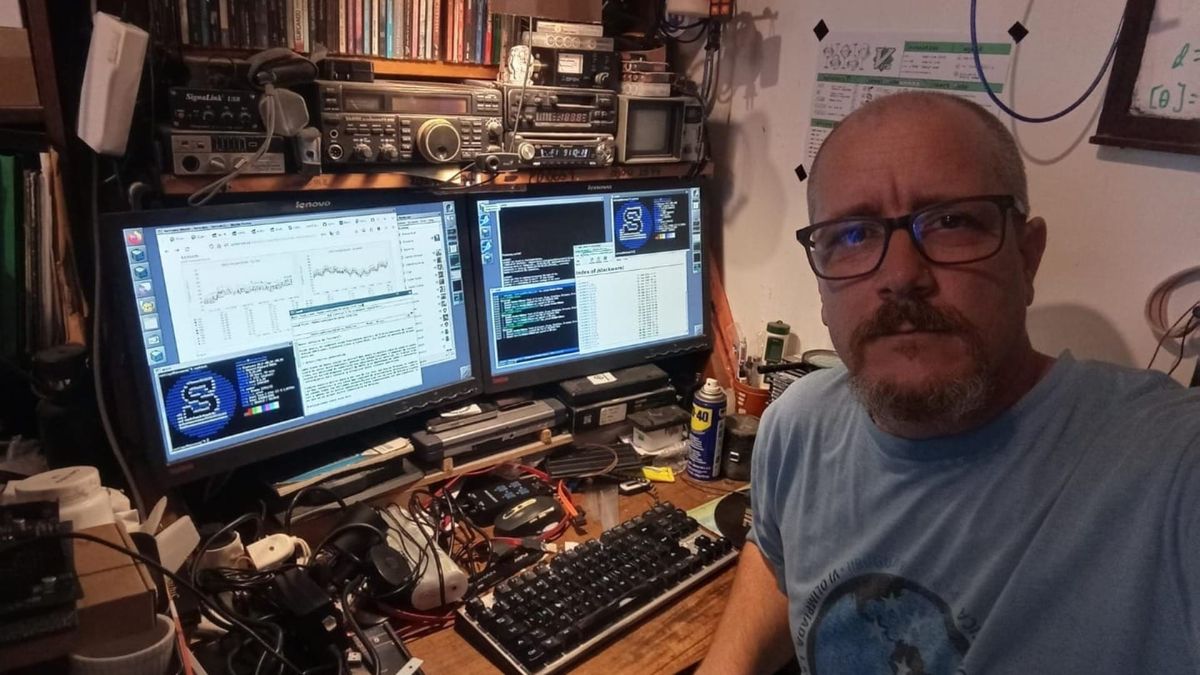
Kristian wasn't just the admin of Stay Free. He was (and still is) a reference voice within the punk and alternative scene. And although today the blog is part of that diffuse archive of the internet we built and consumed, on his personal X account, those micro-chronicles of shows, links to playlists, and the constant push of that DIY ethic that sustained him from the beginning still survive.
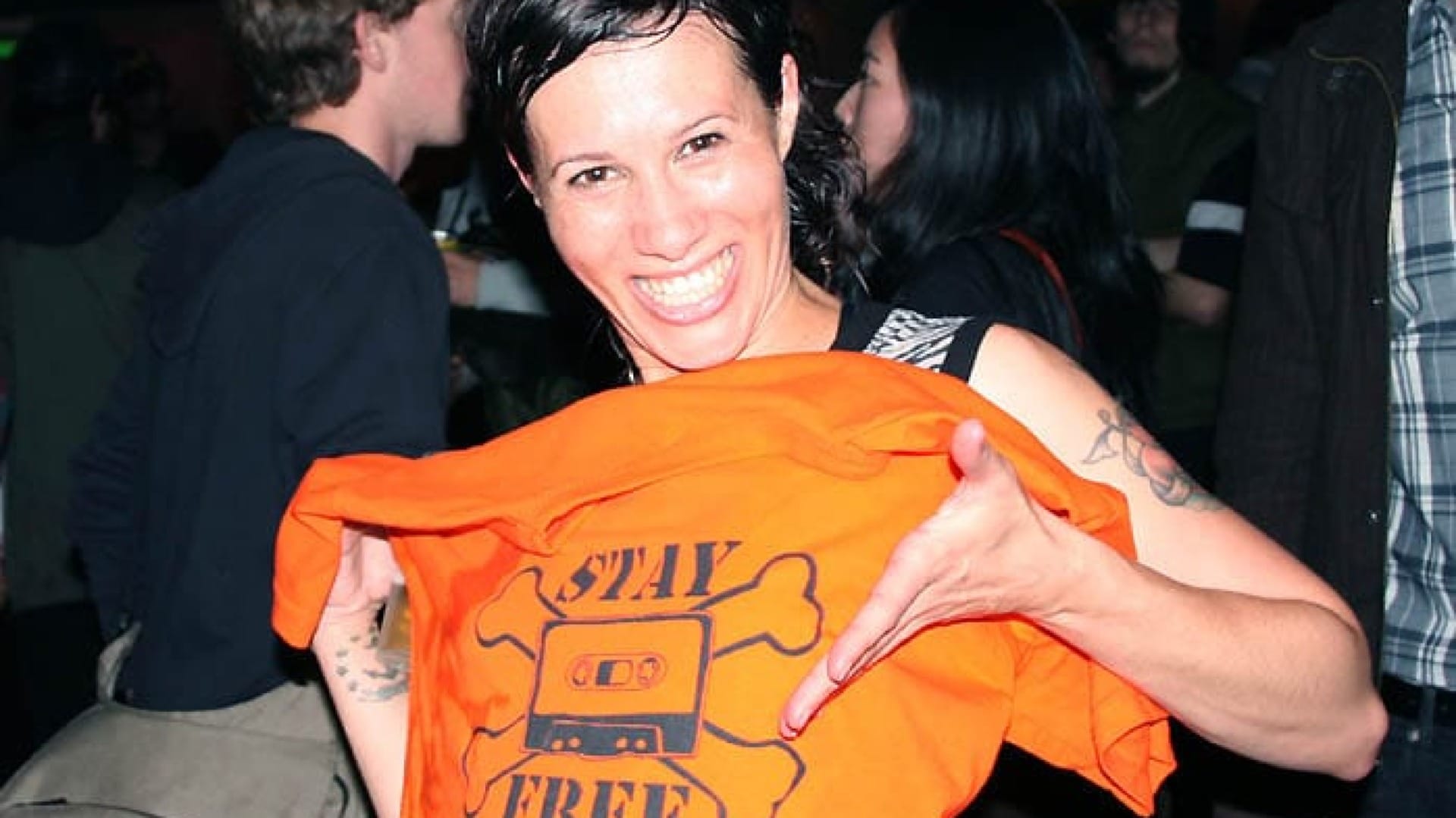
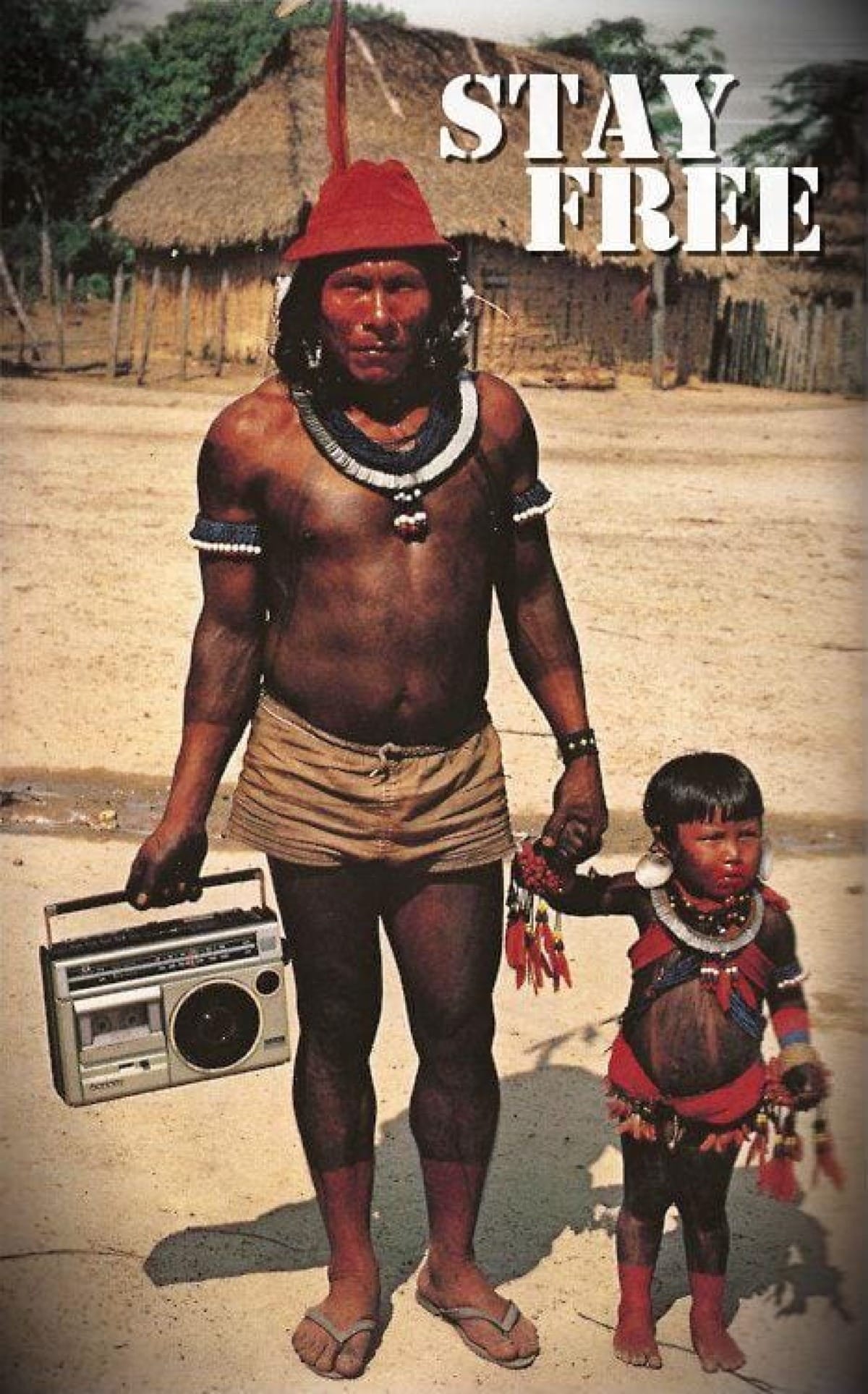
Stay Free ad.
"It happened to me several times that people who didn’t know me, in random places, talked to me about the blog. I never said I was the one doing it; I enjoyed hearing what they said," Kristian shares, who has always chosen anonymity. And he draws a line: "We never made a dime. It was for love and fun, not for money."
That was the fuel: our own records and hours of downloading on P2P networks. "We ripped our CDs, but we also downloaded all the time from Soulseek. We had already used Napster a lot, so we had a huge archive." The first post already set the tone of urgency and zero speculation. "It was the live album by Cienfuegos... We uploaded it right away because I was surely not the only one who wanted it."
By 2006, broadband connections had grown by 70% in the country compared to the previous year, and with speeds ranging from 512k to 1 mbps, downloading albums was becoming almost addictive. Uploading them was too. "The albums didn't weigh much; they uploaded 'relatively quickly.' Today it might take 10 seconds; back then, it was an hour, and that was fine," recalls the creator of Stay Free.
The blog grew and added collaborators. In 2007, Stay Free uploaded over 700 albums. By that time, Kristian had expanded the staff with "internet acquaintances" and also included friends from his offline life.
With that intersection, a small but organized group was formed. In the early years, there were five of them, and they had a clear dynamic: they divided the days of the week, and each one knew when it was their turn to upload content. "So each one uploaded an album on their assigned day. That’s how on Mondays, when it was my turn, I might upload something punk/metal, but on Thursdays, when it was a friend’s turn who liked reggae or ska more, he would upload an album from those styles, and that gave us variety," Kristian explains.
Then came the overflow. "We decided to open the game and ask for collaborations, and that exploded. We didn't upload everything; we chose what we liked the most or what seemed the weirdest. The criteria served as a filter amid the chaos.
Independent bands began to see their albums uploaded on the blog. At first, there was a bit of everything. Many took the opportunity to send their albums and join the wave. Others got upset about the circulation without permission. In the early years, complaints outweighed thanks. Over time, that relationship began to shift, and more and more artists understood the logic and appreciated the exposure.
Independent bands began to see their albums uploaded on the blog. At first, there was a bit of everything. Many took the opportunity to send in their albums and ride the wave. Others got upset about the circulation without permission.
Kristian points to 421: “I remember a 'controversy' with a national band that asked us to take their album down from the blog, and we tried to explain that thanks to us putting their music online, a lot of people who didn’t know them got to listen to it, and because of that, they could gain new fans who otherwise might not have heard them. They didn’t get it and blasted us on their fotolog. Later, over the years, they realized that what we told them wasn’t so wrong and everything was fine.”
Among those episodes, there was also one that was a bit rougher. They received an email full of insults from the owner of a national independent label, upset because they had uploaded four albums from their catalog.
“In hindsight, I understand his anger, but, well, it must have been the same for the guy selling carriages when the car was invented. Sharing music had never been so easy; it wasn’t just a 'nerd' downloading it with a special program anymore, now it was just a link on the internet, and in minutes, with no effort, anyone could have that album they wanted so much, and that really threw him off,” Kristian summarizes.
Copying Is Not Theft
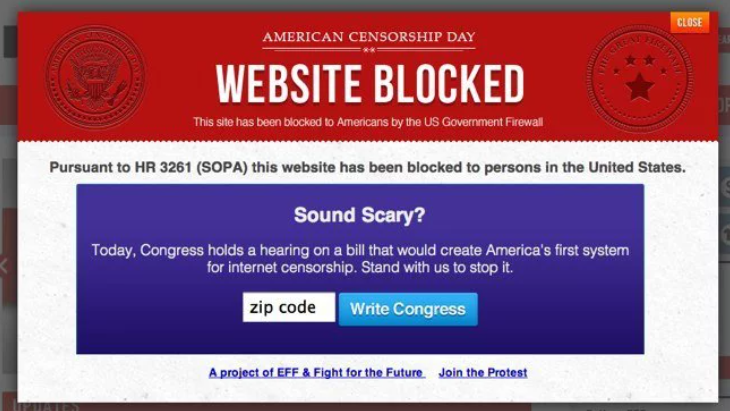
In 2011, the atmosphere around the Internet changed abruptly. In the United States, projects like the Stop Online Piracy Act (SOPA) and the Protect IP Act were advancing, aiming to tighten control over content circulation. But the most concrete blow came in 2012 with the shutdown of Megaupload (a file hosting platform) following an FBI investigation.
For the download blog ecosystem, it was a turning point. A large part of the links that sustained that circuit stopped working overnight, administrators began deleting content out of caution, and many sites simply vanished. The logic changed. What had been quick, accessible, and massive became more unstable, more monitored, and, in many cases, unviable.
“The sites we used to upload albums were taken down very often, Megaupload was the most famous, but we used several, and we constantly had to dodge the shutdowns. Obviously, it’s not great when everything you uploaded gets taken down, but those were the rules of the game; every time we uploaded an album, we knew it could be taken down the next day,” Kristian recounts.
With the tightening of controls, Stay Free had to start adapting their approach. They changed file names, titles, and some details to fly under the radar of the bots that were tracking links to report them. It was a basic way to survive in an increasingly monitored environment.
In that context, there were also some bizarre situations. “A friend who worked at CAPIF had connections with those who were in charge of taking down content and managed to keep the blog off the radar for a while,” Kristian says. The "agreement" worked until someone new came in who didn’t know anything: in just one day, they took down hundreds of albums, and the margin they had gained evaporated in an instant.
“The problem was that they took everything down, even albums that had been sent by the bands themselves or really weird stuff that hadn’t even been released here,” points out the admin of Stay Free.
The response was cathartic: a post detailing what had happened and exposing the inner workings of the organization. “Somewhere, we had to vent.”
By then, Stay Free was already evolving. Downloads continued, but interviews were on the rise, along with the idea of a netlabel. With all the material coming in, they put together a compilation through an open call. About a hundred songs, selected by internal voting and some invited bands. That’s how My Generation was released on Bandcamp, a pretty accurate snapshot of that scene.
Regarding Bandcamp, Kristian is clear: “Blogs had a wider reach because they didn’t ask for permission. If it was recorded, it was shared: album, live, rehearsal, or demo. On Bandcamp, it’s the band or label that decides, and the big ones have always been more reluctant.”
Stay Free was, in that landscape, the balancing point between mass appeal and discernment. The blog was talked about in forums, bars, and gatherings. There were many others that contributed to the circulation of music without restrictions like Indie Hoy, which would later become a journalistic outlet (just like Stereogum in the U.S. or demidiscoteca.cc, just to name a few).
Today, music instead functions as a permanent rental. In the era of leasing, the previous logic is missed: the one where blogs had a link that led you to an album that became part of your library.
Back the project and unlock everything: 421 Magazine a month early, comments on every piece, the monthly council with the newsroom and the exclusive Magic app.