The Scout Movement is the world's largest youth organization. With a history spanning 100 years and a method of self-education in nature, it seeks to develop individuals who will help leave behind a world better than the one we found.
Surely you've seen them around your neighborhood, in churches or parks building structures with logs and knots, making gestures of solidarity for the community, or simply lending a hand. They wear scarves in various colors, each with its own meaning. They are not a cult and they don't sell cookies, despite what pop culture has unsuccessfully tried to suggest. Scouts are the largest youth movement in the world.
Baden Powell is the founder of the scout movement, also known as BP. He was a soldier and a writer. He participated in military campaigns in Africa, such as when he defended during the siege of Mafeking in the Second Boer War (1899-1900). In 1907, he led the first scout camp on Brownsea Island, where he began implementing the patrol system (small groups of boys named after animals, flowers, constellations, or historical figures, each with a role and responsibility), based on the scout law and promise.
The scout method is a system of self-education and evaluation where direct action is vital for children to develop and start making decisions. We scouts forge character and promote physical, intellectual, social, and spiritual development, shaping individuals who will play a fundamental role in society.
They are not a cult and they don't just sell cookies, despite what pop culture has unsuccessfully tried to suggest. Scouts are the largest youth movement in the world.
The scout movement arrived in Argentina in 1908 thanks to a young man named Arturo Penny, who was moved by the supplements BP had published in England called "Scouting for Boys in these Pampas." The initial kick-off was in Banfield, also driven by the expansion of the railroads, filled with British pioneers who knew the scout method and began applying it in schools, fire stations, and police stations. In 1909, BP visited the country invited by the Young Men's Christian Association (YMCA), giving his blessing on our lands.
But the personality that boosted the movement was Francisco Pascacio Moreno, also known as Perito Moreno. The Argentine scientist, explorer, and geographer promoted the founding of the "Argentine Boy Scout Association" in 1912, recognized by President Hipólito Irigoyen in 1917. This way, the scout movement in Argentina began to occupy educational spaces, being sponsored by parishes and clubs, and becoming widespread in every corner of the country. From then on, the scout movement in Argentina branched out, with "Scout of Argentina" being the association that hosts the most kids.
Scouts today
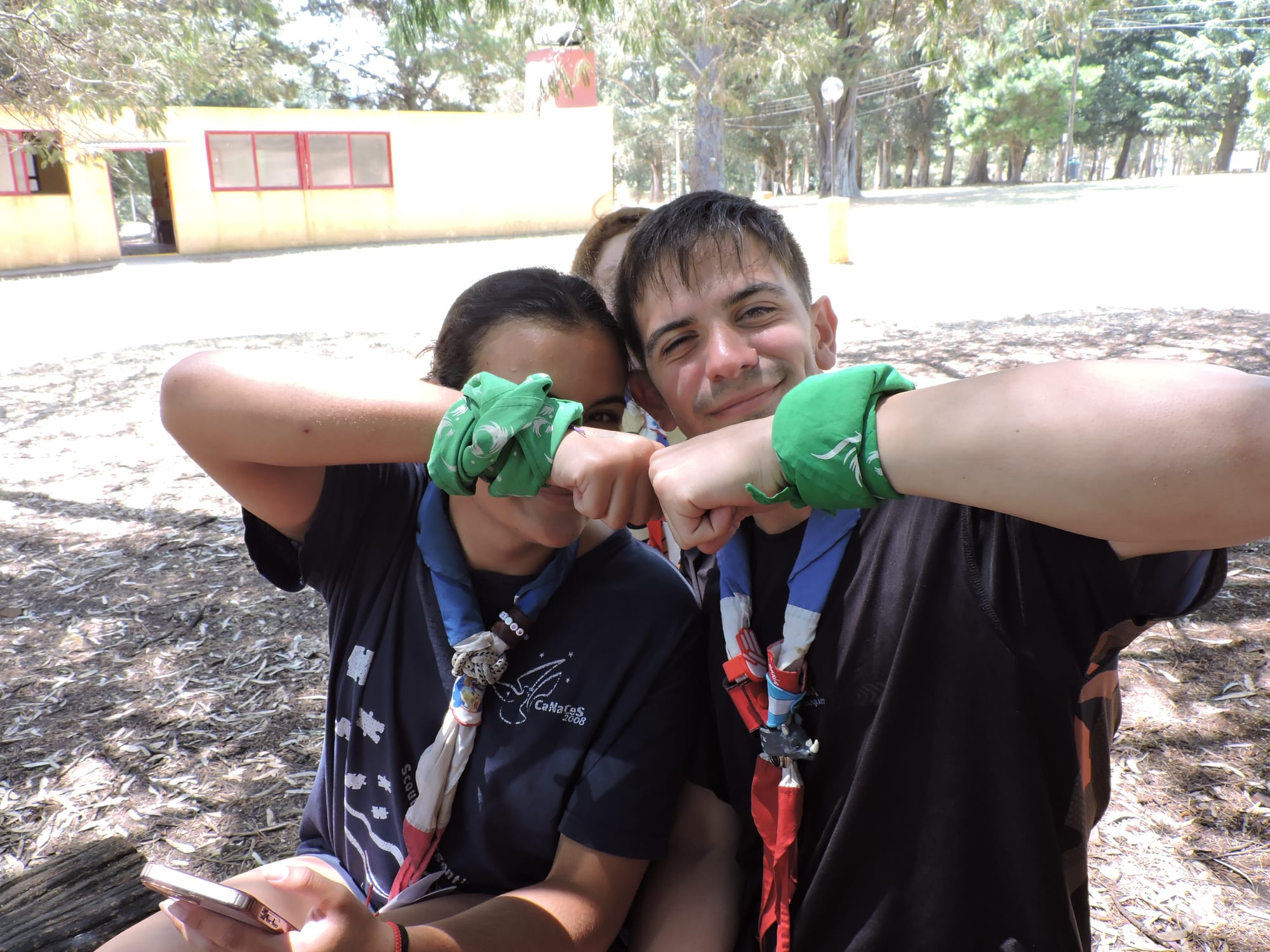
Perhaps popular culture says that scouts should help elderly ladies cross the street, but this community help goes beyond that. Every scout in the world wears a scarf around their neck in colors that represent them (in most cases, they have a spiritual meaning and sometimes are just guided by a custom from the founding group), and at the end, there’s a little knot tied to remind them that every day they should do a good deed to make the world a little better. Because, as BP, the founder of the movement, said, "try to leave the world in better condition than you found it."
The scout movement is a non-profit organization that has been working globally for over 100 years, through the volunteering of adults (I am one of them, for over fifteen years), and offers, among other things, non-formal education to young people and teenagers, covering an age range from 5 to 22 years. The goal is to improve the world in some way, a titanic task in these times. Local associations may have a sponsoring entity, from a church, a company, an NGO, or some benefactor. In most cases, groups self-finance with material fees (to cover snacks, outings, and work materials) and a scout insurance to cover potential incidents.
The primary idea is to enhance people's abilities and form good citizens, enriching the community through their actions.
The scout movement is not a summer camp. It has an educational structure to develop children (also called protagonists) evolutionarily. The primary idea is to enhance people's abilities and form good citizens, enriching the community through their actions. The goal is not to produce good scouts, but to form good people for this world. Engaging in outdoor activities strengthens children's connection with the world and the reality around them.
Generally, scouts meet on Saturdays for three hours, but that's a big and beautiful fallacy: the work of a scout educator is 24 hours a day, 365 days a year. Most scout groups are divided into five branches (Beavers, Pack, Scout Unit, Explorers, and Rovers). Each has different objectives and progressions for children to develop and discover what they want to be in life. The scout uniform is an armor, and the scarf is a sign of belonging that, in the best cases, inspires.
Each branch has a pedagogical foundation according to the age range; Beavers (children aged 3 to 7) focus on playful learning, life in nature, and group coexistence, using the figure of the beaver and its burrow to teach values like sharing and friendship. The Pack (ages 7 to 11) draws from "The Jungle Book" (popularly known as "The Jungle Book"), promoting the motto "always better" and life in the pack. In the Scout Unit (ages 11 to 14), the motivating foundation is the adventure with a group of friends in the context of nature, encouraging exploration; while in the Explorers (ages 14 to 17), the focus is on the adventure of discovery, being the builders of their own path. The Rovers (ages 17 to 22), the older protagonists of the movement, focus on commitment, solidarity, and building an autonomous life project, under the motto "to serve." These young people are invited to "row their own canoe" (take the helm of their lives) to be agents of change in society. After these stages, one can continue in the movement, but as an educator (as I am) or helping in another area like cooking or infrastructure (tents, common spaces, facilities), or simply collaborating when needed.
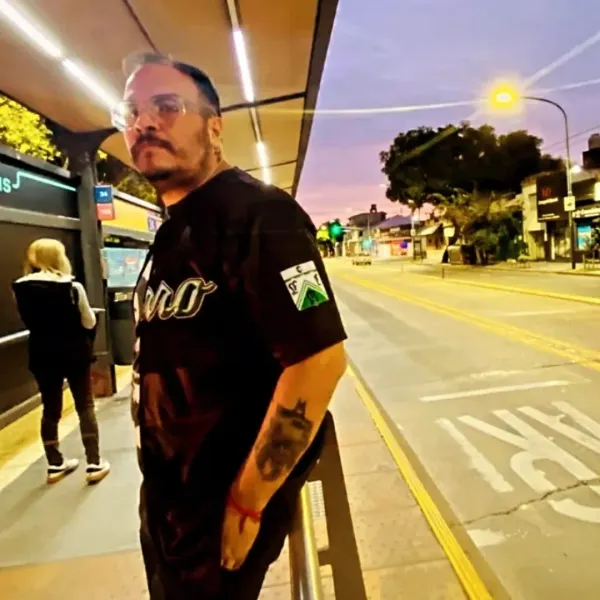
I have been part of the San José Obrero group since 1996. My parents signed me up so I would do something on Saturdays, and I discovered that, even as a kid, I could be useful and my imagination could blossom. Gradually, my world shrank to the scout group, and it was only a matter of time before my siblings signed up and then my parents joined in. The scout group became family. We scouts foster spaces for gathering to enrich day-to-day life. At the end of each activity, we have the custom of having a snack, an activity that seems mundane and trivial, but for some kids, it is vital for their nutrition and socialization. We share mate cocido, cakes, cookies, and chat about the games. Every activity must be within a schedule and must have feedback from the kids (the protagonists) and an older responsible person (group leader) to improve the activity.
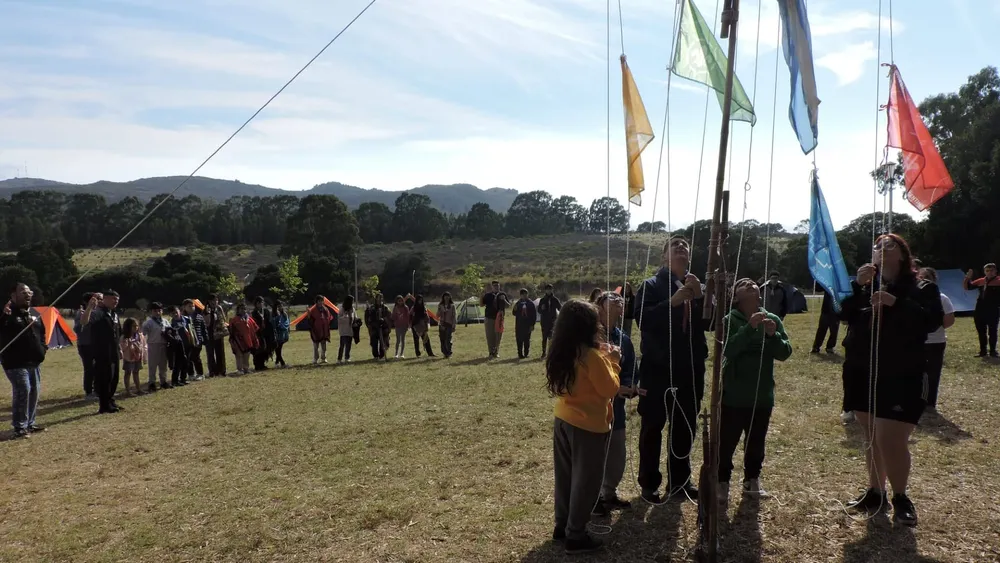
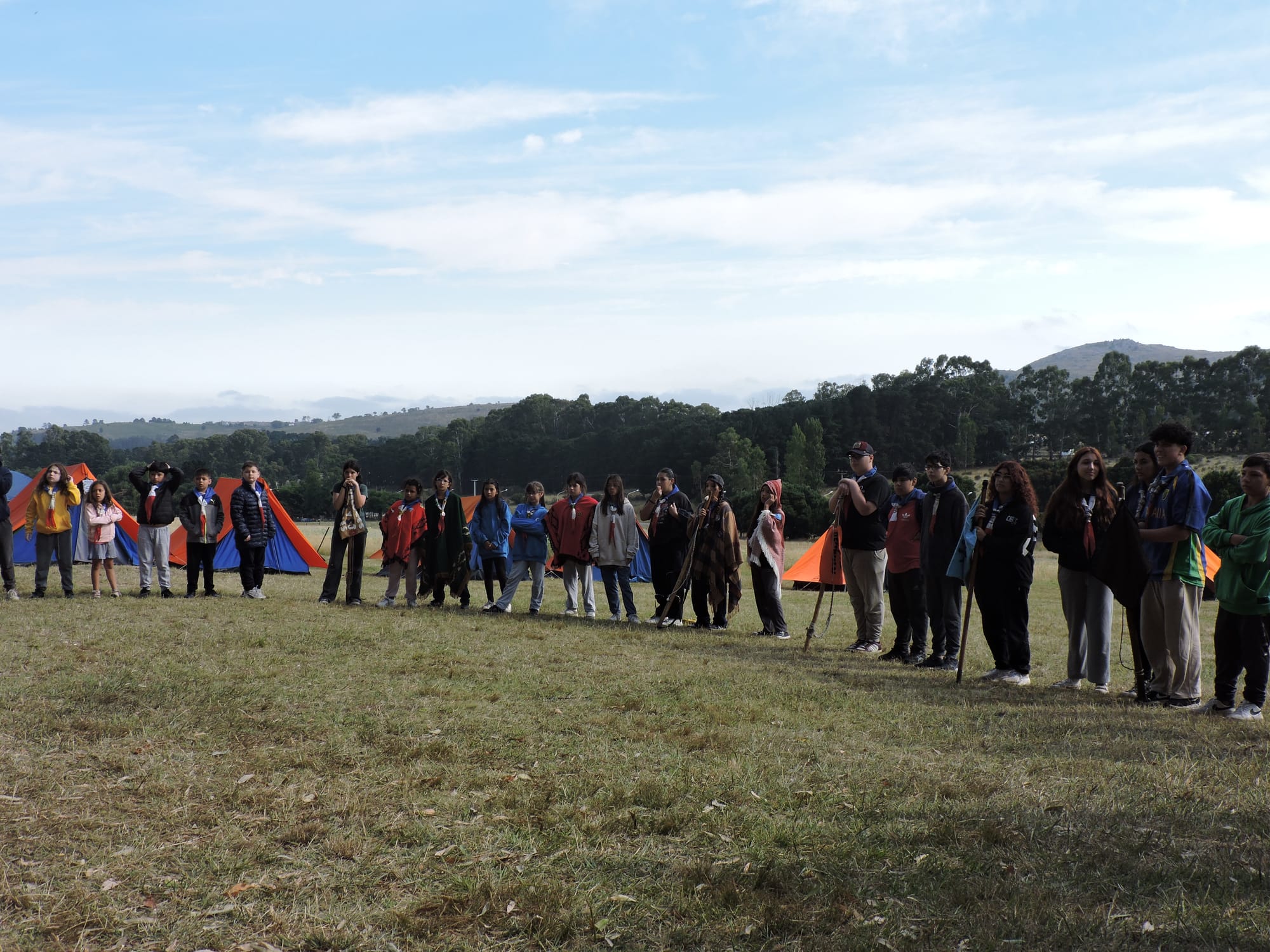
Life in nature is an essential factor for the scout movement. When we go camping, we slow down and sync with nature, completely detached from civilization and its schedules and demands. The sun and the moon mark the time, and one returns to a primitive form long forgotten. All the youth program (the activities we do throughout the year) is transferred outdoors. The scout movement allows kids to discover places they have never explored, food they have never tasted, and see other realities. Crossing General Paz or directly leaving the province.
At the end of each activity, we have the custom of having a snack, an activity that seems mundane and trivial, but for some kids, it is vital for their nutrition and socialization. We share mate cocido, cakes, cookies, and chat about the games.
Thanks to the activity program, we can play with gems from pop culture to make the educational experience more fun. Over nearly 15 years as an educator, I have been able to use different works of fiction to convey the scout law, infusing concepts and reinforcing others: From "The Lord of the Rings", through "Salem's Lot", "The Hunger Games", "Harry Potter", "El Eternauta", "The Odyssey", "Stranger Things", "Ghostbusters", Nordic myths, Argentine myths, Argentine history, etc. The treasure chest has no bottom and the ideas are infinite.
The scout group has allowed me to discover places that would have been impossible for me to know (especially after the 2001 crisis) and helped me grow as a person: I learned to cook, to budget, to read better, learned to chop wood, discovered the stars in the middle of the countryside, and learned to manage my own and others' emotions. I also made friends, fell in love, and had my heart broken.
Obviously, I now transmit all that knowledge as an educator, creating a synergy and a creative mitosis. Being a volunteer, the benefit for the educator is emotional: there is no better feeling than seeing the kids you were in charge of now become doctors, journalists, referees, photographers, or simply happy people with their lives.
In short, the scout movement promotes direct action to improve the world from the neighborhood and lend a hand to those in need. Being a scout is the closest thing to being a superhero today. One is an entertainer, psychologist, doctor, cook, counselor, worker, teacher, animator, and, more importantly, a person who lends an ear to someone in need.