Are we living in a madhouse? What if our awareness of existential meaninglessness were simply an evolutionary mistake? From Zapffe’s philosophy to True Detective, an invitation to create new myths to survive the absurd.
"The world was and will be a mess, I know it, in 506 and in 2000 too," was the phrase with which Enrique Santos Discépolo opened Cambalache in 1934, an Argentine´s tango. In those lines, there might have been less prophecy than acknowledgment: the truth of the human species and the hidden truth of what we have done with our societies. While there are genuine moments of calm, it's hard for a reader of 421 not to accept a somewhat sad idea: we are trapped in a madhouse.
Accounting for the "specificity" of the madhouse we live in is not the task of this note. Others have done it with great precision and more will continue to do so. We can limit ourselves, yes, to making a list. At least a brief list of contemporary world things that, when they brush against schizophrenic acceleration, make us sick: pandemics that just won't go away, the stock market doing strange things, the perpetual flexing among nuclear powers that put us on the brink of nuclear winter, your dwindling desire to sell your labor for crumbs that barely get you through the month, the impossibility of thinking about owning a home, how ridiculous it sometimes sounds that we are all on a giant rock traveling through outer space.
So, if you're reading this and feel that your life plan looks more like "surviving the day" than "fulfilling a divine purpose," welcome to late capitalism, kiddo.
New world, new trend
Nihilism is a philosophical current with a long history. "Nihilism," etymologically speaking, derives from the Latin nihil, which means "nothing" and generally holds that there is no such thing as "objective" truths, values, or ultimate meanings; that everything we have done as communities is merely building "castles in the air," mere conventions and fantasies of language, as Nietzsche would say in "On Truth and Lies in a Nonmoral Sense". That "nothing" that nihilism speaks of is what we find every time we dig too deep into the "true composition of the world." Nihilism, then, will say: 1) there is no purpose designed for our species by Nature or by a God, 2) there are no objective moral principles that we can intellectually deduce, and 3) there is also no possibility, due to our own cognitive and epistemological limitations, of having objective knowledge of reality.
When humans take off the blinders of myths, religions, political parties, or any other discursive structure that offers us a sense of existence and a dopaminergic boost, we run the risk of experiencing an existential burnout.
In short: what exists is "nothing." And our task would be, nothing more and nothing less, than to surf that "nothing."
It happens that now nihilism has ceased to be that complicated word used by edgy users in forums and some overdrafted friends to become the default mood. In these times, everything seems to indicate that the material conditions of our existence (that is, the great "list" I mentioned above) are not helping us interpret this world around us as anything but absurd.
But it seems like an uncomfortable question: what if this seemingly "realistic" way of seeing the world (so sad, really) is, in fact, a bug of the species? What if being too aware that everything is nonsense is literally an evolutionary curse?
Hoffman argues that organisms that see reality too "raw" are tendentially doomed to disappear. In other words: the more complex organisms interested in understanding the "truth" of the world, the cosmos, and its composition will always be lagging behind those organisms solely focused on reproduction and survival in the evolutionary race.
In this framing, "seeing too much reality" is lethal.
According to Hoffman, when humans take off the blinders of myths, religions, political parties, or any other discursive structure that offers us a sense of existence and a dopaminergic boost, we run the risk of experiencing an existential burnout. That is, an "existential burn-out," a deep fatigue that arises from a chronic loss of meaning, purpose, or connection to life.
This perspective seems to directly contradict the now-historical meme graph by William Meijer. According to Hoffman, on the contrary, too many "uncomfortable truths" would operate evolutionarily against us; while many "kind lies" would ensure our reproduction.
An extreme commitment to the truth makes relationships acutely dysfunctional but systems chronically functional (think Elon Musk).
An extreme commitment to kindness makes relationships acutely functional but systems chronically dysfunctional (think Sweden, UK) pic.twitter.com/FShs8icvJW
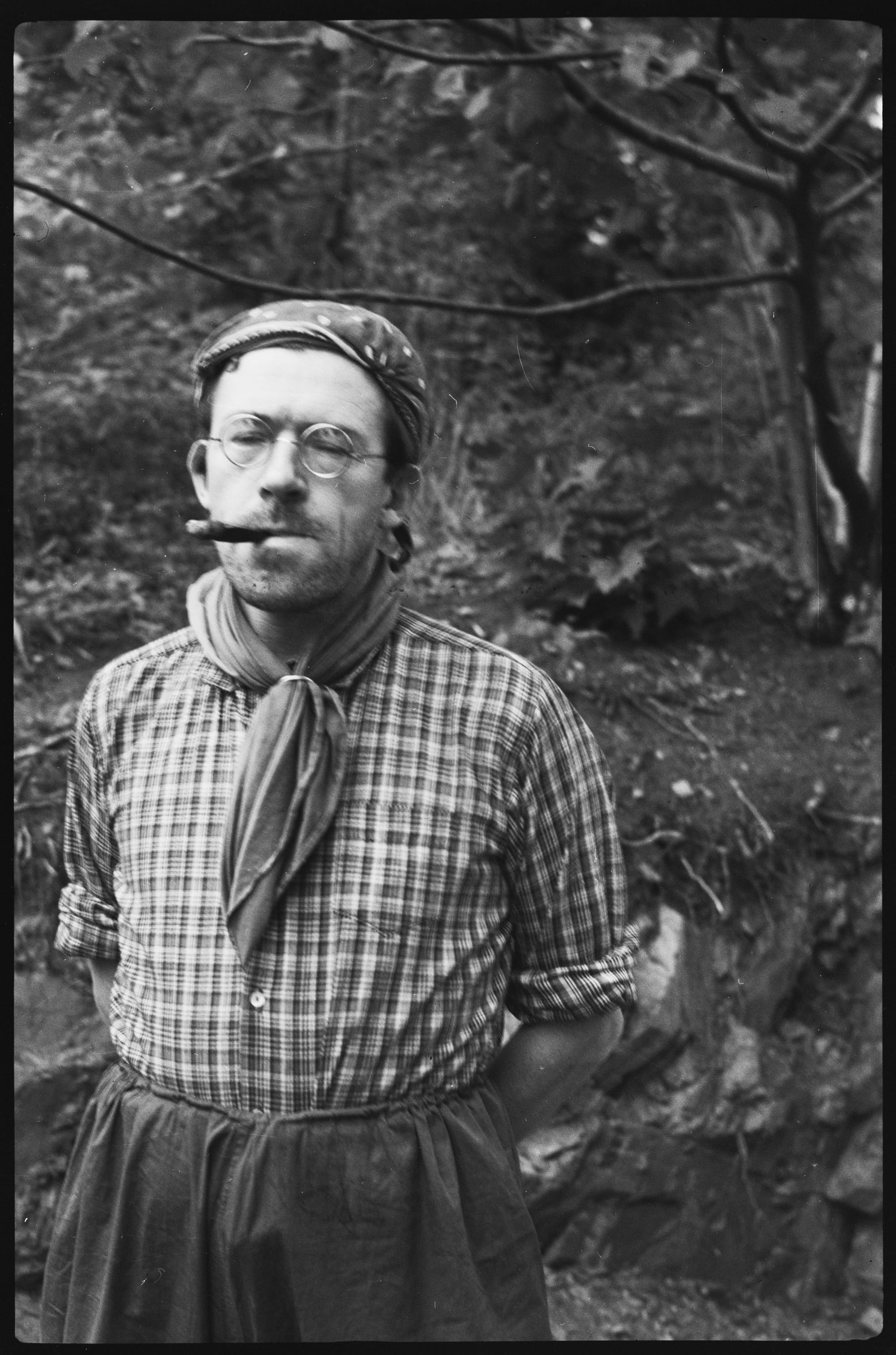
Peter Zappfe looked at reality from too close. He was a Norwegian climber, nihilist, and antinatalist. He was also a lesser philosopher. Lesser in the sense that he did not enter through the grand door of philosophy and there is no philosophy manual that names him.
But it has an incredibly brief yet beautiful text. Just look at the beauty of its writing:
One night in ancient times, man awoke and contemplated himself. He saw that he was naked beneath the cosmos, homeless in his own body. All things dissolved before his scrutinizing thought, and wonder after wonder, horror after horror unfolded in his mind. Then the woman also awoke and said it was time to leave and go hunting. He searched for his bow and arrow, the nuptial bond between spirit and hand, and stepped out beneath the stars. But as the beasts came from their lairs, where he used to wait for them, he no longer felt in his blood the ravenous instinct to pursue them, but rather a great psalm about the brotherhood of suffering of all living things. That day he returned empty-handed, and when they found him the following moon, he lay dead in the thicket.
Peter Wessel Zapffe
The text is called The Last Messiah. It was written after the '29 crisis (not coincidentally) and tells a somewhat heartbreaking story. It speaks of a giant moose that would have existed at some point in Earth's history. This moose would have had such an enormous, heavy, and ridiculously giant antlers that it prevented him from doing everything a moose needs to survive: walking through the forest without bumping into tree trunks, burying his head in the underbrush to find the fruits that would feed him, fighting with other moose that challenged his rank in the herd, and finally, reproducing.
Evolution, with its "practical sense," left him behind, and the moose ceased to exist.
Zapffe says, in an interesting transposition, that our consciousness is that antlers. As a species, we have evolved too much. We became so aware of the world around us that we ended up realizing our own finitude: we came to understand that we are going to die and that the universe is a cold and meaningless explosion; we understood that, on this planet, there is an enormous amount of unnecessary suffering, and that, within the framework of this revelation, we may come to the conclusion that perhaps it is better not to remain alive.
Zapffe writes:
When [man] stands before imminent death, he simultaneously understands his nature and the cosmic meaning of what is to come. His creative imagination constructs new and fearful perspectives beyond the curtain of death, and he understands that even there, no sanctuary exists. Now he can grasp the making of his biological-cosmic schemes: he is the helpless captive of the universe, standing to fall under unimaginable circumstances. From this moment on, he finds himself in a state of unredeemed panic. This feeling of cosmic panic is central to every human mind. The race seems indeed destined to perish as all real conservation and continuation of life is discarded, as soon as the efforts and energy of the individual are directed to resist or to attend to the catastrophic internal tension of life.
So, if we are so intelligent, if our consciousness has developed so much, why haven't we already decided, in a great conclave of all humanity, to extinguish ourselves? Why are we still here? Why do we insist on existence?
Zapffe says that, to survive, we have developed four strategies, four somewhat sad mechanisms of "repression." I list them: isolation, anchoring, distraction, and sublimation.
We became so aware of the world around us that we ended up realizing our own finitude: we came to understand that we are going to die (...) and that, within the framework of this revelation, we may come to the conclusion that perhaps it is better not to remain alive.
"Isolation" is the “expulsion.” It is the denial to speak or work with any uncomfortable question that brings us closer to the absurdity of the world. It is the conscious act of depriving oneself of addressing any disturbing topic that may appear as an “ontological weight” to carry on with our existence.
"Anchoring" is the “fixation to internal points,” “the construction of walls around” that make us forget those uncomfortable revelations: it is the comfort and shelter we receive from the idea of family, the idea of the State, the idea of God.
For Zapffe, these four strategies are different forms of "self-mutilation." According to his reading, we have voluntarily severed our antlers. We have cut ourselves off from what characterized us and made us radically different, our own humanity, in order to continue existing. We have renounced being truly human to become something we should never have been. And thus, we have become nothing more than crippled versions of ourselves, actively working not to go insane.
Zapffe asked: what happens to the one who does not cut his antlers? To the one who “lets his consciousness grow” to the fullest, embraces the absurd, and does not take refuge in any of those four strategies? That is "the last messiah," a man who does not come to give us a new religion but comes to insist that we stop reproducing. The logic is quite simple: if human life is, by design, a source of conscious suffering, the only way to end suffering is not to improve it, but to not even start it.
The resemblance between this particular form of nihilism (because yes, there are many variants we couldn't cover here) and the NERV project in Evangelion is immense. But there's also another endearing character from contemporary cultural industry who echoes Zapffe. His name is Rust Cohle, and he is one of the main characters in the first season of True Detective, written by Nic Pizzolatto.
All of Rust Cohle's philosophy is condensed in a very particular conversation inside a car. In this roadside dialogue, on the way to solving a series of horrific crimes, Rust says:
I believe that human consciousness is a tragic mistake of evolution. We became too aware of ourselves. Nature created a part of itself, separate from itself. We are creatures that shouldn’t exist according to natural law. We are things that carry the illusion of having a self: this accumulation of sensory experiences and feelings, programmed with the full certainty that each of us is someone, when in reality, no one is anyone. I believe that the most honorable thing our species can do is deny its programming, stop reproducing, and walk hand in hand toward extinction. One last midnight, brothers and sisters renouncing an unfair deal.
Cohle restates the thesis: Nature, the Cosmos, has no interest whatsoever in the existence of the human species. Nothing in this galaxy will change if, all of a sudden, humans cease to exist. Evolution, for its part, and to return to Hoffman's initial thesis, also doesn't care whether a particular ideological discourse (be it political, religious, moral-axiological, or scientific) is or isn't 'true', since all it cares about is that you reproduce, that you continue with the wonder of life.
Is there anything that can be done?
Let’s assume there isn’t, that we are not nihilists. At least, not nihilists of this kind.
Let’s assume we don’t want to live for the lolz: that we don’t want to become cynical, that we don’t want to break our bodies with drugs to the point of no return, that we don’t want a world of 'gambling and whores', as Bender once said in Futurama, that we do believe there can be a tomorrow; let’s assume we do believe that all this is absurd, but at the same time we believe that life is worth living, that there are genuine and beautiful reasons to get out of bed and engage, love, create art, and solve scientific mysteries.
What to do, then?
In the 'Introduction to the Critique of Hegel's Philosophy of Right', Marx probably utters the most misunderstood phrase of his entire philosophical career. He says:
Religious misery is at the same time the expression of real misery and the protest against it. Religion is the sigh of the oppressed creature, it is the real meaning of the world without heart, just as it is the spirit of an age deprived of spirit. It is the opium of the people.
Marx doesn’t say that religion is garbage. He says something else, much closer to the Feuerbachian interpretation of religion: we have manufactured an excrescence, a replication of our pains and fears in a metaphysical concept. This concept, this figure (often anthropomorphized, like the Christian God, Vishnu, or Ra) has served as a receptacle for all our 'species fear'. And by attributing everything that hurts us to a metaphysical concept, to an intelligible and ghostly figure, we shy away from becoming 'truly human' or, following that line, 'truly moose'.
This is not a reading 'in the Zapffe way', which advocates for a silent destruction, but rather another, more joyful one, about the recomposition of the true meaning of 'being human in the world'.
To ensure my survival, that of my beloved friends, but also that of my entire species, it becomes necessary, mandatory, and with a certain level of urgency, to revisit the old ideological and axiological structures that gave meaning to old human cultures, to create new forms of rites, myths, and practices aggiornados.
Under this banner, it is possible to 'hack' evolution. At least to cheat it for a while.
The hacking plan begins by recognizing, at least for agnostics like me, that yes, maybe all this around us is more or less absurd; that our place and relevance in the cosmos is of an infinitesimal ridiculousness. It continues by acknowledging that perhaps the discourses that have so far 'organized' our pains as a species, and that have put some limits and allowed us to move forward (the 'anchoring' and 'distraction' in Zapffe), have lost their binding strength (not all, of course, and not entirely).
It concludes with understanding that, to ensure my survival, that of my beloved friends, but also that of my entire species, it becomes necessary, mandatory, and with a certain level of urgency, to revisit the old ideological and axiological structures that gave meaning to old human cultures, to create new forms of rites, myths, and practices aggiornados to the contemporary world that return to us a certain 'sense' of our existence, a certain 'sense' of our desires and projections.
A new myth for a new twenty-first century.
A new set of binding discourses for all the Moose of the Earth.
Which one? Dunno. I wouldn't even know where to start. In any case, it's a call to action. A conclave for us to figure out why, in whose name, and under what conditions we should remain alive and find some level of joy.
A final march of the Moose against the call for the nonexistence of the tower of Isengard, with the sole purpose of saving us all.
As the Cordoban poet Vicente Luy once said: "Use your hatred for the common good. Put your hatred to the service of the common good."
So, little moose, on this beautiful, lovely day: don't cut your crown.
Inject clarity into things.
Create the new light.
✦ Suscribite
Las notas de 421 no tienen paywall
Y a cada colaborador se le paga por su trabajo. Las dos cosas dependen de los suscriptores.
Nací en 1992 en Córdoba. Soy Doctor en Letras. Escribí "El archipiélago. Nuestra retirada del mundo y notas para un regreso", y las novelas "Si sintieras bajo los pies las estructuras mayores" y "Quiebra el álamo". Toco en Ox en Mayo Alto.