What is Cybercirujas?
A name formed by combining “cyber” and “scavenging” (cirujas). South America hacktivism, trash technology, free software.

A name formed by combining “cyber” and “scavenging” (cirujas). South America hacktivism, trash technology, free software.
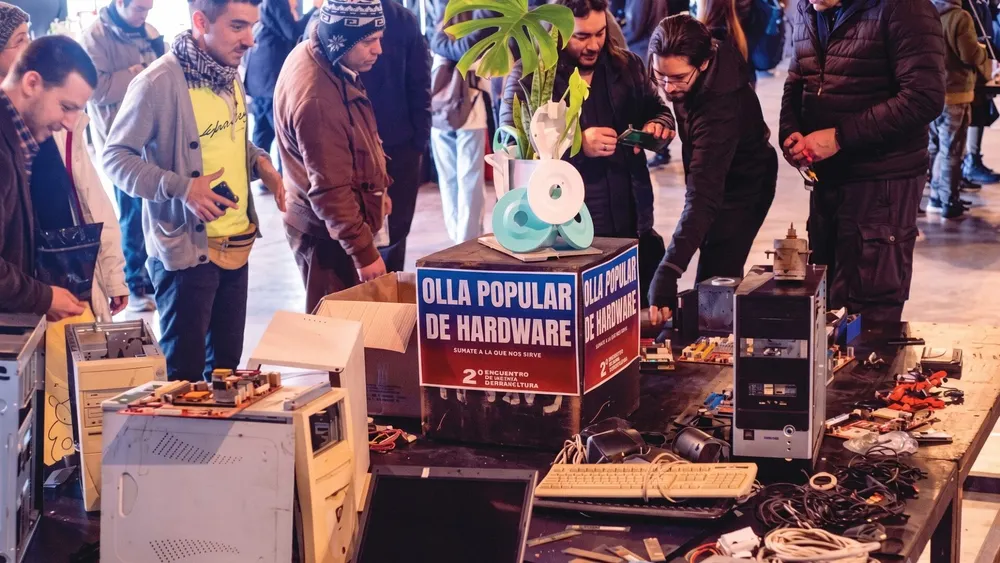
At 421, we've discussed both directly and indirectly the practices of a particular group of South American hacktivists who reclaim hardware and software while debating, disseminating, and taking action against the computing oligarchs. However, we've never delved into who they are or what they seek: today, we embark on an evangelization of the cyberciruja doctrine.
During the 2nd Federal Cyberciruja Meeting held in the city of Rosario on August 31, 2024, the First Federal Cyberciruja Census was presented. This census was compiled by one of the community members and received 384 responses: of those individuals, 307 identified themselves as cybercirujas. Additionally, 120 are located in CABA/AMBA, 55 in Córdoba, 41 in PBA, 25 in Santa Fe, and 25 in other countries, indicating that there is evidently some form of cyberciruja identity that unites all these individuals and continues to grow: just weeks ago, the Cyberciruja Cell of Mendoza was born.
We've never delved into who they are or what they seek: today, we embark on an evangelization of the cyberciruja doctrine.
A few days ago, various cyberciruja researchers from the National University of Cuyo published an article in the journal of the National University of La Plata analyzing the movement. In the first article I published on 421, I defined Cybercirujas as people who recover, reuse, and hack discarded technology to build their own autonomous digital infrastructure. There’s no doubt that it’s an active group that spreads like a virus in every sense: not only does it replicate itself, but this viral reproduction builds knowledge and practices that offer alternatives to the widespread apathy surrounding the technopolitics we live in.
Cybercirujas can be defined as a group of hacktivists. The term explains itself, but it’s also important to note that there isn’t a clear definition of hacktivism. What we can say is that the term originated from a primordial pre-Internet group, the Cult of the Dead Cow (cDc), formed in Texas in 1984, which operated on a BBS (Bulletin Board System), those text-based online forums accessible via telephone lines and computer modems.
In 1995, they joined the fight against Scientology, which was already beginning to target forums and websites that exposed the scams and theft of that 'church.' Amid the legal battles, the term "hacktivism" became popularized, associating it with political and social struggles heavily mediated by digital/technological tools, somewhat disorganized but with a degree of cohesion forged through digital ties.
Generally connected with the struggles on the Internet against censorship and digital rights, traditional hacktivism, or the Yankee-European version, doesn’t represent Cybercirujas the most, a distinctly South American group, with all that entails. There are concrete limits in the region. Without widespread access to computers and knowledge of what computing offers, as often happens, it’s difficult to seriously advance towards struggles over digital rights, data privacy, or net neutrality. How can we discuss models of networks, data, or the issue of total computing concentration in a few hands if there’s no foundational knowledge about what we can do with the computing devices we have at our disposal? Or worse yet, if we only have access to a crappy phone sold solely to plug us into a standardized app ecosystem?
Taking these material limits into account, cyberciruja hacktivism moves forward. It starts from the premise that access to computers must be universal, and if that doesn’t happen, it’s the Organized Community that must provide it. To achieve this foundational goal, Cybercirujas organizes into local cells, some with concrete physical spaces and others without, and they hold repair and refurbishment gatherings for equipment. These computers or computing devices are obtained through donations or found on the streets of large cities where thousands of kilos of equipment are always thrown away: hence the name, a conjunction of cybernetics and scavenging.
The act of recirculating computers incorporates another of the basic political pillars of the group: the right to repair. No company will stop flooding the world with devices, nor will they cease to impose consumption habits, much less collaborate with the computing oligarchs who control all our information through the software that lives on the hardware they sell. Cybercirujas works against these practices with concrete tools: the recovery of durable hardware and the use of Linux as a cutting-edge weapon against planned obsolescence.
Without widespread access to computers and knowledge of what computing offers, it’s very difficult to seriously advance towards struggles over digital rights, data privacy, or net neutrality.
The uniqueness of cyberciruja practices lies precisely in their connection to the local context. Not only because the recirculation of hardware connects with the needs of real people, but also because many of the members are territorial activists. According to the aforementioned census, 57% participate in various organizations, associations, civil society groups, or political organizations. Just to cite one example: one of the leading cybercirujas from the Córdoba cell, Paula Nieto, is part of the neighborhood assembly of Campo de la Rivera, a popular neighborhood in the capital of that province. She was looking for computers to repair and bring to her political space, but didn’t know how to do it: that’s how she got to know Cybercirujas. As Nicolas Wolovick, a professor at UNC, researcher, and founding cyberciruja, says:
If doctors have a Hippocratic oath, a moral duty to treat the sick, those of us who know about computing have a moral duty to help those who need to fix a computer, get it running, or whatever it takes.
The relationship that Cyberciruja proposes with computing follows the line of free software, mixed with punk and our local idiosyncrasy. From free software comes the basic idea: the computer is yours, it’s a tool that should serve you, not the other way around. From punk comes the essence of counterculture and the refusal to accept things by default. The local context defines how each cell organizes and its rituals: repair gatherings, socialization, recirculation, experimentation, awareness-raising, etc.
In Córdoba, where one of the most active cells exists, they regularly meet on the last Saturday of each month in the esplanade of the UNC Data Center as part of an agroecological fair. There, one of the biggest contributions Cybercirujas has made to South American hacktivist culture takes place: the Popular Hardware Pot.
Anyone from this part of the Southern Cone gets the idea right away, but the hardware part might confuse some. Just like in a popular potluck where everyone contributes what they can to fill the pot, and no one will stop you from serving yourself a plate, in the Popular Hardware Pot, people leave hardware that anyone can take, a prime example of “circular economy.”
The case of the Córdoba cell is emblematic because they have already held over 50 meetings, demonstrating that the group is now embedded in the territory. The practice is also a foundational concept: hardware is shared, just like the knowledge to operate it and make it work for whatever you want.
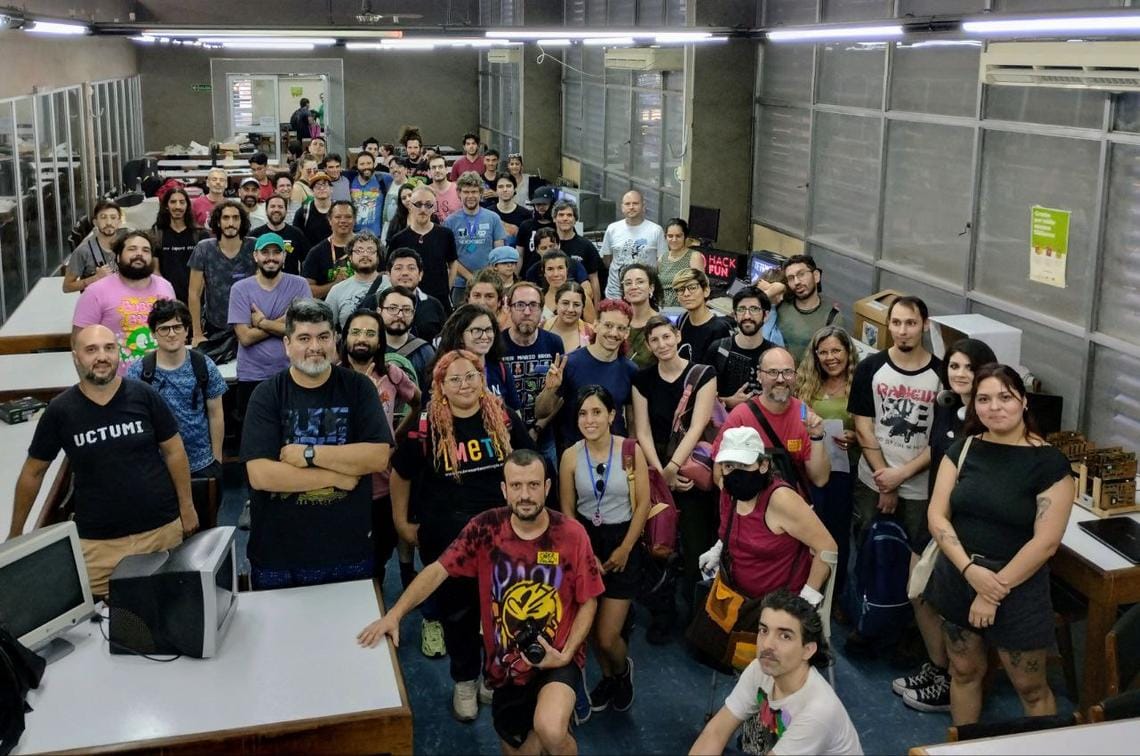
Here comes the distinctly “hacker” part, if you will, of Cybercirujas. It’s the manufacturers of hardware and software who impose barriers or conditions for using the equipment they produce and sell. But a computer today is not just a mundane appliance that simply breaks down from time to time. It’s not a stove, a washing machine, or a TV: it’s the gateway to a cyberspace that operates in physical reality; and, as such, it’s a device of liberation or domination. The cellphone is a clear example of this: it’s a handheld computer that is designed to function as a social control device. Twisting that manifest destiny of the cellphone is the quintessential hacker action of Cybercirujas. Few imagine that they can use their smartphone differently because it has become normalized to consume it “by default” as it comes. But an Organized Community like Cybercirujas not only seeks to vigorously denounce this, but also takes action: it forges ties with other organizations that propose a new ecosystem of cellphones, creates a distribution of Linux specifically tuned for the first models of Conectar Igualdad, or modifies payment terminals from Mercado Pago to take photos or make music (unique devices made from various electronic scraps, which serve to experiment with retro consoles or retro computers).
The uniqueness lies not so much in the bizarre nature of the creations, but rather in the socialization of all these cyberciruja sciences: whether at cell events, in the Cybercirujeo Club, or at the Federal Cyberciruja Meeting (which brings the community together annually). All these spaces are open to anyone who wants to come and learn what this is all about. Probably the Federal Meeting is the most emblematic, as it mobilizes cybercirujas from all cardinal points to debate and build collective knowledge.
Digital struggles, once the hallmark of traditional and original hacktivism, are no longer confined to cyberspace. Or rather, they are, because cyberspace is essentially woven into the fabric of real life: from the obligation to complete certain tasks in applications to deeper issues, such as facial recognition systems used to surveil the population, data centers that deplete resources, or states that cede sovereignty by hosting sensitive information about their citizens in clouds largely controlled by the United States.
Indeed, living in an era where cyberspace and real life no longer have a separation, we must ask ourselves if as a society we can accept these injustices. Why should we settle for merely "regulating" digital platforms that are essentially computers from the United States? Don’t we have the tools to build our own platforms?
Cybercirujas fosters digital deterritorialization and total decentralization. We have accepted and normalized the idea that it’s ideal for all of us to be crammed into the same "public square," as Twitter was called in its early years. It seems fine that we are exposed to millions of people, as if our brains were designed for that. But they’re not. And we have the tools to create our own self-managed communities. Don’t we support and back self-managed theater, cultural centers, popular libraries, and territorial spaces for activism? In total digitality, we can manage our own servers to communicate autonomously and sovereignly with whomever we choose, while also having the opportunity to participate in how those communities are regulated!
In total digitality, we can manage our own servers to communicate autonomously and sovereignly with whomever we choose.
Here's another example. Nowadays, streaming almost exclusively goes through YouTube and Twitch. If tomorrow they change their policies and you can’t say "boludo" or "pelotudo" because you’ll get banned, everyone will self-censor. Linux, free software, and hacktivist communities like Cybercirujas allow us to build our own communication and dissemination platforms without having to depend on overlords or the United States or any other country. How can it be that political and social organizations, people completely exposed politically, continue to relegate their communications and digital lives to American companies that can share their information with the government whenever they want? Cybercirujas acts as a hacktivist group to bring these issues to the forefront, but not just through discourse; it also provides concrete examples of how to live digitally without hiding in a cave.
There is no leader, no centralized account, no president or benevolent dictator: in Cybercirujas, all cells act independently, more or less following the mentioned guidelines. When one searches online about the group, it’s likely they will come across some news, the forum, the blog, or one of the Instagram accounts of the different cells. The very logic of this collectivity works in such a way that whoever fits the bill can step up and take action. Of course, there are certain values that are non-negotiable: you cannot be a Cyberciruja and support the computing oligarchs and their henchmen. There are no half measures or gray areas on some issues. On certain specific matters, you’re either on one side or the other. You can’t fight for a popular computing while also supporting Musk, Thiel, Zuckerberg, or any of those tech oligarchs.
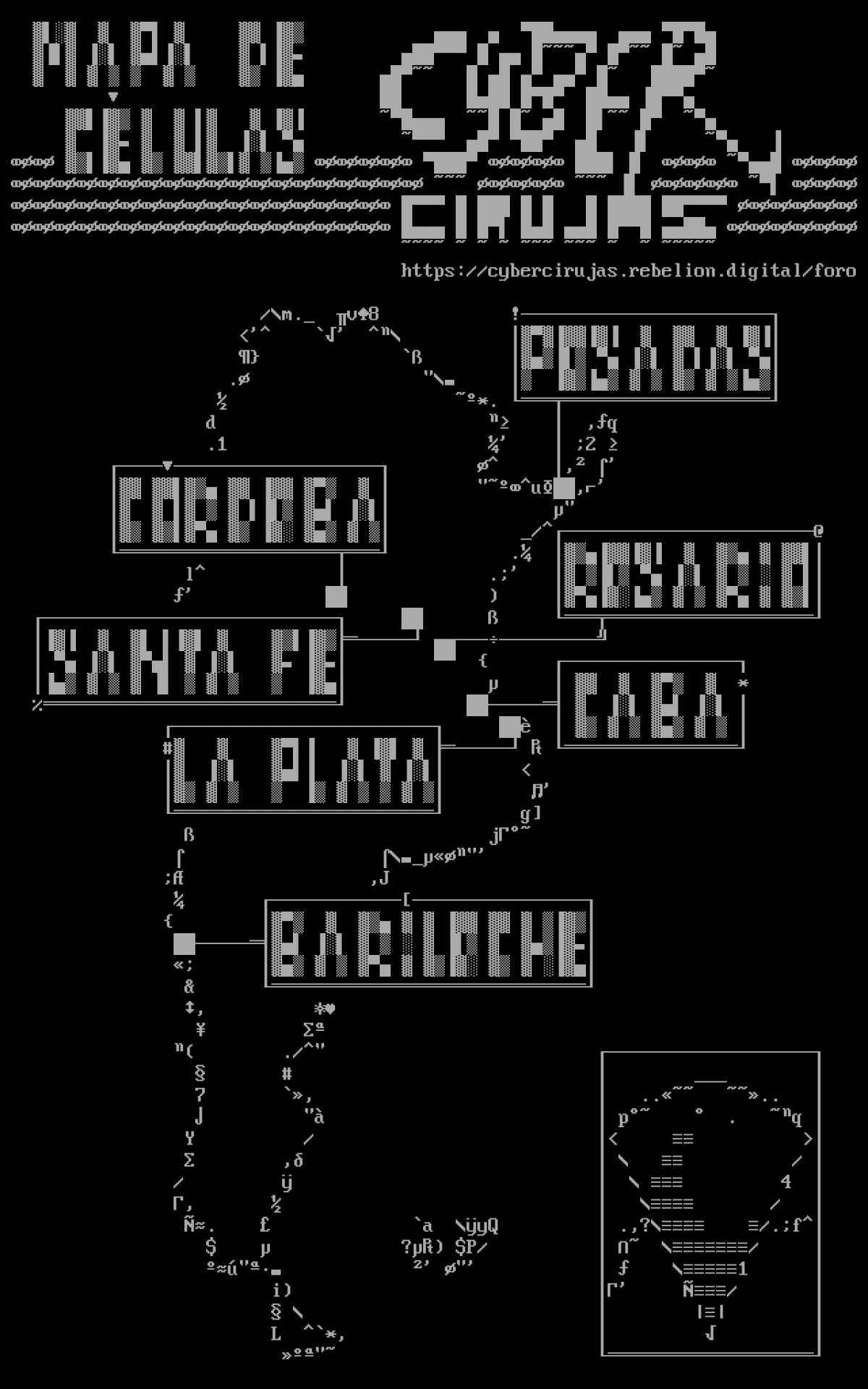
Each cell has its configurations, which mutate and evolve. The CABA cell has moved spaces several times but has always done a great job of repairing and delivering computers, connecting with individuals as well as various civil society groups. Additionally, from there, the events of the Cybercirujeo Club are organized, true spaces for technological leisure and experimentation, where it is precisely shown that computing is meant for having fun while connecting with others.
The Rosario cell has long been established at the La Toma Cultural Center, formerly a supermarket, taken over by its former workers. Córdoba, one of the most active cells that recovers the most equipment, operates in a rather anarchic manner, but regularly comes together with a well-oiled scheme that weaves connections between those who need computers, those who can donate them, and those who can repair them.
Citing again the census conducted in 2024, at least 50 people from the community identify as members of the LGBTQ+ community. For spaces related to "technology," this is no small feat, as they have historically been dominated by rather toxic masculinities or, as we say, "tech bros." Another important detail is just that: not everyone in our community is a tech expert or from the field. In the composition of the collectivity, l@s miembr@s working in IT are indeed the majority, but a significant percentage works in education, communication, culture, etc.
In this landscape, the foundations of the community emerged: there is a broad consensus on the use of free software to ensure technological sovereignty, on the active participation of civil society to drive techno-political issues, and on distrust towards the "market" as a solver of problems related to the digital divide or access to the Internet.
That computer, today, to which we give our entire lives, is actually someone else's computer. But it can be ours!
The hacktivism of Cybercirujas breaks away from the classical tradition because it is deeply rooted in the territory and connects it with cyberspace. The struggle for access to computing and for the creation of popular and sovereign computing is our banner. In a country with so many social difficulties, it’s hard to see that many of the problems are related to this technological system in which we live, but which we still haven’t dared to confront. The consequences are clear: more and more young people with anxiety disorders, learning difficulties, depression.
The only way to fight back is to drive a general struggle. But first, we must understand that the digital is already part of the real, and everything digital is mediated by a computer. And that computer, today, to which we give our entire lives, is actually someone else's computer. But it can be ours! Cybercirujas is a collectivity open to everyone with concerns about the current situation: if something happening doesn’t sit right with you, if you’re tired of the widespread apathy, of the default acceptance of all these problems, if you believe it’s time to fight from a different perspective, you’re probably already a Cyberciruja! And if you want to join, you don’t need much: no expertise or credentials, just the urgent need to want to change things.
Y a cada colaborador se le paga por su trabajo. Las dos cosas dependen de los suscriptores.