MultiEnding Heroes: The RPG with a Thousand Endings
An Argentine RPG where dying is just the beginning. MultiEnding Heroes satirizes the genre with many different endings.
When designing a game, the factor of "collecting" is not just a tool at our disposal; it’s practically a genre in its own right. These are games where the charm and goal lie in the accumulation of elements, whether they be characters, items, or abilities. There are plenty of examples: from the entire series of Pokémon games to the (in my opinion) unjustly overlooked JRPG saga Suikoden, the notion of "Gotta catch 'em all" as a gameplay dynamic has become a classic by now. And before anyone jumps in to say that Pokémon games are different, it’s worth remembering that the game rewards you with key items and new moves for every X critters you capture.
It’s quite common for this collecting factor to come from games in the RPG style, games that offer vast worlds, complex and immersive stories, spaces where players can spend an undisclosed number of hours. So, what could be better than an RPG that directly pays homage to collection, using its self-awareness to satirize the genre a bit?
What could be better than an RPG that directly pays homage to collection, using its self-awareness to satirize the genre a bit?
That’s MultiEnding Heroes, a multifaceted Argentine RPG whose goal is to achieve all possible endings, which had me hooked until the very last moment (a major reason I submitted this article late; sorry, editor).
The synopsis
Dawn breaks in a quiet, anonymous village. An enthusiastic and cocky young man shouts his uncontrollable desire to become a hero; a goal for which there is a direct target: to defeat the Dark Knight who resides in the nearby fortress. To achieve this, this would-be hero recruits an inexperienced priest as his companion and healer. They set off in search of adventures, only to encounter a bear that promptly mauls them. Congratulations, you’ve achieved the first ending.
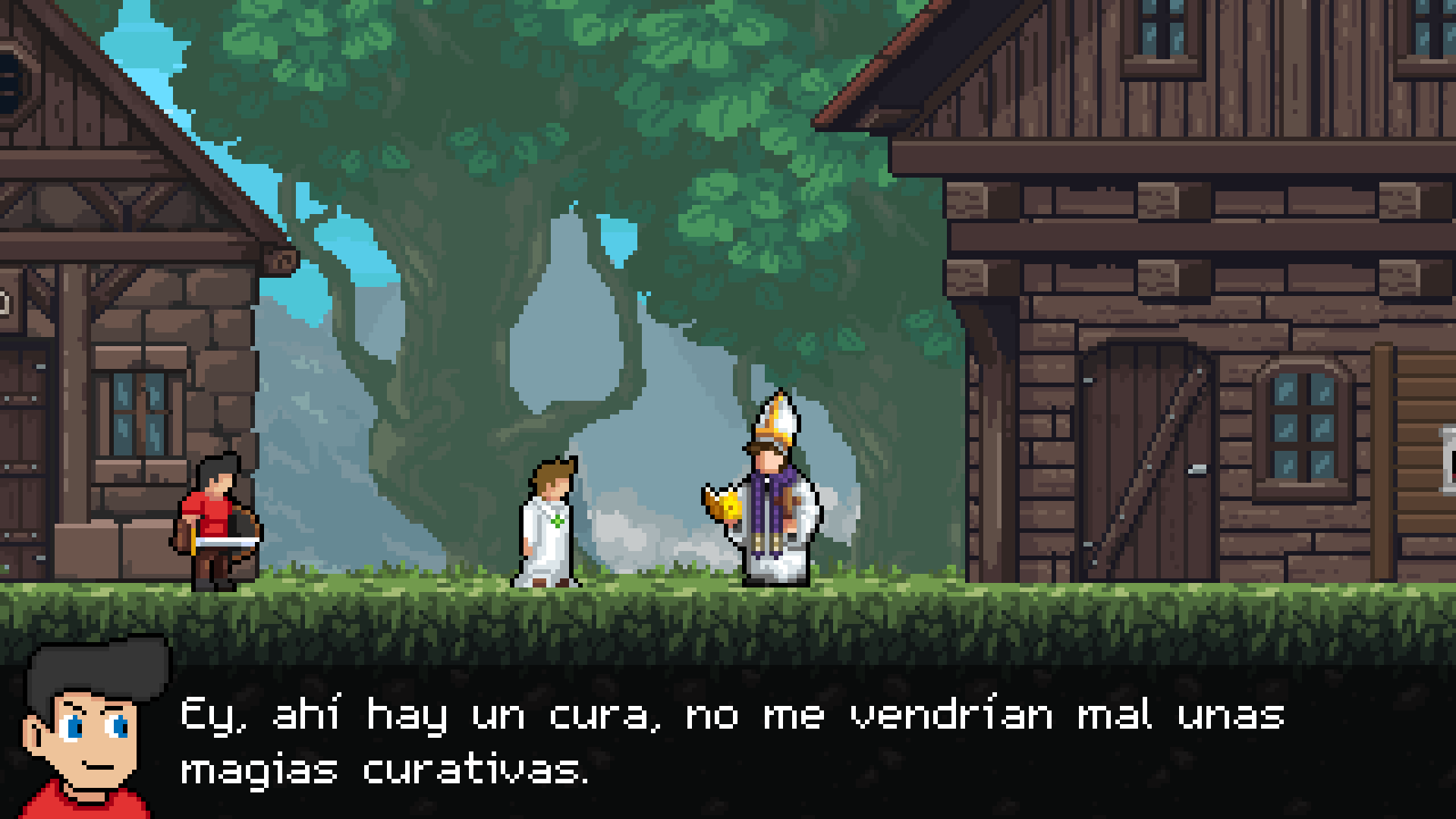
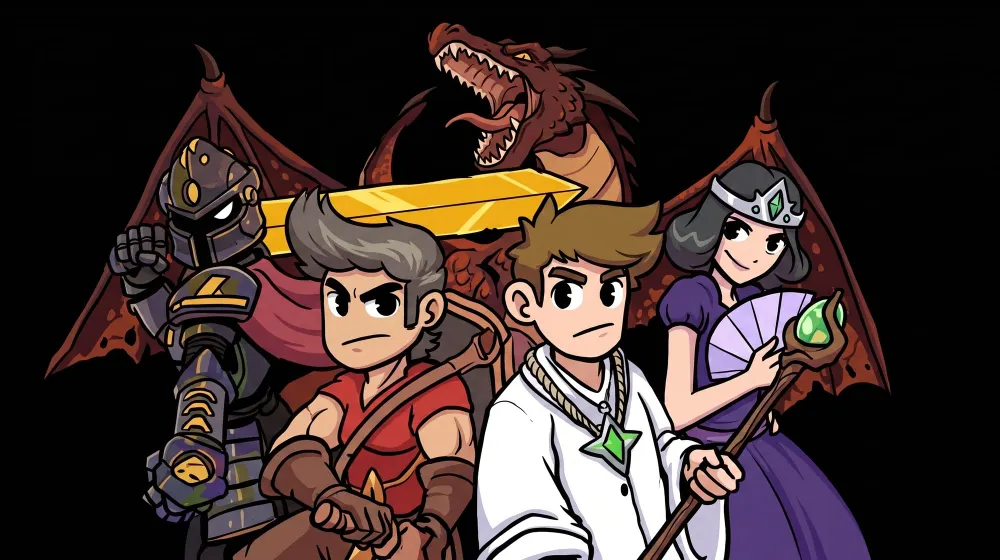
In MultiEnding Heroes, we control the Priest whose task is to keep the Hero alive; starting with just the basic spell "Heal" and having no other stat than Magic Points (or mana, in gordil dialect), as we accumulate experience, we gain new powers, as well as special items that surprisingly expand the range of possibilities within encounters and interactions. On the other hand, the Hero only auto-attacks; he has only Hit Points (or health) and doesn’t know how to do anything other than swing his sword.
Drawing inspiration from games like UnderTale, MultiEnding Heroes proposes a very active and engaging interaction with the game itself: it doesn’t just give us a set of rules to play linearly, but encourages us to try atypical things to break expectations and achieve unexpected results. For instance, one of the commands in every battle is talk (each enemy in the game has at least two completely original dialogue options, which can completely alter the outcome of the encounter). Or maybe there’s an item that has a totally different effect on a specific NPC compared to others. What happens if I throw a match at an Ent?
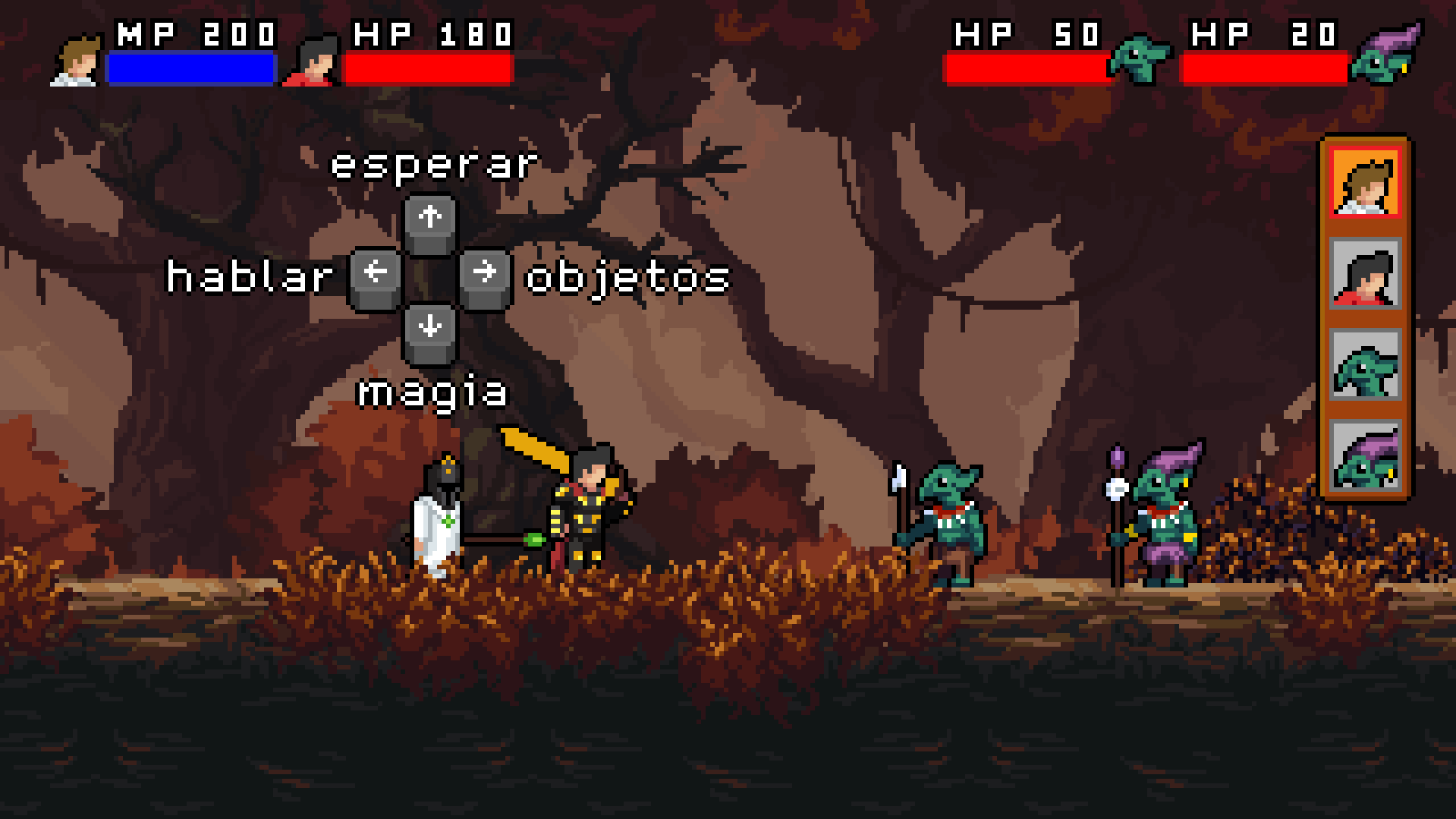
Questions like these are part of the MultiEnding Heroes experience. Every skill, every item, every new piece of information you’ve gained from another ending can alter a situation you’ve already experienced, which encourages a constant revisiting of previous scenarios/screens to try new things. And I can happily say: the game does not disappoint. Like the aforementioned UnderTale or the wonderful Disco Elysium, this game seems perfectly programmed in terms of scenarios. In 15 hours of gameplay, I encountered every possible surprise, from surviving a lethal encounter with a Beholder by simply casting basic lights to defeating the Dark Knight, reviving him with a spell, and teaming up with him because he was tired of the Hero. There’s a constant reward for creativity and imagination that leaves players wanting to discover more and more. How far does the limit go?
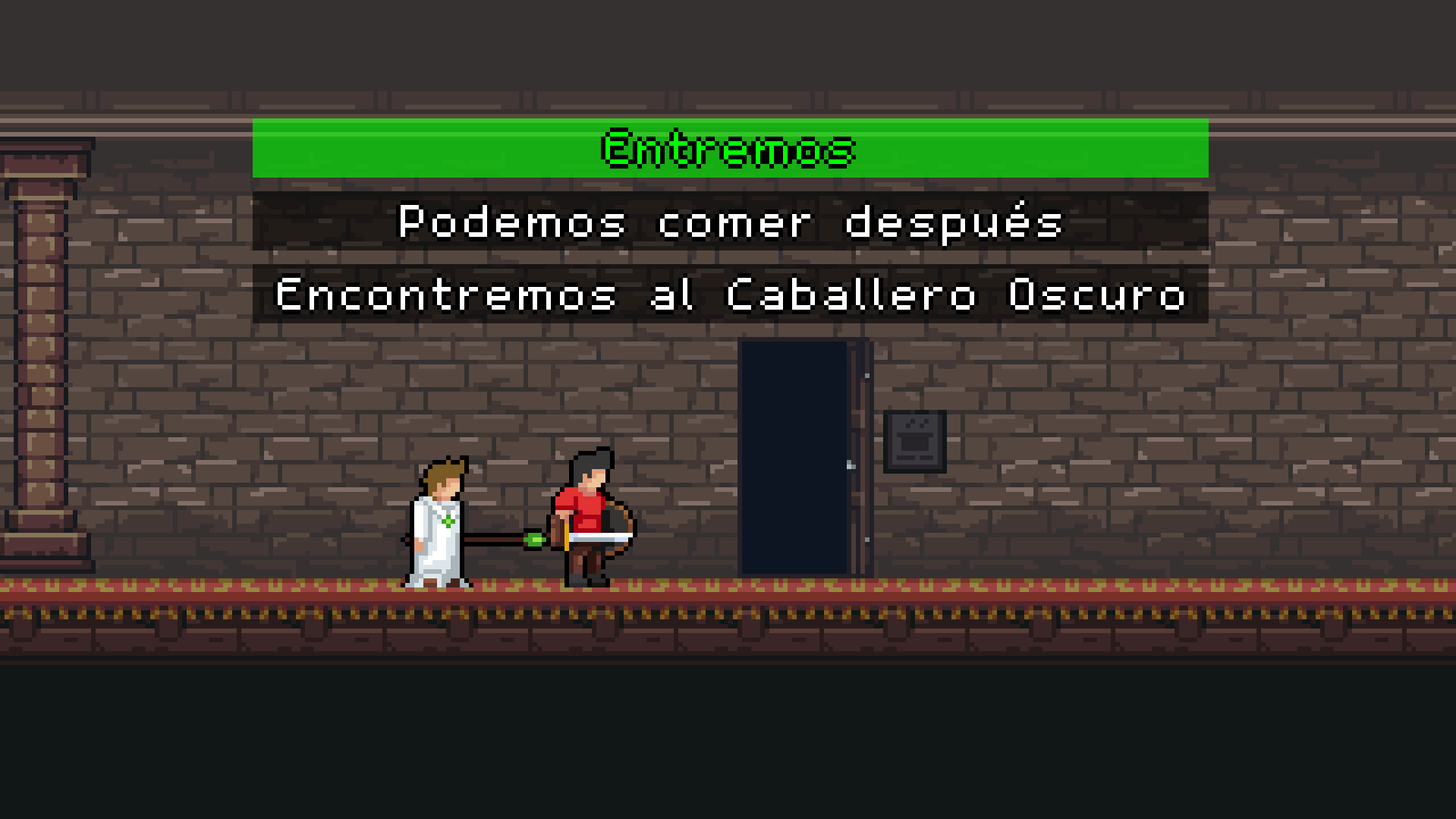
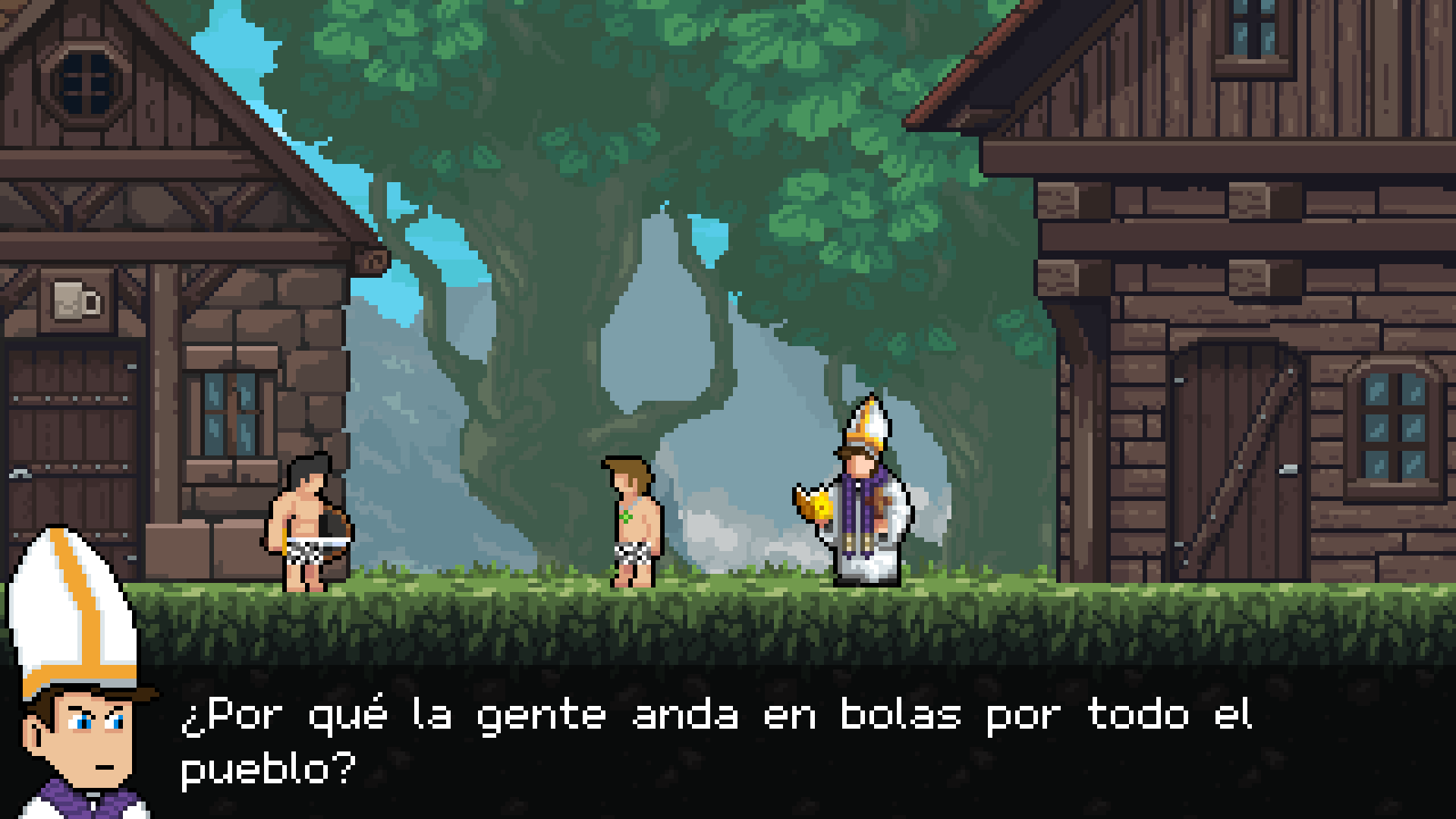
The game also plays with an unexpected factor in the search for interactions: the characters' clothing. While you start with the basic white priest robe and the red hero shirt, the game allows you to unlock and use different outfits that, depending on the NPC you interact with, modify conversations and outcomes. There are endings that depend on wearing the right outfit in the right situation.
The game’s aesthetic, as seen in some of the screenshots, is entirely pixel-art with a commitment to two dimensions to play with the traditional RPG aesthetic. Developed by NicoDiti with multiple collaborations, including music from Panman Music, there’s a clear aim to be a satirical game without losing playability, seriousness, and innovation. I can say it outright: MultiEnding Heroes achieves this.
It’s not just addictive because of the quest to complete it, but it also has a fluidity in both controls and ways to interact with the environment that enhances the desire to retry or restart chapters over and over again. And all this without losing the challenge, because there are some encounters that are truly a filter. I never thought I would spend over an hour and more than 10 attempts fighting against, literally, a penguin. I rarely found myself using the “Return to Menu” function because I died or made the wrong decision and ended up in an ending I had already unlocked: it’s faster and better to just quickly skip the dialogue, let the “Ending X” screen pop up, and continue from there.
There’s a constant reward for creativity and imagination that leaves players wanting to discover more and more. How far does the limit go?
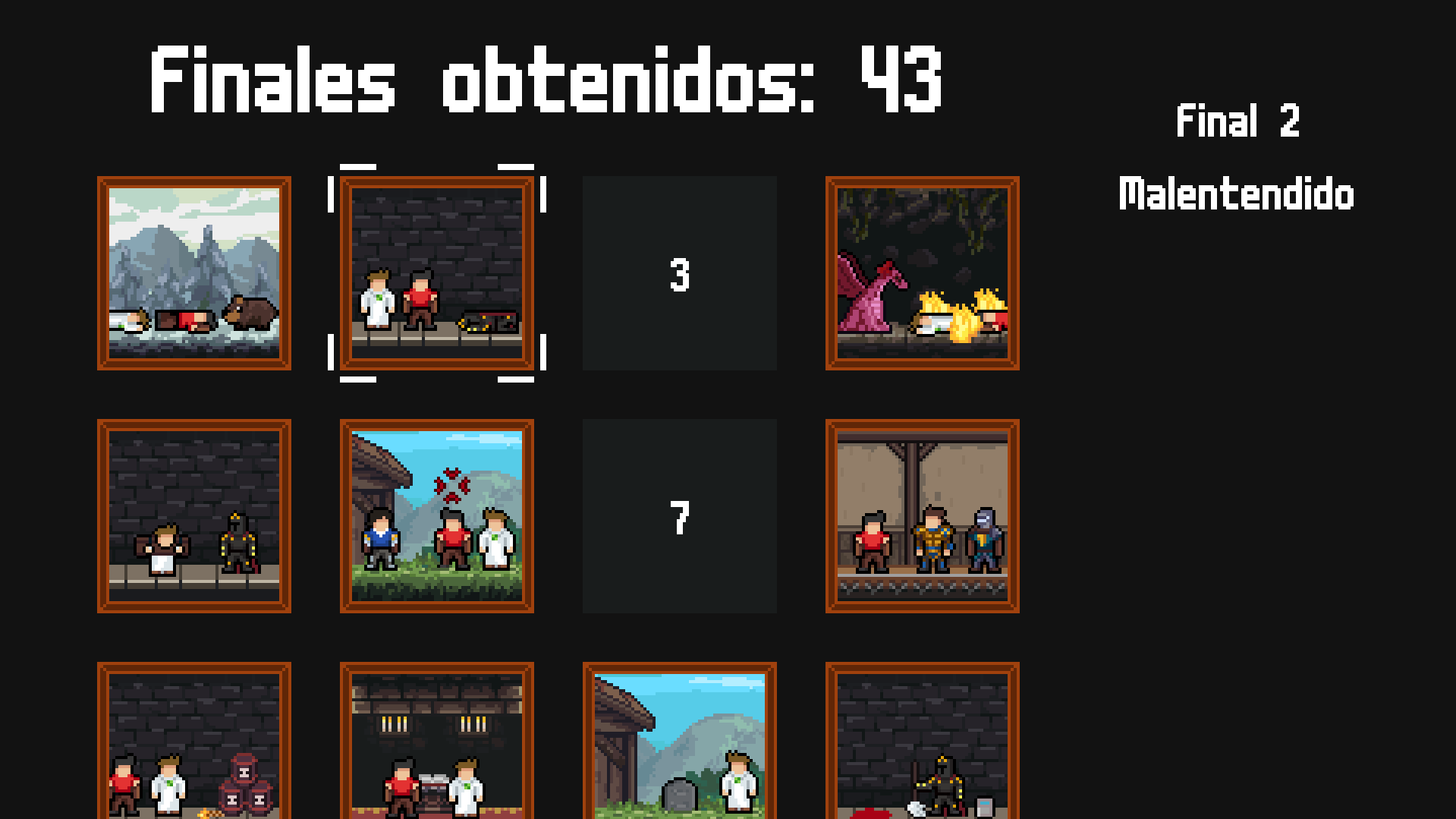
The game has, at least in its main declaration, 75 endings to unlock, possibly including that utopian “True Ending,” which rewards the hefty collector with “the truth.” A beautiful reminiscence for me to sagas like Zero Escape (999 or Virtue’s Last Reward), which in their “repetitive” or cyclical gameplay reward the passage of time and the dedication of players. Because there’s a difference between having to repeat over and over again, with no end in sight and no discernible goal, and having to relive moments to notice the differences or, better yet, to generate them.
As a hefty RPG fan, as a hefty collector, as a hefty pixel-art lover, and as a hefty Disco Elysium enthusiast, MultiEnding Heroes is a game that spoke directly to me, proposed a different challenge, and rewarded me for trying to be creative instead of formulaic. A gratifying, enjoyable, and admirable experience from a design perspective.
MultiEnding Heroes is currently available on the Steam store, at the super accessible price of $5 if you’re keen on supporting local developers.
Like so many others, MultiEnding Heroes reached us thanks to the 421 form to showcase Argentine games and demos. If you have a studio or a project, don’t hesitate to share it with us!
Las notas de 421 no tienen paywall
Y a cada colaborador se le paga por su trabajo. Las dos cosas dependen de los suscriptores.