Below, Rusted Gods: Psychological Terror in the Control Room
The horror is not facing monsters, but unwittingly leading others to their doom.

The horror is not facing monsters, but unwittingly leading others to their doom.

In horror video games, we are usually the protagonists, facing each terrifying obstacle in our path. We need to find that key to unlock that door, discover the correct combination to input a series of symbols, and confront every horrifying presence, abominable creature, or hostile human that crosses our way. But what happens when the core shifts and we hold the lives of a group in our hands?
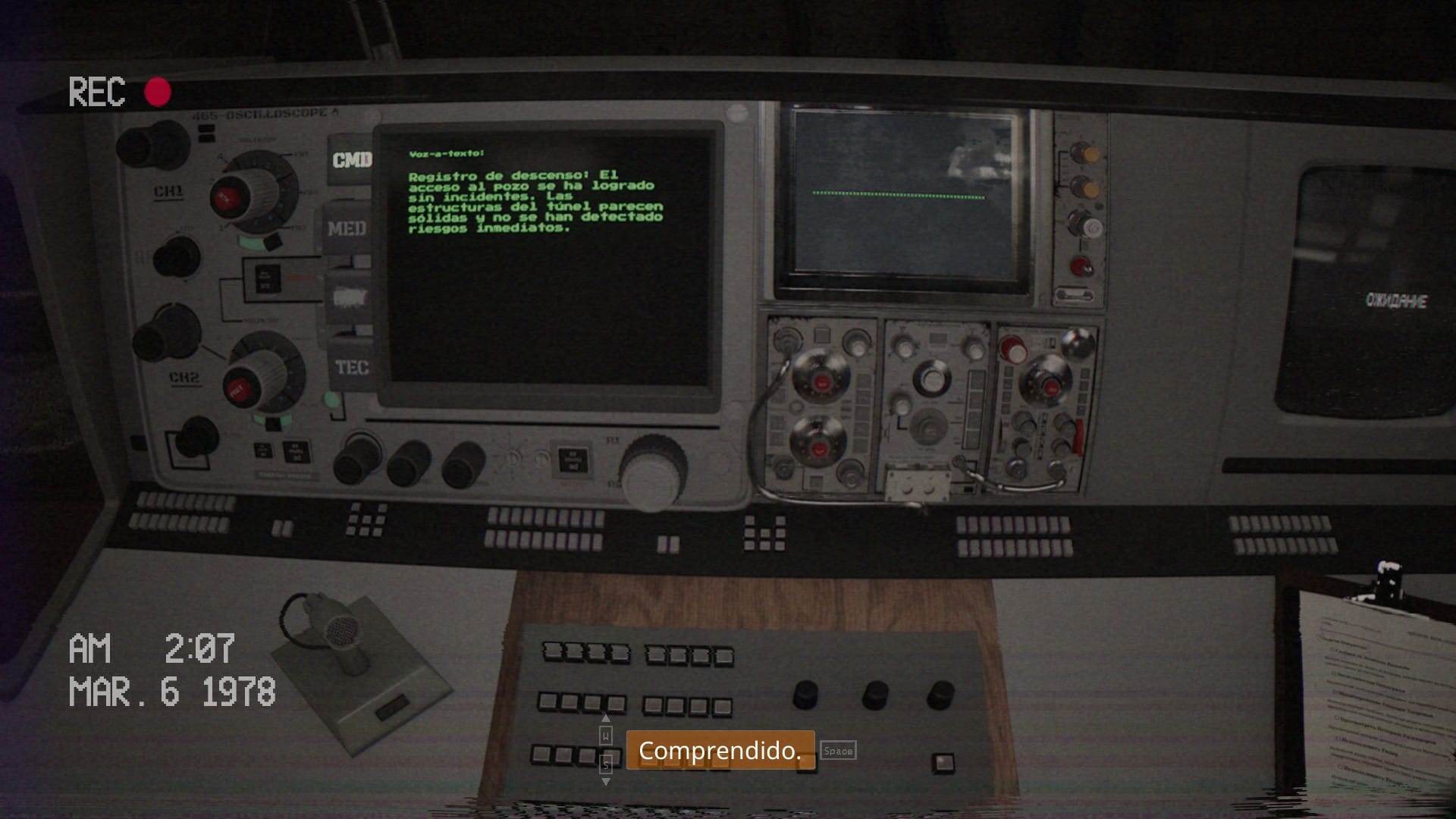
In Below, Rusted Gods by FromSouthGames, we will spend most of our time in front of an intercom. It displays four names and roles, which will flash yellow every time we have a call to answer. The communication will appear on screen, and we typically have to respond with a generic “understood” or choose from multiple options, which can trigger consequences for the health of these individuals. It turns out we are “The Operator,” sending a somewhat equipped group down a hole that we can see from the control room we’re in. This opening has a completely horrifying facade, and probably none of us would descend into it for any amount of promised monetary reward. What are they looking for? At first glance, we have no idea. In hindsight, I’d say we still don’t.
In horror video games, we are usually the protagonists. But what happens when the axis shifts and we hold the lives of a group in our hands?
Our story unfolds through these communications, in a rather analog manner, with a style reminiscent of other works like Stories Untold (No Code, 2017). While we also hear the calls, the only language is Russian, so unless you’re a language scholar, we’ll have to settle for reading. They are status reports, and their prose, which is intentionally transmitted in a non-instantaneous manner with pauses, transports us into a descent that is not only literal but also metaphorical. Little by little, our team will lose their sanity in the face of phenomena they cannot explain, and it’s up to us to lend them a hand.
Aside from answering their calls and providing responses, in our control room we can use a history of conversations in case we forget any details or need to fill in gaps, check the medical station for reports on each person’s physical and mental state (which take time to load, building suspense), use the radar to see if there’s anything nearby, the radio to pick up signals from the tunnel (good luck), and an old television that shows images from part of the descent. While we can use these devices as often as we want, using them once or twice at the right moment, when a specific event calls for it, will suffice.
This idea I mentioned at the beginning about taking care of another is very well thought out. In the desperation of moments when we don’t know exactly what’s happening and what we can do to help those in need, we’ll end up pressing buttons here and there and searching every nook for a machine we might have missed at first glance. As if that weren’t enough, even if we’ve done everything we needed to do and are just waiting for a call, these are not instantaneous. At least a few seconds will pass before our device rings and the light turns yellow, playing with our nerves.
During the game, my immersion was occasionally broken by the many dialogues that go unanswered. For example, you ask one of the characters a question or report something relevant expecting a response, and the communication cuts off. Sometimes, this creates the desired effect: you say something important, hoping for a response or a minimal reaction, and there’s just silence. You think something happened to the person you’re talking to, or that they didn’t know how to react to the information. However, when this happens several times, you understand it’s a normal type of response, and it feels strange, as if something is missing. There are also some inconsistencies in the generic responses you can give, assuming a message from a group member, with somewhat incongruous wording (it seems the game was first written in English and then translated to Spanish, or there are just simple writing errors).
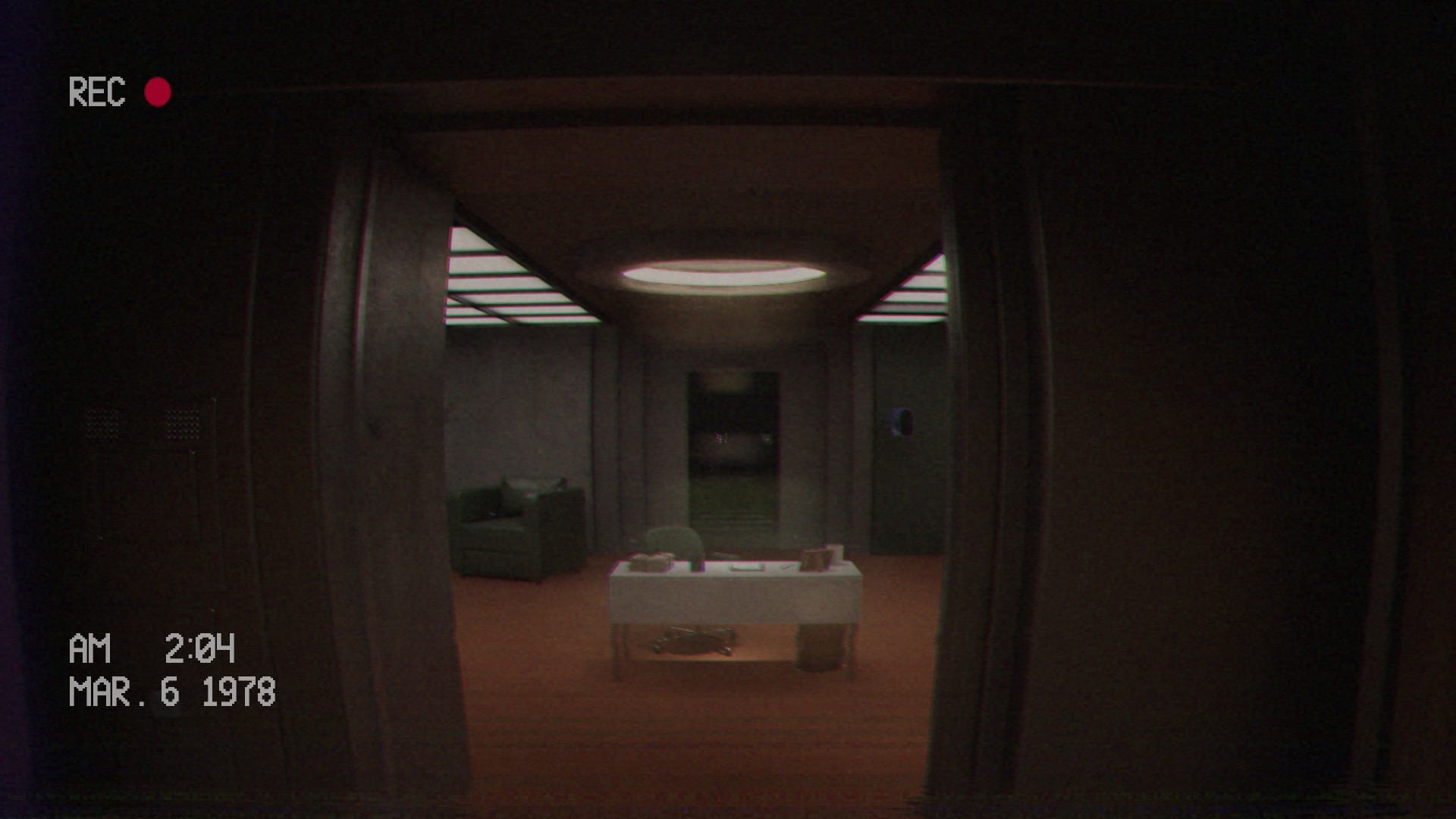
Returning to the group itself, we don’t know these four people. We’ve never seen their faces. They have a first name, but it’s more likely we’ll remember them by their role in the expedition. As they progress, we start to sense their personalities and why they react the way they do. I want to help them, but at the same time, I exist in a space of ambiguities. I don’t have a name either; I’m a role. I operate. The work isn’t spoken in Russian by mere coincidence; it’s set against a backdrop of Soviet architecture and iconography. Hanging paintings venerate the life of the worker, but, as always, it’s a group of poor fools doing the hard and dangerous work. There are references to an “Administration,” which we’ll never fully know, but with these minimal clues and others hidden in the scenery, you’ll get a good idea of what’s happening behind the scenes.
We don’t know these four people. We’ve never seen their faces. They have a first name, but it’s more likely we’ll remember them by their role in the expedition. As they progress, we start to sense their personalities.
There’s something very interesting and disturbing about that terrible thing we cannot see. Just like when we read a horror story, the lines in front of us direct and delimit, but it’s our minds that create the images and fill in the gaps. A significant part of experiencing Below, Rusted Gods is joining this game, testing the tension between our empathetic nature and sitting comfortably as an observer. The threat (or threats?) our group faces is one that cannot be fully described, of a Lovecraftian nature.
But be careful. In the previous paragraph, I said “a significant part” because I somewhat misled you. While the work plays a lot with everything you don’t see and have to imagine based on others, that doesn’t mean we won’t have our own explorations. Our control room is connected to a living room, which in turn connects to a bathroom, a staircase leading to an attic, an elevator, and, well, some surprises. Yes, we’ll have to roll up our sleeves and do our part. Of course, the path won’t be clear.
Aside from the occasional well-placed jump scare, we won’t encounter cheap tricks or cheap scares. In fact, there’s an intelligent contrast between everything I mentioned earlier (not being able to see the horror that others see) and the fact that, practically, everything terrifying you encounter, you’ll have to face it head-on, almost touching it. Best of luck.
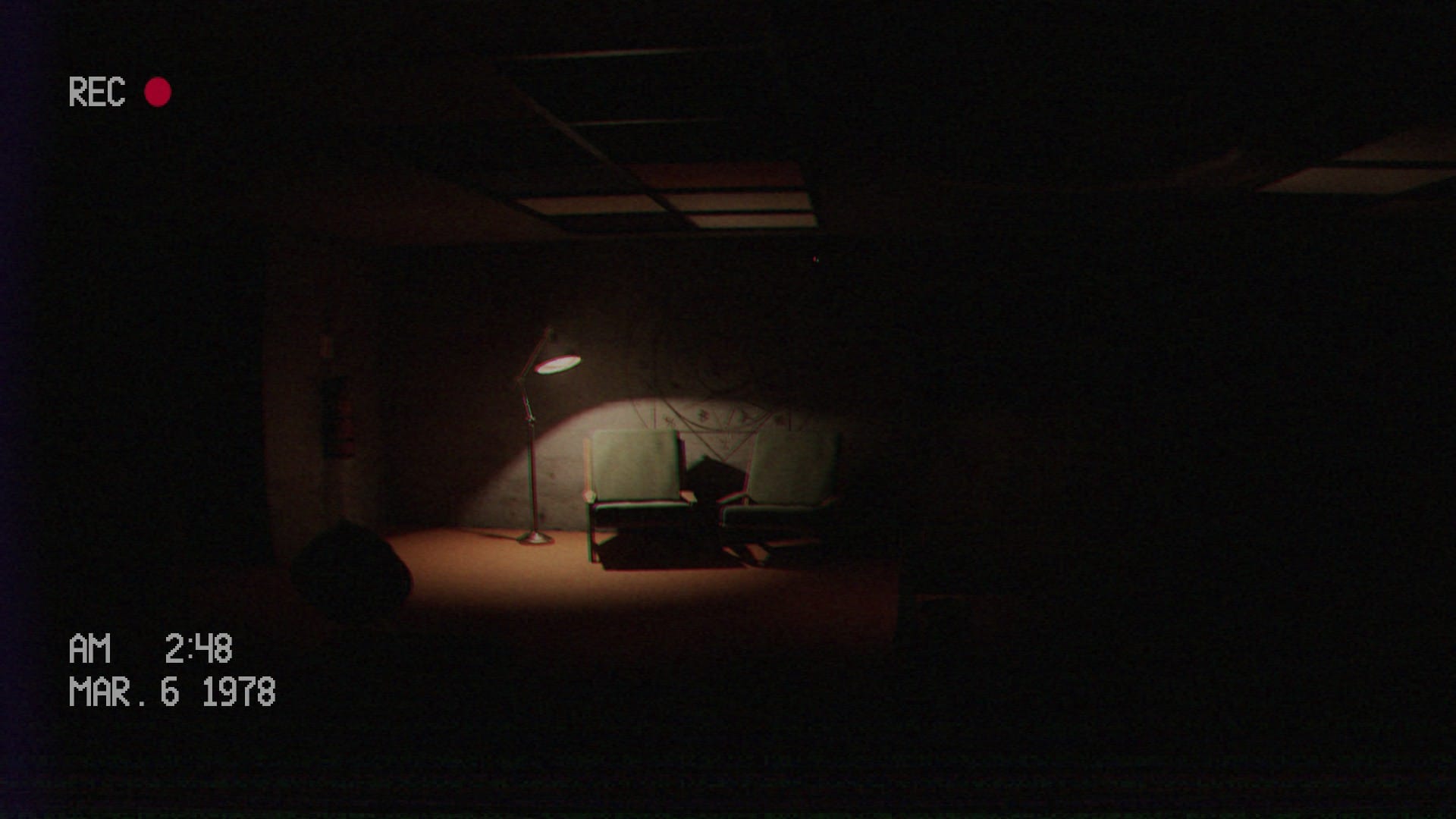
I stumbled upon Below, Rusted Gods almost by chance, through a recommended search, and I was very pleased with what was offered. I feel it’s a work that hasn’t been talked about much locally, at least in the circles and media I navigate, and it flew under the radar. Don’t make the same mistake. My only recommendation is, if you can, play it in one sitting (it may take you about three hours if you don’t get too lost) for the experience to be complete. And in complete darkness, of course.
You can find Below, Rusted Gods on its Steam page and follow FromSouthGames on Twitter/X.
If you have a video game made in Argentina and want us to write about it, go ahead and fill out this form.
Y a cada colaborador se le paga por su trabajo. Las dos cosas dependen de los suscriptores.