“Choose Your Own Adventure” Is Now an Argentine Horror Story
A gamebook where, behind a friendly title, lurks a dark and gory imagination, as creative as it is lethal.

A gamebook where, behind a friendly title, lurks a dark and gory imagination, as creative as it is lethal.
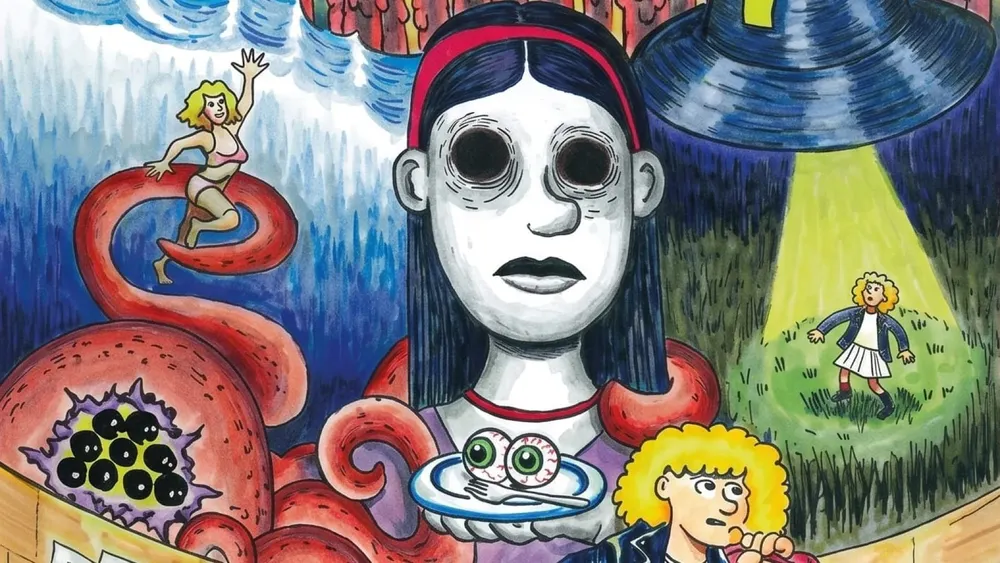
"Don't call me Tami" could be an urban legend: the forbidden title from the "Choose Your Own Adventure" collection, the one your bookseller has never heard of but your friend's older cousin swears he read in a library in a coastal town one gray afternoon. A gamebook where, behind a friendly title, lurks a dark and gory imagination, as creative as it is lethal. A story that starts simple and relatable, at the beginning of a journey to the coast from the Retiro terminal, but soon becomes murky and swirls like a sewer during a storm that we know will flood everything.
Luckily for us, "Don't call me Tami" is very real, Argentine, and perhaps the start of a very interesting movement.
In "The reader, the text, the poem," Louise M. Rosenblatt proposes that "the basic paradigm of the reading process consists of responding to cues: adopting an efferent or aesthetic stance, developing a tentative framework or guiding principle of organization, the emergence of expectations that influence the selection and synthesis of subsequent responses, and the fulfillment or reinforcement of those expectations, or their frustration, which leads to a revision of the framework and sometimes, if necessary, to re-reading". As a good horror work, "Don't call me Tami" (by María Eugenia Alcatena, Melisa Martí, and Florencia Miranda) knows a lot about expectation and plays with it in more than one sense, starting with the most obvious: the aesthetic homage to the legendary series that many millennials (myself included) began reading with. The recreation is so vivid that it provokes an immediate nostalgic response, the warmth of the memory of those adventures that many of us cherish and the invitation to go back to playing, something that (count me out here) many adults deprive themselves of.
A story that starts simple and relatable, at the beginning of a journey to the coast from the Retiro terminal, but soon becomes murky.
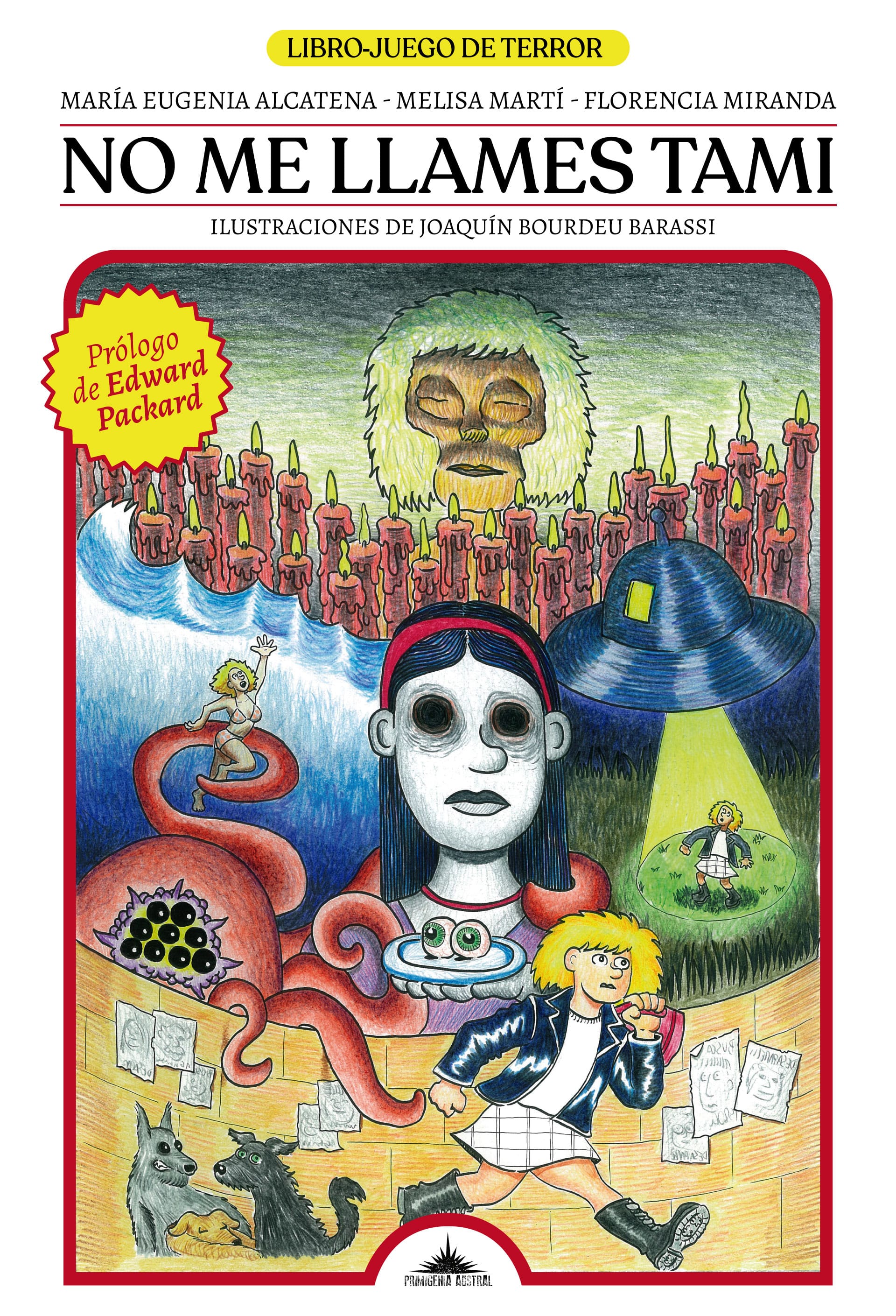
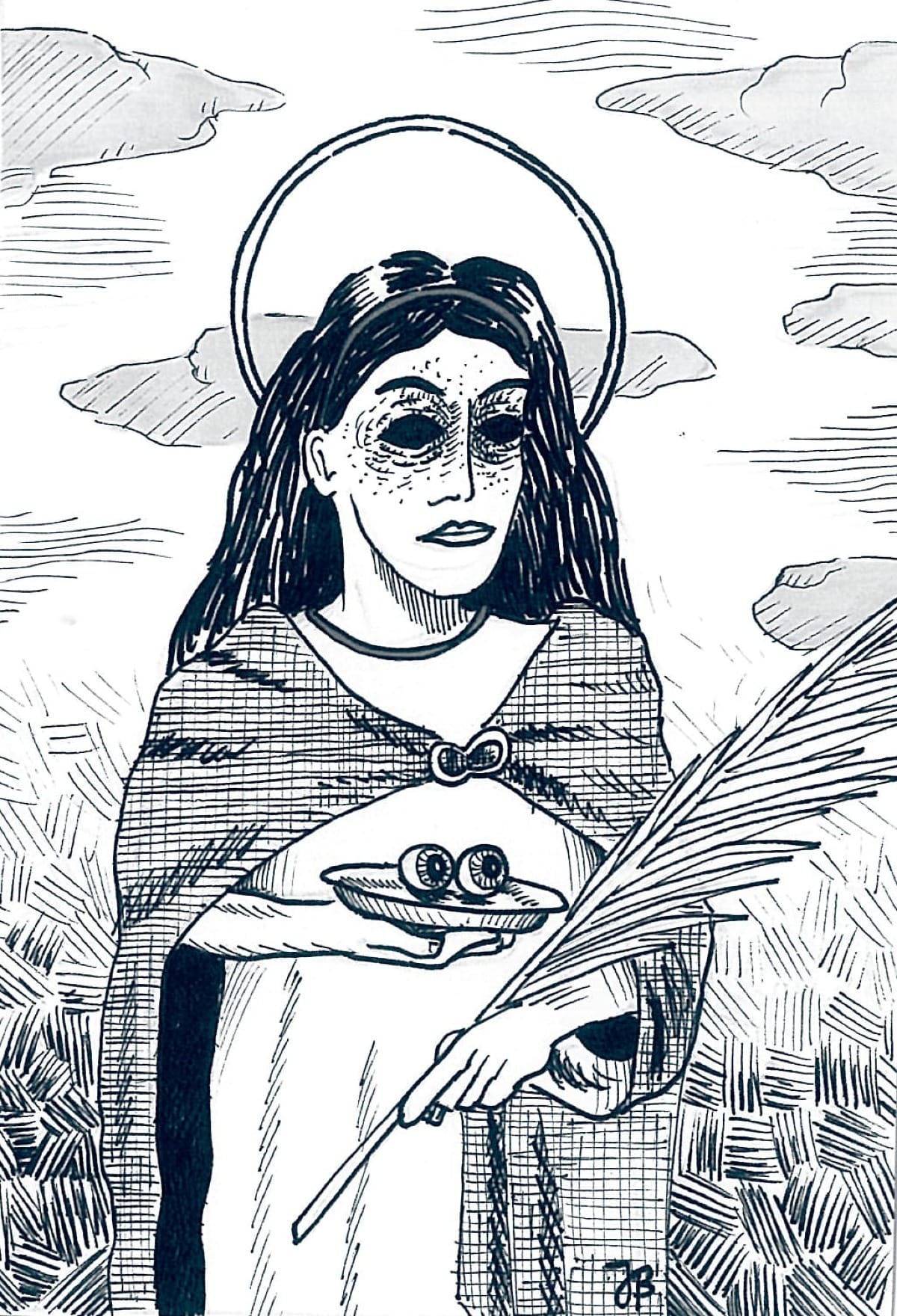
But in this time machine we are about to open, not everything is innocent. In the collage of the cover art, among aliens, Lovecraftian tentacles, and posters of missing people, the gray face of a woman catches our attention. It's Santa Lucía de los Pajonales, the patron saint of the town our protagonist must reach to settle the inheritance of a forgotten uncle. The saint's hands offer us her plated eyes. The abyss of her empty sockets reminds us that we are no longer children and that sometimes the familiar returns distorted in sinister ways. Joaquín Bourdeu Barassi's art makes two things clear: a lot can happen to Tami. And almost none of it is good.
Her first conflict is that the micro waiting to take her to Santa Lucía is a piece of junk. What I love most about Argentine fiction is that delightful tradition of embodying mundane heroes, everyday women with problems just like ours. It happens in El Eternauta, it happens in Okupas, and it’s the charm of Los simuladores. Tami is not a grandiose protagonist. She's a bit clumsy and doesn't know how to lie. She has some courage, a bit of embarrassment, and quite a bit of survival instinct. But above all, she lacks money, like almost everyone in life. The supposed inheritance waiting for her in Santa Lucía, more than a call to adventure, is a desperate grasp... that might drag her down to the depths. So think carefully about whether you’re going to hop on that bus or if you should look for a plan B. "Don't call me Tami" doesn't take the easy route of putting us right in the action. Like a good Dungeon Master, it opens paths from the start. And boy, is it easy to get lost in this book. In fact, what’s not easy at all is reaching Santa Lucía. There are at least three endings that happen far from our destination in the Partido de La Costa, all gruesome. But let's not forget our superpower: going back (or to the beginning) and trying another path.
There’s a strange pleasure in traversing these branching paths and contrasting our growing quantum knowledge of Tami's possible destinations with her fresh and daring innocence as she takes a path at a crossroads we've already traveled. A desire to whisper to her, "If only you knew what you just escaped..." when this time we dodge danger. Or a hint of bittersweet cruelty when we go back to play after a "happy" ending that’s hard to replicate (there are about 3 out of 28, the odds are not in our favor). "Don't call me Tami" handles horror tropes very well. It knows when to surprise with a clinical jumpscare and when to subvert our expectations. The number of monster and danger archetypes involved in this multi-story is such that any element can become a nightmare scenario, from a noble chicken sandwich to a treacherous bus bathroom. Above all, the narration balances comfortably between humor and suspense, on par with the Peele and Cregger of this golden age of horror we’ve been enjoying. To put it plainly, reading "Don't call me Tami" is like laughing your head off only to be scared stiff, in a loop until you die in a way as macabre as it is clever.
"Don't call me Tami" handles horror tropes very well. It knows when to surprise with a clinical jumpscare and when to subvert our expectations.
Or not. Dying isn’t necessarily the worst thing that can happen to us. There are much more chilling things. And other endings that are very realistic and emotional. I’ll include a line from one of the ones that surprised and hit me the most: "Something in you broke forever. You can only wish they never let you out again." This gamebook isn’t just for adults, but it is adult.
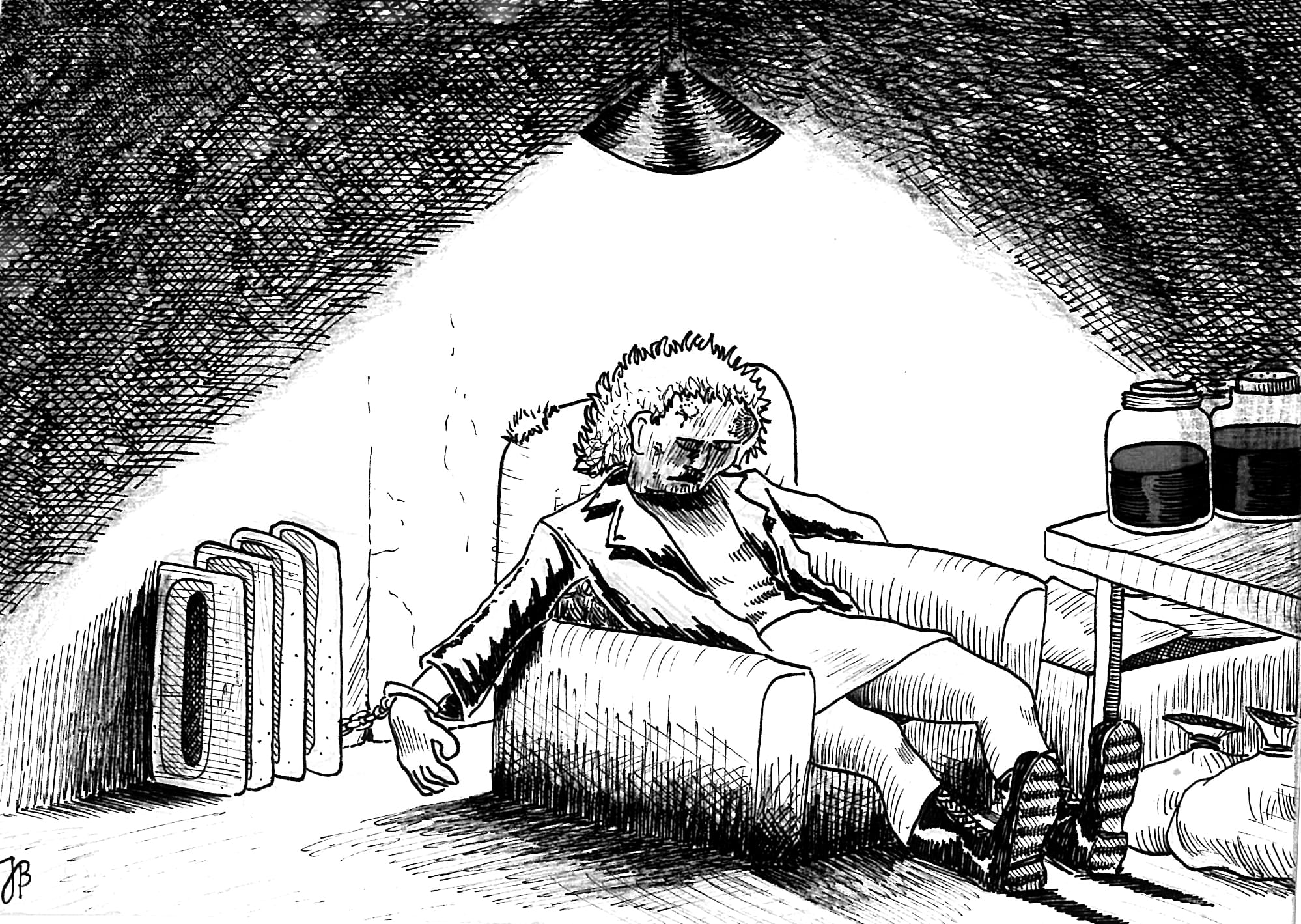
My favorite character is "Poli," Tami's judgmental brother who constantly flits through her thoughts in an endless mental fight. Half a castrating gaze, half a punching bag, "Poli" embodies the lore, an iceberg we explore with each re-reading. In some paths, he’s barely mentioned. In others, he becomes totally central (including what is the best plot twist in the book, which of course I won’t spoil).
"Don't call me Tami" isn’t an urban legend, but it was born on the internet and was built from the ground up. It started as an interactive blog (now inaccessible) with a companion Facebook page. Then it was self-published in 2017 and experienced a spark of glory in various circles of the role-playing and comic world, selling out its humble initial print run. Now it returns to us as a memory we thought forgotten, to scare and entertain us once again, in partnership with Primigenia Austral and kicking off its collection of gamebooks. Is this the Argentine revival of a genre that seemed confined to the last good decade of the world? We still don’t know, but we can already say that a second gamebook set in the universe of Pampa Primigenia is in development, meaning a crossover with role-playing, which makes a lot of sense since gamebooks are very much like playing role-playing solo.
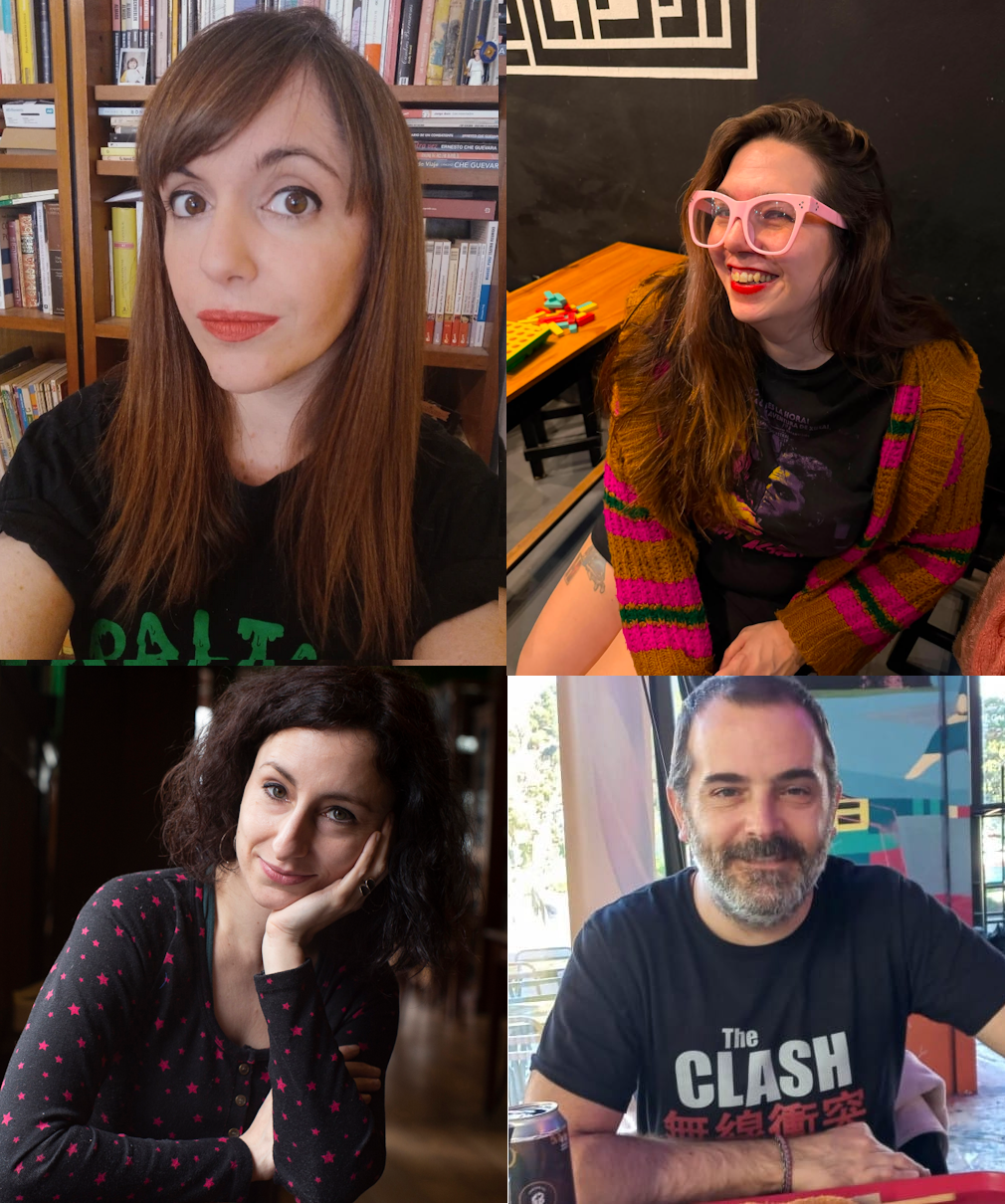
If you want to know more and get the book, "Don't call me Tami" will be presented this Saturday, August 29, at the Biblioteca Popular Ansible, located in Café Artigas, with a talk with its authors and illustrator, role-playing tables set in the world of the gamebook, and other surprises from Primigenia Austral. We’ll see you there or, why not, vacationing in Santa Lucía. What could go wrong?
Y a cada colaborador se le paga por su trabajo. Las dos cosas dependen de los suscriptores.