Chronicle of the 2026 Pilgrimage to Luján: Faith, Blisters and Crisis
The Pilgrimage to Luján: sixty kilometers of physical sacrifice and a search for hope.

The Pilgrimage to Luján: sixty kilometers of physical sacrifice and a search for hope.
—Someone with a job, someone with money. Just a normal guy.
Two young women walk with a group from a parish while chatting animatedly about what they're asking the Virgin for: a boyfriend. There are still a few blocks to go before the Basilica of Luján and it's already past 2 a.m.; legs feel heavy, and the state of everyone's feet contrasts with the general mood, a kind of cheerful calm. The night is slightly cool, and by this hour the wind has dried the rain off the pilgrims' clothes, leaving behind, as the rain's aftertaste, a pervasive smell of damp dish towel.
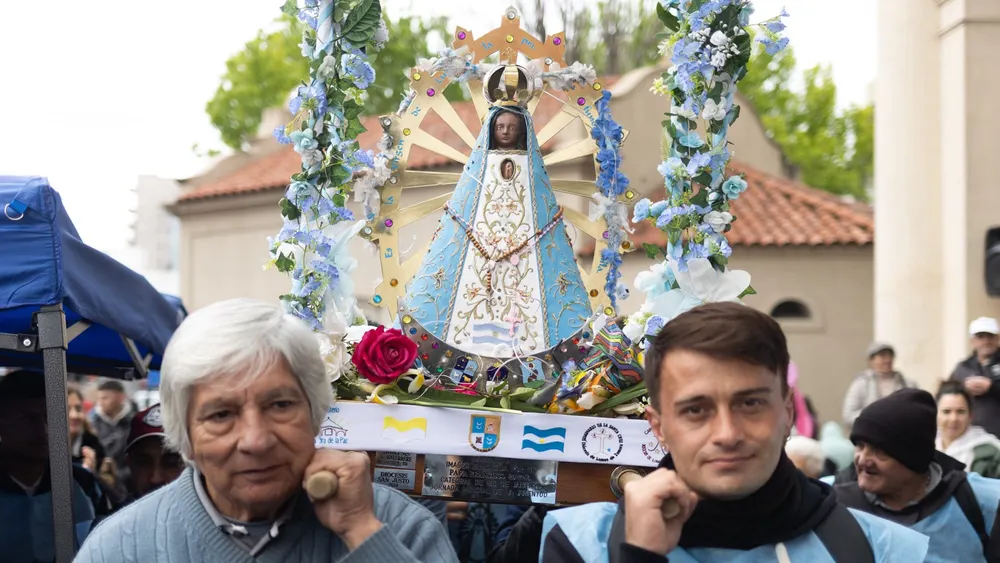
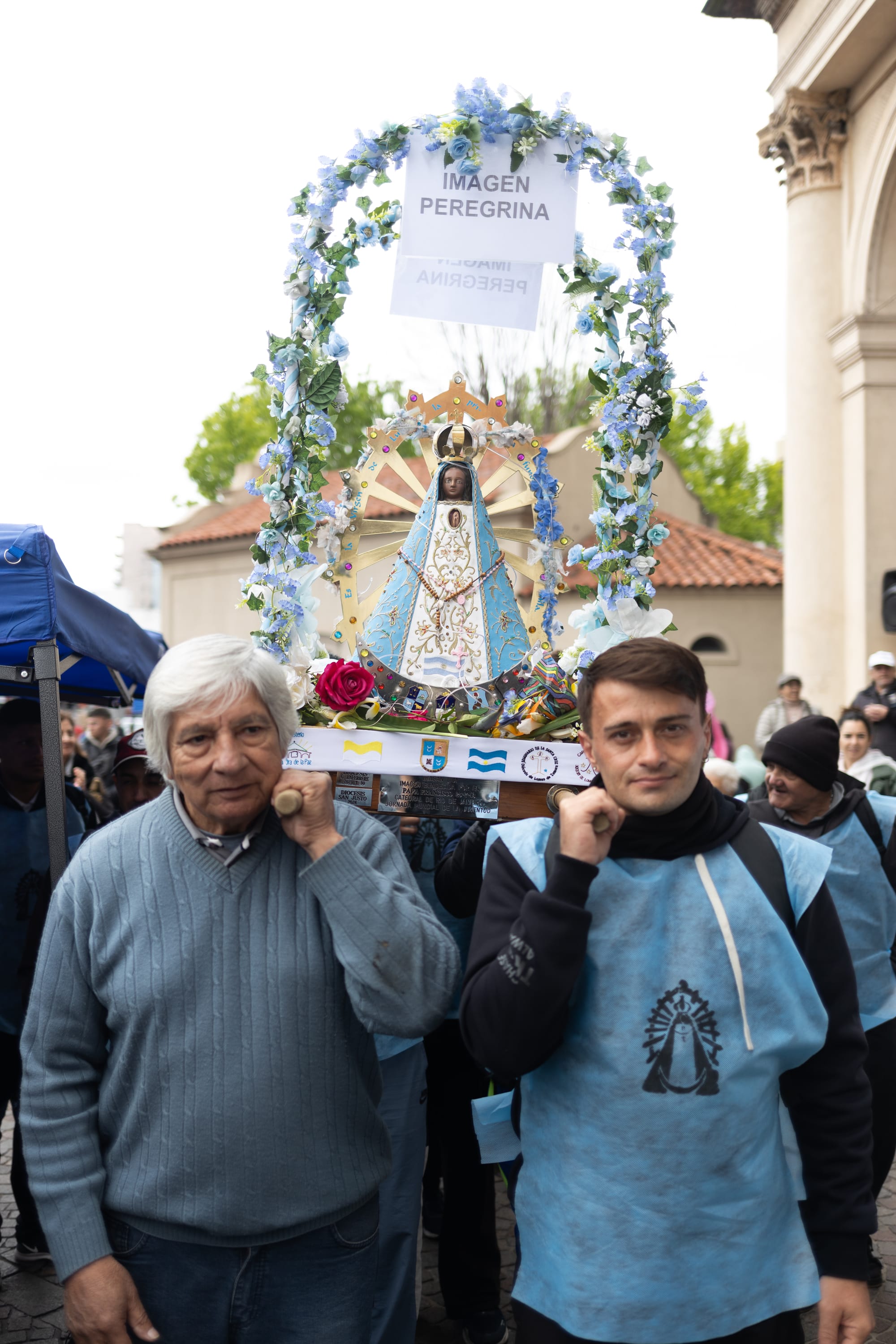
A blonde woman in a blue vest pulls a light-blue metal-pipe cart carrying an image of the Virgin protected by clear plastic. She's got a microphone in hand and doesn't hit a single note of the song she's singing. Some stifled laughter rises from the limping crowd and she ends up laughing too; she came to lift people's spirits and she pulled it off. The woman decides to stop singing and reminds her parish that it's not much farther, that they're almost there, that they're very close to the goal. All that can be made out of the Basilica are two red lights. Some computer-printed signs announce 11, 7, 5 blocks to go.
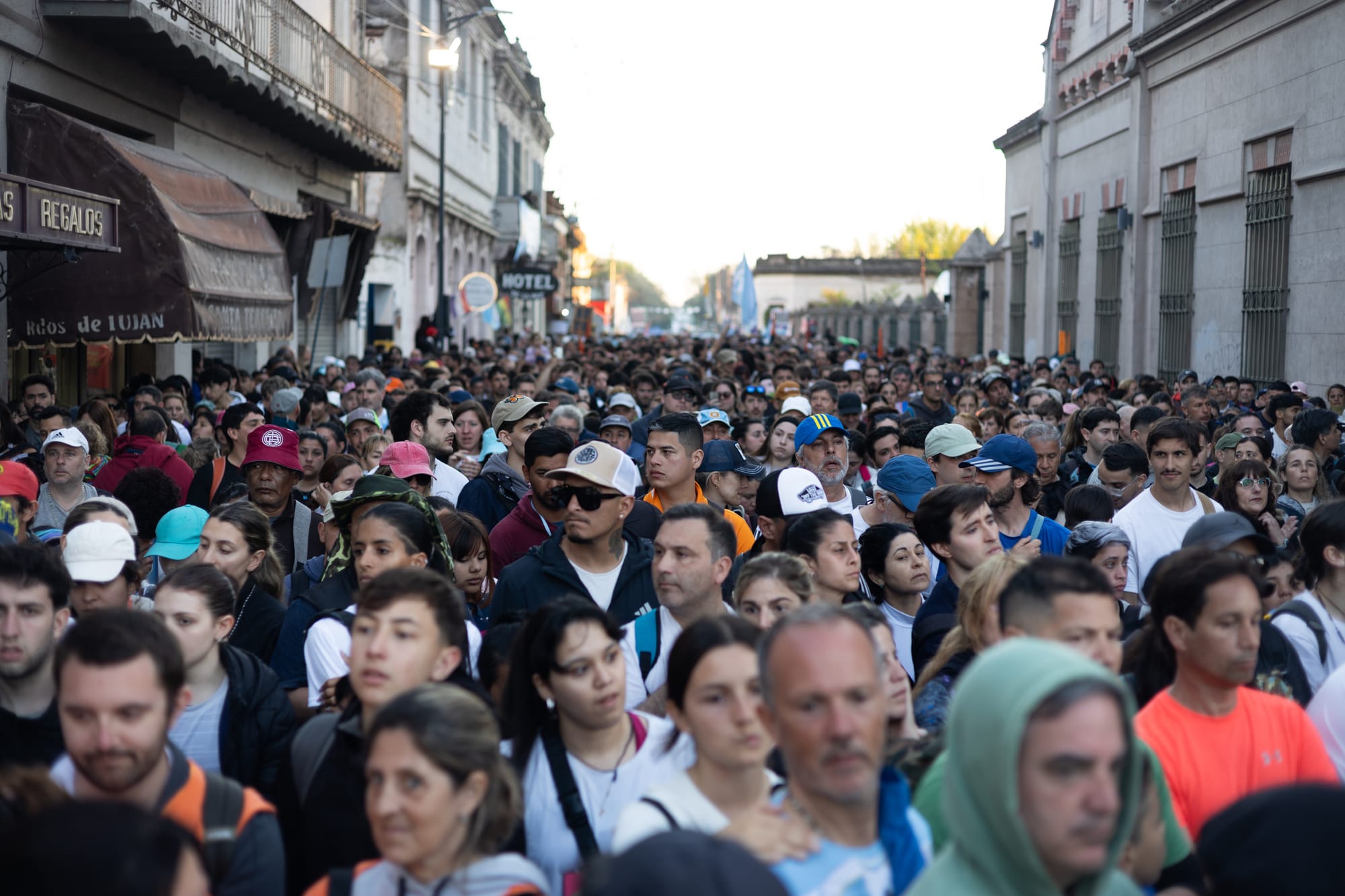
Some set out from Liniers and have walked around 60 kilometers; others joined in Morón, in Merlo, or at the last stop, General Rodríguez, 17 kilometers from Luján. And some, like Romina and Facundo, mother and son, left Friday night from Lomas de Zamora and covered more than 70 kilometers.
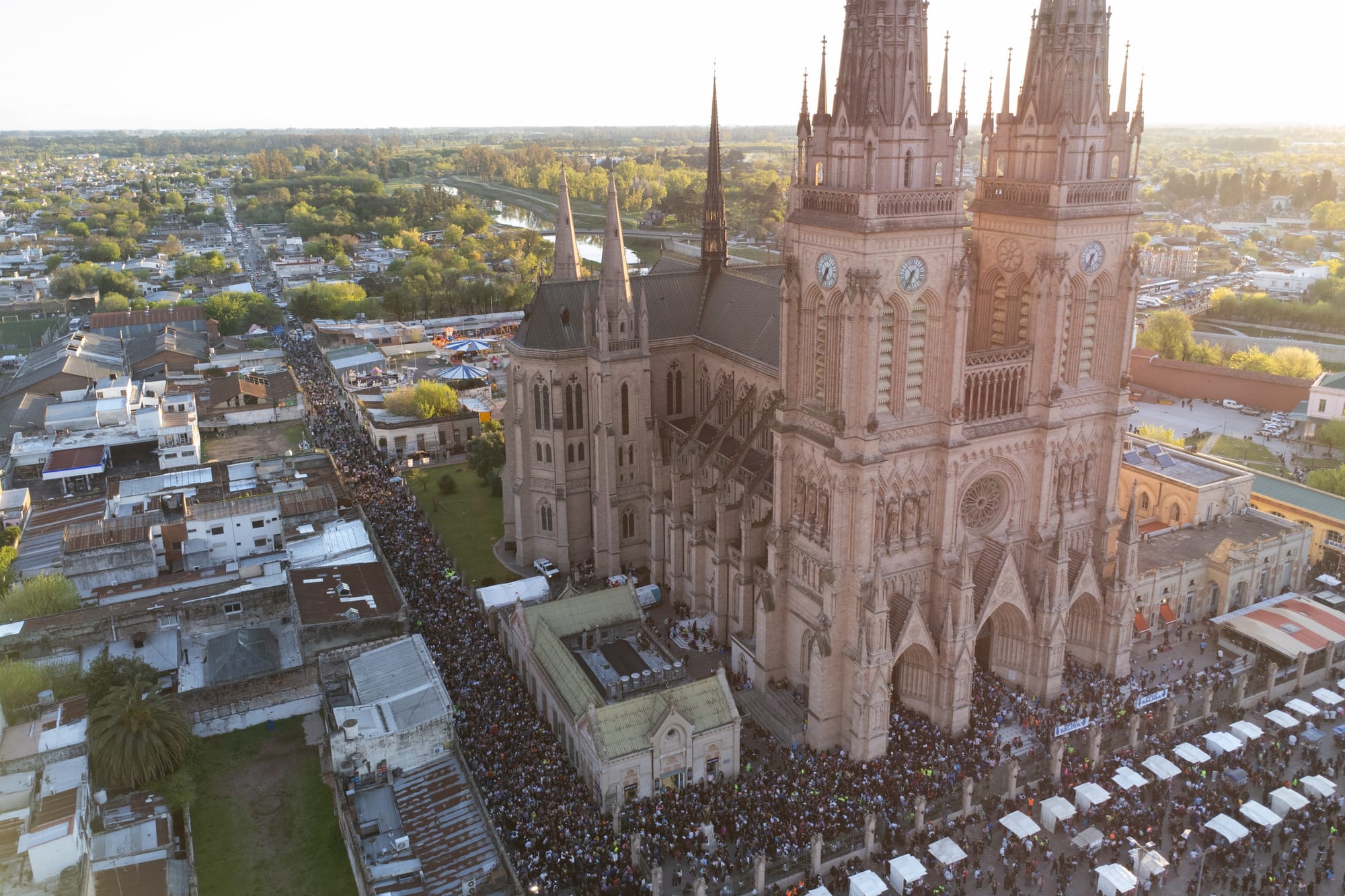
Sunday's small hours are a human anthill of the faithful and believers who asked the Virgin for many things, among them, to help them finish the journey. The beautiful Basilica of Luján has its plaza packed with people sitting down, the ground covered in socks, sneakers and backpacks. A young woman faints into a man's arms, between two stalls selling rosaries, holy cards, bracelets, medals and miniatures. Two women immediately come over and help lay her down on the ground. Nearby, very nearby, there's a medical assistance team. That night the Basilica of Luján has everything you could need and more; it has the satisfaction, for me and for many others, of having once again managed to walk 60 kilometers in one of the biggest popular gatherings in Argentina.
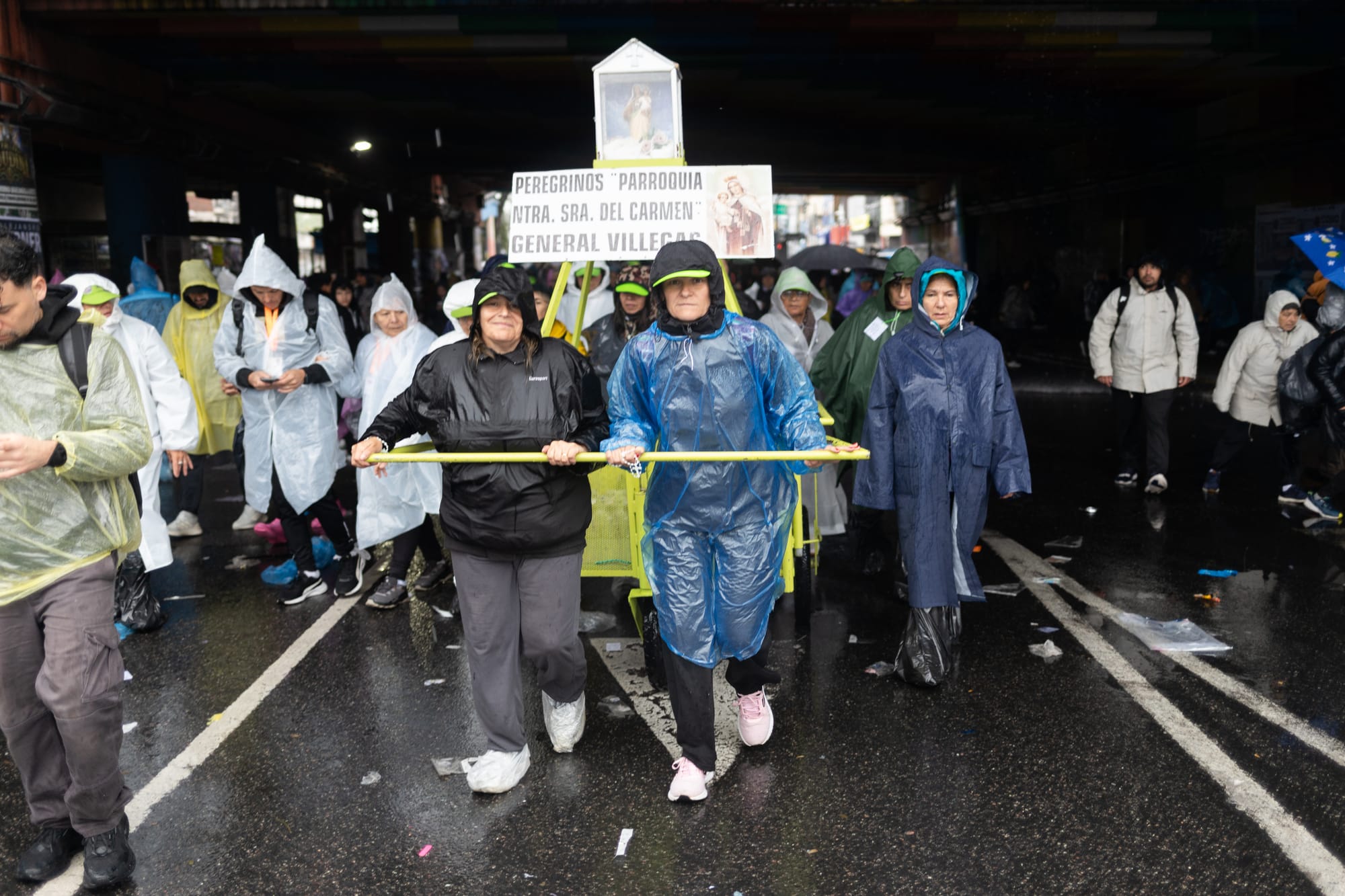
According to the Luján municipality, around 1 million people arrived for the 52nd Youth Pilgrimage to Luján. According to Buenos Aires Province Security Minister Javier Alonso, this year set an all-time attendance record, with 2,700,000 people. The first Youth Pilgrimage to Luján also blew past the organizers' estimates: they expected around 6,000 people and ended up with close to 30,000.
According to the Luján municipality, around 1 million people arrived for the 52nd Youth Pilgrimage to Luján.
The first edition of the Pilgrimage took place on October 25, 1975, with the aim of offering young people an alternative path to transform reality, in the face of the political and social violence that marked those years. One of its leading figures was Father Rafael Tello, a disciple of Father Mugica (murdered the year before) and a promoter of the Theology of the People. Just a few years earlier, the Second Vatican Council (1962-1965) had pushed through a number of ecclesiastical reforms, giving its members a more horizontal structure. There was a very well-oiled dialogue with a certain sector of the Church influenced by Liberation Theology, the Latin American current that intensified the ideas of the Second Vatican Council in response to the continent's poverty and injustice.
The book Seguimos caminando. La peregrinación juvenil a Luján. Apuntes para un relato histórico-pastoral (2004) includes this testimony from a participant: “(...) even though the motivations were many and varied, we were all walking together, or as they'd say later, we were all mixed up: kids from the neighborhoods, the schools, the parishes, the priests and the nuns, the political activists, the ones who went to see what was going on, and so many others; all called by the same Mother (…) The reality was that we young people were deciding to walk, to get moving.” That first edition had a very explicit political content, even among its organizers; even the motto carried a stamp that captures the spirit of those years: “Youth makes pilgrimage to Luján for the Homeland.”
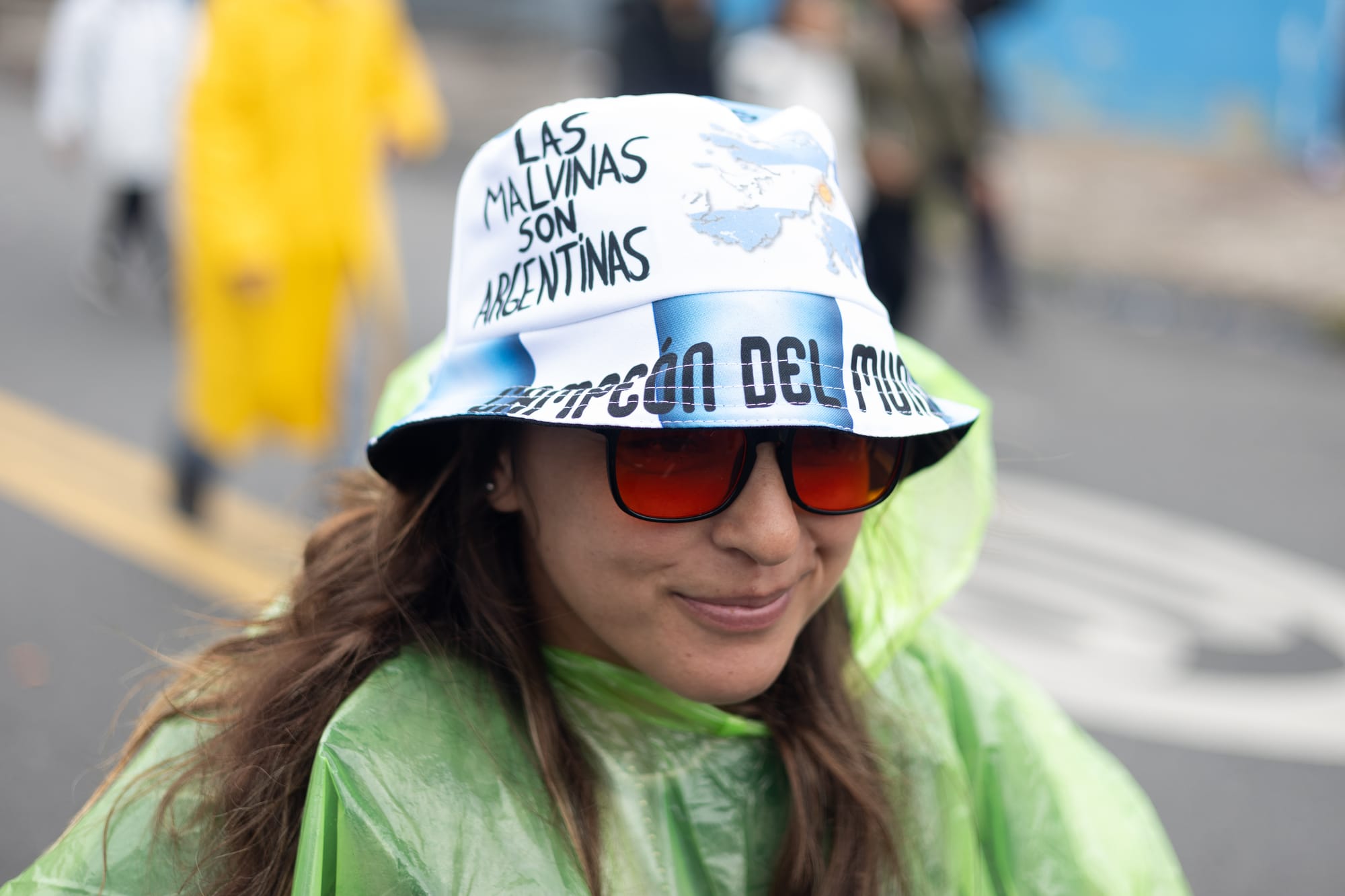
This year's motto, in 2026, was “Mother, in your embrace we recognize each other as brothers and sisters,” but the day was full of demands for sovereignty over the Malvinas: people wearing T-shirts with that flag that was smuggled into the 2-1 Argentina vs. England game. Caps. Stickers. Printed posters stuck up on the streets. Shops selling Virgin of Luján T-shirts and Malvinas T-shirts. A hint, perhaps, of what April 2, 2027 will mean for the people?
Brazilian geographer Zeny Rosendahl argues that a shrine's power doesn't come from outside: it's the pilgrims themselves who project it onto the place. In other words, the procession goes on inside. The image of Church orthodoxy gets displaced when, along the way, devotion to the Virgin fits seamlessly with cans of beer, cigarettes smoked on the go, and speakers on the parish carts alternating between Christian songs and cumbia villera. Special (and entirely expected) mention goes to the musical accompaniment of Los Redondos throughout the whole route; a secular phenomenon that shares mysticism and pilgrimage with the Catholic Church.
From Liniers to Luján it's, according to Google Maps, 57.4 km, which works out to 12 hours and 58 minutes of walking. That route is affected by two factors: the meeting point for the support group of the organization or parish you're walking with, where the distance from the official route (Av. Rivadavia, Av. Juan Domingo Perón, Av. Bartolomé Mitre, Av. Francisco Piovano, Intendente Colobraro, Boulevard Bernardo de Irigoyen, Ruta 7 and San Martín) varies depending on the stop; and how long the stops last. There are four points along the way where it's recommended to stop, eat something, use the bathroom and keep going. Like any experience in this century, nothing seems new, even before you live it: dozens of videos on social media show the route, warn you, and advise on the measures needed to get past every hurdle as smoothly as possible.
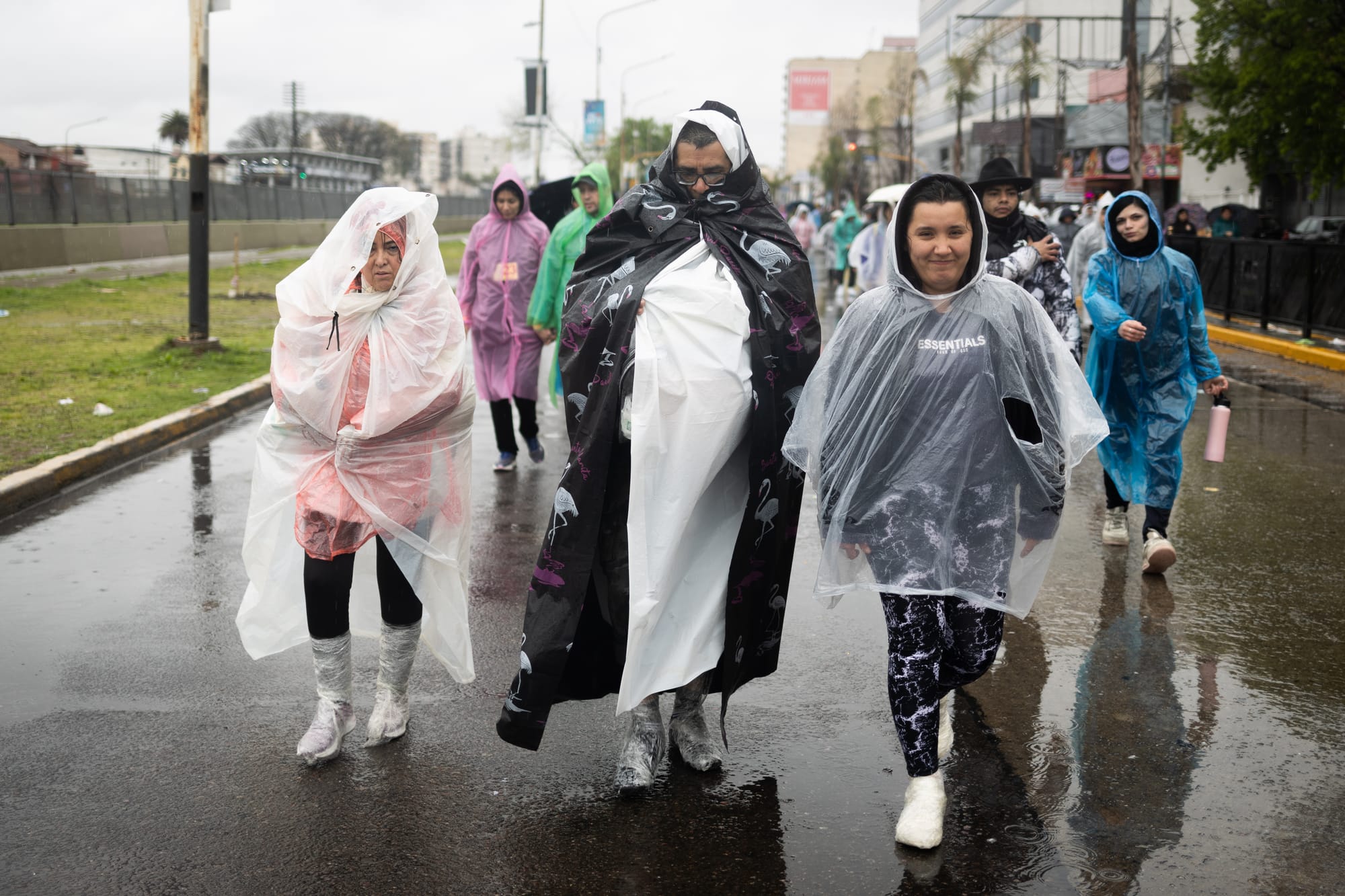
You can get an idea, just an idea, of what walking 60 kilometers in less than a day involves and the toll it most commonly takes: blisters on your feet, for which they recommend taping your feet with hypoallergenic tape, rubbing on Vaseline and changing socks two or three times; muscle fatigue, so it's a good idea to bring Diclofenac gel or pills, or get a massage at a first-aid station; the most “old and broken-in” sneakers you own (no breaking in new shoes); comfortable, snug clothing to avoid chafing. A cap, sunglasses, sunscreen and, thanks to the National Weather Service, for this march it was possible to know that rain was a given, so you had to pack a raincoat too.
Special mention goes to the musical accompaniment of Los Redondos throughout the whole route; a secular phenomenon that shares mysticism and pilgrimage with the Catholic Church.
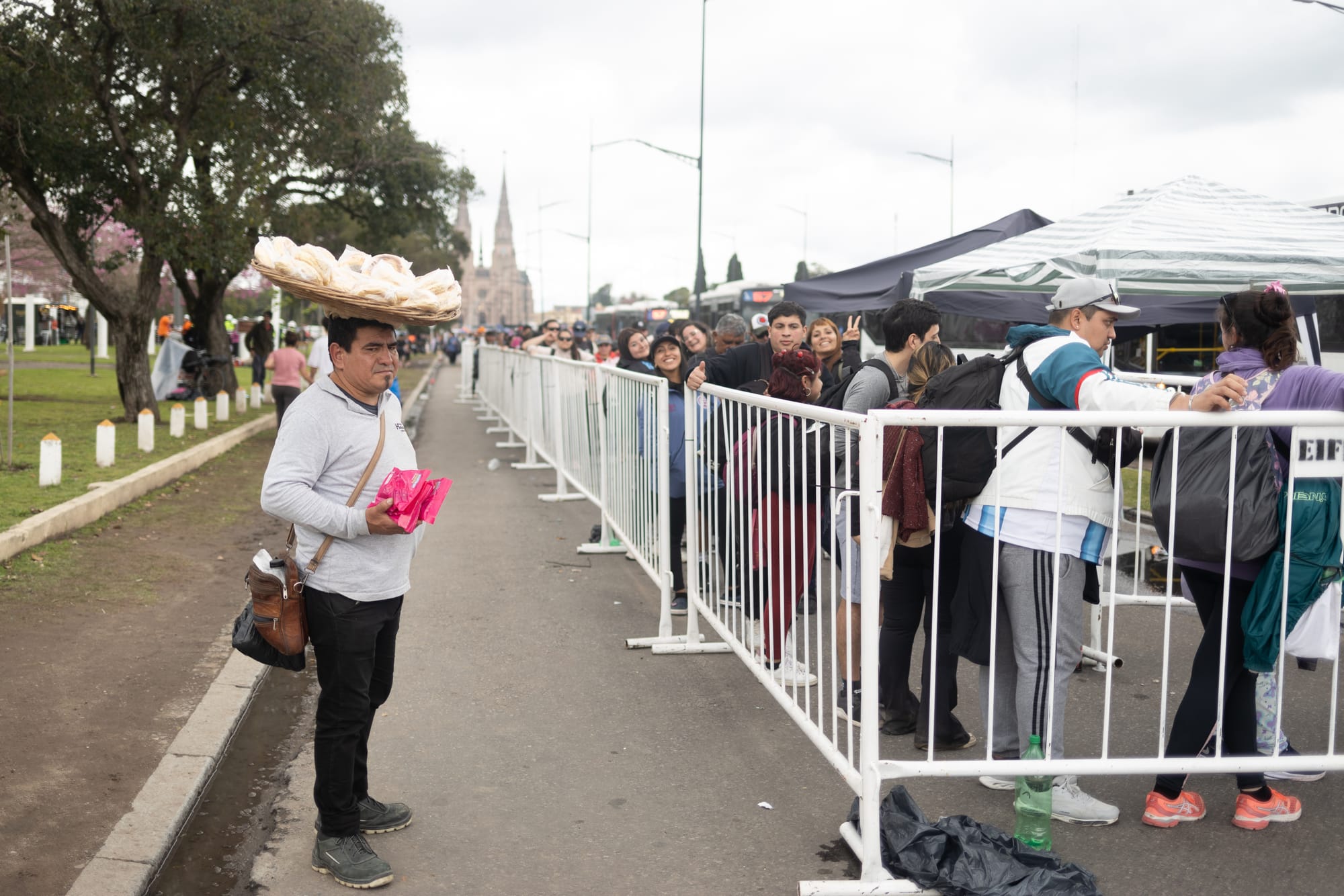
The Instagram, YouTube and TikTok videos also warned that anything not strictly necessary could be found along the way, which is full of street vendors offering whatever you might need: packs of socks for three thousand pesos, water for a thousand, 2 sports drinks for two thousand, a stand that charges phones for three thousand pesos, Virgin T-shirts for between three and ten thousand, a house's bathroom for a thousand pesos, sodas for two thousand, coffee and hot water for a thousand pesos, protein bars, sandwiches, a Pope Leo XIV flag, a Messi flag and an Indio flag, empanadas, Band-Aids, choripanes, a flag of Indio with Cristina, rosaries, holy cards, croissants, fried chicken.
The smartwatch says that from Rivadavia and Montiel (Liniers) to the Basilica it's 78,143 steps, equivalent to 2,325 calories at an average pace of 18 minutes per kilometer. This little gadget, which has become far more widespread lately, also measures heart rate and blood pressure. An arsenal of tech devices lets you project the future and measure the present of a body and of an experience. The world has become an extremely quantifiable place, where you can constantly and precisely measure how hard your heart is pumping, at which kilometer your friend fell behind, and how many more hours of walking you've got left at this pace. In the age of the tutorial, where you can binge a batch of videos teaching you how to walk (that is, the best way to put one foot in front of the other), it seems the world is even more incomprehensible than before.
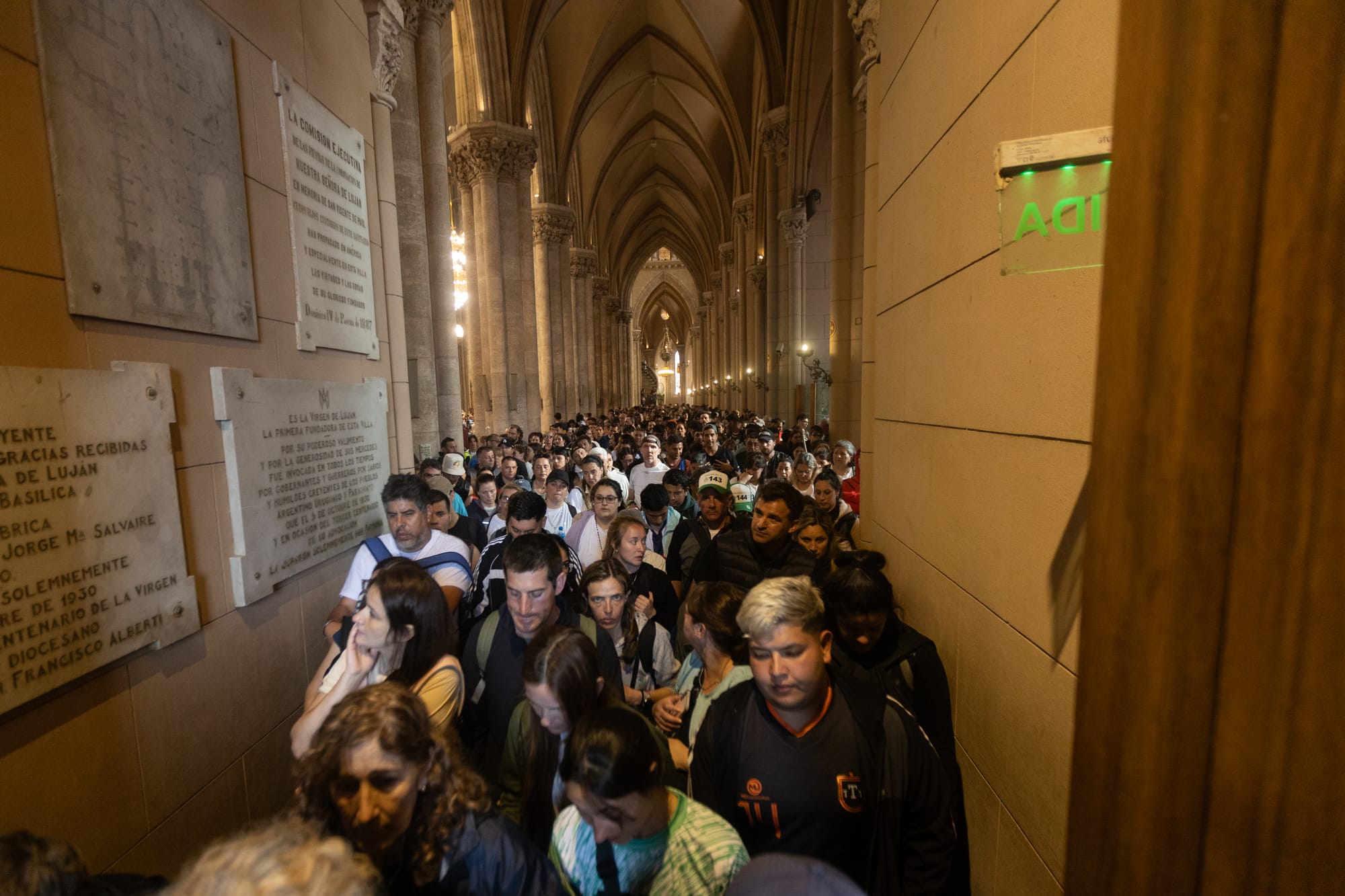
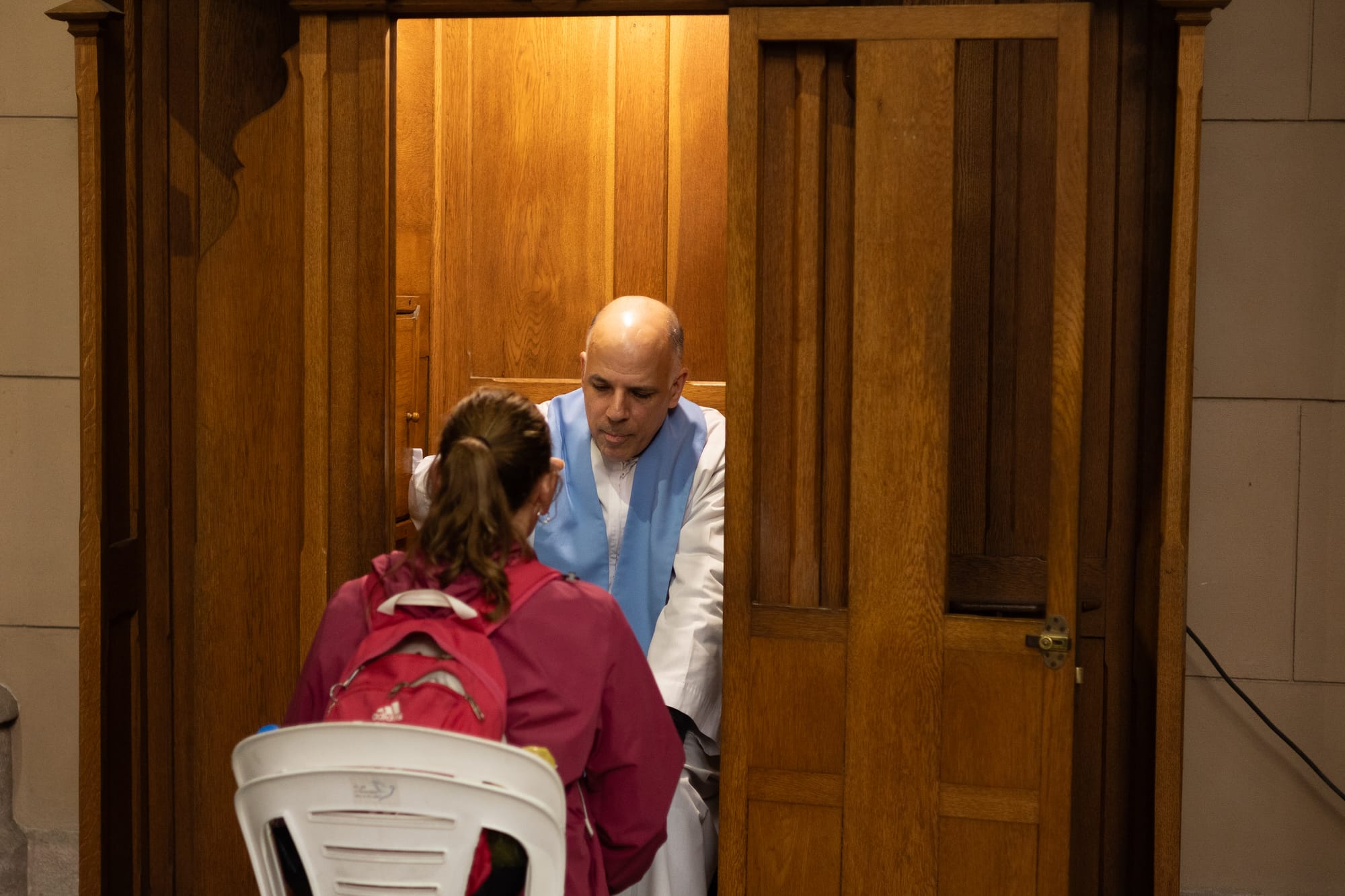
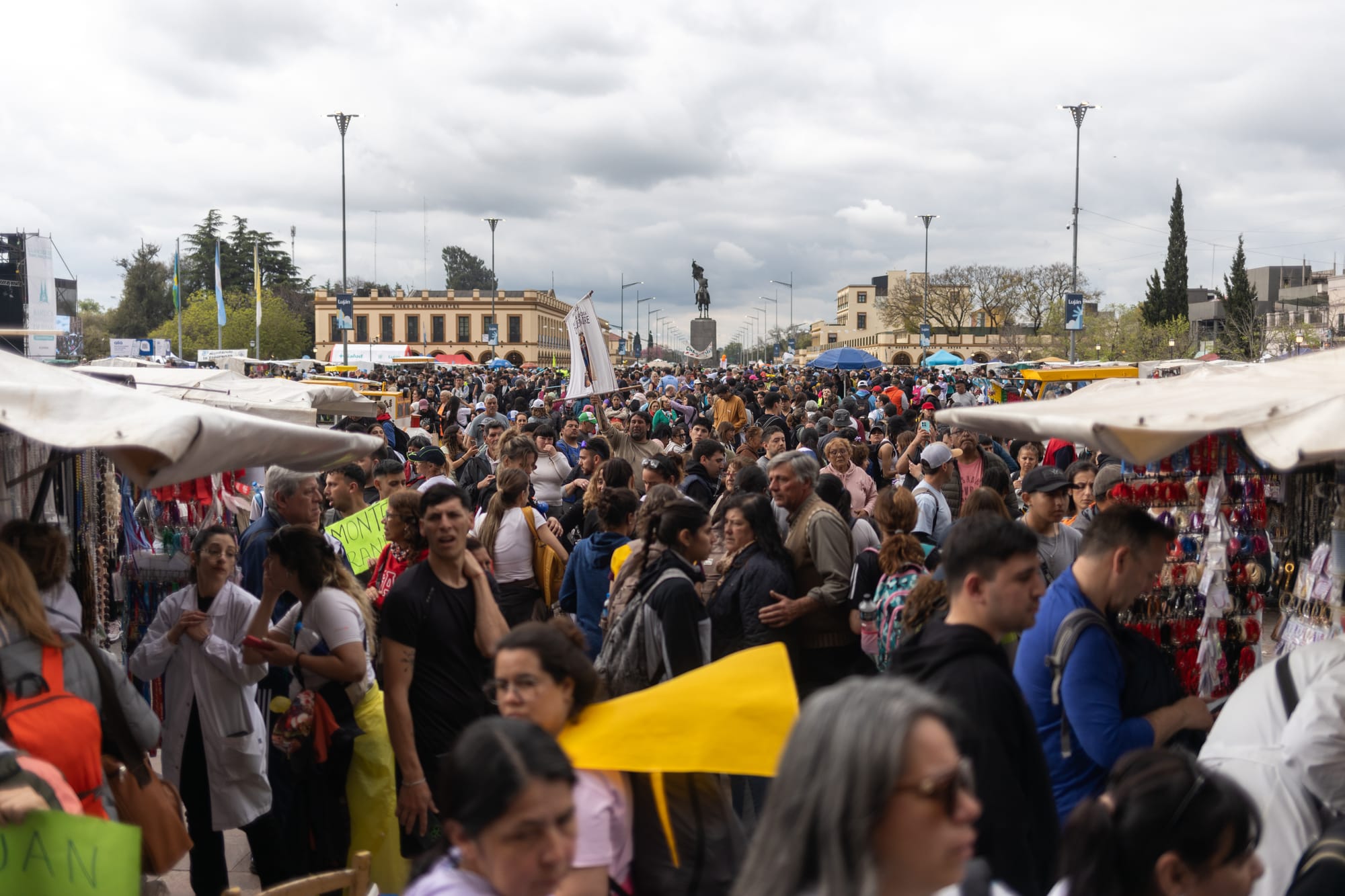
Photos: Nicolás Suárez for 421.
It's hard to know why this year's Pilgrimage seems to have set an attendance record, and there's probably no single reason. Some people have walked year after year for decades; some come back because they promised the Virgin something and she delivered; some feel, this year, an urgent need for something to change; some are suffering and asking for help. Unemployment and health problems, two defining marks of the present in a country battered by recession and funding cuts, cut through many households, and a good share of the petitions go along those lines.
That's the case with Maxi, who set out from Pilar at seven in the evening along Ruta 34 with his sister. His intentions, he says, "were clear and heavy": to pray for a job, because he's been looking for over a year and can't find anything. He didn't feel physically ready and wasn't even planning to go this time, but something pushed him to get moving. A few hours in, exhaustion setting in, they stopped at the brewery, where the security booth was offering hot water to pilgrims. While filling his thermos, Maxi saw an email address written on a piece of paper and asked the guard if it was for sending résumés. The guard said no. Then he looked at him and said, with a "disarming" generosity: "Send it to me anyway right now, and I'll print it for you." Maxi sent it right then and there, from his phone.
Unemployment and health problems, two defining marks of the present in a country battered by recession and funding cuts, cut through many households.
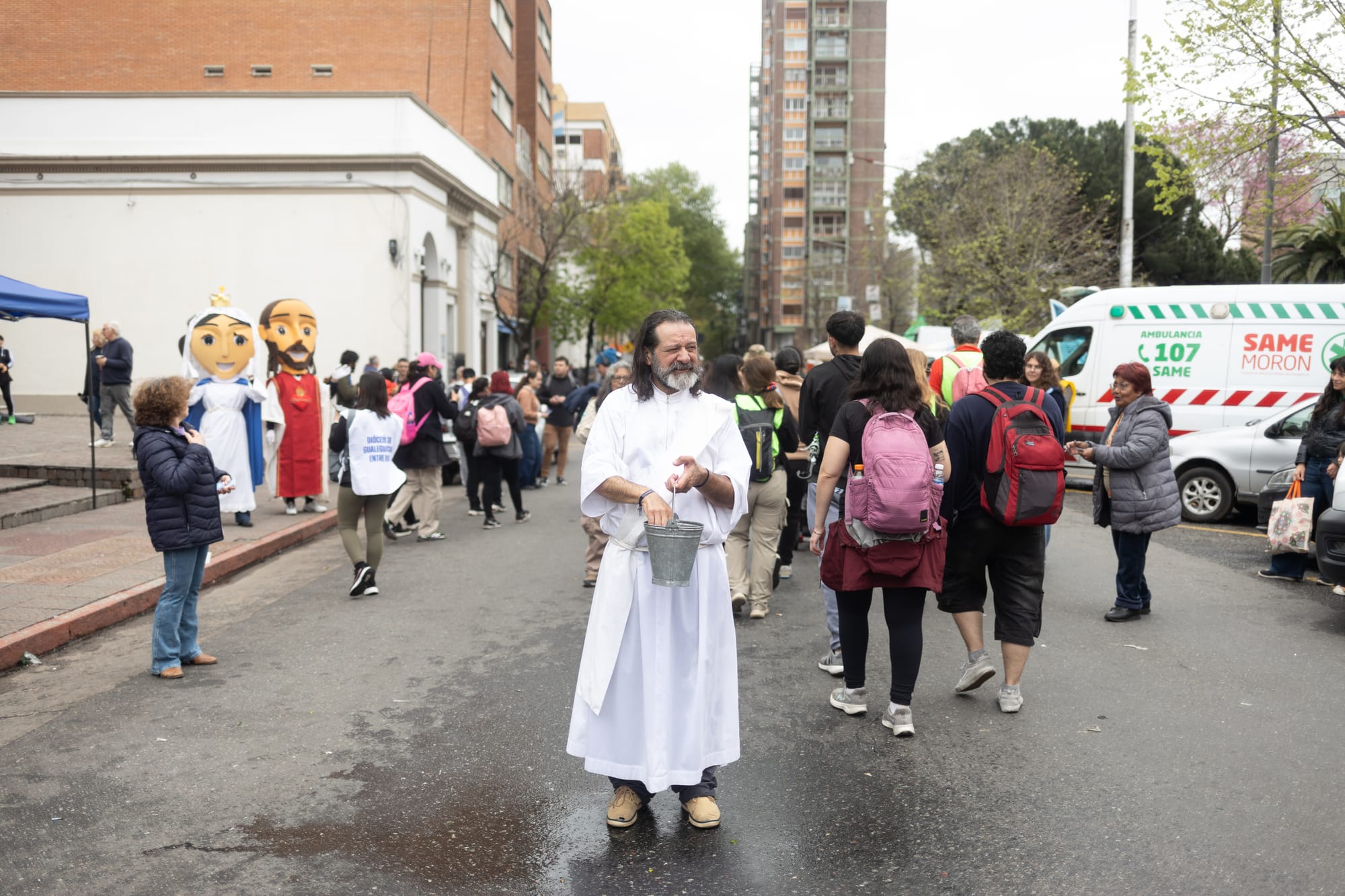
All along the way you can find volunteers: this year there were around 6,000 people offering their services, handing out water, massaging feet or treating wounds. A group of nurses who've already patched up who knows how many blisters dances to abrime la ventana, prendeme el aire. On Ruta 7, a young guy who didn't do the pilgrimage but showed up anyway holds a broomstick with a foam hand on the end and asks people to high-five it, shouting "come on, you've got this!" At the crossing of Luján's second bridge, a municipal stand hands out cups of water and words of encouragement, with Floricienta blasting from the speaker. Almost there.
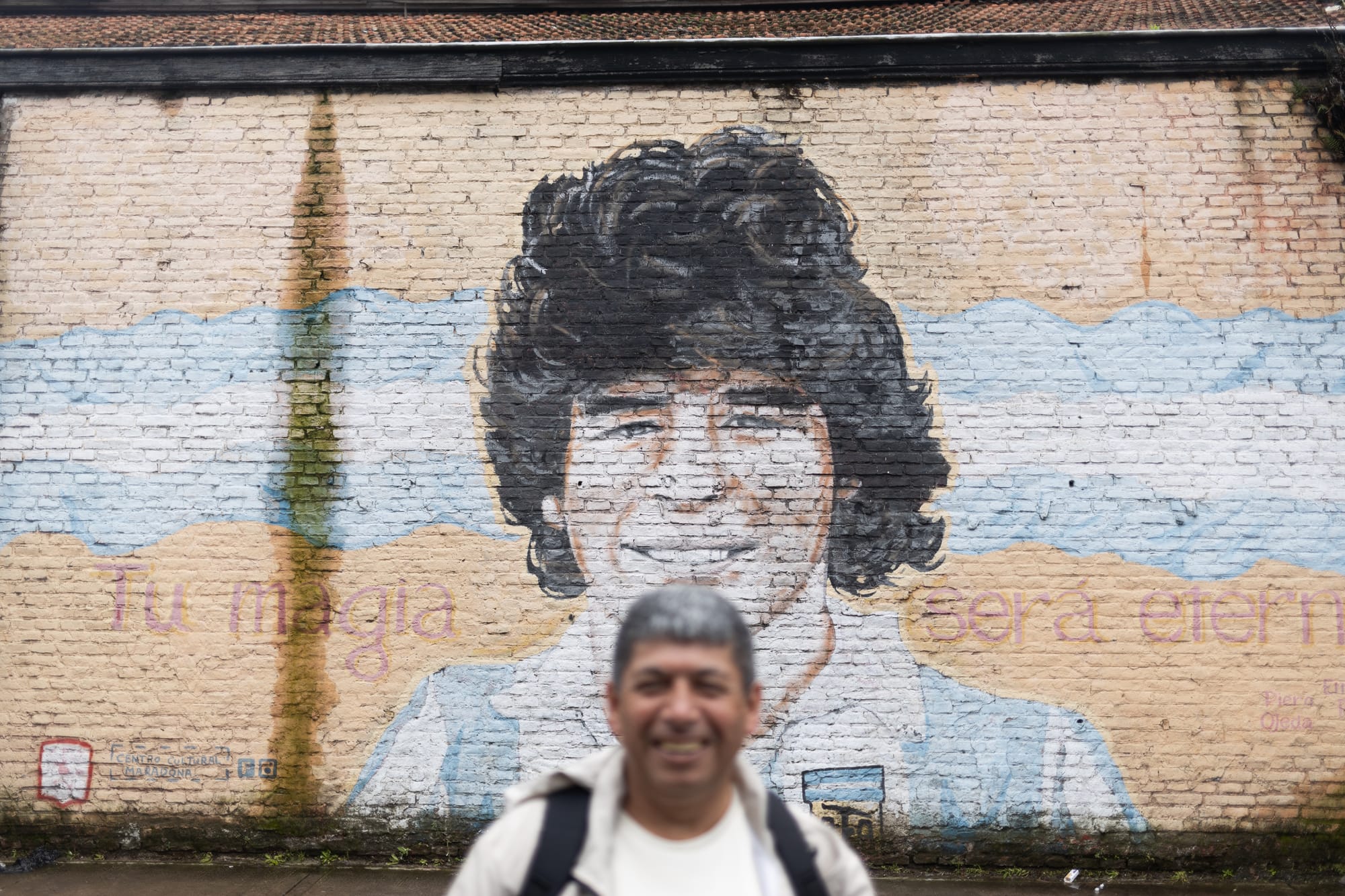
All the vlogs, the get ready with me videos, the YouTube comments and the people who've already done the walk warn about the same thing: the stretch from General Rodríguez to Luján is, by far, the worst. This year the rain covered the first 20 kilometers of the walk for those who set out around seven-thirty in the morning; but in 2025 the rain came in the early hours of Saturday, lashing those walking along Ruta 7 with a torrential downpour. The other big piece of advice is to keep stops short, because otherwise your body cools down, stiffens up, and becomes much harder to get moving. The last 17 kilometers are the real test: if your body cooperates, you can make it… probably limping.
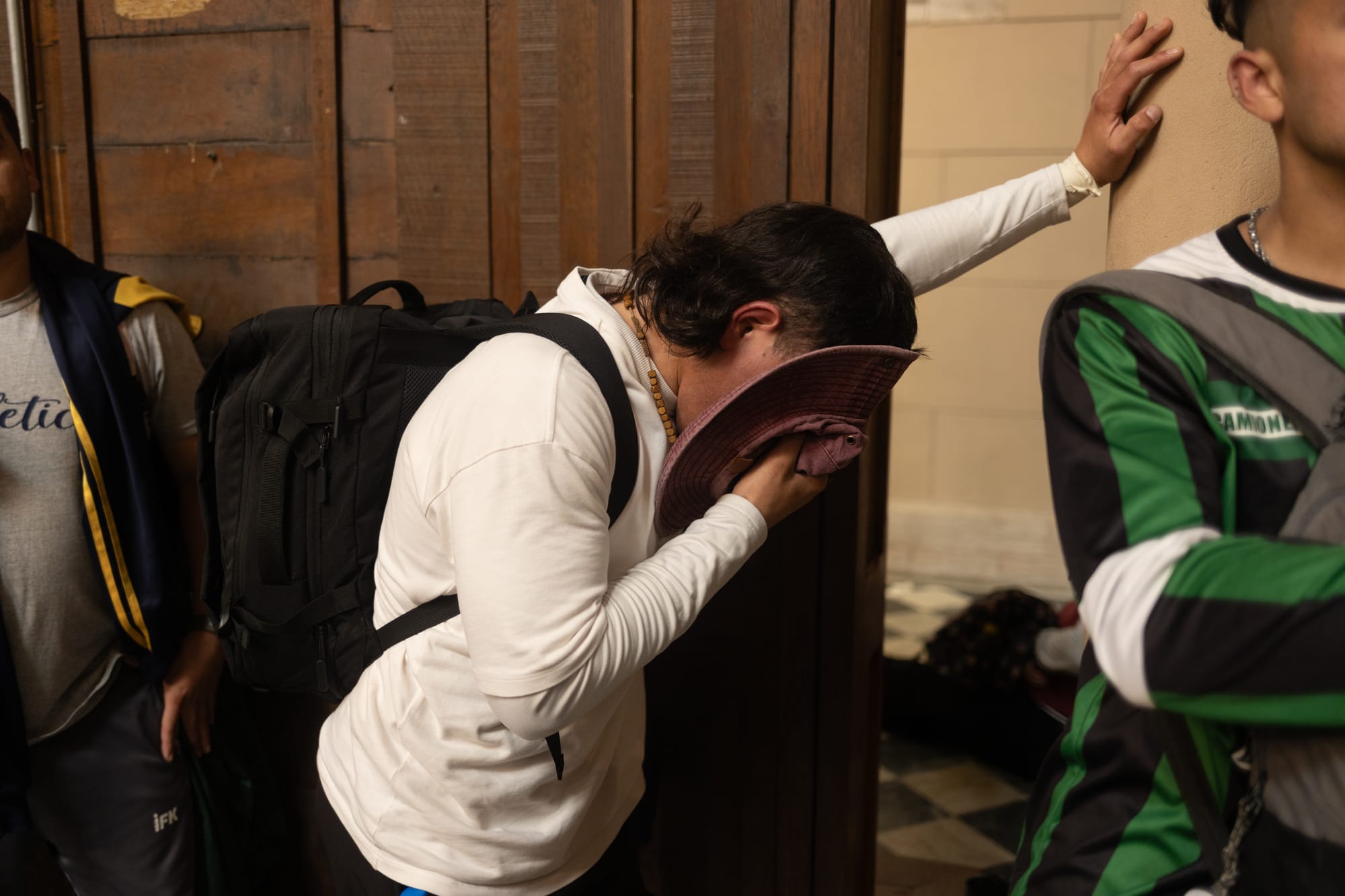
But not everyone makes it. Daiana couldn't go on past General Rodríguez: "I felt like I hit the limit of my body like never before, not even when I gave birth to my kids. I got there, I did 53 km, and I felt so powerless and so angry. But my beloved group from Perpetuo held me up the whole way... They took care of every little detail, they gave me strength, they made me see that what really matters is the process. And I'm left with so many beautiful things: an Argentina that's generous, united, that shares and sticks together." Daiana walked to thank the Virgin for curing someone she loves very much of cancer, and she also made a request she's keeping to herself. "Meeting the Virgin at the Basilica from a place of vulnerability and surrender, of total openness, feeling this immense peace, was really moving... A one-of-a-kind experience that I'm definitely going to do again, because I want to make it all the way."
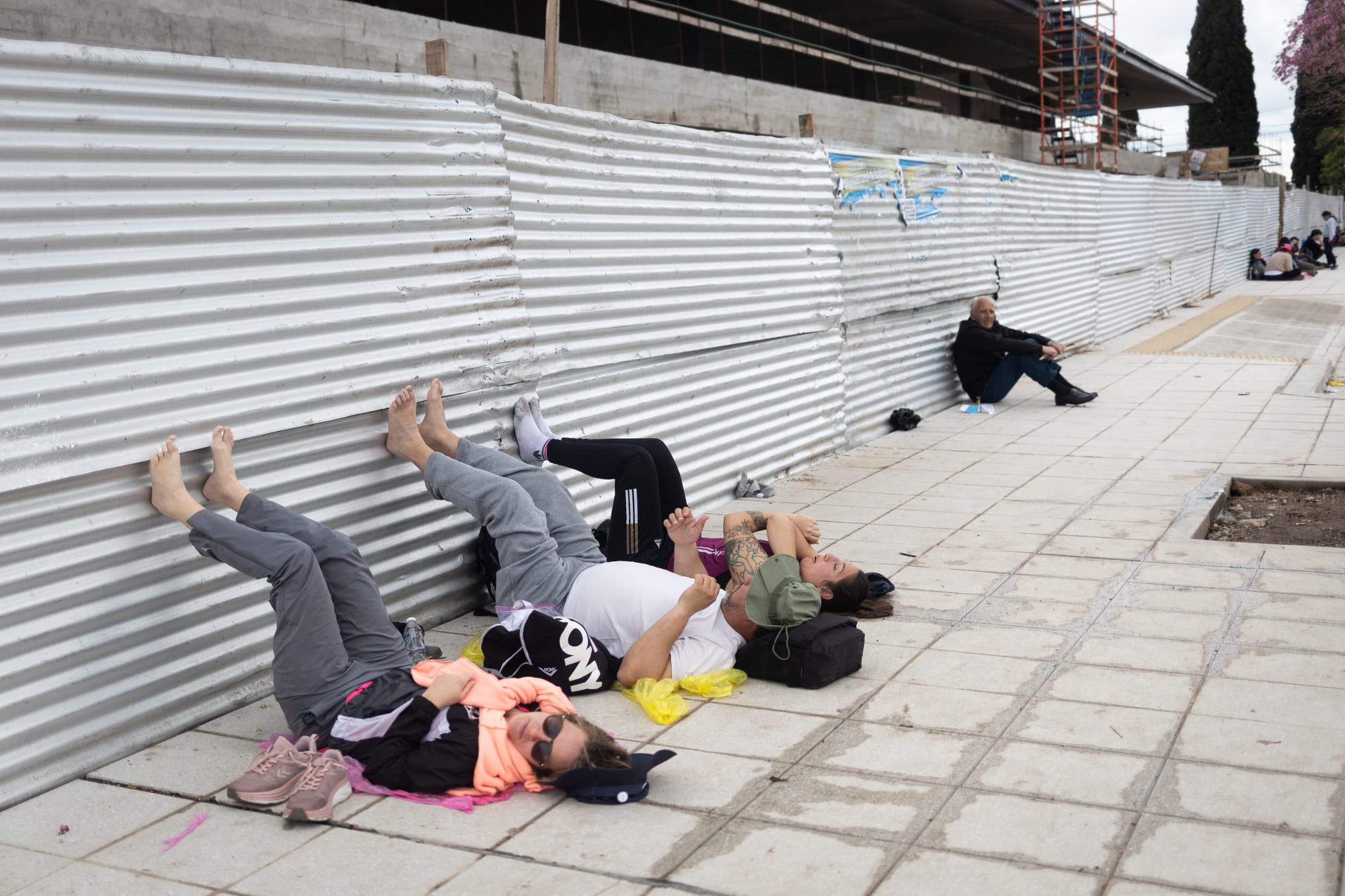
The road is hostile: a highway doesn't hold you the way an avenue does, the wind hits you from the sides and turns the last few kilometers into real suffering. “It puts you face to face with your limit,” says Florencia, who at 34 is doing the march for the first time. Camila walked the last stretch asking the Virgin for strength, and the Virgin delivered: she made it. She knew the journey would be tough and she was scared before setting out. There were moments along the way when she had doubts, and maybe something like that is the most realistic exercise of faith: keeping at something even as uncertainty keeps cutting in on certainty. In a present where everything is constantly shown and put on display, believing in the things we can't see takes on a different weight. And in a country with a history like ours, with one economic crisis after another, worsening over the last 10 years, believing it's possible to turn your life around becomes a reason in itself.
“Does anybody know what hope is?” a woman shouts through a megaphone somewhere around Moreno. There's still more than half the way to go; the sky, sunny earlier and rainy before that, is now overcast. The road is quiet. The woman answers herself, laughing: “The last thing you lose! Move it, move it, move it, Luján, move it!”
Y a cada colaborador se le paga por su trabajo. Las dos cosas dependen de los suscriptores.